Marketplace of Heavy Machinery Spare Parts

15274408, 152 744 08 BUSHING BEARING SANDVIK


Categories: Transmission & Drive Components, PIN & Bushing
$664,00
90 in stock
- Our spare parts are engineered to seamlessly integrate with your machinery.
- Delivery anywhere in the world in max. 10 days
- 1 year manufacturer warranty
- Your transactions are protected by the most advanced security measures.
- Shipping fees are included in the prices of all our products.
Product Video
Product Description
15274408, 152 744 08 BUSHING BEARING SANDVIK
When a rock drill is working at full energy, the parts you never see are often the ones doing the hardest job. The 15274408, 152 744 08 BUSHING BEARING SANDVIK is built to carry radial loads, keep rotating components aligned, and protect expensive housings and shafts from direct metal-to-metal contact. In high-vibration drilling environments, this bushing bearing acts like a precision “buffer zone” that stabilizes motion, supports lubrication flow, and helps your drifter or rock drill maintain consistent performance.
At 3GEN Export, we supply the 15274408, 152 744 08 BUSHING BEARING SANDVIK as an OEM-quality replacement part for demanding field conditions. Our focus is simple: stable quality, clean machining, reliable fit, and global delivery in 5 working days, so your downtime stays short and predictable.
This page is written for buyers who want clarity: what the 15274408, 152 744 08 BUSHING BEARING SANDVIK does, why its geometry matters, how to install it correctly, what failures to prevent, and which SANDVIK drilling units commonly reference this part number.
What the 15274408, 152 744 08 BUSHING BEARING SANDVIK actually does
A bushing bearing is a sliding bearing. Instead of rolling elements (balls/rollers), it relies on a precisely machined bearing surface and a lubrication film. In rock drilling, sliding bearings are popular because they handle shock loads well, tolerate contamination better than many rolling bearings, and can be produced in robust bronze-style materials that resist seizure under heavy load.
The 15274408, 152 744 08 BUSHING BEARING SANDVIK typically sits in an area where rotation and impact forces meet. It supports a rotating or oscillating shaft section, keeping the centerline stable. That stability prevents uneven wear on surrounding parts, reduces vibration amplification, and helps the drifter deliver power efficiently rather than wasting it as heat and friction.
If your drill begins to show symptoms like abnormal noise, heat buildup, unstable rotation, or accelerated wear on a mating shaft, the bushing bearing is one of the first components to inspect, because it is designed to wear first to protect higher-cost assemblies.
Why machining quality matters for a bushing bearing
With rolling bearings, your quality risk is often internal geometry you can’t see. With a bushing bearing, your quality risk is the surface you can see, because that surface is the bearing.
The 15274408, 152 744 08 BUSHING BEARING SANDVIK must be produced with consistent inner diameter, correct oil groove geometry, and accurate wall thickness so it can:
Support a stable lubrication film under load
Hold a consistent clearance to the shaft (too tight = heat/seizure, too loose = vibration/impact wear)
Maintain alignment, especially during percussion and high-frequency vibration
Distribute lubricant through channels and holes so friction remains controlled during long drilling cycles
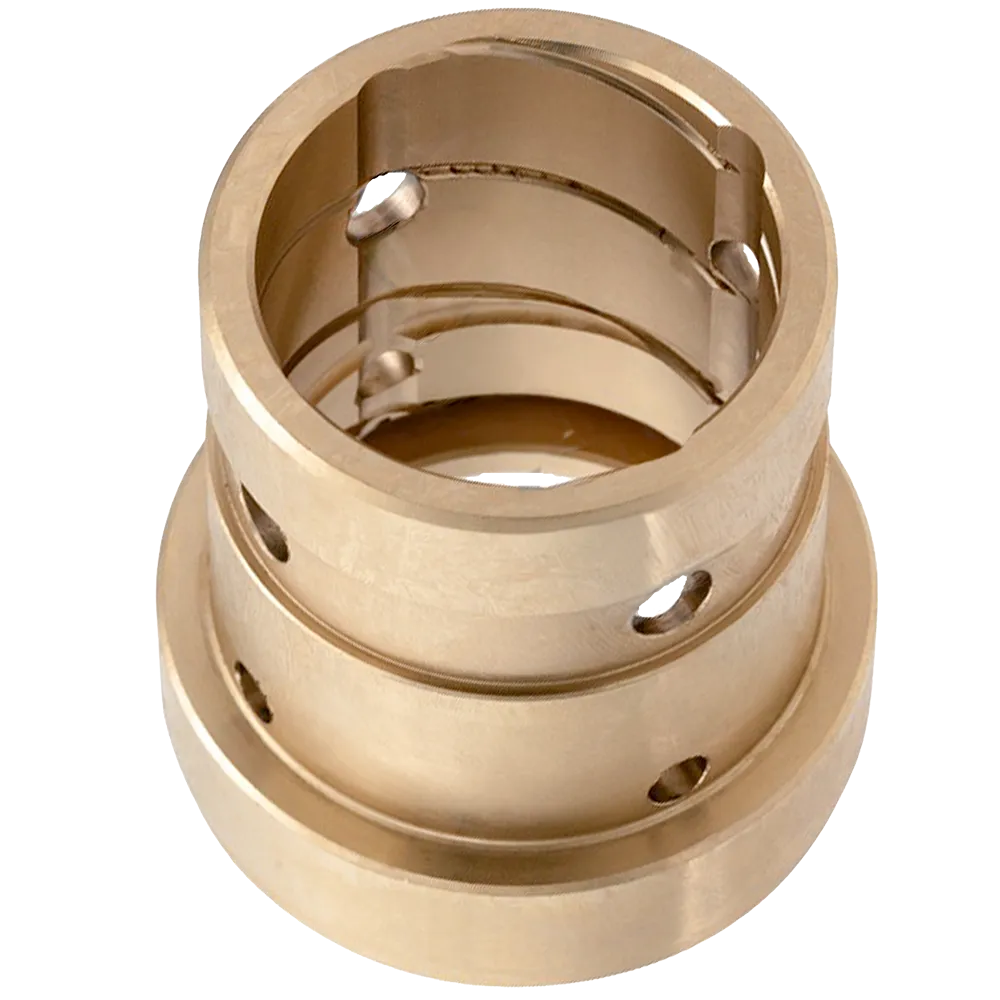
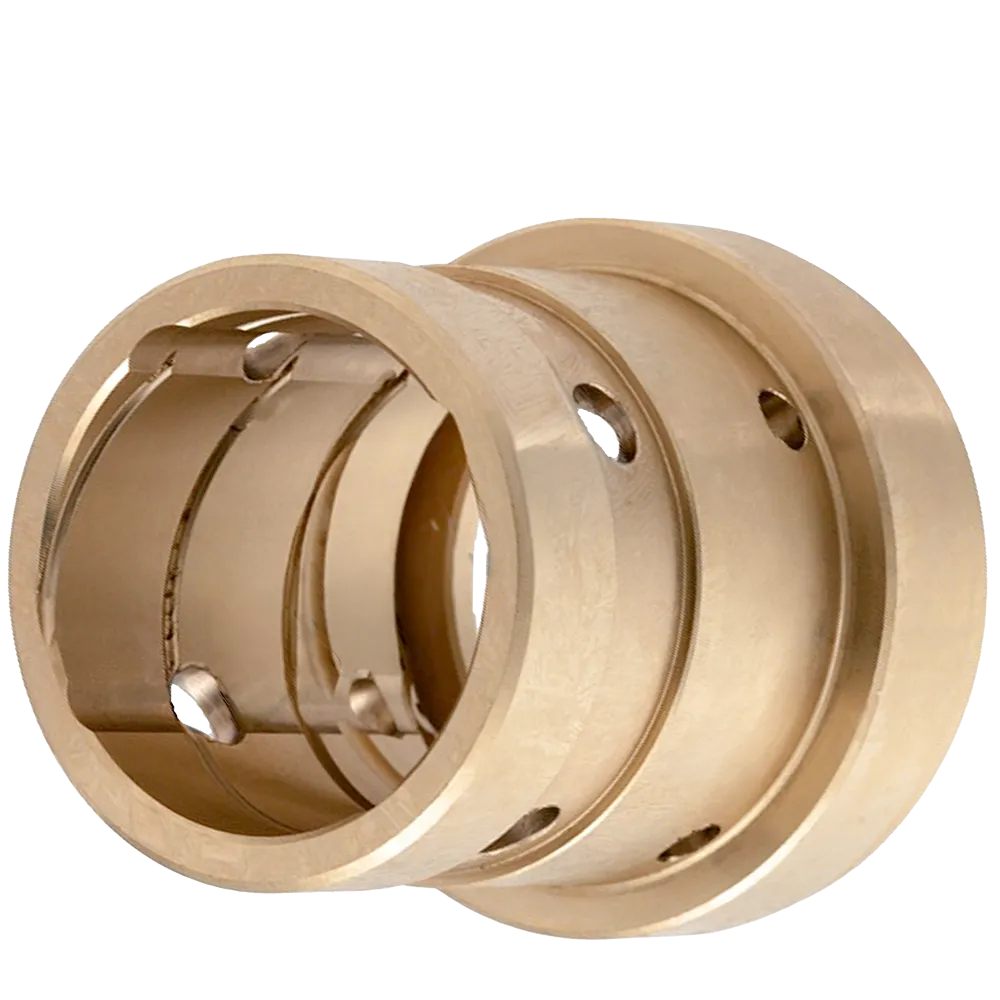
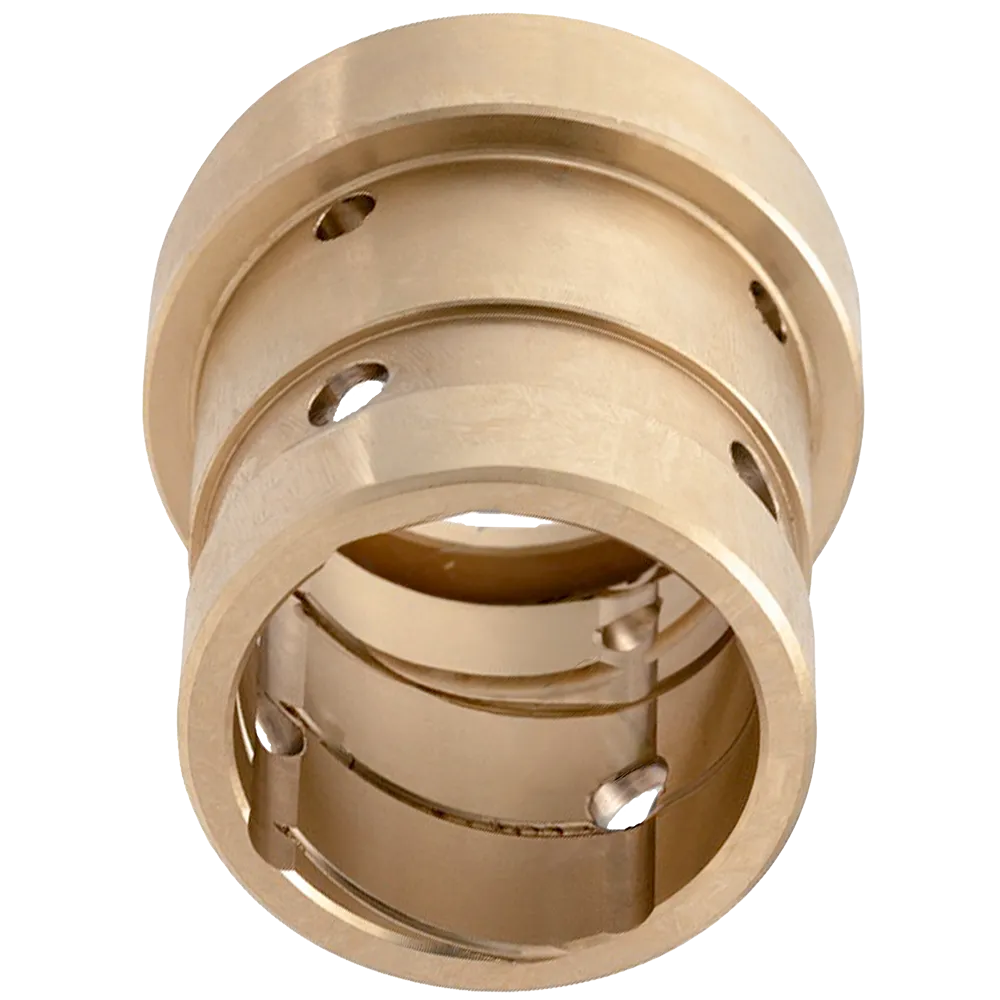
From the images you provided, the part design shows defined internal lubrication features and oil paths. Those details are not cosmetic. They are the difference between a bushing that runs cool and quiet, and one that fails early and turns into a costly cascade (shaft scoring, housing damage, secondary component wear).
Typical material and surface expectations
While suppliers may use different formulations depending on production route, bushing bearings in this category are commonly manufactured from bronze-based alloys or engineered bearing materials designed for:
High load capacity
Good embeddability (handling small particles without immediately scoring the shaft)
Anti-seizure behavior under mixed lubrication conditions
Thermal stability during long drilling cycles
In practical terms, what matters most for your operation is not a marketing label, it is the consistency of the bearing surface, proper lubrication pathways, and correct fit with your shaft and housing.
3GEN Export supplies the 15274408, 152 744 08 BUSHING BEARING SANDVIK as an OEM-standard replacement solution intended for industrial drilling uptime, not showroom display.
Technical specifications for 15274408, 152 744 08 BUSHING BEARING SANDVIK
Below are common reference dimensions associated with this part number in a published HLX5/MRX5 parts context:
Outer diameter (D): 55 mm
Inner diameter (d): 45 mm
Length (L): 70 mm
Because bushing bearings are precision-fit components, always confirm dimensions against your machine’s serial/parts manual and measure the mating shaft and housing before installation.
Estimated weight (kg)
Based on the reference dimensions D55 / d45 / L70 and typical bronze-bearing density, a realistic estimated weight for the 15274408, 152 744 08 BUSHING BEARING SANDVIK is approximately:
0.45–0.55 kg (typical estimate range for this geometry)
If you need the exact packed weight for shipping calculation, tell me your preferred courier lane and whether you want single-piece or bulk carton packing, and I’ll format a packing-ready estimate.
Where the 15274408, 152 744 08 BUSHING BEARING SANDVIK is used
The safest way to confirm usage is always your machine serial number and the official parts documentation for the exact drifter variant. That said, reputable aftermarket catalogs and parts references commonly associate this part number with SANDVIK rock drill/drifter systems.
Common references include:
Sandvik RD525 rock drill parts lists referencing 152 744 08 BEARING BUSHING
Listings that present the part as applicable within RD520–RD525 rock drill context
Parts-manual context that references the item under HLX5/MRX5 documentation
Aftermarket “drifter parts” catalog listings selling 15274408 as a bushing for Sandvik equipment
Compatible SANDVIK models (commonly referenced)
Based on the sources above, the 15274408, 152 744 08 BUSHING BEARING SANDVIK is commonly referenced in connection with:
Sandvik RD525 (rock drill / drifter parts context)
Sandvik RD520–RD525 (parts context)
Sandvik HLX5 / MRX5 (parts manual reference context)
RD520, HLX5, RDX5
Important note for accuracy: SANDVIK drilling platforms often have sub-variants, updated revisions, and regional configurations. Use these model references as a starting point, then confirm with your machine serial number to avoid ordering the wrong fit.
Why 15274408, 152 744 08 BUSHING BEARING SANDVIK failures happen
A bushing bearing rarely fails “randomly.” It fails because one or more conditions push it beyond its lubrication and clearance limits. The most common root causes are:
Lubrication starvation (blocked channels, wrong grease/oil spec, insufficient flow)
Contamination (abrasive dust migrating into the bearing surface)
Incorrect clearance (wrong part, wrong machining tolerance, housing distortion, or shaft wear)
Misalignment (bent shaft, worn housing bore, improper installation force)
Overheating cycles (high duty cycle without adequate lubrication refresh)
Improper installation (scoring during press fit, burrs, wrong orientation of oil grooves/holes)
When the 15274408, 152 744 08 BUSHING BEARING SANDVIK begins to wear, it typically shows:
Polished/overheated areas on the ID
Scoring lines in the direction of rotation
Edge wear (a sign of misalignment or shaft deflection)
Ovality (often from load concentration or housing deformation)
Unusual play that produces vibration and noise
If you catch these signs early, you usually prevent the expensive part of the story: shaft damage and housing bore damage.
Installation guide for 15274408, 152 744 08 BUSHING BEARING SANDVIK
This is a practical field-focused installation flow. Always follow your site procedures and your machine documentation first.
1) Pre-install inspection
Clean the housing bore fully and inspect for scoring, ovality, or fretting.
Measure the mating shaft diameter and confirm it is within acceptable wear limits.
Check the old bushing bearing wear pattern; it tells you whether the issue is lubrication, alignment, or contamination.
Confirm the correct part number: 15274408 / 152 744 08 BUSHING BEARING SANDVIK.
2) Fit and orientation
If the bushing bearing has lubrication holes or internal oil grooves, align them to the lubrication feed paths in the housing. On parts with multiple holes/grooves, orientation consistency matters because it controls where the lubricant film forms first during start-up.
3) Pressing and handling
Do not hammer the bushing directly.
Use a proper press tool and a sleeve that contacts the correct surface evenly.
Avoid nicking the inner surface during handling, small defects can become heat points under load.
4) Lubrication and run-in
Apply the correct lubricant per machine spec before assembly completion.
After installation, run the system at a controlled load stage (if your operation allows) so lubricant can distribute through the grooves and holes before full production drilling.
Maintenance practices that extend bushing life
The 15274408, 152 744 08 BUSHING BEARING SANDVIK will last significantly longer when your maintenance routine prevents the two big killers: contamination and starvation.
Recommended habits:
Keep lubrication intervals disciplined, especially in dusty environments
Use the lubricant grade and method recommended for your drifter system
Inspect seals and wipers that protect the bearing zone
Track temperature rise during long drilling cycles
Watch for vibration changes, early clearance shift often shows up as vibration before it becomes visible wear
During rebuilds, measure housing bore and shaft OD; replace what is out of spec, not only what “looks worn”
Operational benefits of using the correct 15274408, 152 744 08 BUSHING BEARING SANDVIK
When you install the correct bushing bearing and maintain lubrication quality, you typically gain:
More stable rotation and reduced vibration transfer
Lower heat buildup at the bearing zone
Longer life for the mating shaft and housing bore
More consistent drilling output (less energy lost to friction)
Lower risk of sudden seizure events
Reduced rebuild frequency and improved planned maintenance scheduling
In short: this small part quietly protects your larger investment.
Ordering from 3GEN Export (OEM supplier, fast global shipping)
3GEN Export supplies the 15274408, 152 744 08 BUSHING BEARING SANDVIK as an OEM-quality replacement part and ships worldwide in 5 working days. If you want the fastest verification, send:
Your SANDVIK drill/drifter model (RD520, RD525, HLX5, etc.)
Machine serial number (or at least the drifter serial)
Any alternative part numbers shown in your parts list
Quantity and destination country/city
That lets you confirm fitment and avoid ordering mistakes, especially if your equipment has a revision change.
Quick checklist before you buy
Confirm your exact model reference (RD520/RD525/HLX5 context)
Confirm dimensions if you’re matching by measurement (D55 / d45 / L70 reference)
Check shaft condition, new bushing + worn shaft often fails early
Plan lubrication inspection after installation
Order spares if your site runs continuous duty cycles
Manufactured in Turkey, these products are made using the latest technologies and built to meet the highest international standards. Each machine is a high-quality copy of the original, ensuring durability, precision, and performance that you can rely on for modern construction and metalworking projects.