
When your Komatsu PC200 excavator throws a hydraulic fault code at 6 AM on a Monday, you’re not thinking about brand loyalty or warranty fine print. You need that machine back online before your crew starts billing idle time.
We’ve been sourcing komatsu parts for mining and construction fleets since 2006, and stark: OEM parts from authorized dealers can take 7-14 days to arrive, while quality aftermarket alternatives often ship within 48 hours. The question isn’t whether aftermarket parts work , it’s knowing which ones match OEM specifications and which ones will leave you stranded again in three months.
Understanding Komatsu’s Parts Ecosystem

Komatsu operates one of the most complex parts distribution networks in heavy equipment. Unlike Caterpillar’s centralized system, Komatsu relies heavily on regional distributors who maintain their own inventory levels and pricing structures.
OEM Parts Distribution Challenges
Genuine Komatsu parts flow through a three-tier system: manufacturing facilities in Japan and Brazil, regional distribution centers, and local dealers. This creates predictable bottlenecks, especially for older models like the PC120-6 or D65EX-12 dozers where parts production runs have ended.
Most fleet managers don’t realize that Komatsu discontinued manufacturing certain hydraulic pumps for pre-2015 excavators. When these fail, you’re looking at remanufactured units or aftermarket alternatives , there’s no “genuine” option available.
Aftermarket Quality Tiers
Not all aftermarket parts are created equal. We categorize suppliers into three tiers based on manufacturing standards and failure rates from our customer feedback:
- Tier 1: ISO-certified manufacturers using OEM specifications (brands like NOK, Parker, Bosch)
- Tier 2: Quality manufacturers with slight spec variations (acceptable for non-critical applications)
- Tier 3: Budget options with higher failure rates (avoid for hydraulic and engine components)
Part Number Compatibility Matrix
Komatsu uses a 15-digit part numbering system that includes revision codes. A single hydraulic filter might have six different part numbers across model years, but only three actual physical variations. Understanding these cross-references can save substantial costs and reduce inventory complexity.
Critical Components: When to Choose OEM vs Aftermarket
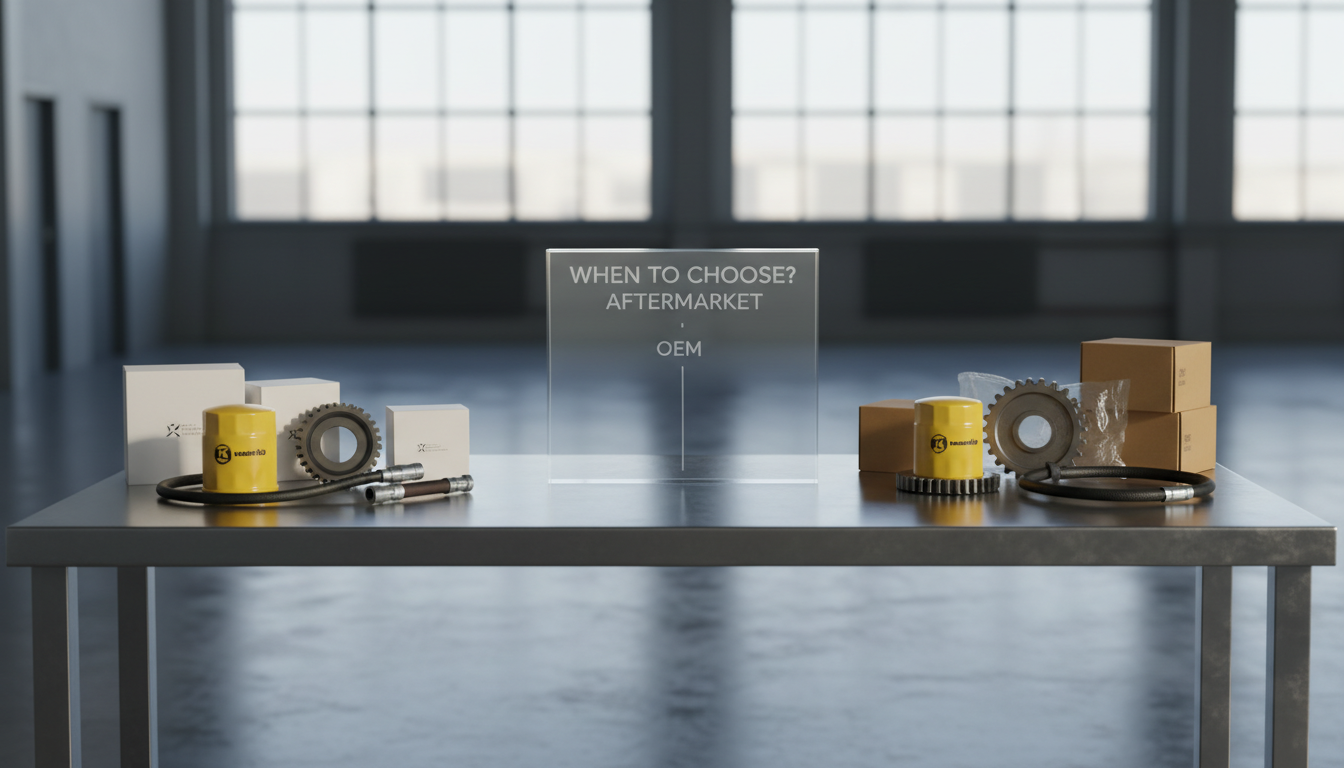
The OEM-versus-aftermarket decision shouldn’t be binary. Smart procurement managers use a risk-based approach that considers component criticality, machine age, and operational environment.
Engine Components: Stick with OEM Standards
For Komatsu’s SAA6D125E-3 engines (found in PC400-7 excavators and WA470-6 loaders), we recommend OEM or Tier 1 aftermarket for pistons, rings, and injection components. These engines run at higher pressures than previous generations, and substandard parts can cause catastrophic failures.
However, external components like alternators, starter motors, and cooling fans often have excellent aftermarket alternatives at 40-60% of OEM pricing. We’ve supplied thousands of aftermarket alternators for Komatsu equipment with failure rates under 2%.
Hydraulic Systems: Quality Over Brand
Komatsu’s CLSS (Closed Load Sensing System) hydraulics are sensitive to contamination and pressure variations. Main pumps and swing motors should use OEM or certified remanufactured units. But hydraulic cylinders, especially for attachments, work well with quality aftermarket seals and components.
Pro tip: Always replace hydraulic filters when installing new pumps or motors, regardless of filter age. Contamination from the old component can destroy new parts within hours.
Undercarriage: Aftermarket Advantage
Komatsu undercarriage components , track chains, sprockets, idlers , face some of the strongest aftermarket competition. Quality aftermarket tracks often outlast OEM parts while costing 30-40% less. We’ve seen aftermarket track chains exceed 4,000 hours on PC300 excavators in rocky conditions.
Sourcing Strategies for Global Operations
Managing komatsu parts inventory across multiple continents requires understanding regional availability patterns and shipping logistics. What works for a single-site operation in Texas won’t scale for mining operations in Chile and Australia.
Regional Inventory Patterns
Komatsu’s parts availability varies dramatically by region. European distributors typically stock more engine components due to emissions regulations, while Asia-Pacific focuses on undercarriage and hydraulic parts for the mining sector. North American dealers emphasize construction-specific components.
We maintain relationships with suppliers across all regions, allowing us to source parts from the most cost-effective location while meeting delivery requirements. A hydraulic pump available in 3 days from our European supplier might take 2 weeks through North American channels.
Emergency Procurement Protocols
Critical failures don’t wait for business hours. We’ve developed emergency sourcing protocols that can locate and ship critical components within 24-48 hours globally. This includes partnerships with charter freight services for truly urgent situations.
Last month, we sourced a main hydraulic pump for a PC800 excavator in a remote Chilean copper mine. The part shipped from our Japanese supplier via charter flight, arriving on-site within 36 hours. Total cost was still 20% less than the local Komatsu dealer’s price with 10-day delivery.
Customs and Documentation
Heavy equipment parts face complex import regulations, especially for engines and hydraulic components. We handle all customs documentation, including EPA certifications for engine parts and safety certifications for hydraulic components. This eliminates delays and ensures compliance with local regulations.
Cost Analysis: Total Cost of Ownership Perspective
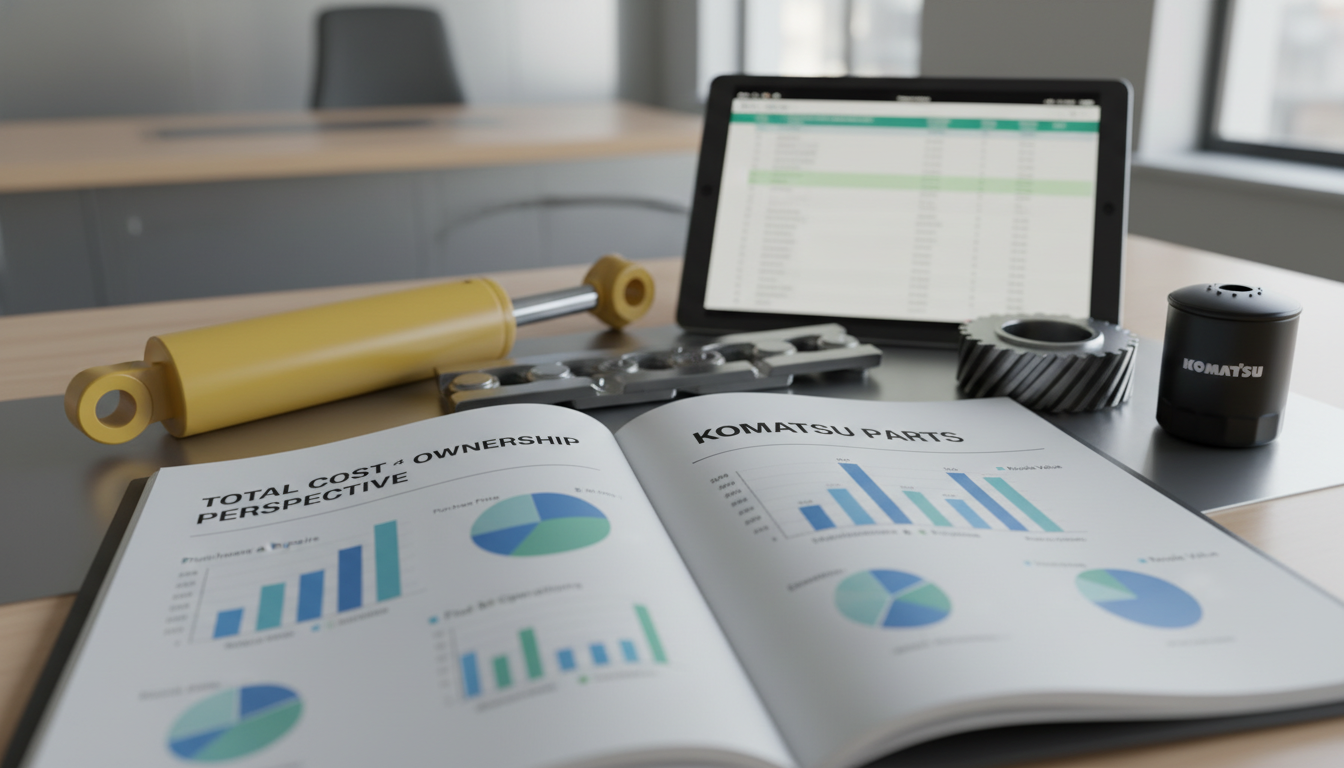
Smart procurement goes beyond initial part costs. The real metric is total cost of ownership, including installation labor, downtime costs, and replacement frequency.
Labor Cost Multipliers
Installing a $500 hydraulic pump on a PC200 excavator requires roughly 8 hours of technician time. At $85/hour shop rates, labor costs $680 , more than the part itself. If an aftermarket pump fails after 1,200 hours instead of OEM’s 2,000-hour life, you’re paying that labor cost 67% more frequently.
However, for components with quick replacement times , filters, belts, minor electrical parts , aftermarket savings often justify slightly shorter service intervals.
Downtime Cost Calculations
A PC400 excavator generates roughly $800-1,200 per operating day in most construction applications. Each day of downtime waiting for parts costs more than most individual components. This shifts the equation heavily toward availability over absolute lowest price.
We track downtime costs for our major customers and consistently find that paying 15-20% more for 2-day delivery versus 7-day delivery saves money overall when downtime costs are included.
Warranty Considerations
OEM parts typically carry 12-month warranties, while aftermarket ranges from 6-24 months depending on manufacturer. But warranty coverage means little if the supplier can’t provide rapid replacement during the warranty period.
Quality Control and Testing Standards
The aftermarket parts industry has matured significantly over the past decade. Today’s quality aftermarket manufacturers often exceed OEM specifications in certain areas, particularly for wear-resistant components.
Material Science Advances
Modern aftermarket manufacturers use material science advances that weren’t available when original Komatsu parts were designed. Improved steel alloys for cutting edges, enhanced rubber compounds for seals, and better bearing materials can actually improve component life over OEM specifications.
We work with suppliers who provide material certifications and test reports for critical components. This documentation is essential for insurance claims and warranty disputes.
Field Testing Programs
Before adding new suppliers to our network, we conduct field testing with select customers. New hydraulic seals get tested on multiple machine types across different operating conditions. Only suppliers that meet our performance standards earn approval for general distribution.
Our current hydraulic seal supplier underwent 18 months of field testing across mining, construction, and forestry applications before approval. Their seals now show around one in ten longer service life than OEM equivalents in abrasive conditions.
Quality Documentation Requirements
Professional aftermarket suppliers provide complete documentation: material certifications, dimensional reports, and performance test data. This documentation is important for maintenance records and insurance requirements.
We require suppliers to maintain ISO 9001 certification and provide batch traceability for all critical components. This ensures consistent quality and enables rapid response if issues arise.
Digital Parts Management and Inventory Optimization
Modern fleet management requires sophisticated parts inventory strategies that balance carrying costs against downtime risks. Digital tools now make this optimization accessible to smaller operations.
Predictive Maintenance Integration
Komatsu’s KOMTRAX telematics system provides valuable data for parts planning, but most operators underutilize this information. Engine hours, hydraulic temperatures, and fault codes can predict component failures weeks in advance.
We help customers integrate KOMTRAX data with parts inventory systems to automate reorder points and identify machines approaching service intervals. This proactive approach reduces emergency orders and associated premium costs.
Cross-Fleet Standardization
Mixed fleets create inventory complexity, but smart standardization can reduce parts carrying costs by 30-roughly a third. A PC200 and PC220 excavator share roughly over half of their components, including filters, seals, and electrical parts.
We analyze customer fleets to identify standardization opportunities. Sometimes switching to a different attachment or accessory can eliminate unique parts requirements and simplify inventory management.
Vendor-Managed Inventory Programs
For high-volume operations, vendor-managed inventory eliminates the guesswork from parts planning. We maintain on-site inventory for critical components, automatically replenishing based on usage patterns and machine schedules.
Our largest mining customer reduced parts inventory investment by roughly a third while improving parts availability through our vendor-managed program. We assume inventory risk while they focus on production.
Regional Considerations and Global Supply Chain
Sourcing komatsu parts globally requires understanding regional manufacturing capabilities, shipping logistics, and regulatory requirements. What works in North America may not translate to operations in Africa or Southeast Asia.
Manufacturing Hub Analysis
Quality aftermarket parts manufacturing has shifted significantly over the past decade. While China remains the largest producer by volume, countries like India, Brazil, and Turkey have emerged as quality manufacturing centers for specific component categories.
Indian manufacturers excel at precision-machined components like hydraulic cylinders and engine parts. Brazilian suppliers dominate undercarriage components for mining applications. Turkish manufacturers produce excellent hydraulic hoses and fittings.
Shipping and Logistics Optimization
Global parts shipping involves complex trade-offs between cost, speed, and reliability. Air freight costs 8-12 times more than ocean shipping but reduces delivery time from 4-6 weeks to 3-5 days.
We maintain strategic inventory positions in key regions to optimize these trade-offs. High-value, low-weight components like electronic modules ship via air freight. Heavy components like engine blocks ship via ocean freight with longer lead times.
Currency and Trade Considerations
Global sourcing exposes operations to currency fluctuations and trade policy changes. We help customers navigate these risks through flexible sourcing strategies and forward currency contracts for large orders.
Recent trade tensions have highlighted the importance of supply chain diversification. We maintain supplier relationships across multiple countries to ensure continuity during trade disruptions.
Future Trends in Komatsu Parts Supply
The heavy equipment parts industry is evolving rapidly, driven by digitalization, sustainability requirements, and changing customer expectations. Understanding these trends helps inform long-term procurement strategies.
3D Printing and On-Demand Manufacturing
Additive manufacturing is beginning to impact parts availability, particularly for obsolete components. While 3D printing can’t yet match traditional manufacturing for high-stress components, it’s viable for brackets, covers, and certain wear parts.
We’re piloting 3D printing programs for customers with older Komatsu equipment where OEM parts are no longer available. Initial results show promise for non-critical components, with potential cost savings of 40-over half over traditional manufacturing.
Sustainability and Circular Economy
Environmental regulations are driving increased focus on parts remanufacturing and recycling. Komatsu’s Reman program has expanded significantly, offering factory-remanufactured components at 60-most of new part costs.
We’re developing partnerships with remanufacturing facilities to offer customers more sustainable options without compromising performance. Core exchange programs reduce costs while supporting circular economy principles.
Digital Integration and IoT
Smart parts with embedded sensors are becoming reality for critical components. These parts can monitor their own condition and predict failure before it occurs, revolutionizing maintenance planning.
While still early-stage, we’re tracking developments in smart hydraulic components and engine parts that could transform how fleets manage maintenance and parts inventory.
Ready to optimize your Komatsu parts procurement? Shop OEM-quality spare parts with global 5-day delivery at 3genexport.com