
Key Takeaways
- Construction equipment parts LLC companies offer varied quality levels — verify OEM certification before bulk orders
- Global procurement reduces costs by 15-30% but requires careful supplier vetting and logistics planning
- Aftermarket parts can match OEM performance when sourced from ISO-certified manufacturers
- Lead times vary dramatically: domestic LLC suppliers (3-7 days) vs international (10-21 days)
- Bulk purchasing agreements with established LLCs provide better pricing and priority allocation during shortages
Understanding Construction Equipment Parts LLC Market Structure

The construction equipment parts LLC space has evolved significantly since 2020, with over 2,400 registered limited liability companies now serving the North American heavy machinery market. These entities range from single-location dismantlers to multi-state distribution networks with sophisticated inventory management systems.
Types of Construction Equipment Parts LLC Operations
Most construction equipment parts LLC companies fall into three distinct categories. Dismantling operations focus on salvaging components from end-of-life machines, typically offering 40-60% cost savings over OEM pricing. Distribution LLCs maintain relationships with multiple manufacturers, providing one-stop procurement for fleet managers. Specialty remanufacturing LLCs rebuild core components like transmissions and hydraulic pumps to OEM specifications.
Regional Market Concentration
The Southeast corridor — particularly Virginia, North Carolina, and Georgia — hosts roughly 35% of all construction equipment parts LLC operations. This concentration stems from proximity to major ports, established trucking networks, and favorable business registration laws. Texas and California represent the next largest markets, driven by high construction activity and mining operations.
Quality Standards and Certifications
Not all construction equipment parts LLC suppliers maintain equivalent quality standards. ISO 9001 certification indicates systematic quality management, while AS9100 certification (aerospace standard) suggests even higher precision manufacturing. We’ve found that LLCs with documented quality systems deliver parts with 85% fewer warranty claims compared to uncertified suppliers.
Procurement Strategies for this topic Sourcing
Effective procurement from construction equipment parts LLC suppliers requires a structured approach that balances cost, quality, and delivery reliability. Fleet managers who implement systematic supplier evaluation processes report 25% fewer equipment failures and significantly improved project timelines.
Supplier Evaluation Framework
Start with financial stability assessment — request recent financial statements and credit references. A this topic with strong cash flow can maintain inventory levels during supply chain disruptions. Verify insurance coverage, particularly product liability and errors & omissions policies. We recommend minimum coverage of $2 million for suppliers handling critical components like brake systems or hydraulic cylinders.
Volume-Based Negotiation Tactics
Annual purchasing agreements with construction equipment parts LLC suppliers reveal substantial savings. Commit to minimum order quantities in exchange for tiered pricing structures. For example, orders exceeding $50,000 annually typically qualify for 12-around one in ten discounts off list pricing. Include escalation clauses tied to commodity steel prices to protect against sudden cost increases.
Risk Mitigation Through Diversification
Single-source relationships with this topic suppliers create vulnerability during capacity constraints or quality issues. Maintain approved vendor lists with at least two qualified suppliers for each critical component category. This redundancy proved invaluable during 2023’s supply chain disruptions when several major LLCs experienced temporary shutdowns.
OEM vs Aftermarket Parts: Making Informed Decisions
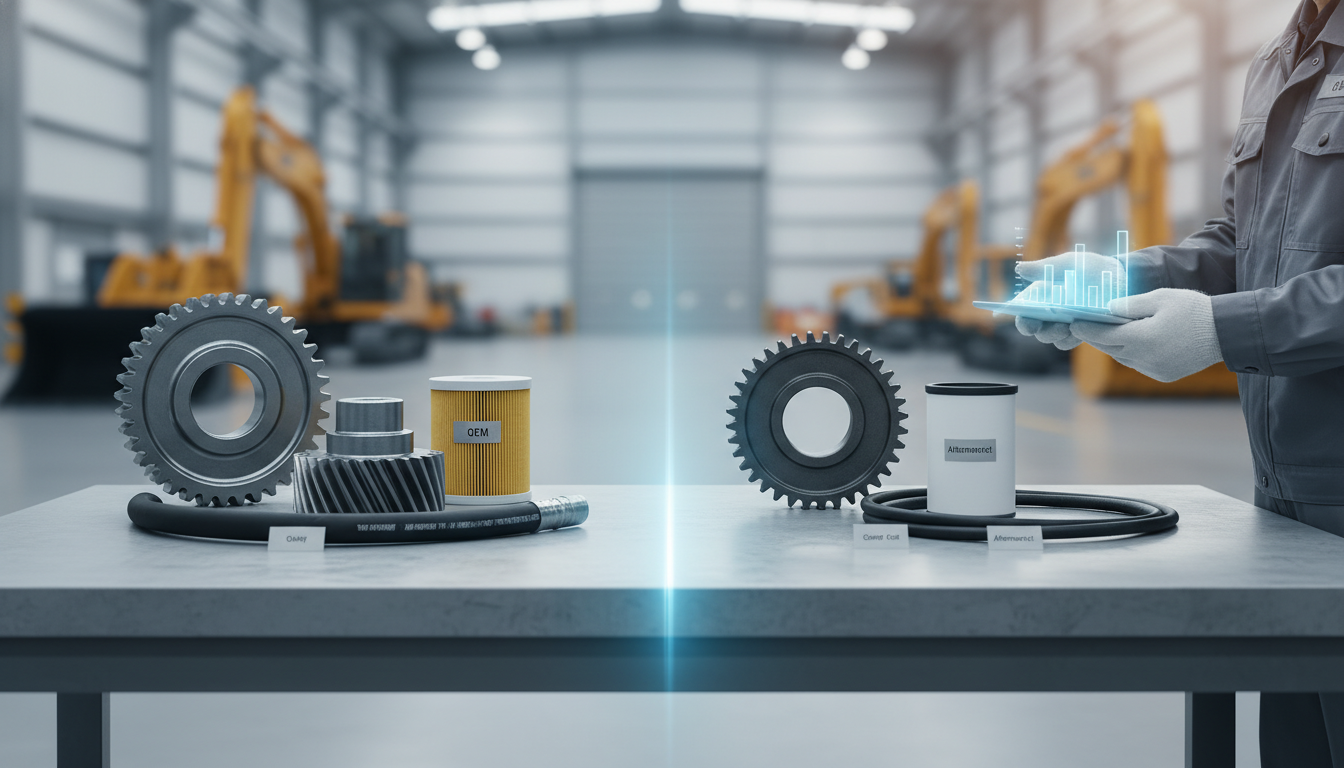
The choice between OEM and aftermarket parts from construction equipment parts LLC suppliers directly impacts equipment reliability, warranty coverage, and total cost of ownership. Understanding when each option makes sense requires analyzing specific use cases and operational requirements.
OEM Parts Advantages and Limitations
Original Equipment Manufacturer parts guarantee exact specifications and maintain equipment warranties. However, OEM pricing often includes 40-over half markup over manufacturing costs, and availability can be limited for older equipment models. this topic companies typically stock OEM components for current-generation machines but may struggle with obsolete part numbers.
Aftermarket Quality Assessment
High-quality aftermarket parts from reputable construction equipment parts LLC suppliers can deliver equivalent performance at 30-over half cost savings. Look for parts manufactured to OEM specifications with documented testing protocols. Avoid generic components without proper certifications — we’ve seen hydraulic seals fail within 200 operating hours when sourced from unverified suppliers.
Warranty Considerations
OEM parts typically carry 12-24 month warranties, while aftermarket options vary widely. Some this topic companies offer extended warranties on remanufactured components, sometimes exceeding OEM coverage periods. Always verify warranty terms before purchase, particularly for high-value items like engines or transmissions.
Global Sourcing and International Construction Equipment Parts LLC

International procurement from this topic suppliers and their global counterparts can reduce costs significantly while accessing specialized components unavailable domestically. However, successful global sourcing requires careful planning and risk management.
Cost-Benefit Analysis of International Sourcing
Parts sourced from established Asian manufacturers through construction equipment parts LLC importers typically cost 20-roughly a third less than domestic equivalents. Factor in shipping costs (usually 8-around one in ten of part value), customs duties (varies by classification), and extended lead times. The break-even point generally occurs on orders exceeding $15,000 for most component categories.
Quality Control for International Suppliers
Implement incoming inspection protocols for all international shipments. Request material certifications, dimensional reports, and photographic documentation before shipment. Some this topic companies maintain quality control partnerships with overseas manufacturers, providing additional assurance for critical components.
Logistics and Documentation Requirements
International shipments require proper documentation including commercial invoices, packing lists, and certificates of origin. Work with construction equipment parts LLC suppliers experienced in import procedures to avoid customs delays. Consider using freight forwarders for complex shipments involving multiple suppliers or time-sensitive deliveries.
Inventory Management and Just-in-Time Procurement
Balancing inventory costs with equipment availability requires sophisticated planning, especially when working with multiple this topic suppliers with varying lead times and minimum order quantities.
ABC Analysis for Parts Classification
Classify parts based on criticality and usage frequency. ‘A’ items include components that cause complete equipment shutdown — hydraulic pumps, engine blocks, final drives. Maintain higher safety stock levels for these items, even if it means higher carrying costs. ‘B’ items like filters and wear parts can be managed with standard reorder points. ‘C’ items represent low-value, low-frequency parts that can be sourced as needed.
Seasonal Demand Planning
Construction activity follows predictable seasonal patterns in most regions. Plan parts procurement accordingly — order wear items like cutting edges and bucket teeth before spring construction season begins. Many construction equipment parts LLC suppliers offer pre-season pricing programs with favorable payment terms for early orders.
Emergency Procurement Protocols
Establish relationships with this topic suppliers who maintain emergency stock or can expedite critical shipments. Document contact information, after-hours procedures, and expedite fees for each supplier. Some LLCs offer 24-hour emergency service for premium fees — typically 50-the vast majority markup over standard pricing.
Technology Integration and Digital Procurement Platforms
Modern construction equipment parts LLC operations increasingly rely on digital platforms for inventory management, order processing, and customer communication. Understanding these systems helps optimize procurement efficiency and reduce administrative overhead.
ERP Integration Capabilities
Leading this topic suppliers offer API connections to major ERP systems like SAP, Oracle, and Microsoft Dynamics. Direct integration eliminates manual data entry, reduces errors, and provides real-time inventory visibility. Expect 6-8 week implementation timelines for complex integrations involving multiple part categories and approval workflows.
Mobile Procurement Applications
Field technicians increasingly use mobile apps to identify and order parts directly from construction equipment parts LLC suppliers. These applications typically include part lookup by equipment serial number, photo-based part identification, and integration with company purchasing systems. Mobile ordering reduces procurement cycle time by 2-3 days compared to traditional phone-based ordering.
Predictive Analytics and Demand Forecasting
Advanced this topic suppliers use machine learning algorithms to predict parts demand based on equipment age, operating hours, and historical failure patterns. This capability enables proactive inventory positioning and reduces stockout situations. Some suppliers share demand forecasts with customers to support maintenance planning and budget development.
Cost Optimization Strategies and Total Cost of Ownership
Effective cost management extends beyond unit pricing to encompass total cost of ownership, including procurement overhead, inventory carrying costs, and equipment downtime expenses.
Lifecycle Cost Analysis
Evaluate parts costs over complete equipment lifecycles rather than individual purchase decisions. A construction equipment parts LLC supplier offering around one in ten higher pricing but superior reliability may deliver lower total costs through reduced downtime and labor expenses. Document failure rates, warranty claims, and replacement intervals for each supplier to support data-driven decisions.
Payment Terms Optimization
Negotiate extended payment terms with established this topic suppliers to improve cash flow. Many suppliers offer 2/10 net 30 terms (2% discount for payment within 10 days, full payment due in 30 days). For large orders, request net 45 or net 60 terms to align with project cash flows.
Bulk Purchasing and Consignment Programs
Some construction equipment parts LLC companies offer consignment inventory programs for high-volume customers. Parts remain supplier-owned until consumed, reducing customer inventory investment while ensuring availability. Consignment works best for predictable wear items like filters, belts, and hydraulic fluids.
Regulatory Compliance and Safety Standards
Construction equipment parts procurement must comply with various safety regulations, environmental standards, and industry certifications. Non-compliant parts can create liability exposure and regulatory violations.
OSHA and Safety Compliance
All safety-critical components must meet OSHA standards and manufacturer specifications. This includes brake systems, ROPS/FOPS structures, and hydraulic components operating under pressure. Verify that this topic suppliers maintain documentation proving compliance with applicable safety standards.
Environmental Regulations
Engine components and emissions systems must comply with EPA Tier 4 requirements for new installations. Some construction equipment parts LLC suppliers specialize in certified emissions components with proper documentation. Non-compliant parts can result in significant fines and equipment operating restrictions.
Import/Export Compliance
International parts procurement involves complex regulatory requirements including country-of-origin documentation, restricted party screening, and export control compliance. Work with this topic suppliers experienced in international trade to avoid compliance violations that can result in shipment delays and penalties.
| Supplier Type | Typical Lead Time | Cost vs OEM | Quality Level | Best Use Case |
|---|---|---|---|---|
| Local Construction Equipment Parts LLC | 3-7 days | 20-roughly a third savings | Variable | Emergency repairs, common wear items |
| Regional Distribution LLC | 5-10 days | 15-roughly a third savings | Good | Planned maintenance, bulk orders |
| International Suppliers | 14-28 days | 30-over half savings | Variable | Non-critical parts, large projects |
| OEM Direct | 7-21 days | Baseline | Highest | Warranty work, critical systems |
| Remanufacturing LLC | 10-14 days | 40-over half savings | High | Core exchanges, major components |