
When your Volvo EC210 excavator’s hydraulic pump starts showing signs of cavitation at 6 AM on a Monday, you don’t have three weeks to wait for a factory-fresh replacement. Construction schedules don’t pause for parts procurement — and neither should your operation.
We’ve been sourcing used Volvo construction equipment parts across five continents since 2006, and the pattern remains consistent: operators who plan ahead with reliable used parts suppliers minimize downtime by 60-70% compared to those scrambling for OEM-only solutions.
Understanding the Used Volvo Parts Market Space
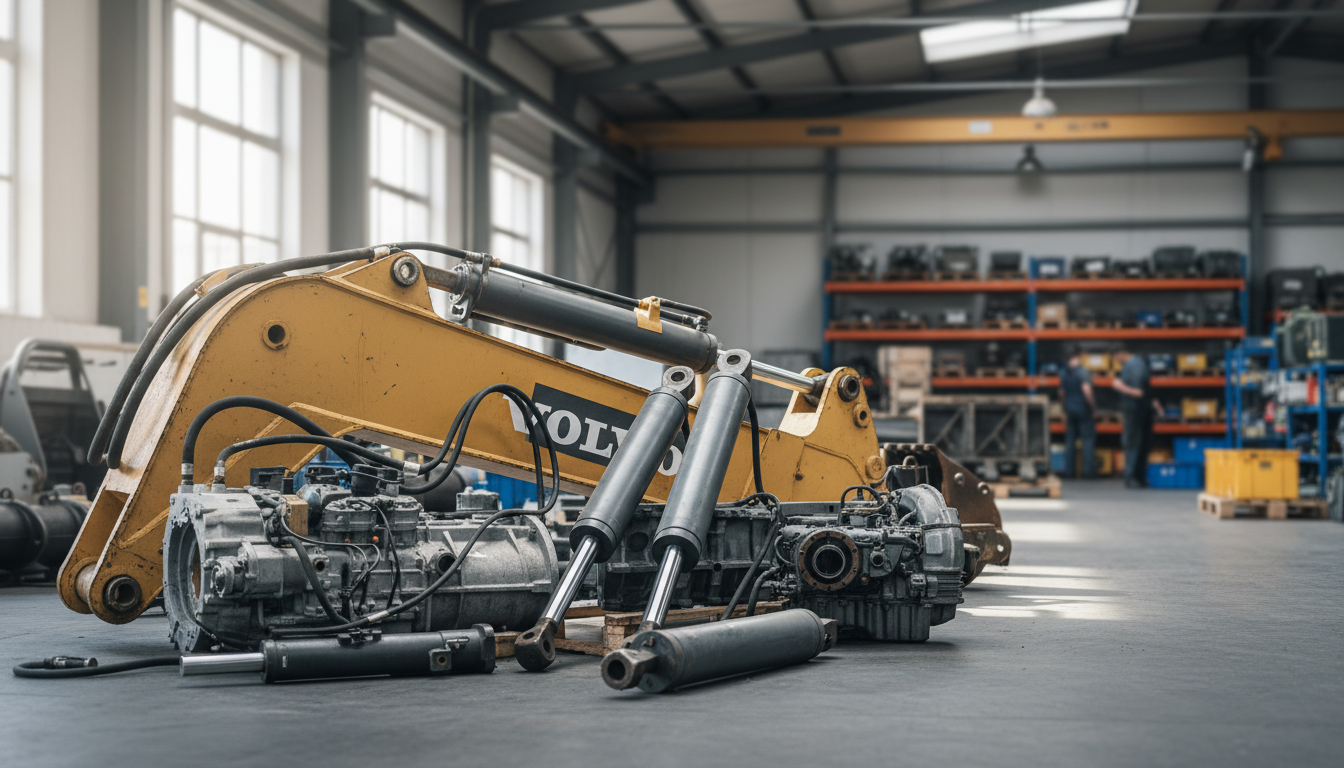
The secondary market for Volvo construction parts operates differently than most industrial procurement channels. Unlike Caterpillar’s extensive dealer network or Komatsu’s centralized distribution, Volvo’s aftermarket ecosystem relies heavily on specialized salvage operations and independent rebuilders.
Market Structure and Supply Chains
Most quality used Volvo parts flow through three primary channels: authorized dismantlers who specialize in Swedish iron, independent salvage yards with mixed inventories, and remanufacturing facilities that focus on high-wear components like hydraulic pumps and final drives.
The challenge isn’t finding used parts — it’s finding parts that meet your operational standards. A hydraulic cylinder from a Volvo L120 wheel loader might look identical to one from an L150, but the pressure ratings and seal configurations differ significantly.
Quality Standards and Certification
Professional dismantlers follow strict protocols when processing Volvo equipment. Components undergo pressure testing, dimensional verification, and compatibility checks before entering inventory. This process separates legitimate suppliers from scrap dealers who simply pull parts without proper evaluation.
Look for suppliers who provide detailed condition reports, including hours of operation, maintenance history, and test results. A reputable parts house will document hydraulic pressures, electrical continuity, and mechanical tolerances for critical components.
Pricing Dynamics and Market Forces
Used Volvo parts typically cost 40-65% less than new OEM equivalents, but pricing varies significantly based on component type and availability. High-demand items like ECM controllers and hydraulic pumps maintain stronger pricing due to limited supply, while structural components like counterweights and frames offer deeper discounts.
Seasonal factors also influence pricing. Winter months see increased demand for undercarriage components as operators prepare for spring construction seasons, while summer brings higher prices for cooling system parts.
Critical Components: What to Buy Used vs. New
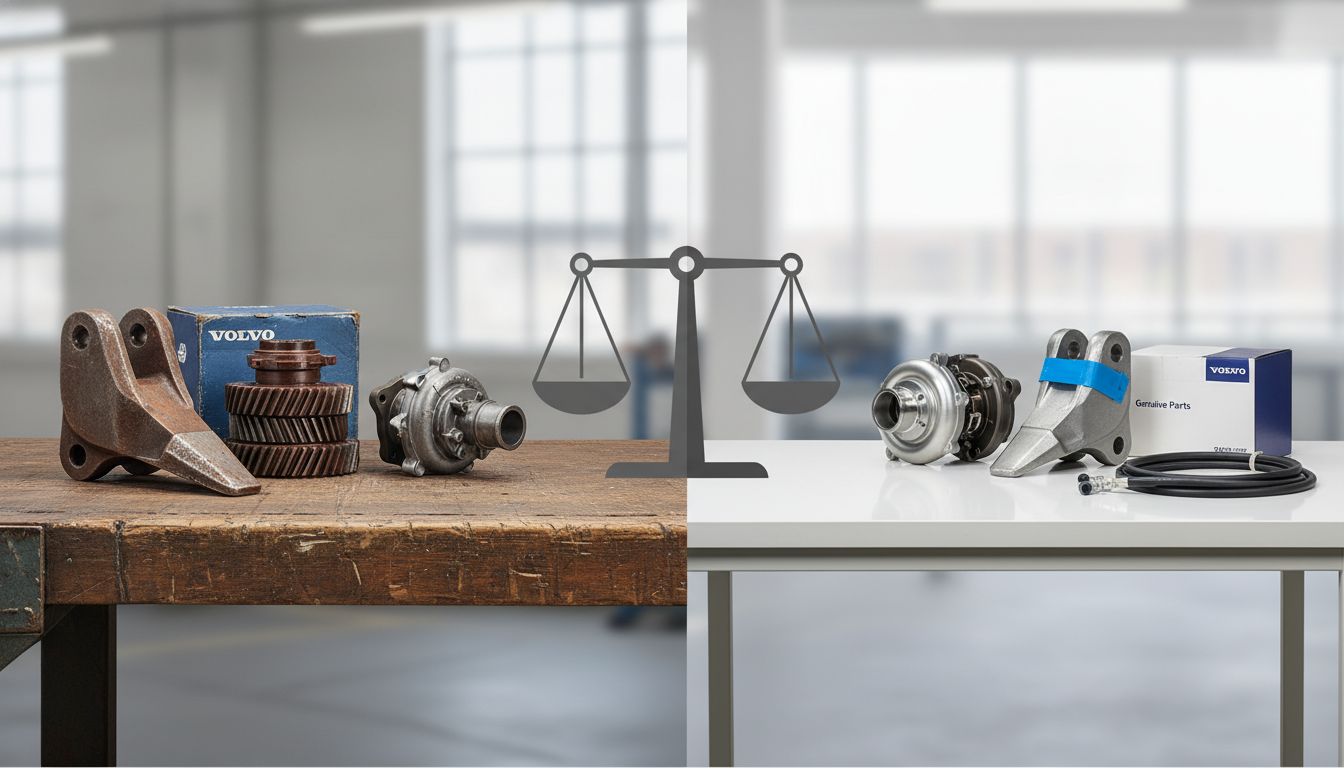
Not all Volvo parts are suitable candidates for used procurement. Understanding which components offer the best value proposition — and which ones require new replacements — can save thousands in unnecessary expenses or catastrophic failures.
High-Value Used Component Categories
Structural elements like booms, sticks, and counterweights represent excellent used part opportunities. These components rarely fail catastrophically and offer substantial cost savings. A used boom assembly for a Volvo EC360 excavator typically costs $8,000-12,000 versus $25,000-30,000 new.
Hydraulic cylinders also perform well in the used market, provided they’ve been properly resealed and tested. Most cylinder failures involve seal degradation rather than structural damage, making quality used cylinders with fresh seals nearly equivalent to new units.
Undercarriage components — tracks, sprockets, and rollers — offer mixed value propositions. While used tracks can provide 1,000-2,000 hours of additional service at 50% of new cost, worn sprockets and rollers may cause premature track failure.
Components Requiring New Procurement
Electronic control modules (ECMs) and sophisticated hydraulic pumps generally warrant new or professionally remanufactured units. These components contain precision-machined surfaces and complex electronic circuits that degrade unpredictably with age and operating hours.
Engine components like turbochargers, injection pumps, and cylinder heads also fall into the “buy new” category for most applications. While used engines can provide temporary solutions, the labor costs associated with installation make new components more cost-effective for long-term reliability.
Remanufactured vs. Used: Making the Right Choice
Remanufactured components occupy the middle ground between new and used, offering factory-specification performance at 60-70% of new cost. Volvo’s own reman program covers critical components like engines, transmissions, and hydraulic pumps with warranties comparable to new parts.
For high-utilization equipment operating in demanding conditions, remanufactured components often provide better value than used parts despite higher upfront costs. The extended warranty coverage and documented performance specifications justify the premium for mission-critical applications.
Volvo Model Compatibility and Cross-Reference Guide
Volvo’s construction equipment lineup spans multiple generations and model families, creating both opportunities and challenges for parts interchangeability. Understanding compatibility patterns can significantly expand your sourcing options while avoiding costly mistakes.
Excavator Family Compatibility
The EC series excavators share numerous components across size classes and generations. EC210, EC240, and EC290 models from the B and C generations use identical hydraulic pumps, though mounting configurations may differ. Similarly, boom and stick assemblies often interchange between adjacent size classes with minor modifications.
However, electrical systems vary significantly between generations. EC140B excavators use different wiring harnesses and ECM configurations than EC140C models, despite sharing mechanical components. Always verify electrical compatibility before purchasing used electronic components.
Undercarriage components follow predictable patterns within each size class. EC360 track chains, sprockets, and drive motors interchange across B, C, and D generations with minimal modifications. This compatibility extends parts availability and creates pricing competition among suppliers.
Wheel Loader Cross-Platform Parts
Volvo’s L-series wheel loaders demonstrate excellent parts commonality, particularly in hydraulic and drivetrain components. L120, L150, and L180 models share transmission assemblies, differential housings, and hydraulic valve blocks across multiple generations.
Engine compatibility follows displacement patterns rather than model designations. The D7 engine family powers multiple loader sizes, creating opportunities for engine and related component sourcing from various donor machines. A D7E engine from an L150F can potentially power an L120G with appropriate software configuration.
Attachment mounting systems remain consistent within each size class, allowing bucket and fork assemblies to interchange freely. This compatibility extends to hydraulic cylinders and associated hardware, simplifying parts procurement for attachment-specific components.
Articulated Truck Component Sharing
Volvo’s A-series articulated trucks share substantial component commonality, particularly in drivetrain and hydraulic systems. A25, A30, and A35 models use similar transmission assemblies, differential configurations, and hydraulic pump designs across multiple generations.
Cab assemblies and operator interfaces show strong compatibility within generation groups. A30C and A35C trucks use identical ROPS structures, seating systems, and control layouts, creating opportunities for cost-effective cab refurbishment using used Volvo construction equipment parts.
Quality Assessment: Inspecting Used Parts Before Purchase
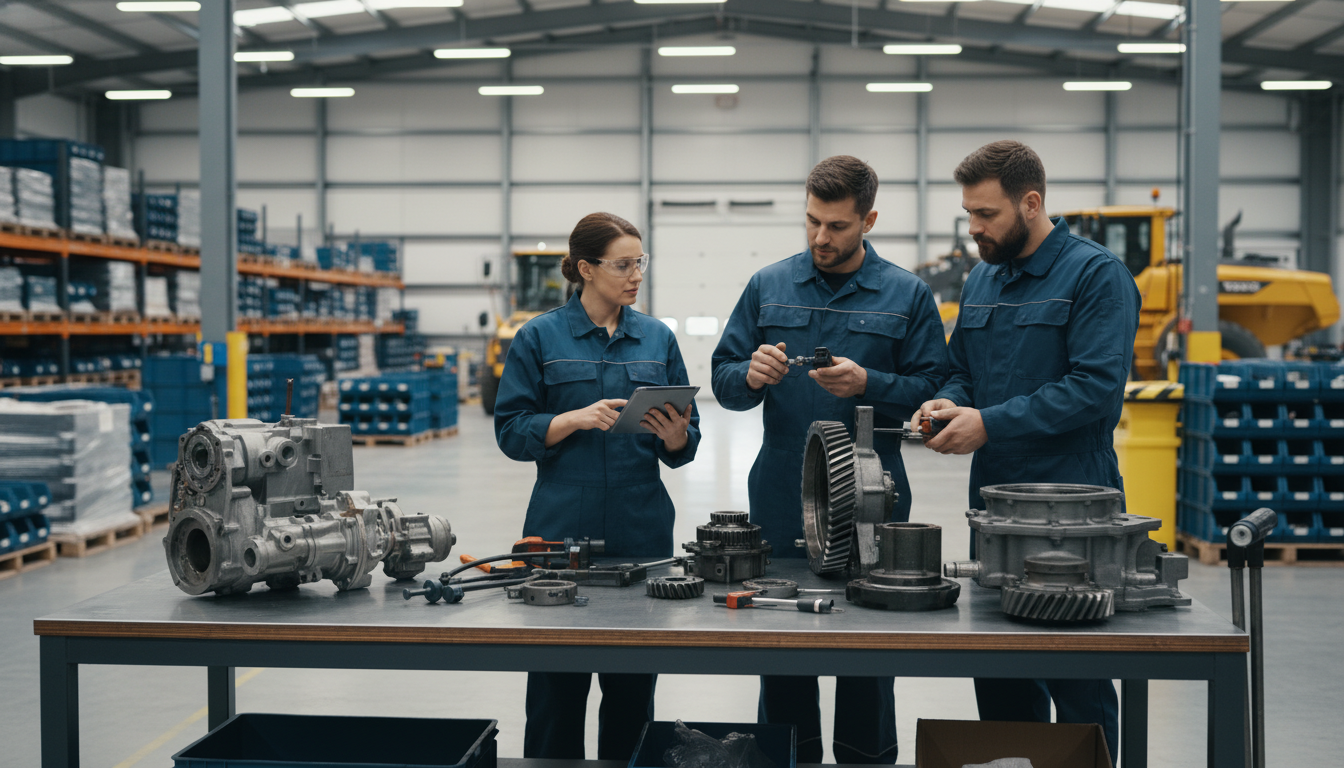
Professional parts evaluation separates successful procurement from expensive mistakes. Developing systematic inspection protocols ensures you receive components that meet operational requirements while avoiding hidden defects that could cause premature failure.
Visual Inspection Protocols
Begin with complete photographic documentation from multiple angles. Quality suppliers provide detailed images showing wear patterns, surface conditions, and any visible damage. Pay particular attention to mounting surfaces, seal grooves, and threaded connections where problems often develop.
Hydraulic components require special attention to internal cleanliness and contamination levels. Metal particles in hydraulic oil indicate internal wear, while water contamination suggests seal failures or improper storage. Request oil analysis reports for high-value hydraulic components when available.
Structural components should show uniform wear patterns without evidence of impact damage, welding repairs, or stress cracking. Boom and stick assemblies often develop hairline cracks near pivot points that may not be visible in standard photographs.
Functional Testing Requirements
Insist on operational testing for all moving components before purchase. Hydraulic cylinders should demonstrate full extension and retraction without binding, leakage, or pressure loss. Electric motors and actuators require load testing to verify torque output and current draw specifications.
Electronic components need complete diagnostic testing using appropriate scan tools and software. ECM modules should demonstrate proper communication protocols and respond correctly to input signals. Request diagnostic reports showing all monitored parameters within specification ranges.
Transmission and drivetrain components require pressure testing and performance verification under load conditions. A transmission that shifts smoothly on the bench may fail under operational loads due to worn clutch packs or valve body problems not apparent during static testing.
Documentation and Traceability
Legitimate suppliers maintain detailed records including equipment serial numbers, operating hours, maintenance history, and removal circumstances. This documentation helps predict remaining service life and identify potential compatibility issues.
Request parts books and service manuals for complex components to verify correct installation procedures and torque specifications. Many used part failures result from improper installation rather than component defects.
Warranty coverage varies significantly among suppliers, ranging from “as-is” sales to complete performance guarantees. Understand warranty terms and exclusions before committing to purchase, particularly for high-value components like engines and transmissions.
Global Sourcing Strategies and Logistics
The international nature of construction equipment creates opportunities for cost-effective parts sourcing from multiple continents. However, successful global procurement requires understanding regulatory requirements, shipping logistics, and quality standards across different markets.
Regional Market Characteristics
European markets, particularly Scandinavia, offer excellent sources for genuine Volvo parts due to high equipment populations and strict maintenance standards. Swedish and Norwegian operators typically maintain equipment to higher standards than many other regions, resulting in superior used part quality.
North American markets provide large volumes of parts from diverse operating conditions. Mining operations in Canada and the western United States generate high-quality drivetrain and hydraulic components, while construction fleets in moderate climates offer excellent structural parts.
Asian markets present mixed opportunities depending on specific countries and applications. Japanese equipment typically shows excellent maintenance standards, while parts from developing markets may require more careful evaluation due to varying maintenance practices and operating conditions.
Import Regulations and Compliance
Most countries allow used construction equipment parts importation with proper documentation and compliance with environmental regulations. However, specific requirements vary significantly between jurisdictions and component types.
Electronic components may require emissions compliance certification depending on destination country and intended use. ECM modules and engine controllers often need software configuration updates to meet local emissions standards.
Hydraulic fluids and lubricants require special handling and documentation for international shipment. Many suppliers drain all fluids before shipping to avoid hazardous materials regulations, requiring refilling and system bleeding after installation.
Shipping and Logistics Considerations
Heavy components like engine blocks and transmission assemblies require specialized shipping arrangements including proper crating, weight distribution, and handling equipment at destination. Factor these costs into total procurement expenses when comparing supplier quotes.
Air freight becomes cost-effective for small, high-value components when downtime costs exceed shipping premiums. A $2,000 hydraulic pump shipped overnight for $500 often provides better total cost than a $1,500 pump requiring two weeks ocean freight.
Insurance coverage should reflect actual replacement costs rather than purchase prices, particularly for remanufactured or rare components. Standard shipping insurance may not cover full replacement costs for specialized construction equipment parts.
Cost Analysis: TCO Beyond Purchase Price
Effective procurement decisions require complete total cost analysis extending beyond initial purchase prices. Hidden costs, installation requirements, and operational impacts significantly influence the true value proposition of used Volvo construction equipment parts.
Installation and Integration Costs
Labor costs for used part installation often exceed new part requirements due to additional preparation, modification, and testing needs. A used hydraulic pump may require seal replacement, pressure testing, and system flushing that wouldn’t be necessary with new components.
Compatibility issues can generate unexpected costs when used parts require modifications or additional components for proper integration. A used boom assembly might need new hydraulic lines, electrical connections, or mounting hardware not included with the original part.
Downtime during installation varies significantly between new and used components. New parts typically install with predictable timeframes, while used parts may require troubleshooting, adjustment, or additional work to achieve proper operation.
Warranty and Risk Assessment
Limited warranty coverage on used parts creates financial risk that must be quantified and managed. A $10,000 used transmission with 90-day warranty carries different risk profiles than a $20,000 new unit with two-year coverage.
Consider the cost of backup plans when primary used parts fail prematurely. Having secondary sourcing options or rental equipment arrangements can mitigate risks associated with used part procurement.
Insurance implications vary depending on equipment applications and coverage types. Some policies may exclude coverage for failures related to used parts installation, while others treat all components equally regardless of origin.
Operational Impact Analysis
Performance differences between new and used components can affect overall equipment productivity and operating costs. A used engine with 80% of original power output may increase fuel consumption and reduce cycle times compared to new alternatives.
Maintenance requirements often increase with used parts due to accelerated wear patterns and reduced service intervals. Factor these ongoing costs into total ownership calculations when comparing procurement options.
Resale value considerations become important for equipment intended for eventual disposal or trade. Machines with significant used part content may experience reduced market acceptance and lower resale values.
Supplier Evaluation and Partnership Development
Long-term success in used parts procurement depends on developing relationships with reliable suppliers who understand your operational requirements and quality standards. Supplier selection criteria extend far beyond price considerations to encompass service capabilities, technical expertise, and business stability.
Supplier Qualification Criteria
Evaluate potential suppliers based on inventory depth, technical capabilities, and quality control processes. Suppliers with complete testing facilities and documented procedures typically provide more reliable parts than those operating as simple resellers.
Geographic coverage and logistics capabilities influence response times and shipping costs for urgent requirements. Suppliers with multiple locations or strong shipping partnerships can often provide faster delivery and better service than single-location operations.
Technical support capabilities separate professional suppliers from commodity parts dealers. Look for suppliers who can provide installation guidance, troubleshooting assistance, and compatibility verification for complex components.
Performance Monitoring and Feedback
Establish metrics for supplier performance including delivery times, quality ratings, and warranty claim rates. Regular performance reviews help identify improvement opportunities and guide future sourcing decisions.
Document part performance after installation to build institutional knowledge about supplier quality and component reliability. This information becomes valuable for future procurement decisions and supplier negotiations.
Maintain open communication channels with suppliers regarding quality issues, delivery problems, and changing requirements. Suppliers who respond positively to feedback and work collaboratively to resolve issues deserve preference in future sourcing decisions.
Strategic Partnership Benefits
Long-term supplier relationships often yield benefits beyond simple cost savings including priority access to rare parts, extended payment terms, and technical support services. These advantages can provide competitive advantages in demanding operational environments.
Volume commitments may justify preferential pricing and service levels from key suppliers. However, balance these benefits against the need for competitive sourcing and supply chain diversification.
Joint planning initiatives with strategic suppliers can improve parts availability and reduce emergency procurement situations. Suppliers who understand your equipment populations and operating patterns can maintain appropriate inventory levels and anticipate future requirements.
Future Trends and Market Evolution
The used construction equipment parts market continues evolving in response to technological advances, regulatory changes, and shifting customer expectations. Understanding these trends helps inform long-term procurement strategies and supplier selection decisions.
Digital Transformation Impact
Online marketplaces and digital catalogs are revolutionizing parts identification and procurement processes. Advanced search capabilities, compatibility databases, and real-time inventory systems reduce sourcing time and improve accuracy for complex parts requirements.
Telematics integration enables predictive maintenance strategies that influence used parts demand patterns. Equipment monitoring systems can identify component degradation before failure, creating opportunities for planned replacement using cost-effective used parts.
Blockchain technology and digital documentation systems improve parts traceability and authenticity verification. These systems help combat counterfeit parts while providing detailed component histories that support better procurement decisions.
Sustainability and Circular Economy
Environmental regulations and corporate sustainability initiatives increasingly favor used parts procurement over new manufacturing. Reusing existing components reduces material consumption, energy usage, and waste generation compared to new part production.
Extended producer responsibility regulations may require equipment manufacturers to support parts reuse and recycling programs. These initiatives could improve used parts availability and quality while reducing disposal costs for end-of-life equipment.
Carbon footprint considerations influence procurement decisions as companies seek to reduce environmental impacts. Used parts typically carry significantly lower carbon footprints than new alternatives due to avoided manufacturing processes.
Technology Integration Challenges
Increasing electronic content in modern construction equipment creates challenges for used parts compatibility and integration. Software licensing, calibration requirements, and security protocols may limit the viability of used electronic components.
Autonomous and semi-autonomous equipment features require precise sensor calibration and software configuration that may not be transferable between machines. These limitations could reduce the market for certain categories of used electronic parts.
However, mechanical and hydraulic components remain largely unaffected by these technological changes, ensuring continued viability for traditional used parts categories in used Volvo construction equipment parts markets.