
Key Takeaways
- Genuine Hyundai heavy equipment parts are designed specifically for Hyundai machinery, ensuring optimal fit and performance.
- A 98% fill‑up rate and over 86,000 line items in OEM inventories mean most parts are available immediately.
- Online catalogs and dealer networks simplify part identification, but global exporters can ship internationally where local supply is limited.
- Choosing OEM parts preserves warranty and resale value, while high‑quality aftermarket options can reduce costs by 20–40%.
- 3GEN Export specializes in worldwide delivery of genuine Hyundai parts, reaching over 50 countries within 5–7 business days.
Hyundai heavy equipment parts are components specifically engineered for Hyundai excavators, wheel loaders, dozers, and other heavy machinery. Sourcing these parts globally can be complex, but a reliable supplier streamlines everything from identification to delivery.
Hyundai Construction Equipment has built a reputation for durability and innovation since 1972. When a machine breaks down, the right part keeps downtime short and productivity high. Whether you manage a single excavator or an international fleet, understanding Hyundai heavy equipment parts is essential. This guide explains part types, OEM versus aftermarket choices, global sourcing strategies, and how 3GEN Export helps businesses get the parts they need, anywhere.
The Importance of Genuine Hyundai Heavy Equipment Parts
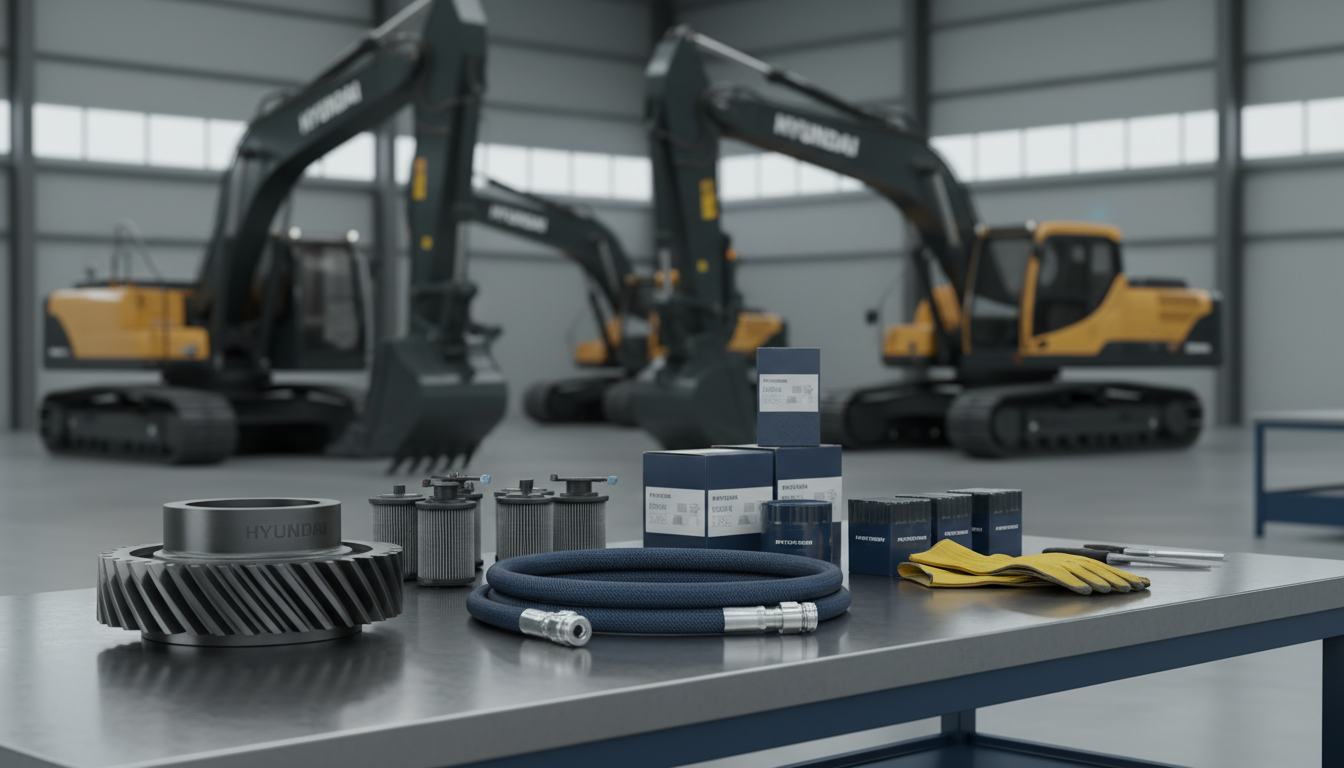
“Hyundai’s 180,000 square‑foot parts distribution warehouse in Norcross, Georgia houses over $43 million in inventory and maintains a 98% fill‑up rate, setting a benchmark for parts availability,” according to HD Hyundai Construction Equipment North America.
Why OEM Parts Matter for Equipment Longevity
Original Equipment Manufacturer (OEM) parts are made by Hyundai to the exact specifications of each machine model. Using them ensures consistent performance and reduces the risk of premature failure. Non‑genuine parts, even if they look identical, often lack the metallurgy, tolerances, or heat treatment that OEM components require. Over time, this can lead to accelerated wear on adjacent systems, larger repair bills, and safety hazards.
The Role of Warranty and Certification
Hyundai stands behind its parts with a warranty program that covers defects and workmanship. Installing aftermarket pieces may void that warranty if the substitute part causes a related failure. For machines still under manufacturer coverage, sticking with OEM is financially prudent. Even after the warranty expires, OEM parts carry a quality assurance that helps preserve resale value and operational reliability.
Understanding Hyundai Parts Catalogs and Identification

How to Use Online EPC Systems
An Electronic Parts Catalog (EPC) is a digital database of every component for a given machine model. Hyundai dealers and many independent suppliers provide access to EPCs, often by model and serial number. By entering your machine’s data, you can view exploded parts diagrams, look up part numbers, and check real‑time availability. This step prevents ordering incorrect items and speeds up the sourcing process. Major distributors like AMS Parts maintain searchable catalogs with over 18,000 items online.
Decoding Hyundai Part Numbers
Genuine Hyundai heavy equipment parts follow a logical numbering structure. For example, a bucket cylinder for an R290LC‑3 is part number 31E9‑50240. The prefix often indicates the machine series, while the suffix denotes the specific component. When you find a part number in the EPC, double‑check it against your machine’s serial range, because even small revisions can alter parts. Many online stores allow you to search by part number directly, returning exact matches in seconds.
Step‑by‑Step: Finding the Right Part in 3 Steps
- Locate your machine’s model and serial number – typically on a plate inside the cab or on the frame.
- Access an EPC – through a dealer portal, an independent site like 3GEN Export, or a manufacturer‑approved catalog.
- Confirm the part number and supersessions – cross‑reference with the latest charts to avoid obsolete numbers.
Types of Hyundai Heavy Equipment Parts
Undercarriage and Structural Components
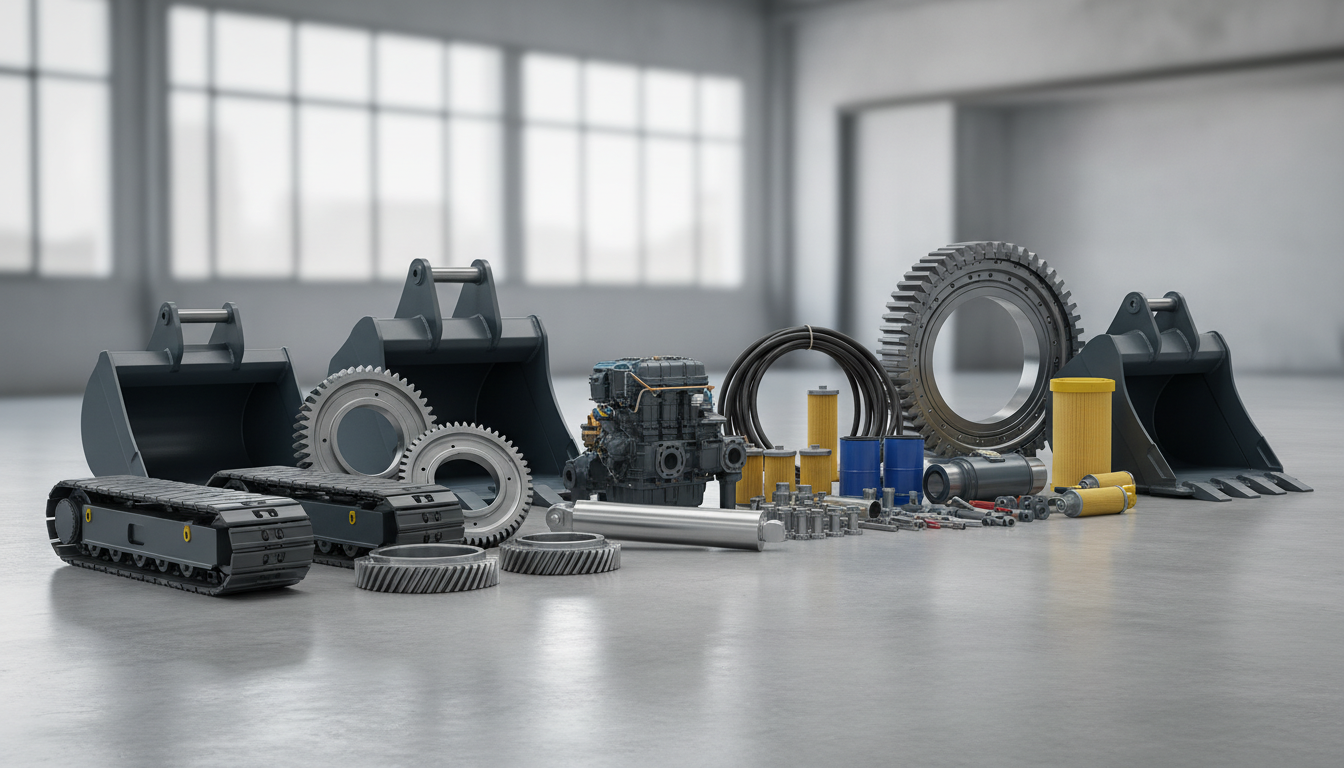
The undercarriage absorbs constant stress and is one of the most frequently replaced systems on tracked machines. Genuine Hyundai track chains, sprockets, idlers, and rollers are built with hardened steel to withstand abrasive conditions. For example, part number 81E5‑20010 is a sprocket designed for R290‑series excavators. Using counterfeit undercarriage parts often results in uneven wear, causing early failure of other track components and increasing operating costs.
Engine, Hydraulic, and Powertrain Parts
Hyundai construction equipment relies on high‑pressure hydraulic systems and robust diesel engines. Critical items include main hydraulic pumps (e.g., part 31E9‑03010 or K3V140DT), final drives, swing bearings, and control valves. OEM pumps are factory‑tested to deliver the exact flow and pressure specifications, which is vital for attachment performance. Aftermarket pumps may cut costs but often sacrifice peak efficiency and longevity.
Attachments, Filters, and Maintenance Kits
Beyond major components, Hyundai offers a complete line of genuine filters, seal kits, and rebuild kits. Universal Truck Parts, for instance, stocks air, oil, and fuel filters like 11K6‑91451 and XKBC‑00089 with free shipping on parcel orders. Maintenance kits bundle the parts needed for 250‑ or 500‑hour service intervals, simplifying ordering. Examples include the HL940A 250‑Hour PM Filter Kit at $299.00. These kits ensure that no critical filter is missed, reducing the risk of contamination‑related failures.
OEM vs. Aftermarket Hyundai Parts: A Data‑Driven Comparison
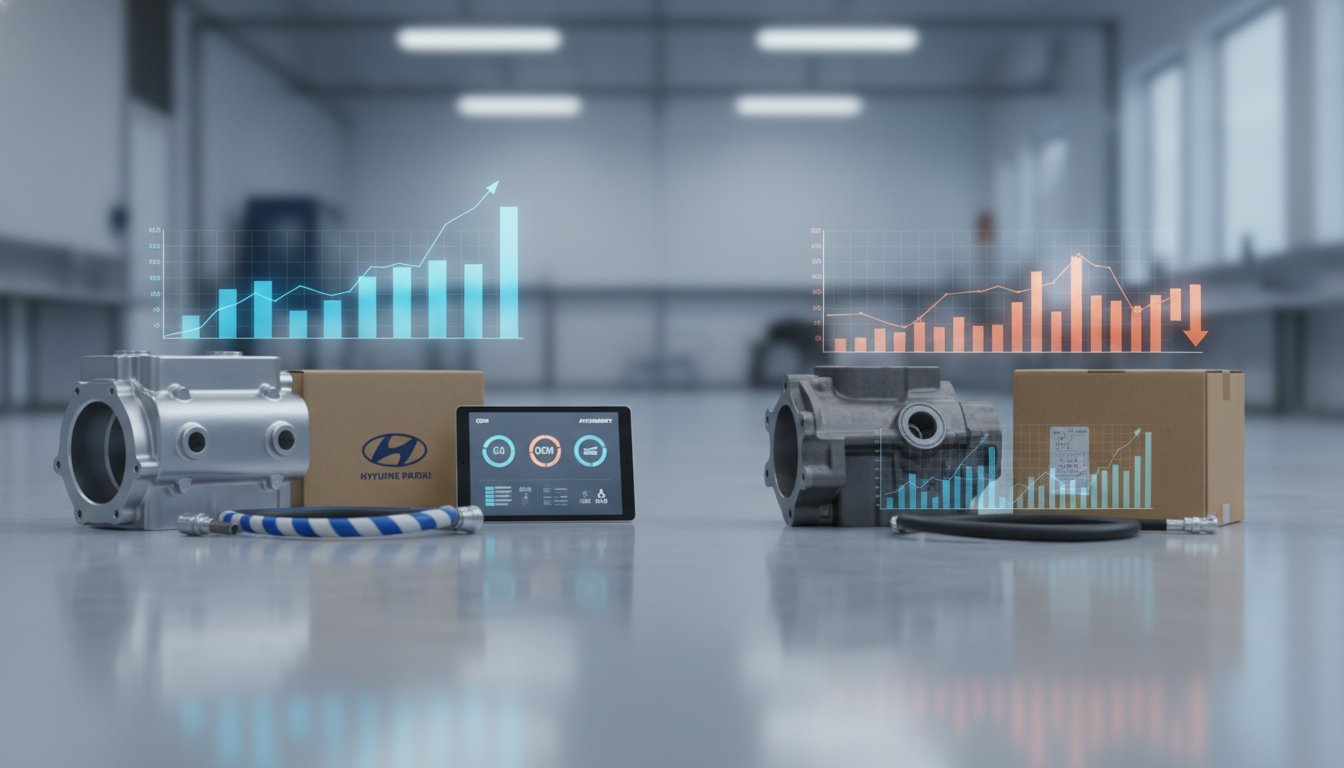
“Independent exporters can often source genuine OEM parts at 15–25% below dealer list prices while still providing international logistics,” notes 3GEN Export’s parts sourcing team. “The key is verifying authenticity through packaging, holograms, and serial number cross‑checks.”
Quality and Performance Considerations
OEM parts are engineered to the same standards as the original machine build. Aftermarket parts can vary from “will‑fit” generic items to premium reverse‑engineered components. For non‑critical applications like cab glass or wear plates, high‑quality aftermarket replacements may perform admirably. However, for engine, hydraulic, or structural components, the precision of OEM is hard to beat. Fleet managers using predominantly OEM parts report fewer unplanned breakdowns compared to those relying heavily on generic aftermarket alternatives.
Cost Analysis: Short‑Term Savings vs. Long‑Term Value
| Feature | OEM Hyundai Parts | Aftermarket Parts | Rebuilt Parts |
|---|---|---|---|
| Quality | Factory‑matched materials and tolerances | Varies; may lack original specifications | Restored to OEM‑like function but with reused cores |
| Warranty | Full manufacturer warranty | Limited or no warranty | Usually 90‑180 days |
| Availability | 98% fill‑up rate from OEM warehouses | Can be highly available through independent sellers | Subject to core availability |
| Lifespan | Designed for full machine life | Often shorter than OEM | Varies; typically reduced compared to new OEM |
| Cost | Highest upfront cost | 20–40% cheaper than OEM | 50–70% cheaper than new OEM |
Pros and Cons
Pros
- OEM parts guarantee exact fit and factory specifications for optimal performance
- 98% availability rate means most parts ship immediately from warehouse stock
- Global exporters like 3GEN Export deliver worldwide within 5-7 business days
- Electronic parts catalogs simplify identification with exploded diagrams
- Maintenance kits bundle all required filters for scheduled service intervals
Cons
- OEM parts carry premium pricing compared to aftermarket alternatives
- International shipping adds complexity and potential customs delays
- Some obsolete parts may require sourcing from specialized suppliers
- Warranty coverage varies between regions and authorized dealers
How to Source Hyundai Heavy Equipment Parts Worldwide
Choosing Between Authorized Dealers and Global Exporters
Local Hyundai dealers provide factory‑backed support, but their reach is often limited to their territory. For construction companies operating across borders or in remote regions, a global exporter like 3GEN Export becomes indispensable. Exporters consolidate orders, handle customs documentation, and ship via air or sea freight to over 50 countries. This approach can cut lead times from weeks to days, especially for critical breakdown parts.
International Shipping: What to Look For
Reliable shipment tracking, proper packaging, and expertise in heavy part logistics are non‑negotiable. Parts weighing hundreds of pounds require specialized freight handling. 3GEN Export uses reinforced pallets and partners with major freight carriers to ensure components arrive damage‑free. Customers should confirm the exporter has experience with destination‑country import regulations to avoid customs delays.
3GEN Export: Your Partner for Global Parts Logistics
3GEN Export stocks thousands of Hyundai heavy equipment parts and ships daily to Africa, South America, the Middle East, and Asia. Their online catalog is synchronized with multiple warehouses, so availability is always current. For urgent needs, their team can source obsolete or hard‑to‑find parts through a global network of suppliers. With a standard transit time of 5–7 business days for air freight orders, downtime is minimized.
Maximizing Uptime with Hyundai Maintenance Kits and Lubricants
The Benefits of Pre‑Bundled Filter and Fluid Kits
Preventative maintenance is the most cost‑effective way to extend equipment life. Hyundai’s genuine filter and seal kits contain everything required for scheduled service intervals. Instead of ordering a dozen individual part numbers, a single kit number (e.g., HL940A) simplifies procurement and reduces the chance of missing a critical filter. Fleet managers who have adopted these kits report significant reductions in maintenance‑related errors.
Hyundai’s Lubricants Program: Engineered for Performance
Hydraulic oil, engine oil, and gear lubricants from Hyundai are formulated to meet the exact viscosity and additive requirements of Hyundai engines and hydraulic systems. Using generic lubricants may seem economical, but it can lead to increased wear, overheating, and seal degradation. Hyundai’s lubricants program ensures that machines run cooler and cleaner, which directly impacts fuel efficiency and component lifespan.
The Future of Hyundai Parts Distribution: Technology and Trends
Telematics and Predictive Parts Replacement
Hyundai’s Hi MATE remote management system, available free for the first five years, tracks machine hours, fault codes, and component stress. This data allows dealers and fleet managers to predict when a part will need replacement before it fails. By integrating telematics data with parts ordering systems, downtime can shift from reactive to planned, saving thousands in emergency repair costs.
Expanding Warehouse Networks for Faster Fulfillment
In June 2024, Hyundai opened a new parts distribution center in Toronto, Canada, to serve the Canadian market directly. This expansion, coupled with the existing 180,000‑square‑foot facility in Norcross, Georgia, demonstrates Hyundai’s commitment to rapid fulfillment. Independent exporters mirror this strategy by positioning inventory in strategic hubs, ensuring that customers in Latin America or Africa get Hyundai heavy equipment parts as quickly as their North American counterparts.
Frequently Asked Questions
What are Hyundai heavy equipment parts?
They are components specifically designed for Hyundai construction machinery, including excavators, wheel loaders, dozers, and compact equipment. These parts are manufactured to precise specifications to ensure optimal fit and performance.
How can I find the right part number for my Hyundai excavator?
Use your machine’s model and serial number to access an Electronic Parts Catalog (EPC) through a dealer or independent website. The EPC displays exploded diagrams and exact part numbers, which you can then search online.
Where is the best place to buy genuine Hyundai heavy equipment parts online?
Authorized dealers are the official source, but for international buyers, trusted exporters like 3GEN Export offer worldwide shipping with verified OEM parts. Always check for certifications and customer reviews before purchasing.
What is the difference between OEM and aftermarket Hyundai parts?
OEM parts are made by Hyundai to original factory standards, while aftermarket parts come from third‑party manufacturers and may vary in quality. OEM ensures exact fit and warranty coverage, whereas aftermarket can be cheaper but riskier.
How often should I replace filters and fluids on my Hyundai equipment?
Follow the maintenance schedule in your operator’s manual – typically every 250, 500, or 1,000 operating hours. Using Hyundai’s genuine filter and fluid kits ensures you meet all requirements at each interval.
Can I get Hyundai parts shipped internationally?
Yes, global exporters like 3GEN Export specialize in international freight for heavy parts. They manage all logistics, from documentation to final delivery, reaching over 50 countries in 5–7 business days.
Shop OEM-quality spare parts with global 5-day delivery at 3genexport.com