
Heavy equipment parts online are replacement components for excavators, bulldozers, and loaders sourced through digital marketplaces, offering new, used, rebuilt, and aftermarket options with delivery times often under 48 hours.
Key Takeaways
- Online sourcing cuts procurement costs up to 70% compared to traditional dealer markups
- Understanding part conditions, new, used, rebuilt, aftermarket, balances budget with reliability requirements
- Cross-referencing part numbers across platforms prevents costly returns and compatibility issues
- Digital suppliers maintain inventories exceeding 200,000 components for rapid fulfillment
- Rebuilt components deliver substantial lifespan at half the cost of new OEM parts
- Proper verification and inspection protocols ensure first-time-right installations
Why Buy Heavy Equipment Parts Online?
Traditional parts procurement through local dealers involves markups of 20–40% and wait times exceeding a week. Digital sourcing changes this equation entirely. Companies like AMS Parts and ConEquip list aftermarket components at discounts reaching 70% off OEM prices. With technical support from certified technicians and same-day shipping on orders placed before 2 p.m., equipment downtime drops dramatically.
For fleet managers, comparing pricing and availability across multiple vendors in one browser eliminates the traditional phone-and-fax procurement cycle. Digital platforms aggregate inventory from nationwide dismantling yards and aftermarket manufacturers, providing access to over 200,000 unique SKUs from a single portal. Whether you need a final drive for a Komatsu PC120-6 or brake components for a Caterpillar D3, the digital inventory rarely disappoints. This breadth encourages competitive pricing, a clear advantage for equipment owners managing tight budgets.
What to Look for When Buying Replacement Components
Smart procurement of heavy equipment parts online requires evaluating several critical factors before purchase. A rock-bottom price can hide quality issues that cost more in the long run.
1. Condition and Compatibility
OEM parts are manufactured by the original equipment maker and guarantee perfect fit, but command premium pricing. Aftermarket parts are produced by third-party manufacturers and often match or exceed OEM specifications while costing 30–70% less. Used and rebuilt parts are salvaged or remanufactured originals, frequently the only option for legacy machines. Always cross-check the part number against your machine’s serial number and model year. When uncertain, use the free quote tools offered by suppliers like Construction Equipment Parts.
2. Supplier Credentials
Verify vendors with established track records. ConEquip maintains a 4.9 out of 5 rating from over 4,000 reviews; H&R Construction Parts has served more than 50,000 customers since 1984. Check for physical addresses, phone support, and clear return policies. Reputable sellers provide warranties, typically 6–18 months on rebuilt items and 30–90 days on salvage parts.
3. Shipping and Logistics
Understand freight terms completely. Some e-commerce platforms offer flat-rate LTL shipping for large components, while others include free ground shipping on orders over certain thresholds. Residential delivery often requires liftgate service, adding approximately $180 to the total cost. Confirm that the courier can deliver to your job site or yard, and inquire about international shipping if you operate outside the contiguous U.S.
4. Price Transparency
Online catalogs should display clear, no-haggle pricing. Avoid suppliers that hide prices behind mandatory quote requests for common items. Transparent pricing, combined with volume discounts, helps you budget accurately and plan procurement cycles effectively.
“Ordering heavy machinery components online has reduced our procurement time by nearly 40%,” reports the Equipment Today 2026 Maintenance Survey.
5 Steps to Sourcing Heavy Equipment Parts Online
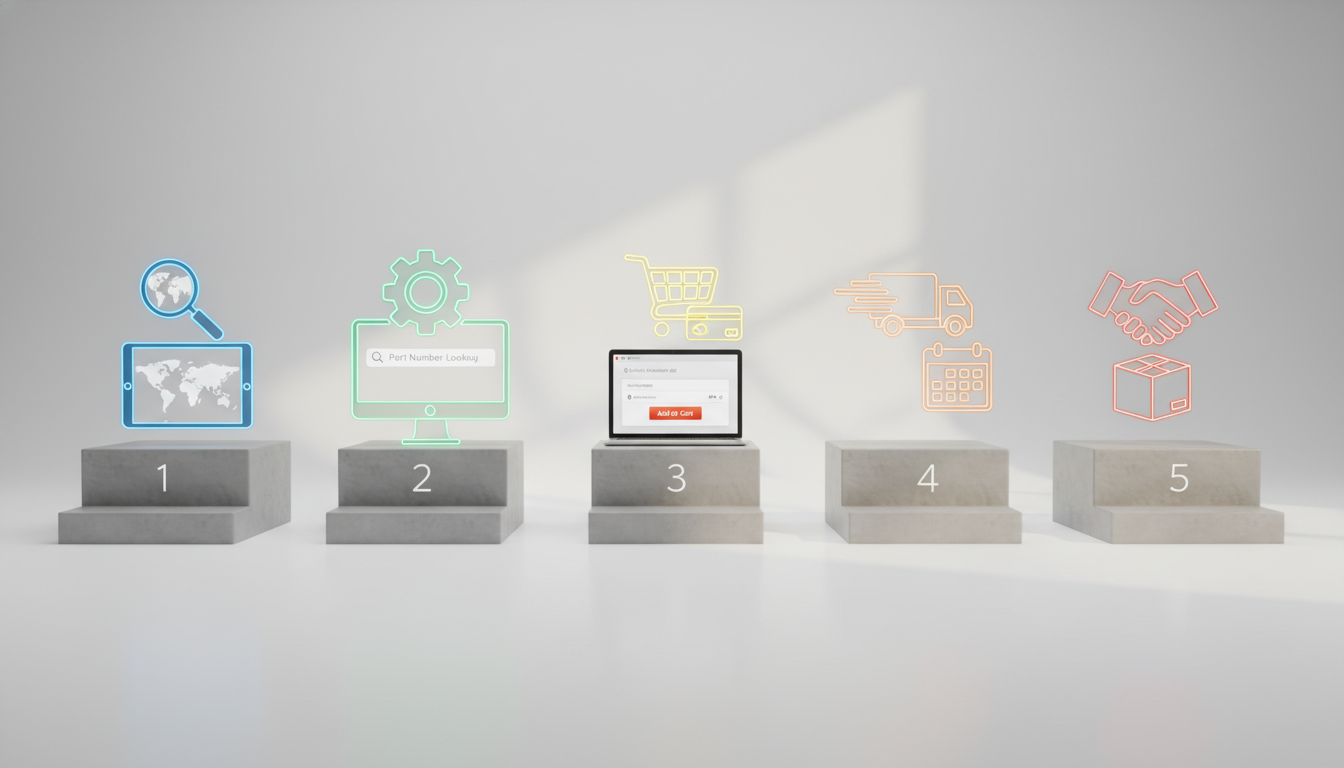
Follow this systematic approach to avoid mistakes and secure the correct component on the first attempt.
Step 1: Gather Accurate Machine Information
Record the make, model, serial number (typically located near the cab or engine), and the OEM part number. If the original number is worn or damaged, photograph it and email to a parts specialist, many suppliers offer free identification services for challenging cases.
Step 2: Search Multiple Platforms
Enter the part number into search functions on 2–3 reputable sites like Machinery Parts Warehouse, ACTParts, and Highway & Heavy Parts. Compare listed prices, condition descriptions, and availability status. Don’t overlook eBay for rare salvage units, but verify seller ratings and return policies.
Step 3: Verify Cross-References and Supersessions
OEMs frequently update part numbers for improved designs or manufacturing efficiency. Competent online vendors list superseded numbers in product descriptions. If the updated number fits your machine, it will be clearly noted. Use online parts books provided by established suppliers to confirm interchangeability.
Step 4: Request a Quote or Place the Order
For high-value items like final drives or transmissions, always request a formal quote, this triggers verification by the supplier’s technical team. Provide your complete shipping address and request estimated lead times. Most orders placed before midday ship the same day.
Step 5: Inspect Upon Arrival
Before scheduling installation, inspect components for shipping damage and verify numbers match your order. Test-fit gaskets and seals where possible. Reputable suppliers replace incorrect or damaged items quickly, but catching issues early prevents wasted labor costs.
Comparing Part Conditions: Which One Fits Your Repair?
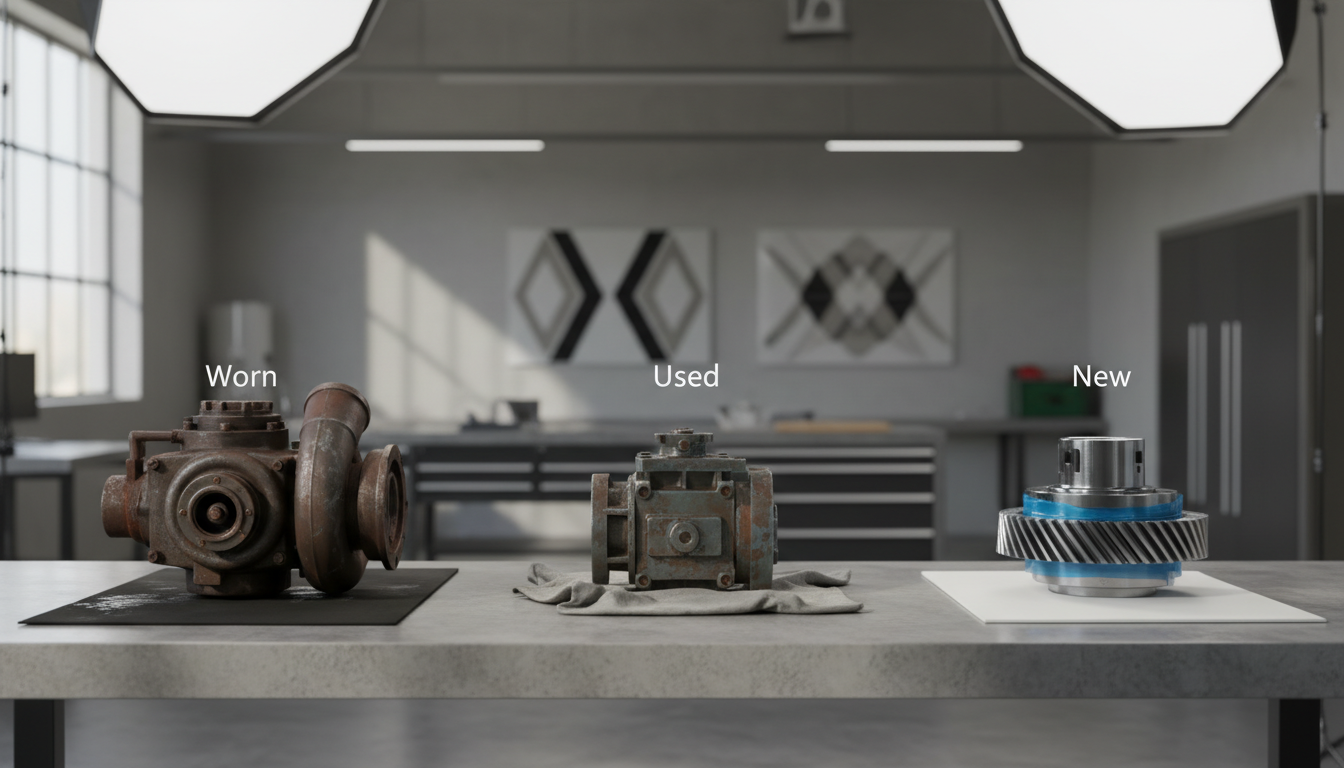
Not every repair justifies a brand-new OEM component. When buying heavy equipment parts online, use this comparison to weigh the trade-offs between cost and reliability.
| Part Condition | Typical Cost vs. New OEM | Warranty Duration | Ideal Application |
|---|---|---|---|
| New Aftermarket | 30–70% lower | 6–12 months | Undercarriage, hydraulics, filters |
| Used / Salvage | 40–80% lower | 30–90 days | Legacy machines, body panels, cabs |
| Rebuilt / Reman | 50–65% lower | 12–18 months | Engines, transmissions, final drives |
| Genuine OEM | Full list price | 12–24 months | Safety systems, warranty-sensitive fleets |
“Rebuilt parts from certified suppliers deliver substantial lifespan at significantly reduced cost compared to new components,” according to the Associated Equipment Distributors (AED).
Pros and Cons
Pros
- Cost savings: Up to 70% reduction compared to traditional dealer pricing
- Speed: Same-day shipping and 24-48 hour delivery options available
- Selection: Access to over 200,000 parts from multiple suppliers instantly
- Transparency: Clear pricing and specifications without sales pressure
- Convenience: 24/7 ordering from any location with internet access
Cons
- Quality variance: Aftermarket parts may have inconsistent manufacturing standards
- Return complexity: Shipping large components back can be expensive and time-consuming
- Technical support: Limited hands-on assistance compared to local dealer relationships
- Warranty claims: Remote suppliers may complicate warranty service and support
International Shipping and Customs Requirements
Global procurement of heavy equipment parts online requires understanding customs documentation and import regulations. Most established suppliers handle export paperwork, but buyers must provide accurate machine details and end-use information. Expect additional 3-5 days for customs clearance and potential duty charges ranging from 2-8% depending on the destination country and part classification. Some components may require import licenses or certificates of origin, verify requirements with your customs broker before ordering.
Maintaining and Storing Your Parts for Longevity
Proper care extends component life before installation. Follow these proven practices:
- Use proper shelving: Store heavy parts on pallets or racks rated for the load; never stack cast-iron housings directly on concrete floors where they absorb moisture
- Protect machined surfaces: Apply thin layers of rust-preventative oil to exposed bores and splines. Seal openings with plastic plugs if parts will sit for weeks
- Keep hydraulics clean: New or rebuilt hydraulic pumps and motors come with protective caps. Leave them in place until ready to connect hoses; one grain of sand can destroy a pump
- Rotate stock: For fleet operators keeping spare belts, hoses, and filters, use first-in, first-out systems to avoid material degradation
- Document receipt: Photograph parts upon arrival and note dates. This helps with warranty claims if defects appear later
Combining smart online purchasing with diligent part care maximizes uptime and minimizes total cost of ownership across your equipment fleet.
Frequently Asked Questions
How do I know if a part will fit my machine when ordering heavy equipment parts online?
Always match the part number from your owner’s manual or the old component. Cross-reference with the supplier’s parts catalog, and submit the machine serial number when requesting quotes. Reputable suppliers verify compatibility before shipping.
Are aftermarket parts as reliable as OEM?
Quality aftermarket parts from established manufacturers often meet or exceed OEM specifications. Look for warranties of at least 6 months and check customer reviews for real-world durability feedback.
What is the return policy for heavy equipment parts bought online?
Policies vary, but most reputable sellers accept returns within 30 days for unused, undamaged parts. Special-order or electrical items may be non-returnable, so clarify terms before purchasing.
Can I get financing for expensive parts?
Yes. Several online retailers offer installment payment options through services like Affirm, allowing you to spread costs over 3–12 months. This helps manage cash flow for major repairs.
How fast can I receive a part when ordering online?
Many suppliers ship same-day if orders are placed by early afternoon. Standard ground delivery takes 2–5 business days, while expedited air freight delivers critical components within 24 hours.
Should I buy a used engine or a rebuilt one?
Rebuilt engines are disassembled, machined, and reassembled with new wear parts, providing predictable lifespan. Used engines cost less but carry more risk. For daily-use machines, rebuilt units with 12-month warranties are usually better investments.
Purchasing heavy equipment parts online transforms traditional multi-day procurement into same-day transactions. By understanding part conditions, vetting suppliers, and following systematic ordering processes, contractors and fleet managers keep their equipment working harder for less money. Shop OEM-quality spare parts with global 5-day delivery at 3genexport.com