
Construction equipment parts and accessories are specialized components and add-ons required to maintain, repair, or enhance heavy machinery performance across construction, mining, and industrial operations.
Key Takeaways
- and accessories range from critical engine components to undercarriage systems, requiring precise model matching
- Four main condition types exist: new OEM, used, rebuilt, and aftermarket, each with distinct cost and reliability profiles
- Always verify part numbers using manufacturer catalogs and cross-reference with supplier databases to prevent costly mismatches
- Global suppliers like 3GEN Export often provide wider availability and competitive pricing for international buyers
- Proper maintenance and storage practices can extend these accessories lifespan by decades
Whether you manage a single backhoe or a multinational fleet, choosing the right such and accessories directly impacts uptime, safety, and total cost of ownership. We’ve been supplying these critical components since 2006, and this guide distills our field experience into actionable procurement advice.
Why Quality Sourcing of Construction Equipment Parts and Accessories Matters
Every hour a machine sits idle costs real money, equipment downtime drains thousands of dollars daily in lost productivity. Using substandard the equipment parts and accessories not only risks premature failure but may void manufacturer warranties. That’s why global distributors like TVH stock over 8 million known references, ensuring the right part is available when you need it.
“More than 30,000 businesses bought parts for construction equipment from TVH last year. Most orders ship within 24 hours.”
, TVH Customer Data
Reliable suppliers also provide traceable part provenance. For instance, CE Parts maintains an inventory of over 200,000 parts ready to ship, many with full OEM documentation. This transparency reduces the risk of counterfeit or incompatible components, a common pitfall when sourcing accessories from unverified online marketplaces.
Understanding the Main Categories of Heavy Equipment Parts
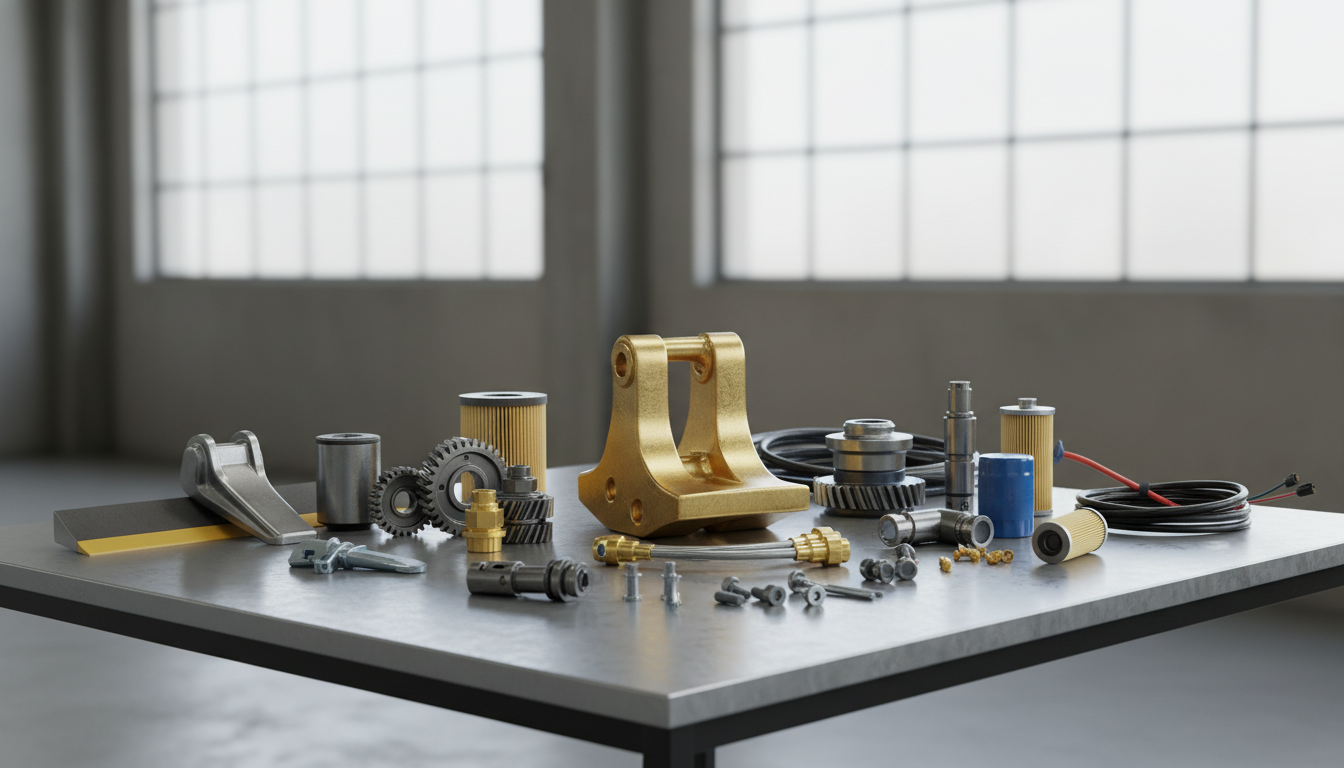
Construction machinery consists of thousands of parts, but construction equipment cluster into logical families that help you narrow searches and communicate effectively with suppliers.
- Engine & Powertrain: Complete engines, fuel pumps, radiators, turbochargers, and exhaust systems
- Hydraulic System: Pumps, cylinders, valves, hoses, and seals, the muscle behind every lift and tilt
- Undercarriage: Tracks, rails, rollers, idlers, sprockets, and track springs for tracked equipment
- Attachments & Accessories: Buckets, blades, breakers, augers, quick couplers, and safety guards
- Electrical & Cabin: Starters, alternators, sensors, joysticks, seats, and glazing components
For example, a wheel loader might need a replacement hydraulic pump, while an excavator commonly requires final drives or swing motors. Cross-referencing your machine’s model and serial number with the supplier’s catalog ensures you get the exact fit, especially for brand-specific and accessories from Caterpillar, Komatsu, Volvo, John Deere, or Hitachi.
New, Used, Rebuilt, or Aftermarket: Choosing the Right Condition

One of the first decisions buyers face when sourcing these accessories is which part condition to select. Each tier trades off cost, lead time, and expected lifespan.
| Condition | Quality & Warranty | Price Level | Best For |
|---|---|---|---|
| New OEM | Factory-fresh, full manufacturer warranty (typically 12–24 months) | Highest | Critical safety parts, late-model machines under warranty |
| Used / Salvage | Original equipment with visible wear; limited or no warranty | Lowest (typically 30–60% off new) | Older models, emergency repairs, budget-conscious fleets |
| Rebuilt / Reconditioned | Disassembled, cleaned, and rebuilt to near-OEM specs; warranty varies (6–24 months) | Mid-range | Major components (engines, transmissions, final drives) |
| Aftermarket | New, built to fit OEM specifications but not by the original manufacturer; quality varies | Roughly 20–50% less than new OEM | Non-critical wear items (filters, tracks, bucket teeth) |
Sourcing from a supplier that offers all four conditions under one roof, like many large exporters, simplifies comparison and can lower shipping costs by consolidating orders.
Pros and Cons
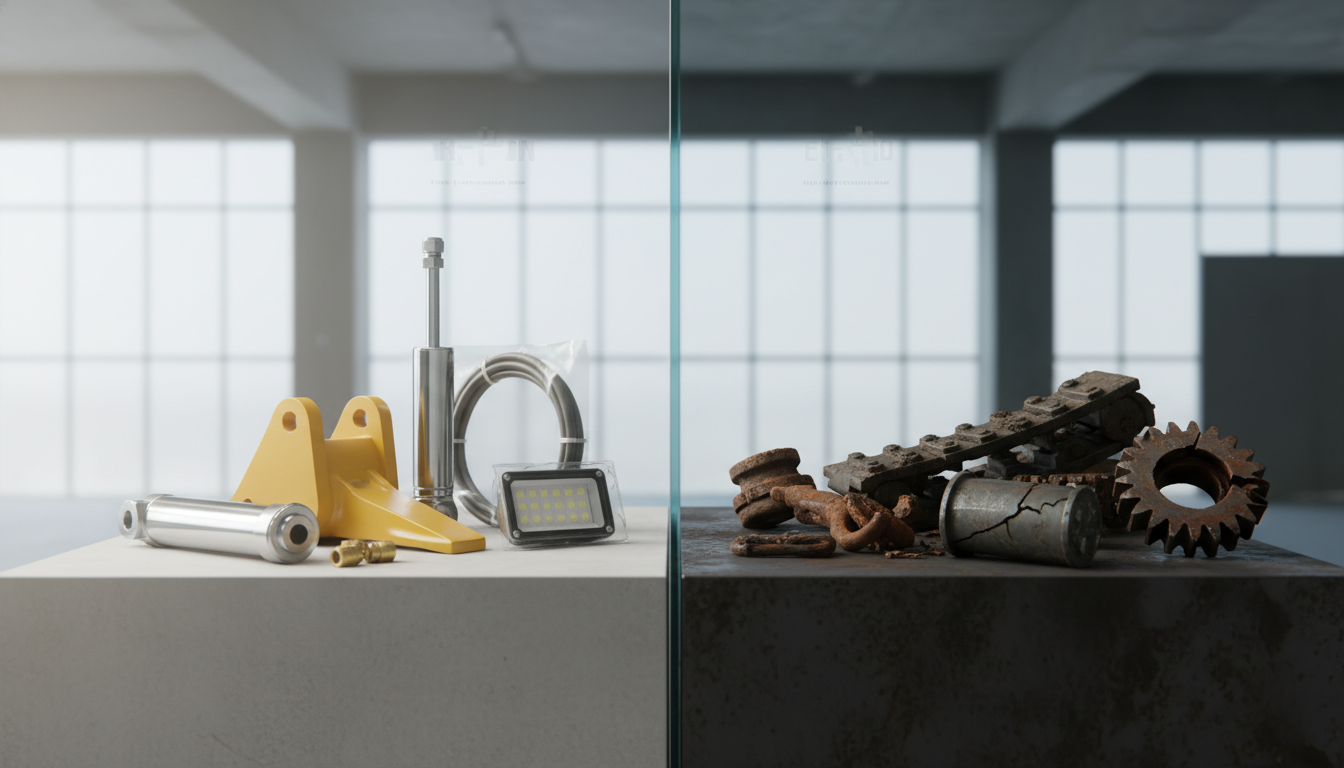
Pros
- Wide selection of such and accessories from multiple manufacturers under one supplier
- Significant cost savings available through used, rebuilt, and aftermarket options
- Global sourcing networks provide access to rare or discontinued parts
- Online catalogs and cross-reference tools streamline part identification
- Bulk purchasing opportunities reduce per-unit costs for fleet operators
Cons
- Quality varies significantly between aftermarket suppliers
- International shipping can extend lead times for urgent repairs
- Used parts may lack comprehensive warranty coverage
- Counterfeit parts remain a risk with unverified suppliers
- Complex compatibility requirements increase risk of ordering errors
How to Identify the Correct Construction Equipment Parts and Accessories
Incorrect parts are the number one cause of returns and downtime when purchasing the equipment parts and accessories. Use this step-by-step process to ensure a perfect match every time.
- Locate the machine’s identification plate. It usually sits near the cabin or on the frame. Note the complete model name and serial number (not just the model).
- Retrieve the original equipment manufacturer (OEM) part number. Check the part itself (often stamped or on a sticker) or consult the machine’s parts book or digital catalog. Many OEMs like Caterpillar and John Deere offer online databases.
- Cross-reference with supplier inventories. Use the part number to search on sites like AMS Parts or Machinery Parts Warehouse. If the number is superseded, a knowledgeable parts specialist can find the updated version.
- Verify compatibility. Some parts changed mid-production. Provide your serial number to ensure the part fits your machine’s specific build date and configuration.
“For over 50,000 customers since 1984, we’ve delivered quality you demand and savings you deserve.”
, H&R Construction Parts
H&R Construction Parts has built its reputation on precisely this cross-referencing expertise, handling everything from track spring assemblies to complete final drives.
Price Ranges and Where to Buy Construction Equipment Parts and Accessories
Pricing for accessories varies widely by component, brand, and condition. A new final drive for a Komatsu dozer can range from $5,000 to $12,000, while a track spring might cost $1,300–$1,500. ConEquip, for example, has sold over 1 million parts since 2008, offering competitive pricing on popular items like undercarriage components and hydraulic pumps.
Buyers have several sourcing channels for construction equipment:
- Local dealerships: Highest trust, but often highest prices and limited stock for older models
- Independent parts specialists: Broad inventory, multiple brands, and knowledgeable staff, ideal for mixed fleets
- Online aggregators: Convenient for price comparison, but verify the seller’s credentials and return policy
- International exporters: Companies like 3GEN Export leverage global networks to source rare or OEM-discontinued parts, often with faster shipping than local alternatives
Many suppliers now offer online quoting tools that let you upload your part list and receive a consolidated quote within hours, streamlining the procurement process for and accessories.
Care and Maintenance Tips to Extend Part Life
Even premium construction equipment parts and accessories wear out prematurely if mishandled. Follow these field-proven practices to maximize longevity.
- Install correctly. Use the recommended torque specifications and lubricants. A misaligned seal can cause catastrophic hydraulic failure.
- Store parts in clean, dry conditions. Rust and contamination are the enemies of precision components. Keep rubber tracks away from sunlight and ozone sources.
- Follow run-in procedures. New or rebuilt engines and final drives often require a break-in period with reduced loads and early fluid changes.
- Monitor wear regularly. Undercarriage pins and bushings can be rotated or turned to extend service life significantly.
Adhering to the manufacturer’s maintenance schedule not only extends equipment life but also helps you plan procurement of construction equipment parts and accessories, avoiding emergency purchases at premium prices.
Frequently Asked Questions
What is the difference between OEM and aftermarket parts?
OEM parts are made by the original manufacturer to its exact specifications. Aftermarket parts are produced by independent companies to fit OEM models, but may use different materials or manufacturing processes, often at a lower cost.
How can I tell if a used part is serviceable?
Reputable suppliers test used parts for key functions and provide a condition report. Look for signs of excessive wear, cracks, or corrosion. A good supplier offers a limited warranty and accepts returns if the part fails within a specified period.
Will using aftermarket parts void my machine’s warranty?
In many regions, using aftermarket parts does not automatically void the warranty unless the part directly causes a failure. However, it is best to check your specific warranty terms or consult your manufacturer before purchasing.
How long does international shipping take for heavy equipment parts?
Standard air freight can deliver parts within 3–7 business days, while ocean freight may take 2–6 weeks. Many exporters offer expedited options to keep lead times short for urgent repairs.
Can I purchase construction equipment parts and accessories without a part number?
Yes, but it may delay the process. Provide the machine model, serial number, and a detailed description or photo of the part. Experienced parts specialists can then identify the correct item and often find an OEM reference for you.
What is the best value for money: rebuilt or aftermarket?
It depends on the component. For high-stress assemblies like final drives or hydraulic pumps, a quality rebuilt unit with a warranty often outlasts a cheap aftermarket part. For simple wear items, aftermarket can deliver significant savings with acceptable reliability.
Shop OEM-quality spare parts with global 5-day delivery at 3genexport.com.