
How to extend the life of heavy equipment parts is a maintenance strategy that combines preventive schedules, quality components, and operator discipline to minimize wear and avoid premature failure.
Key Takeaways
- Regular lubrication reduces friction and extends the service intervals of bearings, pins, and joints.
- Using OEM filters and parts ensures proper fit and longer replacement cycles, sometimes up to 1,000 hours.
- Operator training directly impacts parts wear; smooth operation can add years to component life.
- Predictive maintenance with fluid sampling catches failures before they cause costly downtime.
- Clean equipment is less likely to suffer from overheating and hidden damage.
Understanding Heavy Equipment Part Wear

Every hour of operation subjects components to heat, friction, vibration, and contamination. Without intervention, these forces degrade parts until failure occurs. Recognizing how and why parts wear is the first step toward implementing effective strategies for equipment parts.
The Cost of Neglected Maintenance
Heavy machinery represents significant capital. A base model compact tractor costs around $10,000, while larger excavators and loaders demand six-figure investments. Ignoring maintenance leads to unplanned downtime, emergency repairs, and safety incidents. According to GT Mid Atlantic, reactive maintenance approaches can increase long-term ownership costs compared to proactive programs.
Common Failure Modes in Heavy Equipment
Parts typically fail through abrasion (frictional wear), fatigue (cyclic stress cracks), corrosion (chemical attack), or overheating. For example, bearings wear prematurely when lubricant films break down. Hydraulic seals crack and leak due to heat aging. Undercarriage components erode in abrasive sand or rock. Knowing these patterns allows targeted interventions.
Why Proactive Maintenance Pays Off
Proactive maintenance catches small problems before they escalate. It reduces unplanned downtime, extends component life, and enhances safety. Research shows that maintenance directly impacts construction equipment durability, reliability, and performance. A well-executed plan can cut repair expenses while keeping machines in the field longer.
“Research shows that maintenance impacts construction equipment durability, reliability and performance.” , GT Mid Atlantic
Establish a Preventive Maintenance Schedule
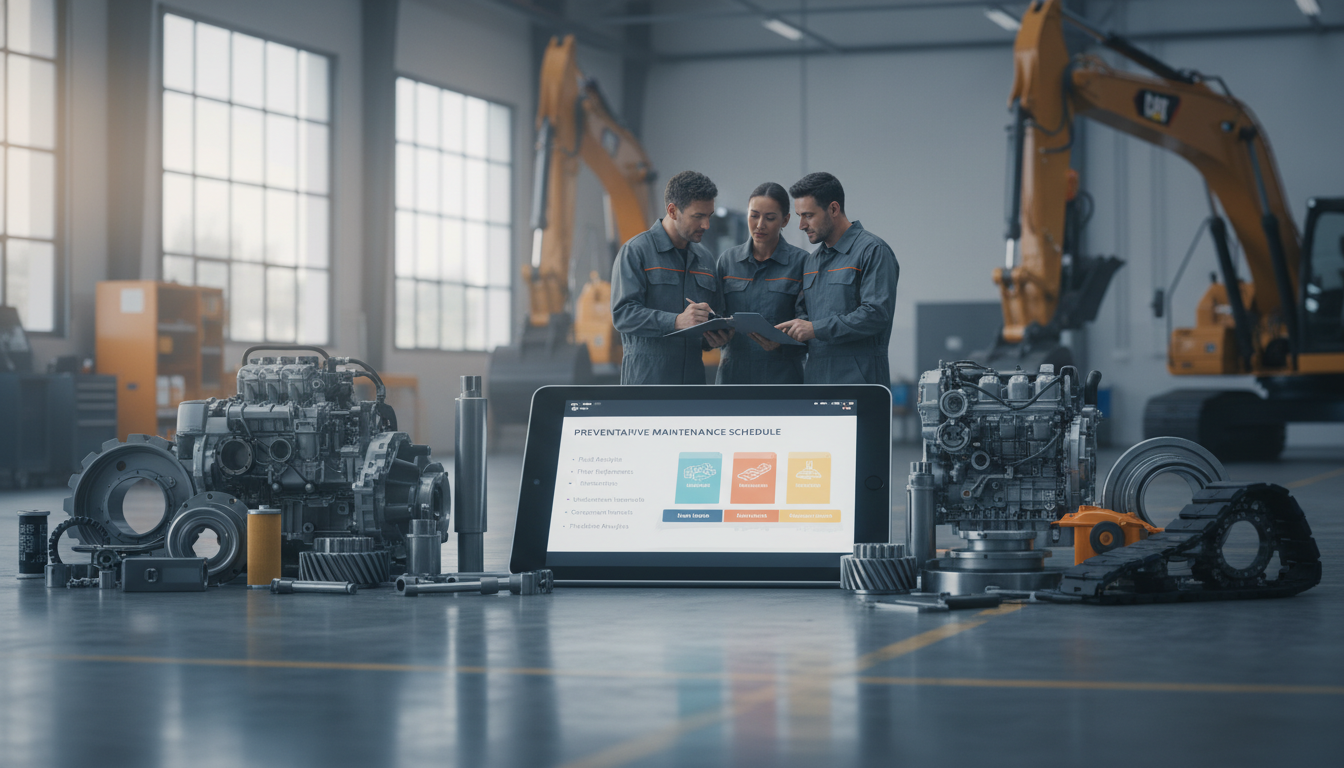
A structured schedule is the backbone of these parts. It replaces guesswork with calendar- or hour-based tasks that keep components in top condition. The best schedules align with manufacturer guidelines and adapt to your operating environment.
Creating a Customized Maintenance Calendar
Start by listing every machine in your fleet. Note the OEM-recommended service intervals for engine oil, hydraulic fluid, filters, and undercarriage adjustments. Then factor in your typical weekly hours, site conditions (dust, moisture, temperature extremes), and equipment age. For example, a wheel loader averaging 1,200-1,500 hours per year needs more frequent attention than one used sporadically. A comprehensive calendar includes component rebuilds, electronic data collection, and point-to-point inspections.
Daily, Weekly, and Monthly Inspection Checklists
Daily walk-around inspections catch obvious issues: leaks, loose bolts, worn tracks. Weekly checks dive deeper into fluid levels, belt tension, and filter conditions. Monthly inspections might involve oil sampling, coolant testing, and detailed undercarriage measurements. The Canadian Center for Occupational Health and Safety (CCOHS) emphasizes that consistent inspections are key to mitigating workplace hazards. Follow these steps:
- Step 1: Inspect tires, tracks, and ground-engaging tools for wear or damage.
- Step 2: Check all fluid levels (engine oil, hydraulic oil, coolant) and look for puddles underneath.
- Step 3: Examine hoses, belts, and wiring for cracks, chafing, or loose connections.
- Step 4: Verify that guards, lights, and safety devices are functional.
- Step 5: Record findings and flag anything out of spec for immediate follow-up.
Using Telematics to Streamline Schedules
Modern telematics systems like Volvo’s CareTrack and MATRIS provide real-time data on engine hours, idle time, and fault codes. This data lets you tailor maintenance to actual usage rather than fixed intervals. For instance, if a machine idles excessively, you can adjust oil change intervals and remind operators to reduce idle time, a practice that not only saves fuel but also extends engine life.
The Critical Role of Lubrication in Part Longevity
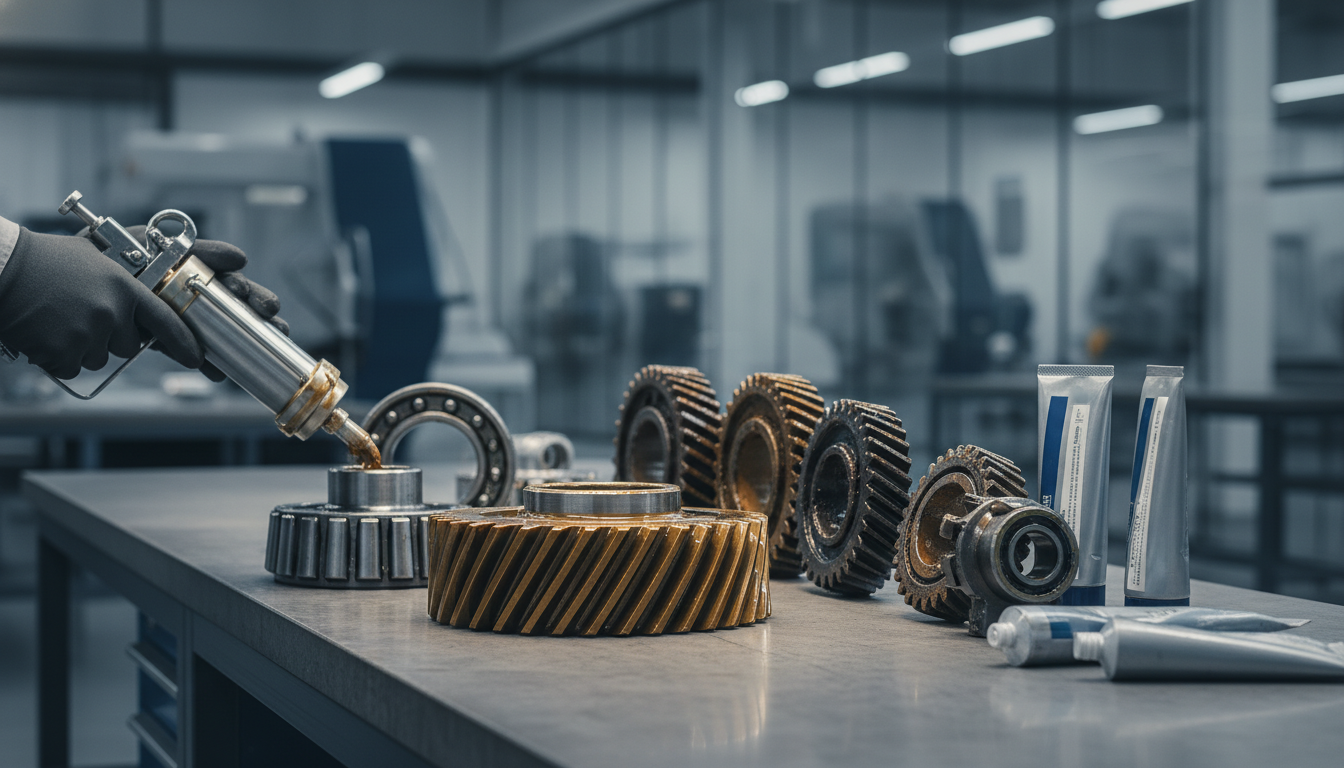
Lubrication is the single most cost-effective tactic for such equipment parts. It reduces friction, cools moving surfaces, and flushes away contaminants. According to industry observations, proper lubrication practices can significantly reduce wear-related failures.
Choosing the Right Lubricants for Each Component
Not all greases and oils are interchangeable. Engine oil must meet API service categories specific to your diesel engine. Hydraulic systems require anti-wear fluids with the correct viscosity. Pivot pins need extreme-pressure grease, while wheel bearings perform best with lithium-complex formulations. Always consult the OEM manual. Volvo Lubricants, for example, contain additives that prevent degradation under high loads and temperatures.
Proper Lubrication Techniques and Intervals
Over-lubrication can blow seals and attract dirt, while under-lubrication starves components. Clean grease fittings before applying new grease to avoid injecting contaminants. Use a metered gun and follow the manufacturer’s specified intervals, often every 50-250 hours for critical points. For oil changes, stick to the schedule, and always replace filters simultaneously to prevent dirty oil from cycling through the system.
Avoiding Over- and Under-Lubrication
Too much grease increases pressure and heat, damaging seals. Too little allows metal-to-metal contact. Watch for signs: ejected grease near seals suggests over-lubrication; squeaking or heat buildup signals insufficient grease. Many fleets now use ultrasonic lubrication tools or simply rely on experienced technicians who can “feel” when a bearing is properly packed. This attention to detail is a cornerstone of the to extend the life of heavy equipment parts.
Keep Heavy Equipment Clean to Preserve Parts
Dirt, dust, and debris act like sandpaper on moving components. They clog filters, trap moisture, and hide developing cracks. A clean machine is easier to inspect and operates cooler, directly supporting efforts to extend component longevity.
The Impact of Dirt and Debris on Component Life
An ounce of dust can clog air filters, starving the engine of oxygen and causing rich fuel mixtures that wash cylinder walls. Mud buildup on undercarriages accelerates track pin and bushing wear. Even in the cab, debris can jam controls and create safety hazards. Understanding parts starts with removing these contaminants before they cause harm.
Best Practices for Pressure Washing and Compressed Air
Use a pressure washer to blast away caked-on grime from the exterior, frame, and undercarriage. For sensitive areas like electrical connections and air intakes, use compressed air or a low-pressure rinse. After washing, allow the machine to dry and then re-lubricate all grease points, as water can displace grease. Some fleets set a standard: wash after every shift in muddy or corrosive environments, weekly in normal conditions.
Cab and Control Panel Cleanliness
Operators who work in a clean cab are more attentive and less fatigued. Wipe down controls, windows, and floors daily. Check for loose objects that could interfere with pedals or levers. A clean cab also prevents expensive damage to electronic controllers and display screens, parts that are costly to replace.
How to Extend the Life of Heavy Equipment Parts with OEM Components
Genuine OEM parts are engineered to the exact tolerances of your machine. Substituting with aftermarket alternatives may save money upfront but often leads to more frequent failures and higher overall costs when implementing strategies for how to.
OEM vs. Aftermarket Parts: A Comparison
Our comparison table highlights the trade-offs between aftermarket, OEM, and remanufactured options:
| Part Source | Initial Cost | Fit & Compatibility | Typical Service Life | Warranty |
|---|---|---|---|---|
| Aftermarket | Lowest | Variable; may require modification | Often 30-50% shorter | Limited or none |
| OEM (Original Equipment Manufacturer) | Higher | Exact match; no modifications | Longest; meets design spec | Comprehensive |
| Remanufactured OEM | Moderate | Exact match; restored to spec | Comparable to new OEM | Typically equal to new |
Data from Volvo Construction Equipment shows that Volvo filters are designed to last up to 1,000 hours, significantly longer than many aftermarket filters. This directly contributes to equipment parts.
Filters, Seals, and Hoses: Why Quality Matters
Filters protect engines and hydraulics from abrasive particles. Seals maintain pressure and prevent leaks. Hoses carry high-pressure fluid. Inferior versions of these components fail sooner, leading to secondary damage. For example, a blown seal can contaminate an entire hydraulic system, destroying pumps and valves. Installing OEM seals with proper tools and technique avoids such cascading failures. Industrial seals are fragile, they must avoid contact with sharp edges during installation, and they need lubricants compatible with the hydraulic fluid.
The Benefits of Remanufactured OEM Parts
Remanufactured parts (reman) offer a middle ground. They are disassembled, cleaned, inspected, and rebuilt to OEM specs, often with the latest design updates. This process costs 20-40% less than new while delivering equivalent reliability. Many Caterpillar dealers offer reman programs that include full warranties, making them an attractive option for these parts on a budget.
“Volvo filters are designed to last up to 1,000 hours, providing a longer service life than many aftermarket options.” , Volvo CE
Operator Training and Its Direct Impact on Parts Wear
Even the best maintenance program can be undone by poor operation. Operators control how loads are applied, how fast the machine moves, and whether daily checks are performed. Investing in training is one of the most effective ways to learn such equipment parts.
Key Operating Habits That Reduce Stress on Components
Smooth, gradual movements reduce shock loads on drivetrains and hydraulic cylinders. Avoiding sudden starts, stops, and sharp turns minimizes tire and track wear. Proper bucket loading prevents excessive strain on lift arms and pins. Limiting idle time, not just for fuel savings but to prevent wet stacking in diesel engines, is critical. Volvo’s MATRIS system provides data that can coach operators toward better habits.
Monitoring Operator Behavior with Onboard Systems
Telematics record who operated the machine, how many hours, idle percentage, and event severity (e.g., over-speed, harsh braking). This data helps identify operators who may need additional training. Over time, fleets that use such coaching see a measurable drop in parts consumption and unscheduled maintenance.
How Training Programs Lower Maintenance Costs
Well-trained operators are the first line of defense. They spot leaks, abnormal noises, or vibration changes early. According to Senergy Petroleum, operators who understand their equipment catch problems before they require a mechanic, saving both time and money. Formal training programs that include both classroom and hands-on sessions can reduce repair costs significantly.
Fluid Analysis and Condition Monitoring
Fluid analysis is like blood work for heavy equipment. It reveals internal wear before external symptoms appear, allowing you to schedule repairs during planned downtime and supporting your efforts to extend component longevity.
What Fluid Sampling Reveals About Part Health
Engine oil samples can show elevated levels of iron (cylinder wear), copper (bearing wear), or silicon (dirt ingress). Hydraulic oil samples detect water contamination, which degrades performance, or metal particles from pump cavitation. Coolant analysis checks for acidity and corrosion inhibitors. Catching a trend early, say, a gradual rise in iron, can mean the difference between a simple bearing swap and a full engine rebuild.
Integrating Sampling into Routine Maintenance
Take samples at consistent intervals, typically every 250-500 hours, using clean, dedicated sampling valves. Label clearly and send to a certified lab. Many dealers offer fluid analysis services; for instance, GT Mid Atlantic provides customized maintenance inspections that include sampling. Compare results over time to establish baselines. A sudden spike demands immediate investigation.
Interpreting Results and Taking Action
Labs provide reports with actionable thresholds. If the report flags high contamination, increase filter change frequency or inspect seals. If wear metals trend upward, schedule an inspection of the component. This data-driven method directly supports the to extend the life of heavy equipment parts by preventing catastrophic failures.
Managing Operating Environments to Reduce Wear
The environment in which your equipment works has a profound effect on part longevity. Adjusting your maintenance to account for extremes can add years to component life and directly impact how to extend the life of heavy equipment parts.
Extreme Temperatures and Their Effects
In northern climates, diesel fuel can gel, starving the engine. Using a winter blend and installing block heaters prevents this. High ambient temperatures thin lubricants and stress cooling systems; more frequent coolant and oil checks are needed. Volvo CE notes that clean, high-quality diesel helps avoid build-up that damages filters and injectors, especially in extreme cold.
Abrasive Materials and Dusty Sites
Sand, gravel, and fly ash accelerate wear on cutting edges, buckets, and track components. Increase air filter service intervals, perhaps to daily cleaning in severe conditions. Use pre-cleaners and dust ejection valves. Protect hydraulic cylinder rods with bellows or shields. Worn pins and bushings should be replaced promptly to prevent ovaling of bores, which leads to much costlier repairs.
Storage and Idling Practices
Whenever possible, park equipment indoors or under cover to shield it from UV, rain, and overnight temperature swings. Excessive idling not only wastes fuel but also causes carbon buildup and cylinder washing. Idle shutdown timers and operator training can reduce engine wear. The goal is to keep the machine working within its optimal load range, ideally, about seven hours of an eight-hour shift under load.
Undercarriage Maintenance: A Frequently Overlooked Priority
The undercarriage can account for up to 20% of a tracked machine’s purchase price and a similar share of maintenance costs. Yet it is often neglected until failure. Proactive undercarriage care is a prime example of how to extend the life of heavy equipment parts.
Track Tension and Shoe Wear
Over-tightened tracks stress idlers and sprockets; loose tracks cause derailment and excessive pin wear. Measure tension daily with a track sag gauge and adjust per OEM specs. Inspect shoes for uneven wear, cracks, or missing bolts. Rotate shoes if wear patterns differ between left and right sides.
Cleaning and Inspecting Undercarriage Components
Mud and rock packed between tracks and frames cause immense friction and wear. Use a pressure washer or spade to clean the undercarriage at the end of each shift in muddy conditions. Check sprocket segments, idler wheels, and bottom rollers for wear. Replace worn rollers before they damage the track links, a set of rollers is far cheaper than a new chain assembly.
The ROI of Undercarriage Care
Dealers like Gregory Poole emphasize that maintaining proper track tension and cleanliness can extend undercarriage life significantly. Considering that replacing a full undercarriage on a medium dozer can exceed $10,000, that savings is substantial. Integrating undercarriage checks into daily inspections is one of the smartest moves a fleet manager can make.
Leveraging Technology and Data for Predictive Maintenance
Technology is transforming how we approach how to extend the life of heavy equipment parts. Sensors, data analytics, and cloud-based platforms now allow condition-based maintenance that addresses issues only when needed, avoiding unnecessary part swaps while preventing failures.
How IoT Sensors Predict Component Failure
Vibration sensors on pumps and motors detect imbalances before bearings seize. Temperature sensors on hydraulic reservoirs flag overheating. On-cylinder pressure sensors reveal seal bypass. These Internet of Things (IoT) devices stream data to a central platform, where algorithms can predict remaining useful life. Companies that adopt such systems report reduced unplanned downtime.
Data-Driven Maintenance Scheduling
Instead of changing oil every 250 hours regardless of condition, predictive maintenance relies on actual oil condition sensors or regular lab analysis. This can safely extend intervals, reducing fluid and labor costs without risking engine health. For example, some fleets have extended oil drain intervals after implementing condition-based monitoring, with no increase in wear metal trends.
Integrating Telematics with Maintenance Software
Platforms like Volvo ActiveCare Direct aggregate telematics data and generate maintenance alerts. They can automatically trigger work orders when a fault code is detected or when an hour-based service comes due. Integration with enterprise resource planning (ERP) software ensures parts are stocked and technicians are scheduled efficiently. This seamless flow from data to action is the future of heavy equipment parts longevity.
Pros and Cons
Pros
- Significant cost savings through reduced unplanned downtime and emergency repairs
- Extended equipment lifespan often exceeding manufacturer specifications by years
- Improved safety through regular inspections and preventive maintenance protocols
- Higher resale value due to documented maintenance history and component condition
- Predictable operating costs with scheduled maintenance versus reactive repairs
Cons
- Higher upfront investment in OEM parts, training programs, and monitoring systems
- Time-intensive daily and weekly inspection requirements that may slow operations
- Skilled technician requirements for proper fluid analysis interpretation and predictive maintenance
- Technology dependency on telematics and IoT systems that may fail or require updates
Conclusion: Your Roadmap on How to Extend the Life of Heavy Equipment Parts
Learning how to extend the life of heavy equipment parts is not a single action but a culture. It requires a preventive maintenance schedule, quality lubricants and OEM components, trained operators, regular fluid analysis, environmental management, and the strategic use of technology. When all these elements work together, machines routinely exceed their expected design life, for instance, a wheel loader that averages 10 years or 7,000-12,000 hours can push to 15,000 hours or more. The common factor is disciplined execution of the principles outlined here.
To recap, remember these pillars: lubricate properly, inspect often, use genuine parts, train operators, clean thoroughly, monitor fluids, care for the undercarriage, and leverage data. By following these strategies for how to extend the life of heavy equipment parts, you not only lower your owning and operating costs but also improve safety and boost resale value. Start today with a single machine, document a baseline, implement these steps, and measure the results. Your fleet’s lifespan will thank you.
Shop OEM-quality spare parts with global 5-day delivery at 3genexport.com
Frequently Asked Questions
How often should heavy equipment be inspected?
A thorough pre-shift walk-around is essential; more detailed weekly and monthly inspections should follow manufacturer guidelines. Fluids and filters may need checks every 50-250 hours depending on the component.
What is the 10% rule in maintenance?
The 10% rule advises budgeting at least 10% of a machine’s replacement cost annually for maintenance. This covers routine service, wear parts, and unexpected repairs, preventing deferred care that shortens life.
What are the 4 P’s of maintenance?
They are Preventive (scheduled), Predictive (condition-based), Proactive (root-cause analysis), and Planned (work order management). Together they form a complete asset management strategy.
Can using aftermarket parts void equipment warranties?
It can, especially if the part fails and causes consequential damage. Many manufacturers require OEM or equivalent parts. Always check your warranty terms before installing aftermarket components.
How do telematics systems help extend parts life?
Telematics track idle time, harsh operation, and fault codes, enabling targeted coaching and early interventions. They also optimize maintenance intervals based on actual machine use.
What is the single most important factor in extending heavy equipment part life?
Lubrication is often cited as the most critical. When done correctly, right type, right amount, clean fittings, it reduces wear more than any other single practice.