
Signs your excavator undercarriage needs replacement are critical indicators that prevent catastrophic failures and costly downtime on construction sites.
Key Takeaways
- The undercarriage can account for half of an excavator’s total maintenance costs
- Track pitch elongation beyond 2% or visible cracking are clear replacement signals
- Sprocket teeth with a hooked or shark-fin shape indicate advanced wear
- Grinding noises, wobbling rollers, and leaking seals demand immediate attention
- Proper daily cleaning and weekly inspections can extend undercarriage life by hundreds of hours
- Measuring wear with precision tools reveals problems before visual inspection catches them
Understanding Excavator Undercarriage Components
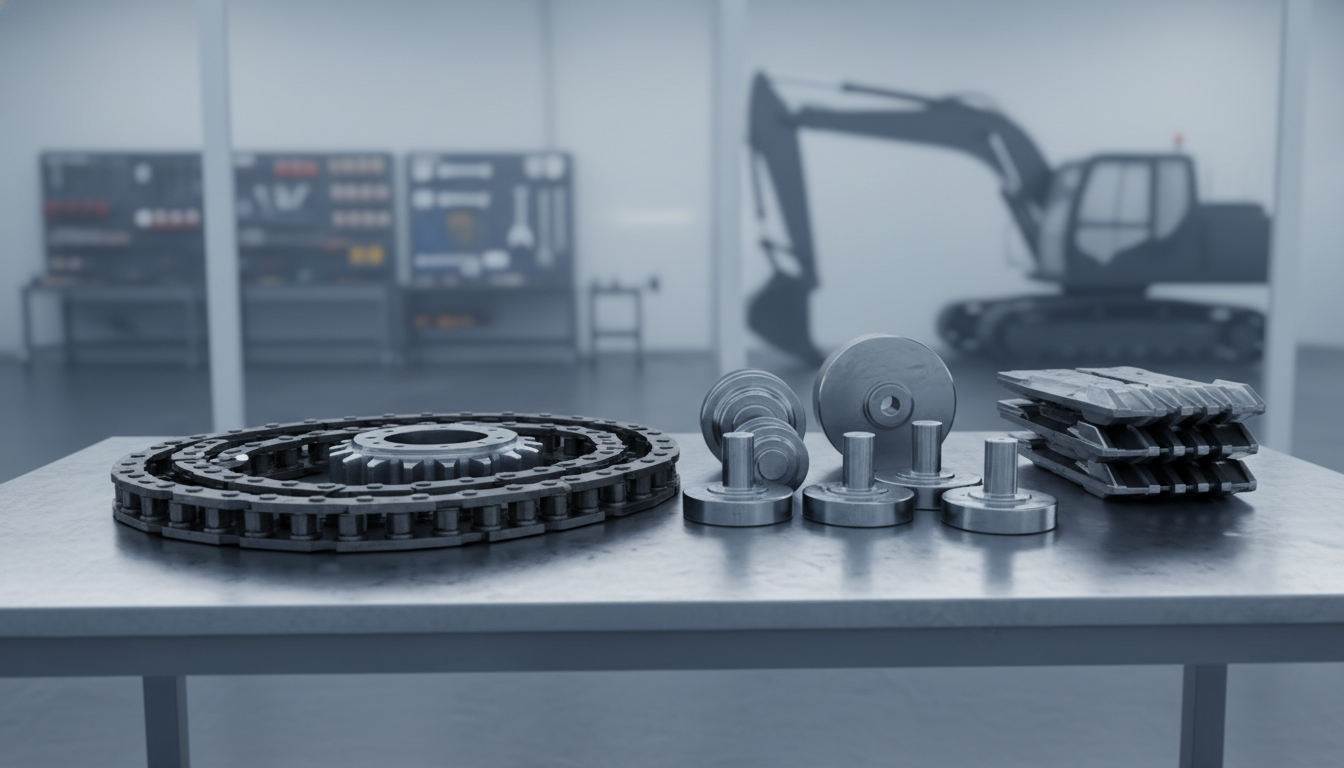
An excavator’s undercarriage is the foundation that supports the entire machine and enables mobility on rough terrain. It consists of several interconnected parts: track chains, sprockets, idlers, track rollers, and carrier rollers. Each piece endures constant stress from the machine’s weight, abrasive materials, and mechanical forces. Knowing how these parts work is essential before assessing the signs your excavator undercarriage needs replacement.
Track Chains and Links
Track chains are the continuous loops of metal links that encircle the undercarriage. They distribute the excavator’s weight and provide traction. Over time, the link pins and bushings wear, causing the track to elongate, a process called “pitch elongation.” When elongation exceeds the manufacturer’s limit, usually 1–2%, the chain must be replaced to avoid damaging the sprocket.
Sprockets and Idlers
The sprocket is a toothed wheel at the rear of the undercarriage that engages the track chain and transmits power from the final drive. The idler is a large wheel at the front that maintains track tension and guides the chain. Both components are made of hardened steel but wear down over time, especially when tracks are too loose or too tight.
Track and Carrier Rollers
Track rollers (also called bottom rollers) support the excavator’s weight along the ground, while carrier rollers support the upper portion of the track as it returns. Roller failure often starts with seal leaks, leading to bearing contamination and eventual seizure. A failed roller can cause severe track damage if not replaced promptly.
7 Critical Signs Your Excavator Undercarriage Needs Replacement
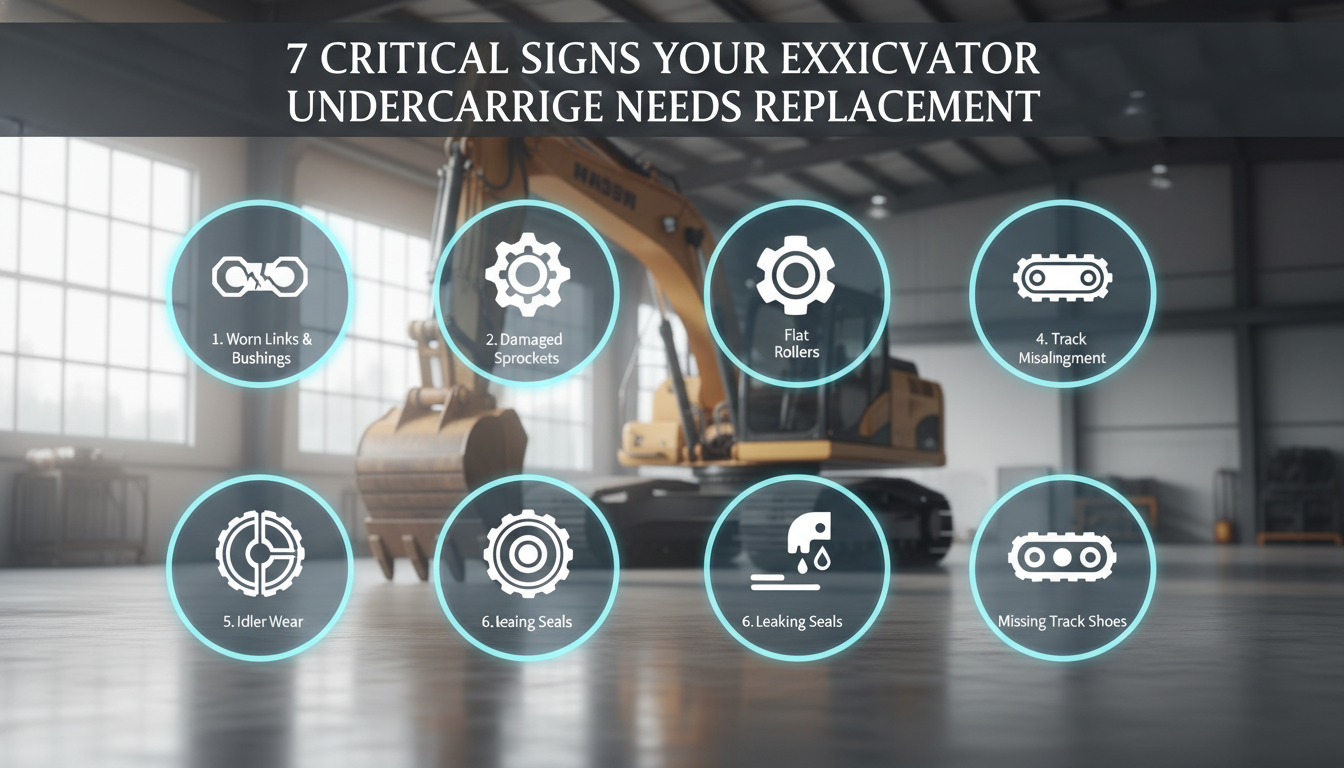
The most obvious signs your excavator undercarriage needs replacement involve visible damage, unusual noises, or performance loss. Recognizing these indicators early prevents catastrophic failures and unplanned downtime. Below are the primary symptoms organized by component.
| Symptom | Affected Component | Severity | Recommended Action |
|---|---|---|---|
| Track pitch elongation over 2% | Track chains | High | Replace entire track group |
| Hooked or shark-fin sprocket teeth | Sprocket | High | Replace sprocket and inspect track chain |
| Grinding, squealing, or rumbling sounds | Rollers, idlers, bearings | Medium | Isolate noise source; replace failing component |
| Flat spots or excessive wobble on rollers | Track rollers | Medium | Replace roller; check alignment |
| Tracks sagging or popping off sprocket | Track tension system | Critical | Adjust tension immediately; inspect for wear |
Track Wear and Elongation
Track pitch is the distance between the centers of two consecutive link pins. As bushings and pins wear, this distance increases. According to Langley Excavator Parts, elongation beyond 1–2% represents definitive signs your excavator undercarriage needs replacement. You can measure pitch using a track gauge or by counting links over a known distance. Cracked link plates, especially near pin bosses, also call for immediate chain replacement.
Sprocket Tooth Deterioration
Inspect sprocket teeth regularly. When they become sharp, hooked, or develop a shark-fin appearance, the sprocket is worn beyond its service limit. This condition accelerates chain wear and can lead to uneven tooth engagement. Worn sprockets often indicate that other undercarriage parts are also nearing the end of their life. Swapping sprockets between machines to even out wear is a common practice in fleets.
Roller and Idler Failure Indicators
Roller and idler problems announce themselves with grinding, squealing, or rumbling noises. Leaking oil around the seal is a telltale sign that the internal bearings are compromised. Visually, you may see flat spots on the roller tread or feel excessive side-to-side wobble. Any of these symptoms means the roller is failing and should be replaced before it seizes and damages the track links.
Abnormal Track Tension
Track tension is critical. Over-tensioned tracks put excessive load on the entire undercarriage, increasing fuel consumption and component wear. Under-tensioned tracks sag, increasing the risk of derailment. A quick sag check using a straightedge can tell you if tension is out of spec. Most manufacturers recommend a sag of 1–2 inches in the middle of the upper track span. If you cannot achieve proper tension even at the adjustment limit, these are clear signs your excavator undercarriage needs replacement.
Measuring Wear: From Inspection to Replacement
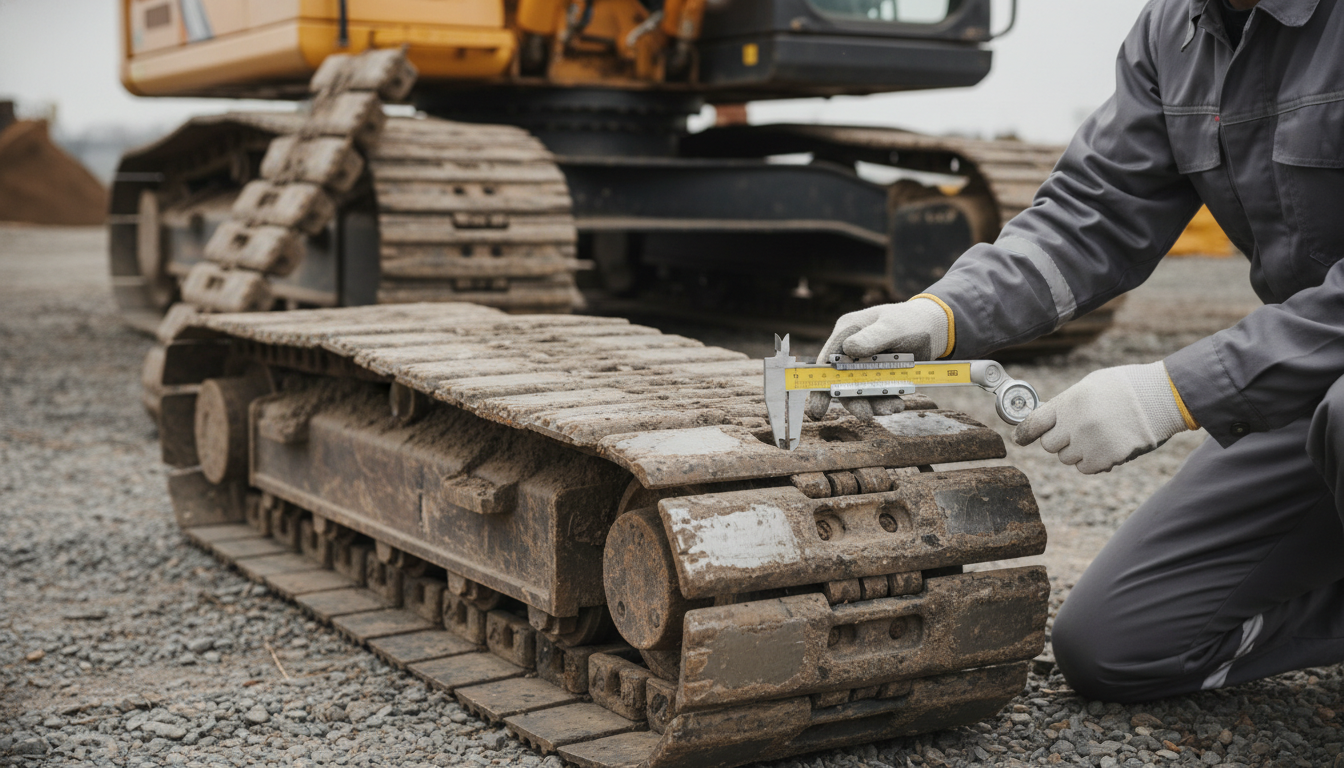
Relying solely on visual inspections misses the quantitative data needed to forecast replacement. Measuring undercarriage components with the right tools reveals wear you cannot see and helps you schedule replacements during planned downtime, avoiding costly emergencies.
Tools for Measuring Track Pitch
A track pitch gauge or caliper measures the distance between pin centers. Some heavy equipment shops use ultrasonic thickness gauges to assess link plate and bushing wear. Portable track inspection tools from brands like Caterpillar provide quick readings. For a low-cost field check, you can measure the distance over a specific number of links (e.g., 4 or 5 links) and compare it to the manufacturer’s specification, a dimension that changes with wear.
Interpreting Elongation Data
Elongation is expressed as a percentage. For example, if a new track pitch is 6.00 inches and your measurement shows 6.12 inches, elongation is (0.12/6.00) × 100 = 2%. At 2%, you are at the industry-recommended replacement threshold. Continuing to run beyond 2% not only damages the sprocket but also puts uneven stress on the final drive. A single worn track can force early replacement of an otherwise healthy sprocket, multiplying costs.
Diagnosing Sprocket and Idler Damage
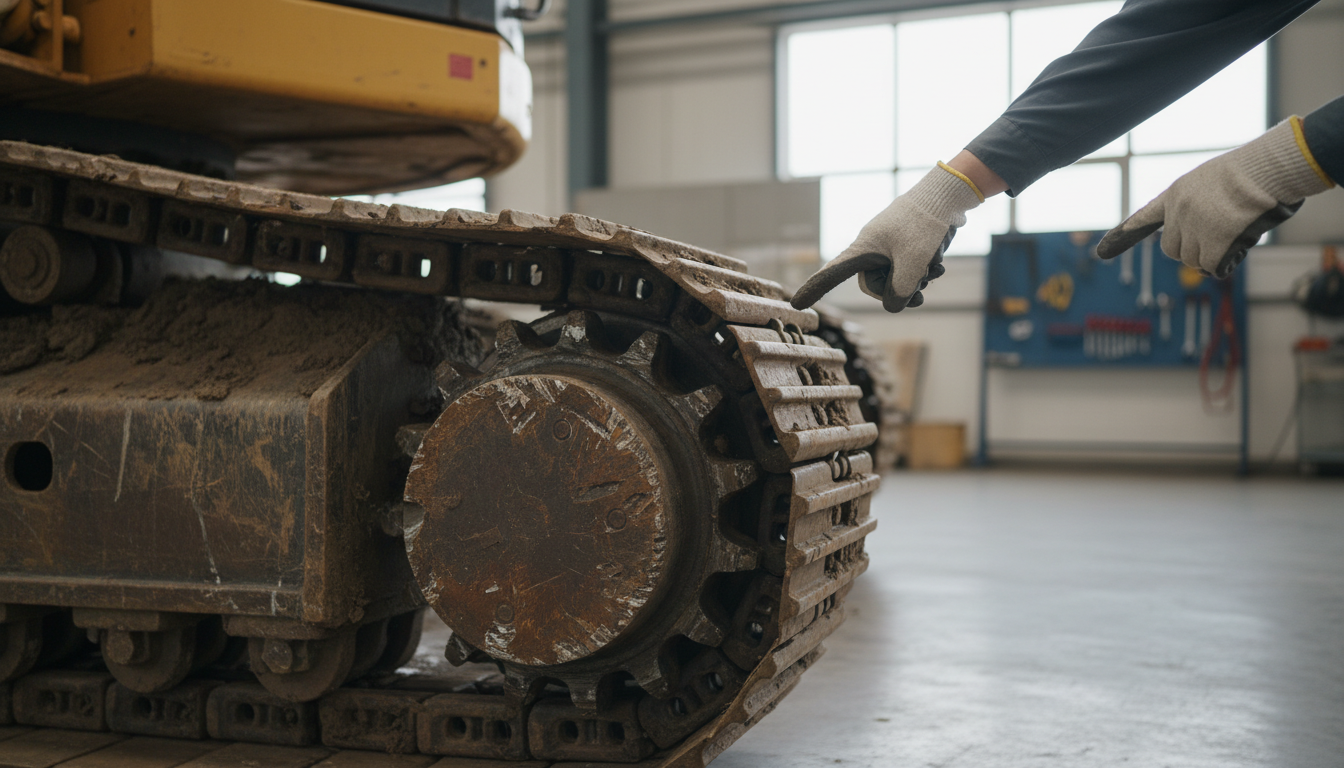
Sprockets and idlers are expensive components, but early detection can sometimes allow you to rotate or rebuild them rather than replace them outright. Knowing what to look for during your weekly walkaround is crucial for identifying signs your excavator undercarriage needs replacement.
The Shark-Fin Pattern on Sprocket Teeth
Examine the forward and reverse sides of the sprocket teeth. Normal teeth have a symmetric, slightly rounded profile. As wear progresses, the working face of the tooth becomes concave, creating a hooked, shark-fin shape. This indicates that the tooth has lost its hardened surface layer and will wear rapidly. At this stage, replacement is the only safe option, because a worn sprocket will quickly destroy a new track chain.
Idler Wobble and Seal Leaks
The idler should rotate smoothly without lateral movement. Grasp the idler and try to rock it side to side. Noticeable play often means the bearings are shot. Look for oil leaking from the idler hub, this is a clear sign of seal failure. Idler failure can cause the track to wander or bind, leading to uneven wear across the chain. According to Volvo Construction Equipment, regular visual inspections, once a week or every 40 operating hours, can catch these issues before they escalate.
“By keeping the undercarriage in good condition, you can count on improved safety and efficiency from the machine.” , Volvo Construction Equipment
The Role of Track Tension
Track tension directly influences the rate of wear across all undercarriage components. Yet tension is often overlooked until a track comes off. Proper tension balancing is a daily duty, not a quarterly chore.
Consequences of Over-Tensioning
When tracks are too tight, they resist bending at the sprocket and idler, dramatically increasing friction. This forces the engine to work harder, raising fuel consumption. Over-tensioning also accelerates bushing and sprocket wear, shortens roller bearing life, and can even crack link plates. A simple test: if you can’t fit a finger between the track and the carrier roller at mid-span on a slackened track, it’s probably too tight.
Dangers of Loose Tracks
Loose tracks snake and slap against the undercarriage frame, hammering the rollers and idlers. They are prone to derailment, which can result in hours of lost production while tracks are reseated. In extreme cases, a derailed track can rip off hydraulic hoses or damage the final drive. If track sag exceeds 2 inches or you can easily push the track off the flange, tension is insufficient.
Adjusting Tension Step-by-Step
- Park on level ground: Ensure the excavator is stable and the parking brake is engaged.
- Lift the track: Use the boom and arm to raise one side of the machine until the track clears the ground.
- Measure sag: Place a straightedge on the upper track span between the carrier roller and the idler or sprocket. Measure the distance from the straightedge to the track’s inside surface at the midpoint.
- Pump or release grease: Use the track adjuster grease fitting to add or remove grease until sag matches the OEM specification, typically 1–1.5 inches.
- Repeat on the other track: Always adjust both sides to the same specification.
Top Causes of Premature Undercarriage Wear
Understanding what accelerates wear helps you adjust operations and maintenance routines to avoid early replacement. The most common culprits are abrasive terrain, inadequate cleaning, and misalignment.
Abrasive Terrain and Material Handling
Working in sand, gravel, or rocky ground grinds away at link bushings and roller treads faster than operating in soil or clay. In abrasive conditions, track cracks may start appearing after only 3,000–4,000 hours, compared to 5,000–6,000 hours in milder environments, according to industry data from Langley Excavator Parts. When possible, limit tracking through heavy rubble or choose work paths with less abrasive material.
Neglecting Daily Cleaning
Mud, stones, and debris packed between track links and in the sprocket pockets act like sandpaper, accelerating wear. Operators should perform a quick debris removal at every shift change. For wet, compact material, a shovel is often needed; for dry dirt, lifting one track and spinning it free can suffice. Ignoring this simple step is one of the easiest ways to cut undercarriage life in half.
“Operators should check the tracks for debris and accumulation of dirt at the start of each shift as well as any time they enter the cab.” , Jordan Troutman, President of Pivot Equipment Parts, as reported by ConExpo-Con/Agg
Ignoring Misalignment
If the track frame is bent or the idler alignment is off, the track will ride unevenly, wearing one side of the bars and link pin bores faster. Misalignment can stem from a collision, improper installation, or worn frame bushes. A telltale sign is uneven sprocket tooth wear, more aggressive on the inside or outside. Realigning the undercarriage can restore even wear patterns and extend component life.
Maintenance Actions That Prevent Early Replacement
Preventive maintenance is far less costly than emergency undercarriage overhauls. The following practices, incorporated into your daily and weekly routines, will keep your excavator moving reliably for many extra hundreds of hours.
Daily and Weekly Walkarounds
Implement a structured inspection checklist that operators complete at the start of each shift. Look for missing track shoe bolts, oil leaks, uneven roller wear, and loose guards. Once a week, measure track pitch and sag, and check sprocket tooth height. Volvo CE recommends a thorough visual inspection at least every 40 operating hours. This routine catches problems when they are still cheap to fix.
Cleaning Protocols
For dry, sandy environments, lift the machine on one track at a time and spin the tracks in forward and reverse to sling off loose dirt. In muddy or compacted conditions, use a high-pressure washer or a shovel to clean the track frames, sprocket pockets, and roller flanges. Pay special attention to the area around the final drive motor, packed debris here can damage seals.
Component Swapping for Even Wear
To maximize the undercarriage’s service life, track wear percentage across all components and swap positions when differences exceed 20%. For example, an idler showing 30% wear can be moved to the opposite side or swapped with a less worn idler to even out consumption. Many large fleets employ undercarriage management programs to track wear with conversion charts specific to Caterpillar, Komatsu, and Hitachi undercarriages. This practice can delay a full replacement by hundreds of hours.
Pros and Cons
Pros
- Early detection prevents catastrophic failures and costly emergency repairs
- Scheduled replacements reduce unplanned downtime by up to 80%
- Proper maintenance extends undercarriage life from 3,000 to 6,000+ hours
- Component swapping and rotation maximize value from each part
Cons
- Regular inspections require dedicated time and trained personnel
- Precision measuring tools represent an upfront investment
- Replacement parts can be expensive, especially OEM components
- Weather conditions may limit thorough cleaning and inspection
When to Act on Warning Signs
Recognizing the signs your excavator undercarriage needs replacement is only half the battle, timing your response correctly saves money and prevents cascade failures. When measurements exceed replacement thresholds, swift action avoids more expensive repairs down the line. The undercarriage is the single largest maintenance expense on an excavator, treat it with the attention it demands, and it will reward you with reliable performance and lower total ownership costs.
Shop OEM-quality spare parts with global 5-day delivery at 3genexport.com
Frequently Asked Questions
How often should I inspect my excavator’s undercarriage?
A visual inspection should be performed at the start of each shift, with a more detailed measurement check weekly or every 40 operating hours, whichever comes first.
Can I replace just one track if it wears faster?
No. Replacing only one track can cause driveline stress and uneven wear. Always replace tracks in pairs to maintain balanced traction and tension.
What is the most accurate way to measure track wear?
The most accurate method is to measure track pitch over several links with a calibrated gauge. Converting the value to percentage elongation and comparing it to the OEM’s limit (usually 2%) gives a definitive wear reading.
How long does an excavator undercarriage last?
In average conditions, a well-maintained undercarriage can last 4,000–6,000 hours before major component replacement is needed. Abrasive environments can reduce this to as little as 3,000 hours.
Are aftermarket undercarriage parts reliable?
Many aftermarket manufacturers produce parts that meet or exceed OEM specifications at a lower cost. Always source from reputable suppliers who provide wear guarantees and dimension certifications.
What happens if I ignore a leaking roller seal?
A leaking seal allows oil to escape and contaminants to enter, quickly causing bearing failure. A seized roller can then damage the track links, turning a minor roller replacement into a costly chain and sprocket repair.