
Key Takeaways
- Mining equipment fleet parts encompass drivetrain, hydraulic, GET, and undercarriage components that directly impact machine uptime.
- OEM parts ensure exact fit, while quality aftermarket alternatives can achieve 80-90% of OEM performance at significantly lower cost.
- Digital fleet management tools and predictive maintenance reduce unplanned downtime, with over 60% of fleets now incorporating automation and sensor technology.
- Partnering with certified global suppliers like Metso, Caterpillar, and Weir guarantees quality and rapid parts availability.
- Remanufactured parts restore components to OEM specifications while cutting raw material use and supporting ESG targets.
- Proactive sourcing, ISO-certified suppliers, and pilot orders before bulk purchasing protect both budget and fleet reliability.
Mining equipment fleet parts are the replaceable components that keep haul trucks, excavators, and loaders running in demanding mining environments. They include OEM, aftermarket, and remanufactured parts engineered for durability and peak performance.
What Are Mining Equipment Fleet Parts?

Mining equipment fleet parts are all replaceable components required to maintain and repair the heavy machinery used in mining operations. This includes everything from engine blocks and hydraulic cylinders to filters and wear plates. Efficient fleet management depends on having the right parts available at the right time to minimize production losses.
Core Components of a Mining Fleet Parts Inventory
Mining equipment comprises thousands of individual parts, but the most critical categories include:
- Drivetrain and powertrain: Transmissions, axles, differentials, final drives, and torque converters that transmit power under extreme torque loads.
- Hydraulic systems: Cylinders, pumps, valves, and hoses that enable digging, lifting, and steering.
- Ground engaging tools (GET): Bucket teeth, adapters, cutting edges, and ripper shanks that directly contact abrasive materials.
- Undercarriage: Tracks, rollers, idlers, and sprockets for tracked machines like dozers and excavators.
- Filtration and fluids: Oil, air, and fuel filters, plus specialized lubricants to protect internal components.
Why Fleet Parts Integrity Matters
Faulty or worn-out components can trigger catastrophic failures, safety hazards, and costly unscheduled downtime. According to Caterpillar, genuine Cat wear and maintenance parts are designed to deliver longer service life and lower total cost of ownership. Regular parts replacement based on operating hours and condition monitoring is essential to sustain productivity.
Pros and Cons of Sourcing Mining Equipment Fleet Parts
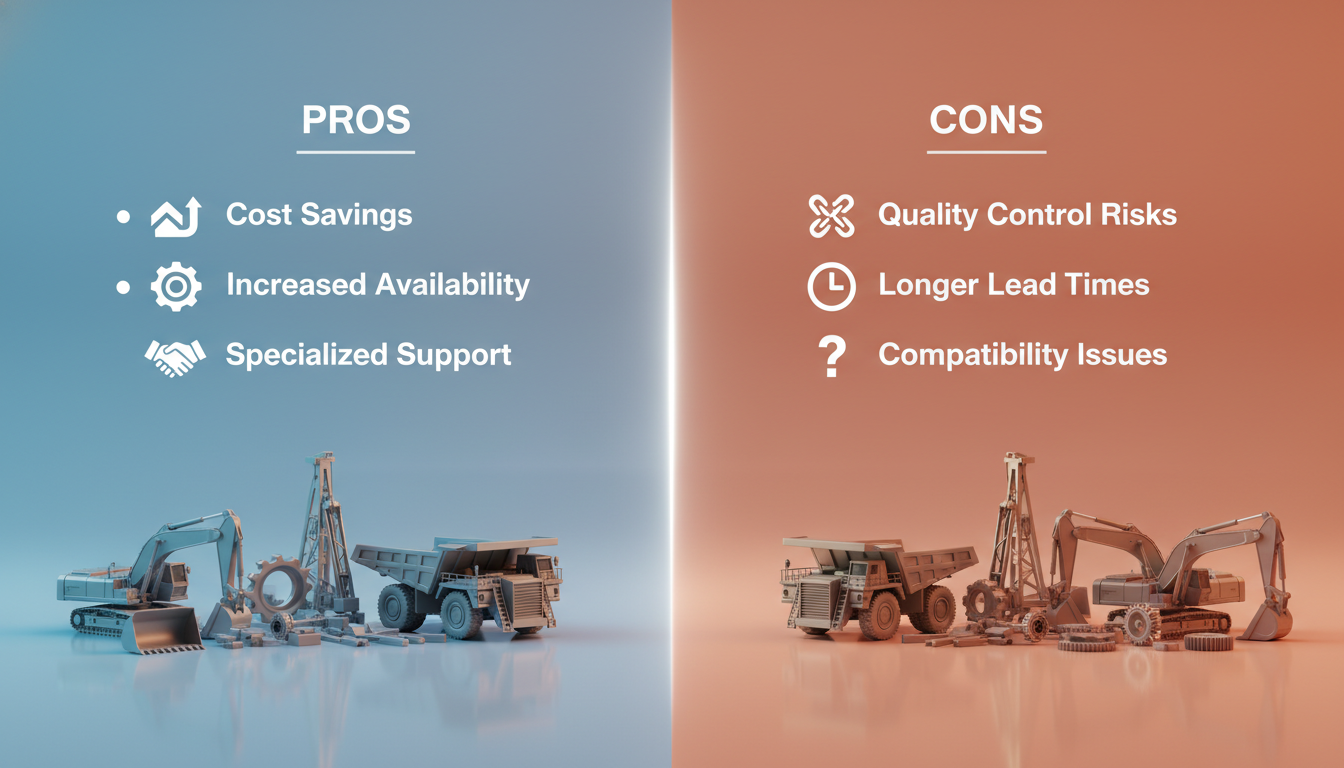
Pros
- Reduced downtime: Stocking critical spare parts means faster repairs and fewer production stoppages.
- Cost flexibility: Aftermarket and remanufactured options give procurement teams real budget control without sacrificing reliability.
- Global availability: Suppliers like Metso, with over 150 distribution centers worldwide, ensure parts reach remote mine sites quickly.
- Sustainability gains: Remanufactured parts cut raw material consumption and support ESG reporting requirements.
- Predictive maintenance integration: IoT-enabled parts management reduces unplanned failures and extends component life cycles.
Cons
- OEM lead times: Genuine OEM parts for specialized equipment can carry lead times of several weeks, especially for remote sites.
- Aftermarket quality variance: Not all third-party suppliers meet consistent standards. Vetting suppliers with ISO 9001 certification is essential.
- Inventory carrying costs: Overstocking critical parts ties up working capital, while understocking creates downtime risk.
- Customs complexity: International sourcing requires correct HS code classification (typically 8431.49.00 for mining spare parts) and accurate import documentation.
OEM vs. Aftermarket vs. Remanufactured Parts
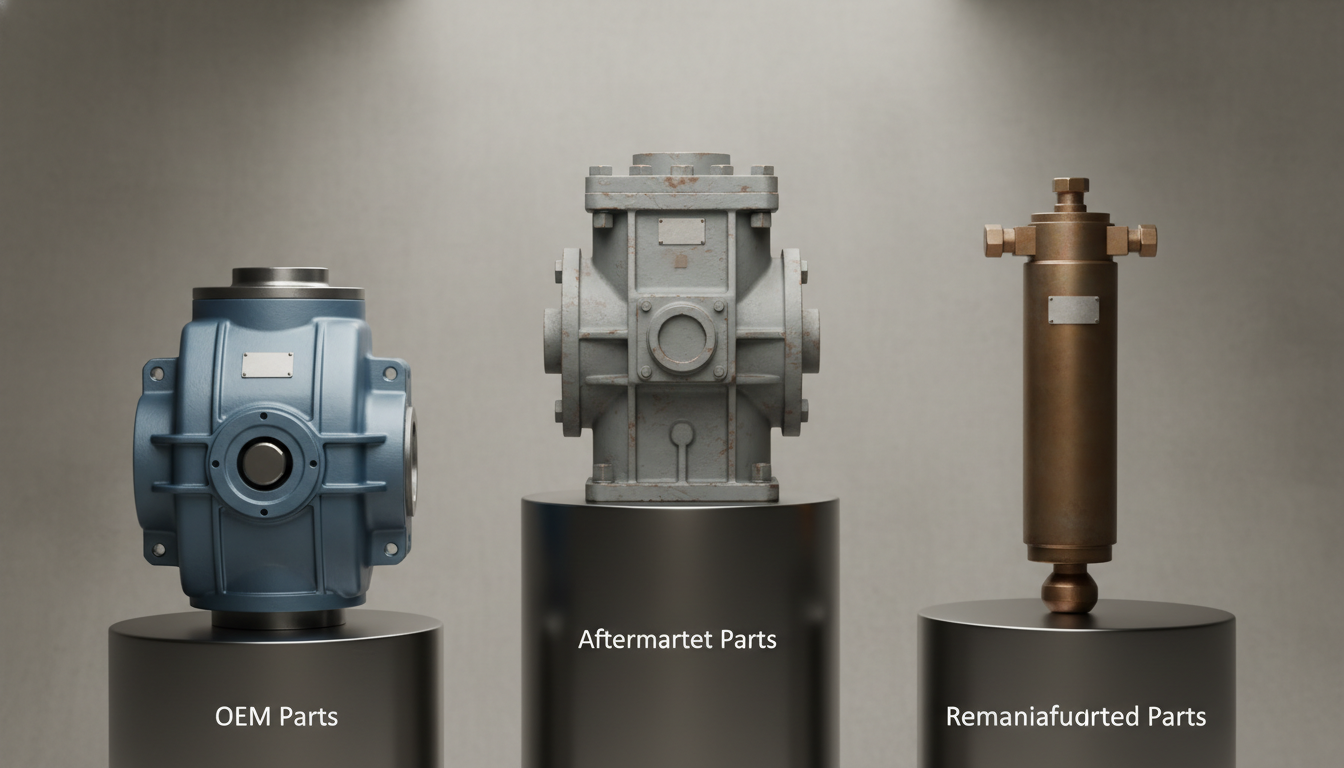
Choosing between OEM, aftermarket, and remanufactured options involves trade-offs in cost, quality, and availability. This table breaks down the key differences:
| Criteria | OEM Parts | Aftermarket Parts | Remanufactured Parts |
|---|---|---|---|
| Cost | Highest initial investment | Lower than OEM, significant savings | Significantly less than new OEM |
| Quality/Performance | 100% OEM specification | 80-90% of OEM performance* | Restored to OEM specs |
| Warranty | Full manufacturer warranty | Varies; often 6-12 months | 12-24 months typical |
| Availability | Generally high, but may have lead times | Wide, especially for popular fleet models | Limited to core-exchange programs |
| Environmental Impact | New raw material extraction and manufacturing | Lower new material use | Significant waste reduction |
*According to XTMEMining, a global supplier of aftermarket mining equipment parts.
OEM Parts: The Gold Standard
OEM parts are manufactured by the original equipment maker, including Caterpillar, Komatsu, and Hitachi, to identical specifications as the original components. They guarantee compatibility and performance but come at a premium. Metso, for example, offers OEM-quality spare and wear parts backed by over 150 distribution centers worldwide to ensure rapid delivery to even the most remote sites.
Aftermarket Parts: Balancing Cost and Performance
Aftermarket parts are produced by third-party manufacturers. Companies like XTMEMining specialize in components that are 100% interchangeable with OEM parts, typically achieving 80-90% of original factory performance while offering superior cost-effectiveness. They are a practical choice for older fleets or when budgets are constrained.
“Quality aftermarket components, when sourced from ISO-certified suppliers with documented test data, consistently deliver reliable performance across high-cycle mining applications. The key is supplier vetting, not blanket avoidance.” – 3GEN Export Technical Procurement Team
Remanufactured Parts: Sustainable Performance
Caterpillar’s Reman program offers more than 8,000 remanufactured parts, components, and kits. These are disassembled, cleaned, inspected, and rebuilt to OEM specifications, providing a reliable, lower-cost, and environmentally responsible alternative to new parts. Warranties of 12-24 months are standard across most reman programs.
Rebuild vs. Replace: A Decision Framework
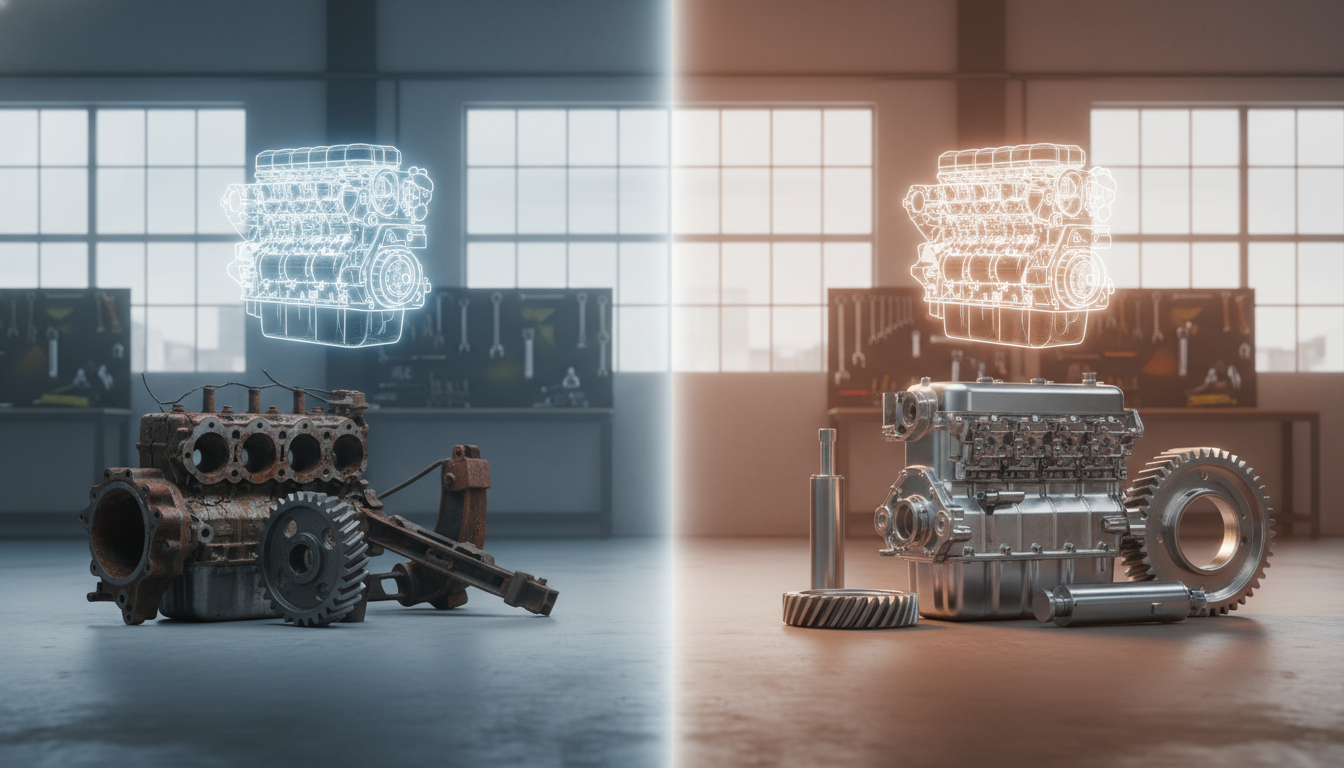
Deciding whether to rebuild a worn component or replace it outright is one of the most consequential calls in fleet maintenance. The wrong choice costs money either way.
Use these criteria to guide the decision:
- Component age and hours: If a final drive or hydraulic pump is within 20-30% of its rated service life, rebuilding is usually cost-effective. Beyond that threshold, replacement is safer.
- Failure mode: Gradual wear is rebuildable. Catastrophic fractures, heat damage, or corrosion typically require full replacement.
- Parts availability: If rebuild kits for a specific model are readily available and priced at less than 40% of a new unit, rebuilding is the clear financial choice.
- Downtime tolerance: Rebuilds take time. If the machine is on a critical production path, a direct replacement with a remanufactured exchange unit is faster.
- Warranty implications: Rebuilding outside an OEM-authorized program may void remaining equipment warranty. Confirm this before proceeding.
“The rebuild-versus-replace decision should never be made on price alone. Total cost of ownership, including the risk of repeat failure within the same maintenance cycle, must factor into every call.” – Industry Maintenance Advisory, SAE International
Critical Maintenance Practices for Prolonging Parts Life
Effective maintenance of fleet components directly impacts operational efficiency. A proactive approach prevents minor wear from escalating into major failures.
Scheduled Inspections and Condition Monitoring
Implement a daily walkaround inspection checklist for operators and a more detailed weekly review by technicians. Use oil analysis, vibration monitoring, and thermography to detect early signs of wear in critical components such as wheel motors, hydraulic pumps, and final drives. Most OEM service bulletins recommend oil sampling intervals of every 250-500 operating hours for high-load applications.
Lubrication and Contamination Control
Contamination is the leading cause of hydraulic system failure. Cat filters and fluids, designed specifically for mining environments, extend component life by maintaining clean fluid circuits. Change lubricants on schedule and inspect breathers regularly to keep dust and moisture out of sensitive systems.
Replacing Wear Parts Preventively
Ground engaging tools wear faster than virtually any other component category. Weir’s Nemisys® lip and tooth system provides extended wear life and can be swapped in minutes, reducing machine downtime during GET changes. Establish a replacement schedule based on tonne-per-hour wear rates to avoid sudden failures that halt production.
“Preventive GET replacement on a defined wear schedule, rather than waiting for visible failure, typically reduces total bucket maintenance costs and eliminates the risk of structural damage to the bucket shell itself.” – Weir Group Technical Documentation
Sourcing Mining Equipment Fleet Parts Globally
Sourcing reliable components requires evaluating more than just price. Here is a step-by-step guide to securing quality parts:
- Identify exact part numbers from equipment manuals or nameplates and note any OEM interchange information.
- Shortlist suppliers with expertise in your specific fleet, covering brands such as Komatsu, Belaz, Terex, Volvo, and Hitachi.
- Verify certifications including ISO 9001 and ISO 14001, and request test reports confirming material hardness, tensile strength, and fit tolerances.
- Request warranty terms and after-sales support. Reputable suppliers offer at least a 12-month warranty on critical parts.
- Run a pilot order on a small scale to evaluate delivery time, packaging quality, and part performance before committing to bulk purchasing.
Supplier Audits and Quality Inspection
Before approving a new supplier for critical mining equipment fleet parts, conduct a structured audit. Request material certifications, dimensional inspection reports, and hardness test data for wear components. For high-value parts like final drives or hydraulic cylinders, on-site factory audits or third-party inspection (SGS, Bureau Veritas) provide the strongest assurance. A supplier unwilling to share test documentation is a supplier worth avoiding.
Global Supply Chain and Customs Considerations
Leading suppliers operate extensive distribution networks. Metso maintains over 150 distribution centers worldwide, ensuring parts reach remote mine sites quickly. When sourcing internationally, classify parts correctly under HS code 8431.49.00 for mining spare parts to budget accurately for import duties. Prepare commercial invoices, packing lists, and certificates of origin in advance to avoid customs clearance delays that extend downtime.
Digital Platforms for Parts Procurement
Many manufacturers and independent suppliers now offer online portals with real-time inventory checks, instant quotes, and order tracking. These platforms cut procurement lead times and ensure critical components are never out of stock. As of 2026, most major OEM suppliers have integrated API-based inventory feeds that connect directly with mine site ERP systems.
The Digital Shift in Fleet Parts Management
Digitalization is reshaping how mining equipment fleet parts are managed, from predictive analytics to automated inventory replenishment.
IoT and Predictive Maintenance
According to a 2025 report by Farmonaut, over 60% of mining fleets now incorporate some form of automation and sensor technology. IoT sensors track temperature, pressure, and vibration in real time, flagging potential failures before they occur. This predictive approach reduces unscheduled downtime and extends parts service life across the fleet.
Inventory Management Software
Advanced fleet management systems integrate parts consumption data, enabling automatic reordering when stock reaches predefined minimums. This avoids both shortages and overstocking, optimizing working capital. Systems that sync with supplier inventory feeds can reduce average parts procurement lead times from weeks to days.
Autonomous Fleets and Precision Components
As autonomous haul trucks and drills become mainstream, demand rises for high-precision, electronically controlled components: sensors, actuators, and advanced hydraulic valves. These parts must meet stricter tolerance requirements, pushing suppliers to invest in CNC machining and rigorous testing protocols. Procurement teams sourcing for autonomous fleets should require documented tolerance specifications from suppliers, not just general quality certifications.
Real-World Impact: Smart Parts Management in Practice
Real-world examples show how strategic parts management delivers measurable results.
Cat Filters in Action
Caterpillar reports that mining operations using Cat filters experience lower total cost of ownership through extended service intervals and reduced engine wear. Operations in Australia that switched to Cat filtration systems documented meaningful reductions in unscheduled downtime, according to manufacturer case study data.
New Hope Group’s Hose Repair Efficiency
By implementing an onsite hose shop and working with Cat technicians, New Hope Group reduced hose repair time significantly, keeping its fleet productive. This highlights the value of rapid access to critical hydraulic parts and trained support on-site.
XTMEMining’s Aftermarket Reach
XTMEMining supplies aftermarket parts for Komatsu, Belaz, and Hitachi fleets across Eastern Europe and Central Asia. Their components achieve 80-90% of OEM performance, helping miners in the region reduce costs without sacrificing fleet availability.
Sustainability and the Future of Fleet Parts
Sustainability is now a business requirement, not a preference. The parts choices procurement teams make today directly affect a mine’s environmental footprint and ESG reporting.
Remanufacturing and Circular Economy
Remanufactured parts cut raw material usage and energy consumption compared to producing new components. With over 100 years of experience, Metso designs its spare and wear parts for long service life and recyclability. The Cat Reman program reclaims millions of parts each year, giving mining companies a practical path to meeting ESG targets without sacrificing performance.
Advanced Materials for Longer Life
Innovations in metallurgy, including Weir’s ESCO® wear materials and composite mill liners, extend service intervals. Longer-lasting parts mean fewer replacements, less waste, and reduced logistics-related emissions across the supply chain.
Electrification-Ready Components
As electric mining equipment enters the market, new component categories are emerging: high-voltage connectors, battery thermal management modules, and electric drivetrain assemblies. Suppliers investing in these technologies now will be positioned to serve the zero-emission mines that major operators are targeting for the 2030s.
For related guidance on managing hydraulic components and undercarriage wear, see our articles on heavy equipment maintenance best practices and OEM-quality spare parts by category at 3genexport.com.
Frequently Asked Questions
What are the most critical mining equipment fleet parts?
Critical parts include drivetrain components (final drives, differentials), hydraulic cylinders, ground engaging tools, and undercarriage assemblies. Their failure causes immediate downtime, so they require frequent inspection and proactive replacement based on operating hours and condition monitoring data.
How often should mining equipment parts be replaced?
Replacement intervals vary by component and operating conditions. Manufacturers provide guidelines based on operating hours. GET may need replacement every 500-2,000 hours depending on material abrasiveness, while engine components can last 10,000 hours or more with proper maintenance and oil analysis programs.
Are aftermarket parts as reliable as OEM?
Quality aftermarket parts from reputable, ISO-certified suppliers can achieve 80-90% of OEM performance at a lower cost. They are a viable option for non-safety-critical applications, provided the supplier furnishes test data, dimensional reports, and a minimum 12-month warranty.
What is the difference between aftermarket and remanufactured parts?
Aftermarket parts are newly manufactured by third parties to OEM-equivalent specifications. Remanufactured parts are worn OEM components that have been fully disassembled, inspected, and rebuilt to original specifications. Reman parts often carry warranties of 12-24 months and offer a more sustainable option than buying new.
How can I reduce downtime with proper parts management?
Implement a proactive maintenance schedule, keep safety stock of high-failure-rate items, and use digital inventory tools to automate reordering. IoT-based predictive maintenance alerts you to imminent failures before they cause unplanned stoppages, reducing both repair costs and lost production time.
Where can I source mining equipment fleet parts globally?
Global suppliers like Metso, Caterpillar, and Weir have extensive distribution networks covering most major mining regions. Independent specialists such as XTMEMining also offer worldwide shipping and competitive pricing for Komatsu, Belaz, and Hitachi fleets. For OEM-quality parts with 5-day global delivery, visit 3genexport.com.