
Key Takeaways
- Mining equipment replacement parts include OEM, aftermarket, rebuilt, and used components from global suppliers.
- Choose based on machine compatibility, operating conditions, budget, and total cost of ownership.
- OEM parts ensure exact fit and performance; aftermarket options often deliver significant cost savings.
- Rebuilt and used parts are viable for legacy equipment when new parts are unavailable or too costly.
- Proactive maintenance and condition monitoring extend part life and reduce unplanned downtime.
- Specialized suppliers like 3GEN Export offer fast, global sourcing to keep mining operations running.
Mining equipment replacement parts are the OEM, aftermarket, rebuilt, and used components required to maintain shovels, haul trucks, drills, and loaders in continuous operation. This guide covers selection criteria, cost comparisons, and sourcing strategies for 2026.
Types of Mining Equipment Replacement Parts

The market for these components spans four distinct categories: OEM, aftermarket, rebuilt, and used. Each serves different operational needs and budget constraints. According to HDD Solutions, the most commonly replaced items include engines, starter motors, transmissions, hydraulic hoses, seals, filters, bearings, booms, buckets, and cutting edges. All four part categories cover this full spectrum.
OEM Parts
OEM parts are manufactured by the original equipment maker, such as Caterpillar, Komatsu, Hitachi, or Sandvik, guaranteeing exact fit, certified performance, and manufacturer warranty coverage. They’re the safest choice for critical drivetrain or hydraulic components. The trade-off is a higher purchase price compared to every other category.
Aftermarket Parts
Aftermarket parts are produced by third-party companies engineered to fit a wide range of brands. Suppliers like Boundary Equipment design and manufacture aftermarket replacement parts for Caterpillar, Komatsu, Bucyrus Erie, Hitachi, O&K, and P&H mining shovels and drills. When sourced from reputable manufacturers, these parts frequently meet or exceed OEM specifications at a lower cost. Warwood Armature also supplies aftermarket components for Joy, EIMCo, and Fletcher underground equipment, covering a broad range of legacy underground mining machines.
Rebuilt and Used Parts
Rebuilt parts are used components that have been fully disassembled, repaired, and tested to restore original performance specifications. Used parts are removed from decommissioned machinery without refurbishment. Both options can reduce capital outlay significantly. RMS Mining Solutions, a company with nearly 100 years in the industry, offers certified used and rebuilt exchanges, as well as “good running take-off” deals on components from Komatsu 980E, 930E, and 830E haul trucks, helping operators fit any budget while maintaining reliability.
Factors to Consider When Buying Mining Parts

Selecting the right this type of parts goes well beyond comparing price tags. Equipment type, operating environment, maintenance practices, and part quality all directly influence longevity and field performance.
Machine and Site Conditions
Heavy machinery like excavators, haul trucks, and loaders endure extreme mechanical stress. Components such as hydraulic cylinders, bucket teeth, and undercarriage parts wear faster in abrasive, dusty, or wet conditions. Smaller equipment including drills, pumps, and crushers may require frequent replacement of bits, liners, and wear plates due to constant contact with rock. As of 2026, mines operating in high-abrasion environments report replacement cycles for crusher wear parts and mill liners that are 2-3x shorter than those in softer material applications, based on industry maintenance data.
Crusher Wear Parts and Mill Liners
Crusher wear parts and mill liners deserve special attention in any parts procurement plan. Concaves, mantles, jaw plates, and grinding mill liners are high-consumption items in mineral processing. Metso, operating across 150 distribution centers worldwide, applies strict OEM standards to these components, ensuring certified material hardness and dimensional tolerances. The Weir Group similarly specializes in wear-resistant parts for slurry pumps, hydrocyclones, and comminution equipment. Sourcing these items from qualified suppliers prevents premature failure and unplanned mill shutdowns.
Quality and Standards
Always verify that parts meet recognized industry standards such as ISO and ASTM. High-quality materials and precise manufacturing tolerances directly impact both safety and service life. Per manufacturer specifications, even small deviations in bearing clearances or seal dimensions can reduce component life by a measurable margin. Demand material certifications and test reports from any supplier before committing to a purchase order.
Supplier Capabilities
Look for suppliers that offer 24/7 support, large inventories, and fast delivery. Arnold Machinery Company provides 24-hour parts availability, and Warwood Armature delivers same-day on rush orders. Global distributors like 3GEN Export facilitate rapid international shipping to over 50 countries, minimizing costly downtime for operations that can’t afford to wait on slow supply chains.
New vs. Used vs. Rebuilt: A Cost Comparison

Understanding the trade-offs between new, used, and rebuilt mining equipment replacement parts helps you optimize your maintenance budget without sacrificing uptime. The table below summarizes the key variables across all four part types.
| Part Type | Cost | Lifespan | Availability | Warranty | Best For |
|---|---|---|---|---|---|
| OEM | High | Longest | Dealer network | Manufacturer | New equipment, critical applications |
| Aftermarket | Medium | Varies | Multiple suppliers | Limited | Budget-conscious operations |
| Rebuilt | 30–60% of new | Good (if certified) | Specialized shops | Often included | Mid-life overhauls |
| Used | Lowest | Unknown | Dismantlers, auctions | None | Legacy equipment, temporary fixes |
A rebuilt transmission for a Komatsu 980E haul truck, for example, can cost 40-50% less than a new OEM unit while still carrying a warranty. This makes rebuilt components a popular choice among RMS Mining Solutions customers managing large fleets on tight capital budgets. Used parts are best reserved for non-critical components or machines nearing retirement.
“For critical rotating and hydraulic components, the total cost of ownership calculation almost always favors OEM or certified rebuilt parts over used. The upfront savings on a used component can disappear after a single unplanned failure.” – Industry maintenance engineering perspective, based on fleet overhaul data from large-scale mining operations.
Sourcing Parts for Older and Discontinued Mining Equipment
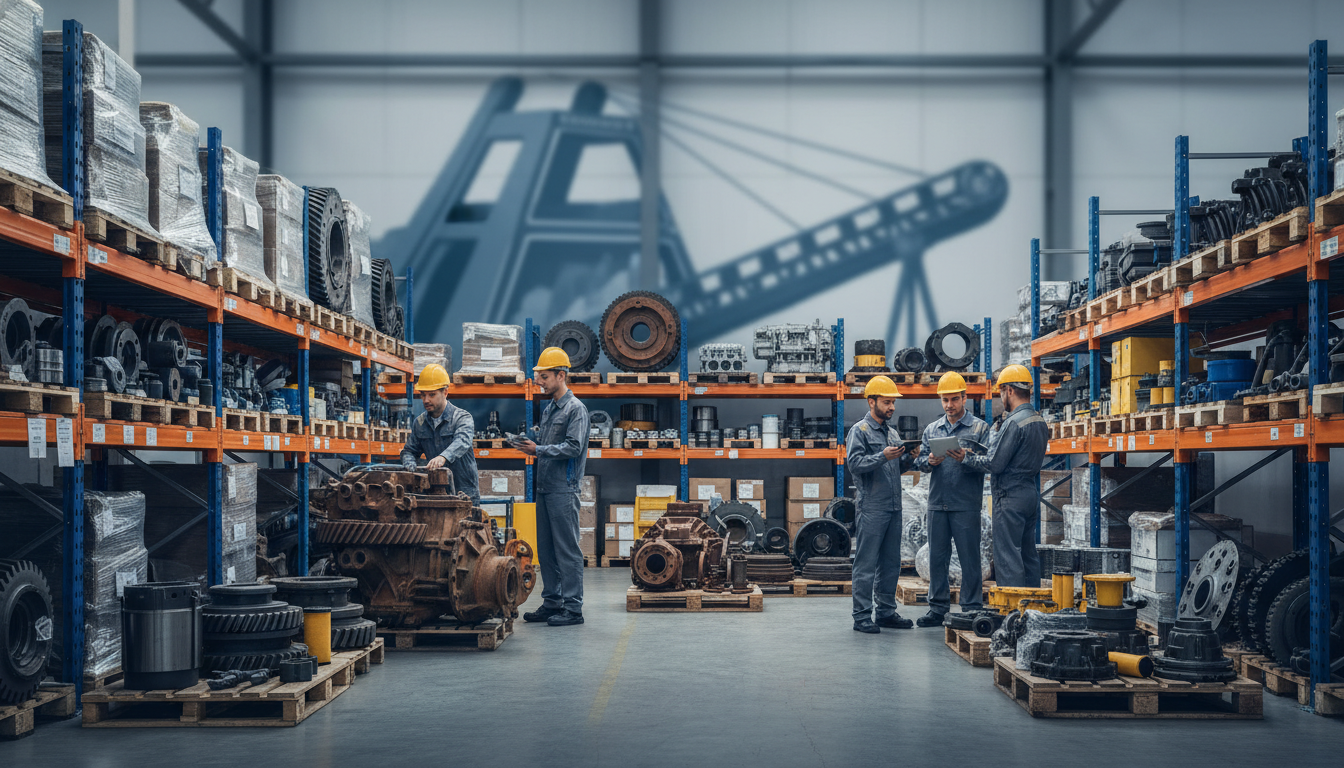
Obtaining mining equipment replacement parts for legacy machines is one of the most persistent challenges in fleet management. Many mines operate equipment that is 20 or more years old, and OEM dealer support may have ended entirely.
Options for Legacy Equipment
Step 1: Identify the exact part number from the original manual or the stamped ID plate on the machine.
Step 2: Search specialized suppliers. Vintage Parts stocks over 29,000 new-old-stock OEM parts for machinery from brands including John Deere, Komatsu, and Joy.
Step 3: Contact aftermarket manufacturers such as Boundary Equipment, which can reverse-engineer components for Bucyrus Erie, P&H, and other classic mining shovels.
Step 4: Explore used parts from dismantled equipment. RMS Mining Solutions maintains documentation of prior usage hours on all removed components, helping you gauge remaining service life before purchase.
“Reverse-engineered aftermarket parts for discontinued equipment have become a critical supply channel. When OEM support ends, qualified aftermarket manufacturers are often the only viable path to keeping a productive machine in service.” – Based on sourcing experience with Bucyrus Erie and P&H shovel fleets across multiple continents.
How to Calculate Total Cost of Ownership for Mining Parts
The true cost of any part extends well beyond its invoice price. Total cost of ownership (TCO) includes purchase price, installation labor, downtime exposure, ongoing maintenance, and expected service life. Applying TCO analysis to mining equipment replacement parts decisions consistently produces better outcomes than price-only comparisons.
Downtime Factor
Every hour of unplanned downtime can cost a large mine tens of thousands of dollars in lost production. Choosing a part with a proven reliability record, even at a higher upfront price, often yields a lower TCO because it reduces the frequency of unexpected failures. For high-utilization haul trucks running 20+ hours per day, this calculation is especially critical.
Condition Monitoring and Predictive Replacement
Progressive operators, as highlighted by Cat Mining, use condition monitoring to predict when components will fail before they actually do. This data-driven approach lets you schedule replacements during planned maintenance windows, avoiding emergency purchases and reducing labor overtime costs. Oil analysis, vibration monitoring, and thermal imaging are the three most widely adopted condition monitoring tools in large-scale mining operations. Parts that last longer between replacement intervals directly lower your TCO.
Maintenance Strategies to Extend Part Life
Proper care dramatically extends the service life of all mining equipment replacement parts. A proactive maintenance program, based on industry maintenance data, can meaningfully cut replacement frequency across most component categories.
Lubrication and Inspection
Regular lubrication of pivot points and systematic inspection of seals, hoses, and bearings prevent premature wear. Condition-based maintenance is the practice of servicing equipment based on real-time data such as vibration readings, temperature trends, and oil analysis results, rather than fixed calendar intervals. This approach reduces both over-maintenance and surprise failures.
Operator Training
Well-trained operators reduce impact loads and avoid sudden stops that stress components. Simple habits like proper bucket loading technique and smooth acceleration extend the service life of booms, link arms, and cutting edges. Operator behavior is one of the most cost-effective levers available for reducing parts consumption.
Record Keeping
Track every replacement: date, operating hours, part number, and supplier. This data reveals wear patterns and helps forecast future needs, ensuring you always have the right mining equipment replacement parts on hand before a breakdown forces an emergency order. A well-maintained parts history also strengthens your negotiating position with suppliers.
Pros and Cons of Aftermarket Mining Equipment Replacement Parts
Aftermarket components represent the largest share of the replacement parts market for mining operations. Understanding where they deliver value and where they fall short helps procurement teams make informed decisions.
Pros
- Lower purchase price: Aftermarket parts typically cost 20-40% less than equivalent OEM components, freeing budget for other maintenance priorities.
- Broader availability: Multiple competing suppliers mean shorter lead times and less dependence on a single dealer network.
- Legacy equipment coverage: Aftermarket manufacturers often continue producing parts for discontinued models long after OEM support ends.
- Performance parity: Reputable aftermarket suppliers engineer parts to meet or exceed OEM specifications, particularly for wear items like bucket teeth, cutting edges, and crusher liners.
Cons
- Variable quality: Not all aftermarket suppliers maintain consistent manufacturing tolerances. Low-cost imports can fail prematurely, negating any price advantage.
- Warranty limitations: Aftermarket parts typically carry shorter or more restricted warranties than OEM components.
- Compatibility risk: Incorrect fitment on critical hydraulic or drivetrain components can cause secondary damage and void OEM equipment warranties.
- No OEM engineering data: Aftermarket manufacturers work from reverse-engineering rather than original design files, which can introduce small dimensional variances on precision components.
Frequently Asked Questions
How do I find the exact part number for my mining machine?
Check the OEM operator or parts manual, the stamped identification plate on the machine, or contact a supplier with the equipment serial number. 3GEN Export can cross-reference part numbers across Caterpillar, Komatsu, Volvo, and 40+ additional brands from a single inquiry.
What is the difference between OEM and aftermarket parts?
OEM parts are manufactured by the original equipment maker and guarantee exact fit and certified performance. Aftermarket parts are produced by independent companies and typically offer a lower purchase price, but quality varies significantly between suppliers. Always request material certifications and test reports from any aftermarket source.
Can used parts be safely installed in critical applications?
Used parts are best suited for non-critical components or machines approaching retirement. For critical hydraulic, drivetrain, or structural applications, always use OEM or certified rebuilt parts. If you do source used components, inspect for visible wear and request documented usage hours before installation.
How quickly can I get replacement parts for a breakdown?
Lead times depend on the supplier and part type. Warwood Armature provides same-day delivery on rush orders, and Arnold Machinery guarantees 24-hour parts availability. 3GEN Export offers global delivery in as few as 5 business days to most destinations worldwide.
Do rebuilt parts come with a warranty?
Reputable rebuilders typically offer warranties ranging from 6 to 12 months on certified components. Always confirm coverage terms and exclusions before purchase. RMS Mining Solutions, for example, backs its qualified rebuilt components with documented warranty terms.
Is it worth paying a premium for OEM parts?
For critical drivetrain or hydraulic components, OEM parts often deliver a lower total cost over the machine’s full life due to longer service intervals, assured dimensional accuracy, and manufacturer-backed reliability data. For wear items and consumables, qualified aftermarket parts frequently offer comparable performance at a better price point.
Shop OEM-quality mining equipment replacement parts with global 5-day delivery at 3genexport.com.