
Aftermarket construction equipment parts are replacement components manufactured by third-party companies to match OEM specifications while delivering 40-70% cost savings. When your CAT 320 excavator needs a hydraulic pump or your Komatsu dozer requires undercarriage components, these parts provide identical performance without the premium pricing.
Key Takeaways
- Aftermarket construction equipment parts offer 40–70% cost savings vs. OEM while meeting original specifications.
- Match the part type (new aftermarket, rebuilt, or used) to your operational demands and budget.
- Verify supplier quality through ISO-certified manufacturing, warranty terms, and real-world reviews.
- Use exact OEM part numbers or equipment model/serial numbers to guarantee compatibility.
- Stock high-wear components like filters, seals, and undercarriage parts to minimize downtime.
What Are Aftermarket Construction Equipment Parts?
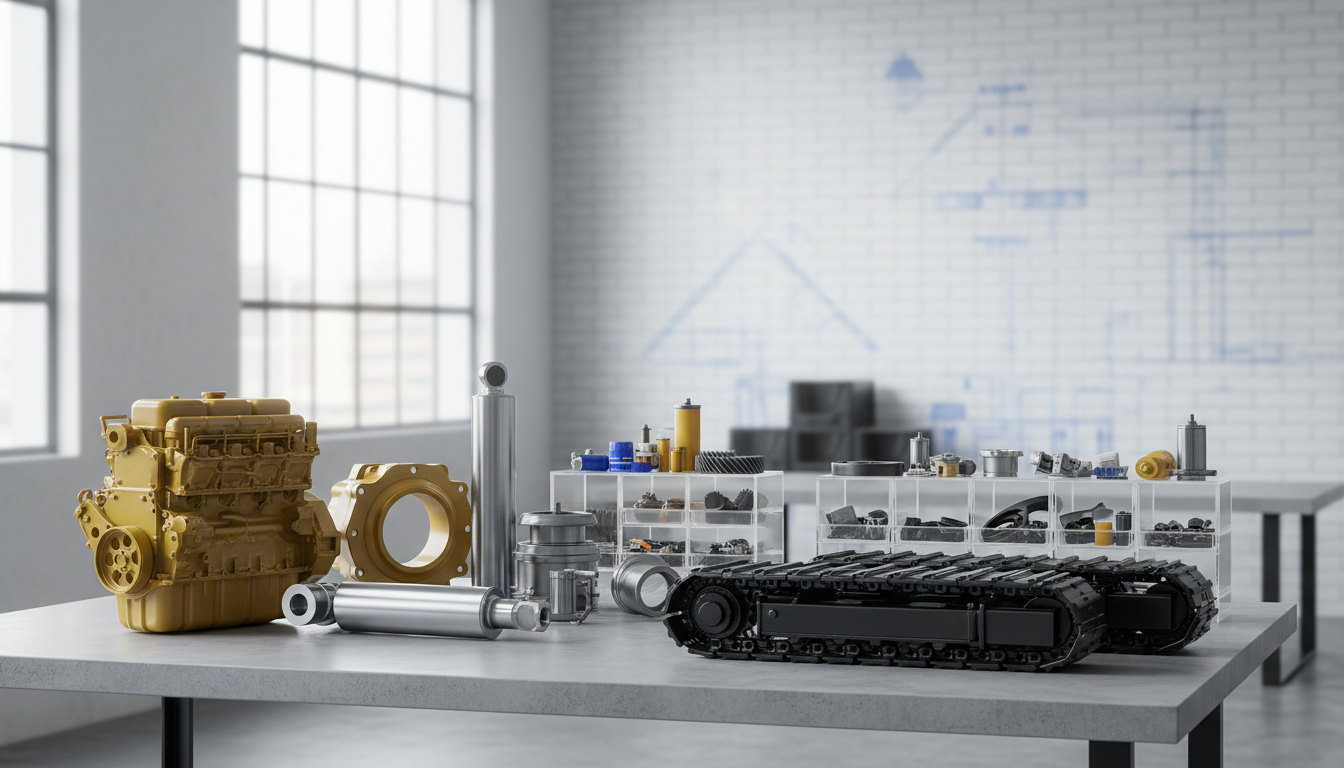
These replacement components cover everything from hydraulic pumps and final drives to engine overhauls and undercarriage assemblies for excavators, dozers, loaders, and more. Third-party manufacturers reverse-engineer OEM designs to create parts that fit and perform identically to originals.
“Our aftermarket construction equipment parts are manufactured to meet or exceed OEM specifications, often by the same suppliers, guaranteeing a perfect fit and outstanding durability.” , H&R Construction Equipment Parts
When you buy these components, you avoid the premium pricing of OEM branding while still getting reliable performance. For example, a new aftermarket final drive for a Caterpillar 315B can cost $7,340, a fraction of the OEM list price, and ship with a full warranty. This value proposition has made them the go-to choice for fleets and independent operators who manage tight repair budgets without sacrificing uptime.
Types of Aftermarket Replacement Parts
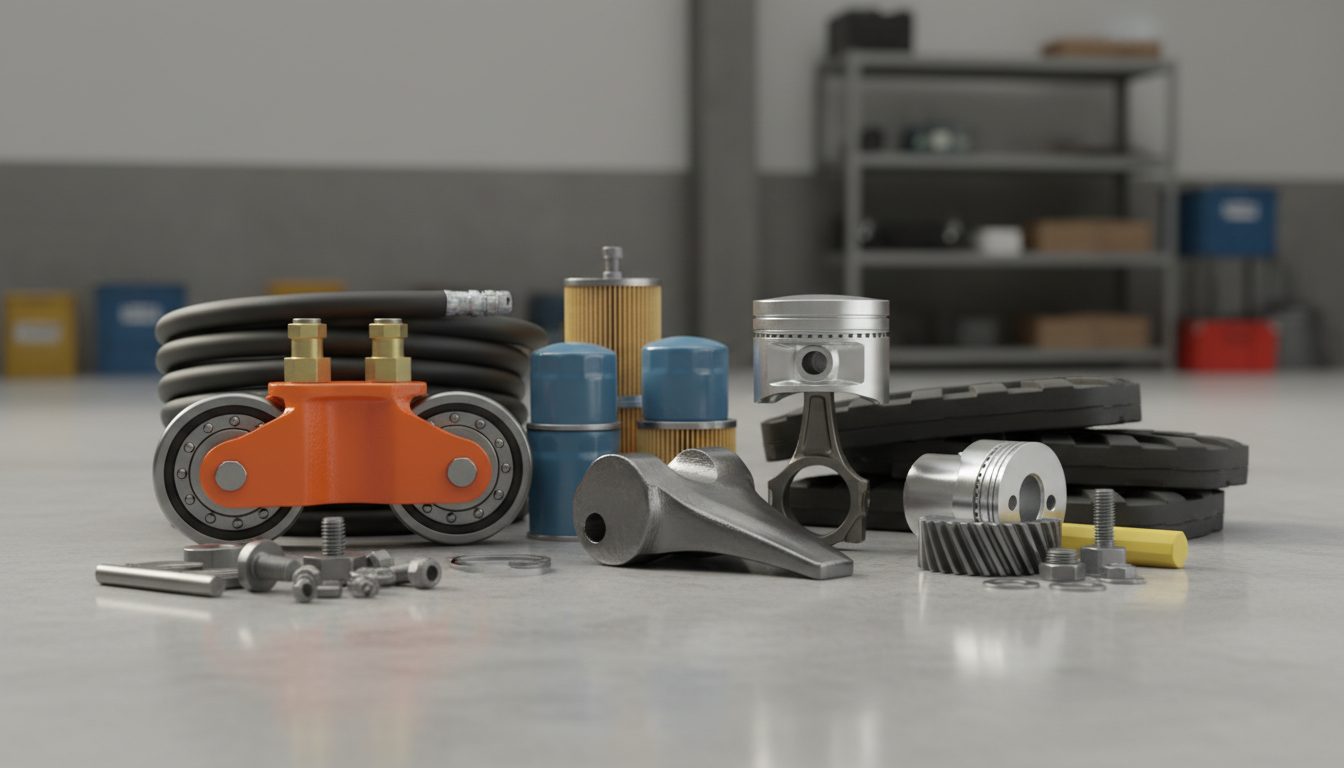
Not all replacement components are created equal. Understanding the three main categories helps you pick the right option for your application.
New Aftermarket Parts
These are brand-new components built to reverse-engineered OEM specifications using modern materials and manufacturing processes. They have never been installed and carry fresh warranties, typically 6 to 12 months. ACTParts, for instance, sources from the Italian GB Group (CGR Ghinassi), which has been producing new replacement parts since 1927. New aftermarket construction equipment parts excel in high-wear systems like hydraulic cylinders, pins and bushings, and final drives where any compromise in metallurgy or tolerances leads to premature failure.
Rebuilt or Reconditioned Parts
Rebuilt parts start as used, worn cores that are disassembled, cleaned, inspected, and reassembled with new seals, bearings, and friction materials to restore factory performance. They typically cost 20–40% less than new aftermarket equivalents and often carry a warranty similar to new components. Major suppliers like H&R and Machinery Parts Warehouse stock rebuilt transmissions, torque converters, and differentials. A rebuilt transmission for a Volvo A25E can run $27,950, substantial savings over new OEM pricing for an equal-as-spec component.
Used or Take-Off Parts
Used parts are pulled from decommissioned machines and sold as-is. They are the lowest-cost option but offer no performance guarantee unless specifically tagged as “tested good.” AMS Parts lists over 930,000 used and salvage parts across dozens of makes. These are best suited for older, out-of-production equipment where new parts are unavailable or for low-stress items like cab glass, brackets, and non-structural body panels. Always confirm return policies and request high-resolution photos when buying used parts online.
What to Look for When Buying Aftermarket Parts
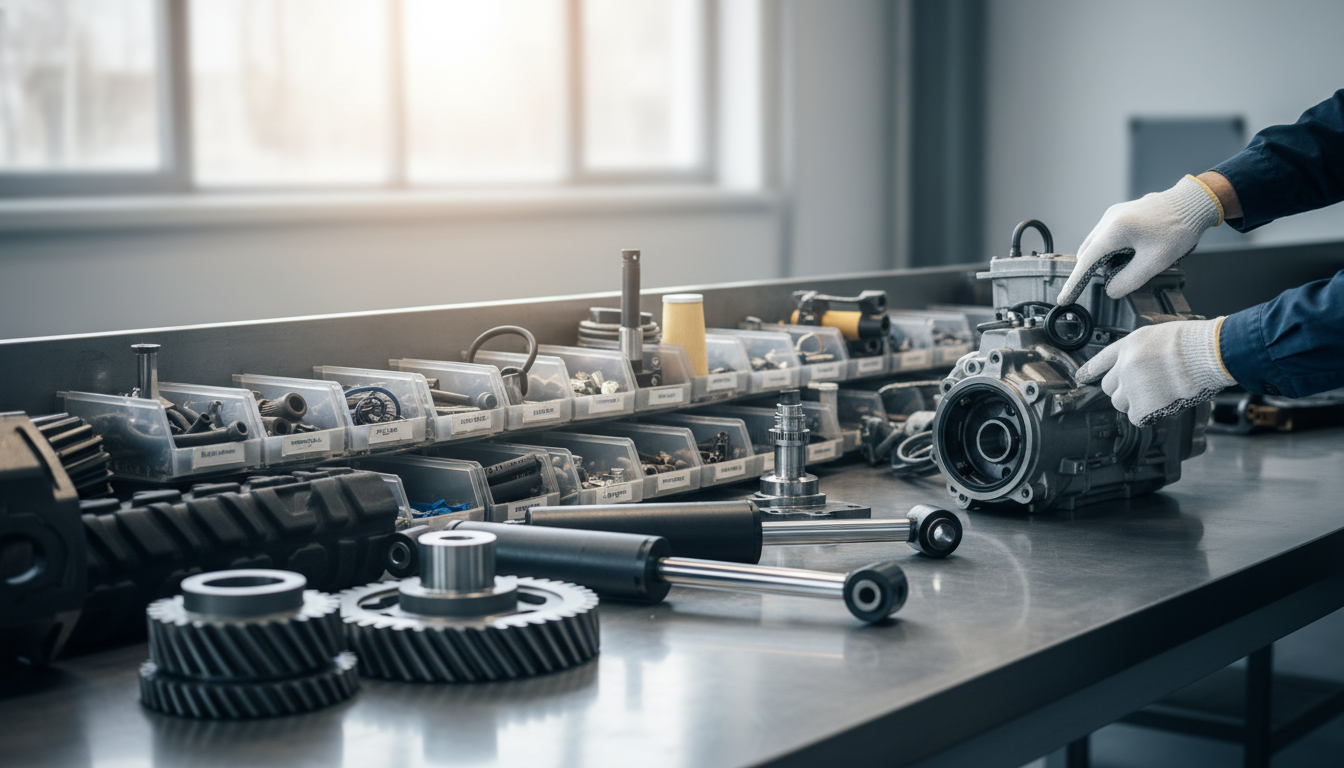
Choosing the right supplier and part prevents mismatches that can lead to catastrophic failures. Use this checklist to vet every purchase.
1. Verify the Part Number
Always start with the OEM part number, stamped directly on the component or obtained from your machine’s parts book. Cross‑reference it against the supplier’s catalog. Reputable distributors like ConEquip and EPS Store allow you to search by OEM number and machine model simultaneously. A small discrepancy, like an 8 mm difference in a pin diameter, can wreck a bucket linkage.
2. Confirm Material and Manufacturing Standards
Ask if the part is manufactured under ISO 9001 or similar quality management systems. For critical components, look for suppliers that provide material certifications (e.g., SAE grade for steel or ASTM specifications for bushings). ACTParts emphasizes that its Italian partner uses generations-old craftsmanship combined with modern CNC and heat-treating equipment to meet OEM material properties.
3. Evaluate Warranty and Return Terms
Industry-leading suppliers offer at least a 6-month warranty on new aftermarket parts and 90 days on rebuilt units. H&R Parts explicitly states a warranty on all items, while HW Parts provides 30-day returns. A robust warranty signals that the supplier stands behind the reverse-engineering quality.
4. Check Inventory Depth and Availability
Uptime depends on fast delivery. Five distribution centers, like those operated by ACTParts, mean orders ship same-day and arrive in 1–3 business days across most of the U.S. For international buyers, look for suppliers with global logistics partnerships. When a dozer is down on a job site, a part that ships in 48 hours instead of two weeks can save thousands in idle crew costs.
5. Review Real Customer Feedback
Check independent reviews, not just the supplier’s website testimonials. Platforms like Google Maps and industry forums often contain unfiltered feedback. Machinery Parts Warehouse displays a 4.2-star rating from customer reviews that highlight helpful staff and wide part availability, indicators of a supplier that solves problems, not just ships boxes.
Pricing Tiers and What to Expect
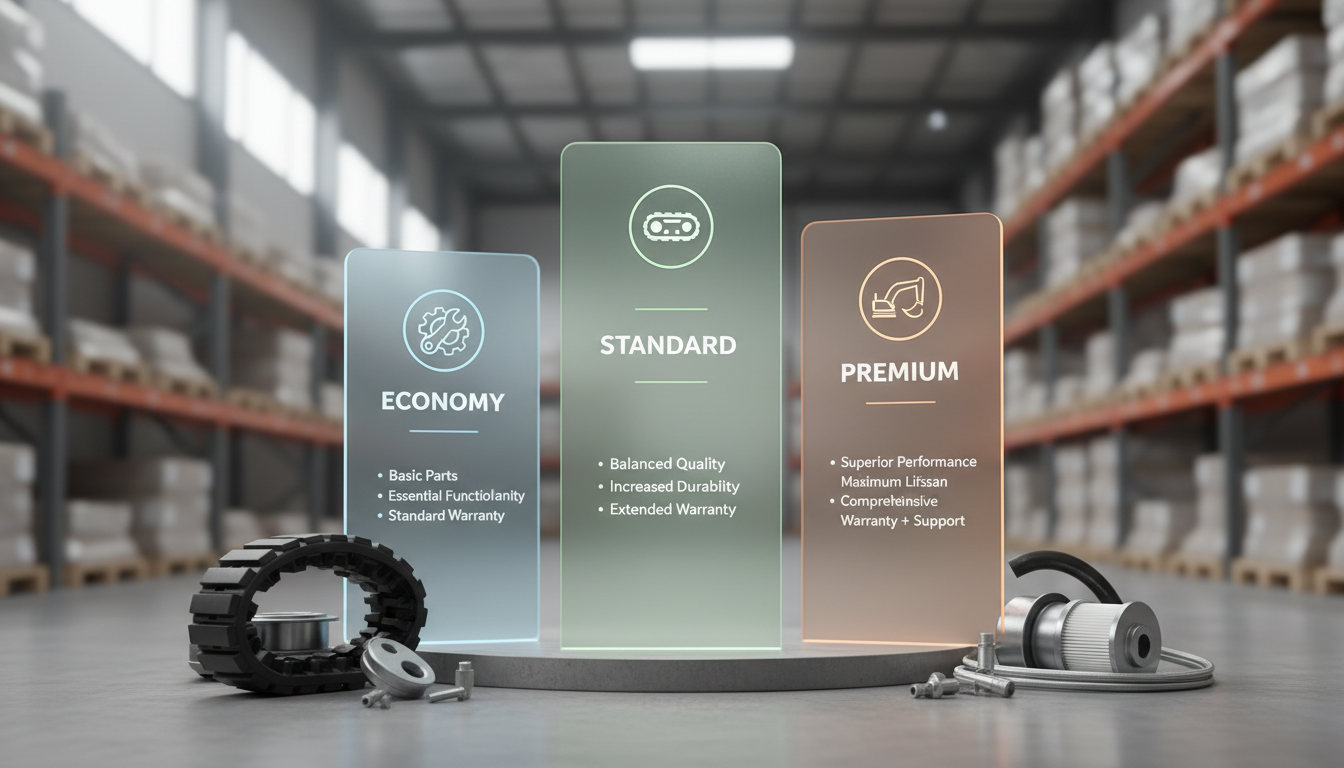
Costs vary significantly by type and seller. Use this table to align your budget with the right category for aftermarket construction equipment parts.
| Part Category | Budget (Used) | Mid-Range (Rebuilt) | Premium (New Aftermarket) |
|---|---|---|---|
| Final Drive (mid-size excavator) | $2,000–$4,000 | $5,000–$8,000 | $7,000–$12,000 |
| Hydraulic Main Pump | $1,500–$3,000 | $3,000–$5,500 | $4,500–$8,000 |
| Engine Overhaul Kit (6‑cylinder diesel) | $1,200–$2,500 | $2,500–$4,000 | $3,500–$6,000 |
| Undercarriage Track Group (dozer) | $8,000–$15,000 | $15,000–$22,000 | $20,000–$35,000 |
Prices are estimated 2026 ranges based on publicly listed supplier inventories and may vary by make, model, and market conditions.
How to Match Parts to Your Equipment Model
Getting the right part the first time requires a disciplined process. Follow these steps to avoid expensive returns and extended downtime.
Step 1: Collect Machine Identifiers
Gather the complete model number, serial number (often called ESN or PIN), and engine arrangement number. These are stamped on the frame, engine block, and cab plate. For Komatsu equipment, the model and serial number prefix (e.g., D65EX-16) are critical for narrowing final drive gear ratios.
Step 2: Locate the OEM Part Number
Remove the defective part and find the cast or stamped number. On hydraulic cylinders, it may be on the barrel or rod end. If the number is illegible, download the OEM parts catalog from your machine manufacturer’s website (many offer free online access) or use third-party books provided by suppliers like AMS Parts.
Step 3: Cross-Reference with Aftermarket Catalogs
Enter the OEM number into the search tool of a trusted supplier. Systems at ConEquip and H&R automatically map OEM part numbers to their equivalent. If a direct match does not appear, use the supplier’s “Quick Quote” form to have a parts specialist manually locate the item.
Step 4: Confirm Application Details
Review the fitment list to verify your exact machine variant. A final drive for a Caterpillar 315B L may not fit a 315C without a serial number break. Suppliers often note serial number ranges in the part description, never skip this check.
Step 5: Order and Track
Place the order online or by phone, and save the confirmation with the part number and promised ship date. With same-day shipping from multi-location distributors, many parts arrive within 48 hours, saving your crew from costly idle time.
“Up to 70% off new aftermarket construction equipment parts, used and rebuilt components, with same-day shipping from five distribution centers.” , ACTParts & AMS Parts combined value proposition
Pros and Cons
Pros
- Significant cost savings of 40-70% compared to OEM pricing
- Often manufactured by the same Tier-1 suppliers as OEM parts
- Faster availability than OEM parts with global shipping networks
- Comprehensive warranties ranging from 6-12 months on new components
- Wide selection including parts for discontinued equipment models
Cons
- Quality can vary between manufacturers without proper vetting
- May void remaining OEM warranty on newer equipment
- Limited technical support compared to OEM dealer networks
- Potential compatibility issues if part numbers are mismatched
- Resale value impact on equipment with non-OEM components
Care & Maintenance for Component Longevity
Even the best replacement part will fail prematurely if installed incorrectly or neglected. Follow OEM service intervals and these best practices to maximize lifespan of your aftermarket construction equipment parts.
- Break-In Periods: New hydraulic pumps and final drives require a break-in of 50–100 hours with frequent system fluid and filter changes to remove manufacturing debris.
- Fluid Cleanliness: Contaminated oil is the #1 killer of hydraulic components. Maintain ISO 4406 cleanliness levels of 18/16/13 or better in your system.
- Torque Procedures: Use calibrated torque wrenches for fasteners on critical assemblies like final drive motor mounts. Even a 10% over-torque can distort housings.
- Regular Inspections: Check undercarriage wear, seal leaks, and bushing play every 250 hours. Catching a worn track adjuster seal early prevents idler and track frame damage.
- Documentation: Keep records of every part installed, manufacturer, part number, date, and hours at installation. This log becomes invaluable for troubleshooting and warranty claims.
International Shipping and Global Considerations
Global procurement of aftermarket construction equipment parts requires understanding customs regulations and shipping logistics. Most major suppliers offer international delivery with proper documentation for customs clearance. Factor in duties, taxes, and potential delays when ordering from overseas suppliers. Some manufacturers maintain regional distribution centers to reduce shipping times and costs for international customers.
Shop OEM-quality spare parts with global 5-day delivery at 3genexport.com
Frequently Asked Questions
Are aftermarket construction equipment parts as reliable as OEM?
Yes, when sourced from reputable manufacturers who reverse-engineer to exact OEM tolerances and use equivalent materials. Many come from the same Tier-1 suppliers that produce for OEMs, ensuring a perfect fit and durability that meets or exceeds original specs.
How much money can I save with aftermarket parts?
Savings typically range from 40% to 70% compared to OEM list prices. On a $15,000 OEM final drive, an aftermarket version might cost only $4,500–$9,000, delivering the same performance with a comparable warranty.
What is the warranty on aftermarket components?
Most suppliers provide a 6–12 month warranty on new parts and 90 days to 6 months on rebuilt units. Always confirm warranty terms in writing before purchase; some suppliers also offer extended coverage for commercial fleets.
Can I return a part if it does not fit?
Yes, if the supplier accepts returns and the part is in resaleable condition. Return windows vary, typically 30 days, and restocking fees may apply. Always verify the return policy and keep all packaging until the part is installed.
How do I know which part fits my machine?
Use the OEM part number from your machine’s parts book or the number stamped on the old part to cross-reference against catalogs. If you don’t have the number, provide the machine make, model, and serial number to a parts specialist, who can identify the correct component.