
- Save up to 70% versus OEM dealer prices on replacement parts.
- Match OEM specs: Quality aftermarket components often meet or exceed the original manufacturer’s standards.
- Wide availability: Online suppliers stock parts for over 50 major equipment brands.
- Fast shipping: Many distributors ship within 36–48 hours, with some offering same-day dispatch.
- Warranty protection: Leading providers offer warranties from 6 months to 2 years.
Aftermarket heavy equipment parts are replacement components manufactured by third-party companies, not the original equipment manufacturer. These parts deliver substantial cost savings while maintaining OEM-level quality and performance standards.
Why Choose Aftermarket Heavy Equipment Parts?
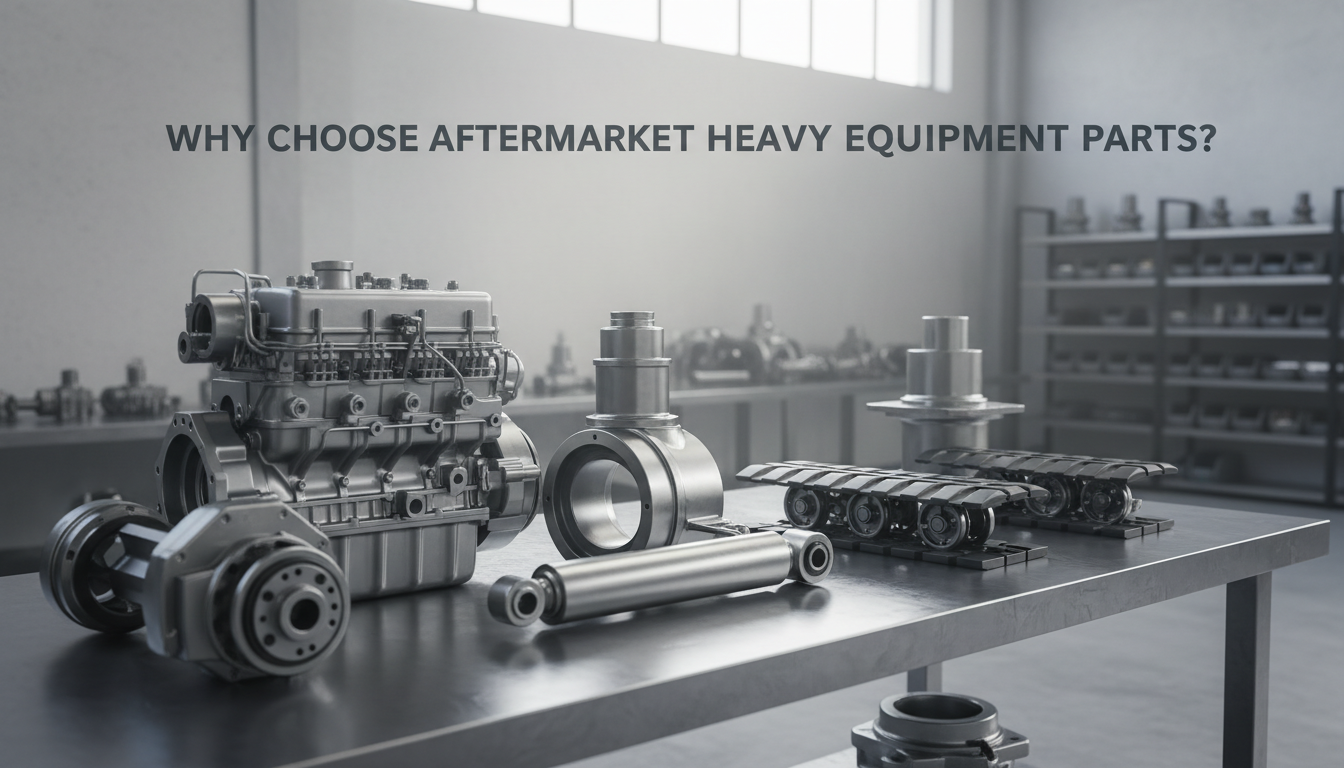
Aftermarket heavy equipment parts offer a cost-effective alternative to OEM components without sacrificing quality. Fleet managers routinely save up to 70% compared to dealer list prices on critical components like final drives, hydraulic pumps, and undercarriage systems. For a construction company replacing multiple excavator final drives annually, this translates to tens of thousands in operational savings.
Modern aftermarket manufacturers have eliminated the quality concerns of decades past. Many suppliers now produce components to meet or exceed ISO 9001:2015 quality management standards. These parts often come from the same factories that manufacture OEM components, ensuring identical specifications and performance. The key difference? You’re not paying the OEM brand premium.
Availability represents another significant advantage. While OEM dealers typically operate 3–4 distribution centers, leading aftermarket suppliers maintain five or more strategically located warehouses across North America. This expanded network reduces shipping times and keeps your equipment running when downtime costs real money.
Types of Aftermarket Parts Available
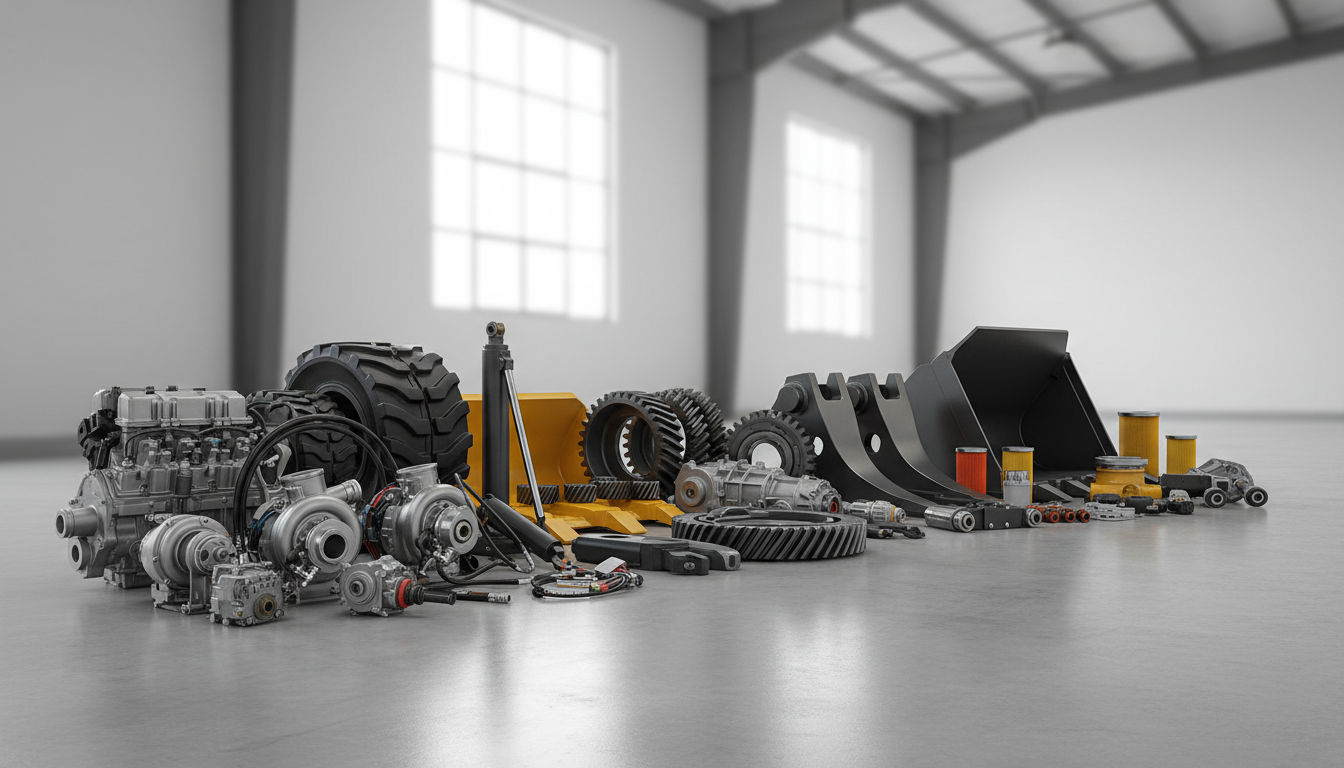
Understanding the three main categories helps buyers select the right solution for their specific application and budget requirements.
New Aftermarket Parts
These are brand-new components manufactured to OEM specifications by certified third-party producers. They carry full warranties of 12–24 months and work best for high-stress applications like final drives, hydraulic cylinders, and transmission assemblies. You get new-part reliability at 40-70% less than OEM pricing.
Remanufactured (Rebuilt) Parts
Remanufactured components start as used cores that undergo complete disassembly, cleaning, inspection, and rebuilding with new seals, bearings, and wear surfaces. They meet original performance standards and typically include warranties comparable to new parts. This option works well for expensive assemblies such as engine long blocks, torque converters, and swing motors where cost savings matter most.
Used / Salvaged Parts
Used parts come from dismantled machines and sell as-is with limited or no warranty. Quality varies significantly, so purchase only from reputable dismantlers who test components before sale. These parts suit older equipment where new replacements are discontinued, or when budget constraints require the lowest upfront investment.
What to Look For When Buying Aftermarket Heavy Equipment Parts
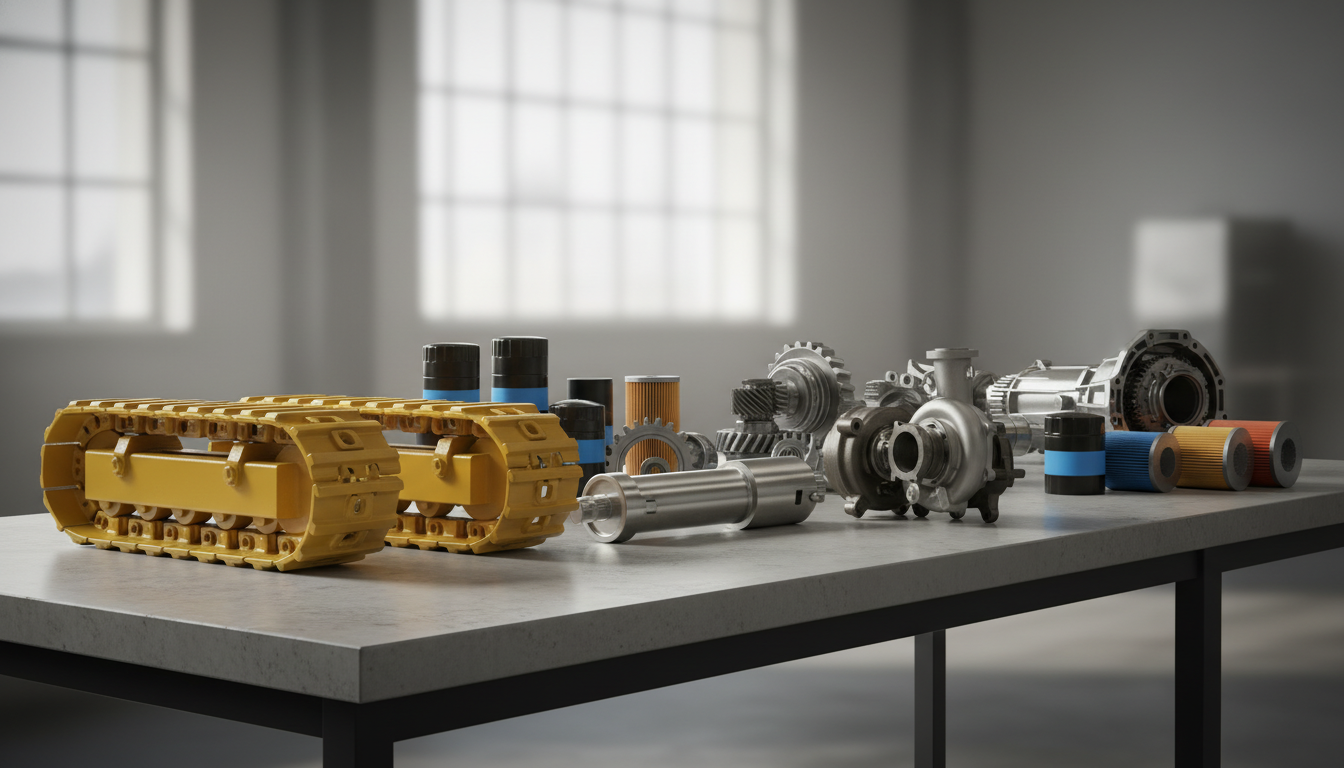
Not all suppliers deliver equal quality or service. Use these evaluation criteria to identify reliable partners.
Material and Manufacturing Quality
Demand parts that reference specific OEM material specifications — cast steel idlers, forged teeth, or hardened bushings. Verify the manufacturer holds ISO 9001 or equivalent certifications. Quality suppliers proudly display their manufacturing standards and testing protocols.
Exact Fit and Compatibility
Always cross-reference the original equipment part number against the aftermarket equivalent. Even minor dimensional differences cause premature failure and costly rework. Provide your machine’s serial number to account for mid-production design changes that affect compatibility. Most professional suppliers offer online lookup tools to simplify this verification process.
Warranty and Return Policy
Strong warranty coverage signals manufacturer confidence in their product. Seek minimum 6-month coverage; many suppliers provide 12–24 months on major components. Some distributors offer 60-day money-back guarantees on select items. Read warranty terms carefully — driveline components may have separate conditions, and coverage typically requires professional installation.
Price Transparency
Reliable sellers display pricing openly or provide fast, no-obligation quotes. Watch for hidden core charges or restocking fees that inflate total cost. Compare complete landed cost — part price plus shipping and applicable taxes — rather than just the advertised number.
How to Choose the Right Supplier
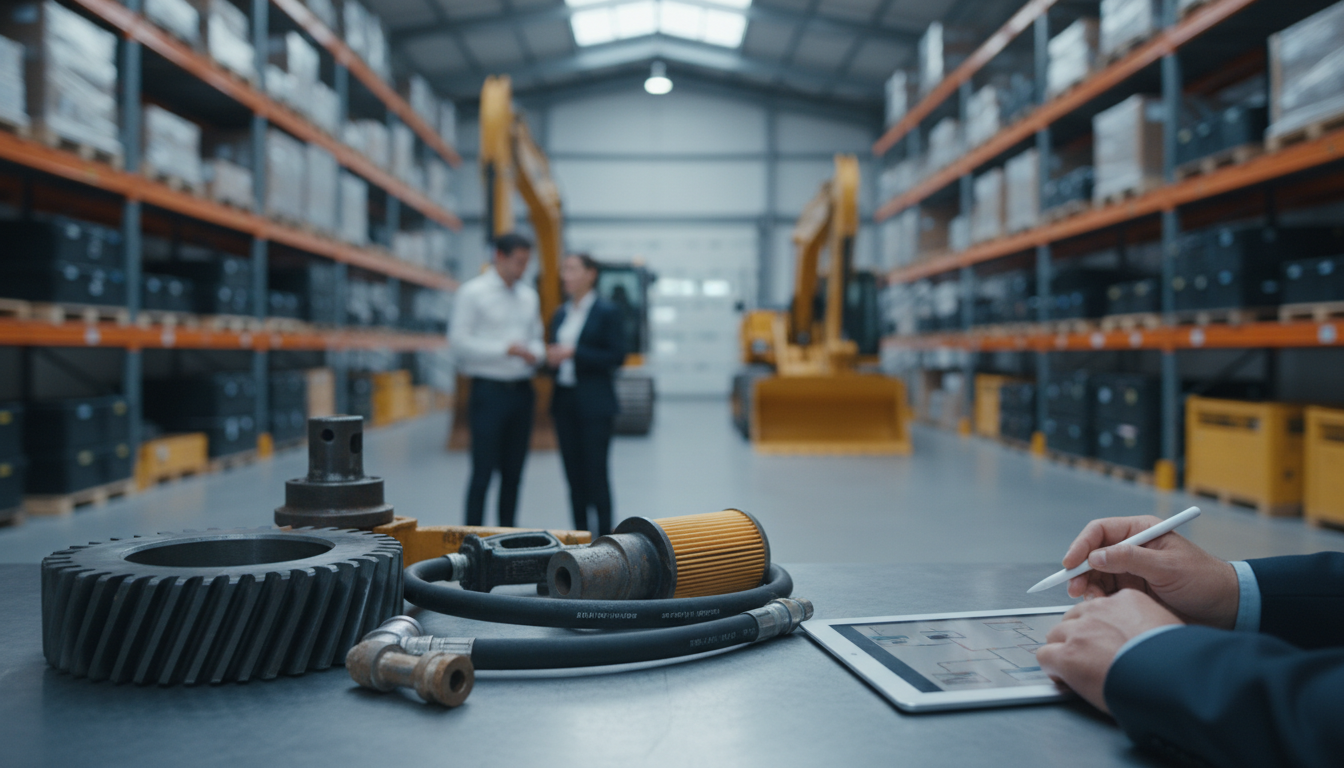
Your parts source directly impacts equipment uptime and operational efficiency. Evaluate these critical factors.
- Inventory breadth: Verify they stock parts for your specific equipment makes and models. Leading distributors serve 50+ brands, from Caterpillar and Komatsu to Bobcat and Volvo.
- Location and logistics: Multiple warehouses reduce transit times significantly. Strategic locations in industrial hubs like Miami, Dallas, Kansas City, and Buffalo enable faster delivery to most North American job sites.
- Customer feedback: Look for consistent positive reviews about part quality, shipping speed, and technical support. Ratings above 4.5 stars across thousands of reviews indicate reliable service.
- Technical expertise: Knowledgeable parts specialists cross-reference numbers accurately, suggest related failure-prone items, and provide installation guidance. This expertise prevents costly ordering mistakes.
Step-by-Step: How to Purchase Aftermarket Heavy Equipment Parts
Following a systematic approach ensures you receive the correct component on the first order, minimizing downtime and frustration.
- Gather machine data: Record the equipment make, model, year, and serial number. The serial number is critical — manufacturers often change component suppliers mid-production cycle.
- Locate the OEM part number: Find the number stamped on the failed component or reference the OEM parts catalog. Many parts manuals are available online through aftermarket supplier websites.
- Cross-reference the number: Use the supplier’s search tool or consult with a parts specialist. They’ll match your OEM number to their equivalent, confirming physical dimensions and performance specifications.
- Verify compatibility: Check the part’s application chart to confirm it lists your exact machine model and serial number range.
- Request detailed quote: Confirm current inventory, pricing, delivery timeline, and warranty terms. For expensive assemblies like final drives, request formal written quotations for your records.
- Complete your order: Provide payment and shipping details once you approve the quote. Retain all order confirmations and tracking information for follow-up.
Cost Comparison: What to Expect to Pay
The following comparison illustrates typical price ranges and value propositions across different part categories. Examples based on mid-size excavator final drive assembly pricing.
| Part Type | Price Range | Warranty | Best For |
|---|---|---|---|
| Brand New OEM | $15,000 – $16,500 | 12 months | Warranty-critical machines |
| New Aftermarket | $5,000 – $9,000 | 12 – 24 months | Most applications; best value |
| Remanufactured | $7,000 – $11,000 | 12 – 18 months | Expensive assemblies |
| Used / Salvage | $2,500 – $5,500 | 30 – 90 days | Pre-2005 machines |
Quality aftermarket components consistently deliver superior price-to-performance ratios compared to OEM alternatives. According to Grand View Research, the global construction equipment aftermarket reached nearly $30 billion in 2023, driven by demand for cost-efficient replacements. When you factor in extended warranties and technical support from established suppliers, total ownership costs favor aftermarket solutions by substantial margins.
Shipping costs vary by supplier and component size. Many distributors offer expedited shipping within 36 hours, while others provide free shipping on large assemblies. Always inquire about core return credits for remanufactured parts — returning your old unit can reduce invoice totals by hundreds of dollars.
Ground Engaging Tools and Undercarriage Considerations
Ground engaging tools (GET) like bucket teeth, cutting edges, and wear plates require special attention when selecting aftermarket options. These components endure extreme abrasion and impact forces, making material composition critical. Look for hardened steel construction with proper heat treatment specifications. Many aftermarket GET suppliers offer enhanced metallurgy that actually outlasts OEM components in high-wear applications.
For undercarriage parts, measure wear patterns before ordering replacements. Track pad wear should be uniform across the width — uneven wear indicates alignment issues that new parts won’t solve. Sprocket and idler wear typically follows predictable patterns based on operating hours and ground conditions. Quality aftermarket suppliers provide wear measurement guides to help determine optimal replacement timing.
Shop OEM-quality spare parts with global 5-day delivery at 3genexport.com
Frequently Asked Questions
Are aftermarket heavy equipment parts reliable?
Yes, when sourced from reputable suppliers. Modern aftermarket parts meet or exceed OEM specifications and often come from ISO 9001 certified facilities. Many carry warranties up to two years, demonstrating manufacturer confidence in their quality.
How do I know an aftermarket part will fit my machine?
Cross-reference the OEM part number with the aftermarket supplier’s database using your machine’s serial number. This accounts for production updates that could affect compatibility. Professional suppliers provide detailed application charts and technical support to ensure proper fitment.
What is the typical warranty on aftermarket parts?
Warranties range from 6 to 24 months depending on the component type and supplier. High-wear items like undercarriage parts may have shorter terms, while major assemblies often carry full year coverage or longer.
Can I return a part if it doesn’t solve my problem?
Most suppliers accept returns within 30–60 days if parts remain in resalable condition. However, electrical components and custom-order items may be non-returnable. Always review return policies before purchasing, and some distributors offer money-back guarantees on select products.
Is it safe to buy heavy equipment parts online?
Yes, when using established distributors with secure checkout systems, clear contact information, and verified customer reviews. Look for suppliers with transparent business practices, multiple warehouse locations, and strong technical support capabilities.
How much can I really save with aftermarket parts?
Savings of 40–70% versus OEM pricing are common across most component categories. On expensive assemblies like final drives or hydraulic pumps, this can represent thousands of dollars per unit while maintaining comparable warranty coverage and performance standards.