
When your Case CX210D excavator’s hydraulic pump starts showing pressure drops, you’re facing a choice that could impact your operation for months. Go with genuine OEM parts at premium pricing, or risk aftermarket alternatives that might save money upfront but cost more in downtime later.
We’ve been sourcing case construction equipment parts for mining and construction fleets across 40+ countries since 2006. The decision between OEM and aftermarket isn’t just about price , it’s about understanding your equipment’s critical systems, your operational timeline, and the real cost of failure.
Understanding Case Construction Equipment Parts Categories
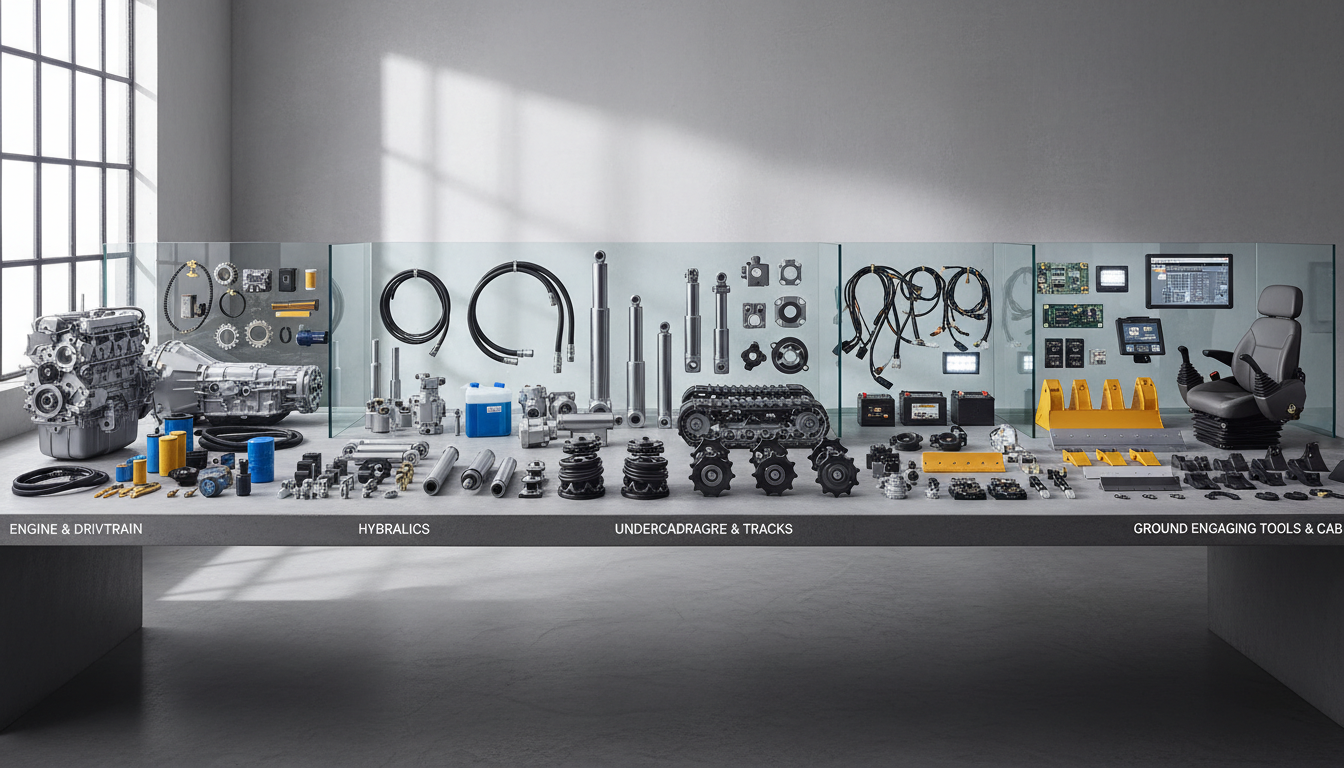
Case construction equipment spans multiple product lines, each with distinct parts requirements and failure patterns. From compact track loaders to massive mining excavators, the parts ecosystem varies significantly across machine types and operational environments.
Engine and Powertrain Components
Case machines typically run Cummins, FPT, or Deutz engines depending on the model year and size class. The CX350D excavator uses a Cummins QSB6.7 engine, while smaller machines like the TV380 track loader feature FPT F5C powerplants. Engine parts represent roughly 30% of total maintenance spend over a machine’s lifecycle.
Critical engine components include fuel injection systems, turbochargers, and cooling system parts. A single injector failure on a Case 1150M dozer can cascade into fuel system contamination if not addressed quickly. We’ve seen operators attempt to stretch injector life beyond recommended intervals, only to face complete fuel system rebuilds costing 3-4x the original injector replacement.
Hydraulic System Parts
Case hydraulic systems are the backbone of machine performance, particularly on excavators and wheel loaders. The company’s pilot-operated hydraulic controls require precise pressure tolerances , typically 3,200-3,500 PSI for main hydraulic circuits on mid-size excavators.
Hydraulic pump rebuilds on Case CX470C excavators typically require 15-20 individual seals and gaskets, plus precision-machined valve plates. Aftermarket seal kits often include generic O-rings that don’t match OEM durometer specifications, leading to premature failure under high-pressure cycling.
Undercarriage and Track Components
Track undercarriage represents the highest wear component category for tracked Case machines. A complete undercarriage replacement on a CX245D excavator includes track chains, drive sprockets, idlers, and roller assemblies , typically costing $25,000-35,000 for OEM parts.
Track pin and bushing wear rates vary dramatically based on ground conditions. Rocky quarry applications can consume undercarriage components 2-3x faster than general construction work. We’ve tracked undercarriage life across different Case models and found the CX210D consistently delivers 4,000-5,000 hours in mixed applications.
OEM vs Aftermarket Parts: The Real Performance Gap
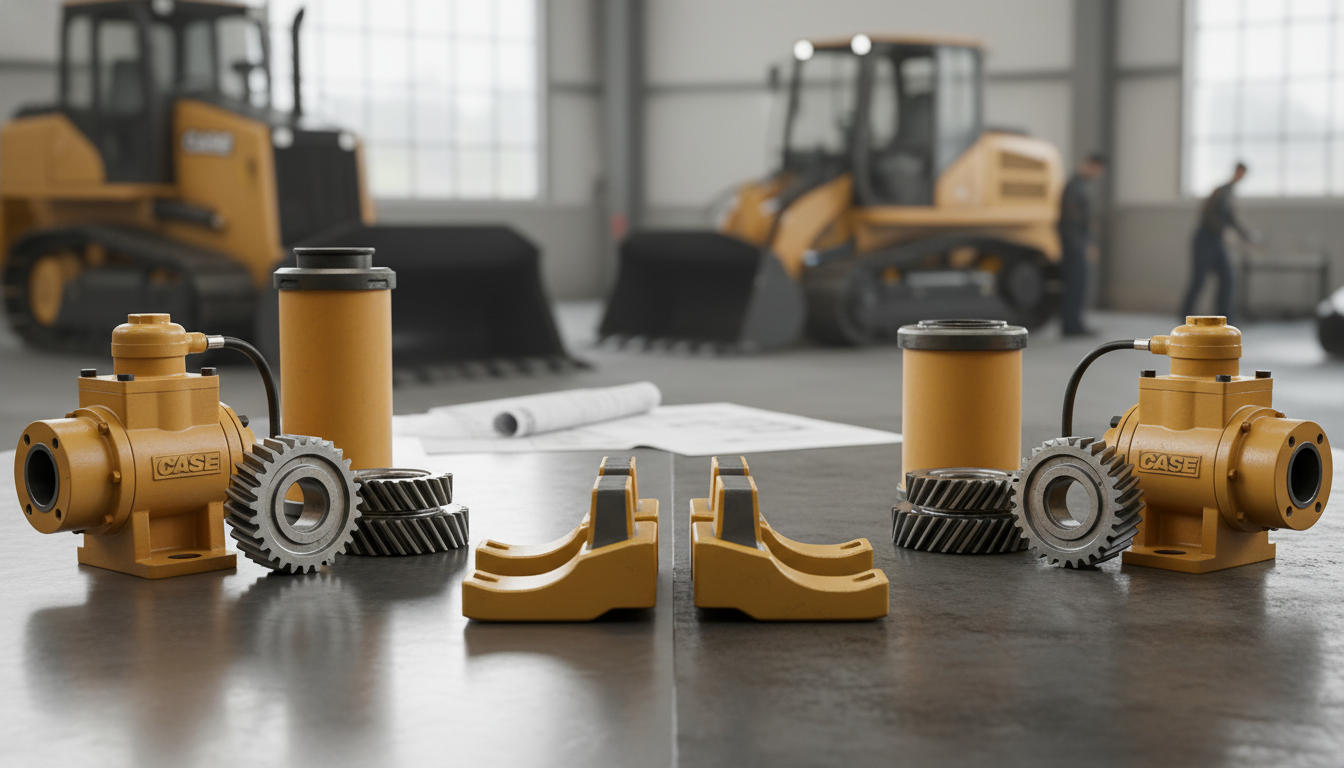
The choice between genuine Case parts and aftermarket alternatives involves more than price comparison. Manufacturing tolerances, material specifications, and quality control processes create measurable performance differences that impact total cost of ownership.
Manufacturing Standards and Quality Control
Genuine Case parts undergo the same quality control processes as original production components. This includes material certification, dimensional inspection, and performance testing under simulated operating conditions. Aftermarket manufacturers may skip these validation steps to reduce costs.
For hydraulic components, tolerance variations of just 0.001 inches can affect system pressure and flow rates. We’ve measured aftermarket hydraulic cylinders with bore tolerances 2-3x wider than OEM specifications, resulting in internal leakage and reduced lifting capacity over time.
Material Composition Differences
OEM Case parts use specific steel grades and heat treatment processes developed during original equipment design. The drive sprockets on Case track loaders, for example, use through-hardened alloy steel with specific carbon content to balance wear resistance and impact toughness.
Aftermarket sprockets often use surface hardening techniques that create a hard outer layer over softer core material. While initially performing similarly to OEM parts, these components typically show accelerated wear once the hardened surface is compromised , usually around 60-70% of expected OEM service life.
Warranty and Support Considerations
Genuine Case parts carry complete warranty coverage that extends beyond the component itself. If an OEM hydraulic pump fails prematurely, Case may cover related system damage caused by contamination or pressure spikes. Aftermarket parts typically limit warranty coverage to the specific component that failed.
Technical support represents another significant difference. Case engineers can provide application-specific guidance for parts selection and installation procedures. Aftermarket suppliers rarely offer this level of technical expertise, leaving operators to rely on local mechanics or equipment dealers for troubleshooting support.
Critical Parts That Demand OEM Quality
Not all case construction equipment parts carry equal risk when choosing between OEM and aftermarket options. Certain components operate under extreme conditions or perform safety-critical functions that justify premium OEM pricing.
Hydraulic System Components
Main hydraulic pumps, swing motors, and pilot valve assemblies represent the highest-risk aftermarket substitutions. These components operate under continuous high pressure and precise flow control requirements that demand exact manufacturing tolerances.
A failed aftermarket main pump on a Case CX350D excavator doesn’t just stop the machine , it can contaminate the entire hydraulic system with metal particles and debris. System flushing and component replacement costs often exceed $40,000, far outweighing any initial savings from aftermarket pump selection.
Hydraulic cylinders present a more detailed decision. Boom and arm cylinders on excavators operate under extreme side loading and require precise bore tolerances for proper sealing. Aftermarket cylinders with looser manufacturing tolerances may function initially but develop internal leakage within 1,000-1,500 operating hours.
Engine Management and Fuel Systems
Modern Case machines rely on sophisticated engine management systems that monitor dozens of parameters in real-time. Fuel injectors, turbocharger assemblies, and exhaust aftertreatment components must meet exact specifications to maintain emissions compliance and optimal performance.
Aftermarket fuel injectors may physically fit Case engines but lack the precise spray patterns and flow rates of OEM components. This can trigger diagnostic trouble codes, reduce fuel efficiency, and potentially damage exhaust aftertreatment systems that cost $15,000+ to replace.
Electrical and Electronic Components
Case construction equipment increasingly relies on electronic control modules, sensors, and wiring harnesses that integrate with proprietary software systems. These components require exact electrical specifications and communication protocols that aftermarket manufacturers struggle to replicate.
We’ve seen aftermarket display modules for Case machines that physically connect but can’t access all machine functions or diagnostic capabilities. Operators lose critical monitoring data and troubleshooting capabilities, making it difficult to identify developing problems before they cause major failures.
Aftermarket Parts That Deliver Value
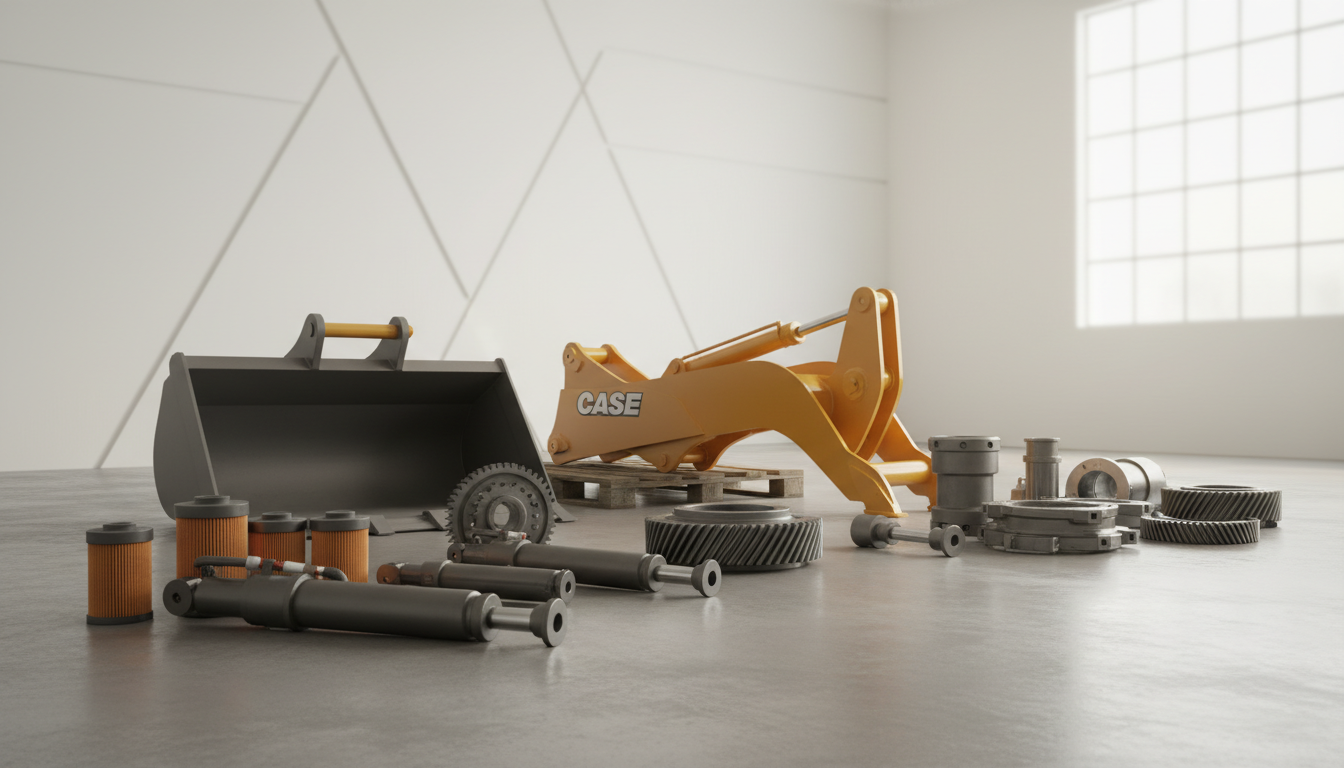
While critical systems demand OEM quality, many case construction equipment parts categories offer excellent aftermarket alternatives that provide significant cost savings without compromising reliability or performance.
Wear Parts and Consumables
Cutting edges, bucket teeth, and ground engaging tools represent ideal aftermarket opportunities. These components are designed to wear and require regular replacement regardless of material quality. Aftermarket alternatives often cost 40-60% less than OEM parts while delivering comparable service life.
Case loader bucket cutting edges typically last 200-400 hours in general construction applications. Aftermarket edges made from comparable steel grades show similar wear patterns and replacement intervals. The key is selecting aftermarket suppliers that use proper steel specifications and heat treatment processes.
Track pads for rubber track machines offer another excellent aftermarket opportunity. While the steel track chain requires precise manufacturing tolerances, rubber pads are relatively simple components that aftermarket manufacturers can produce to OEM quality standards at significant cost savings.
Filtration and Maintenance Items
Engine oil filters, hydraulic filters, and air filtration elements represent high-volume, frequently replaced components where aftermarket alternatives excel. These parts use standardized filtration media and manufacturing processes that multiple suppliers can execute effectively.
Quality aftermarket filter manufacturers often exceed OEM specifications for filtration efficiency and dirt-holding capacity. Baldwin, Donaldson, and other established filter companies produce aftermarket alternatives for Case machines that match or exceed original equipment performance.
Cab and Comfort Components
Operator seats, HVAC components, and interior trim pieces offer good aftermarket opportunities since they don’t affect machine performance or safety systems. Aftermarket seat manufacturers like Grammer and KAB produce replacement seats for Case machines that often include upgraded features like improved suspension or heating elements.
Door glass, mirrors, and lighting components also represent low-risk aftermarket categories. LED light upgrades from aftermarket suppliers often provide better illumination and longer service life than original halogen systems while costing less than OEM replacements.
Global Sourcing and Supply Chain Considerations
Sourcing case construction equipment parts globally requires understanding regional manufacturing capabilities, shipping logistics, and quality control variations across different markets and suppliers.
Regional Manufacturing Hubs
Major aftermarket parts manufacturing concentrates in specific global regions based on material costs, manufacturing expertise, and proximity to raw materials. China dominates high-volume steel components like track chains, sprockets, and structural parts. European manufacturers excel in precision hydraulic components and electronic systems.
Korean manufacturers have established strong positions in undercarriage components and hydraulic cylinders, often matching OEM quality at competitive pricing. Japanese suppliers focus on high-precision engine components and electronic control systems where manufacturing tolerances are critical.
Understanding these regional strengths helps procurement teams identify the most reliable sources for specific part categories. A hydraulic pump from a Chinese manufacturer may offer significant cost savings but require more thorough quality inspection than a similar component from an established European supplier.
Quality Control and Inspection Protocols
Global parts sourcing requires strong quality control processes to ensure aftermarket components meet operational requirements. This includes incoming inspection procedures, supplier audits, and performance tracking across different part categories and manufacturers.
Critical dimensions and material properties should be verified through independent testing, particularly for high-stress components like hydraulic cylinders and drive train parts. We maintain relationships with certified testing laboratories in major manufacturing regions to validate aftermarket parts before they enter our supply chain.
Supplier certification programs help identify aftermarket manufacturers with consistent quality control processes. ISO 9001 certification provides baseline quality assurance, while industry-specific certifications like IATF 16949 indicate more rigorous manufacturing controls.
Shipping and Logistics Optimization
Global parts sourcing must balance cost savings against delivery time requirements and shipping costs. Emergency parts requirements often justify air freight costs that eliminate aftermarket price advantages, making local inventory management critical for cost-effective operations.
Container shipping from Asia typically requires 3-4 weeks transit time plus customs clearance, making it suitable for planned maintenance and inventory replenishment but inadequate for emergency repairs. Regional distribution centers help bridge this gap by maintaining inventory of fast-moving parts closer to end users.
Customs and import regulations vary significantly across different countries and part categories. Hydraulic components may face different duty rates than electronic parts, and some countries require specific certifications or documentation for imported machinery components.
Maintenance Strategies and Parts Planning
Effective parts management for Case construction equipment requires understanding failure patterns, maintenance intervals, and inventory optimization strategies that balance carrying costs against downtime risks.
Predictive Maintenance and Parts Forecasting
Modern Case machines generate extensive diagnostic data that can predict component failures before they occur. Hydraulic system pressure monitoring, engine oil analysis, and vibration monitoring provide early warning indicators that allow planned parts replacement during scheduled maintenance windows.
Track undercarriage wear follows predictable patterns based on operating hours and ground conditions. Measuring track pin wear at regular intervals allows accurate forecasting of complete undercarriage replacement timing, enabling bulk parts purchasing and maintenance scheduling optimization.
Engine component life varies significantly based on operating conditions and maintenance quality. Fuel system components typically require replacement every 3,000-5,000 hours, while turbochargers may last 8,000-12,000 hours in well-maintained applications. Understanding these patterns helps optimize parts inventory levels.
Inventory Management and Carrying Costs
Parts inventory represents significant capital investment that must be balanced against downtime costs and emergency procurement expenses. Fast-moving consumables like filters and fluids justify higher inventory levels, while expensive, slow-moving components require careful demand forecasting.
ABC analysis helps categorize parts based on usage frequency and cost impact. Category A parts represent high-cost, critical components that justify safety stock despite high carrying costs. Category C parts include low-cost consumables that can be ordered as needed without significant inventory investment.
Regional parts availability affects inventory strategy significantly. Remote mining operations may justify higher safety stock levels for critical components, while urban construction fleets can rely more heavily on dealer networks and expedited shipping for emergency parts requirements.
Dealer Networks and Emergency Support
Case dealer networks provide critical support for emergency parts requirements and technical expertise, but coverage varies significantly across different geographic regions and market segments. Understanding dealer capabilities helps optimize parts sourcing strategies.
Major metropolitan areas typically have multiple Case dealers with extensive parts inventory and technical support capabilities. Rural and remote locations may have limited dealer coverage, making independent parts sourcing and local repair capabilities more important for operational continuity.
Dealer parts pricing often includes significant markups over wholesale costs, but emergency availability and technical support may justify premium pricing for critical repairs. Building relationships with multiple dealers helps ensure parts availability and competitive pricing for routine maintenance requirements.
Cost Analysis and ROI Calculations
Making informed decisions about case construction equipment parts requires complete cost analysis that considers initial purchase price, installation costs, expected service life, and failure consequences across different sourcing options.
Total Cost of Ownership Modeling
True parts cost extends far beyond initial purchase price to include installation labor, downtime costs, and potential secondary damage from component failures. A $500 aftermarket hydraulic seal that fails prematurely may cost $5,000 in emergency repairs and lost productivity.
Labor costs vary significantly based on component accessibility and complexity. Replacing hydraulic cylinders on Case excavators requires boom removal and specialized lifting equipment, adding $2,000-3,000 in labor costs regardless of parts pricing. Simple components like filters and belts have minimal labor impact on total replacement cost.
Downtime costs depend heavily on operational context and equipment utilization rates. A critical excavator on a highway construction project may generate $2,000+ per day in lost productivity, making premium OEM parts cost-effective even for relatively minor components. Lower-utilization equipment may justify aftermarket alternatives with acceptable reliability.
Risk Assessment and Failure Impact
Component failure consequences vary dramatically across different machine systems and operational environments. Hydraulic system failures typically cause complete machine shutdown, while cab comfort issues may reduce operator efficiency without stopping production entirely.
Safety-critical components like braking systems and ROPS structures demand OEM quality regardless of cost considerations. Regulatory compliance requirements may mandate specific certifications or approvals that eliminate aftermarket alternatives for certain component categories.
Secondary damage potential affects parts selection decisions significantly. A failed aftermarket turbocharger may contaminate the entire engine lubrication system, requiring complete engine rebuild at costs exceeding $50,000. Conservative OEM parts selection for critical components helps minimize catastrophic failure risks.
Financing and Cash Flow Considerations
Parts procurement timing affects cash flow and financing requirements, particularly for major component replacements and planned maintenance programs. Bulk purchasing agreements can reduce unit costs but require significant upfront capital investment.
Scheduled maintenance programs allow better cash flow planning and often enable volume pricing discounts from parts suppliers. Emergency repairs typically require immediate payment and premium pricing, making predictive maintenance and parts planning financially advantageous.
Equipment financing agreements may include parts and service packages that affect procurement flexibility and cost structures. Understanding these contractual obligations helps optimize parts sourcing strategies within existing financial frameworks.
| Component Category | OEM Premium | Aftermarket Risk | Recommendation |
|---|---|---|---|
| Hydraulic Pumps | 40-60% | High | OEM Only |
| Track Chains | 30-45% | Medium | Quality Aftermarket |
| Filters | 50-most | Low | Aftermarket |
| Engine Injectors | 35-over half | High | OEM Preferred |
| Cutting Edges | 60-most | Low | Aftermarket |
Pro Tip: Always verify aftermarket parts compatibility using Case part numbers rather than generic descriptions. A “hydraulic seal kit” may include dozens of different seals with specific durometer and dimensional requirements.
Ready to source reliable case construction equipment parts with global delivery? Browse our extensive inventory of OEM-quality components for Case excavators, loaders, and dozers at 3genexport.com , with 5-day delivery to over 40 countries worldwide.