
Diesel engine spare parts are replacement components used to repair, maintain, or overhaul diesel-powered engines in trucks, heavy equipment, marine vessels, and generators across industrial applications worldwide.
Key Takeaways
- Diesel engine spare parts encompass everything from internal engine components to fuel and electrical systems
- Choosing between OEM and aftermarket parts depends on budget, warranty needs, and engine age
- Trusted suppliers like Reliance Power Parts stock over 100,000 components and ship within 2–3 business days
- Regular maintenance and using quality spare parts can significantly extend diesel engine service life
- Digital parts catalogs and mobile apps now streamline identification and ordering processes
- Remanufactured components offer sustainable alternatives with OEM-equivalent performance at reduced costs
“Selecting the right diesel engine spare parts is about balancing quality, cost, and urgency. Always verify part numbers with your engine’s data plate and buy from a dealer with a strong warranty,” says Michael Torres, a veteran diesel technician with over 25 years in heavy equipment repair.
What Are Diesel Engine Spare Parts?
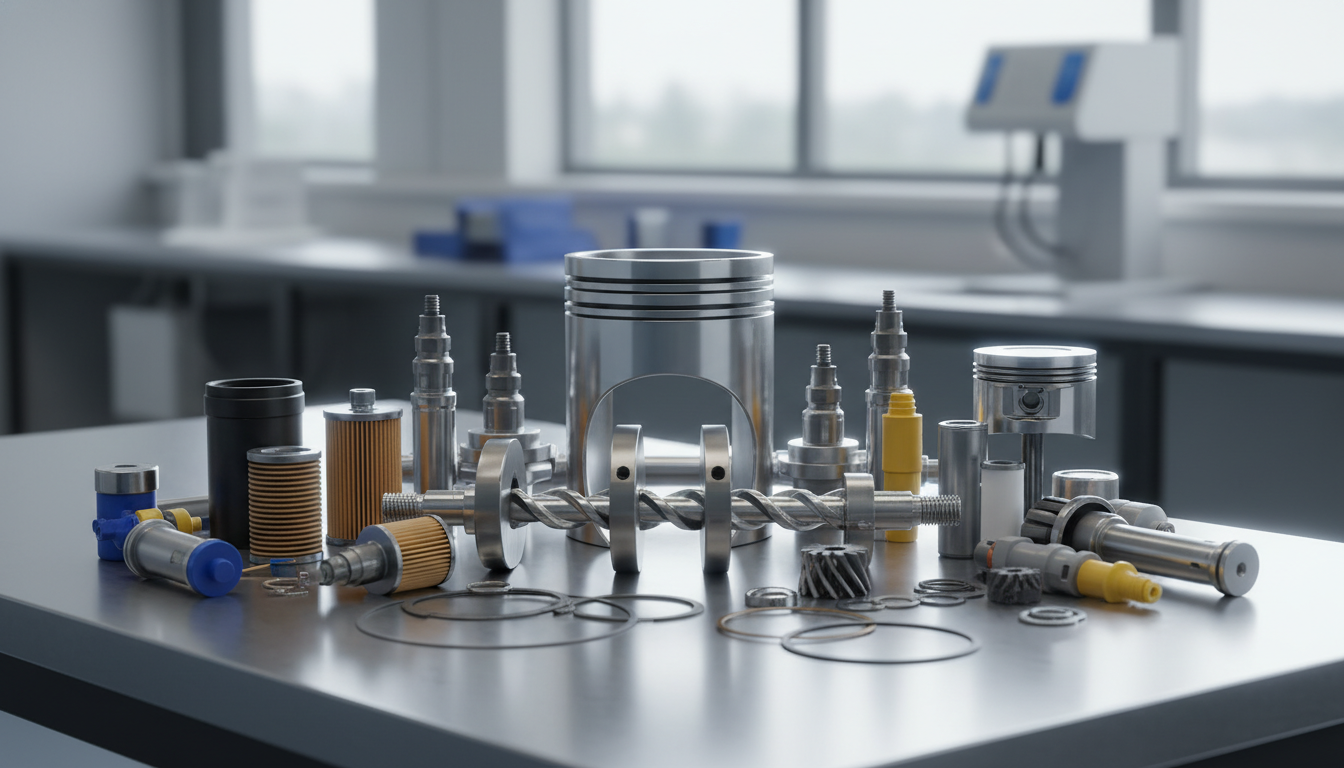
Diesel engine spare parts are the essential replacement components that keep compression-ignition engines running reliably. Whether it’s a failed injector in a semi-truck or a worn piston ring in a stationary generator, these parts restore performance and prevent costly downtime. The market covers thousands of individual items, from major castings like cylinder heads and crankshafts to small seals, sensors, and gaskets.
The Importance of Quality Components
Using substandard parts can lead to premature failure, increased fuel consumption, and even catastrophic engine damage. Suppliers like Reliance Power Parts, with over 40 years of experience and an A+ BBB rating, stock only components that meet or exceed OEM standards, backed by comprehensive warranties.
How Spare Parts Are Categorized
The industry groups spare parts by engine subsystem: fuel delivery, air intake, exhaust, cooling, lubrication, and electrical. Many online retailers, such as Diesel Parts Direct, allow you to filter by engine make and model, simplifying the ordering process.
Common Types of Replacement Parts

Diesel engines rely on dozens of precise components. Understanding the most frequently replaced parts helps operators plan maintenance and stock critical spares.
Engine Block and Internal Components
These include pistons, piston rings, cylinder liners, connecting rods, bearings, and crankshafts. An engine rebuild kit bundles many of these parts for a complete overhaul. For example, Highway & Heavy Parts offers overhaul kits for Cummins ISX and Caterpillar C15 engines that include all necessary gaskets, pistons, and bearings.
Fuel System Parts
Fuel injectors, injection pumps, high-pressure common rails, and lift pumps are critical for combustion efficiency. Aftermarket manufacturers now produce OEM-spec injectors that can reduce costs significantly while maintaining performance.
Cooling and Lubrication Components
Water pumps, oil pumps, oil coolers, thermostats, and radiators keep engine temperatures stable. Regular replacement of these parts prevents overheating and extends engine life.
Electrical and Control Systems
Modern diesel engines depend on sophisticated electronic control modules (ECMs), sensors, and wiring harnesses. These components manage fuel injection timing, exhaust gas recirculation, and turbocharger boost pressure. Faulty sensors can trigger limp mode or cause emissions compliance issues.
Exhaust and Emissions Components
Diesel particulate filters (DPF), selective catalytic reduction (SCR) systems, and exhaust gas recirculation (EGR) valves are mandatory for emissions compliance. These parts require periodic cleaning or replacement to maintain engine performance and avoid regulatory penalties.
What to Look For When Buying Diesel Engine Parts

Smart purchasing decisions start with understanding quality indicators and compatibility requirements. These criteria help you avoid costly mistakes and ensure reliable performance.
Part Number Verification
Always cross-reference the OEM part number with your engine’s serial number and model code. Mismatched parts can cause immediate failure or long-term damage. Reputable suppliers provide lookup tools that verify compatibility before you order.
Quality Certifications
Look for parts that meet ISO 9001 quality standards or carry OEM equivalency statements. Premium aftermarket brands often exceed original specifications through improved materials or design refinements.
Warranty Coverage
Quality suppliers back their products with substantial warranties. OEM parts typically include 12-24 month coverage, while premium aftermarket components may offer similar or extended protection. Avoid suppliers offering only 30-90 day warranties on critical components.
Supplier Reputation and Support
Choose suppliers with proven track records in heavy equipment or commercial vehicle markets. Technical support availability, return policies, and shipping speed directly impact your downtime costs.
OEM vs Aftermarket Components

One of the biggest decisions when buying spare parts is whether to choose Original Equipment Manufacturer (OEM) parts or aftermarket alternatives. Aftermarket parts are components manufactured by third-party companies to fit and function like the OEM part.
Comparing OEM and Aftermarket Parts
| Factor | OEM Parts | Aftermarket Parts |
|---|---|---|
| Quality | Manufactured to exact factory specifications | Varies; premium brands match or exceed OEM standards |
| Cost | Typically higher | Generally more affordable |
| Warranty | Backed by manufacturer warranty | Warranties range from 90 days to lifetime, depending on supplier |
| Availability | Through authorized dealers only | Widely available online and through independent retailers |
| Best For | New engines under warranty, critical applications | Cost-conscious repairs, older engines, and fleets |
Certifications and Standards
Reputable aftermarket suppliers adhere to ISO 9001 quality management and may meet ASTM testing protocols. When buying aftermarket, look for parts that carry an OEM equivalency statement and a solid warranty.
Price Range Guide for 2026
Understanding cost tiers helps budget for repairs and maintenance. Prices vary significantly based on engine size, application, and part complexity.
Budget Tier ($50-$500)
Basic maintenance items like filters, belts, hoses, and gaskets fall into this range. Aftermarket options dominate this segment, offering substantial savings over OEM equivalents without compromising reliability.
Mid-Range Tier ($500-$5,000)
Fuel injectors, water pumps, turbochargers, and electronic control modules occupy this price band. Both OEM and premium aftermarket options are viable, with aftermarket parts typically costing 20-40% less than OEM.
Premium Tier ($5,000+)
Complete engine assemblies, cylinder heads, and major overhaul kits require significant investment. OEM parts ensure warranty compliance for newer engines, while remanufactured options provide cost-effective alternatives for older equipment.
Finding the Right Part for Your Engine
Ordering the wrong part causes delays and wasted money. A systematic approach ensures you get the correct component the first time.
A 4-Step Process for Ordering the Correct Part
- Locate the engine data plate: Find the serial number and model code stamped on the engine block or valve cover.
- Identify the OEM part number: Use the engine manufacturer’s parts catalog or an online database to cross-reference the component.
- Verify compatibility with a supplier: Contact your parts dealer with the engine model, serial number, and OEM part code.
- Confirm shipping and warranty: Ensure the part is in stock and backed by a satisfaction guarantee, as offered by many retailers.
Using Engine Serial Numbers
The engine serial number is a unique identifier stamped on the engine block that provides exact details for parts ordering. Most online catalogs allow you to enter this number to filter results, reducing the risk of ordering mismatched parts.
Top Online Retailers for Diesel Components
Several specialized suppliers dominate the North American market. They combine massive inventories with technical support.
Reliance Power Parts
Reliance Power Parts stocks over 100,000 machine parts across more than 5,000 unique applications and represents 50 OEMs. Their average delivery time of 2–3 business days keeps downtime minimal.
Diesel Parts Direct
With over 40 years of experience, Diesel Parts Direct is an authorized dealer for Yanmar, Perkins, Deutz, and others. They offer a Guaranteed In-Stock Program and maintain an A+ BBB rating.
Highway & Heavy Parts
Highway & Heavy Parts lists over 32,000 parts in its online catalog, from cylinder heads to injectors. They specialize in Cummins, Caterpillar, and Detroit Diesel components and offer financing for major repairs.
Performance Upgrades and High-Performance Parts
Performance modifications can increase power output and efficiency, but require careful consideration of warranty implications and emissions compliance.
Turbocharger Upgrades
Larger or more efficient turbochargers can boost power output significantly. However, supporting modifications to fuel systems and cooling may be necessary to handle increased performance safely.
Fuel System Enhancements
High-flow injectors, performance fuel pumps, and upgraded common rail systems can improve power delivery. These modifications work best when professionally tuned to match engine capabilities.
Exhaust System Modifications
Performance exhaust systems reduce backpressure and can improve fuel economy. Ensure any modifications comply with local emissions regulations to avoid legal issues.
Marine and Generator Applications
Marine diesel engines and stationary generators have unique requirements compared to automotive applications. These environments demand specialized components designed for continuous operation.
Marine-Specific Components
Saltwater environments require corrosion-resistant materials and specialized cooling systems. Heat exchangers, raw water pumps, and zinc anodes need regular replacement to prevent costly damage.
Generator Set Maintenance
Standby generators require different maintenance schedules than mobile equipment. Air filters, fuel filters, and coolant systems need attention even during periods of inactivity.
Maintenance and Replacement Intervals
Preventive maintenance reduces unplanned failures and lowers total ownership costs. Many diesel engines follow a tiered schedule based on hours of operation or mileage.
Common Diesel Engine Repairs
Frequently replaced parts include fuel injectors, turbochargers, water pumps, and EGR system components. According to industry repair data, injectors and turbochargers account for a significant share of component failures in high-mileage trucks.
Scheduled Overhauls and Rebuild Kits
An engine overhaul kit is a comprehensive bundle of replacement parts, such as pistons, rings, bearings, and gaskets, required to rebuild an engine to like-new condition. Major engine manufacturers recommend in-frame overhauls at specific intervals (often 500,000–1,000,000 miles for heavy-duty trucks).
Care and Maintenance Best Practices
Proper maintenance extends component life and prevents premature failures. Following manufacturer guidelines and using quality fluids are essential for reliability.
Fluid Quality and Change Intervals
Use only manufacturer-approved engine oils, coolants, and fuel additives. Extended drain intervals with premium synthetic oils can reduce maintenance costs while providing superior protection.
Filter Replacement Strategy
Air, fuel, and oil filters protect expensive engine components from contamination. Replace filters according to manufacturer schedules, or more frequently in dusty or contaminated environments.
Storage and Handling
Store spare parts in clean, dry environments to prevent corrosion and contamination. Keep gaskets and seals in sealed packages until installation to maintain their sealing properties.
Installation Best Practices
Follow torque specifications exactly when installing components. Use proper sealants and gaskets as specified by the manufacturer. Clean all mating surfaces thoroughly before assembly.
Digital Tools for Parts Identification
Mobile apps and online databases now make it easier than ever to find the right components. Suppliers like IDParts, which celebrates 20 years in business, offer vehicle-specific filtering that matches parts to your exact engine code.
Electronic Parts Catalogs (EPCs)
Manufacturers provide EPCs that let you browse exploded diagrams and identify individual part numbers. Third-party platforms aggregate data from multiple OEMs, streamlining cross-referencing.
VIN and Serial Number Lookups
Many e-commerce sites now support instant lookup by entering your engine or chassis serial number. This drastically reduces misorders and returns.
Mobile Apps for Field Service
Technicians can now identify and order parts directly from job sites using smartphone apps. These tools often include augmented reality features that help identify components through camera recognition.
The Rise of Remanufactured Parts
Remanufactured parts, also called certified rebuilds, are gaining popularity as a sustainable and cost-effective alternative. A certified rebuild is a used component that has been disassembled, cleaned, inspected, and remachined to meet original specifications.
Environmental and Cost Benefits
Remanufacturing conserves raw materials and energy compared to producing new parts. Many fleets now specify reman injectors, turbochargers, and cylinder heads, which can deliver OEM-equivalent performance at a lower price.
What to Look for in a Reman Part
Choose reman components from ISO-certified facilities. Reputable suppliers test every unit and include a warranty equal to or better than new parts. Highway & Heavy Parts and other vendors offer reman options with extended coverage.
Pros and Cons
Pros
- Wide availability of both OEM and aftermarket options provides flexibility in sourcing
- Digital catalogs and mobile apps simplify identification and ordering processes
- Remanufactured components offer sustainable alternatives with significant cost savings
- Established supplier networks ensure fast delivery and technical support
- Quality aftermarket parts often match or exceed OEM specifications
Cons
- Part compatibility verification requires careful attention to engine serial numbers
- Quality varies significantly among aftermarket suppliers
- OEM parts carry premium pricing that can strain maintenance budgets
- Complex emissions components may require specialized diagnostic tools
- Counterfeit parts remain a concern in some market segments
2026 Market Trends and Outlook
The spare parts industry continues evolving with technological advances and changing regulations. Understanding these trends helps plan future maintenance strategies.
Electrification Impact
While electric vehicles gain market share, diesel engines remain dominant in heavy-duty applications. This creates stable demand for traditional components while spurring innovation in hybrid systems.
Supply Chain Resilience
Recent global disruptions have emphasized the importance of diversified supplier networks. Many operators now maintain larger spare parts inventories to reduce dependency on just-in-time delivery.
Advanced Materials
New alloys and coatings extend component life and improve performance. These advances particularly benefit high-stress applications like turbochargers and fuel injection systems.
Frequently Asked Questions
What are the main parts of a diesel engine?
The main components include the engine block, cylinder head, pistons, crankshaft, camshaft, connecting rods, fuel injectors, turbocharger, and oil pump. These parts form the core of any compression-ignition engine and work together to convert fuel into mechanical power.
Are aftermarket diesel parts worth it?
Yes, when sourced from reputable suppliers. High-quality aftermarket parts often meet or exceed OEM specifications and can reduce repair costs considerably, especially for older engines no longer under warranty. Look for parts with solid warranties and quality certifications.
Which engine is cheaper to maintain: diesel or gasoline?
Diesel engines generally have higher component costs but longer service intervals, so lifetime maintenance can be comparable. The specific engine model and application heavily influence the total expense, with diesel engines typically offering better fuel economy and longevity.
What are the common diesel engine repairs?
Fuel injector replacement, turbocharger failure, EGR cooler clogging, water pump leaks, and oil cooler issues are among the most frequent. Regular maintenance helps prevent these failures, while quality replacement parts ensure reliable repairs.
How can I find a diesel engine part number?
Look for the stamped number on the component itself, consult the engine data plate, or use an electronic parts catalog. Online suppliers like Reliance and Diesel Parts Direct offer look-up tools based on engine serial number that simplify the identification process.
What’s the difference between OEM and aftermarket parts?
OEM parts are manufactured by the original equipment manufacturer to exact factory specifications, while aftermarket parts are produced by third-party companies. Quality aftermarket parts can match OEM performance at lower costs, making them popular for fleet maintenance and older equipment repairs.
Choosing quality components is one of the most impactful decisions for engine longevity and performance. By understanding part types, leveraging digital tools, and buying from trusted suppliers with proven track records, you minimize downtime and protect your investment. Shop OEM-quality spare parts with global 5-day delivery at 3genexport.com