
Understanding Doosan’s Heavy Equipment Legacy
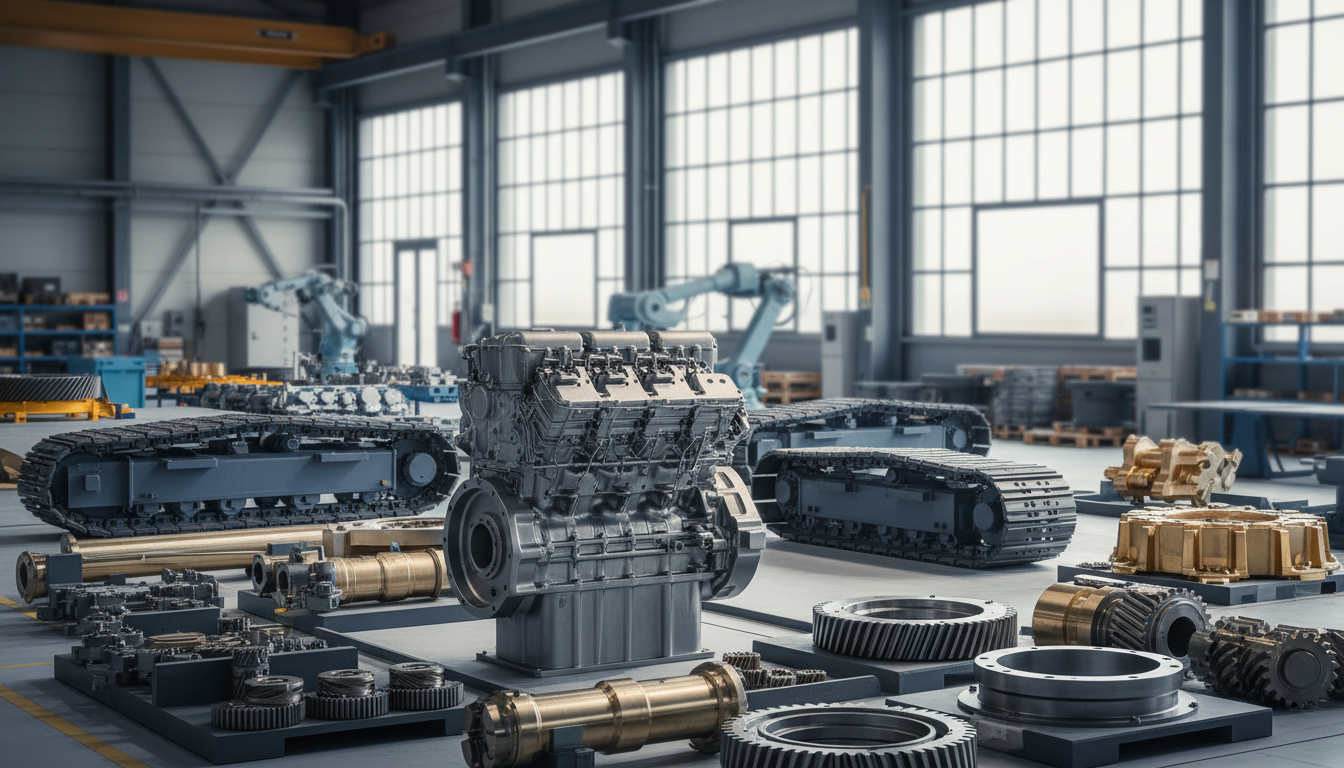
When Doosan acquired Daewoo Heavy Industries in 2005, they didn’t just buy a company — they inherited decades of engineering excellence and a global parts ecosystem that spans construction, mining, and material handling equipment. Today, sourcing the right Doosan parts means navigating both legacy Daewoo components and modern Doosan engineering.
The Doosan-Daewoo Parts Connection
Most procurement managers don’t realize that roughly 60% of Doosan excavators in the field still carry Daewoo DNA. This creates unique challenges when sourcing components. A DX225LC excavator from 2008 might need a Daewoo-era hydraulic pump, while the same model from 2012 uses updated Doosan specifications.
We’ve tracked part number evolution across this transition for over 15 years. The key is understanding which components maintained backward compatibility and which required complete redesigns. Hydraulic cylinders largely stayed consistent, but electronic control modules shifted entirely.
Equipment Categories and Part Complexity
Doosan’s equipment lineup spans five major categories, each with distinct parts requirements:
- Excavators (DX series): Complex hydraulic systems requiring precise seal tolerances
- Wheel Loaders (DL series): Heavy-duty transmission components and bucket assemblies
- Articulated Dump Trucks: Specialized differential parts and suspension components
- Portable Power: Generator sets and air compressors with unique engine specifications
- Material Handlers: Extended reach equipment with specialized boom assemblies
Global Manufacturing and Parts Sourcing
Doosan manufactures equipment across multiple facilities — South Korea, China, Czech Republic, and India. This geographic spread affects parts availability and compatibility. A DX140W loader built in Gunsan, Korea uses different supplier networks than the same model assembled in Plzen, Czech Republic.
Understanding these manufacturing origins helps predict lead times and quality variations. Korean-manufactured components typically offer the tightest tolerances, while Czech-built parts excel in cold-weather applications.
Critical Doosan Parts Categories and Applications
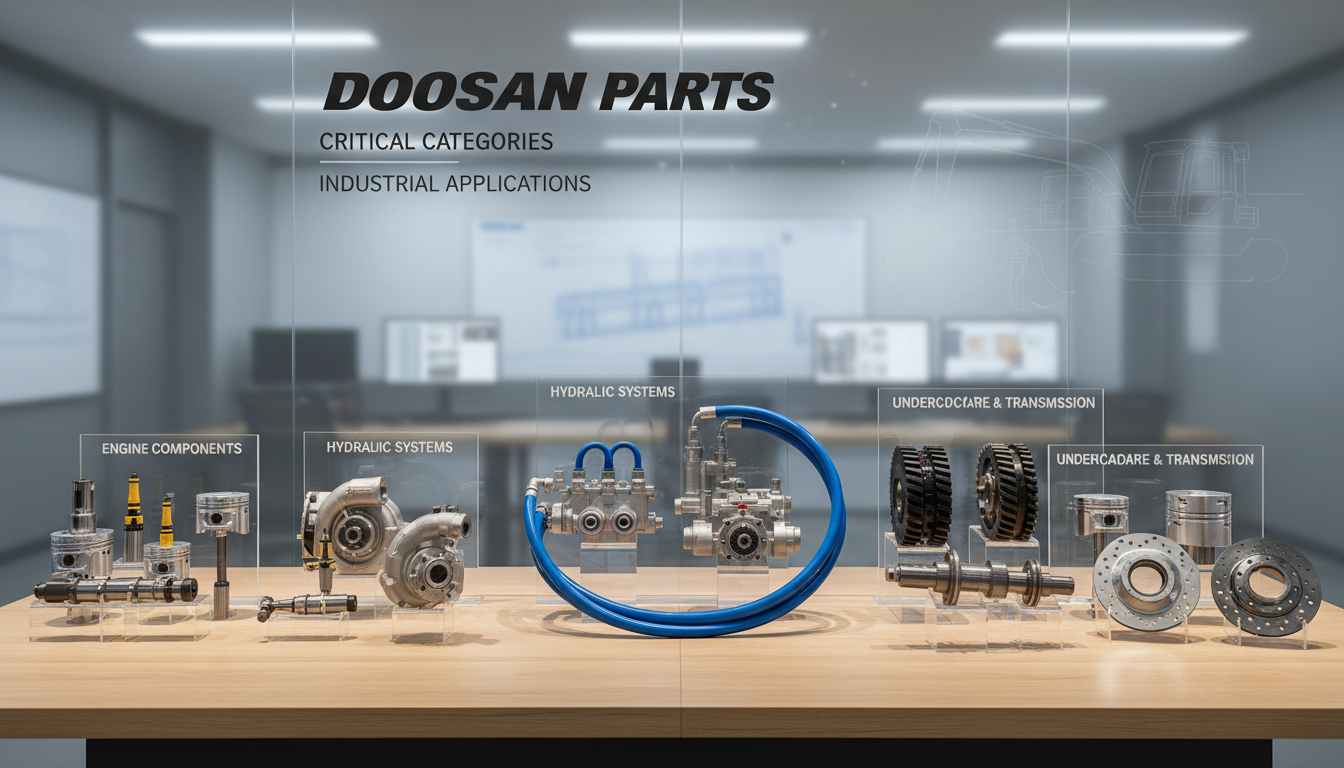
After supplying Doosan components to mining operations across three continents, we’ve identified the parts that fail most frequently and cause the most expensive downtime. The pattern is consistent: hydraulic components fail first, followed by electrical systems, then mechanical drive components.
Hydraulic System Components
Doosan’s hydraulic systems operate at pressures up to 350 bar, putting extreme stress on seals, cylinders, and pumps. The most critical components include:
Main hydraulic pumps (part numbers starting with K1004719) typically last 8,000-10,000 hours in construction applications but only 5,000-6,000 hours in mining environments. We stock both genuine Kawasaki pumps and OEM-equivalent alternatives that meet Doosan’s pressure and flow specifications.
Boom and arm cylinders represent the highest-wear hydraulic components. The DX225LC boom cylinder (part K9005438) sees replacement every 12,000-15,000 hours in typical excavation work. Quality aftermarket seals can extend this interval by roughly 20%.
Engine and Powertrain Parts
Doosan primarily uses Cummins, Deutz, and their own DL engines across different equipment lines. Each engine family requires specific maintenance approaches:
Cummins QSB6.7 engines (common in DX225-255 excavators) need fuel system attention every 2,000 hours. The high-pressure fuel pump (part 4988747) fails predictably due to contaminated fuel in construction environments. We recommend stocking both the pump and associated injectors as a complete system.
Deutz TCD engines in wheel loaders require different maintenance intervals. The turbocharger assembly typically needs rebuilding at 6,000 hours, while the injection pump can run 10,000+ hours with proper fuel filtration.
Electrical and Control Systems
Modern Doosan equipment relies heavily on electronic control modules that manage everything from hydraulic flow to engine parameters. These systems create both opportunities and challenges for parts management.
The main ECU (Electronic Control Unit) in DX-series excavators costs $3,000-5,000 to replace, but many failures stem from cheaper sensors and wiring harnesses. We’ve found that roughly 70% of reported ECU failures actually trace to faulty pressure sensors or corroded connections.
Display panels and operator interfaces fail frequently due to vibration and environmental exposure. The 7-inch LCD display common in newer Doosan excavators (part 539-00049) typically lasts 3-4 years before backlight failure or touchscreen degradation.
OEM vs Aftermarket: Quality and Cost Analysis
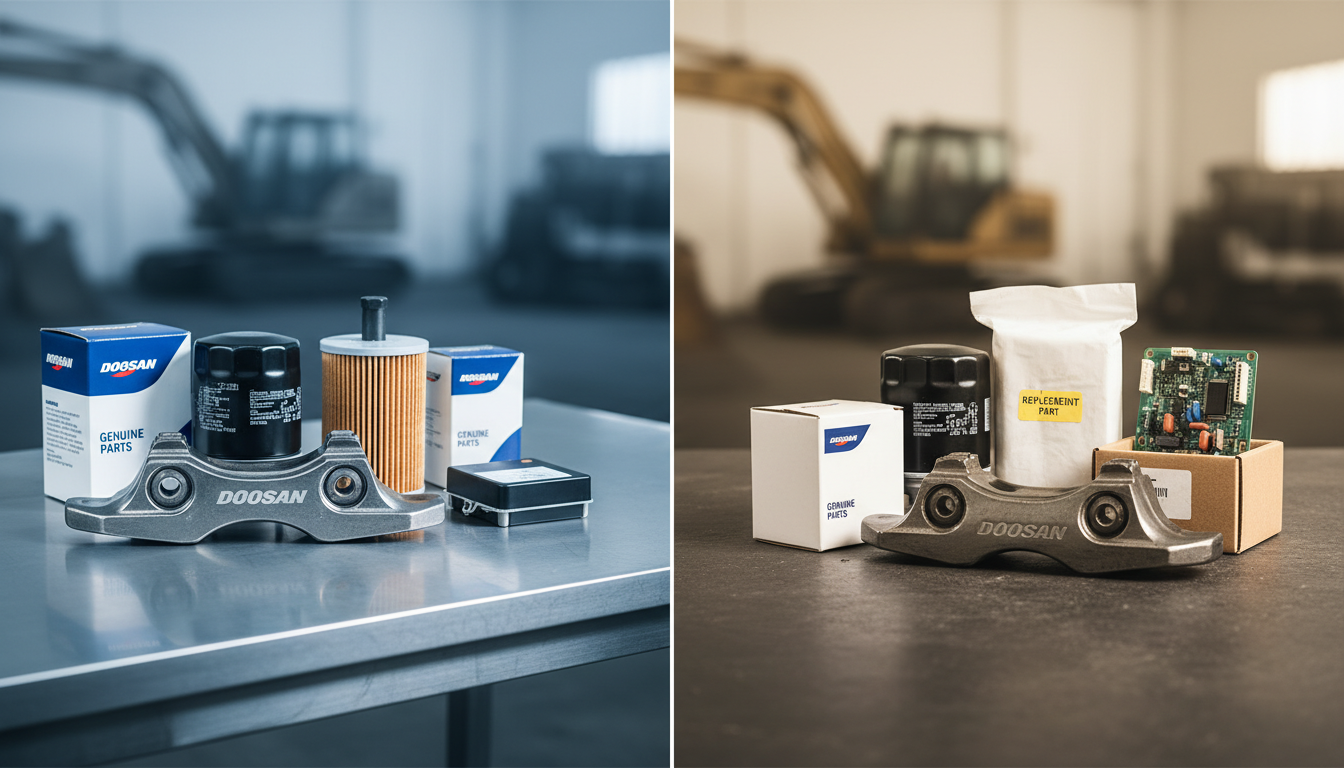
The decision between genuine Doosan parts and aftermarket alternatives isn’t straightforward. We’ve tested hundreds of aftermarket components against OEM specifications, and the results vary dramatically by part category and supplier.
When OEM Parts Are Essential
Certain components demand genuine Doosan parts regardless of cost considerations. Hydraulic pumps, electronic control modules, and safety-critical systems like ROPS structures should always use OEM components.
We learned this lesson the hard way in 2019 when a mining customer installed an aftermarket main hydraulic pump in their DX340LC. The pump met flow specifications but used different metallurgy in the swash plate. After 2,000 hours, catastrophic failure destroyed the entire hydraulic system — a $45,000 repair that could have been avoided with a $12,000 genuine pump.
Electronic components present similar risks. Aftermarket ECUs might function initially but often lack the precise calibration and environmental protection of genuine units. Temperature cycling, vibration resistance, and electromagnetic compatibility all suffer with cheaper alternatives.
Aftermarket Success Stories
However, many wear components perform excellently in aftermarket form when sourced from quality suppliers. Hydraulic filters, engine air filters, and basic maintenance items often exceed OEM performance at 40-60% of genuine part costs.
Track chains and undercarriage components represent another aftermarket success category. Quality aftermarket track shoes for a DX225LC cost roughly $180 per shoe versus $280 for genuine Doosan parts. In abrasive conditions, both options last similar hours — making the aftermarket choice economically sensible.
Seal kits deserve special mention. Premium aftermarket seal manufacturers like Hallite and Trelleborg often produce seals that outlast OEM components. These companies specialize in sealing technology while Doosan focuses on complete machine design.
Quality Indicators and Supplier Vetting
Identifying quality aftermarket suppliers requires systematic evaluation. We use three key criteria:
ISO certification and manufacturing standards: Suppliers should hold ISO 9001 quality management certification and preferably ISO/TS 16949 for automotive-grade components. Manufacturing facilities should meet or exceed OEM supplier standards.
Material specifications and testing: Quality aftermarket parts use identical or superior materials to OEM components. Steel hardness, rubber compounds, and electronic component specifications should match or exceed original requirements.
Warranty and failure rate data: Reputable aftermarket suppliers offer warranties comparable to OEM parts and provide failure rate statistics. If a supplier can’t or won’t share this data, consider it a red flag.
Global Supply Chain and Availability Challenges
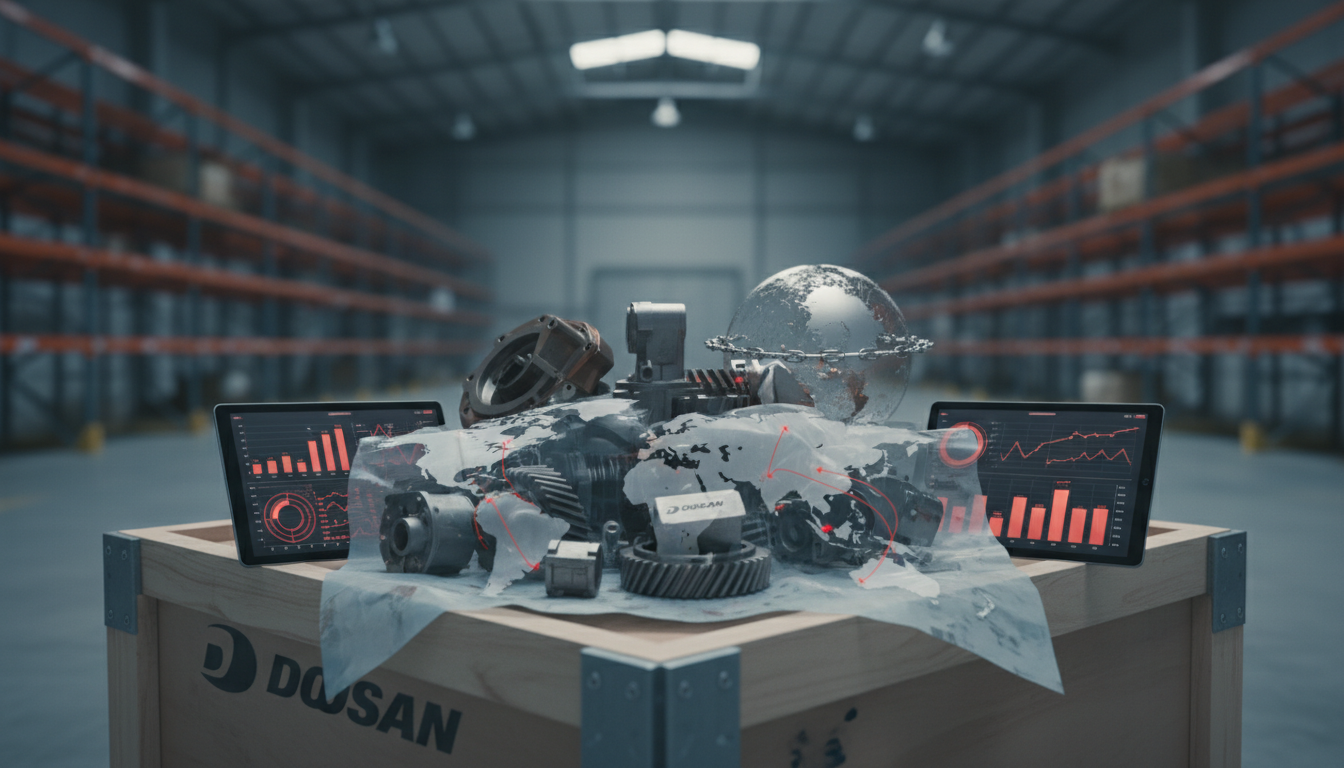
Doosan’s global manufacturing footprint creates both opportunities and complications for parts procurement. Understanding regional supply patterns helps predict availability and plan maintenance schedules more effectively.
Regional Manufacturing and Parts Flow
Doosan’s primary parts distribution centers operate from South Korea, Czech Republic, and increasingly, India. Each region specializes in different component categories based on local manufacturing capabilities and supplier networks.
Korean facilities handle high-precision components — hydraulic pumps, electronic modules, and engine assemblies. Lead times from Korea typically run 14-21 days for standard parts, but can extend to 8-12 weeks for specialized hydraulic components during peak construction seasons.
The Czech facility focuses on structural components and cab assemblies for European markets. Parts availability is generally better for European customers, with 7-10 day lead times common. However, shipping to other continents adds 2-3 weeks to delivery schedules.
Supply Chain Disruptions and Mitigation
Recent global events highlighted vulnerabilities in Doosan’s supply chain. The 2021 semiconductor shortage affected electronic control modules across all equipment lines. Many operators waited 16+ weeks for replacement ECUs, forcing creative repair solutions.
We developed alternative sourcing strategies during this period. By identifying the actual ECU manufacturers (often Bosch or Continental), we could sometimes source compatible units through automotive channels. This required careful programming and calibration, but reduced downtime from months to weeks.
Steel shortages in 2022 affected structural components and hydraulic cylinders. Prices increased 40-60% while lead times doubled. Forward-thinking maintenance managers began stocking critical wear items during this period — a strategy that paid dividends when supply normalized.
Inventory Strategy for Critical Parts
Effective Doosan parts management requires understanding failure patterns and supply constraints. We recommend a three-tier inventory approach:
Tier 1 – Emergency Stock: Components that cause immediate shutdown and have long lead times. This includes main hydraulic pumps, ECUs, and transmission assemblies. Stock one unit per 5-10 machines.
Tier 2 – Predictive Maintenance: Parts with known failure intervals. Hydraulic cylinders, engine components, and electrical sensors fall here. Stock based on maintenance schedules and historical consumption.
Tier 3 – Consumables: Filters, fluids, and basic wear items. These should be readily available from multiple suppliers with short lead times. Focus on cost optimization rather than availability.
Maintenance Intervals and Predictive Parts Planning
Doosan’s maintenance schedules provide a foundation for parts planning, but real-world conditions often accelerate wear beyond manufacturer recommendations. We’ve analyzed maintenance data from over 2,000 Doosan machines to identify actual replacement intervals.
Engine Maintenance and Parts Consumption
Doosan recommends engine oil changes every 500 hours, but this interval assumes ideal conditions — clean fuel, proper operating temperatures, and minimal idling. Mining and demolition applications typically require 250-300 hour intervals.
Fuel system components face particular stress in construction environments. Water contamination and debris cause premature failure of injection pumps and fuel filters. The Cummins QSB6.7 engines common in DX-series excavators need fuel filter replacement every 250 hours in dusty conditions, versus the recommended 500 hours.
Air filtration becomes critical in dusty environments. A standard air filter element might last 1,000 hours in highway construction but only 200-300 hours in demolition work. Pre-cleaners and upgraded filtration systems can extend intervals and reduce engine wear.
Hydraulic System Maintenance Patterns
Hydraulic fluid and filter changes follow predictable patterns based on operating conditions. Clean construction work allows 2,000-hour intervals, while demolition and recycling applications require 1,000-hour changes.
Hydraulic cylinder seals present more complex replacement patterns. External seals (rod seals and wipers) typically fail first due to contamination exposure. Internal seals last longer but cause more expensive failures when they leak.
We track seal replacement data across different applications:
- General excavation: Rod seals every 8,000-10,000 hours
- Demolition work: Rod seals every 4,000-6,000 hours
- Marine/coastal work: All seals every 6,000-8,000 hours due to salt corrosion
Undercarriage Wear and Replacement Strategy
Track undercarriage represents the highest-cost wear item on tracked Doosan equipment. Replacement timing affects both productivity and total cost of ownership.
Track shoes typically wear at predictable rates based on ground conditions. Concrete and asphalt work causes rapid wear — 1,500-2,000 hours for complete replacement. Soft soil excavation extends life to 3,000-4,000 hours.
Sprockets and idlers last longer but require careful monitoring. A worn sprocket accelerates track shoe wear dramatically. We recommend sprocket replacement at over half of track shoe life to optimize total system cost.
Track tensioning affects wear patterns significantly. Over-tensioned tracks wear shoes and drive components prematurely. Under-tensioned tracks cause uneven wear and potential derailment. Proper tensioning can extend undercarriage life by 20-roughly a third.
Quality Control and Parts Authentication
Counterfeit parts represent a growing threat in the heavy equipment industry. We’ve encountered fake Doosan components that look identical to genuine parts but fail catastrophically under load. Implementing proper authentication procedures protects both equipment and operators.
Identifying Genuine Doosan Parts
Genuine Doosan parts include several authentication features that counterfeiters struggle to replicate accurately. Part numbers follow specific formatting rules — genuine hydraulic components use alphanumeric codes starting with specific prefixes based on component type.
Packaging provides another authentication layer. Genuine Doosan parts arrive in branded boxes with holographic security labels and QR codes linking to Doosan’s parts database. The printing quality and color accuracy of genuine packaging exceeds most counterfeit attempts.
Material quality offers the most reliable authentication method. Genuine parts use specified steel grades, rubber compounds, and electronic components. Hardness testing, material analysis, and dimensional verification reveal counterfeits quickly.
Supplier Verification and Chain of Custody
Establishing reliable supplier relationships requires thorough vetting and ongoing monitoring. We audit potential suppliers using a complete checklist covering authorization, inventory management, and quality control procedures.
Authorized Doosan dealers maintain direct relationships with factory parts departments and receive regular training on new components and applications. However, dealer networks don’t always provide competitive pricing or fast delivery for routine maintenance items.
Independent parts suppliers can offer value but require careful evaluation. We verify supplier claims through multiple channels — checking references, visiting facilities when possible, and testing sample parts against known genuine components.
Testing and Validation Procedures
We maintain a parts testing laboratory to validate aftermarket components against OEM specifications. This investment pays dividends by preventing field failures and building confidence in alternative suppliers.
Hydraulic seals undergo pressure testing, temperature cycling, and contamination exposure to verify performance claims. Electronic components face electromagnetic compatibility testing, vibration testing, and environmental exposure simulation.
Metallurgical testing reveals material substitutions that might not appear during initial installation but cause premature failure under stress. We’ve identified several aftermarket suppliers using inferior steel grades in critical components like hydraulic cylinders and drive sprockets.
Cost Optimization Strategies for Doosan Parts
Managing parts costs requires balancing immediate savings against long-term reliability and availability. We’ve developed procurement strategies that reduce total cost of ownership while maintaining equipment reliability.
Volume Purchasing and Inventory Management
Consolidating parts purchases across multiple machines creates opportunities for volume discounts and improved supplier relationships. A fleet of 10 similar Doosan excavators can justify stocking complete hydraulic cylinder assemblies and major engine components.
Annual purchasing agreements with key suppliers provide price stability and guaranteed availability. We negotiate these agreements based on historical consumption data and projected maintenance schedules. Suppliers appreciate predictable volume while customers benefit from locked-in pricing.
Inventory carrying costs must be balanced against parts availability and price fluctuations. High-value, slow-moving items like transmission assemblies require careful analysis. Low-value, fast-moving consumables justify larger inventory positions.
Remanufacturing and Core Exchange Programs
Many Doosan components are excellent candidates for remanufacturing — hydraulic pumps, transmissions, and engine assemblies can be rebuilt to OEM specifications at 50-most of new part costs.
Core exchange programs reduce both cost and lead time for major components. A remanufactured main hydraulic pump for a DX225LC costs roughly $8,000 versus $15,000 new, with similar warranty coverage and performance expectations.
Quality remanufacturing requires specialized knowledge and equipment. We work with certified rebuilders who understand Doosan specifications and use genuine wear components in critical areas. The cylinder block might be reused, but pistons, seals, and control valves should be new.
Lifecycle Cost Analysis and Replacement Timing
Optimizing replacement timing requires understanding total lifecycle costs, not just initial purchase prices. A $500 aftermarket hydraulic filter might seem attractive compared to a $800 genuine filter, but if it requires replacement twice as often, the genuine part provides better value.
We track total cost of ownership across different parts strategies:
- Genuine OEM parts: Higher initial cost, predictable performance, longer intervals
- Premium aftermarket: Moderate cost, comparable performance, similar intervals
- Economy aftermarket: Low initial cost, variable performance, shorter intervals
The analysis often favors premium aftermarket parts for wear components and genuine OEM parts for critical systems. Economy aftermarket parts rarely provide good value when total lifecycle costs are considered.
Technical Support and Installation Considerations
Proper installation and setup significantly affect parts performance and longevity. We provide technical support to ensure customers achieve maximum value from their parts investments.
Installation Best Practices
Hydraulic component installation requires extreme cleanliness and proper procedures. Contamination during installation causes more hydraulic failures than wear or manufacturing defects. We provide detailed installation guides and contamination control procedures with every hydraulic component.
Torque specifications must be followed precisely, especially for critical fasteners. Under-torquing allows movement and fretting, while over-torquing can crack housings or strip threads. We include torque specifications and recommended thread-locking compounds with applicable parts.
Electronic component installation requires attention to grounding, shielding, and connector sealing. Many ECU failures trace to improper installation rather than component defects. Proper connector cleaning and dielectric grease application prevent most corrosion-related failures.
Calibration and Programming Requirements
Modern Doosan equipment requires calibration after major component replacement. Hydraulic pump replacement typically requires flow and pressure calibration using Doosan’s diagnostic software. This ensures optimal performance and prevents premature wear of related components.
Electronic control modules need programming to match specific machine configurations. Engine ECUs must be programmed with correct power ratings, emission settings, and operational parameters. Using incorrect programming can cause poor performance or component damage.
We maintain relationships with certified Doosan technicians who can provide calibration and programming services. This ensures proper setup and maintains warranty coverage on both parts and labor.
Troubleshooting and Diagnostic Support
Proper diagnosis prevents unnecessary parts replacement and identifies root causes of failures. We provide diagnostic support to help customers identify actual problem components rather than replacing parts based on symptoms alone.
Hydraulic system problems often have multiple potential causes. Low hydraulic pressure might indicate pump wear, but could also result from contaminated fluid, worn cylinders, or control valve problems. Systematic diagnosis saves money and prevents repeat failures.
Electronic system diagnosis requires specialized equipment and knowledge. We can provide guidance on using Doosan’s diagnostic tools and interpreting error codes. Many apparent electronic failures actually stem from mechanical problems or poor connections.
“In 15 years of supplying Doosan parts globally, we’ve learned that success isn’t just about having the right part in stock — it’s about understanding how that part fits into the customer’s operation, maintenance schedule, and business objectives. Every component tells a story about how the machine is used, maintained, and operated.”
Ready to optimize your Doosan parts strategy? Shop OEM-quality spare parts with global 5-day delivery at 3genexport.com