
When your Hitachi ZX200 hydraulic pump starts showing pressure drops at 6 AM on a Monday, you’ve got roughly 8 hours before that excavator becomes dead weight on your jobsite. We’ve been sourcing hitachi excavator parts for mining and construction fleets since 2006, and the pattern never changes: operators who plan ahead keep working, while those scrambling for emergency parts watch their project timelines collapse.
The Hitachi brand — now operating as Hitachi Construction Machinery after various ownership changes — built its reputation on hydraulic precision and component durability. But even the most reliable ZX series excavators need parts replacement, and your sourcing strategy determines whether you’re back online in 48 hours or waiting three weeks for OEM delivery from Japan.
Understanding Hitachi’s Current Parts Ecosystem
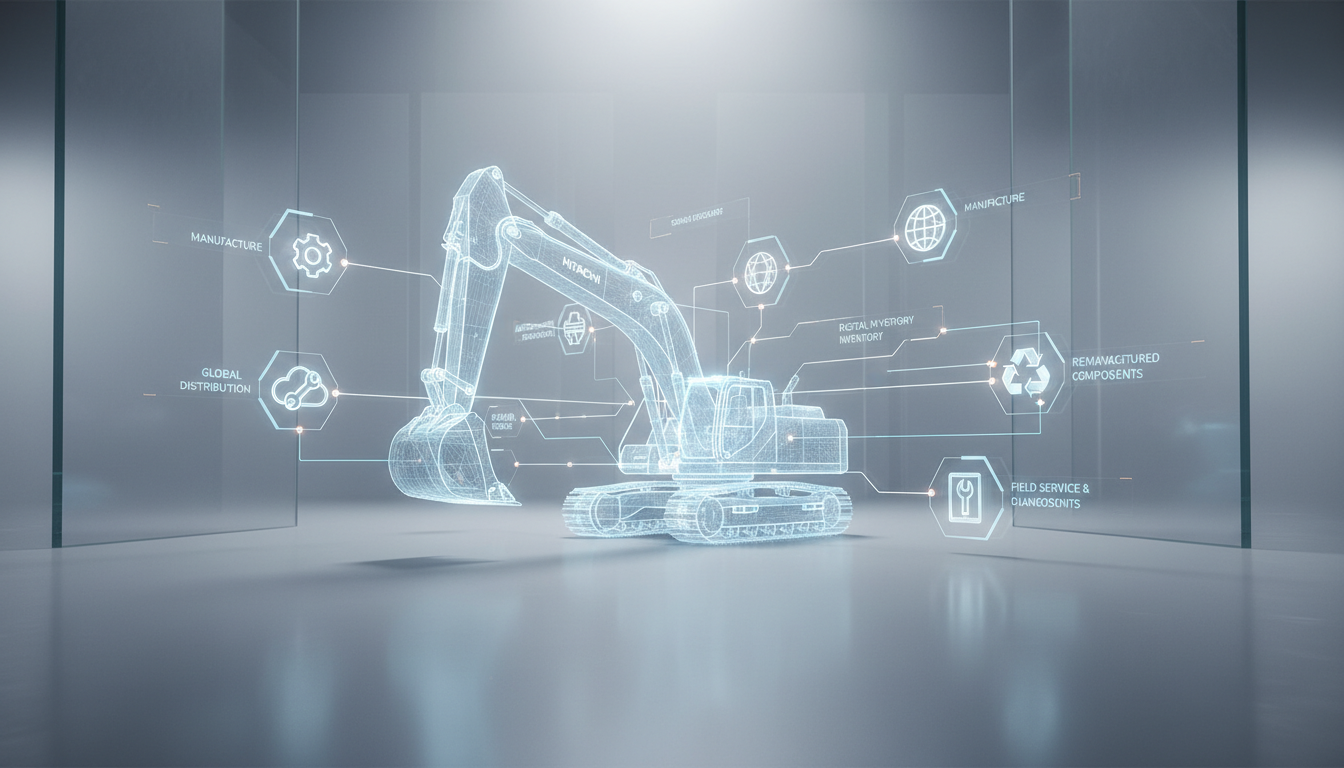
Hitachi Construction Machinery operates a complex global parts network that’s evolved significantly since the brand’s construction equipment division separated from its parent company. The current structure affects everything from part numbering systems to warranty coverage.
OEM Parts Distribution Network
Genuine Hitachi parts flow through authorized dealers who maintain direct connections to manufacturing facilities in Japan, Europe, and select regional assembly plants. These dealers stock high-turnover items like hydraulic filters, engine oil filters, and basic wear components, but major hydraulic components often require factory orders with 2-4 week lead times.
The dealer network prioritizes newer ZX-6 and ZX-7 series machines, which means parts availability for older ZX-3 and ZX-5 series excavators becomes increasingly limited. We’ve seen this pattern accelerate since 2024, with some dealers discontinuing inventory for machines over 8 years old.
Aftermarket Parts Quality Tiers
Not all aftermarket parts deliver the same performance standards. Premium aftermarket manufacturers like Parker Hannifin produce hydraulic components that meet or exceed OEM specifications, while budget suppliers often cut corners on metallurgy and precision tolerances.
The key distinction lies in manufacturing standards: OEM-equivalent aftermarket parts undergo the same testing protocols as genuine components, including pressure cycling, temperature stress testing, and material composition verification. Budget alternatives skip these validation steps, leading to premature failures that cost more than the initial savings.
Part Number Evolution and Cross-References
Hitachi’s part numbering system has undergone multiple revisions, creating confusion when sourcing components for older machines. A hydraulic cylinder seal kit for a ZX200LC-3 might carry three different part numbers depending on production year and regional specifications.
Cross-reference databases become essential tools, but they’re only as accurate as their last update. We maintain our own cross-reference system that includes superseded part numbers, regional variations, and compatible aftermarket alternatives — something most online catalogs lack.
Critical Components That Determine Uptime
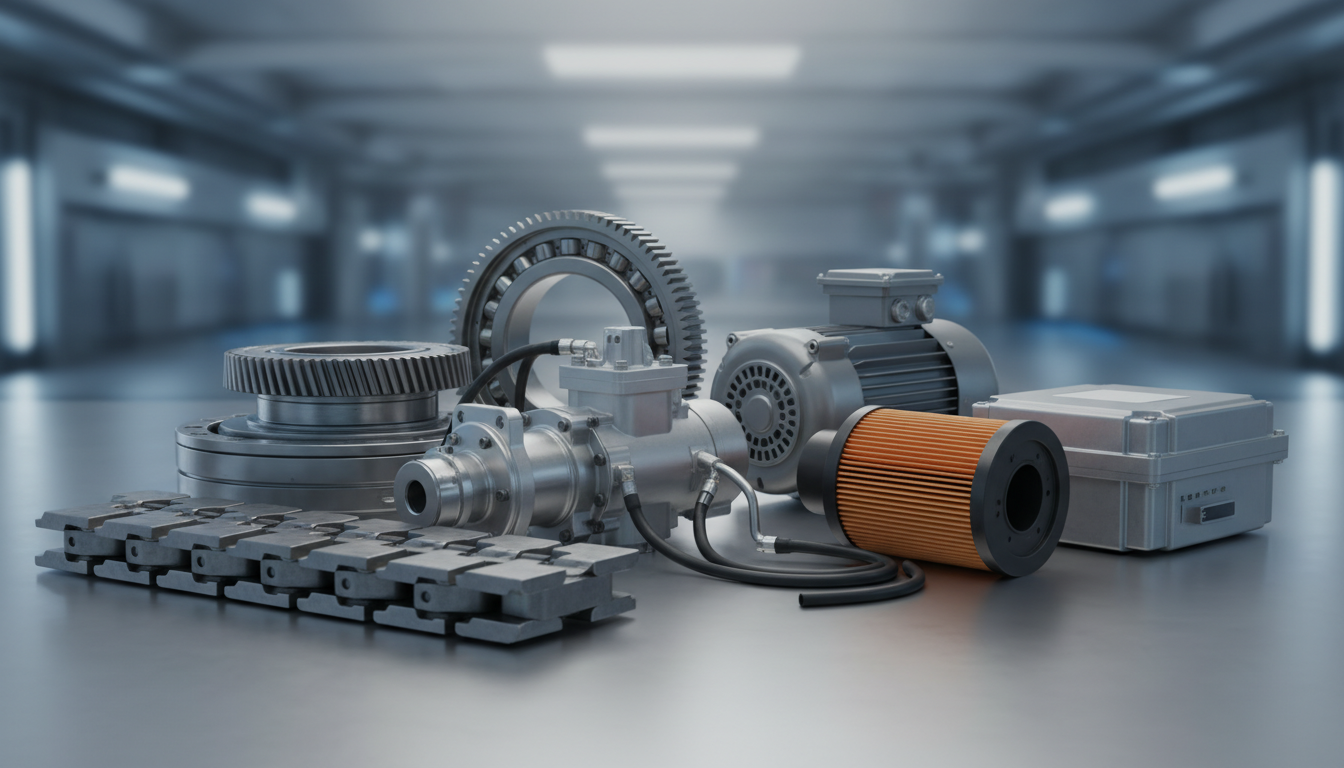
Certain components on Hitachi excavators fail more predictably than others, and smart procurement managers stock these items before they’re needed. Understanding failure patterns helps you build an effective parts inventory strategy.
Hydraulic System Components
The hydraulic system represents roughly 60% of all hitachi excavator parts orders we process. Main hydraulic pumps typically show wear symptoms around 6,000-8,000 operating hours, while hydraulic cylinders start leaking at 4,000-5,000 hours depending on application severity.
Swing motors and travel motors follow similar patterns, but their failure modes differ significantly. Swing motors usually develop internal leakage that reduces rotation speed, while travel motors tend to fail catastrophically when internal seals rupture. The repair approach for each requires different parts inventories and technical expertise.
Control valves present the most complex sourcing challenge because they’re machine-specific and expensive. A main control valve for a ZX350LC-6 costs $8,000-12,000 from OEM sources, but compatible aftermarket alternatives run $4,000-6,000 with similar performance characteristics.
Engine and Powertrain Elements
Hitachi excavators use engines from multiple suppliers — primarily Isuzu for smaller models and Cummins for larger machines. This creates parts sourcing advantages because engine components often cross-reference with other equipment brands using the same powerplants.
Turbochargers fail more frequently in dusty environments, typically showing symptoms around 3,000-4,000 hours. The replacement decision often comes down to rebuild versus replacement, with rebuild kits costing 30-40% less than new units but requiring specialized technical expertise.
Final drive assemblies represent high-value components that benefit from proactive replacement. We recommend sourcing rebuilt final drives when machines reach 4,000 hours, before catastrophic failure damages expensive internal components.
Undercarriage and Attachment Points
Track chains, sprockets, and idlers wear at predictable rates based on ground conditions and operating practices. Rocky terrain accelerates wear by 40-50% compared to standard dirt applications, while abrasive materials like crushed concrete can double normal wear rates.
Bucket pins and bushings require regular replacement but often get overlooked until excessive play develops. By that point, the bucket itself may need structural repairs that cost more than proactive pin replacement.
Sourcing Strategies for Different Fleet Sizes

Your parts sourcing approach should match your fleet size and operational requirements. Single-machine operators need different strategies than large mining companies running 50+ excavators.
Small Fleet Operations (1-5 Machines)
Small operators can’t justify large parts inventories, so supplier relationships become critical. Focus on suppliers who stock common wear items and can expedite major component orders when needed.
Emergency parts sourcing costs 2-3 times normal pricing, but it’s often justified for small fleets where each machine represents significant revenue capacity. We’ve seen operators pay $15,000 for overnight delivery of a hydraulic pump rather than lose a week of production worth $25,000.
Consider parts sharing agreements with other local operators running similar Hitachi models. A hydraulic cylinder that fails on your ZX200 might be needed by another contractor next month, making shared inventory economically viable.
Medium Fleet Management (6-20 Machines)
Medium fleets benefit from strategic parts inventory that covers high-failure components across their most common machine models. Focus inventory on parts that cross-reference between multiple machines in your fleet.
Establish relationships with both OEM dealers and quality aftermarket suppliers. Use OEM parts for warranty-covered machines and critical applications, while aftermarket alternatives work well for older machines and non-critical applications.
Implement condition monitoring programs that predict component failures 30-60 days in advance. This lead time allows normal parts ordering instead of emergency procurement, reducing parts costs by 40-50%.
Large Fleet Procurement (20+ Machines)
Large fleets should negotiate volume pricing agreements with multiple suppliers to ensure competitive pricing and supply security. Diversified sourcing prevents supply disruptions when individual suppliers face inventory shortages.
Consider establishing regional parts depots that serve multiple operational areas. A centralized inventory system with 24-48 hour internal distribution often outperforms relying on external suppliers for routine parts needs.
Develop relationships with remanufacturing facilities that can rebuild major components using your cores. This approach reduces parts costs by 30-40% while maintaining performance standards comparable to new components.
Quality Assessment: OEM vs Aftermarket Performance

The quality gap between OEM and aftermarket hitachi excavator parts has narrowed significantly, but important differences remain that affect long-term operating costs and machine reliability.
Performance Testing Standards
OEM parts undergo extensive validation testing that includes accelerated wear testing, environmental stress testing, and compatibility verification with other machine systems. This testing adds cost but ensures consistent performance across different operating conditions.
Premium aftermarket manufacturers like Parker, Bosch Rexroth, and Kawasaki often exceed OEM testing standards because they supply components to multiple equipment brands. Their parts must perform reliably across various machine platforms, driving higher quality standards.
Budget aftermarket suppliers typically skip complete testing, relying instead on dimensional compatibility and basic functionality verification. This approach works for non-critical applications but creates risks for high-stress components like hydraulic pumps and final drives.
Material Quality and Manufacturing Precision
Metallurgy makes the difference between parts that last 5,000 hours and those that fail at 2,000 hours. OEM suppliers use specified steel grades and heat treatment processes that aftermarket manufacturers may modify to reduce costs.
Hydraulic component tolerances matter more than most operators realize. A hydraulic cylinder with bore tolerances 0.002″ looser than specification will develop internal leakage 30-roughly a third faster than properly manufactured components.
Surface treatments like hard chrome plating and specialized coatings add cost but significantly extend component life in abrasive environments. Budget aftermarket parts often eliminate these treatments, reducing initial cost but increasing long-term replacement frequency.
Warranty Coverage and Support
OEM parts typically include complete warranty coverage that extends to consequential damage caused by part failure. If a genuine Hitachi hydraulic pump fails and damages the main control valve, warranty coverage often includes both components.
Aftermarket warranties usually cover only the failed component itself, leaving operators responsible for any secondary damage. However, premium aftermarket suppliers increasingly offer extended warranty programs that approach OEM coverage levels.
Technical support varies dramatically between suppliers. OEM dealers provide factory-trained technicians and complete diagnostic support, while aftermarket suppliers may offer limited technical assistance beyond basic installation guidance.
Global Supply Chain Considerations
Hitachi excavator parts sourcing involves complex international logistics that affect delivery times, costs, and inventory planning. Understanding these factors helps optimize your procurement strategy.
Regional Manufacturing and Distribution
Hitachi manufactures excavator components across multiple global facilities, with Japan handling advanced hydraulic components, Europe focusing on engine integration, and regional facilities producing basic structural elements and wear parts.
This distributed manufacturing creates opportunities for regional sourcing that reduces shipping costs and delivery times. European operators can often source hydraulic cylinders from local remanufacturing facilities faster than ordering from Japan, while maintaining quality standards.
Aftermarket suppliers have established competing supply chains that often provide faster delivery than OEM networks. We maintain inventory relationships across four continents, allowing us to source most hitachi excavator parts within 48-72 hours regardless of customer location.
Import Regulations and Compliance
Heavy equipment parts face varying import regulations depending on component type and destination country. Hydraulic components containing specific seal materials may require additional documentation for certain markets, while electronic control modules need compliance certification.
Customs classification affects both import duties and processing times. Properly classified shipments clear customs faster and avoid unexpected fees that can add 10-around one in ten to parts costs.
Some countries maintain preferred supplier agreements that provide duty advantages for specific manufacturers. Understanding these agreements helps optimize sourcing decisions for international operations.
Currency and Economic Factors
Exchange rate fluctuations significantly impact parts costs for international sourcing. The Japanese yen’s strength against other currencies directly affects OEM parts pricing, while aftermarket suppliers often price in USD or EUR for stability.
Economic disruptions like the 2024 supply chain constraints highlighted the importance of diversified sourcing. Operators who relied solely on single-country suppliers faced extended downtime when shipping disruptions occurred.
Consider currency hedging strategies for large parts orders when exchange rates favor specific suppliers. A 5-around one in ten currency advantage can justify larger inventory purchases that provide long-term cost benefits.
Maintenance Planning and Parts Forecasting
Effective parts management requires understanding component life cycles and failure patterns specific to your operating conditions and machine utilization patterns.
Predictive Maintenance Integration
Modern Hitachi excavators include telematics systems that monitor component performance and predict maintenance needs. This data helps optimize parts ordering by providing 30-60 day advance notice of impending component failures.
Oil analysis programs identify hydraulic system wear before catastrophic failures occur. Trending metal content in hydraulic oil samples can predict main pump wear 500-1000 hours before performance degradation becomes noticeable to operators.
Vibration monitoring on rotating components like swing motors and final drives detects bearing wear patterns that indicate replacement needs. Early detection allows planned maintenance during scheduled downtime rather than emergency repairs during critical operations.
Inventory Optimization Strategies
Effective parts inventory balances carrying costs against downtime risks. High-value, low-failure-rate components like control valves shouldn’t be stocked unless your fleet includes many identical machines.
Focus inventory on components with predictable failure patterns and reasonable costs. Hydraulic filters, engine oil filters, and basic seal kits provide good inventory value because they’re used regularly and don’t require significant capital investment.
Consider consignment inventory arrangements with suppliers for high-value components. This approach provides immediate parts availability without tying up working capital in slow-moving inventory.
Seasonal and Application-Specific Planning
Operating conditions significantly affect parts consumption patterns. Construction fleets working in winter conditions consume more hydraulic seals due to temperature cycling, while mining operations in dusty environments require more frequent air filter and engine component replacement.
Plan parts procurement around seasonal work patterns. Order major components during slow seasons when delivery times are less critical and suppliers may offer better pricing for non-urgent orders.
Track parts consumption by application type to identify patterns specific to your operations. Demolition work consumes bucket teeth and cutting edges faster than general excavation, while precision grading requires more frequent hydraulic system maintenance.
Cost Optimization Without Compromising Reliability
Smart procurement balances cost reduction with operational reliability. The cheapest parts aren’t always the most economical when total cost of ownership is considered.
Total Cost of Ownership Analysis
Calculate parts costs based on operating hours rather than purchase price alone. A hydraulic cylinder that costs roughly a third more but lasts twice as long provides better value than cheaper alternatives that require frequent replacement.
Include labor costs in parts evaluation. Components that require extensive disassembly for replacement should justify premium pricing for longer service life. A main hydraulic pump replacement requires 12-16 hours of skilled technician time, making component longevity critical.
Factor downtime costs into parts decisions. Emergency parts procurement might cost 3x normal pricing, but it’s often justified when machine downtime exceeds $2,000-3,000 per day in lost productivity.
Strategic Supplier Relationships
Develop partnerships with suppliers who understand your operational requirements and can provide technical support beyond basic parts supply. Suppliers who offer installation guidance, troubleshooting support, and application-specific recommendations add value beyond competitive pricing.
Negotiate volume pricing agreements that provide cost advantages without requiring large upfront inventory investments. Many suppliers offer tiered pricing based on annual purchase volumes rather than individual order quantities.
Consider exclusive supplier relationships for specific component categories in exchange for guaranteed pricing and priority allocation during supply shortages. This approach works well for high-volume parts like filters and basic wear components.
Remanufacturing and Core Exchange Programs
Remanufactured components offer 30-over half cost savings compared to new parts while providing performance comparable to OEM components. Quality remanufacturing processes include complete disassembly, precision machining, and new internal components.
Core exchange programs reduce the effective cost of remanufactured parts by providing credit for your failed components. A remanufactured final drive might cost $8,000 with a $2,000 core credit, making the net cost $6,000 compared to $15,000 for new OEM replacement.
Establish relationships with remanufacturing facilities that specialize in hitachi excavator parts. These facilities understand component-specific rebuild procedures and maintain quality standards that generic rebuilders may lack.
Pro Tip: When sourcing critical hydraulic components, request test certificates that document pressure testing and performance verification. Quality suppliers provide this documentation, while budget alternatives often cannot.
| Component Type | OEM Cost | Premium Aftermarket | Budget Aftermarket | Remanufactured |
|---|---|---|---|---|
| Main Hydraulic Pump | $12,000-15,000 | $8,000-10,000 | $4,000-6,000 | $6,000-8,000 |
| Final Drive Assembly | $8,000-12,000 | $5,000-7,000 | $3,000-4,500 | $4,000-6,000 |
| Hydraulic Cylinder | $3,000-5,000 | $2,000-3,500 | $1,200-2,000 | $1,500-2,500 |
| Control Valve | $8,000-12,000 | $5,000-8,000 | $3,000-5,000 | $4,000-6,000 |
Ready to optimize your Hitachi excavator parts procurement? Our global inventory includes OEM-quality components for all ZX series models with 5-day delivery worldwide. Shop OEM-quality spare parts with global 5-day delivery at 3genexport.com