
How to source spare parts for old mining equipment is a systematic procurement process for identifying, qualifying, and importing components for machines whose OEM support has ended. This guide covers every critical step to keep legacy fleets running.
Key Takeaways
- Part sourcing for legacy mining equipment requires a strategy that combines OEM, aftermarket, refurbished, and custom-made components.
- Accurate documentation of machine make, model, serial number, and part number is the single most critical step before initiating any procurement.
- Supplier verification against counterfeit risks can save significant costs in downtime and safety hazards.
- Global sourcing networks with export expertise can unlock parts that are no longer available locally.
- Lifecycle cost analysis, not just purchase price, should drive the final buying decision.
- Proactive inventory classification into A, B, and C items reduces emergency sourcing scrambles and capital tied up in stock.
Why Sourcing for Legacy Equipment Differs

Mining equipment routinely operates for 20, 30, or even 40 years, far beyond the original manufacturer’s standard parts support window of 10 to 15 years. According to Joe Ferch of Spuncast, “OEMs of large mining trucks and vehicles discontinue parts after a certain amount of time, often a decade or two, making it nearly impossible to find replacement parts.” This reality creates a parallel supply chain that demands specialized knowledge. Unlike current-model procurement, knowing how to source spare parts for old mining equipment means navigating discontinued inventory, reverse engineering, and cross-border regulatory hurdles. The financial stakes are enormous: a single haul truck breakdown can cost an operation millions of dollars in lost production and idle labor.
The Scale of the Problem
A significant share of active mine sites operate at least one equipment model for which OEM parts are no longer manufactured. Compounding this, the underground mining environment accelerates wear. Components such as hydraulic cylinders and drill bits frequently require replacement every 1,000 to 3,000 operating hours, depending on ground conditions, rock hardness, and maintenance quality. Underground operations face additional challenges: confined access, humidity, and airborne particulates that shorten component life well below surface benchmarks.
Hidden Costs of Sourcing Errors
Installing an incorrect or substandard part can lead to catastrophic failures. A mismatched crusher mantle or a counterfeit seal introduces serious safety risks and often results in repair costs 3 to 5 times higher than the component’s original price. The downtime multiplier is especially severe for remote operations where logistics delays add days to each repair cycle. For mines in regions like the Atacama Desert or Central African copper belt, a single incorrect part order can idle a machine for weeks.
Documenting Your Equipment: The Foundation of Every Search
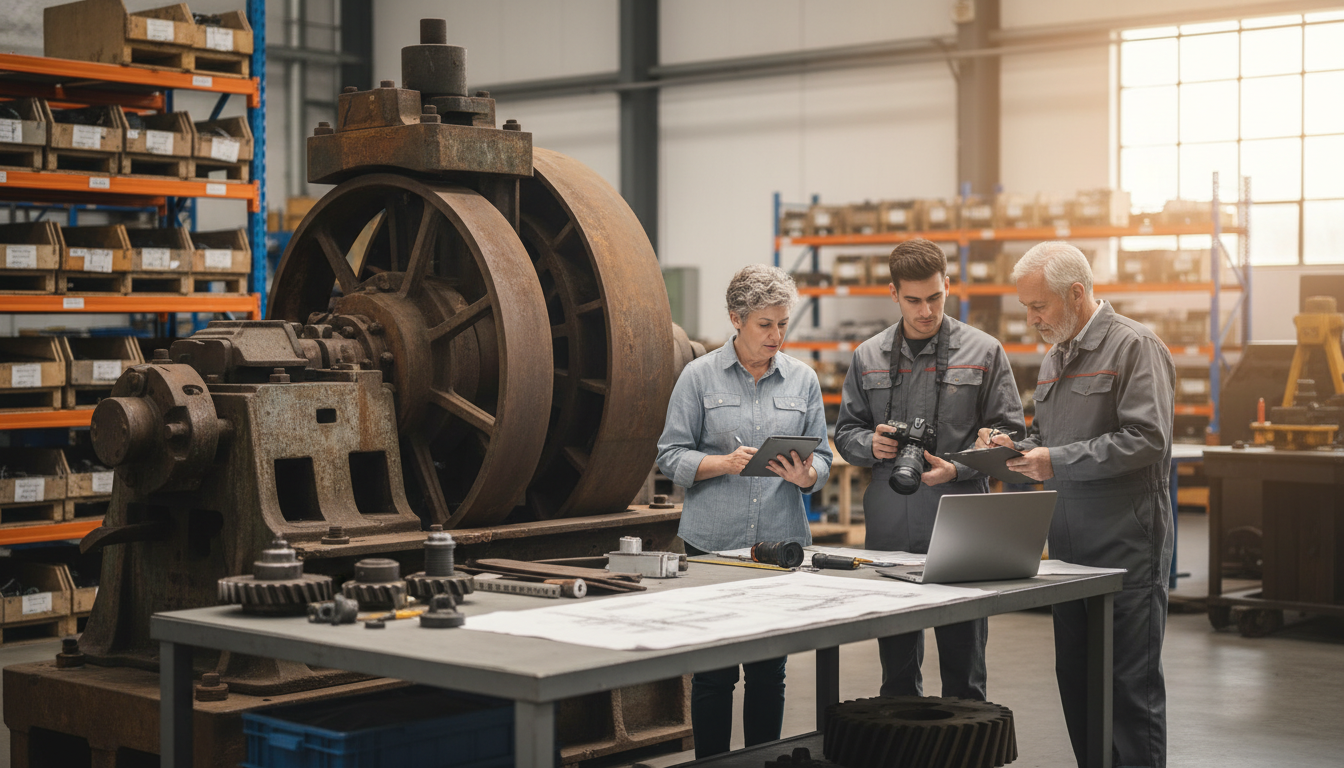
Before reaching out to any supplier, gather every piece of identification data available. This step alone can reduce sourcing time by 30 to 40% and minimizes the risk of ordering incorrect parts. Procurement managers who skip this step consistently report the highest rates of returns, delays, and fitment failures.
Critical Information Checklist
- Machine make (e.g., Caterpillar, Komatsu, Sandvik, Epiroc)
- Model number and series (e.g., CAT 793, Komatsu 930E)
- Serial number (or PIN): essential for pinpointing the exact build configuration
- Existing part number(s), preferably from the part itself or the OEM service manual
- Application environment (underground, open pit, high-abrasion)
- Any prior modifications or rebuilds, which can alter fitment requirements
Using Digital Tools for Part Identification
Mobile apps and portals from OEMs like Caterpillar’s Parts.Cat.Com and Metso’s digital catalog allow users to search by serial number and scan barcodes on surviving components. For brands that no longer offer public portals, third-party databases such as SpareFinder and MachineryTrader’s parts lookup aggregate millions of records across discontinued lines. Digitizing parts manuals and linking them to your inventory system can save maintenance teams over 200 hours per year in manual cross-referencing. As of 2026, several OEMs are also piloting AI-assisted part identification tools that match photos of worn components to catalog entries.
OEM vs Aftermarket vs Rebuilt: A Strategic Comparison
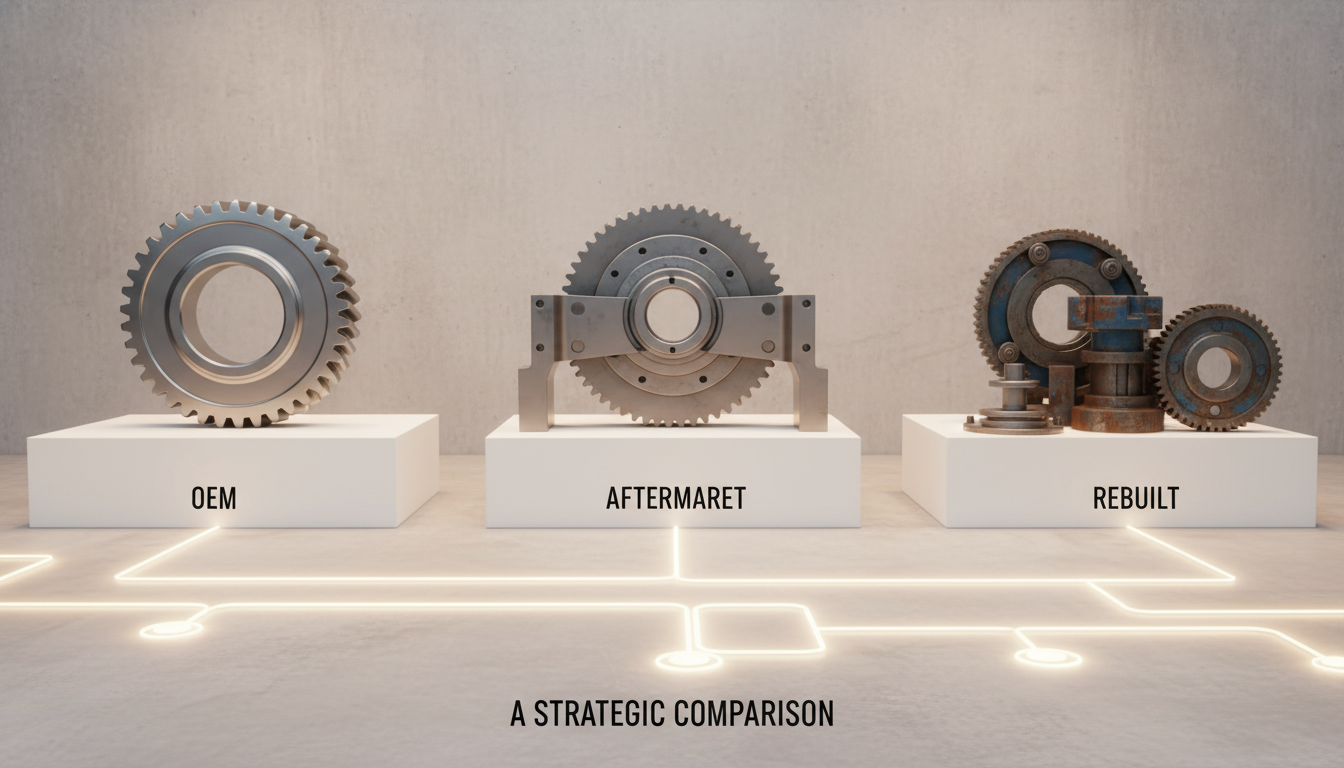
Selecting the right source path for how to source spare parts for old mining equipment depends on the component’s criticality, lead time, and budget. Each option carries distinct trade-offs that must be evaluated case by case.
Comparison Table: Sourcing Options at a Glance
| Criteria | OEM Parts | Quality Aftermarket | Rebuilt/Refurbished |
|---|---|---|---|
| Cost vs New | 100% (baseline) | 50–80% | 30–60% |
| Availability | Variable; often discontinued for old models | High for common wear parts, limited for niche items | Dependent on salvage stocks; can be immediate if in inventory |
| Warranty | Typically 12–24 months | 6–12 months from reputable suppliers | Often 3–6 months or limited to workmanship |
| Life Expectancy | Designed to match original | Varies; premium brands can equal OEM | Typically 50–80% of new life; RMS Mining Solutions certifies 50%+ remaining life |
| Regulatory Compliance | Meets all original standards | Verify compliance; ISO 9001 suppliers preferred | Must be re-certified for critical applications |
When to Choose Each Option
OEM parts are non-negotiable for safety-critical systems such as brakes and hoist cylinders, and when maintaining warranty on recently rebuilt equipment. Aftermarket parts are the right call for high-wear consumables like crusher liners, conveyor idlers, and bucket teeth. In these categories, metallurgical improvements in premium aftermarket lines can actually outperform the original specification. Rebuilt components are ideal for large capital items such as engines, transmissions, and hydraulic cylinders. Companies like RMS Mining Solutions carry over 80,000 refurbished parts with certified remaining life, reducing lead times from 12 weeks to just days in many cases.
The Global Marketplace: Where to Find Parts for Discontinued Mining Equipment
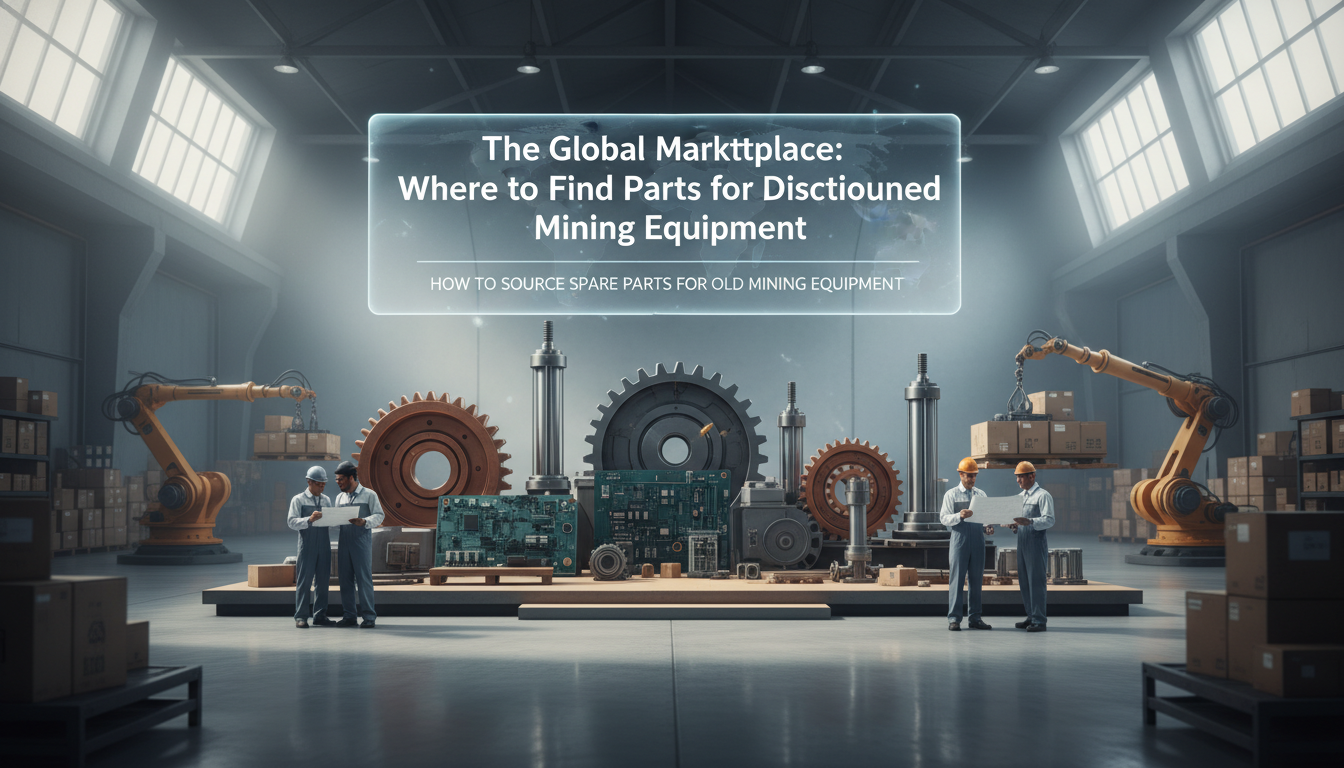
Geographic limitations are no longer the barrier they once were, thanks to a robust secondary market and specialized exporters. Understanding this landscape is central to how to source spare parts for old mining equipment when local dealer networks have nothing to offer.
Specialized Exporters and Broker Networks
Firms like 3GEN Export consolidate parts from multiple global suppliers, handling export documentation, freight forwarding, and customs clearance end to end. This model is particularly valuable for mines in Southeast Asia, Africa, and South America, where local dealer networks are thin or absent entirely. A single export partner can provide access to inventories spanning the United States, Canada, Europe, and Australia, often locating a discontinued part within 48 hours through their network. Per manufacturer specifications and export compliance requirements, all shipments should include full traceability documentation.
Online Marketplaces: A Goldmine with Caveats
Platforms such as Alibaba, eBay Industrial, and Mercado Libre list thousands of mining components. Procurement teams have reported success sourcing old crusher parts through these channels after exhausting traditional dealer routes. However, due diligence is critical: always request ISO 9001 or ISO 14001 certification, check for material test certificates (MTCs), and never pay via unprotected channels. Counterfeit incidents on open marketplaces have risen year-over-year, according to industry trade groups tracking parts integrity. Treat any price that looks too good as a red flag, not a bargain.
Salvage Yards and Mine Closures
When a mine shuts down, entire fleets are often parted out. Companies such as Ritchie Bros. Auctioneers and specialty dismantlers in mining hubs like Perth, Western Australia and Santiago, Chile regularly sell component inventories. Attending these auctions or building relationships with dismantlers can yield OEM parts at 20 to 40% of new price. UHCO CHRISTENSEN, a Chilean mining maintenance specialist, has resolved suspension cylinder shortages by sourcing cores from dismantled trucks across South America and coordinating refurbishment through certified hydraulic shops, a model that other operations can replicate.
“OEMs of large mining trucks and vehicles discontinue parts after a certain amount of time, often a decade or two, making it nearly impossible to find replacement parts.” Joe Ferch, Spuncast
Pros and Cons of Global Sourcing for Old Mining Equipment Parts
Understanding the advantages and drawbacks of global sourcing helps procurement teams set realistic expectations and build the right safeguards into their process.
Pros
- Access to discontinued inventory: Global networks surface parts that no local dealer can provide, including OEM cores from salvage yards in Nevada, Australia, or Brazil.
- Cost savings of 20 to 60%: Aftermarket and rebuilt options sourced internationally can deliver significant savings versus new OEM pricing.
- Faster resolution for critical breakdowns: Export specialists with live inventory databases can locate and ship a part within 48 hours, versus weeks through traditional channels.
- Consolidated logistics: A single export partner handles customs, freight, and documentation, reducing administrative burden on your maintenance team.
- Broader supplier competition: Access to multiple global suppliers drives better pricing and quality accountability.
Cons
- Counterfeit risk: Open marketplaces carry a real risk of mislabeled or substandard parts; verification adds time and cost to every transaction.
- Customs and regulatory complexity: Misclassifying an HS code can cause delays of 2 to 4 weeks and trigger unexpected tariff charges.
- Quality variability: Not all aftermarket suppliers meet OEM tolerances; without proper vetting, a cheaper part can cost more in downtime than the OEM alternative.
- Lead time uncertainty: Sea freight takes 25 to 35 days, which is unacceptable when a crusher is down and costing the operation tens of thousands per hour.
- Intellectual property considerations: Reverse-engineered parts must be produced only for machines where patents have expired or with OEM consent.
Verifying Supplier Quality and Mitigating Counterfeit Risk
Counterfeit and mislabeled parts are a documented problem in the aftermarket mining supply chain. The consequences range from accelerated wear to catastrophic failure, putting both productivity and personnel at risk. Industry maintenance data shows that substandard components can generate repair costs 3 to 5 times the original part value when failures cascade through connected systems.
Red Flags and Required Documentation
- Missing or photocopied certifications: Always insist on original test reports, not scanned copies.
- Prices significantly below market: If a “new” Komatsu cylinder is offered at 60% off, it is likely a refurbished unit or a counterfeit.
- Unclear origin or lack of traceability: Legitimate parts have a clear chain of custody from manufacturer to end user.
- No physical address or landline number: Reputable suppliers invest in verifiable infrastructure.
Due Diligence Process
- Step 1: Require the supplier’s quality management system certificate (e.g., ISO 9001:2015) and verify it directly on the certifier’s website.
- Step 2: Request detailed photos of the exact item, including serial numbers, packaging labels, and any visible casting or forging marks.
- Step 3: Cross-reference part numbers with OEM catalogs or independent databases like PartsCatalogs.net.
- Step 4: Check trade references and, for large orders, conduct a virtual factory tour via video call.
- Step 5: Use an escrow service or letter of credit for first-time transactions over $10,000 USD.
“Metso applies the strictest standards and tolerances for guaranteed safety and reliability.” Metso Parts for Mining Equipment
When sourcing outside the OEM channel, that same standard of rigor is the benchmark to hold every supplier against. Third-party inspection services such as SGS or Bureau Veritas can provide an independent quality gate for high-value orders.
Navigating International Logistics and Customs for Mining Spares
For mines in developing countries or remote regions, transportation and border clearance can be as critical as the part itself. The HS code for mining equipment spare parts commonly falls under chapters 84 and 87 (e.g., 8431.49 for machinery parts, 8708.99 for vehicle parts), but correct classification directly affects duty rates and clearance time. Misclassification can cause delays of 2 to 4 weeks and trigger unexpected tariffs that inflate the total landed cost.
Essential Documentation
- Commercial Invoice and Packing List
- Certificate of Origin (often required for preferential trade agreements)
- Bill of Lading or Air Waybill
- Export Compliance Declaration (required when shipping from the United States)
- Importer’s customs bond and permits (each country has unique requirements)
Air Freight vs. Sea Freight: When Speed Matters Most
Air freight can deliver a part from the U.S. to Chile in 3 to 5 days at a cost of roughly $8 to $15 per kilogram, while sea freight takes 25 to 35 days but costs approximately $0.50 to $2 per kilogram. When a crusher is down and costing $50,000 per hour in lost production, the air freight premium becomes negligible. Many export specialists consolidate multiple items into a single shipment to reduce per-unit freight costs, achieving savings of 15 to 25% compared to individual courier shipments.
Total Cost of Ownership: Beyond the Acquisition Price
Knowing how to source spare parts for old mining equipment is as much a financial exercise as a logistical one. The purchase price is just the visible portion of the total cost.
The Hidden Cost Pyramid
- Installation labor: A part that requires extensive modification or specialized tooling can add 20 to 40% to the total job cost.
- Production downtime: If an aftermarket part lasts only 70% as long as the OEM equivalent, the lost production hours may erase the initial savings entirely.
- Inventory carrying cost: Holding spares ties up capital; industry benchmarks suggest an annual carrying cost of 20 to 30% of the part’s value.
- Warranty support: Rebuilds with a solid warranty reduce financial risk; RMS Mining Solutions specifies remaining life and stands behind its re-certification process.
Calculating Breakeven
Suppose an OEM crusher mantle costs $10,000 and lasts 2,000 hours. An aftermarket option costs $8,000 but lasts only 1,400 hours. The hourly cost for OEM is $5.00, while the aftermarket is $5.71, making the aftermarket 14% more expensive per operating hour despite the lower upfront price. Always compute cost per operating hour before making the final call.
Building a Resilient Spare Parts Inventory for Aging Fleets
Proactive inventory management prevents scrambles. As ABB notes in its guidance on spare parts management, “keeping spare parts in stock is a balancing act: too many parts tie up capital, too few, and you might face a costly shutdown.” This tension is especially acute for aging fleets where parts are harder to find and lead times are longer.
Criticality Classification
- A-items (Critical Spares): No substitutes, long lead time, high downtime cost (e.g., main hoist motor, mill pinion). Stock 1 to 2 units on hand at all times.
- B-items (Operational Spares): Needed for scheduled maintenance, moderate lead time (e.g., hydraulic pumps, bearings). Stock based on min-max levels tied to consumption history.
- C-items (Consumables): Short lead time, low unit cost (e.g., filters, seals, wear plates). Use two-bin systems or vendor-managed inventory to avoid stockouts.
Consignment and Vendor-Held Stock
Many exporters will hold critical spares at their warehouses on consignment, invoicing only when consumed. This model has been shown to reduce on-site inventory value by 30 to 50% while maintaining part availability. For mines with limited storage or capital constraints, consignment arrangements with a trusted global supplier are one of the most practical tools available. Explore 3GEN Export’s parts categories to see which components are available for consignment-style supply agreements.
Case Study: Reviving a 1990s Komatsu 930E Fleet in South America
In 2024, a copper mine in northern Chile faced grounding three of its Komatsu 930E haul trucks because rear suspension cylinders were no longer available through any OEM channel. A specialized mining equipment exporter consolidated demand across multiple mines, located six rebuildable cores from a salvage yard in Nevada, and coordinated refurbishment through a certified hydraulic shop in Santiago. The rebuilt cylinders were tested to 90% of original pressure specifications and guaranteed for 50% of new life, per the RMS Mining Solutions certification standard. Delivery came within 28 days at a cost 35% below new OEM pricing. Total downtime avoided saved the mine an estimated $2.1 million in lost production.
Lessons Learned
- Network aggregation creates buying power. One mine alone might not locate six rebuildable cores, but a coordinated network can.
- Third-party testing is non-negotiable. The cylinders underwent NDT magnetic particle inspection and full load testing before shipment.
- Customs pre-clearance slashed wait times. Engaging a freight forwarder with mine-specific experience cleared Chilean customs in 2 days rather than the standard 10.
Future-Proofing Your Sourcing Strategy
The pace of parts obsolescence is accelerating as manufacturers shorten product lifecycles. A proactive approach now prevents crises later. This year, several major OEMs have announced further reductions in legacy parts support windows, making the ability to source spare parts for old mining equipment through alternative channels more important than ever.
Additive Manufacturing: A Rising Solution
3D printing of metal parts using laser sintering and DMLS (Direct Metal Laser Sintering) is moving from prototype to production for low-volume, complex components. Caterpillar’s Additive Manufacturing Center in Illinois has produced hundreds of legacy parts for 777 trucks, cutting lead times from months to weeks. While not yet cost-competitive for all items, additive manufacturing is a viable path for unavailable castings and intricate valve bodies, with cost reductions of 30 to 50% reported for one-off orders compared to traditional tooling.
Reverse Engineering Partnerships
When a part is truly unavailable, reverse engineering offers a clear path forward. Specialized engineering firms can laser-scan the original component, create a 3D CAD model, and produce a small batch. This process typically takes 6 to 12 weeks and costs $5,000 to $25,000 for the first article, but unit cost drops significantly for subsequent orders. Crucially, ensure all intellectual property rights are respected. Producing parts for machines where the original patent has expired, or working with the OEM’s consent, keeps the process legally sound.
Caterpillar Upgrade and Repower Programs
For operations running aging Cat equipment, Caterpillar’s factory repower and upgrade programs offer a structured path to extend machine life. These programs replace obsolete powertrain and control system components with current-generation equivalents, often restoring full OEM parts support eligibility. This approach is worth evaluating before committing to a long-term aftermarket sourcing strategy for a specific machine model.
Frequently Asked Questions
What are the three types of spares typically used in mining?
In mining, spares are classified as OEM (Original Equipment Manufacturer), aftermarket (new, non-OEM), and rebuilt or refurbished components. Each type serves different cost, availability, and application profiles depending on the component’s criticality and the machine’s age.
What is the HS code for mining equipment spare parts?
The most common HS codes for mining spares are 8431.49 (parts of machinery for earth boring, excavating, and similar work) and 8708.99 (vehicle parts). Correct classification depends on the machine type and the specific component. Using the wrong code can trigger tariffs and customs delays of 2 to 4 weeks.
How can I verify if an aftermarket part is legitimate?
Request the supplier’s ISO 9001 certificate, material test reports (MTRs), and photos with visible part numbers. Cross-check the part number with official OEM catalogs. For large orders, a third-party inspection via SGS or Bureau Veritas adds an independent quality gate before shipment.
Is it safe to buy mining parts from online marketplaces like Alibaba?
It can be safe if you thoroughly vet the seller. Look for verified certifications, a documented history of mining-specific transactions, and always use trade assurance rather than direct bank transfers. Start with a small trial order before scaling up to high-value purchases.
How long does it take to source a part that is no longer manufactured?
Timelines vary widely. For a common wear item, a match can often be found within 48 to 72 hours through global networks. For rare or complex components requiring reverse engineering, the process takes 6 to 12 weeks. Working with an export specialist who maintains a live inventory database significantly shortens the search phase.
What is the most overlooked factor when sourcing old mining equipment parts?
Documentation of past modifications. A machine retrofitted with a different engine or hydraulic system may require parts that do not match the original spec sheet. Always base the search on the actual installed equipment configuration, not just the original build list.
Ready to find the parts your legacy fleet needs? Shop OEM-quality spare parts with global 5-day delivery at 3genexport.com.