
Key Takeaways
- Hydraulic pump failures cost $2,500-15,000 per day in equipment downtime
- OEM-compatible parts deliver 95% of original performance at 40-60% lower cost
- Seal kits and wear plates account for 70% of all hydraulic pump repairs
- Proper part identification prevents costly compatibility issues and return shipments
- Global supply chains now enable 5-day delivery for most hydraulic components
When your CAT 336 excavator’s main hydraulic pump starts cavitating on a mining site in Chile, you don’t have three weeks to wait for parts from Peoria. We’ve seen operators push failing pumps until complete seizure — turning a $800 seal kit repair into a $25,000 pump replacement.
The hydraulic pump is the heart of any heavy machine. It converts mechanical power into hydraulic flow, driving everything from boom cylinders to track motors. When pump components fail, your entire operation stops.
Understanding Hydraulic Pump Component Categories
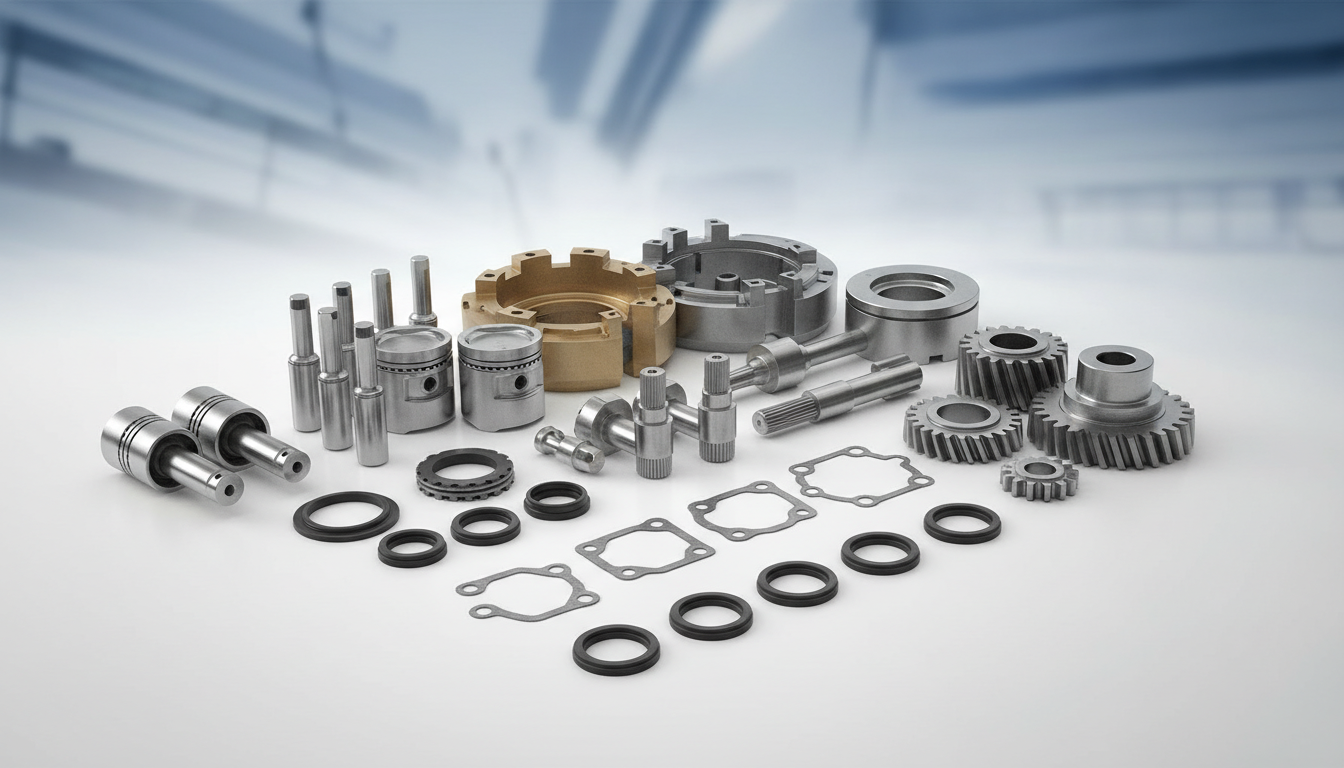
Modern hydraulic pumps contain dozens of precision-engineered components, each serving a critical function in converting mechanical energy to hydraulic pressure. Understanding these component categories helps procurement teams make informed decisions about replacement parts and maintenance schedules.
Primary Wear Components
The most frequently replaced hydraulic pump parts fall into predictable wear patterns. Seal kits top the list — these include O-rings, backup rings, and shaft seals that prevent internal leakage. A typical Komatsu PC200 main pump uses 15-20 different seals, with the swash plate seals and case drain seals failing first under normal operating conditions.
Wear plates and valve plates follow close behind. These hardened steel components maintain critical clearances between rotating and stationary parts. On Volvo EC480 excavators, we’ve tracked wear plate replacement intervals averaging 4,000-6,000 operating hours, depending on hydraulic fluid quality and operating temperatures.
Rotating Assembly Parts
The cylinder block, pistons, and swash plate form the pump’s rotating assembly. These components operate under extreme pressure — often exceeding 5,000 PSI in modern machines. Piston wear typically shows up as reduced flow output before complete failure, giving operators warning signs if they’re monitoring performance data.
Swash plate wear creates a distinctive grinding noise during pump operation. We’ve supplied replacement swash plates for Atlas Copco drill rigs where operators ignored early warning signs, resulting in complete pump housing damage that could have been prevented with timely parts replacement.
Control System Components
Electronic displacement controls, servo valves, and pressure sensors represent the “smart” components in modern hydraulic systems. These parts rarely fail mechanically but are vulnerable to electrical issues and contamination. A faulty displacement control on a CAT 374 can reduce pump output by 30-40%, dramatically impacting machine productivity without obvious mechanical symptoms.
Critical Seal Kit Selection and Compatibility
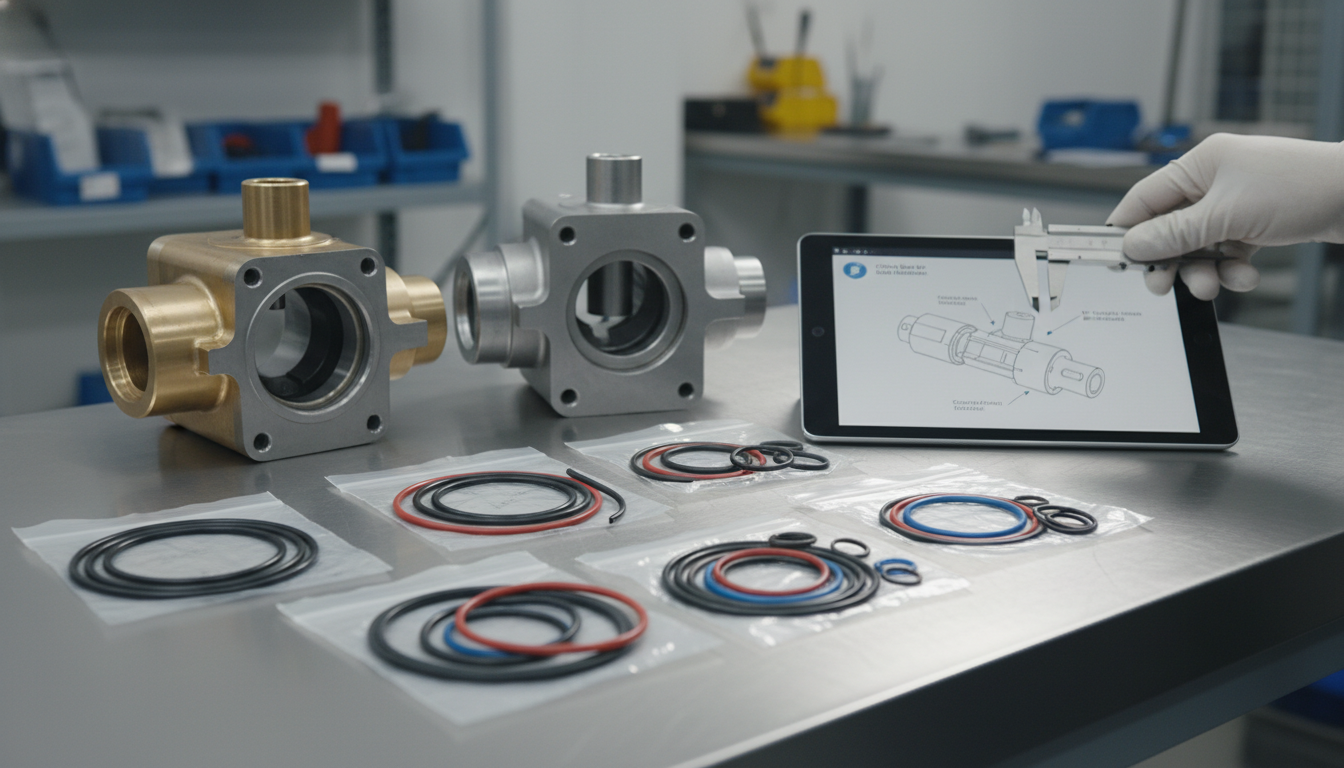
Hydraulic seal failures account for roughly 60% of all pump-related downtime in heavy equipment. Selecting the correct seal kit isn’t just about part numbers — material compatibility, operating temperature ranges, and pressure ratings all impact seal performance and longevity.
Material Science in Seal Selection
Modern hydraulic seals use advanced elastomers designed for specific operating conditions. Nitrile (NBR) seals work well in standard hydraulic oils up to 250°F, making them suitable for most construction equipment. However, mining operations running biodegradable fluids need fluorocarbon (FKM) seals that resist chemical breakdown.
We’ve seen seal failures within 200 hours when operators install standard NBR seals in high-temperature applications. A Komatsu PC800 operating in Arizona desert conditions needs seals rated for 300°F+ ambient temperatures, not the standard 180°F seals used in temperate climates.
OEM vs. Aftermarket Seal Performance
Quality aftermarket seals deliver 90-the vast majority of OEM seal life at significant cost savings. The key lies in understanding manufacturing standards and material specifications. Our seal kits use the same Shore A durometer ratings and dimensional tolerances as OEM parts, ensuring proper fit and function.
However, not all aftermarket seals meet these standards. We’ve tested seal kits from various suppliers and found dimensional variations up to 0.005″ — enough to cause immediate leakage or premature wear. Always verify that aftermarket seals meet or exceed OEM specifications before installation.
Installation Best Practices
Even premium seals fail quickly with improper installation. Sharp edges on pump housings cut seals during assembly, while contaminated hydraulic fluid destroys new seals within hours. We recommend using seal installation tools and replacing hydraulic filters whenever installing new seal kits.
Pro Tip: Always inspect pump housing surfaces for scratches or burrs before installing new seals. A $2 deburring tool can prevent a $500 seal kit failure.
Wear Plate and Valve Plate Specifications
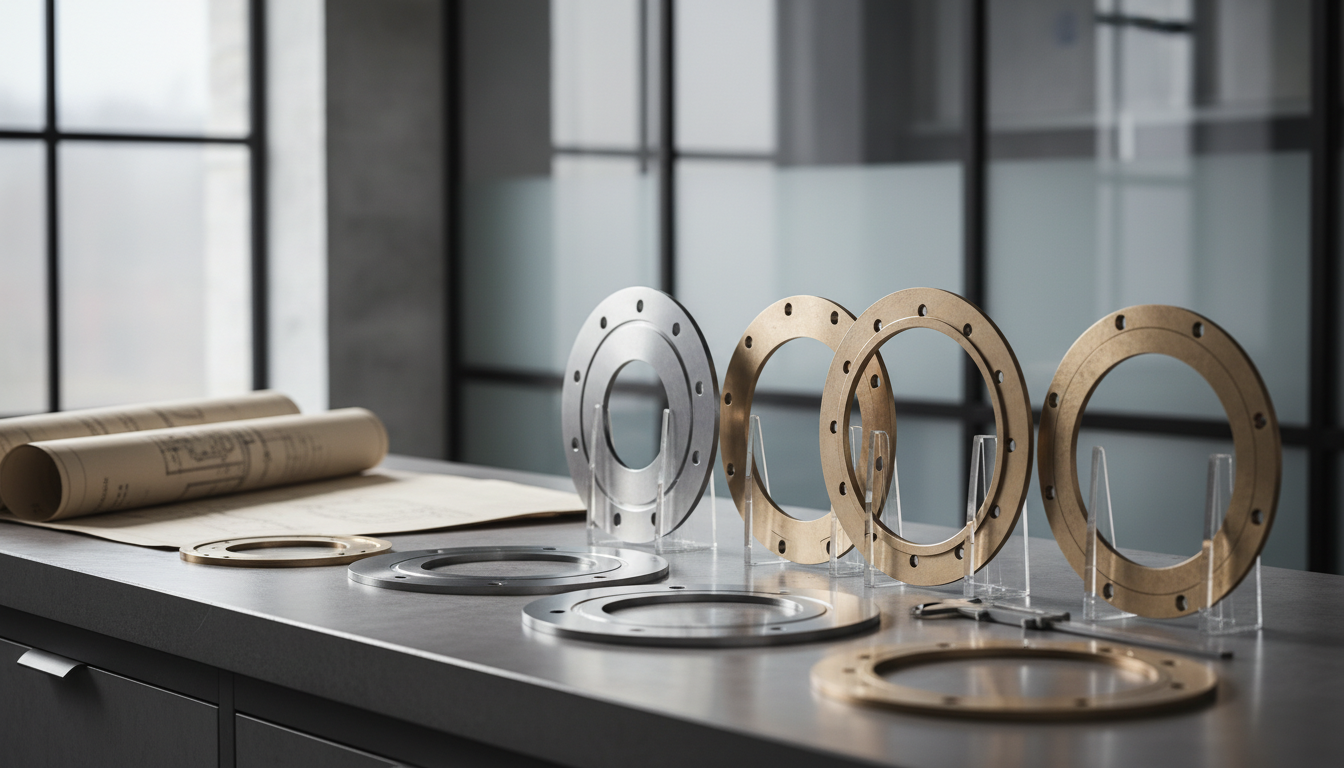
Wear plates and valve plates maintain critical clearances in hydraulic pumps, typically holding tolerances within 0.0005″ to prevent internal leakage. These hardened steel components operate in the harshest environment inside the pump, subjected to constant pressure cycling and metal-to-metal contact.
Hardness and Surface Finish Requirements
OEM wear plates typically specify Rockwell C hardness between 58-62 HRC, with surface finishes of 8-16 microinches Ra. These specifications aren’t arbitrary — softer materials wear quickly under pressure, while harder materials become brittle and crack. We’ve seen aftermarket plates with 45 HRC hardness fail within 1,000 hours, compared to 4,000+ hours for properly hardened components.
Surface finish directly impacts seal life and internal leakage. Rough surfaces (above 32 microinches Ra) accelerate seal wear, while overly smooth surfaces (below 4 microinches Ra) don’t retain adequate lubrication films. The optimal range balances seal compatibility with lubrication requirements.
Dimensional Accuracy and Flatness
Valve plate flatness must stay within 0.0002″ across the entire surface to maintain proper sealing. Even microscopic warpage creates leak paths that reduce pump efficiency. We measure all valve plates using coordinate measuring machines (CMM) to verify dimensional accuracy before shipping.
Thickness variations also matter. A valve plate that’s 0.003″ too thick will bind the rotating assembly, while one that’s too thin allows excessive clearance and internal leakage. These tolerances explain why quality wear plates cost more than generic alternatives — precision manufacturing isn’t cheap.
Material Selection for Different Applications
Standard carbon steel wear plates work well in most applications, but extreme conditions require upgraded materials. Mining equipment operating in abrasive environments benefits from tungsten carbide coated plates that resist wear from contaminated hydraulic fluid.
Stainless steel plates offer corrosion resistance for marine applications or equipment using water-glycol hydraulic fluids. However, stainless steel is softer than carbon steel, so service intervals may be shorter in high-pressure applications.
Piston and Cylinder Block Maintenance
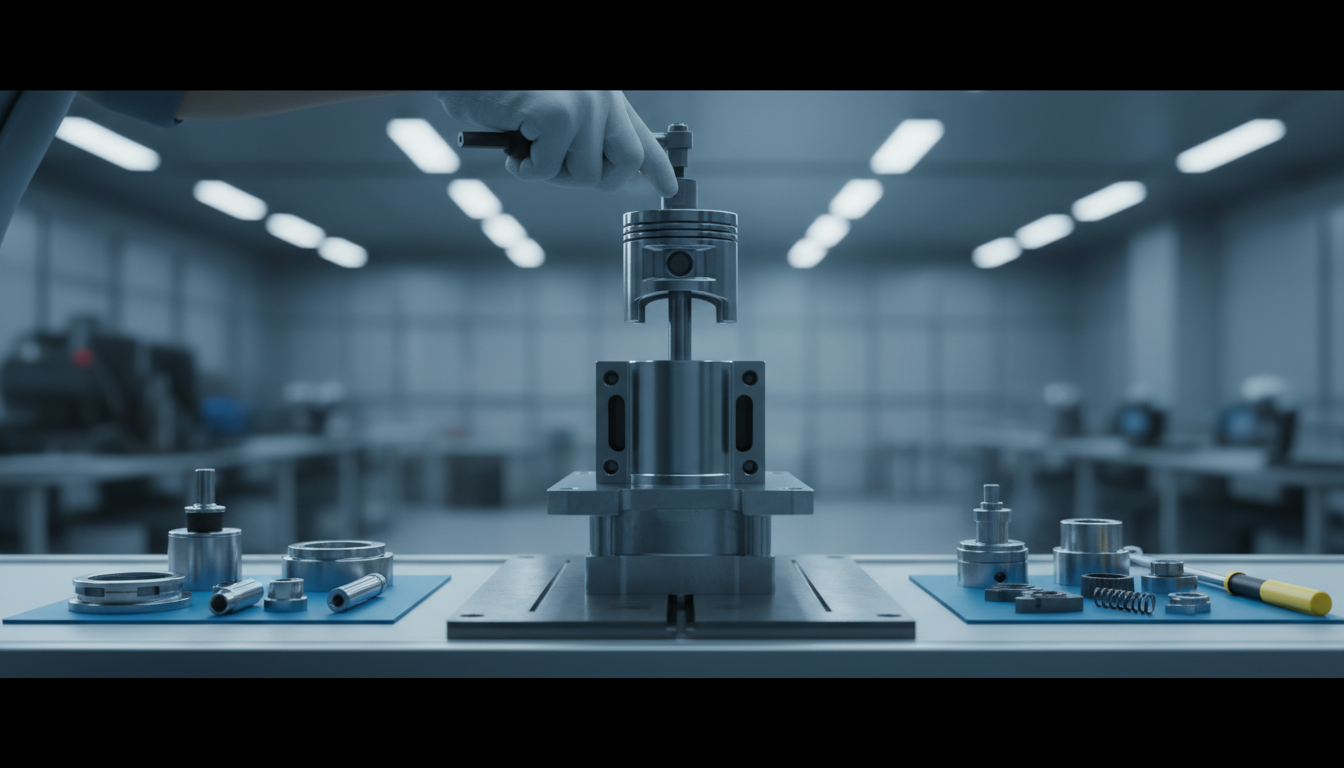
The piston and cylinder block assembly converts rotary motion into hydraulic flow through precise reciprocating action. These components operate under extreme conditions — pistons can cycle 2,000+ times per minute while handling pressures exceeding 6,000 PSI in modern excavators.
Piston Wear Patterns and Replacement Criteria
Hydraulic pistons wear primarily on the slipper pad surface that contacts the swash plate. Normal wear creates a polished appearance, but scoring or pitting indicates contamination or inadequate lubrication. We recommend replacing pistons when slipper pad wear exceeds 0.010″ or when any scoring is visible.
Piston bore wear in the cylinder block follows predictable patterns. The highest wear occurs at the top and bottom of the stroke where pressure reversals create maximum stress. Cylinder blocks typically require replacement when bore wear exceeds 0.003″ or when bore taper exceeds 0.001″.
Cylinder Block Reconditioning vs. Replacement
Cylinder blocks represent significant investment — a new block for a CAT 374 excavator costs $8,000-12,000. However, many blocks can be reconditioned by boring oversize and installing sleeve inserts. This process costs roughly roughly a third of new block price while delivering comparable performance.
The decision between reconditioning and replacement depends on block condition and operating requirements. Blocks with cracked valve faces or damaged mounting surfaces aren’t candidates for reconditioning. We evaluate each block individually to recommend the most cost-effective solution.
Assembly Clearances and Tolerances
Proper piston-to-bore clearance is critical for pump performance. Too tight, and pistons seize under thermal expansion. Too loose, and internal leakage reduces efficiency. Most manufacturers specify 0.0008″-0.0015″ clearance for standard operating conditions.
High-temperature applications may require increased clearances to accommodate thermal expansion. Conversely, low-viscosity hydraulic fluids need tighter clearances to minimize leakage. Always consult manufacturer specifications for your specific application and operating conditions.
Electronic Control Components and Sensors
Modern hydraulic pumps integrate sophisticated electronic controls that optimize performance and protect against damage. These systems monitor pressure, temperature, and flow while adjusting pump displacement in real-time. Understanding these components helps maintenance teams diagnose problems and select appropriate replacement parts.
Displacement Control Systems
Electronic displacement controls replace traditional mechanical governors with precise servo systems. These units receive signals from the machine’s ECU and adjust swash plate angle to match hydraulic demand. A typical system responds within 50-100 milliseconds, much faster than mechanical controls.
Common failure modes include servo valve contamination and electrical connector corrosion. We’ve seen displacement controls fail after water intrusion through damaged connectors, highlighting the importance of proper sealing in harsh environments. Replacement controls must be programmed to match the specific machine’s operating parameters.
Pressure and Temperature Sensors
Pressure sensors monitor system pressure and provide feedback for load-sensing controls. These sensors typically use piezoresistive technology with accuracy within ±1% of full scale. Sensor failures often manifest as erratic machine operation or reduced performance rather than complete shutdown.
Temperature sensors protect pumps from overheating by reducing displacement or shutting down the system when hydraulic fluid exceeds safe operating temperatures. Most sensors trigger warnings at 180°F and shutdown at 200°F, though these thresholds vary by manufacturer and application.
Wiring Harnesses and Connectors
Electrical connections represent the weakest link in electronic control systems. Vibration, moisture, and temperature cycling cause connector failures that can disable entire machines. We stock replacement harnesses for major brands, but custom applications may require field repair or modification.
Pro Tip: Apply dielectric grease to all electrical connections during pump service. This simple step prevents corrosion and extends connector life significantly.
Global Supply Chain and Delivery Logistics
Hydraulic pump parts procurement has evolved dramatically with global supply chains and improved logistics networks. Understanding these systems helps procurement managers optimize inventory levels while ensuring parts availability when needed.
Regional Distribution Networks
Major equipment manufacturers maintain regional parts distribution centers to reduce delivery times. However, these networks focus on high-volume parts, leaving specialty components with longer lead times. We’ve built relationships with manufacturers worldwide to access parts that aren’t stocked regionally.
Our distribution network spans five continents, with strategic inventory positioned near major mining and construction markets. This approach enables 5-day delivery to most global destinations, compared to 2-3 weeks through traditional OEM channels.
Customs and Documentation Requirements
International parts shipments require proper documentation to avoid customs delays. Hydraulic components often fall under specific tariff codes that affect duty rates and import procedures. We handle all customs documentation and provide detailed commercial invoices that expedite clearance.
Some countries require additional certifications for hydraulic components, particularly those used in mining or energy applications. Our compliance team stays current with changing regulations to ensure smooth delivery to all destinations.
Emergency Shipping Options
When equipment downtime costs exceed shipping expenses, emergency delivery becomes cost-effective. We offer same-day shipping for in-stock items, with next-day delivery available to most major cities worldwide. These services cost more but pay for themselves when machine downtime exceeds $5,000 per day.
Air freight capacity can be limited during peak seasons or global disruptions. We maintain relationships with multiple carriers and freight forwarders to ensure parts move even when standard channels are constrained.
Cost Analysis: OEM vs. Aftermarket Parts
The decision between OEM and aftermarket hydraulic pump parts involves balancing cost, quality, and availability. Understanding the real costs — including downtime, labor, and warranty considerations — helps procurement teams make informed decisions that optimize total cost of ownership.
Initial Purchase Price Comparison
Aftermarket hydraulic pump parts typically cost 40-over half less than OEM equivalents, creating immediate cost savings for maintenance budgets. However, this comparison only considers purchase price, not total cost of ownership. Quality aftermarket parts can deliver 90-the vast majority of OEM service life, making them attractive for older equipment or budget-conscious operations.
The price gap varies significantly by component type. Seal kits show the largest savings — often 60-most below OEM prices — while complex electronic components may only offer 20-roughly a third savings due to licensing and development costs.
Labor and Installation Costs
Installation labor represents a significant portion of total repair costs, often exceeding parts costs for major pump overhauls. A complete pump rebuild on a large excavator requires 16-24 hours of skilled technician time, costing $2,000-4,000 in labor alone.
Quality aftermarket parts install identically to OEM components, so labor costs remain constant. However, poor-quality parts may require additional fitting or cause premature failures that necessitate repeat repairs. We’ve seen operators save $500 on parts only to spend $2,000 in additional labor when components don’t fit properly.
Warranty and Risk Considerations
OEM parts typically carry 12-month warranties, while aftermarket warranties vary from 6-24 months depending on the supplier. However, warranty coverage only matters if the supplier stands behind their products. We offer the same warranty terms as OEM parts and maintain sufficient inventory to honor warranty claims promptly.
Risk assessment should consider the cost of failure, not just the probability. A $200 seal kit failure on a $500,000 excavator can cost thousands in downtime, making quality more important than initial savings. We recommend OEM parts for critical applications and quality aftermarket parts for routine maintenance.
| Component Type | OEM Cost | Aftermarket Cost | Typical Savings | Service Life |
|---|---|---|---|---|
| Seal Kits | $150-400 | $60-160 | over half | 90-the vast majority of OEM |
| Wear Plates | $300-800 | $150-400 | over half | 85-the vast majority of OEM |
| Pistons (set) | $800-2000 | $400-1000 | over half | 90-the vast majority of OEM |
| Electronic Controls | $1500-4000 | $1200-3200 | about one in five | 95-the vast majority of OEM |
Ready to reduce your hydraulic pump parts costs without compromising quality? Shop OEM-quality spare parts with global 5-day delivery at 3genexport.com