
Key Takeaways
- Ingersoll Rand compressor parts require precise OEM specifications for optimal performance
- Critical components include pressure switches, check valves, pumps, and filtration systems
- Global sourcing reduces lead times from weeks to days for maintenance operations
- Compatibility verification prevents costly equipment damage and warranty voids
When your Ingersoll Rand rotary screw compressor starts showing pressure drops or unusual vibrations, you’re looking at potential downtime that costs thousands per day. Ingersoll rand compressor parts sourcing becomes critical — not just finding any replacement component, but securing OEM-specification parts that maintain your equipment’s performance standards and warranty coverage.
We’ve supplied Ingersoll Rand components to mining operations in Chile, construction fleets in Dubai, and manufacturing plants across Southeast Asia since 2006. The pattern remains consistent: operators who source quality parts proactively avoid the 3-4 week emergency shipping delays that can shut down entire production lines.
Essential Ingersoll Rand Compressor Components and Their Functions
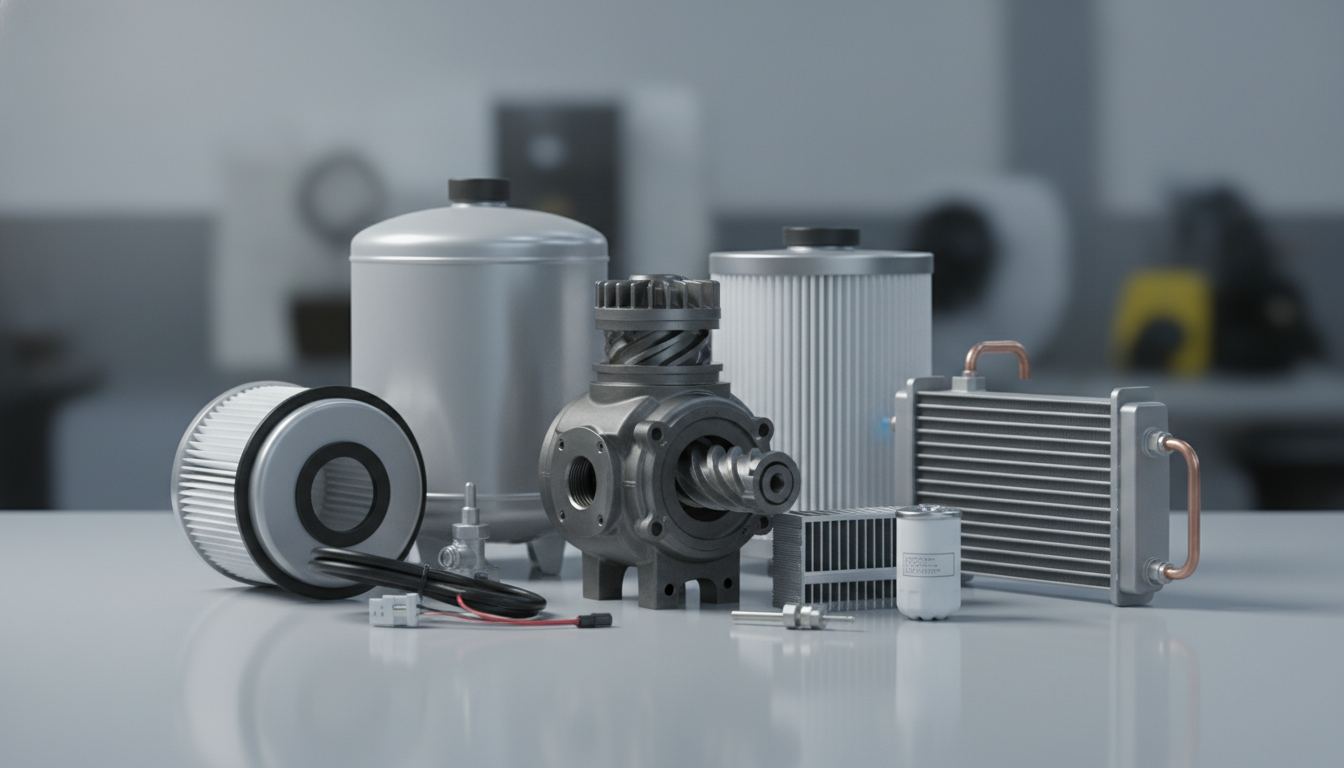
Ingersoll Rand compressor systems rely on precision-engineered components that work together to deliver consistent compressed air output. Understanding these critical parts helps maintenance teams prioritize inventory and prevent cascading failures that can damage multiple system components simultaneously.
Pressure Control Systems
The pressure switch assembly controls when your compressor starts and stops based on tank pressure levels. Ingersoll Rand models like the 2475N5 and SS3 series use specific pressure switch configurations — typically the 23474661 for single-stage units and 23474653 for two-stage applications. These switches must match your compressor’s CFM rating and tank capacity to prevent short cycling, which reduces motor life and increases energy consumption.
Pressure relief valves work alongside switches to prevent over-pressurization. The standard relief valve for most Ingersoll Rand reciprocating compressors opens at 200 PSI, but rotary screw models may require different specifications based on their operating pressure range.
Air Flow and Filtration Components
Check valves prevent compressed air from flowing back into the pump when the motor stops, maintaining tank pressure and reducing restart load on the motor. The 85582229 check valve fits most Ingersoll Rand single-stage pumps, while two-stage units typically use the 85582286 configuration.
Air filters protect internal components from contamination that can cause premature wear. Ingersoll Rand specifies particular filter media and housing designs for each compressor series — using incorrect filters can reduce airflow efficiency and void warranty coverage.
Pump and Motor Integration
Bare pump assemblies for Ingersoll Rand compressors are model-specific and include cylinder heads, pistons, connecting rods, and crankcase components. The SS3 and SS5 series pumps are not interchangeable despite similar external dimensions — internal clearances and port configurations differ significantly.
Motor replacement requires matching horsepower, voltage, and mounting specifications exactly. A 5HP 230V single-phase motor for a 2475 series compressor has different mounting bolt patterns than similar motors for other manufacturers, making cross-compatibility impossible.
Compatibility Requirements Across Ingersoll Rand Model Series

Ingersoll Rand compressor parts compatibility depends on specific model series, manufacturing dates, and regional variations that affect component specifications. Using incorrect parts can damage equipment and void warranties, making proper identification important for maintenance operations.
Reciprocating Compressor Models
The 2475 series represents Ingersoll Rand’s most common reciprocating compressors, with variations including 2475N5 (5HP), 2475N7.5 (7.5HP), and 2475N10 (10HP) models. Each requires different pressure switch settings, motor specifications, and pump configurations. The 2475N5 uses a 23474661 pressure switch rated for 175 PSI cut-out, while larger models may require different pressure ranges.
SS3 and SS5 series compressors share some components but have distinct pump assemblies. SS3 models use single-stage compression with specific cylinder head designs, while SS5 units employ two-stage compression requiring different valve plate configurations and intercooler specifications.
Rotary Screw Compressor Variations
Ingersoll Rand’s rotary screw compressors include R-Series, RS-Series, and UP6 models, each with unique filtration, separation, and control requirements. R-Series units typically use spin-on oil filters and air/oil separators with specific flow ratings, while RS-Series models may require different separator media and housing designs.
Control system compatibility varies significantly between rotary screw models. Newer units with electronic controls require specific sensor types and wiring configurations that differ from older pneumatic control systems.
Regional and Manufacturing Date Considerations
Ingersoll Rand compressors manufactured for different markets may have component variations. European models often use metric fittings and different electrical specifications compared to North American units. Manufacturing date affects parts availability — components for compressors older than 15 years may require special ordering or aftermarket alternatives.
Serial number identification helps determine exact part requirements. Ingersoll Rand serial numbers contain manufacturing date codes and model-specific information that ensures correct component selection.
“We’ve seen too many operations try to save money with generic pressure switches or check valves, only to face compressor damage that costs 10 times the original part price. Ingersoll Rand specifications exist for good reasons — the tolerances and materials matter.” — Senior Maintenance Engineer, Global Mining Operations
Critical Maintenance Parts for Optimal Performance

Preventive maintenance using genuine Ingersoll Rand compressor parts extends equipment life and prevents costly emergency repairs. Certain components require regular replacement based on operating hours, environmental conditions, and duty cycle intensity.
Scheduled Replacement Components
Air filters require replacement every 500-1000 operating hours depending on environmental conditions. Dusty construction sites may need filter changes every 300 hours, while clean indoor applications can extend intervals to 1500 hours. Using incorrect filter media reduces airflow and increases energy consumption by up to 15%.
Oil and oil filters in rotary screw compressors need replacement every 2000-4000 hours. Ingersoll Rand specifies particular oil viscosities and additive packages — using automotive or generic compressor oils can damage internal seals and reduce separator efficiency.
Separator elements in rotary screw units typically last 4000-8000 hours but may require earlier replacement in high-moisture environments. A failing separator allows oil carryover into compressed air lines, contaminating pneumatic tools and processes.
Wear Components and Indicators
Valve plates and gaskets in reciprocating compressors show wear through reduced pumping efficiency and increased operating temperatures. These components typically require replacement every 5000-8000 hours of operation, but harsh conditions can reduce service life significantly.
Pressure switch contacts wear over time, causing erratic cycling and potential motor damage. Signs include delayed startup, failure to reach cut-out pressure, or continuous running. Replacement switches must match original specifications exactly to maintain proper system operation.
Emergency Repair Inventory
Critical spare parts for emergency repairs should include pressure switches, check valves, air filters, and basic gasket sets. For rotary screw compressors, oil filters and separator elements prevent extended downtime during unplanned maintenance.
Motor capacitors fail without warning and can strand operations until replacement. Keeping spare capacitors matching your compressor’s motor specifications prevents extended downtime for this common failure mode.
Sourcing Strategies for Global Operations

Global sourcing of ingersoll rand compressor parts requires balancing cost, quality, and delivery speed while maintaining OEM specifications and warranty compliance. Different sourcing strategies work better for various operational contexts and geographic locations.
OEM vs. Aftermarket Considerations
Genuine Ingersoll Rand parts guarantee compatibility and maintain warranty coverage but often carry premium pricing and longer lead times. OEM parts typically cost 20-40% more than quality aftermarket alternatives but provide assurance of exact specifications and materials.
Quality aftermarket parts can offer significant cost savings while maintaining performance standards. However, verification of specifications, materials, and manufacturing quality becomes critical. Parts that appear identical may use different materials or tolerances that affect longevity and performance.
Warranty implications vary by region and equipment age. Using non-OEM parts on equipment under warranty may void coverage, while older equipment often benefits from cost-effective aftermarket alternatives without warranty concerns.
Regional Supply Chain Optimization
Asia-Pacific operations often benefit from regional parts distribution centers that reduce shipping times and costs. However, quality verification becomes more important when sourcing from multiple suppliers across different countries.
European operations face specific regulatory requirements for pressure equipment components. Parts must meet CE marking requirements and pressure equipment directive standards, which may limit sourcing options but ensure safety compliance.
North American operations typically have the broadest parts availability but may face longer lead times for specialized components. Strategic inventory positioning helps balance carrying costs with availability requirements.
Digital Parts Identification and Ordering
Modern parts identification systems use serial numbers and model codes to ensure exact component matching. Digital catalogs with cross-reference capabilities help identify compatible alternatives when OEM parts are unavailable.
Electronic parts ordering systems integrate with maintenance management software to automate reordering based on usage patterns and lead times. This approach reduces emergency purchases and optimizes inventory levels.
Quality Verification and Performance Standards
Quality verification of Ingersoll Rand compressor parts ensures reliable operation and prevents equipment damage from substandard components. Proper verification processes protect both equipment investment and operational continuity.
OEM Specification Compliance
Ingersoll Rand publishes detailed specifications for all compressor components, including materials, dimensions, pressure ratings, and performance characteristics. These specifications ensure proper fit, function, and safety in specific applications.
Pressure switches must meet exact electrical ratings, pressure ranges, and mounting configurations. A switch rated for 175 PSI maximum cannot safely replace one designed for 200 PSI operation, even if physical dimensions match.
Check valves require specific cracking pressures and flow characteristics. Generic valves may not open at the correct pressure or may allow excessive backflow, reducing system efficiency and potentially damaging the compressor pump.
Material and Manufacturing Quality
Component materials significantly affect service life and performance. Genuine Ingersoll Rand parts use specific steel grades, rubber compounds, and surface treatments that may not be replicated in lower-quality alternatives.
Manufacturing tolerances affect component fit and function. Pressure switch housings with incorrect thread pitch or depth can cause air leaks or improper mounting. Valve components with excessive clearances may not seal properly, reducing compression efficiency.
Quality control processes vary significantly between manufacturers. Established suppliers typically maintain consistent quality standards, while unknown sources may have variable quality that affects reliability.
Performance Testing and Validation
New parts should undergo basic functionality testing before installation when possible. Pressure switches can be tested for proper operation at specified pressures, while check valves can be verified for proper opening and sealing.
Installation verification includes checking for proper fit, correct torque specifications, and absence of air leaks. Many component failures result from improper installation rather than part defects.
Performance monitoring after installation helps identify potential issues early. Unusual pressure readings, excessive cycling, or abnormal operating temperatures may indicate component problems requiring attention.
Cost Optimization Without Compromising Reliability
Effective cost management for Ingersoll Rand compressor parts balances immediate savings with long-term reliability and total cost of ownership. Smart procurement strategies can reduce parts costs by 15-30% while maintaining equipment performance standards.
Strategic Inventory Management
Bulk purchasing of high-usage items like air filters and oil provides significant cost savings while ensuring availability. However, storage conditions must prevent deterioration — filters stored in humid conditions may develop mold or lose filtration efficiency.
Predictive ordering based on equipment operating hours and historical usage patterns prevents both stockouts and excess inventory. Most Ingersoll Rand compressors have predictable maintenance intervals that allow accurate parts forecasting.
Group purchasing with other facilities or contractors can achieve volume discounts on common components. Pressure switches, check valves, and standard filters often qualify for quantity pricing breaks at relatively low volumes.
Alternative Sourcing Strategies
Remanufactured components offer significant cost savings for major items like pump assemblies and motors. Quality remanufacturing processes can restore components to OEM specifications at 40-60% of new part costs.
Cross-reference databases help identify compatible parts from multiple manufacturers. Some components like pressure switches and motors may have direct equivalents from other suppliers at lower costs.
Regional sourcing can reduce shipping costs and lead times while supporting local suppliers. However, quality verification becomes more important when working with unfamiliar suppliers.
Total Cost of Ownership Analysis
Initial part cost represents only one component of total ownership expenses. Installation labor, downtime costs, and service life all affect the true cost of components.
Premium parts with longer service intervals may cost more initially but provide better value through reduced maintenance frequency and lower labor costs. A filter lasting 1500 hours versus 500 hours provides significant labor savings despite higher initial cost.
Reliability improvements from quality parts reduce emergency repair costs and unplanned downtime. The cost difference between genuine and generic parts often pays for itself through improved reliability.
Pro Tip: Calculate total cost per operating hour rather than just initial purchase price. Include installation labor, expected service life, and potential downtime costs to make accurate cost comparisons.
Installation Best Practices and Technical Support
Proper installation of Ingersoll Rand compressor parts ensures optimal performance and prevents premature failure. Following manufacturer procedures and using correct tools and techniques protects both the new components and existing equipment.
Pre-Installation Preparation
System shutdown procedures must include pressure relief, electrical lockout, and cooling time for hot components. Attempting to replace parts on pressurized or hot equipment creates safety hazards and may damage components.
Component verification includes checking part numbers, specifications, and physical condition before installation. Installing incorrect parts can damage equipment and void warranties, making verification a critical step.
Tool requirements vary by component type. Pressure switches require specific torque values to prevent thread damage or air leaks. Check valves need proper sealing compound application to ensure leak-free installation.
Installation Procedures and Torque Specifications
Ingersoll Rand provides specific torque specifications for all threaded connections. Over-tightening can damage threads or crack housings, while under-tightening allows air leaks that reduce system efficiency.
Gasket and seal installation requires clean surfaces and proper orientation. Old gasket material must be completely removed, and new gaskets should not be over-compressed during installation.
Electrical connections for components like pressure switches and motors must match original wiring configurations. Incorrect wiring can damage components or create safety hazards.
Post-Installation Testing and Validation
System startup procedures should include gradual pressure buildup and monitoring for leaks or unusual operation. New components may require break-in periods or adjustment to achieve optimal performance.
Performance verification includes checking pressure settings, cycle times, and operating temperatures. Components that don’t perform within specifications may indicate installation problems or defective parts.
Documentation of installation dates, part numbers, and any adjustments helps track component performance and plan future maintenance. This information proves valuable for warranty claims and troubleshooting.
Future-Proofing Your Parts Procurement Strategy
Effective parts procurement strategies for Ingersoll Rand compressors must adapt to changing technology, supply chain dynamics, and operational requirements. Building flexibility into procurement processes ensures continued equipment reliability as conditions evolve.
Technology Integration and Digital Solutions
IoT sensors and monitoring systems provide real-time data on component performance and wear patterns. This information enables predictive maintenance scheduling and more accurate parts forecasting based on actual operating conditions rather than fixed intervals.
Digital parts catalogs with augmented reality features help technicians identify and verify components in the field. These tools reduce ordering errors and speed up maintenance procedures by providing instant access to specifications and installation procedures.
Automated ordering systems can integrate with equipment monitoring to trigger parts orders based on operating hours, performance degradation, or scheduled maintenance intervals. This approach reduces manual ordering errors and ensures parts availability when needed.
Supply Chain Resilience and Risk Management
Multiple supplier relationships provide backup options when primary sources face disruptions. However, maintaining quality standards across different suppliers requires strong verification processes and clear specifications.
Regional inventory positioning helps reduce dependence on long-distance shipping and provides faster response to urgent requirements. Strategic placement of critical parts near major operations balances carrying costs with availability benefits.
Alternative component identification and testing helps prepare for obsolescence or supply disruptions. Understanding which parts can be substituted safely provides options when original specifications become unavailable.
Sustainability and Environmental Considerations
Remanufacturing programs for major components like pumps and motors reduce environmental impact while providing cost savings. Quality remanufacturing can extend component life cycles and reduce waste generation.
Local sourcing reduces transportation environmental impact and often provides faster delivery times. However, quality verification becomes more important when working with regional suppliers.
Component lifecycle planning helps optimize replacement timing to minimize waste while maintaining reliability. Understanding actual service life versus recommended intervals allows more precise scheduling and reduced unnecessary replacements.
Frequently Asked Questions
What happened to Ingersoll Rand?
Ingersoll Rand continues operating as a global industrial company focused on compressed air systems, tools, and material handling equipment. The company underwent restructuring in recent years, spinning off some divisions while maintaining its core compressor and air system business. Parts availability and support remain strong for current and legacy equipment models.
Is it worth repairing an air compressor?
Repairing an Ingersoll Rand compressor is typically cost-effective when repair costs stay below 50% of replacement value and the unit is less than 15 years old. Major component failures like cracked pump housings or burned motors may justify replacement, while routine maintenance items like pressure switches and valves usually warrant repair.
Are air compressor parts universal?
Air compressor parts are not universal across brands or even model series within the same manufacturer. Ingersoll Rand components require specific specifications for pressure ratings, mounting configurations, and electrical characteristics. Using incorrect parts can damage equipment and void warranties, making proper identification essential.
How do I identify the correct Ingersoll Rand compressor parts?
Correct part identification requires the compressor model number and serial number, typically found on a nameplate attached to the tank or pump assembly. These numbers allow cross-referencing to specific part numbers in Ingersoll Rand catalogs or parts databases to ensure exact compatibility.
Where can I find Ingersoll Rand compressor parts globally?
Ingersoll Rand compressor parts are available through authorized dealers, industrial supply companies, and specialized heavy equipment parts suppliers like 3GEN Export. Global sourcing provides access to both OEM and quality aftermarket alternatives with competitive pricing and faster delivery times than traditional distribution channels.