
When your Ingersoll Rand compressor starts losing pressure or your pneumatic tools drop power mid-job, you need replacement parts fast. We’ve supplied ingersoll rand parts to mining operations in Chile, construction sites across Southeast Asia, and manufacturing plants throughout Europe since 2006. The pattern is consistent: equipment operators push through early warning signs until catastrophic failure forces expensive emergency repairs.
Here’s what procurement managers need to know about sourcing reliable Ingersoll Rand components without breaking budgets or extending downtime.
Understanding Ingersoll Rand’s Equipment Portfolio
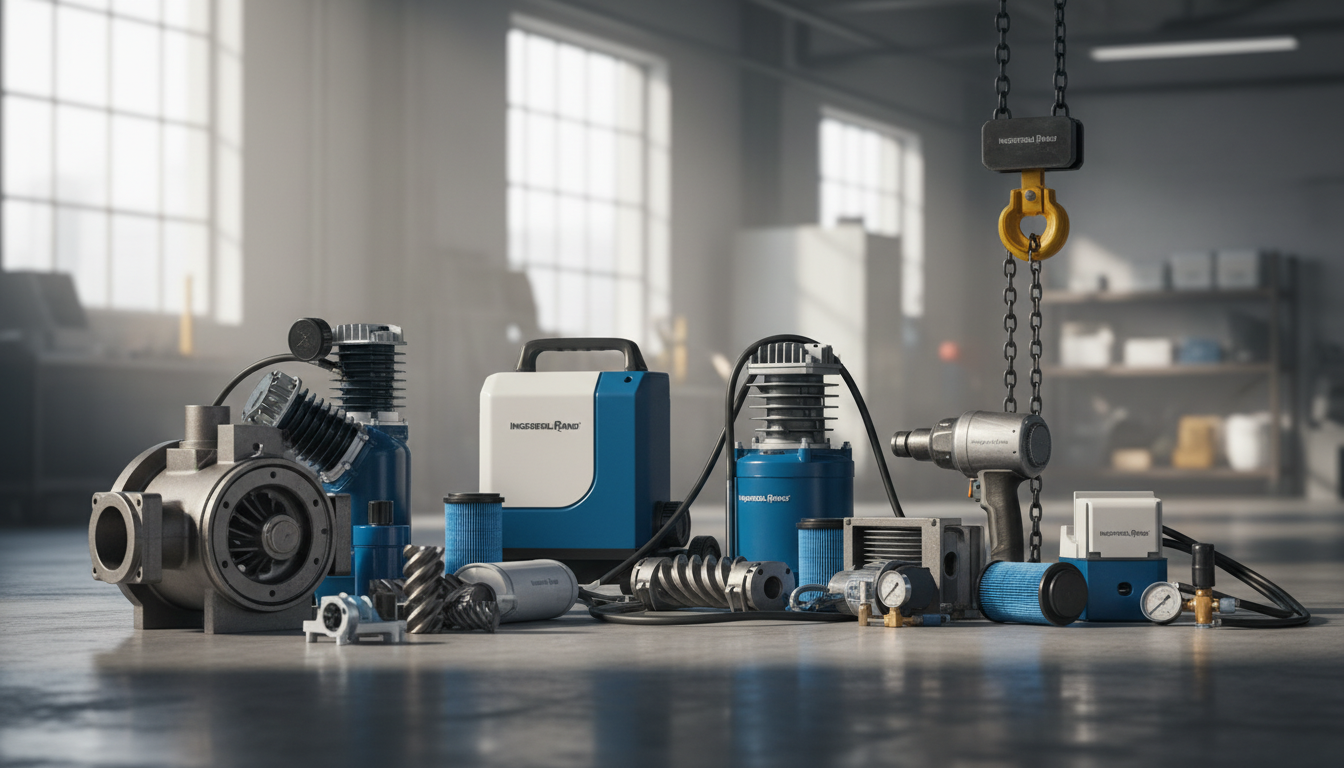
Ingersoll Rand manufactures compressed air systems, power tools, and material handling equipment across multiple industrial sectors. Their product lines span reciprocating air compressors, rotary screw units, pneumatic tools, and lifting equipment — each requiring specific maintenance approaches and replacement components.
Air Compressor Systems
Reciprocating compressors like the SS3, SS4, and SS5 series dominate smaller operations, while rotary screw models (R-Series, Next Generation R-Series) handle heavy-duty industrial applications. These systems share common failure points: pressure switches, check valves, and pump assemblies typically need replacement every 2,000-4,000 operating hours depending on environmental conditions.
We stock pressure switches (part numbers 23474661, 23474653, 23474570) that fit multiple model ranges. Cross-compatibility between series reduces inventory complexity for fleet managers overseeing mixed equipment portfolios.
Pneumatic Power Tools
Impact wrenches, air drills, and pneumatic grinders from Ingersoll Rand’s power tool division require different maintenance schedules than stationary compressors. Tool components — trigger valves, air motors, and chuck assemblies — experience higher wear rates due to portable operation and variable load conditions.
Replacement intervals vary significantly based on usage patterns. Construction crews running tools 8+ hours daily need component replacements every 6-12 months, while maintenance shops with intermittent use can extend service intervals to 18-24 months.
Material Handling Equipment
Hoists, winches, and lifting systems represent Ingersoll Rand’s industrial equipment segment. These applications demand higher safety margins and more frequent inspections than compressed air systems. Load-bearing components require OEM specifications to maintain certification compliance across different regulatory jurisdictions.
Critical Component Categories and Failure Patterns
Understanding which ingersoll rand parts fail first helps procurement teams plan maintenance budgets and minimize emergency purchases. Our replacement data shows consistent patterns across different equipment types and operating environments.
Pressure Control Components
Pressure switches fail more frequently than any other compressor component. Environmental factors — temperature fluctuations, humidity, and vibration — accelerate contact wear and calibration drift. Standard replacement intervals range from 12-18 months in clean indoor environments to 6-9 months in dusty or corrosive conditions.
Unloader valves follow similar failure patterns but typically last 20-30% longer than pressure switches. We recommend stocking both components together since labor costs for accessing these parts overlap significantly.
Pump Assembly Components
Bare pump assemblies for SS3, SS4, and SS5 models represent the highest-value replacement category. Complete pump replacement becomes cost-effective when multiple internal components (pistons, connecting rods, valves) show wear simultaneously.
Rebuild kits offer middle-ground solutions for operators comfortable with internal maintenance. These kits include gaskets, valve plates, and sealing components but require technical expertise and proper torque specifications during installation.
Filtration and Separation Systems
Air/oil separators in rotary screw compressors need replacement every 4,000-8,000 hours depending on operating conditions and oil quality. Contaminated separators reduce efficiency and can damage downstream components if left unserviced.
Intake filters require more frequent attention — typically every 1,000-2,000 hours in normal conditions, or monthly in dusty environments. Clogged filters increase energy consumption and reduce compressor lifespan through increased operating temperatures.
OEM vs Aftermarket Parts: Quality and Cost Analysis

Procurement decisions between genuine Ingersoll Rand components and aftermarket alternatives involve balancing upfront costs against long-term reliability and warranty considerations.
Genuine OEM Advantages
Original equipment manufacturer parts guarantee exact specifications and material compatibility. Ingersoll Rand’s quality control processes ensure consistent performance across production batches, reducing variability in replacement intervals and maintenance scheduling.
Warranty protection represents another OEM advantage. Using genuine parts maintains equipment warranties and provides recourse for premature failures. This protection becomes particularly valuable for newer equipment still under manufacturer coverage.
However, OEM pricing typically runs 40-60% higher than quality aftermarket alternatives, and lead times from authorized distributors can extend 2-4 weeks for less common components.
Aftermarket Quality Considerations
High-quality aftermarket manufacturers produce components meeting or exceeding OEM specifications at reduced costs. We source from ISO-certified suppliers with documented quality management systems and batch traceability.
Material composition and manufacturing tolerances determine aftermarket part reliability. Premium aftermarket suppliers use equivalent steel grades, rubber compounds, and surface treatments as original components. Budget alternatives often compromise on materials to achieve lower pricing.
Testing and validation become critical when evaluating aftermarket sources. We maintain performance databases tracking failure rates, replacement intervals, and compatibility issues across different aftermarket brands.
Cost-Benefit Decision Framework
Equipment age influences OEM vs aftermarket decisions. Newer machines under warranty typically justify OEM parts to maintain coverage. Older equipment approaching replacement cycles can benefit from cost-effective aftermarket components.
Application criticality also affects part selection. Production-critical compressors supporting continuous operations warrant premium components, while backup systems or seasonal equipment can utilize cost-optimized alternatives.
Global Sourcing and Supply Chain Considerations

International procurement of ingersoll rand parts requires understanding regional availability, shipping logistics, and regulatory compliance across different markets.
Regional Distribution Networks
Ingersoll Rand maintains authorized distributors across North America, Europe, and Asia-Pacific regions. However, parts availability varies significantly between markets. European distributors typically stock broader inventories of rotary screw components, while North American suppliers focus on reciprocating compressor parts.
We maintain relationships with distributors across multiple regions to optimize availability and pricing. Cross-border sourcing can reduce costs by 15-25% when currency exchange rates favor specific markets.
Lead times from regional distributors range from 3-5 days for common components to 3-4 weeks for specialized parts. Emergency expediting services are available but typically add 50-100% to standard pricing.
Import Documentation and Compliance
International parts shipments require proper classification under Harmonized System (HS) codes for customs clearance. Compressor components typically fall under HS codes 8414.90 (air compressor parts) or 8467.99 (pneumatic tool parts).
Certificate of origin documentation becomes important for preferential duty treatment under various trade agreements. USMCA, EU trade deals, and ASEAN agreements can reduce or eliminate import duties on qualifying parts.
Some jurisdictions require additional certifications for pressure vessel components or safety-critical parts. We handle documentation requirements to ensure smooth customs clearance and regulatory compliance.
Inventory Management Strategies
Global supply chain disruptions in recent years have highlighted the importance of strategic inventory positioning. We recommend maintaining 3-6 months of critical component inventory based on historical consumption patterns.
ABC analysis helps prioritize inventory investments. ‘A’ items (high-value, low-frequency parts like pump assemblies) justify lower stock levels with reliable supplier relationships. ‘C’ items (low-value, high-frequency consumables) warrant higher inventory levels to avoid stockouts.
Maintenance Scheduling and Predictive Strategies
Proactive maintenance scheduling reduces emergency repairs and extends equipment lifespan while optimizing parts inventory requirements.
Condition-Based Monitoring
Modern Ingersoll Rand compressors include monitoring capabilities tracking operating hours, temperature, pressure, and vibration parameters. These systems provide early warning indicators for component degradation before catastrophic failure.
Pressure switch performance degrades gradually through contact wear and calibration drift. Monitoring cut-in/cut-out pressure differentials helps identify switches approaching replacement intervals. We recommend replacement when pressure bands exceed ±5 PSI from factory specifications.
Oil analysis for rotary screw compressors reveals bearing wear, contamination levels, and additive depletion. Quarterly oil sampling identifies developing problems 6-12 months before component failure, allowing planned maintenance scheduling.
Preventive Maintenance Intervals
Operating environment significantly affects maintenance intervals. Clean, temperature-controlled indoor installations can extend service intervals 50-75% compared to outdoor or dusty conditions.
We’ve developed maintenance matrices based on operating hours and environmental factors. Indoor compressors in manufacturing facilities typically require major service every 4,000 hours, while construction site units need attention every 2,000 hours.
Seasonal considerations also affect maintenance timing. Scheduling major overhauls during low-demand periods reduces operational disruption and allows bulk parts ordering for cost optimization.
Emergency Response Planning
Despite preventive maintenance efforts, unexpected failures still occur. Emergency response planning minimizes downtime through strategic parts positioning and supplier relationships.
Critical spare parts inventory should include pressure switches, check valves, and basic gasket sets for immediate response. These components account for roughly 70% of emergency service calls and can often be installed by maintenance personnel without specialized training.
Supplier emergency services provide 24-hour parts availability for critical applications. Premium pricing applies, but costs often justify themselves through reduced downtime in production-critical applications.
Cost Optimization and Procurement Best Practices
Strategic procurement approaches can reduce ingersoll rand parts costs by 20-35% while maintaining quality and availability standards.
Volume Purchasing Strategies
Annual contracts with parts suppliers provide price stability and priority allocation during supply shortages. Volume commitments typically unlock 10-15% discounts compared to spot purchasing.
Cooperative purchasing with other facilities or companies can achieve volume thresholds for better pricing. Industry associations sometimes coordinate group purchasing programs for common maintenance items.
Seasonal timing affects pricing for some components. End-of-fiscal-year periods often provide opportunities for surplus inventory clearance at reduced prices.
Total Cost of Ownership Analysis
Part price represents only one component of total ownership costs. Installation labor, downtime expenses, and reliability factors significantly impact overall economics.
Premium components with longer service intervals can provide better value despite higher upfront costs. A pressure switch lasting 24 months vs 12 months justifies 50-60% higher pricing through reduced labor and downtime costs.
Warranty coverage and supplier support services add value beyond component pricing. Suppliers providing technical support, installation guidance, and failure analysis reduce internal engineering costs.
Supplier Relationship Management
Long-term supplier partnerships provide benefits beyond pricing advantages. Established relationships enable better communication, priority treatment during shortages, and collaborative problem-solving for complex applications.
Supplier performance metrics should track delivery reliability, quality consistency, and technical support responsiveness. Regular supplier reviews identify improvement opportunities and strengthen partnerships.
Backup supplier qualification ensures continuity during primary supplier disruptions. Maintaining relationships with 2-3 qualified suppliers for critical components provides supply security without excessive complexity.
Technical Support and Installation Considerations
Proper installation and technical support maximize parts performance and minimize premature failures across different Ingersoll Rand equipment types.
Installation Requirements and Procedures
Pressure switch installation requires proper electrical connections and pressure line configuration. Incorrect wiring can damage switch contacts or create safety hazards. We provide wiring diagrams and installation instructions with all pressure switch shipments.
Pump assembly replacement involves precise torque specifications and alignment procedures. Head bolt torque sequences prevent warping and ensure proper sealing. Connecting rod torque values affect bearing life and vibration levels.
Rotary screw separator replacement requires attention to gasket positioning and housing alignment. Improperly installed separators can cause oil carryover and contaminate downstream equipment.
Troubleshooting Common Issues
Pressure switch problems often stem from electrical issues rather than mechanical failure. Voltage variations, loose connections, and contact contamination cause erratic operation. Basic electrical testing can identify these issues before unnecessary parts replacement.
Compressor vibration problems may indicate mounting issues, belt tension problems, or internal wear. Systematic diagnosis prevents replacing components that aren’t actually failing.
Oil carryover in rotary screw compressors can result from separator failure, excessive oil levels, or operating temperature issues. Proper diagnosis ensures addressing root causes rather than just symptoms.
Training and Documentation Resources
Technical training improves maintenance quality and reduces parts consumption through proper installation and adjustment procedures. We provide installation guides, torque specifications, and troubleshooting flowcharts with parts shipments.
Video resources demonstrate proper installation techniques for complex components. Visual guidance reduces installation errors and improves first-time success rates.
Maintenance documentation tracking helps identify recurring problems and optimize parts inventory. Recording failure modes, operating hours, and environmental conditions builds institutional knowledge for better decision-making.
Future Trends and Technology Integration
Evolving technology affects parts requirements, maintenance approaches, and supply chain strategies for Ingersoll Rand equipment.
IoT and Remote Monitoring
Internet-connected monitoring systems provide real-time equipment data and predictive maintenance alerts. These systems can automatically order replacement parts based on operating conditions and wear patterns.
Remote diagnostics reduce service call requirements and improve parts ordering accuracy. Technicians can analyze equipment data before arriving on-site, ensuring proper parts availability for repairs.
Data analytics identify optimal replacement intervals for specific operating conditions. Machine learning algorithms can predict component failures weeks or months in advance, enabling proactive parts ordering and maintenance scheduling.
Additive Manufacturing Impact
3D printing technology increasingly affects spare parts availability and inventory strategies. Simple components like gaskets, brackets, and housings can be printed on-demand rather than stocked as inventory.
Metal additive manufacturing enables production of complex internal components that traditionally required extensive machining. This technology can reduce lead times for specialized parts and enable customization for specific applications.
However, quality control and certification requirements limit additive manufacturing adoption for safety-critical components. Pressure vessel parts and load-bearing components still require traditional manufacturing and testing procedures.
Sustainability and Circular Economy
Remanufacturing programs extend component life cycles and reduce environmental impact. Ingersoll Rand and aftermarket suppliers increasingly offer remanufactured pumps, motors, and major assemblies at reduced costs.
Core exchange programs provide cost incentives for returning worn components for remanufacturing. These programs can reduce replacement costs by 20-30% while supporting sustainability objectives.
Recycling initiatives for consumable components like filters and separators help reduce waste disposal costs and environmental impact. Some suppliers offer take-back programs for used components.