
When your JCB 3CX starts showing hydraulic leaks at 6 AM on a Monday morning, you need more than just hope — you need the right parts, fast. After supplying JCB backhoe components across 40+ countries since 2006, we’ve seen every failure mode these machines throw at operators.
A comprehensive JCB backhoe parts list isn’t just a shopping catalog. It’s your lifeline when downtime costs are bleeding your project budget dry.
Essential JCB Backhoe Parts Every Operator Needs

JCB backhoes share common failure points across their entire range, from the compact 1CX to the heavy-duty 5CX models. We’ve tracked replacement patterns for thousands of machines, and certain components fail predictably.
Hydraulic system components top every critical parts list. Boom cylinder seals, bucket cylinder seals, and stabilizer leg seals account for roughly 60% of our JCB parts orders. The 3CX and 4CX models particularly stress their hydraulic seals due to their extended reach capabilities.
Engine components follow close behind. Air filters, fuel filters, and oil filters need regular replacement — but operators often overlook the fuel water separator until contamination damages injection systems. JCB’s Tier 4 engines in newer models require specific filter grades that generic alternatives can’t match.
Transmission parts round out the essentials. Forward/reverse shuttle components, particularly in the Syncro transmission systems, wear faster under stop-and-go loading cycles. We stock complete shuttle valve assemblies because partial repairs often fail within months.
JCB 3CX Parts: The Workhorse Components
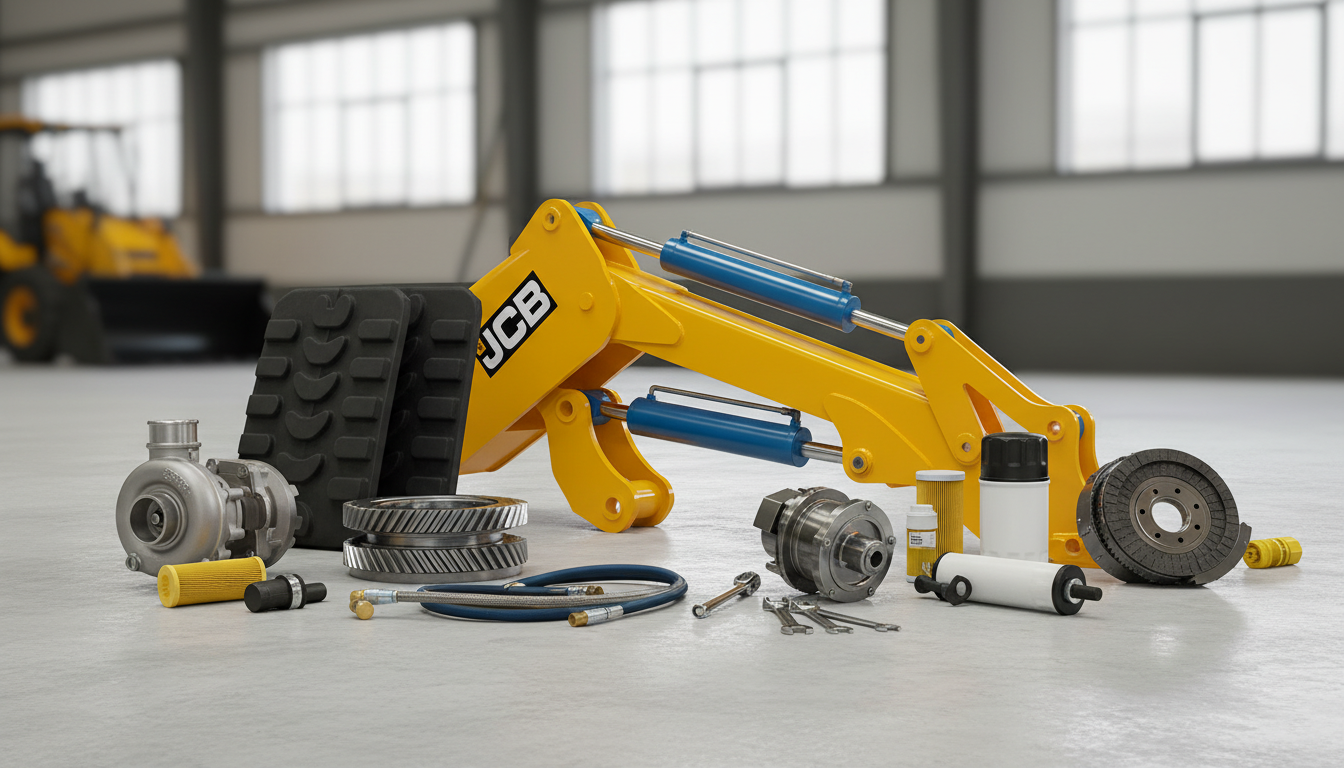
The 3CX remains JCB’s most popular backhoe globally, which means parts availability matters more than for any other model. This machine’s 14-foot dig depth puts enormous stress on specific components.
Boom pivot bushings wear aggressively on 3CX models. The extended boom geometry creates leverage forces that destroy standard bushings within 2,000 operating hours. We’ve seen operators try aftermarket alternatives, but OEM-spec bronze bushings last three times longer.
Hydraulic pump failures plague high-hour 3CX machines. The variable displacement pump handles both loader and excavator functions, creating heat buildup that kills seals prematurely. Pump rebuild kits cost less than complete replacements, but require proper torque specifications during assembly.
Transmission cooler lines crack frequently on 3CX models due to vibration stress. The routing near the engine bay exposes these lines to heat cycling that hardens rubber compounds. Replacement requires specific JCB part numbers — generic hydraulic hose fails within weeks.
| Component | Typical Failure Hours | Replacement Cost Impact |
|---|---|---|
| Boom Cylinder Seals | 1,500-2,000 | Medium |
| Hydraulic Pump | 3,000-4,000 | High |
| Transmission Cooler Lines | 2,500-3,500 | Low |
| Boom Pivot Bushings | 2,000-2,500 | Medium |
Model-Specific Parts Breakdown
Each JCB backhoe model has unique parts requirements that generic catalogs miss. The 214S uses different hydraulic fittings than the 3CX, despite similar operating weights. Model-specific knowledge prevents costly ordering mistakes.
Compact models (1CX, 2CX) share many components with JCB’s mini excavator line. Their smaller hydraulic cylinders use metric seals rather than imperial sizes found on larger models. Boom cylinders particularly require precise seal dimensions — generic kits cause immediate leakage.
Mid-range models (3CX, 4CX) represent JCB’s volume sellers, so parts availability stays strong. However, these models span multiple generations with significant component changes. Early 3CX models used mechanical transmission controls, while newer versions use electronic systems requiring different valve bodies.
Heavy-duty models (5CX, 1400B) use industrial-grade components that cost significantly more but last longer. Their hydraulic systems operate at higher pressures, requiring seals rated for 5,000+ PSI operation. Standard backhoe seals fail catastrophically in these applications.
Critical Maintenance Parts Schedule
Preventive maintenance parts follow predictable replacement intervals, but operating conditions dramatically affect these schedules. Construction sites with high dust loads kill air filters twice as fast as road maintenance work.
Engine oil and filter changes occur every 250-500 hours depending on operating severity. JCB’s newer Tier 4 engines require low-ash oil formulations that generic alternatives can’t provide. Using incorrect oil voids engine warranties and causes DPF system failures.
Hydraulic system maintenance centers on fluid and filter replacement every 1,000 hours. However, hydraulic oil contamination from seal leaks accelerates filter clogging. We recommend hydraulic fluid analysis at 500-hour intervals to catch contamination before system damage occurs.
Transmission service intervals vary by model generation. Older mechanical systems need fluid changes every 1,500 hours, while newer electronic transmissions extend this to 2,000 hours. The wrong transmission fluid destroys clutch packs within hundreds of hours.
Sourcing Strategy: OEM vs Aftermarket
Parts sourcing decisions affect both immediate costs and long-term reliability. We’ve supplied both OEM and aftermarket JCB components for decades, and the quality gap varies dramatically by component type.
Hydraulic seals represent the sweet spot for quality aftermarket alternatives. European seal manufacturers produce components that match or exceed JCB specifications at 30-40% cost savings. However, cheap Asian seals fail within months and aren’t worth the initial savings.
Engine components demand more caution with aftermarket selection. Fuel injection systems particularly require OEM-specification parts to maintain proper spray patterns and timing. Aftermarket injectors might fit physically but deliver poor fuel atomization that reduces power and increases emissions.
Structural components like boom arms and bucket assemblies work well as aftermarket alternatives when properly manufactured. Steel specifications matter more than brand names for these applications. We’ve seen quality aftermarket boom cylinders outlast OEM units when operating conditions favor their design characteristics.
Emergency Parts Kit Essentials
Smart operators maintain emergency parts inventory to minimize downtime costs. A well-planned emergency kit costs less than one day of rental equipment during unexpected failures.
Hydraulic seal kits top every emergency inventory list. Complete cylinder seal kits for boom, bucket, and stabilizer cylinders prevent most hydraulic-related downtime. Store seals in cool, dry conditions to prevent rubber degradation.
Belts and hoses fail without warning, especially in extreme temperatures. Keep complete belt sets for engine accessories plus hydraulic hoses for high-wear locations. Pre-made hydraulic hoses with proper fittings save hours during emergency repairs.
Electrical components cause frustrating diagnostic delays. Relay sets, fuse assortments, and common sensors like hydraulic pressure switches prevent electrical gremlins from stopping work. Modern JCB models use specific relay types that generic auto parts stores don’t stock.
We learned this lesson during a pipeline project where a failed hydraulic pressure sensor stopped a 4CX for three days. The part cost $180, but equipment rental during downtime exceeded $2,400.
Parts Identification and Ordering
Accurate parts identification prevents costly ordering mistakes and return delays. JCB’s part numbering system contains specific information about compatibility and specifications that generic cross-references miss.
Serial number location varies by model and production year. Most JCB backhoes display serial numbers on the right side of the main frame, but some models place them near the engine compartment. Record serial numbers during routine maintenance to speed future parts orders.
JCB part numbers follow logical patterns that help identify compatible alternatives. The first digits typically indicate the component category, while later digits specify exact applications. Understanding these patterns helps verify parts compatibility before ordering.
Digital parts catalogs provide the most current information, but paper manuals remain valuable for field reference. We maintain both formats because internet connectivity isn’t guaranteed at remote job sites. Having backup parts information prevents delays when connectivity fails.
Component photos during disassembly help verify correct parts selection. Modern smartphones capture details that written descriptions miss, particularly for hydraulic fittings and electrical connectors where small differences matter significantly.
Ready to minimize your JCB backhoe downtime? Shop OEM-quality spare parts with global 5-day delivery at 3genexport.com