
- OEM parts are manufactured by the original equipment maker, delivering exact fit and warranty compliance at premium pricing.
- Aftermarket parts come from third-party manufacturers, offering cost savings and faster availability with variable quality standards.
- Use OEM for critical systems and warranty-sensitive equipment; aftermarket works for non-critical components when properly vetted.
- Always verify supplier certifications (ISO 9001, SAE standards) and material specifications before purchasing aftermarket alternatives.
The OEM vs aftermarket heavy equipment parts decision impacts your bottom line every day. OEM parts guarantee exact specifications and warranty protection but cost 30-60% more than alternatives. Aftermarket options can slash repair budgets while maintaining performance , if you know how to separate quality suppliers from the knockoff crowd.
What Are OEM and Aftermarket Heavy Equipment Parts?
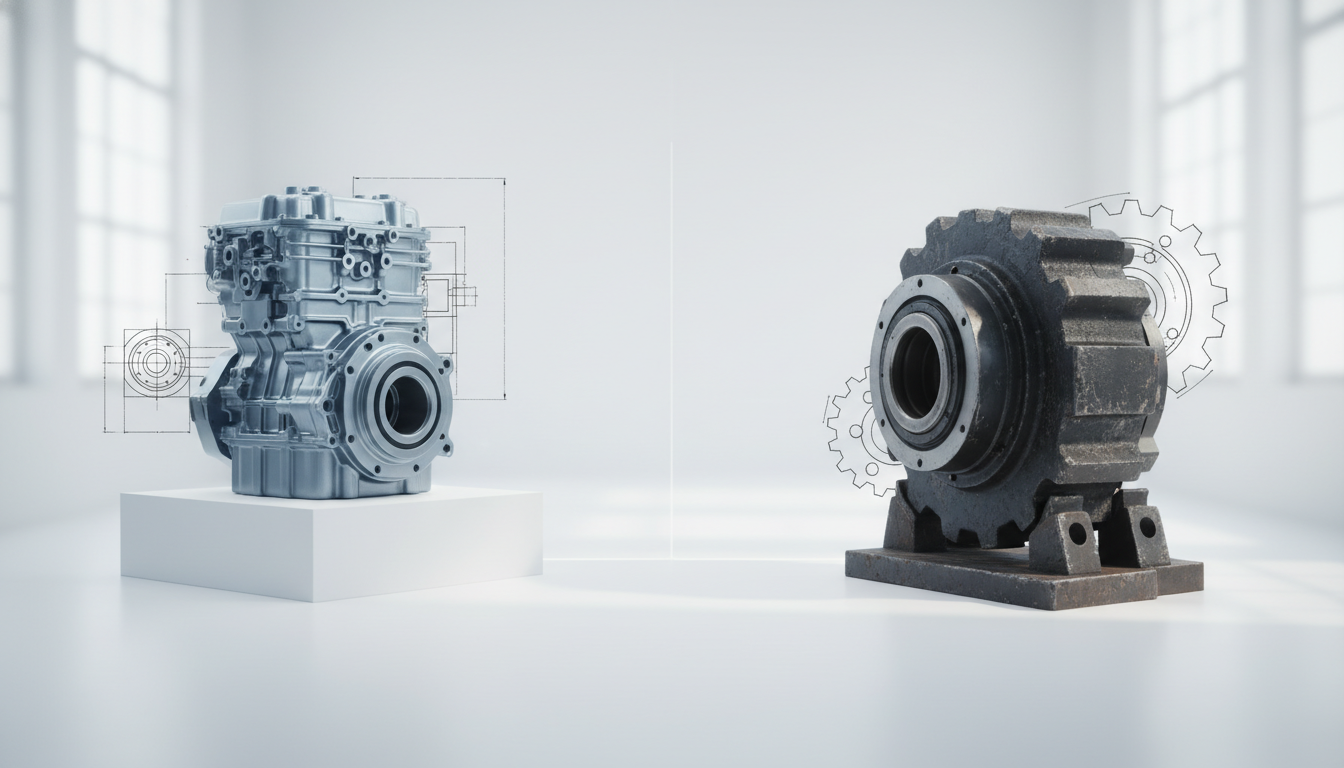
OEM parts are components manufactured by the same company that built your machine. When you buy a genuine Caterpillar hydraulic pump from an authorized CAT dealer, you’re getting the exact same part that rolled off the assembly line with your excavator. Same materials, same tolerances, same performance specifications.
Aftermarket parts come from independent manufacturers who reverse-engineer or license designs to create compatible alternatives. Companies like Fleetguard, Baldwin, and Parker produce aftermarket filters, seals, and hydraulic components that fit Caterpillar, Komatsu, and Volvo equipment. Quality ranges from superior upgrades to dangerous counterfeits , supplier selection makes all the difference.
Price Range Guide: What to Expect in 2026
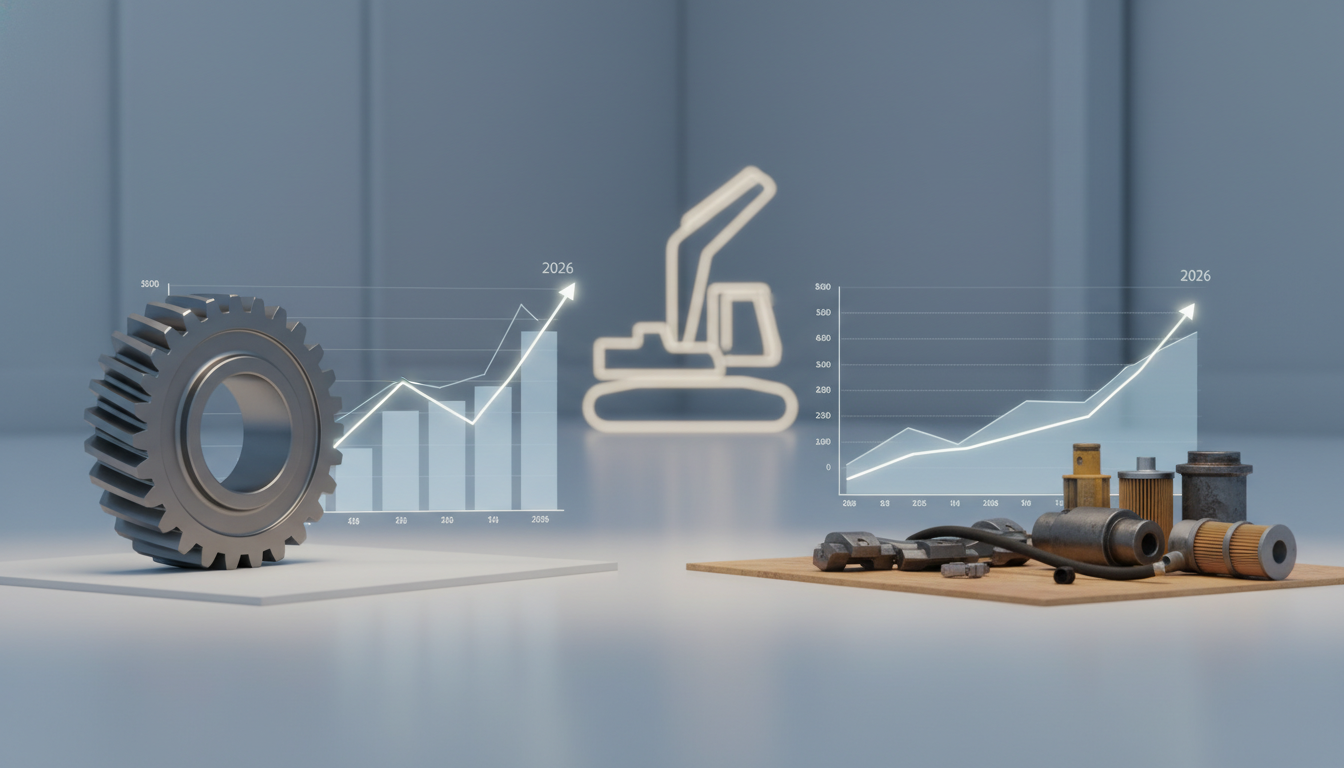
Heavy equipment parts pricing varies dramatically by component type and supplier tier. Here’s what procurement managers are seeing this year:
Budget Tier (Generic Aftermarket)
Basic aftermarket parts from unknown suppliers cost 40-60% less than OEM but carry significant risk. A generic hydraulic filter might cost $25 versus $65 for OEM, but failure rates can exceed 15% within the first 500 hours. We see these parts in emergency situations only.
Mid-Range Tier (Branded Aftermarket)
Established aftermarket brands like Fleetguard or Baldwin typically price 20-35% below OEM while maintaining acceptable quality standards. A branded engine air filter runs $45 compared to $70 OEM , reasonable value for non-critical applications.
Premium Tier (OEM and OEM-Equivalent)
Original manufacturer parts and certified OEM-equivalent alternatives command full retail pricing but deliver predictable performance. For critical drivetrain components, this premium often pays for itself through reduced downtime risk.
Comparison Table: OEM vs Aftermarket Heavy Equipment Parts
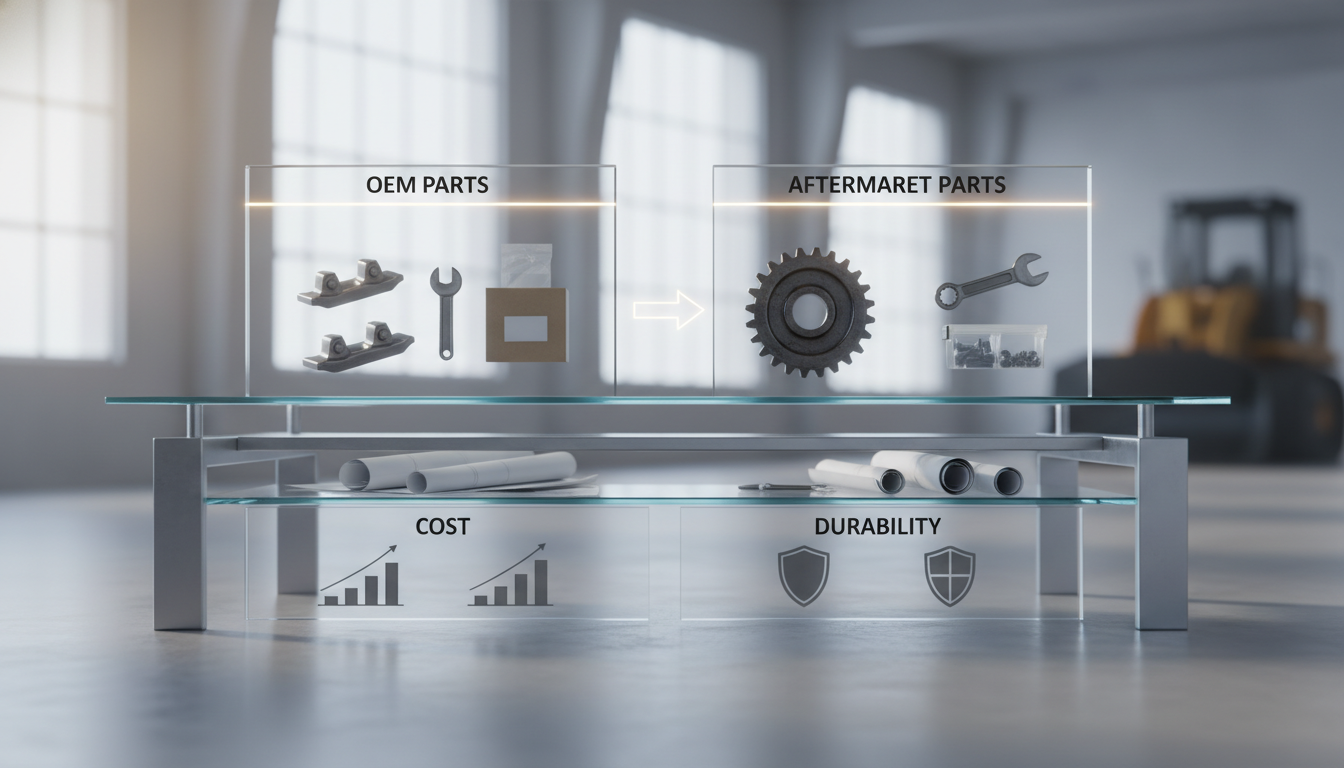
| Criteria | OEM Parts | Aftermarket Parts |
|---|---|---|
| Cost | Higher (typically 30-60% more expensive) | Lower (15-50% less than OEM) |
| Quality & Reliability | Consistent, meets original specs | Varies widely; some match OEM, others inferior |
| Warranty | Often required to maintain machine warranty | May void OEM warranty; limited aftermarket warranty |
| Availability | Through authorized dealers; may have lead times | Widely available online and at parts stores |
| Fit & Compatibility | Guaranteed perfect fit | May require modifications; fit varies |
| Performance | Identical to original | Can be equal or lower; depends on brand |
| Lifespan | Long, predictable | Variable; some last as long, others fail sooner |
OEM Heavy Equipment Parts: Pros and Cons
Pros
- Exact fit and compatibility , Zero modification required, eliminating installation errors that cost hours of labor.
- Predictable reliability , Manufactured to original specifications with consistent quality control processes.
- Warranty protection , Most manufacturers require OEM parts to maintain coverage, protecting your investment.
- Technical support , Authorized dealers provide expert installation guidance and troubleshooting assistance.
Cons
- Premium pricing , OEM parts typically cost 30-60% more than quality aftermarket alternatives.
- Limited availability , Dealer-only distribution can create supply chain bottlenecks during peak seasons.
- No performance upgrades , OEM parts replicate original specifications without improvements or enhancements.
Aftermarket Heavy Equipment Parts: Pros and Cons
Pros
- Cost savings , Quality aftermarket parts reduce repair expenses by 15-50% without sacrificing performance.
- Faster availability , Multiple suppliers and distribution channels minimize lead times and stockouts.
- Variety of options , Different quality tiers and price points accommodate various budget requirements.
- Performance upgrades , Some aftermarket manufacturers offer enhanced materials or improved designs.
Cons
- Quality inconsistency , Substandard parts can fail prematurely, causing secondary damage to expensive components.
- Warranty risks , Using non-OEM parts may void manufacturer coverage, increasing financial exposure.
- Compatibility issues , Dimensional variations may require modifications or cause installation problems.
- Limited recourse , Aftermarket suppliers often provide minimal support when parts fail unexpectedly.
What to Look For: Aftermarket Parts Buying Guide
Smart procurement managers use specific criteria to identify quality aftermarket suppliers and avoid costly mistakes. Here’s our systematic approach developed over two decades of heavy equipment parts sourcing:
Supplier Certifications
ISO 9001 certification indicates established quality management systems. SAE standards compliance shows engineering rigor. Look for suppliers who display these credentials prominently and provide certificate numbers for verification.
Material Specifications
Request detailed material composition data, especially for wear parts and seals. Quality aftermarket manufacturers provide steel grades, rubber compounds, and hardness ratings that match or exceed OEM specifications.
Testing Documentation
Reputable suppliers conduct performance testing and provide documentation. Hydraulic components should include pressure testing results. Filters need efficiency ratings and dirt-holding capacity data.
Warranty Terms
Quality aftermarket parts come with meaningful warranties , typically 12-24 months or specific hour guarantees. Avoid suppliers offering only 30-90 day coverage, which signals low confidence in their products.
Return Policy
Established suppliers accept returns for fitment issues or defects without restocking fees. This policy indicates confidence in part accuracy and quality control processes.
When to Choose OEM vs Aftermarket Heavy Equipment Parts
Choose OEM When:
- Equipment remains under manufacturer warranty and you need compliance documentation.
- The component is safety-critical , brakes, steering, ROPS structures, or load-bearing elements.
- You’re operating high-value equipment where downtime costs exceed part price premiums.
- The machine is leased or financed with specific maintenance requirements in the contract.
Choose Aftermarket When:
- Equipment is out of warranty and you control maintenance decisions completely.
- The part is consumable or wear-related , filters, belts, cutting edges, bucket teeth.
- Budget constraints require cost optimization without compromising safety or reliability.
- You need immediate availability and OEM parts face extended lead times.
“According to a 2024 report by The Freedonia Group, the aftermarket heavy equipment parts market is growing at 4.5% annually, driven by cost-conscious operators. However, a study by Construction Equipment magazine found that 68% of fleet managers prefer OEM for critical drivetrain components due to reliability concerns.”
How to Choose the Right Parts: A Step-by-Step Guide
Follow this systematic approach to make informed OEM vs aftermarket heavy equipment parts decisions that optimize both cost and reliability:
- Document exact requirements , Record machine make, model, serial number, and operating hours to ensure precise part identification.
- Verify warranty status , Check remaining coverage and specific parts requirements to avoid voiding protection.
- Assess component criticality , Categorize parts as safety-critical, performance-critical, or consumable to guide sourcing strategy.
- Research aftermarket alternatives , Identify certified suppliers with proven track records and appropriate quality documentation.
- Calculate total cost of ownership , Include part price, installation labor, expected lifespan, and potential downtime costs.
- Select trusted suppliers , Use authorized dealers for OEM parts; choose aftermarket suppliers with clear return policies and technical support.
Real-World Application: Mining vs Construction Use Cases
Different industries have distinct requirements that influence OEM vs aftermarket heavy equipment parts decisions. Here’s how smart operators approach parts selection based on operational demands:
Mining Operations
Underground and surface mining equipment operates in extreme conditions with minimal maintenance windows. Most mining companies use OEM parts for critical systems , engines, transmissions, final drives , while selecting premium aftermarket options for consumables like cutting edges and wear plates. The 24/7 operating schedule makes reliability paramount.
Construction Projects
Construction equipment faces varied conditions but typically has more flexible maintenance schedules. Many contractors successfully use quality aftermarket parts for hydraulic components and undercarriage elements while maintaining OEM standards for safety systems and warranty-covered items.
Rental Fleet Management
Equipment rental companies balance cost control with uptime requirements. They often use OEM parts during warranty periods, then transition to proven aftermarket suppliers for post-warranty maintenance. Quick turnaround times favor suppliers with local inventory.
Care & Maintenance: Maximizing Part Lifespan
Proper maintenance practices extend both OEM and aftermarket part life, improving your return on investment regardless of sourcing decisions:
Filtration Systems
Change hydraulic and engine filters according to manufacturer intervals, not calendar dates. Operating conditions matter more than time , dusty environments require more frequent changes. Quality aftermarket filters often provide equal protection at lower cost.
Lubrication Programs
Use manufacturer-specified lubricants and change intervals. Aftermarket parts may have different lubrication requirements , verify specifications before installation to prevent premature wear.
Installation Best Practices
Follow torque specifications exactly, especially for aftermarket parts that may have slightly different material properties. Proper installation prevents failures that could damage expensive components.
Monitoring and Documentation
Track part performance regardless of source. Document installation dates, operating hours, and failure modes to identify patterns and optimize future sourcing decisions.
The Hidden Cost of Downtime in 2026
Equipment downtime costs have increased significantly this year due to labor shortages and project delays. According to Construction Executive, unplanned downtime now costs $600 to $1,800 per hour for heavy equipment , up from previous estimates. A cheap aftermarket part that fails after 200 hours may cost more in lost productivity than an OEM part lasting 800 hours. Always calculate cost per operating hour when comparing options.
We’ve seen contractors lose entire project bonuses due to equipment failures caused by substandard parts. The math is brutal: a $50 savings on a hydraulic seal becomes a $15,000 loss when the excavator sits idle for two days waiting for emergency repairs.
Sustainability and Environmental Impact
Environmental considerations increasingly influence parts sourcing decisions as companies pursue sustainability goals. OEM parts typically offer established recycling and remanufacturing programs , Caterpillar Reman, Komatsu ReNew, and Volvo Exchange programs provide environmentally responsible options with OEM-quality standards.
Quality aftermarket parts can also support sustainability when they offer longer service life than original components. Some aftermarket manufacturers use advanced materials that extend replacement intervals, reducing overall waste. However, cheap aftermarket parts that fail prematurely create more environmental impact through frequent replacements and disposal.
Global Supply Chain Trends Affecting Parts Availability
Supply chain disruptions continue affecting both OEM and aftermarket parts availability in 2026. OEM parts face longer lead times due to semiconductor shortages and raw material constraints. Many aftermarket suppliers have responded by increasing inventory levels and diversifying manufacturing locations.
Smart procurement managers now maintain strategic inventory of critical components regardless of source. The cost of carrying extra parts inventory is often less than the risk of extended downtime waiting for emergency shipments.
Frequently Asked Questions
Are aftermarket parts just as good as OEM parts?
Quality aftermarket parts from established manufacturers can match or exceed OEM performance, especially for consumable items like filters and wear parts. However, quality varies dramatically between suppliers, making research and certification verification essential for reliable results.
What are the disadvantages of OEM parts?
OEM parts cost significantly more than aftermarket alternatives and often have longer lead times through dealer networks. They also offer no performance improvements beyond original specifications, missing opportunities for enhanced durability or efficiency.
Are OEM parts worth the extra cost?
For safety-critical components and warranty-sensitive equipment, OEM parts justify their premium through guaranteed compatibility and reduced downtime risk. The total cost calculation often favors OEM when you include potential failure costs and lost productivity.
Which is better, OEM or genuine parts?
“Genuine” parts are typically OEM parts sold under the manufacturer’s brand through authorized channels. They’re identical in quality and performance to OEM parts , the terms are often used interchangeably in the heavy equipment industry.
Can aftermarket parts void my equipment warranty?
Using aftermarket parts can void warranty coverage if they cause damage or fail to meet manufacturer specifications. Always check warranty terms and consult with dealers before installing non-OEM components on covered equipment.
How can I verify aftermarket part quality before purchasing?
Look for ISO 9001 certification, SAE standards compliance, and detailed material specifications from the supplier. Request performance testing documentation and check online reviews from other equipment operators in similar applications.
Verdict: Strategic Sourcing for Maximum Value
The most successful fleet managers use a strategic approach to OEM vs aftermarket heavy equipment parts sourcing. Use OEM parts for safety-critical systems, warranty-covered equipment, and high-value machines where downtime costs exceed price premiums. Choose quality aftermarket alternatives for consumable items, out-of-warranty equipment, and applications where cost optimization is paramount.
Success depends on supplier selection more than the OEM versus aftermarket decision itself. Whether you’re buying genuine Caterpillar hydraulic pumps or aftermarket Fleetguard filters, work with suppliers who provide technical support, quality documentation, and meaningful warranties.
Shop OEM-quality spare parts with global 5-day delivery at 3genexport.com