Parts for Mining Equipment: OEM, Aftermarket & Rebuilt
Source OEM and aftermarket parts for mining equipment with fast global delivery. Compare suppliers, cut costs, and maximize uptime. Shop 3genexport.com.
Loading article…
Article Not Found
The article you're looking for doesn't exist or may have been removed.
Back to BlogParts for mining equipment are the OEM, aftermarket, and rebuilt components that keep crushers, drills, excavators, and conveyors running at full capacity. Sourcing from verified suppliers like Metso, Caterpillar, or 3GEN Export ensures maximum uptime and cost efficiency.
Key Takeaways
- Uptime depends on quality: Correctly specified mining equipment reduce breakdowns and extend machinery life across surface and underground operations.
- OEM vs. aftermarket vs. rebuilt: Each option carries distinct cost, lead time, and risk trade-offs. Match the choice to equipment criticality.
- Supplier credentials matter: ISO 9001 certification, testing protocols, and transparent qualification thresholds separate reliable suppliers from risky ones.
- Inventory planning cuts costs: ABC analysis, predictive maintenance, and ERP integration prevent emergency orders and reduce working capital tied up in spares.
- Rebuilt and remanufactured components: Cat Reman and comparable programs deliver like-new performance at 20-40% below new OEM price for major assemblies.
- Global sourcing is viable: Suppliers like 3GEN Export consolidate multi-brand procurement and ship worldwide, solving the access problem for remote mine sites.
What Are Parts for Mining Equipment?
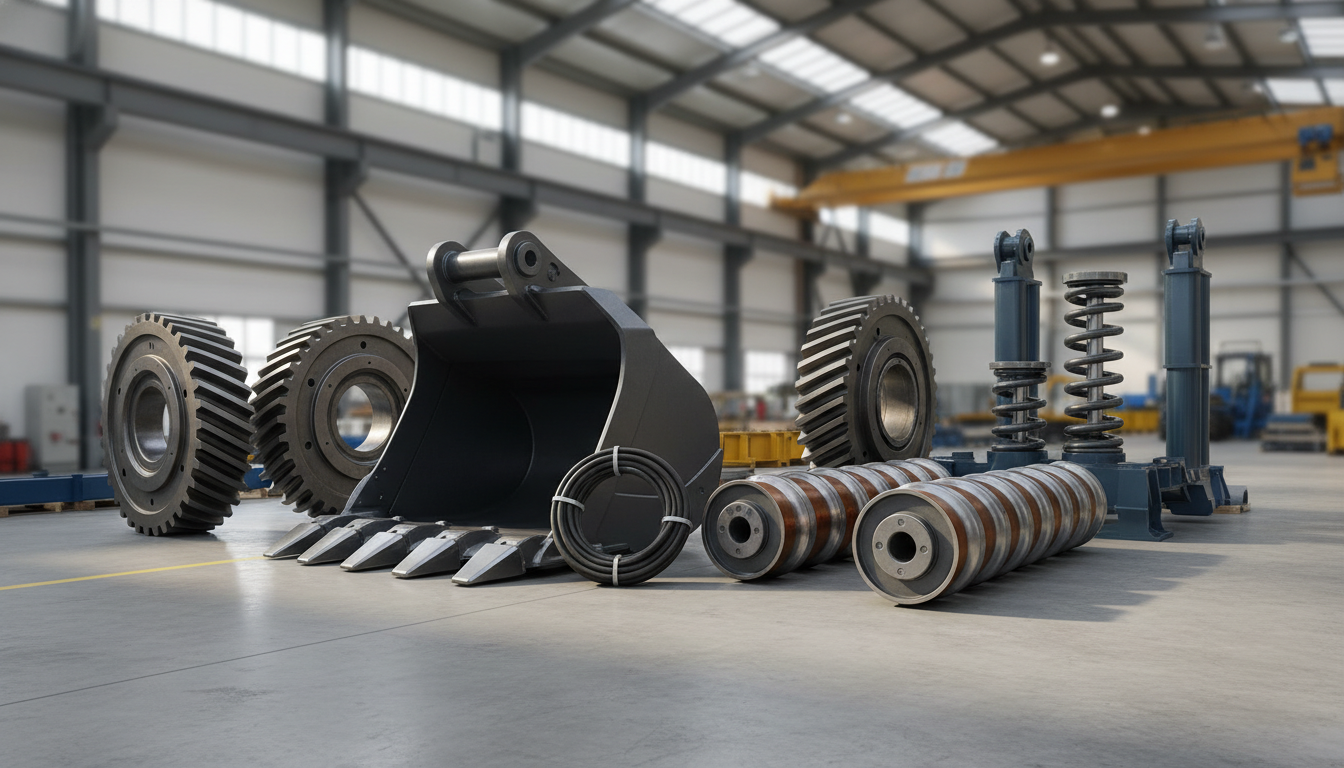
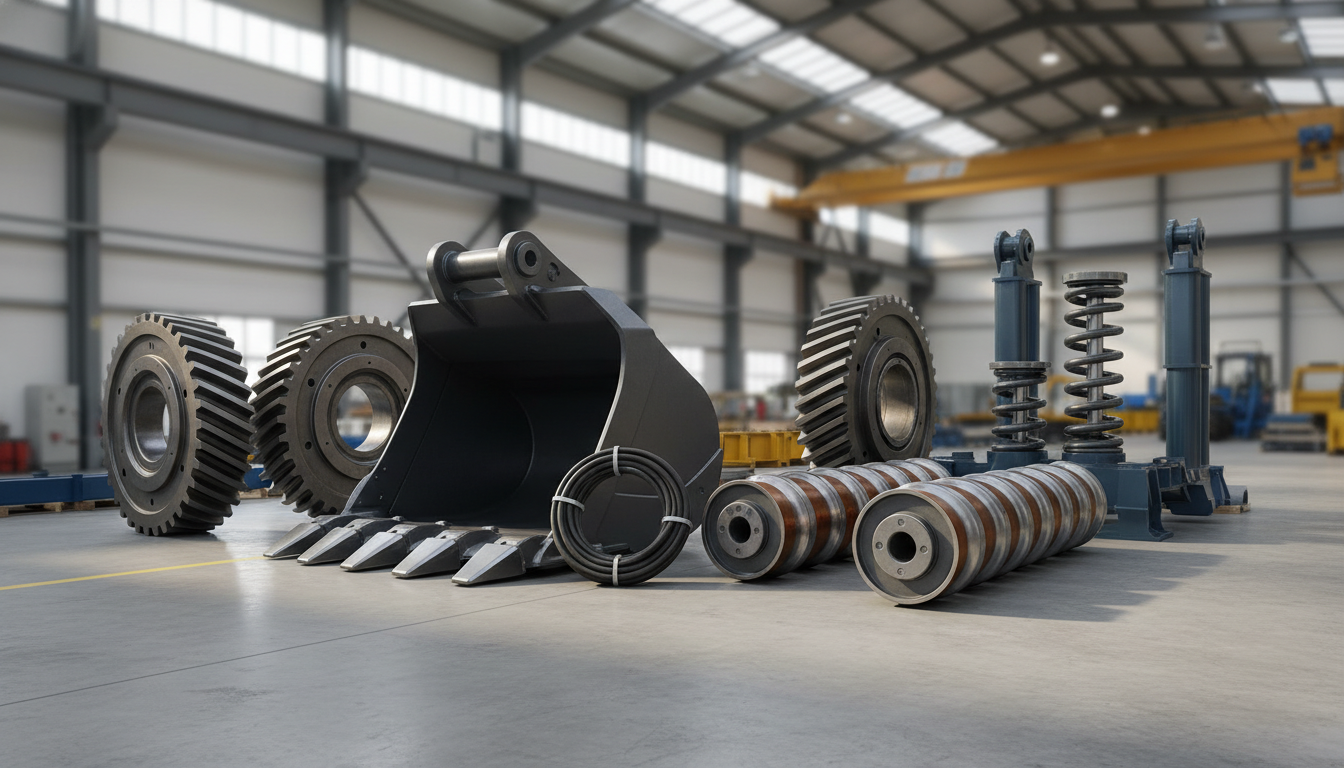
this type of equipment are components that keep machinery used in surface and underground mining operations working. They range from routine wear items like crusher liners and bucket teeth to major assemblies such as hydraulic cylinders and final drives. Without a steady supply of these components, production grinds to a halt and profitability suffers.
Categories of Mining Equipment Parts
Parts fall into three broad groups:
- Wear parts: Liners, screens, conveyor belts, and ground engaging tools (GET) that degrade with use and require scheduled replacement.
- Spare parts: Pumps, motors, bearings, and seals that follow predictable service intervals and are best managed through preventive maintenance programs.
- Structural components: Frames, booms, and buckets that suffer from fatigue and impact loading over thousands of operating hours.
Knowing which category a component belongs to helps in planning inventory levels and choosing between OEM and aftermarket suppliers. The distinction also affects how you budget: wear parts are a recurring operating expense, while structural components are capital expenditure items.
Why Genuine Parts Matter
A genuine OEM part is manufactured to the same specifications and tolerances as the original component installed on the machine. Using genuine this kind of mining equipment protects warranties, maintains resale value, and reduces the risk of premature failure. According to Metso, OEM-quality parts apply “the strictest standards and tolerances for guaranteed safety and reliability.” For high-risk applications like hoist systems or haul truck brakes, that tolerance precision is non-negotiable.
OEM vs. Aftermarket vs. Rebuilt: Which Is Right for Your Operation?
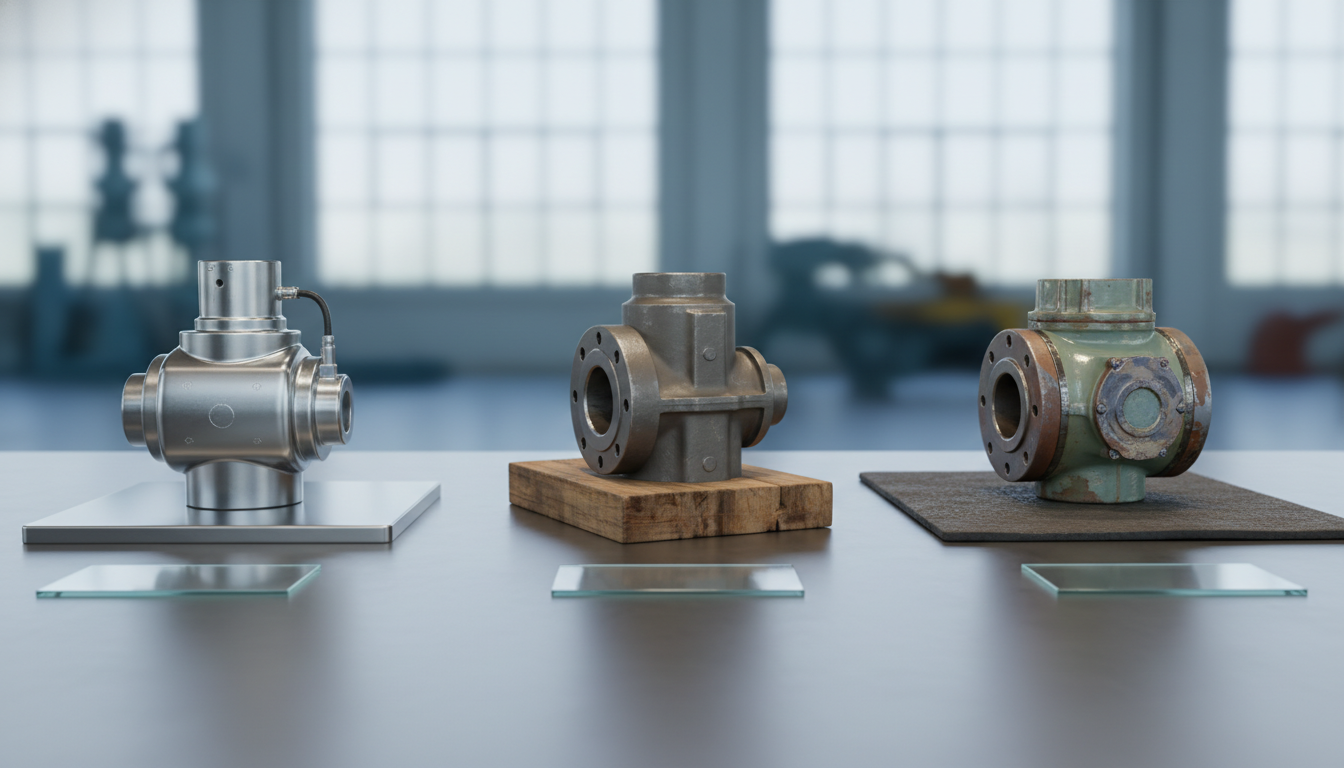
Deciding between original, aftermarket, and rebuilt the for mining equipment involves trade-offs in cost, lead time, and risk. The table below summarizes the key differences so your procurement team can make a fast, informed call.
| Criteria | OEM Parts | Aftermarket Parts | Rebuilt/Remanufactured Parts |
|---|---|---|---|
| Cost | Highest | 20-40% lower than OEM | 30-60% lower than new OEM |
| Quality | Matches original specifications | Varies by manufacturer; some exceed OEM durability | Restored to like-new condition with warranty |
| Warranty | Full factory warranty | Limited, may be shorter | Often 6-12 months |
| Lead Time | Can be long for legacy models | Often in stock at distributors | Depends on core availability |
| Best For | Critical, high-risk components | Non-critical wear items, cost-sensitive operations | Major assemblies where downtime is planned |
Pros and Cons of Sourcing Parts for Mining Equipment
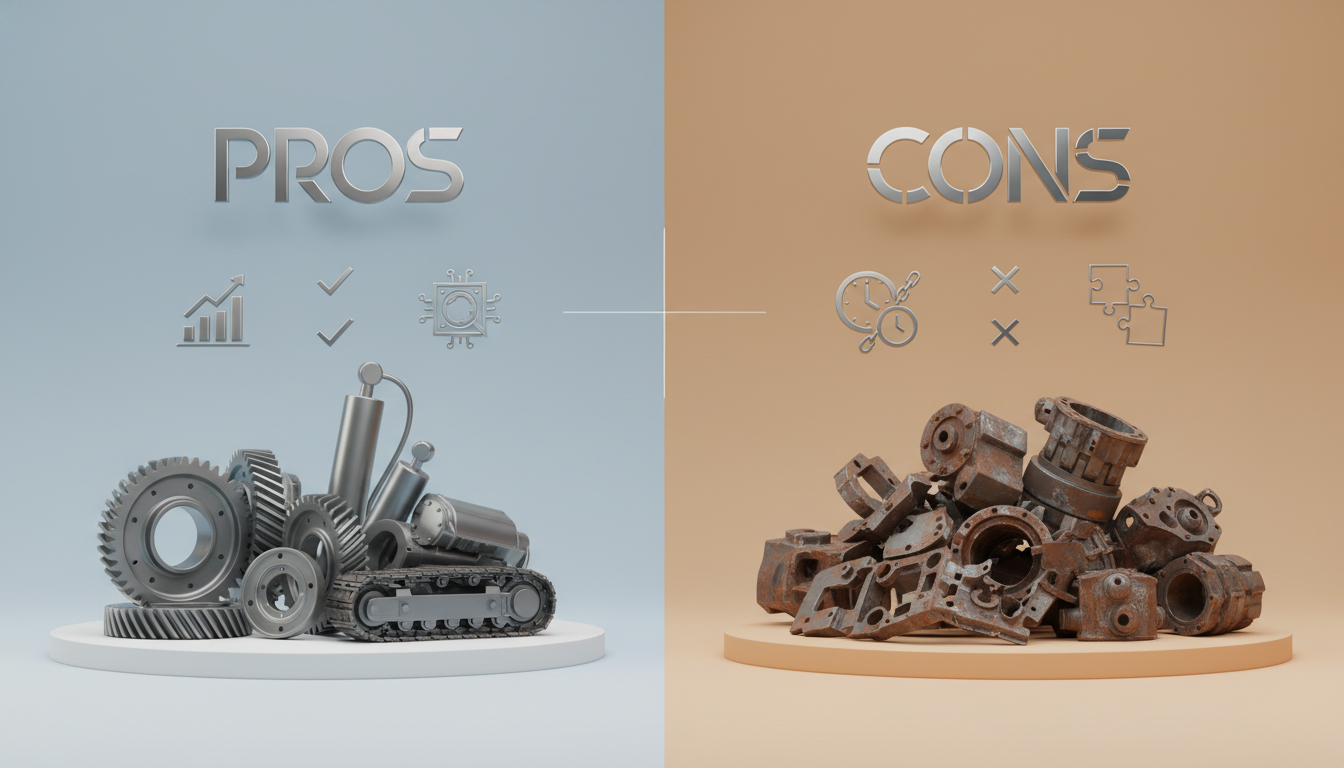
Every sourcing strategy for equipment carries genuine advantages and real limitations. Here is an honest assessment to guide your procurement decisions.
Pros
- OEM parts guarantee fit and performance: Manufactured to original tolerances, they eliminate compatibility risk on critical systems.
- Aftermarket parts improve cash flow: At 20-40% below OEM pricing, they free up budget for other operational priorities without sacrificing performance on non-critical components.
- Rebuilt components reduce waste: Remanufacturing recovers 85-95% of the embedded energy in a used part, lowering both cost and environmental impact.
- Global supplier networks shorten lead times: Distributors like 3GEN Export and Metso’s 150+ distribution centers mean common parts ship within days, not weeks.
- Predictive maintenance integration: Modern parts management systems, including digital twins and ERP catalogs, let mines order replacement components before failure occurs.
Cons
- OEM pricing strains budgets: For high-volume wear items, paying full OEM price across a large fleet adds up to significant annual spend.
- Aftermarket quality varies: Not all aftermarket suppliers meet OEM tolerances. Vetting credentials and certifications takes time and expertise.
- Rebuilt parts depend on core availability: If a worn-out core is not available for exchange, lead times for remanufactured assemblies can stretch considerably.
- Legacy machine parts are hard to find: Discontinued models may have no OEM support, forcing reliance on specialized sourcing networks or reverse-engineered alternatives.
OEM Parts: Deeper Look
Original Equipment Manufacturer parts guarantee perfect fit and performance because they come directly from the machine builder. Caterpillar stocks over 8,000 remanufactured part numbers and emphasizes that Cat OEM parts are “proven to perform in tough applications.” The downside is cost. OEM parts command a premium, and availability can be an issue for discontinued models where factory support has ended.
Aftermarket and Rebuilt Alternatives
Aftermarket suppliers reverse-engineer components, often improving materials or design for longer service life. Specialist parts supplier qualifies its rebuilt parts as having at least 50% of their service life remaining, with full disclosure if that threshold is not met. Rebuilt parts from specialized shops can match OEM durability at a fraction of the cost, especially for high-value items like hoist cylinders and wheel motors.
“OEM-quality parts apply the strictest standards and tolerances for guaranteed safety and reliability.” – Metso, Spare parts for
Key Components: Wear Parts, Spare Parts, and Structural Elements
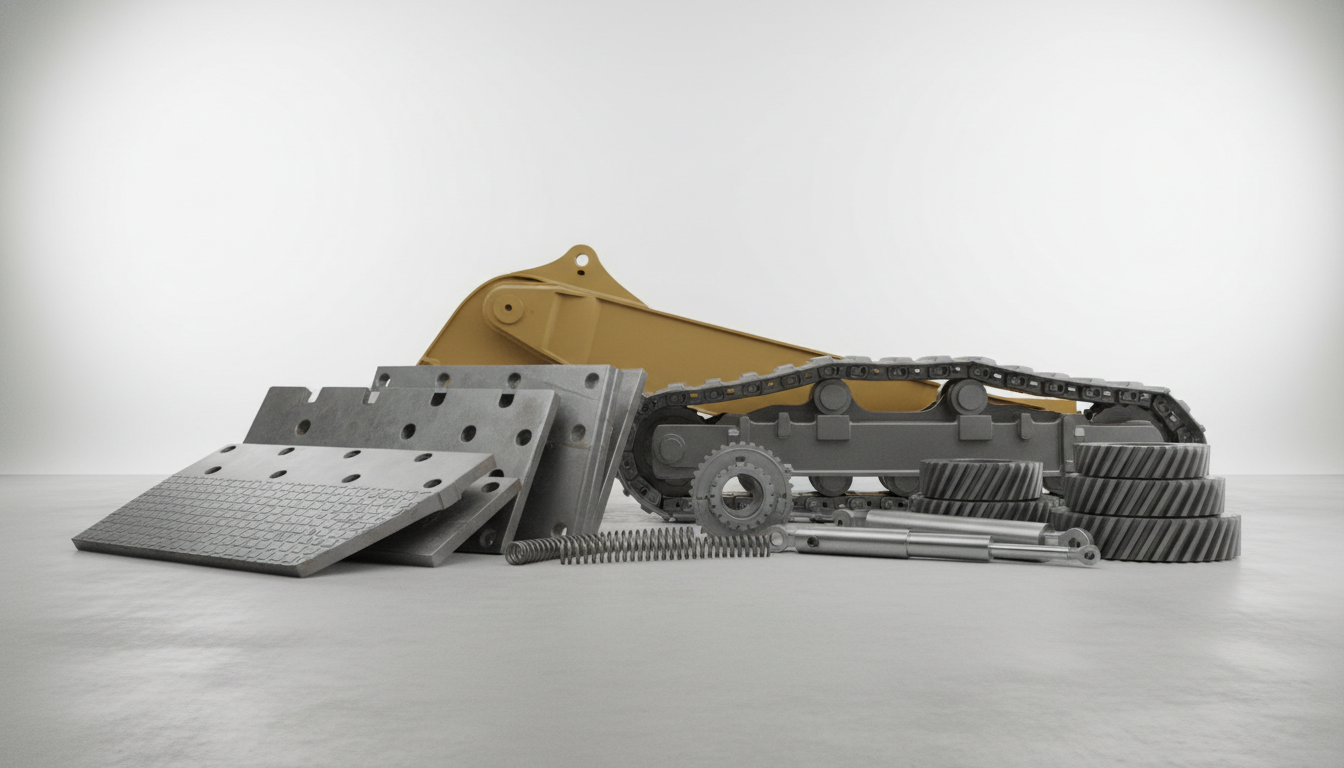
A typical mine site consumes hundreds of different mining equipment every month. Understanding which components fail most often helps in stocking the right inventory and avoiding the costly scramble of emergency procurement.
Wear Parts: Liners, Teeth, and Cutting Edges
Wear parts are designed to be sacrificial. Crusher liners, mill liners, and ground engaging tools like bucket teeth and ripper shanks are replaced on a schedule based on operating hours or material throughput. Metso notes that wear parts can be optimized through material selection, such as manganese steel alloys or rubber composites, to extend service intervals and reduce total replacement frequency. Selecting the right alloy grade for your ore type can extend liner life by a meaningful margin.
Spare Parts: Pumps, Motors, and Hydraulics
Spare parts keep the machine’s core systems running. Hydraulic pumps, drive motors, and control valves are typically on a preventive maintenance program with defined replacement intervals. A single pump failure can stop a shovel or haul truck for days. Many mines stock critical spare parts for quick swaps, keeping a minimum of one exchange unit on the shelf for each machine class. specialist suppliers Company offers 24-hour parts availability and delivery to minimize downtime, a service standard the company has maintained for over 95 years.
Structural Components: Frames, Booms, and Buckets
Structural components endure the highest mechanical stress on any mine site. Haul truck frames, excavator booms, and dragline buckets are subject to fatigue cracking, impact damage, and corrosion. Repair welding and rebuilding are common, but when a structural component reaches the end of its serviceable life, a quality replacement is essential. For older machines, sourcing these items often requires a specialist with access to legacy drawings or the ability to reverse-engineer from the original part.
How to Source Quality Parts for Mining Equipment
Sourcing parts for mining equipment is a structured process that minimizes risk and ensures you get components that meet operational demands. Follow these steps to build a reliable supply chain.
Step 1: Identify Exact Part Numbers and Specifications
Always start with the machine’s parts manual or serial number lookup. OEMs like Komatsu and Caterpillar provide online catalogs that link part numbers to specific machine configurations. Cross-referencing aftermarket alternatives requires knowing the exact dimensions, material grade, and any applied standards. For example, Specialist parts supplier operates under ISO 9001 quality management and maintains a catalog of over 130,000 SKUs, making cross-referencing faster for common machine families.
Step 2: Evaluate Supplier Credentials and Certifications
Look for suppliers with proven track records. Check whether they hold ISO 9001 certification, which indicates robust quality management across their sourcing and inspection processes. Ask about their testing procedures: do they perform dye penetrant, ultrasonic, or magnetic particle inspections on reconditioned parts? A supplier like Specialist parts supplier publicly discloses its qualification thresholds, giving buyers confidence in the remaining life of a rebuilt component. RMS also maintains an inventory of over 80,000 parts, which translates directly into shorter lead times for common items.
Step 3: Compare Lead Times and Logistics
Stock availability varies widely across the supply chain. Global OEMs like Metso operate over 150 distribution centers worldwide, enabling rapid dispatch for most standard items. Regional suppliers may offer same-day delivery for common items. Warwood Armature in West Virginia, for instance, uses its own fleet to deliver rush orders to nearby operations. Always factor in customs clearance and freight if you’re importing parts for mining equipment from overseas, and build a buffer stock for long-lead items like custom-engineered shafts or specialty bearings.
Step 4: Clarify HS Codes and Import Requirements
International procurement adds a layer of complexity that catches many buyers off guard. Parts for mining equipment are classified under specific Harmonized System (HS) codes that determine import duties, VAT treatment, and documentation requirements in each destination country. Common categories include HS 8431 (parts for mining and construction machinery) and HS 8484 (seals and gaskets). Confirming the correct HS code before placing an order prevents customs delays and unexpected duty charges. Your freight forwarder or a specialist exporter like 3GEN Export can advise on classification for your specific components.
Step 5: Implement Quality Checks Upon Delivery
Inspect every shipment against the purchase order and part number. Check for physical damage, correct fitment marks, and packaging integrity. For critical parts, consider third-party inspection or on-site dimensional checks before installation. A small investment in incoming inspection can prevent costly failures underground, where repair access is difficult and downtime costs multiply quickly.
“Parts availability and lead time are as important as price. A $500 part that arrives in 24 hours is worth more than a $400 part that takes three weeks.” – Industry procurement benchmark, heavy equipment sector
Leading Global Suppliers of Mining Components
The market for parts for mining equipment is served by a mix of OEM giants and agile aftermarket specialists. According to Grand View Research, the global mining equipment market was valued at $145.2 billion in 2022, making efficient parts procurement a significant lever for profitability across the industry. The right supplier choice depends on your location, budget, and tolerance for risk.
Global OEMs: Metso, Caterpillar, Komatsu
These manufacturers design and build the original equipment. Their parts networks are vast: Metso carries parts covering over 100 years of equipment history across its 150+ distribution centers, Cat offers 8,000+ remanufactured part numbers, and Komatsu supports everything from small drills to the largest mining trucks. OEM parts come with full engineering support and warranty, but prices are high and lead times can stretch for legacy models.
Specialized Aftermarket Providers: DMC, RMS, specialist suppliers
Aftermarket companies focus on improving the original design or offering more competitive pricing. Specialist parts supplier sources aftermarket GET and undercarriage components from dozens of manufacturers, while specialist suppliers manages a catalog of over 130,000 SKUs across multiple equipment brands. These suppliers often provide technical audits and can re-engineer parts for longer service life in specific ore types or operating conditions.
The 3GEN Export Advantage in International Sourcing
For operations in remote mining regions or countries with limited local options, 3GEN Export simplifies procurement. By consolidating demand and working with multiple factories across 40+ brands, 3GEN delivers genuine and aftermarket parts for mining equipment with competitive pricing and reduced logistics complexity. Their quality control process ensures every component, from a simple gasket to a complete undercarriage assembly, meets or exceeds site requirements. With 5-day global delivery on stocked items, 3GEN is a practical solution for mines that cannot afford to wait.
Maximizing Equipment Lifespan Through Predictive Maintenance and Parts Management
Beyond procuring parts for mining equipment, progressive mines use data to forecast failures and optimize inventory. This approach reduces unplanned downtime and ties up less working capital in emergency spares.
The Role of Digital Twins in Part Lifecycle Planning
A digital twin is a virtual replica of a physical asset that simulates wear and predicts remaining useful life. By feeding real-time sensor data, including vibration readings, temperature trends, and oil analysis results, into the model, maintenance teams can order replacement parts weeks before a component fails. This shifts the supply chain from reactive to predictive, allowing bulk purchasing at better prices and lower freight costs per unit.
Inventory Optimization Strategies
Mining enterprises can classify parts using an ABC analysis: “A” items are high-cost, long-lead components like crusher main shafts; “B” items are moderate-cost, moderate-lead; “C” items are low-cost consumables ordered in bulk. Stocking levels are set based on historical failure rates and supplier lead times. ERP systems with integrated parts catalogs help avoid stock-outs and duplicate orders. As of 2026, more mines are connecting their ERP platforms directly to supplier inventory feeds, reducing the gap between a predicted failure and a confirmed parts order to as little as 24-48 hours.
Cost-Saving Tips for Mining Equipment Parts Procurement
Even modest savings on parts for mining equipment add up to significant sums across a large fleet. Smart buyers combine several strategies to keep costs under control without compromising reliability.
Bulk Purchasing and Long-Term Contracts
Negotiating annual supply agreements with volume discounts reduces per-unit costs on predictable wear items. Suppliers are often willing to hold safety stock on your behalf, eliminating the need for you to carry that inventory on your balance sheet. This works especially well for screen media, conveyor idlers, and GET components where consumption rates are consistent and forecastable.
Refurbished and Remanufactured Options
Remanufacturing returns a used part to its original specification, often with updated engineering improvements. Cat Reman, for example, provides a like-new warranty at 20-40% below new OEM price. For large components such as engines and wheel motors, the savings are substantial while still delivering full reliability. Non-critical structural items like truck frames and buckets are also strong candidates for quality rebuilt parts, particularly when the original core is in recoverable condition.
Consolidating Suppliers
Managing fewer suppliers reduces administrative overhead and freight expenses. Companies like 3GEN Export offer one-stop access to a broad range of parts for mining equipment, from hydraulic seals to complete undercarriages, simplifying procurement and improving negotiation leverage. Fewer purchase orders also means less time spent on invoice reconciliation and supplier audits.
Frequently Asked Questions
What are the most common wear parts on mining equipment?
Crusher liners, mill liners, bucket teeth, cutting edges, and conveyor belts are the most frequently replaced wear parts on mine sites. Their service life depends on material abrasiveness, feed size, and total operating hours per shift.
How do I verify if an aftermarket part will fit my machine?
Cross-reference the original OEM part number and confirm dimensions, material grade, and any OEM-specific design features with the supplier. Reputable suppliers of parts for mining equipment provide interchange tables and dedicated technical support to confirm compatibility before you order.
Is it safe to use rebuilt components in critical applications?
Yes, when rebuilt by a certified shop using documented quality control protocols. Ask about specific testing methods, such as hydraulic pressure tests or magnetic particle inspection, and confirm warranty terms before purchasing. some suppliers, for example, require rebuilt parts to retain at least 50% of their original service life before qualifying them for resale.
What lead times should I expect for OEM mining equipment parts?
Lead times range from same-day for common stock items at local dealers to 12-16 weeks for custom-engineered or low-volume parts sourced directly from the factory. Always plan ahead for critical spares and maintain a buffer stock for components with long procurement cycles.
How can I reduce the total cost of ownership for mining equipment parts?
Adopt a mixed sourcing strategy using OEM parts for critical systems, aftermarket for non-critical wear items, and remanufactured assemblies for major components. Combine this with annual supply contracts, predictive maintenance scheduling, and supplier consolidation to minimize both unit costs and emergency freight charges.
Does 3GEN Export supply parts for older or discontinued mining machines?
Yes. 3GEN Export specializes in sourcing hard-to-find components for legacy equipment by tapping into a global network of manufacturers and dismantlers across 40+ brands. Contact their team with a part number for a quotation and estimated lead time.
Shop OEM-quality spare parts with global 5-day delivery at 3genexport.com.