
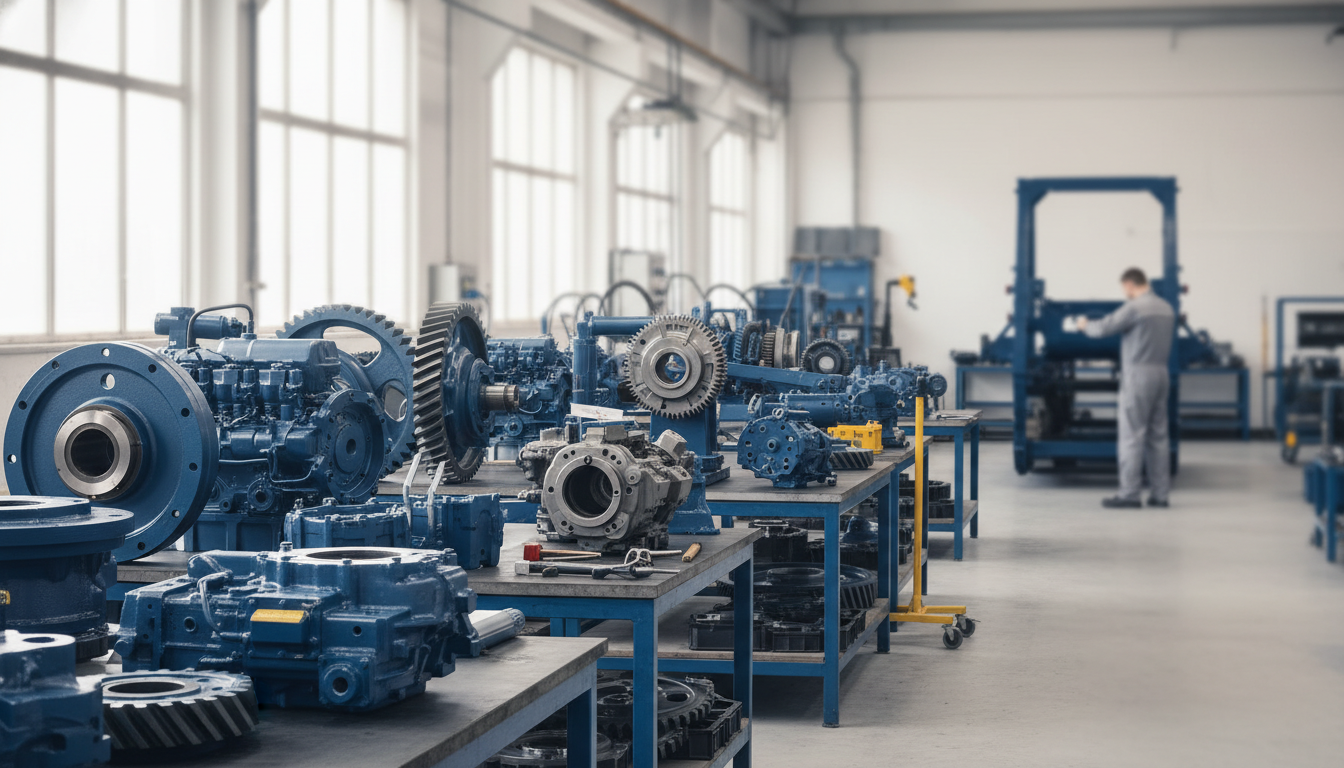
Remanufactured Mining Equipment Parts Guide
Remanufactured mining equipment parts cut costs 30-50% vs. new OEM. Learn quality standards, supplier tips, and global delivery at 3genexport.com.
Loading article…
Article Not Found
The article you're looking for doesn't exist or may have been removed.
Back to BlogKey Takeaways
- Remanufactured mining equipment parts are fully restored to OEM specs, delivering same-as-new performance at a fraction of the cost.
- Quality assurance includes rigorous testing, industry-leading warranties (such as 1-year unlimited miles), and compliance with ISO 9001:2015 standards.
- Choosing a reputable supplier with certified processes, core exchange programs, and large inventories (80,000+ parts) can cut downtime from weeks to hours.
- Sustainability benefits are real: remanufacturing uses up to 85% less energy than producing new parts and supports circular economy goals.
- Total cost of ownership (TCO) improvements of 15-25% are achievable by integrating reman components into planned maintenance schedules.
Remanufactured mining equipment parts are used components restored through a standardized industrial process to original equipment manufacturer (OEM) performance specifications. The process covers disassembly, cleaning, inspection, replacement of worn elements, reassembly, and full-load testing.
What Are Remanufactured Mining Equipment Parts?
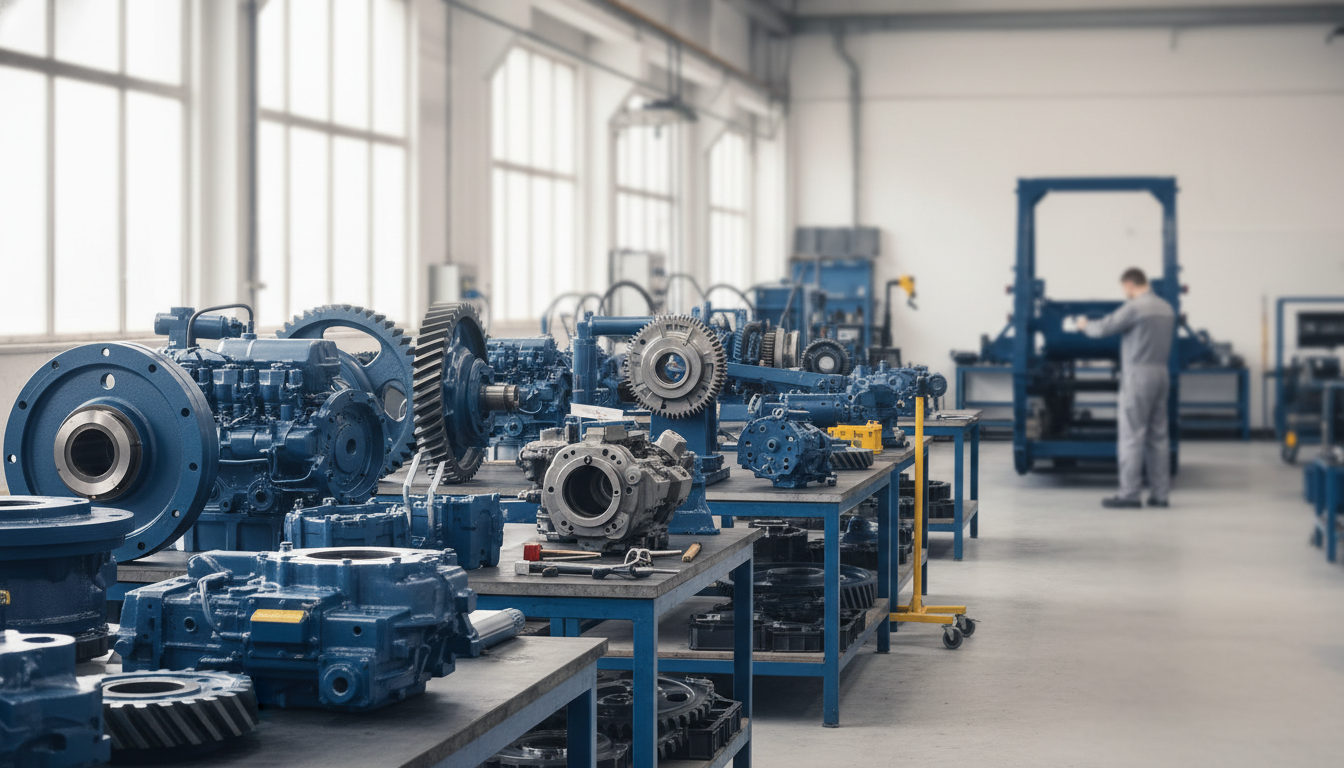
equipment parts are reclaimed components returned to like-new condition through a controlled, documented process that follows strict OEM engineering standards and ends with a warranty that mirrors or exceeds that of a new part. The core idea is to salvage high-value castings and housings that retain structural integrity, replacing all wear items, seals, bearings, and electronics so the final assembly meets original performance benchmarks.
Major manufacturers such as Caterpillar define a remanufactured part as one that is “remanufactured, not repaired, rebuilt, or reconditioned.” Komatsu operates a dedicated remanufacturing facility in Lexington, Kentucky, where components are restored to current factory specifications using salvage engineering and design updates. This distinction matters for mine-site managers because it directly affects reliability, warranty coverage, and total cost of ownership.
Remanufacturing vs. Repair and Rebuild
A repair only fixes the immediate problem, often leaving other worn areas untouched. A rebuild disassembles the component, replaces obviously damaged parts, and reassembles it, but without full performance validation. Remanufacturing, by contrast, applies a zero-hour restoration: every component is inspected to OEM limits, all wear items are replaced, and the unit is tested under load to certify it meets published horsepower, flow, or torque ratings. That is why this type of parts carry same-as-new warranties: because they are built to deliver same-as-new output.
Core Components Eligible for Remanufacturing
Virtually any major mining assembly qualifies. The most common this kind of equipment parts include:
- Engines (Caterpillar 3516, Cummins QSK-60, Komatsu SDA series) and fuel injection systems
- Drivetrain components: transmissions, torque converters, final drives, differentials
- Hydraulic cylinders, pumps, motors, and valves
- Turbochargers, starters, alternators, and air compressors
- Undercarriage groups and track assemblies
- Electronic control modules and power modules
These assemblies account for the bulk of a mine’s unscheduled downtime, making them prime candidates for reman programs that keep a ready inventory of exchange units.
The Core Charge System
Most the mining equipment parts are sold on an exchange basis. You pay a refundable core charge when you buy the reman component. When you return the old, rebuildable core, that charge is credited back. According to Caterpillar, “Cost savings based on return of core; core conditions apply.” This system gives mines a predictable cost structure and ensures a steady supply of raw material for remanufacturing.
Pros and Cons of Remanufactured Mining Equipment Parts
parts offer compelling advantages for most operations, but they are not the right fit for every situation. Here is an honest breakdown.
Pros
- Cost savings of 30-50% vs. new OEM parts, with additional savings from core credits that reduce net acquisition cost further.
- Same-as-new warranty coverage: suppliers like Capital Reman Exchange back their engines with a 1-year unlimited miles warranty, giving maintenance managers real protection.
- Faster return to service: exchange programs let you swap in a shelf unit in a single shift rather than waiting weeks for a rebuild.
- Sustainability credentials: remanufacturing uses up to 85% less energy than producing a new part from virgin ore, supporting ESG and net-zero commitments.
- Engineering updates included: reputable rebuilders incorporate the latest OEM design improvements, so the reman part can outperform the original.
- Broad catalog coverage: specialist suppliers stock over 80,000 parts, covering Caterpillar, Komatsu, Cummins, and other major brands.
Cons
- Core condition dependency: if the returned core is cracked or beyond economical repair, the exchange program cannot proceed and a new casting may be required.
- Not all suppliers are equal: without ISO 9001 certification or OEM authorization, a rebuilder’s quality can vary significantly, raising reliability risk.
- Limited suitability for exhausted components: parts that have completed multiple rebuild cycles and reached fatigue limits should be replaced new, not remanufactured.
- Core deposit ties up capital: the refundable deposit adds to upfront cash outlay, which can affect short-term cash flow for smaller operations.
The Remanufacturing Step-by-Step Process
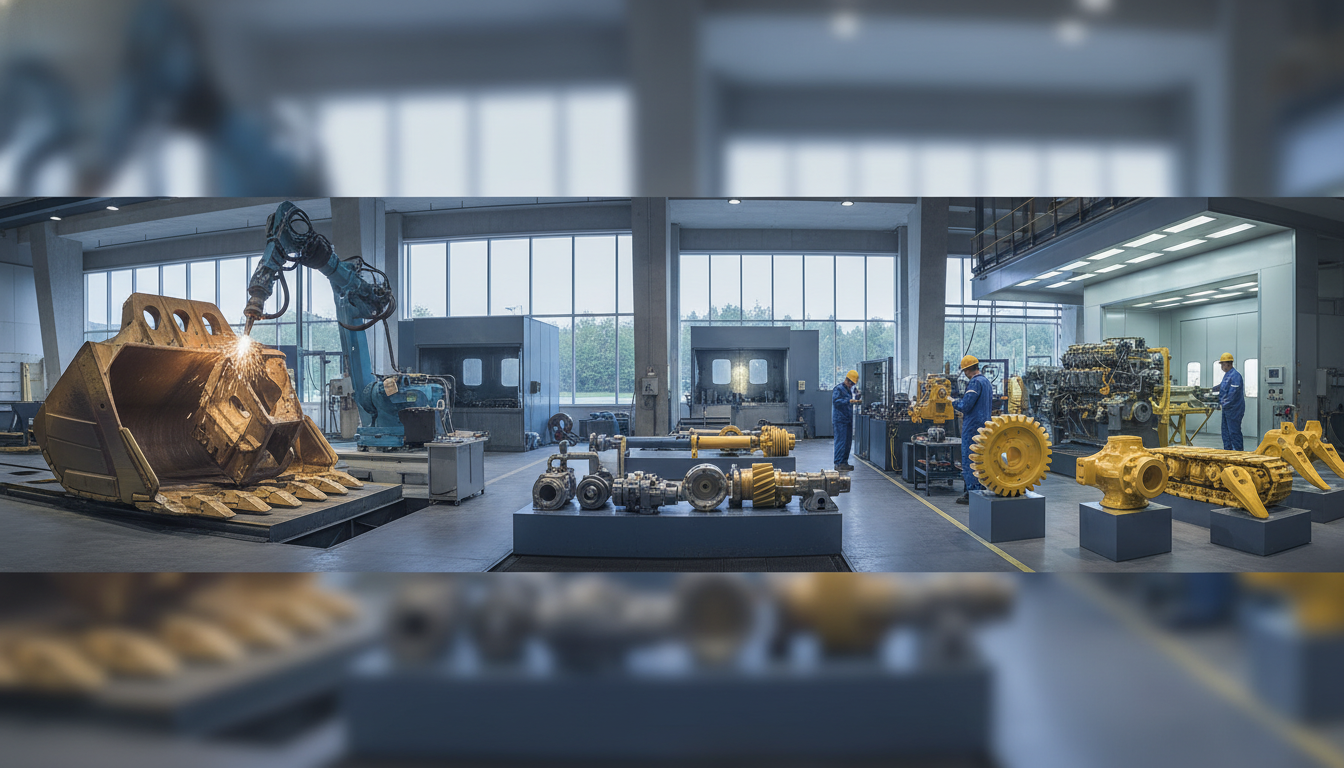
Every reliable remanufactured mining equipment part goes through a documented, multi-step process that is identical whether performed by an OEM’s own facility or an independent rebuilder adhering to OEM specifications. Below is the nine-step sequence employed by specialist shops for mining engines and other major assemblies.
Step 1: Core Evaluation and Receiving Inspection. The incoming used part is assessed for damage, cracks, and missing components. Only cores with salvageable major castings are accepted.
Step 2: Complete Disassembly. The unit is stripped to its individual components. All fluids are drained, and soft parts such as gaskets, seals, and hoses are discarded.
Step 3: Thermal or Chemical Cleaning. Castings go through high-temperature thermal degreasing or ultrasonic cleaning to remove carbon, dirt, and old paint. Precision parts are chemically cleaned to preserve surface finishes.
Step 4: Detailed Inspection and Measurement. Every dimension, including bore diameters, journal sizes, flatness, and runout, is checked against OEM specifications using coordinate measuring machines (CMMs) and magnetic particle or dye penetrant crack detection.
Step 5: Machining and Salvage. Worn surfaces are built up using laser cladding, chrome plating, or spray welding, then machined back to blueprint dimensions. Any component that falls outside tolerance is replaced with a genuine new piece.
Step 6: Sub-assembly and Replacement of Wear Items. New bearings, seals, bushings, pistons, rings, and electronic sensors are installed. All updated engineering modifications, such as improved camshaft profiles and upgraded valve materials, are incorporated at this stage.
Step 7: Reassembly. The component is built up in a clean-room environment, following torque sequences and lubricant specifications identical to those used on a new assembly line.
Step 8: Performance Testing. Engines run on dynamometers; hydraulic pumps are flow-tested; transmissions are shifted through all gears under load. Vibration analysis and oil contamination monitoring confirm the unit performs to new-part benchmarks.
Step 9: Final Inspection and Packaging. The completed assembly receives a factory-spec paint finish and is packaged with full documentation, including test reports and warranty registration.
Quality Control and Certification
Throughout the process, quality gates are enforced at each stage. Specialist parts supplier emphasizes that “every remanufactured component undergoes rigorous inspection, testing and certification to guarantee reliability.” For Komatsu, remanufactured products are validated using “the original equipment specifications, assembly processes and test procedures.” Many independent shops also hold ISO 9001:2015 certification, ensuring repeatable quality across every unit produced.
Speed of Turnaround
Exchange programs drastically compress repair timelines. Instead of pulling a machine from service for weeks while a rebuild is performed on-site, a mine can swap in a remanufactured unit from a dealer’s shelf. This “drop-in ready” approach means a multi-million-dollar haul truck can be back in production within a single shift rather than sitting idle for a fortnight. Leading suppliers maintain an extensive inventory of mining exchange components ready for immediate delivery, with an online Parts Portal in development to streamline ordering further.
Warranty Coverage
Warranties are a hallmark of quality remanufactured mining. Capital Reman Exchange offers a 1-year unlimited miles warranty on remanufactured engines and parts. Caterpillar provides a same-as-new limited warranty on its Reman line, with specific terms varying by model. CB Mining offers a 6-month warranty on certain rebuilds. These guarantees are possible precisely because the remanufacturing process restores the component to a known, repeatable state.
Cost Savings and Financial Benefits
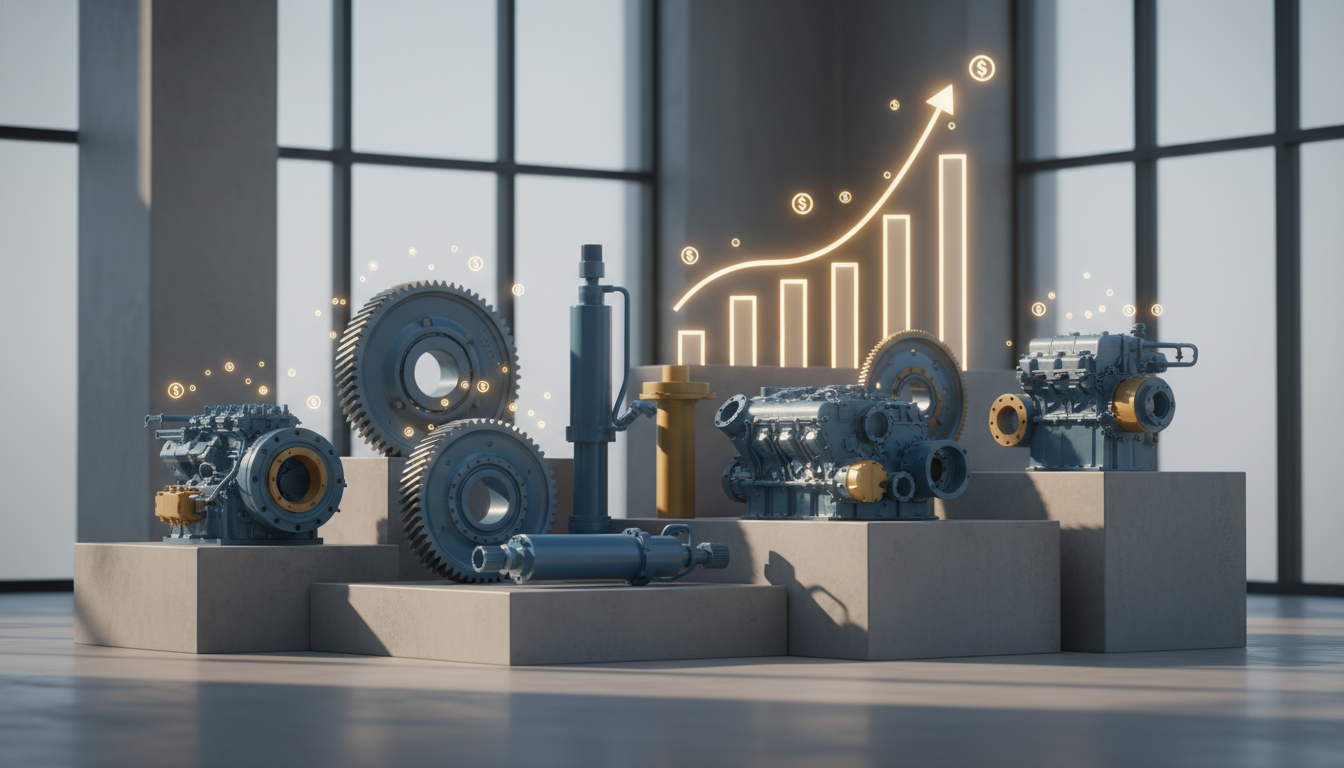
Mine operators constantly balance capital budgets against production demands. equipment parts provide a financial middle ground that lowers the cost of major component replacement without sacrificing reliability.
The direct purchase price of a reman component is typically a fraction of that of a new OEM part. The core-exchange model ensures that the mine pays only for the value added: the labor, replacement wear items, and testing, not for raw castings that already exist. Komatsu states that its Reman program delivers “quality reman parts at a fraction of the cost of new.” Multiplied across a fleet of dozens of trucks, shovels, and loaders, the annual savings can reach into seven figures.
Total Cost of Ownership (TCO) Impact
TCO is the true metric that matters. It accounts not just for acquisition price, but for downtime, labor, logistics, and the value of inventory held. Using remanufactured mining equipment parts can lower TCO by 15-25% over a machine’s second or third life. The numbers break down as follows:
- Acquisition cost: typically 30-50% less than new OEM pricing
- Downtime reduction: exchange units can be installed in hours, avoiding weeks of lost production
- Core credit: the returned core offsets the purchase price further
- Warranty protection: same-as-new warranties reduce the risk of premature failure costs
- Inventory carrying cost: because reman units are available off-the-shelf, mines can reduce their own parts inventory and free up working capital
Financing and Procurement Options
Beyond outright purchase, many suppliers offer flexible procurement structures for remanufactured mining equipment parts. Options typically include surplus new parts, certified used parts, rebuild exchanges, and good-running take-offs, giving procurement managers multiple price points for the same component need. Some dealers also offer deferred payment arrangements on high-value assemblies such as complete engine or transmission exchanges. Ask your supplier about available terms before committing to a single procurement route, since the right structure can improve cash flow without increasing total spend.
Real-World Savings in Practice
Mining companies featured in Caterpillar’s customer stories report that using Cat Reman products in Certified Rebuilds brings “new life and like-new performance” while extending equipment life cycles across multiple rebuild intervals. OceanaGold, a New Zealand gold miner, rebuilt three Cat 789C mining trucks with reman components, keeping their fleet productive through the exchange program. Long-established distributors point to decades-long service guarantees as evidence that reman solutions deliver consistent, measurable savings across diverse mining operations.
“Remanufactured components match the performance and quality of an equivalent new part.” – Komatsu Remanufacturing, based on validation data from the Lexington, Kentucky remanufacturing operation.
Quality and Performance: Can Remanufactured Parts Match New?
Yes. When the remanufacturing process is executed correctly, remanufactured mining equipment parts deliver the same power, torque, and cycle life as a new component. The key lies in three pillars: OEM-equivalent materials, precision machining, and full-load testing.
Because the original castings and forgings are reused, the fundamental metallurgy and structural integrity are identical to those of the original part. All wear-affected surfaces are machined to factory dimensions, and any updated engineering changes are applied. The final product often incorporates improvements that the current generation of new parts enjoys, something a simple repair cannot offer.
Performance Certification Data
Komatsu’s Lexington Remanufacturing Operation guarantees that “remanufactured products match the performance and quality of an equivalent new part.” Diesel engines are run-in on dynamometers that plot horsepower, torque, fuel consumption, and blow-by against acceptance curves. Hydraulic pumps and motors are tested at full pressure, with efficiency measured to be within plus or minus 3% of the OEM’s new-part specification. Per manufacturer service bulletins, any unit that falls outside these acceptance bands is disassembled and corrected before shipment.
Warranty as Proof of Quality
The willingness of OEMs and major independents to back remanufactured mining equipment parts with same-as-new warranties is the ultimate testament to their reliability. A 1-year unlimited miles warranty from Capital Reman Exchange or a 6-month warranty on specific rebuilds from CB Mining gives maintenance managers the confidence to schedule these components into mission-critical machines. If a part fails prematurely, the supplier bears the cost, so suppliers have every incentive to ensure it lives up to the promise.
When a Reman Part May Not Be Suitable
There are situations where remanufactured components may not be the best choice. If the original core is severely damaged, such as a cracked cylinder block or warped transmission case, the remanufacturing process cannot salvage it and a new casting may be required. For components that have undergone multiple rebuild cycles and exhausted their fatigue life, it is safer to replace them with new parts. A reputable supplier will always perform a core assessment and advise when a core is beyond economical repair. some suppliers, for example, qualifies parts to confirm at least 50% life remaining before accepting them into the exchange program.
Common Remanufactured Mining Equipment Components
Mines rely on a wide array of heavy-duty assemblies. The catalog of remanufactured mining equipment parts spans everything from massive diesel engines to hydraulic accumulators, covering virtually every system on a modern haul truck, shovel, or drill rig.
Engines and Fuel Systems
Diesel engines are the heart of any mining fleet. Popular reman engine models include the Caterpillar 3516, 3508, and C-series; Cummins QSK-19, QSK-60, and KTA-38; and Komatsu SDA12V140 and SDA16V160. Remanufacture includes new cylinder heads, blocks machined to oversize if needed, new pistons and rings, rebuilt turbochargers, and tested fuel injectors. A fully reman power module can be swapped in during a single maintenance shift, minimizing production loss.
Drivetrain and Final Drives
Transmissions, torque converters, and final drives endure extreme torque reversals in mining applications. Remanufactured drivetrain components from Komatsu and Caterpillar are built to withstand high torque and heavy loads. Gears are inspected for pitting and replaced if worn; clutches and friction plates are always replaced; and seals and bearings are upgraded to the latest material specifications available from the OEM.
Hydraulic Components
Mining shovels and excavators depend on hydraulic cylinders, pumps, and motors that generate forces measured in tons. Remanufactured hydraulic cylinders receive new gland nuts, piston seals, and rod seals. Pump and motor rotating groups are rebuilt with OEM-spec pistons and valve plates, and the assembly is tested on a hydraulic test stand to verify flow, pressure, and volumetric efficiency before shipment.
Supplier Selection: How to Choose the Right Supplier
Not all reman sellers are equal. The quality of remanufactured mining equipment parts depends entirely on the rigor of the rebuilder’s process. When evaluating a supplier, consider these factors carefully.
Certifications and OEM Ties
Look for suppliers that are either factory-authorized, such as a Caterpillar dealer’s Reman program or Komatsu’s factory reman operation, or who hold ISO 9001:2015 certification. A direct link to the OEM ensures access to the latest engineering changes, genuine replacement parts, and specialized test equipment. some suppliers, for example, offer factory-certified remanufactured mining components and Hitachi OEM and certified rebuilt parts across its product range.
Inventory and Exchange Programs
An extensive, ready-to-ship inventory is the best defense against downtime. Leading suppliers maintain an inventory of over 80,000 parts and offers multiple procurement options: surplus new parts, certified used parts, rebuild exchanges, and good-running take-offs. A robust exchange program means you don’t have to wait for your own core to be rebuilt. You simply exchange it for a shelf unit, reducing downtime from weeks to hours.
On-Site Remanufacturing and Field Support
Some dealers and specialist contractors go beyond supplying remanufactured mining equipment parts by offering on-site remanufacturing services. Mobile rebuild teams can perform component exchanges directly at the mine, eliminating the cost and risk of transporting heavy assemblies to a workshop. This is particularly valuable for remote operations in Africa, South America, and Central Asia where logistics add significant time and cost to any repair event. When evaluating suppliers, ask specifically whether field service teams are available in your region.
Warranty and After-Sale Support
A strong warranty is non-negotiable. Warranties can extend to 1 year with unlimited miles, as offered by Capital Reman Exchange. Ask about field service support, technical hotlines, and the availability of installation guidance. The longest-established distributors back this with formal service guarantees, a commitment to customer satisfaction maintained over decades in the industry.
Remanufactured vs. Rebuilt vs. Aftermarket: Key Differences
Mine buyers often confuse these three categories. The table below clarifies the differences so procurement managers can make an informed decision.
| Feature | Remanufactured Parts | Rebuilt Parts | Aftermarket Parts |
|---|---|---|---|
| Process | Full disassembly, OEM-spec restoration, all wear items replaced, load tested | Partial disassembly, only obviously damaged parts replaced, no performance test | New part manufactured by a third party, may alter design |
| Quality | Matches or exceeds new OEM part | Variable; often no certification | Ranges from OEM-equivalent to lower quality |
| Warranty | Same-as-new (up to 1 year unlimited) | Short (30-90 days) or none | Varies; usually 6-12 months |
| Cost vs. New OEM | 30-50% less | Lowest upfront but higher risk | 25-40% less |
| Best Use | Mission-critical components where downtime is costly | Non-critical, temporary fix | Aging fleets where OEM support is unavailable |
For operations that cannot afford unplanned downtime, remanufactured mining equipment parts provide the best balance of cost and confidence.
Key Distinction: Reman vs. Rebuilt
The crucial difference is in the thoroughness of the process. A rebuilt part may work for a while, but because only the failed sub-component was addressed, other worn areas remain. A remanufactured part is taken to zero-hour condition, which is why OEMs can back it with a full factory warranty.
When Aftermarket Parts Make Sense
Aftermarket parts, meaning new components manufactured by non-OEM companies, can be a good choice for older machines where the OEM no longer supports the model, or for consumables like wear plates and cutting edges. For major assemblies, however, the risk of poor fitment, reduced service life, and voided machine warranties often outweighs the initial savings. Most mines reserve aftermarket sourcing for non-safety-critical, low-duty-cycle items.
Sustainability and the Circular Economy
Remanufacturing is inherently green. By reusing castings and forgings that have already consumed energy in their creation, remanufactured mining equipment parts avoid the significant CO2 emissions associated with melting and recasting new iron or steel. Caterpillar has actively contributed to a circular economy through remanufacturing for over 50 years, and the approach is now a central element of ESG commitments across the mining industry.
Energy and Material Savings
According to the Automotive Parts Remanufacturers Association (APRA), remanufacturing a component typically uses 85-90% less energy than producing a new one from virgin ore. While the exact figure varies by part type and complexity, the principle holds consistently: a reman cylinder block re-enters service with only a fraction of the original carbon footprint. Mines that adopt systematic reman programs can meaningfully reduce their Scope 3 emissions, helping meet net-zero targets set by investors and regulators alike.
Reducing Landfill Waste
Every remanufactured engine or transmission is one that didn’t end up in a scrapyard. Components like cylinder heads, crankshafts, and hydraulic valve bodies contain high-grade alloy steels and aluminium that would otherwise require resource-intensive recycling. Through remanufacturing, these materials stay in productive use for multiple machine lifetimes, aligning with the principles of reduce, reuse, and recycle.
Regulatory and Investor Pressure
Mining companies increasingly face pressure from investors and regulators to demonstrate circular economy practices. Specifying remanufactured mining equipment parts in procurement policies is a tangible, verifiable action that supports sustainability reporting. It also aligns with frameworks such as the Global Reporting Initiative (GRI) and the Task Force on Climate-related Financial Disclosures (TCFD), both of which are now referenced in major mining company annual reports.
As of 2026, procurement teams at Tier 1 miners are actively tracking reman adoption rates as a measurable ESG metric, making supplier documentation and certification more important than ever. If you source remanufactured mining equipment parts, ask your supplier for a material savings certificate or energy reduction report to support your own reporting obligations.
For more on maintaining your fleet’s major assemblies, see our guide to heavy equipment maintenance best practices and our overview of OEM-quality spare parts by category available for global delivery.
Frequently Asked Questions
What is the difference between remanufactured and used mining parts?
Remanufactured mining equipment parts are disassembled, cleaned, inspected, have all wear items replaced, and are tested to meet OEM specifications before sale. Used parts are simply removed from a machine and sold as-is, with no assurance of remaining life or performance. Reman units carry warranties; used parts rarely do.
How much can I save by choosing remanufactured mining equipment parts over new ones?
The purchase price of a reman part is generally 30-50% less than a new OEM equivalent after core credit is applied. When downtime avoidance is factored in, total cost of ownership reductions of 15-25% are common across a full fleet maintenance program.
Are remanufactured parts as reliable as new OEM parts?
Yes, when they are remanufactured by a reputable facility following OEM protocols. The process replaces every wear-sensitive part and recertifies the assembly through full-load testing, which is why many reman parts come with same-as-new warranties such as a 1-year unlimited miles guarantee from Capital Reman Exchange.
What components can be remanufactured for mining equipment?
Almost any major assembly qualifies: engines, transmissions, torque converters, final drives, hydraulic cylinders, pumps, motors, turbochargers, starters, alternators, brake systems, and electronic control modules. Both OEMs like Caterpillar and Komatsu and independent specialists offer extensive catalogs of remanufactured mining equipment parts.
How do core exchange programs work?
You purchase a remanufactured assembly and pay a refundable core deposit. When you return your old, rebuildable component, the deposit is refunded in full. This keeps acquisition costs down and ensures a steady supply of raw material for the remanufacturing cycle.
Can remanufactured parts be used in warranty-covered machines?
Yes. OEM-backed reman parts do not void existing machine warranties. Using genuine OEM-reman parts is often recommended and may be required to maintain coverage. Always confirm the policy with your equipment manufacturer before installation.
Ready to reduce parts costs and cut downtime on your mining fleet? Shop OEM-quality spare parts with global 5-day delivery at 3genexport.com.