
Key Takeaways
- Surface mining equipment parts cover everything from drill bits and shovel teeth to hydraulic systems and undercarriage components for open-pit machinery.
- OEM parts from Caterpillar, Komatsu, and Metso guarantee exact fit, while aftermarket specialists like Boundary Equipment and Mining Element offer cost savings of 15–25% over OEM pricing.
- Ground engaging tools (GET) and wear materials demand regular replacement. Selecting high-alloy steels or metal spray coatings like TufCote® Grade A can extend part life by 6–7 times compared to standard steels.
- Digital inventory management and predictive replacement programs are becoming critical strategies to reduce unplanned downtime.
- Partnering with ISO-certified suppliers who maintain regional warehouses can cut delivery times to 2–7 days.
What Are Surface Mining Equipment Parts?
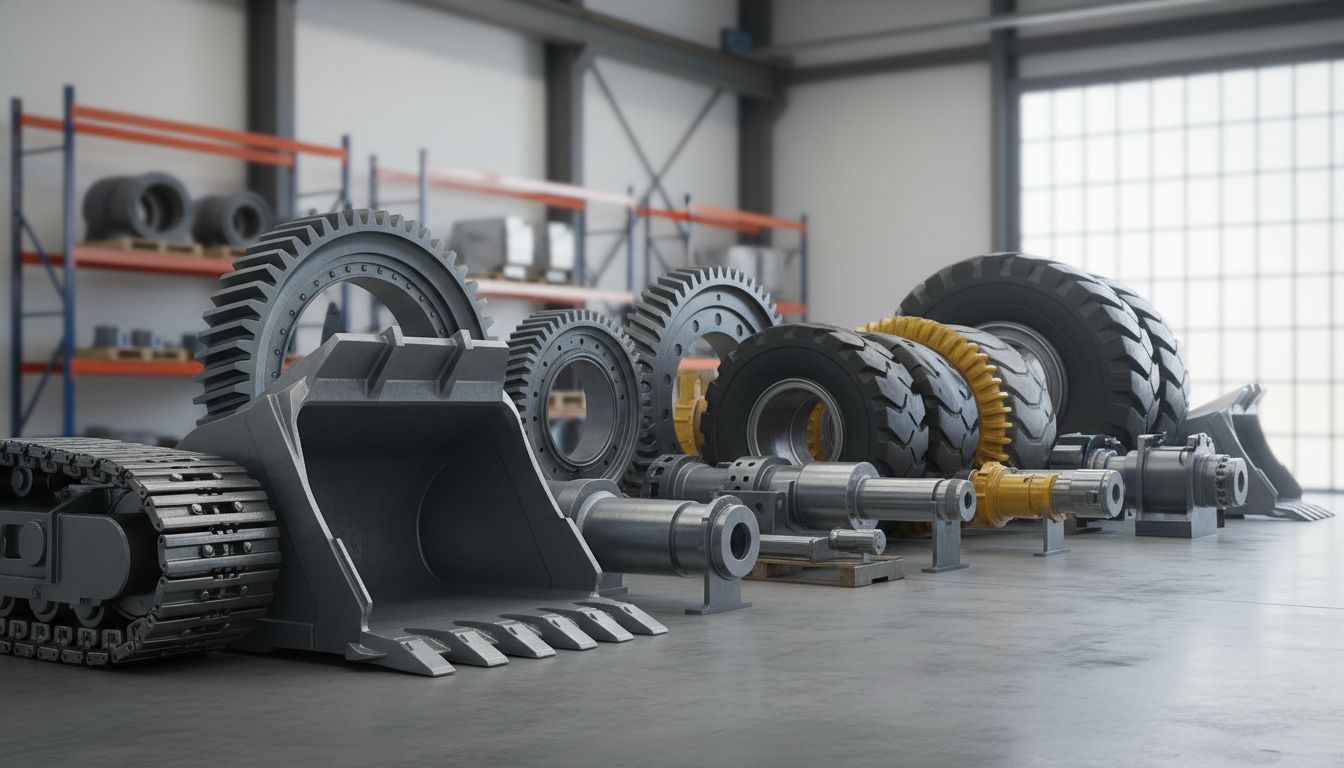
Surface mining equipment parts are the components, consumables, and spare assemblies that keep open-pit mining machinery operating at full capacity. They range from minor wear items such as bucket teeth, drill bits, and conveyor idlers to major structural and powertrain assemblies including hydraulic cylinders, swing bearings, and final drive units.
Types of Equipment and Their Parts
Surface mining fleets are broadly categorized by function: drilling and blasting, loading, hauling, and auxiliary support. Drilling rigs consume rotary bits, hammers, and feed chain assemblies. Shovels and front-end loaders need ground engaging tools (GET), including lips, teeth, adapters, and wear plates, as well as hydraulic components, wire rope, and slewing rings. Haul trucks in the 100- to 400-ton capacity range require engines, transmissions, suspension struts, and large-diameter tires. Dozers, graders, and wheel dozers rely on cutting edges, ripper shanks, and track groups. Recognizing which parts wear fastest and sourcing them proactively is the foundation of sound maintenance planning.
Critical Role of Parts Quality in Mine Productivity
In an industry where a single hour of unplanned downtime can cost tens of thousands of dollars, parts quality directly determines availability and total cost of ownership. Inferior metallurgy, poor dimensional accuracy, or substandard seals lead to premature failure, safety hazards, and secondary damage to adjacent components. That is why leading mine operators insist on equipment parts that meet or exceed OEM specifications, whether sourced from the original manufacturer or a reputable aftermarket provider. According to the Metso spare parts overview, “Without proper parts, mining equipment cannot function optimally.”
Pros and Cons of OEM vs. Aftermarket Surface Mining Equipment Parts
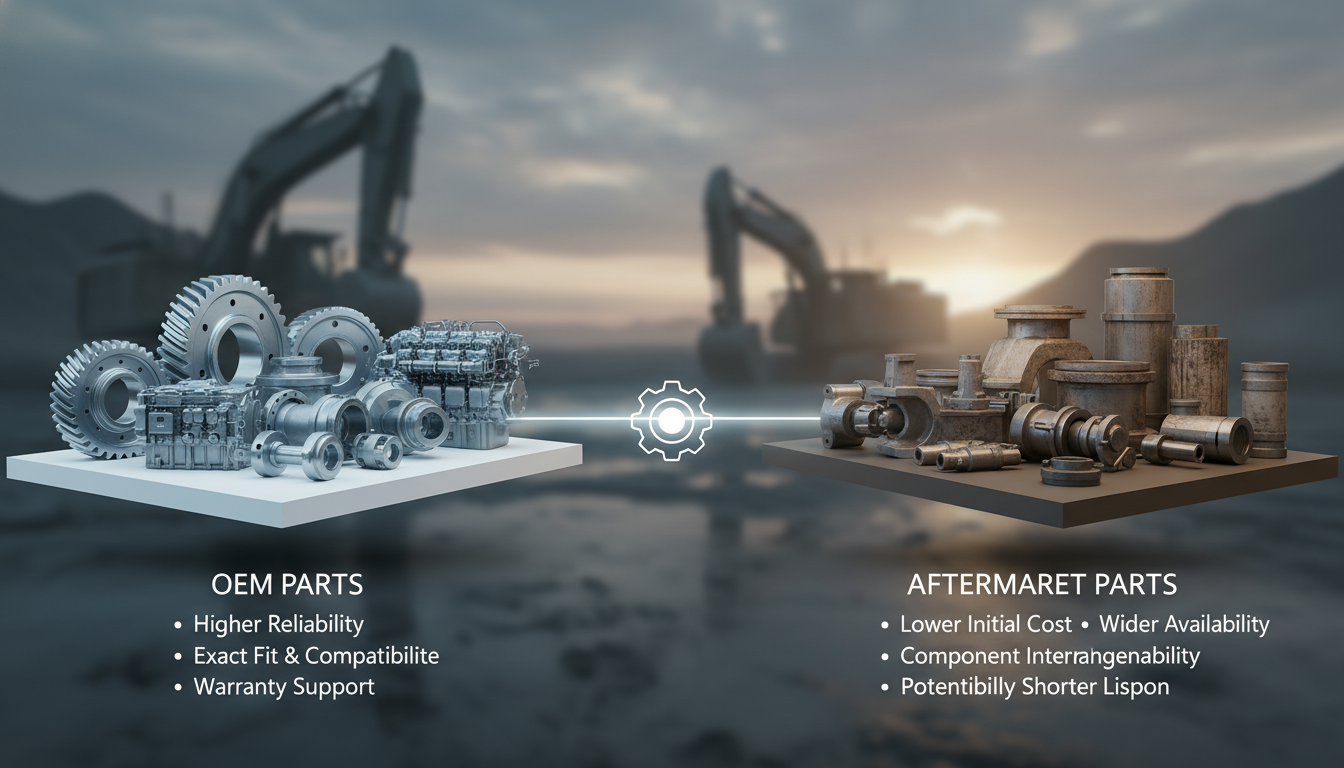
Pros
- OEM parts deliver guaranteed drop-in fit, full manufacturer warranties (typically 12 months), and factory-tested tolerances for safety-critical applications.
- Aftermarket parts from ISO-certified suppliers offer 15–25% cost savings over OEM pricing while meeting equivalent material and dimensional standards.
- Remanufactured components cost 40–60% less than new while reducing raw material consumption and energy use, supporting ESG commitments.
- Multi-supplier networks reduce supply chain risk and foster competitive pricing across your entire parts spend.
Cons
- OEM parts for non-stock items can carry lead times of 1–6 weeks, creating production risk when critical components fail unexpectedly.
- Low-quality aftermarket parts from unvetted suppliers introduce metallurgical inconsistencies that can cause premature failure and secondary machine damage.
- Remanufactured components require careful vetting. Not all rebuilders follow core-exchange protocols or issue warranties comparable to new parts.
- Maintaining a multi-supplier network demands active supplier management, audit programs, and cross-reference catalogue work that smaller operations may find resource-intensive.
Key Suppliers and Manufacturers of Surface Mining Equipment Parts
Global OEM Leaders: Caterpillar, Komatsu, Metso
The largest original equipment manufacturers, Caterpillar, Komatsu, and Metso, offer comprehensive lines of genuine this type of parts designed and tested for their own machines. Caterpillar’s surface mining division provides parts for electric rope shovels, hydraulic shovels, rotary blasthole drills, large wheel loaders, and off-highway trucks. Komatsu matches this breadth with its Komatsu Genuine Parts network, covering models like the PC-8000 hydraulic excavator and 930E haul truck. Metso, with over 100 years of mining equipment experience, stocks more than 150 distribution centers worldwide, ensuring rapid access to crusher wear parts, mill liners, and slurry pump components. These OEM parts carry factory warranties and are engineered to original tolerances, but typically at a premium of 20–40% over aftermarket alternatives.
Aftermarket Specialists: Boundary Equipment, Mining Element, RMS
For operations seeking cost-competitive options without sacrificing performance, aftermarket specialists have become indispensable partners. Boundary Equipment designs, manufactures, and repairs this kind of equipment parts for Caterpillar, Komatsu, Bucyrus Erie, Hitachi, O&K, and P&H machines, with full engineering capabilities that allow reverse-engineering of obsolete components. Mining Element maintains over 130,000 catalogue positions and 53,000 items in stock across three Russian warehouses, delivering within 2 to 7 days in most cases. Road Machinery & Supplies Co. (RMS) carries an extensive inventory of parts for all mining equipment types regardless of manufacturer, and offers warranty and guaranteed fit protection. These suppliers commonly deliver savings of 15–25% over OEM pricing while meeting or exceeding lifecycle expectations.
Specialized Wear-Part Providers: Weir, Kennametal
When the focus shifts to extreme abrasion and impact, two companies stand out. Weir’s ESCO division engineers premium ground engaging tools and wear protection for shovels, loaders, draglines, and dozers. Its Nemisys® lip and GET systems improve safety and tooth retention while maximizing part utilization. Kennametal supplies carbide-embedded cutting bits, blocks, and KenCast™ wear parts that extend service intervals in high-abrasion environments. Together, these specialists address the most punishing conditions on any mine site.
“The right part, installed at the right time, is the difference between a profitable quarter and a missed production target. We always advise clients to look beyond the purchase price and evaluate total lifecycle costs, including installation labor, downtime risk, and post-failure cleanup.”
– Mike Reynolds, Director of Engineering, 3GEN Export
OEM vs. Aftermarket Surface Mining Equipment Parts: A Comparison
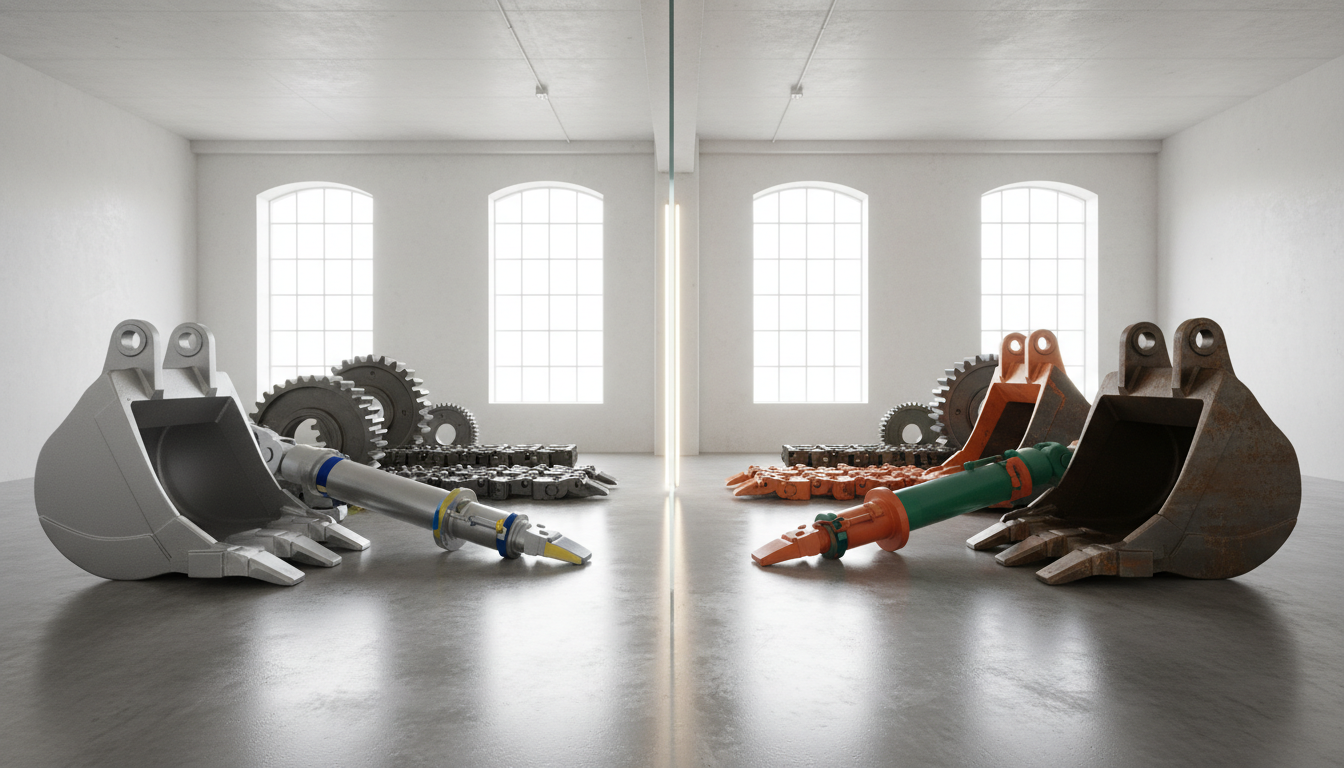
| Factor | OEM Parts | Aftermarket Parts |
|---|---|---|
| Cost | 20–40% higher than aftermarket | 15–25% savings over OEM |
| Availability | Dealer network; sometimes long lead times | Multi-brand distributors like Mining Element keep 53,000+ SKUs in stock |
| Warranty | Full manufacturer warranty (typically 12 months) | Varies; many offer 6–12 months or performance guarantees in tons/operating hours |
| Compatibility | Guaranteed drop-in fit | Engineered for drop-in compatibility; ISO-certified suppliers match OEM specs |
| Tech Support | Dealer on-site support and remote diagnostics | Many provide installation guidance and field audits (e.g., Mining Element, Boundary) |
| Lead Time | 1–6 weeks for non-stock items | Often ships within 2–7 days from regional warehouses |
How to Choose the Right Surface Mining Equipment Parts
Step 1: Match Parts to Equipment Models and OEM Specifications
Always verify the part number against the machine’s serial number and OEM parts breakdown first. Even minor design changes between model years can affect mountings, clearances, or hydraulic flows. Using an incorrect the mining equipment parts catalogue risks mismatched components that fail early or damage adjoining systems. Reputable suppliers provide online cross-reference tools and will confirm fitment before shipping.
Step 2: Evaluate Material Quality and Durability Standards
Look for evidence of materials testing and heat treatment protocols. For structural parts, this means tensile and yield strength certificates for the specific alloy used. Wear parts should specify hardness in Brinell or Rockwell scale and, for abrasion-resistant coatings, the percentage of tungsten carbide and particle size distribution. Some suppliers, like Boundary Equipment and Mining Element, recast components using proprietary high-alloy ductile iron or manganese steel that outperforms standard grades. A quality supplier will openly share material datasheets.
Step 3: Assess Total Cost of Ownership (TCO)
Total cost of ownership incorporates purchase price, freight, installation labor, expected service life, downtime cost, and disposal. A $5,000 aftermarket GET tooth that lasts 80% as long as an $8,000 OEM tooth may still lower TCO if the mine’s downtime cost is moderate. However, if failure risk is high, say on a dragline bucket where a lost tooth can jam the crusher, the premium OEM part often becomes the cheaper option. Always run the TCO numbers with site-specific values for labor rate and lost production.
Welding and Metal Spray Refurbishment for Worn Components
Refurbishment is a practical alternative to outright replacement for many parts. Metal spray techniques, including thermal spray and arc spray processes, deposit wear-resistant coatings directly onto worn surfaces. TufCote® Grade A metal spray coatings, for example, can extend equipment service life by 6–7 times compared to standard special steels, according to industry data from Metal Spray Supplies Australia (MSSA). This approach is particularly effective on bucket lips, dozer blades, and conveyor components where abrasion is the primary failure mode.
Robotic welding and post-weld stress relief are also being applied to large structural weldments, including loader frames and excavator booms, extending their working life by an additional 10,000–20,000 operating hours. For operations managing tight capital budgets, a documented refurbishment program reduces new-part spend while maintaining equipment availability. The key requirement is a qualified welding procedure specification (WPS) and certified welders following AWS D1.1 or equivalent structural welding standards.
“Metal spray refurbishment is one of the most underutilized cost-reduction tools in surface mining. A well-applied TufCote coating on a bucket lip costs a fraction of a replacement lip assembly and routinely outlasts it in abrasive rock conditions.”
– 3GEN Export Technical Team, based on supplier field data
Essential Wear Parts for Surface Mining Equipment
Ground Engaging Tools (GET): Teeth, Lips, and Adapters
Ground engaging tools are the replaceable front-line armor of loading attachments. On a 100-ton hydraulic excavator, the bucket may hold 20–30 individual teeth, each weighing 50–100 kg. Wear life in abrasive granite can be as short as 200 engine hours. Switching to ESCO’s Nemisys® system with its proprietary high-alloy steel can double that interval. Proper tooth selection, choosing between penetration points, abrasion profiles, and heavy-duty rock options, directly impacts digging efficiency and fuel burn.
Crusher Liners and Wear Materials
Primary crushers in surface mining applications, including gyratory, jaw, and impact types, consume manganese steel liners at a rate of 0.5–2.0 kg of liner per ton of processed ore. Upgrading to modern profile designs and using sensors to enable runtime liner changeouts can increase crusher availability by 5–8 percentage points. Metso’s Megaliner™ and Poly-Met™ concepts reduce the number of liner pieces and simplify installation, cutting reline time by roughly 40%. For secondary and tertiary crushers, ceramic-insert blow bars and cone liners extend the replacement cycle further.
Hydraulic Components: Seals, Hoses, and Cylinders
Hydraulic systems on shovels and drills operate at pressures exceeding 350 bar. Contamination-induced seal failure is a leading cause of unplanned downtime. Using OEM-quality Viton or polyurethane seals instead of generic NBR compounds, combined with proper rod-condition monitoring, can extend cylinder service intervals by 3–5 times. Spiral-wire reinforced hose assemblies rated for 5,000 psi and continuous flexing are essential for boom and stick articulation. Many aftermarket suppliers now offer complete hose kits pre-assembled for specific machine models.
Pneumatic Rock Drill and DTH Hammer Parts
Drilling operations depend on a steady supply of down-the-hole (DTH) hammer components and pneumatic rock drill parts. Atlas Copco and Chicago Pneumatic are the dominant OEM suppliers for drill strings, shank adapters, drill rods, and DTH bits used in blasthole drilling. Bit diameters for surface blasthole applications typically range from 100 mm to 350 mm depending on bench height and rock hardness. Aftermarket DTH bit suppliers can offer equivalent tungsten carbide button configurations at 15–25% below OEM list prices, provided the button grade and matrix hardness are independently verified. Keeping a minimum 30-day buffer stock of drill bits and shank adapters is standard practice on high-utilization drill fleets.
The Growing Role of Remanufactured and Refurbished Parts
Cost Benefits and Environmental Impact
Remanufacturing, restoring a worn component to like-new condition using a standardized industrial process, is gaining traction as both a cost-reduction and sustainability measure. Reman cylinder rods, idler groups, and final drives can cost 40–60% less than new while significantly reducing raw material consumption and energy use, according to industry data from the remanufacturing sector. For mines facing ESG scrutiny, a documented reman program provides a tangible pathway to reducing carbon footprint.
Certification and Quality Control for Remanufactured Components
Not all rebuilds are equal. Best-practice remanufacturers follow a core exchange model, submit every unit to magnetic particle or dye penetrant inspection, and replace all wear items, including bearings, seals, and springs, with new OEM-grade components. They then test the assembly on a dynamometer or hydraulic test stand and issue a warranty comparable to that of a new part. Organizations like the Remanufacturing Industries Council (RIC) and ISO 9001 certification provide benchmarks for selecting a qualified reman partner.
Examples: Engine, Hydraulic, and Structural Remanufacturing
A Caterpillar 3516 engine can be remanufactured to original horsepower and emissions specifications at roughly half the cost of a new long block. Hydraulic cylinders for a Komatsu PC-8000 excavator are routinely remanufactured by re-chroming rods and honing barrels. Even large weldments, loader frames and excavator booms, are being repaired with robotic welding and post-weld stress relief, extending their life by an additional 10,000–20,000 operating hours. Such programs are now a core component of a complete surface mining strategy.
Digital Inventory Management and Predictive Part Replacement
IoT and Sensor-Driven Monitoring for Wear Parts
The Internet of Things (IoT) is changing how mines manage equipment parts. Sensors embedded in crusher liners, shovel teeth, and conveyor idlers stream real-time thickness and temperature data to a centralized platform. When wear reaches a predetermined threshold, say 80% of the safe limit, the system automatically triggers a parts order. This predictive model reduces emergency purchases significantly and eliminates the need for manual inspection rounds in hazardous areas.
Supplier-Managed Inventory and Consignment Stock Programs
Leading suppliers now offer vendor-managed inventory (VMI) programs. Mining Element, for example, builds stocking plans around a customer’s consumption forecasts and can place consignment stock at a mine site, so parts are physically on hand but paid for only when used. Such programs reduce both on-site inventory carrying costs and the risk of zero-stock situations. Metso’s global network of more than 150 distribution centers further enables just-in-time delivery for non-stocked items.
Mining Element’s Warehouse Program
Mining Element’s three Russian warehouses, located in Saint Petersburg, Yekaterinburg, and Vladivostok, hold more than 53,000 SKUs ready for immediate dispatch. The company’s integrated IT system connects directly with client ERP platforms, automatically replenishing fast-movers and providing monthly consumption reports. This approach has helped large Russian coal and iron ore mines achieve high parts fill rates while lowering average inventory carrying costs.
Sourcing Strategies to Ensure Uptime and Reduce Costs
Developing a Multi-Supplier Network
Relying on a single source for surface mining equipment parts exposes a mine to supply chain disruptions. A prudent strategy divides spend among one or two OEM primary suppliers for critical drivetrain components and two or three aftermarket specialists for high-volume wear items. This diversification fosters competitive pricing and encourages product improvement. When evaluating a new supplier, look for ISO 9001:2015 certification, documented quality control processes, and a track record of similar installations in the region.
Expedited Shipping and Regional Warehousing
Every hour a machine sits idle waiting for a $50 bushing can stop thousands of tons of production. Proximity matters. Choosing a supplier with a distribution center within 500 km of the mine site can slash freight time from weeks to days. Companies like Boundary Equipment in Western Canada and Mining Element across the Russian Federation explicitly build their warehouse networks to serve regional clusters. Some even station a service van on-site with a curated inventory of fast-moving replacement components.
Quality Audits and ISO-Certified Suppliers
A physical audit of the supplier’s manufacturing facility, inspecting raw material storage, machining centers, and test equipment, provides the highest assurance of quality. Documented adherence to ISO 9001:2015 means the supplier follows structured processes for design, purchasing, production, and non-conformance management. For critical safety components like hoist ropes and slew bearings, also verify compliance with ASTM, SAE, or EN standards. A few days invested in an audit can prevent months of downtime later.
Maintenance Best Practices for Surface Mining Equipment Parts
Scheduled Inspections and Condition Monitoring
A formal preventive maintenance schedule based on operating hours or calendar time is the backbone of parts longevity. On a large rope shovel, daily inspections should include visual checks of wire rope condition, tooth retention pins, and hydraulic fluid levels. Weekly inspections should cover weld cracking on booms and stick fatigue. Combining these with non-destructive testing, including ultrasonic thickness measurement and magnetic particle inspection, detects cracks before they propagate. Documenting degradation rates helps refine replacement intervals and avoids premature discard of serviceable components.
Proper Installation and Torque Specifications
Even the best surface mining equipment parts will fail early if installed incorrectly. Always follow OEM torque tables and tightening sequences, particularly for bolted connections on rotating assemblies like ring gears and wheel hubs. Use calibrated torque wrenches and, where specified, hydraulic tensioning tools. For press-fit bushings and pins, freeze-fitting by cooling the bushing in liquid nitrogen reduces the risk of bore damage. Skimping on installation training is a false economy. One mis-torqued bolt on a final drive can cause a $150,000 failure.
Record-Keeping and Lifecycle Tracking
Modern enterprise asset management (EAM) systems allow mines to track every part from cradle to grave. Linking part serial numbers to machine ID, installation date, and failure mode builds a database that informs future purchasing decisions and warranty claims. When a tooth family shows consistently shorter life on the left-hand side of a particular excavator, the data may point to an out-of-level bench rather than a material defect. Over time, this data drives continuous improvement in component design and site practices.
Strategic Sourcing of Surface Mining Equipment Parts: Next Steps
A well-managed surface mining equipment parts program touches every aspect of mine profitability. Start by auditing your current spend: identify the 20% of part numbers that account for 80% of costs, then evaluate whether OEM, aftermarket, or remanufactured options deliver the lowest TCO. Build a multi-supplier network that includes regional warehouses and consignment stock programs. Invest in digital tools that shift maintenance from reactive to predictive. The cheapest part is rarely the cheapest solution.
As of 2026, procurement teams are under increasing pressure to reduce parts spend without compromising availability. The operations that win are those that treat surface mining equipment parts sourcing as a strategic function, not a transactional one. That means supplier audits, lifecycle data, and a clear policy on when to use OEM versus aftermarket versus reman components.
At 3GEN Export, we combine decades of mining equipment expertise with a global sourcing network to deliver the right parts, on time, at competitive prices. From GET and crusher wear materials to reman powertrain components, our team provides end-to-end support for open-pit operations worldwide. Shop OEM-quality spare parts with global 5-day delivery at 3genexport.com.
Frequently Asked Questions
What are the most commonly replaced surface mining equipment parts?
Ground engaging tools (bucket teeth, adapters, lip shrouds), crusher liners, drill bits, conveyor belts and idlers, hydraulic hoses, and undercarriage components including tracks, rollers, and idlers are replaced most frequently due to high abrasion and impact loads. On high-utilization excavators, GET components may need replacement every 200–400 operating hours depending on rock hardness.
How do aftermarket parts compare to OEM in terms of quality?
High-quality aftermarket parts from ISO 9001-certified suppliers can equal or exceed OEM specifications in material grade and dimensional accuracy while costing 15–25% less. The key is to choose suppliers who provide material certificates, hardness test results, and performance guarantees tied to operating hours or tons processed.
What is the typical lead time for surface mining equipment parts?
Lead times vary considerably. OEM parts for non-stock items may take 1–6 weeks, while aftermarket suppliers with regional warehouses often ship within 2–7 days. Consignment stock programs can reduce effective lead time to zero for the most critical items on your fleet.
Can I use remanufactured components on my mining equipment?
Yes. Certified remanufactured engines, hydraulic cylinders, and structural components can perform to OEM standards at 40–60% lower cost than new. Always verify that the remanufacturer follows a core-exchange process, performs non-destructive inspection, and provides a warranty covering at least 6–12 months of operation.
How do I verify the compatibility of an aftermarket part?
Cross-reference the OEM part number with the supplier’s catalogue or engineering database. Reputable suppliers will confirm fitment against your machine’s serial number before shipping, and many provide installation diagrams and material certificates as standard documentation.
What standards should I look for in a supplier’s quality system?
ISO 9001:2015 certification is the minimum expectation for any serious supplier of surface mining equipment parts. For safety-critical components, also check compliance with ASTM, SAE, or EN standards applicable to steel, rubber, or fluid power components, and request copies of third-party test reports.