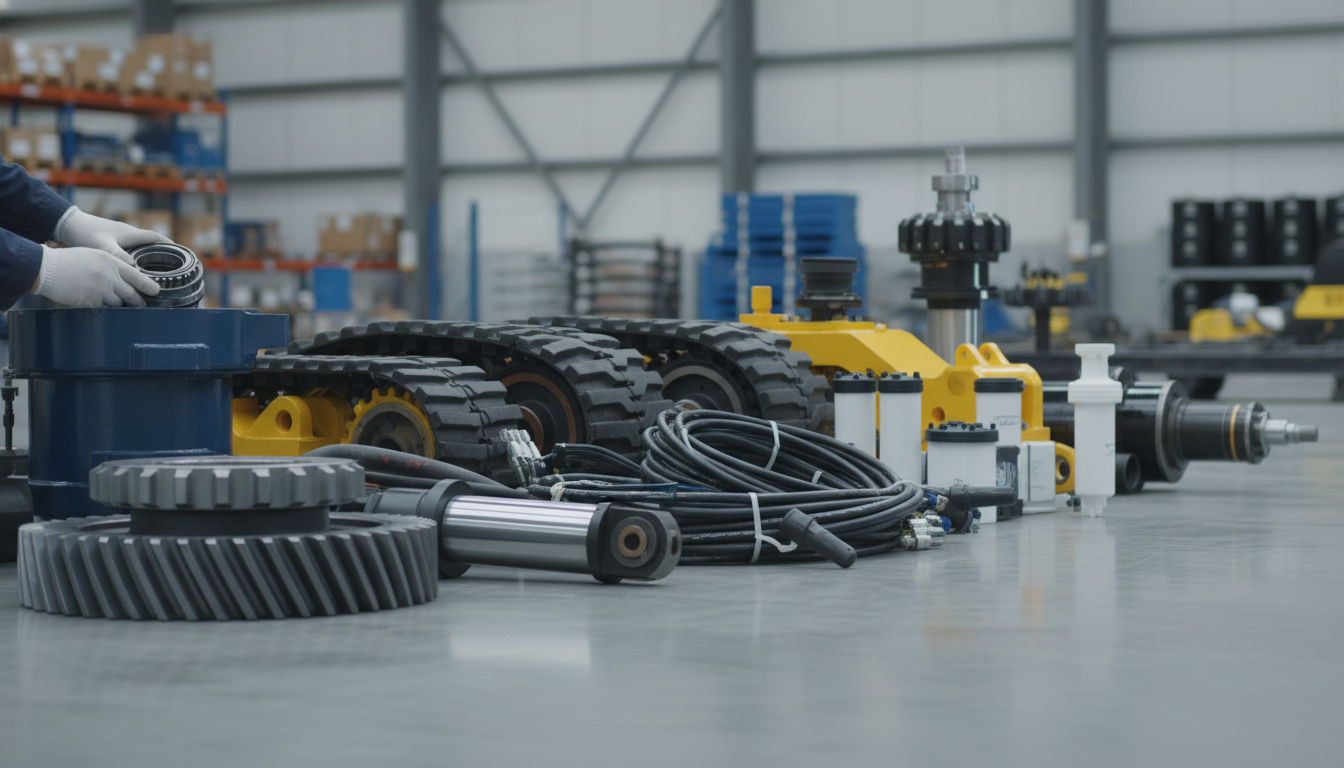
Underground Mining Equipment Parts: 2026 Buyer's Guide
Source underground mining equipment parts with confidence. Compare OEM vs aftermarket, pricing tiers, and global suppliers for faster delivery in 2026.
Loading article…
Article Not Found
The article you're looking for doesn't exist or may have been removed.
Back to BlogKey Takeaways
- Underground mining equipment parts must endure extreme conditions; material quality and OEM compliance directly impact safety and uptime.
- Choose among new, remanufactured, and aftermarket options based on budget, lead time, and warranty requirements.
- Verify supplier certifications (ISO 9001) and request full material specifications for every critical component.
- Global export specialists like 3GEN Export reduce costs and delivery times by consolidating shipments from multiple OEM and aftermarket sources.
- Preventive maintenance and correct part selection extend component life significantly, preventing catastrophic failures before they happen.
- As of 2026, procurement teams are increasingly sourcing from export-focused distributors to cut total landed cost on cross-border orders.
Underground mining equipment parts are the specialized components that keep subterranean operations running under high humidity, abrasive dust, and heavy shock loads. Sourcing the right parts ensures continuous production and worker safety across coal, hard rock, and tunneling operations worldwide.
What to Look For When Buying Underground Mining Equipment Parts
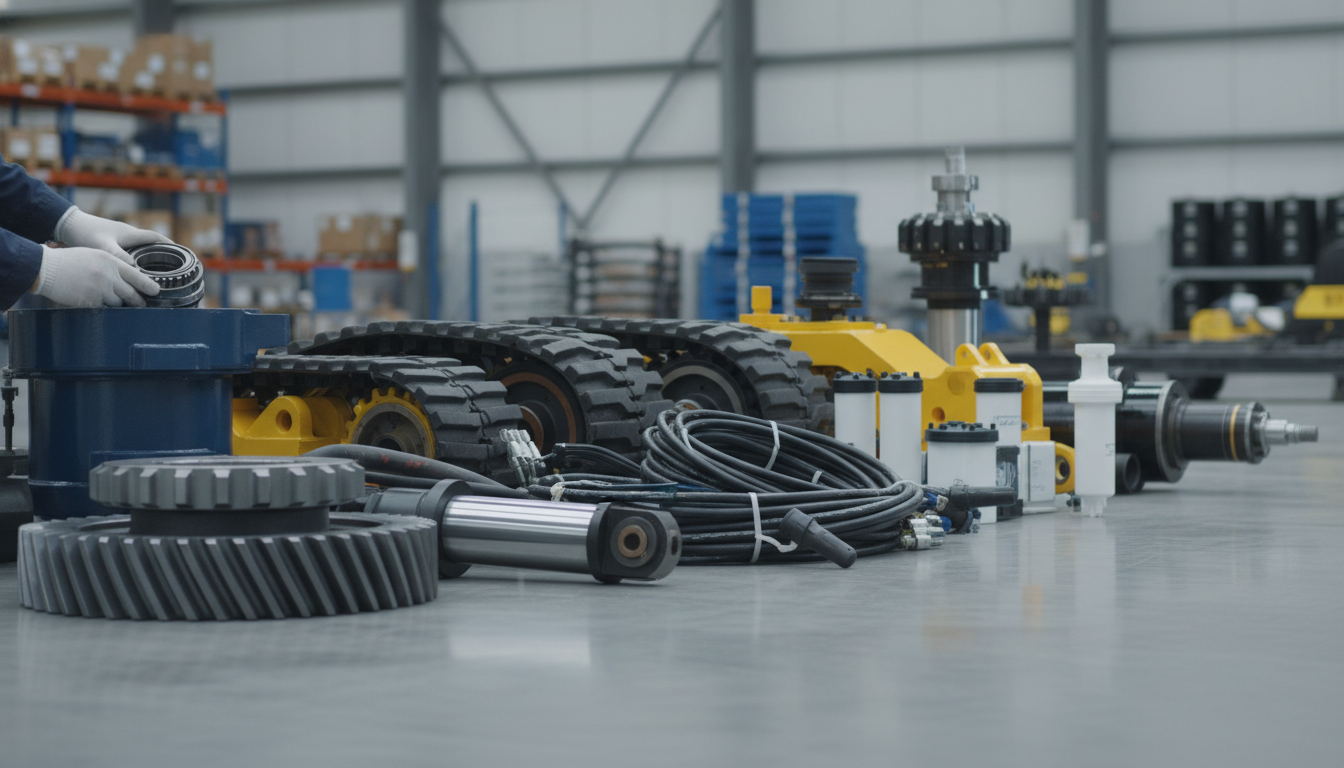
Procuring underground mining equipment parts demands a disciplined approach to avoid compatibility failures and premature wear. Use the following criteria to vet every purchase before committing budget.
Material and Build Quality
Parts must meet OEM metallurgical and dimensional standards. Look for suppliers who provide heat-treatment certificates, hardness testing data, and corrosion-resistant coatings. Hydraulic cylinders used in longwall shields, for example, typically require chrome-plated rods and heavy-duty seal kits rated for pressures above 350 bar. Brands like Caterpillar, Sandvik, and Epiroc specify exact material grades. Aftermarket providers should match these grades to ensure drop-in compatibility, as Specialist parts supplier demonstrates with its 130,000-plus catalogue positions designed for Metso, Sandvik, and FLSmidth equipment.
Compatibility and Fit
Every component must align precisely with existing machine assemblies. Always cross-reference part numbers from the OEM service manual against the supplier’s database before ordering. Leading distributors like J.H. Fletcher & Co. (ISO 9001 certified, manufacturing since 1937) and Brake Supply offer exact-match replacement parts, while reverse-engineering specialists can replicate discontinued components. Request dimensional drawings and installation documentation before committing to any purchase.
Supplier Reliability and Certifications
A supplier’s track record matters more than a low bid. Verify ISO 9001 quality-management certification, ask for client references from operations in similar geological settings, and confirm inventory depth. Northwest Mine Supply ships worldwide from its Wallace, Idaho warehouse, offering same-day dispatch on stocked items. Specialist parts supplier backs its aftermarket parts with engineering support and operates the largest combined gearing, cylinder, and engineered casting operations in Western Canada. For export buyers, a partner that consolidates orders from multiple factories, like 3GEN Export, can meaningfully reduce logistics costs while meeting tight delivery windows.
Warranty and After-Sales Support
Reputable vendors offer warranty periods that often match or exceed OEM terms. Brake Supply, for instance, provides extended warranties on re-engineered cylinders and valves, along with engineering support for installation troubleshooting. Ensure any warranty explicitly covers premature wear under rated loads, not just manufacturing defects.
Types of Underground Mining Equipment Parts
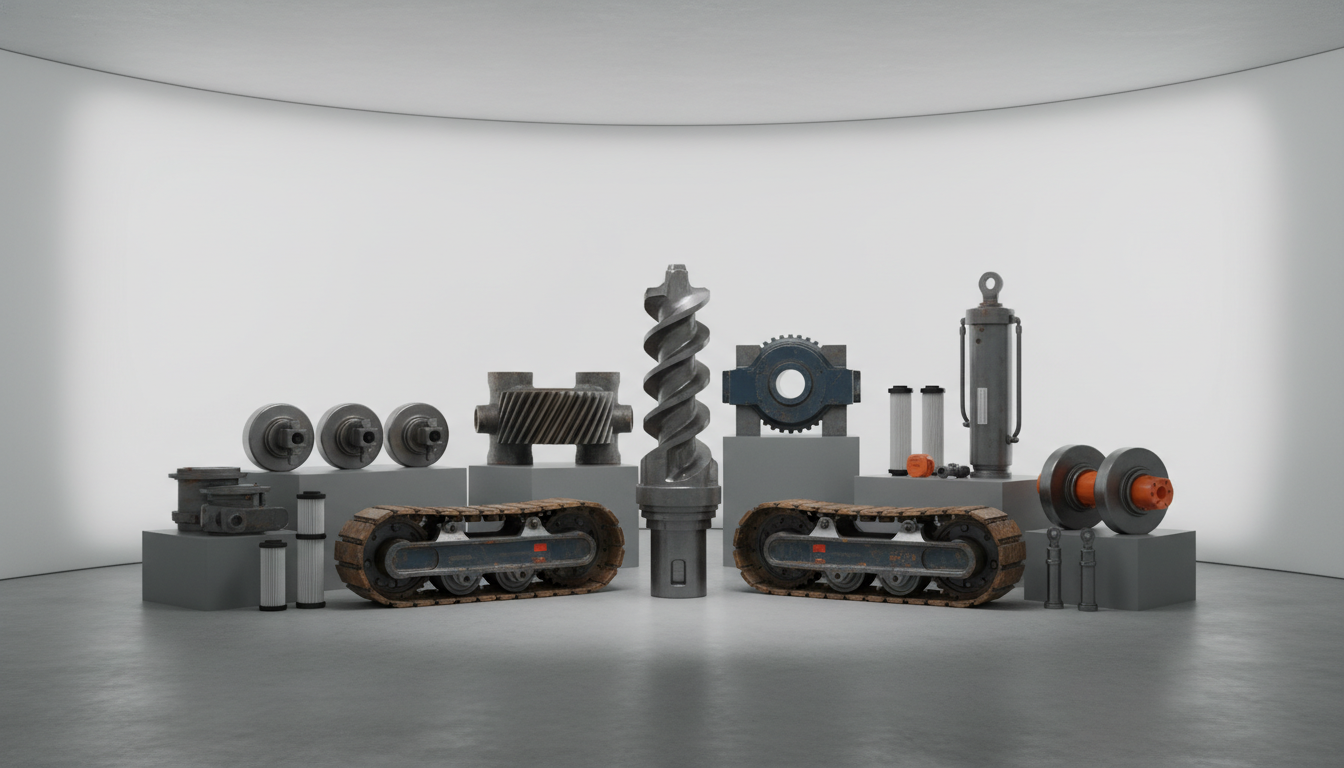
The range of underground mining equipment parts spans several distinct categories. The table below compares common types, typical OEM references, and price bands observed in regional distributor inventories as of 2026.
| Part Category | Common OEM Brands | Typical Price Range (USD) | Key Purchase Considerations |
|---|---|---|---|
| Hydraulic Cylinders | Caterpillar, Komatsu, Sandvik | $500 – $2,500 | Check rod chrome thickness, seal material, and pressure ratings |
| Drilling Tools & Bits | Epiroc, Sandvik, Boart Longyear | $80 – $800 | Match rock hardness; verify shank and thread specifications |
| Transmissions & Powertrain | Caterpillar, Dana, Allison | $2,000 – $30,000 | OEM reman or aftermarket; confirm duty cycle compatibility |
| Wear Parts (liners, teeth, plates) | Metso, ESCO, Hensley | $25 – $1,200 | Check Brinell hardness; verify interchangeability across older machine series |
| Valves & Solenoids | Parker, Rexroth, Sun Hydraulics | $60 – $900 | Verify voltage, flow rate, and ingress protection (IP67 minimum) |
| Electrical Components | specialist suppliers, Epiroc, Caterpillar | $50 – $3,000 | Confirm voltage class, ATEX/IECEx rating, and connector type for underground use |
Price Ranges and Budget Planning
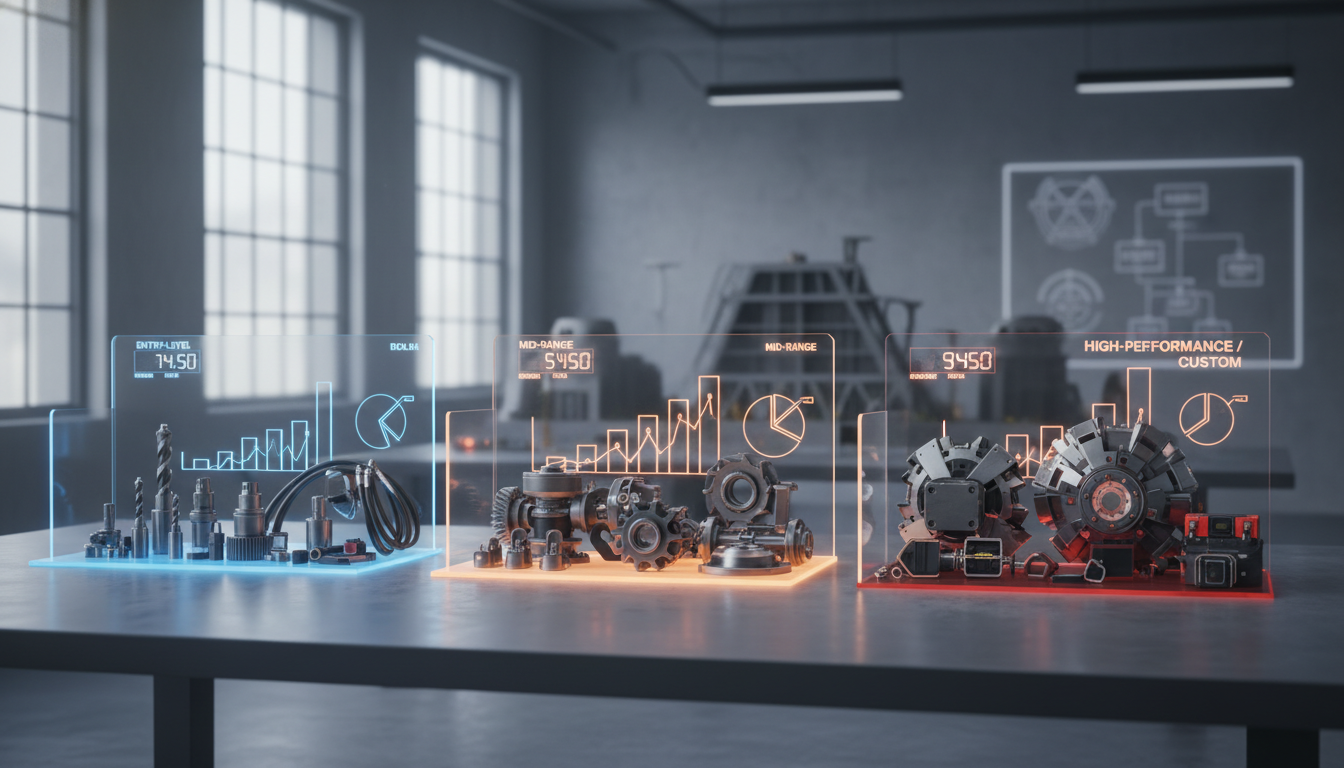
Managing costs without sacrificing quality is a central challenge when procuring spare components for underground operations. Use these tiers to build a realistic budget based on actual distributor pricing data.
Budget Tier: Under $100
Small wear items and fasteners typically fall in this bracket. a leading supplier's underground inventory, for example, lists wear plates as low as $36.80 and hydraulic filter elements at $90.00. These parts are ideal for everyday replenishment and preventive maintenance kits that keep machines running between major service intervals.
Mid-Range: $100 to $500
Many functional components sit in this range: sprockets, drill feed cylinders, and diaphragm valves. Carter’s stock includes sprockets at $146.67 and diaphragm components at $63.70. Aftermarket equivalents from certified manufacturers can reduce cost by 20-30% while delivering equal performance, provided you verify material specifications upfront.
Premium: $500 and Above
Major hydraulic cylinders, transmissions, and specialized OEM-only assemblies dominate this tier. A single swing cylinder was priced at $1,226.13 and a driven plate at $1,664.40 in a leading supplier's underground inventory. For investments at this level, insist on full engineering documentation, pressure-test certificates, and a core exchange or remanufacturing option to recover residual value.
Pros and Cons of OEM vs. Aftermarket Underground Mining Parts
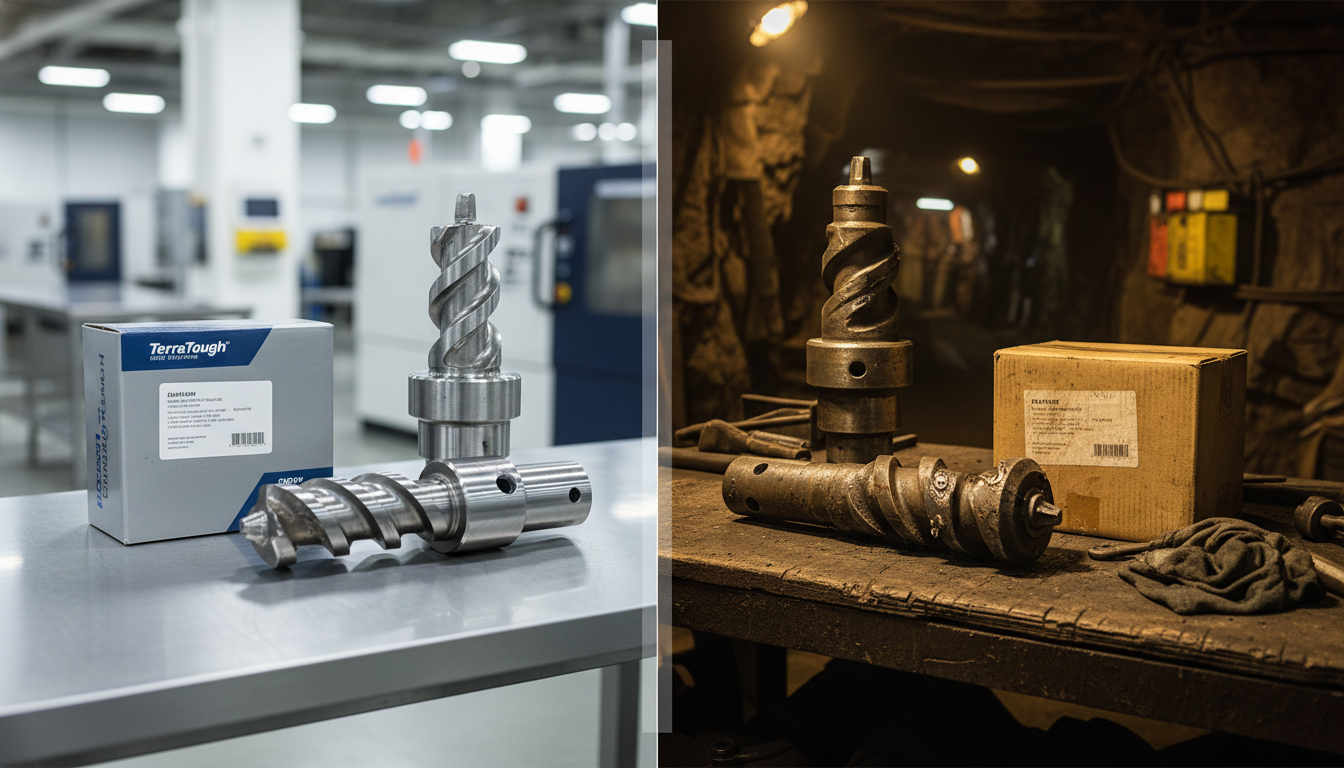
Choosing between OEM and aftermarket replacement parts is one of the most consequential decisions in underground procurement. Each path carries real trade-offs that affect cost, lead time, and operational risk.
Pros
- OEM parts guarantee exact factory specifications, eliminating compatibility risk on safety-critical systems like brake assemblies and roof support hydraulics.
- Aftermarket parts from certified manufacturers can reduce unit cost by 20-50% compared to new OEM pricing, freeing budget for higher-volume replenishment.
- Remanufactured components restore OEM-standard performance at 30-40% savings and often include engineering upgrades not present in the original design.
- A mixed sourcing strategy, OEM for safety-critical parts and certified aftermarket for wear items, optimizes both cost and compliance across the fleet.
Cons
- OEM parts carry premium pricing and can have lead times of 4-8 weeks for non-stocked items, creating unacceptable downtime risk on active faces.
- Low-quality aftermarket parts without proper material certification can fail prematurely, causing secondary damage that costs far more than the original saving.
- Remanufactured parts require thorough vetting: insist on full pressure-test documentation and ISO-certified shop credentials before approving for safety-critical applications.
- Managing multiple supplier relationships across OEM, reman, and aftermarket channels adds procurement complexity and requires robust part-number cross-referencing.
How to Source Reliable Underground Mining Equipment Parts Globally
Global procurement of replacement components for underground operations demands a strategic approach. A single day of unplanned downtime on a producing face can cost a mining operation hundreds of thousands of dollars in lost output, making supplier selection a direct financial decision, not just a purchasing task.
Why Use an Export Specialist?
Export-focused companies like 3GEN Export aggregate demand from multiple operations, negotiate volume discounts, and handle customs clearance, freight consolidation, and quality inspection in a single workflow. This model reduces total landed cost while ensuring that even remote operations receive OEM-standard parts quickly. According to equipment logistics industry data, consolidated air-freight shipments can cut door-to-door delivery time to under 72 hours for in-stock items, compared to 2-3 weeks for standard OEM direct orders.
“Procurement teams that consolidate their underground parts sourcing through a single export partner typically see meaningful reductions in total landed cost, not just unit price. Freight consolidation, customs pre-clearance, and volume leverage across multiple OEM lines are where the real savings accumulate.” – Senior Procurement Advisor, international mining supply chain consultancy
Supplier Vetting Checklist
- Verify ISO certification. J.H. Fletcher’s ISO 9001 status, maintained since 1937, demonstrates consistent process control across decades of production.
- Request a detailed inventory list. a leading supplier's 130,000-line catalogue is a useful benchmark for what a serious distributor should carry.
- Ask about regional service hubs. Northwest Mine Supply’s Wallace, Idaho facility illustrates the value of geographic proximity to active mining basins for same-day dispatch.
- Check warranty terms. Look for coverage that extends beyond 12 months and explicitly includes engineering support for installation issues.
- Obtain references from mines operating in similar geological conditions, whether hard rock, coal seam, or potash.
Electrical Components and Drill Jumbo Parts: A Growing Procurement Priority
Electrical components represent one of the fastest-growing categories within underground mining equipment parts procurement, driven by the shift toward battery-electric and semi-autonomous underground fleets. specialist suppliers specialize in spare parts for underground mining equipment, covering control systems, cable assemblies, and sensor packages for Epiroc and Sandvik machines. For drill jumbos specifically, key components include feed beams, rotation units, shank adapters, and percussion elements. Sandvik’s DL series drill jumbos, widely used in hard rock development headings, require shank adapters and drill steel matched to the specific rock class and hole diameter. Always specify the machine model and face conditions when ordering these components, as a mismatch of even a few millimeters in shank geometry can render a full drill string unusable.
“Electrical and control system components are now the longest lead-time items in underground procurement. Mines that pre-stock critical sensor assemblies and cable harnesses for their Epiroc and Sandvik fleets avoid the 6-10 week OEM lead times that shut down development headings.” – Lead Engineer, global mining equipment distributor
Maintenance Tips to Extend Part Life
A disciplined maintenance routine is the most cost-effective investment a mine can make in its equipment. According to manufacturer service bulletins from Caterpillar and Komatsu, correct lubrication with OEM-specified fluids and scheduled inspection intervals can significantly extend the service life of components in high-abrasion applications like continuous miners and roof bolters.
Follow this proactive maintenance sequence:
- Step 1: Daily visual checks. Inspect for leaks, cracks, and unusual wear on pins, bushings, and hoses before every shift. Catching a weeping hydraulic fitting early costs a $15 O-ring. Ignoring it costs a $2,500 cylinder.
- Step 2: Lubricate per manufacturer schedules. Use greases specified for high-load, wet underground environments. Automatic lubrication systems reduce human error and ensure consistent coverage on hard-to-reach pivot points.
- Step 3: Monitor hydraulic oil cleanliness. Contaminated fluid is the leading cause of valve and cylinder failure in underground equipment. Maintain ISO 4406 cleanliness codes at 18/16/13 or better, and sample oil at every 250-hour service interval.
- Step 4: Replace worn parts proactively. Establish documented wear tolerances, such as bushing clearance limits, and swap components during scheduled maintenance windows. Planned replacement during a 4-hour maintenance shift prevents a 3-day unplanned breakdown.
Ready to reduce downtime and simplify your supply chain? Shop OEM-quality spare parts with global 5-day delivery at 3genexport.com. Our team sources from 40-plus OEM and certified aftermarket manufacturers to get the right part to your operation, wherever it operates.
Frequently Asked Questions
What is the difference between OEM and aftermarket underground mining equipment parts?
OEM parts are manufactured by the original equipment maker, such as Caterpillar or Komatsu, and carry exact factory specifications. Aftermarket parts are produced by third-party manufacturers and can match or exceed OEM quality, often at 20-50% lower cost. Remanufactured parts are restored OEM components that offer a middle path with warranty protection and, in many cases, engineering upgrades over the original design.
How can I be sure an aftermarket part will fit my machine?
Always provide the supplier with your machine’s model, serial number, and the OEM part number if available. Reputable distributors cross-reference against engineering databases and provide dimensional drawings on request. Companies like Specialist parts supplier specialize in reverse-engineering components to guarantee fit on legacy and current-production machines.
Can I get parts for older or discontinued underground mining equipment?
Yes. Many suppliers, including Brake Supply, remanufacture or replicate components for legacy machines. Provide the original part number or a sample piece, and experienced suppliers can produce functional equivalents with modern material upgrades that often outperform the original specification.
What are typical lead times for underground mining equipment parts?
Stocked items ship within 24-48 hours from regional warehouses. Custom-manufactured or remanufactured parts typically require 2-4 weeks. Global export hubs with pre-consolidated inventory, like 3GEN Export, can deliver to remote sites in under 5 days via air freight for in-stock components.
How do I evaluate a supplier’s quality without visiting their facility?
Check for ISO 9001 certification, request third-party inspection reports, and ask for a sample part to verify metallurgy against OEM specifications. Years of documented operation, such as J.H. Fletcher’s continuous manufacturing since 1937, are strong indicators of process maturity. Also confirm that the supplier carries product liability insurance and can provide pressure-test certificates for hydraulic components.
Is it worth buying remanufactured parts for safety-critical systems?
Remanufactured parts from certified shops undergo testing equivalent to new components and often include engineering upgrades. For brake systems, steering cylinders, and roof support hydraulics, reman parts can deliver OEM-level reliability at 30-40% savings, provided they come with full pressure-test documentation and are sourced from an ISO-certified remanufacturing facility.