
Key Takeaways
- Used construction equipment parts can reduce procurement costs by 40-60% compared to new OEM components
- Quality assessment requires checking part numbers, wear patterns, and compatibility with your specific machine model
- Major brands like Caterpillar, Komatsu, and Volvo maintain strict part numbering systems that ensure cross-compatibility
- Global sourcing expands your options but requires understanding shipping regulations and lead times
- Proper documentation and warranty terms protect your investment in used components
Understanding the Used Construction Equipment Parts Market
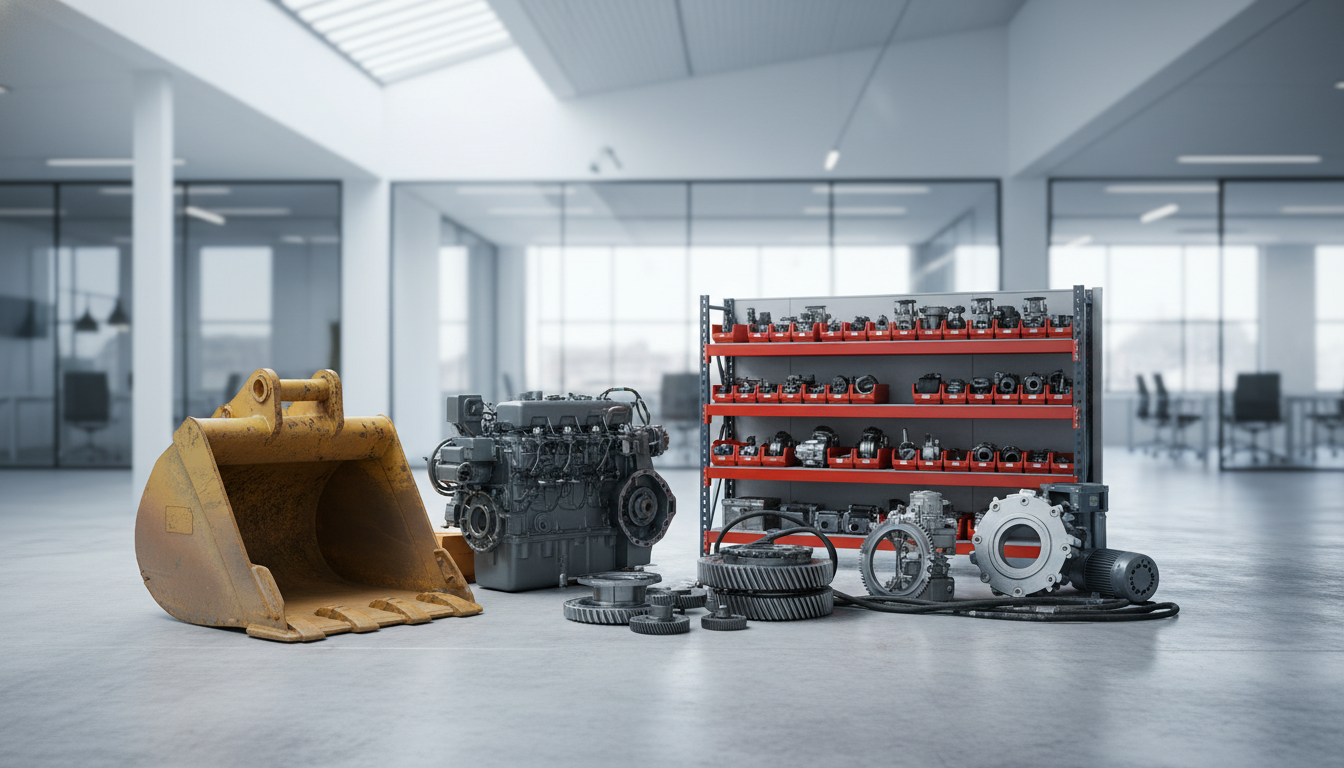
Used construction equipment parts represent a $12 billion global market that continues growing as operators seek cost-effective alternatives to new OEM components. The market spans everything from hydraulic cylinders and final drives to engine blocks and transmission assemblies, with quality ranging from salvage-grade components to professionally refurbished units that meet OEM specifications.
Market Dynamics and Pricing Trends
Pricing for used construction equipment parts typically runs 40-60% below new OEM costs, though this varies significantly by component type and condition. High-wear items like undercarriage components and hydraulic seals show smaller discounts due to frequent replacement cycles, while major assemblies like engines and transmissions offer the greatest savings potential. As of 2026, supply chain disruptions have actually increased demand for quality used parts as operators face longer lead times for new components.
Quality Classifications in the Used Parts Market
The used parts industry operates on several quality tiers. Salvage parts come directly from dismantled machines with minimal testing or refurbishment. Inspected used parts undergo basic functionality checks and cleaning. Rebuilt or remanufactured components receive complete overhauls with new wear items and often carry warranties comparable to new parts. Understanding these classifications helps you match part quality to your specific application requirements.
Regional Market Variations
North American and European markets emphasize documentation and traceability, while Asian markets often focus on competitive pricing. This creates opportunities for global sourcing, but also requires understanding different quality standards and business practices. We’ve found that European suppliers typically provide the most detailed component histories, while North American suppliers excel at rapid delivery and customer service.
Evaluating Part Quality and Compatibility

Quality assessment starts with the part number verification process, which ensures you’re getting components that will actually fit and function in your specific machine. Every major manufacturer uses standardized part numbering systems that encode critical compatibility information, making this your first line of defense against costly mistakes.
Part Number Verification Process
Caterpillar uses an 8-digit system where the first three digits indicate the part family, while Komatsu employs alphanumeric codes that specify both the component type and machine compatibility. Always cross-reference the complete part number against your machine’s service manual rather than relying on generic descriptions. We’ve seen operators purchase the wrong hydraulic pump because they matched only the first six digits of a Komatsu part number, missing the critical suffix that indicated a different displacement rating.
Physical Inspection Criteria
Visual inspection reveals critical information about a used part’s remaining service life. Look for uniform wear patterns on moving components, which indicate proper operation and maintenance. Irregular wear, scoring, or discoloration often signals underlying problems that could lead to premature failure. For hydraulic components, check for external leakage, corrosion around fittings, and any signs of contamination in fluid passages.
Documentation and Service History
Quality used parts suppliers maintain detailed records including removal date, operating hours, and reason for replacement. This documentation helps predict remaining service life and identify potential compatibility issues. Parts removed during routine overhauls typically offer better reliability than those replaced due to failures. Always request service records when available, as they provide valuable insights into the component’s operational history.
Cost Analysis: New vs Used vs Rebuilt Options

The financial decision between new, used, and rebuilt parts extends beyond simple purchase price to include installation costs, expected service life, and downtime risks. A complete cost analysis considers total cost of ownership rather than just upfront expenses.
Purchase Price Comparisons
New OEM parts command premium pricing but offer maximum reliability and full warranty coverage. Used parts typically cost 40-60% less but carry higher failure risks and limited warranties. Rebuilt components split the difference, offering 20-40% savings with warranties approaching new part coverage. For a Caterpillar 320 excavator hydraulic pump, expect to pay roughly $8,000 new, $3,500 used, or $5,500 rebuilt from reputable suppliers.
Hidden Costs and Risk Factors
Used parts may require additional inspection time, specialized tools for installation, or complementary components to ensure proper operation. Factor in potential downtime if the used part fails prematurely, especially for critical components like engines or final drives. We recommend calculating the cost of one day’s downtime for your operation and comparing it to the savings from buying used versus new parts.
ROI Calculations for Different Applications
High-utilization machines in critical applications often justify new parts due to downtime costs, while seasonal or backup equipment can effectively use quality used components. For rental fleets, used parts make sense for older machines where repair costs must stay below replacement thresholds. Construction projects with tight deadlines may require new parts to minimize failure risks, while maintenance operations can often accommodate the longer lead times associated with sourcing quality used components.
Major Brand Compatibility and Part Interchangeability

Understanding brand-specific compatibility rules and cross-reference opportunities can significantly expand your sourcing options while ensuring proper fit and function. Major manufacturers like Caterpillar, Komatsu, and Volvo maintain strict compatibility standards, but opportunities exist for cross-brand applications in certain component categories.
OEM Part Numbering Systems
Each manufacturer employs unique part numbering conventions that encode critical compatibility information. Caterpillar’s system includes family codes, while Komatsu uses model-specific prefixes that immediately identify compatible machines. Volvo parts often include revision codes that indicate engineering updates or improvements. Learning to decode these systems helps you identify compatible alternatives and avoid costly mistakes.
Cross-Brand Compatibility Opportunities
Certain component categories offer cross-brand compatibility, particularly in hydraulic fittings, electrical components, and some engine parts. Standard SAE hydraulic fittings work across brands, while many electrical components use industry-standard connectors. However, never assume compatibility without verification, as even identical-appearing parts may have different specifications or performance characteristics.
Aftermarket vs OEM Considerations
Quality aftermarket manufacturers often produce components that fit multiple brands, expanding your sourcing options. Companies like Parker Hannifin manufacture hydraulic components for multiple OEMs, meaning their aftermarket parts may offer broader compatibility than brand-specific options. However, verify that aftermarket parts meet or exceed OEM specifications, particularly for critical applications where failure could cause secondary damage.
Global Sourcing Strategies and Logistics
International sourcing opens access to broader inventory and competitive pricing, but requires understanding shipping regulations, customs procedures, and quality standards across different markets. Successful global procurement balances cost savings against delivery times and regulatory compliance requirements.
Regional Market Characteristics
European suppliers typically offer excellent documentation and traceability but may have higher prices due to strict quality standards. Asian markets provide competitive pricing and large inventories, particularly for common components like filters and wear parts. North American suppliers excel at customer service and rapid delivery but may have limited selection for older or specialized equipment.
Shipping and Customs Considerations
Heavy equipment parts often require specialized shipping due to size and weight constraints. Ocean freight offers cost advantages for large shipments but extends delivery times to 2-4 weeks. Air freight provides faster delivery but can double shipping costs for heavy components. Understanding customs classifications and duties helps predict total landed costs and avoid delays at borders.
Quality Assurance Across Borders
International suppliers may operate under different quality standards and business practices. Establish clear specifications and inspection criteria before placing orders, and consider using third-party inspection services for high-value components. We recommend starting with smaller orders to evaluate supplier reliability before committing to major purchases.
Installation and Warranty Considerations
Proper installation procedures and warranty terms significantly impact the success of used part purchases. Understanding these factors upfront prevents costly mistakes and ensures you receive appropriate protection for your investment.
Installation Requirements and Procedures
Used parts may require different installation procedures than new components, particularly if they show wear or have been modified. Always consult service manuals for proper torque specifications, seal replacement requirements, and break-in procedures. Some used hydraulic components benefit from system flushing to remove contaminants that could cause premature failure.
Warranty Terms and Coverage
Warranty coverage varies dramatically across suppliers and part conditions. Salvage parts typically carry no warranty, while rebuilt components may include 6-12 month coverage. Understand exactly what’s covered and what conditions void the warranty. Some suppliers offer extended warranties for additional cost, which may be worthwhile for critical components.
Return Policies and Exchanges
Establish clear return policies before purchasing, particularly for compatibility issues or parts that don’t meet specifications. Quality suppliers typically accept returns within 30 days for unused parts, though shipping costs may apply. For international purchases, understand return shipping procedures and any restocking fees that may apply.
Expert Insight: “After 15 years in heavy equipment procurement, I’ve learned that the cheapest used part isn’t always the best value. Focus on suppliers who provide detailed part histories, stand behind their products with meaningful warranties, and have established return policies. The extra cost upfront often saves money in the long run.” – Senior Procurement Manager, Global Mining Operation
Common Pitfalls and How to Avoid Them
Even experienced buyers make mistakes when purchasing used construction equipment parts, often due to incomplete information or pressure to minimize downtime. Learning from common pitfalls helps you develop better procurement practices and avoid costly errors.
Compatibility Mistakes
The most expensive mistakes involve purchasing parts that don’t fit or function properly in your specific application. This often happens when buyers focus on generic descriptions rather than exact part numbers, or assume that similar-looking parts are interchangeable. Always verify complete part numbers and consult with technical experts when in doubt about compatibility.
Quality Assessment Errors
Buyers sometimes focus too heavily on cosmetic appearance while missing critical wear indicators or damage. A freshly painted hydraulic cylinder may hide internal wear or seal damage that leads to early failure. Conversely, a component with surface corrosion may be perfectly functional if the critical wear surfaces remain within specifications.
Supplier Selection Issues
Choosing suppliers based solely on price often leads to problems with part quality, delivery times, or customer service. Evaluate suppliers based on their reputation, warranty terms, return policies, and technical support capabilities. A slightly higher price from a reliable supplier usually provides better value than the cheapest option from an unknown source.
Future Trends in Used Parts Market
The used construction equipment parts market continues evolving as technology advances and sustainability concerns grow. Understanding emerging trends helps you make better long-term procurement decisions and identify new opportunities for cost savings.
Digital Marketplaces and AI-Powered Matching
Online platforms increasingly use artificial intelligence to match buyers with compatible parts, reducing search time and compatibility errors. These systems analyze part specifications, machine compatibility, and user requirements to suggest optimal matches. As of 2026, several platforms offer automated compatibility checking that significantly reduces the risk of ordering incorrect parts.
Sustainability and Circular Economy Initiatives
Environmental regulations and corporate sustainability goals drive increased demand for used and rebuilt parts as alternatives to new manufacturing. Many companies now track the environmental impact of their procurement decisions, making used parts more attractive from both cost and sustainability perspectives. This trend supports higher prices for quality used components and encourages better refurbishment practices.
Technology Integration and Telematics
Modern equipment telematics systems provide detailed component usage data that helps predict remaining service life and optimal replacement timing. This information makes used parts more attractive by providing better visibility into their operational history and expected performance. Suppliers increasingly use this data to grade used parts more accurately and provide better warranties.
Frequently Asked Questions
How can I verify that a used construction equipment part will fit my specific machine?
Always start with the complete part number from your machine’s service manual or parts catalog. Cross-reference this exact number with the supplier’s listing, including any suffix codes or revision numbers. When in doubt, provide your machine’s serial number to the supplier for verification, as manufacturers sometimes make mid-year changes that affect part compatibility.
What warranty should I expect when buying used construction equipment parts?
Warranty terms vary significantly by part condition and supplier. Salvage parts typically carry no warranty, inspected used parts may include 30-90 days coverage, and rebuilt components often provide 6-12 months protection. Quality suppliers clearly state their warranty terms and what conditions void coverage, such as improper installation or use in incompatible applications.
Are aftermarket parts a good alternative to OEM used parts?
Quality aftermarket parts can offer excellent value, particularly for wear items like filters, seals, and bushings. However, verify that aftermarket components meet or exceed OEM specifications and carry appropriate certifications. For critical components like engines or hydraulic pumps, OEM or OEM-equivalent parts typically provide better reliability and resale value.
How do shipping costs affect the total cost of used parts from international suppliers?
Shipping costs can add 15-30% to the part price for international orders, depending on size, weight, and delivery speed requirements. Ocean freight offers the best rates for large or heavy components but extends delivery times to 2-4 weeks. Factor in customs duties, which typically range from 0-8% for construction equipment parts, when calculating total landed costs.
What documentation should I request when buying used construction equipment parts?
Request the complete part number, condition assessment, removal date and reason, operating hours if available, and any service history. Quality suppliers provide photos showing the actual part condition and may include inspection reports for rebuilt components. This documentation helps you assess the part’s remaining service life and provides valuable information for your maintenance records.
Ready to source quality used construction equipment parts with global delivery? Shop OEM-quality spare parts with global 5-day delivery at 3genexport.com