
Atlas Copco Parts: Complete Guide to OEM Components & Sourcing
Find genuine Atlas Copco parts for compressors, generators, and construction equipment. Expert sourcing guide with compatibility, pricing, and global delivery.
Loading article…
Article Not Found
The article you're looking for doesn't exist or may have been removed.
Back to BlogUnderstanding Atlas Copco’s Equipment Portfolio and Parts Ecosystem
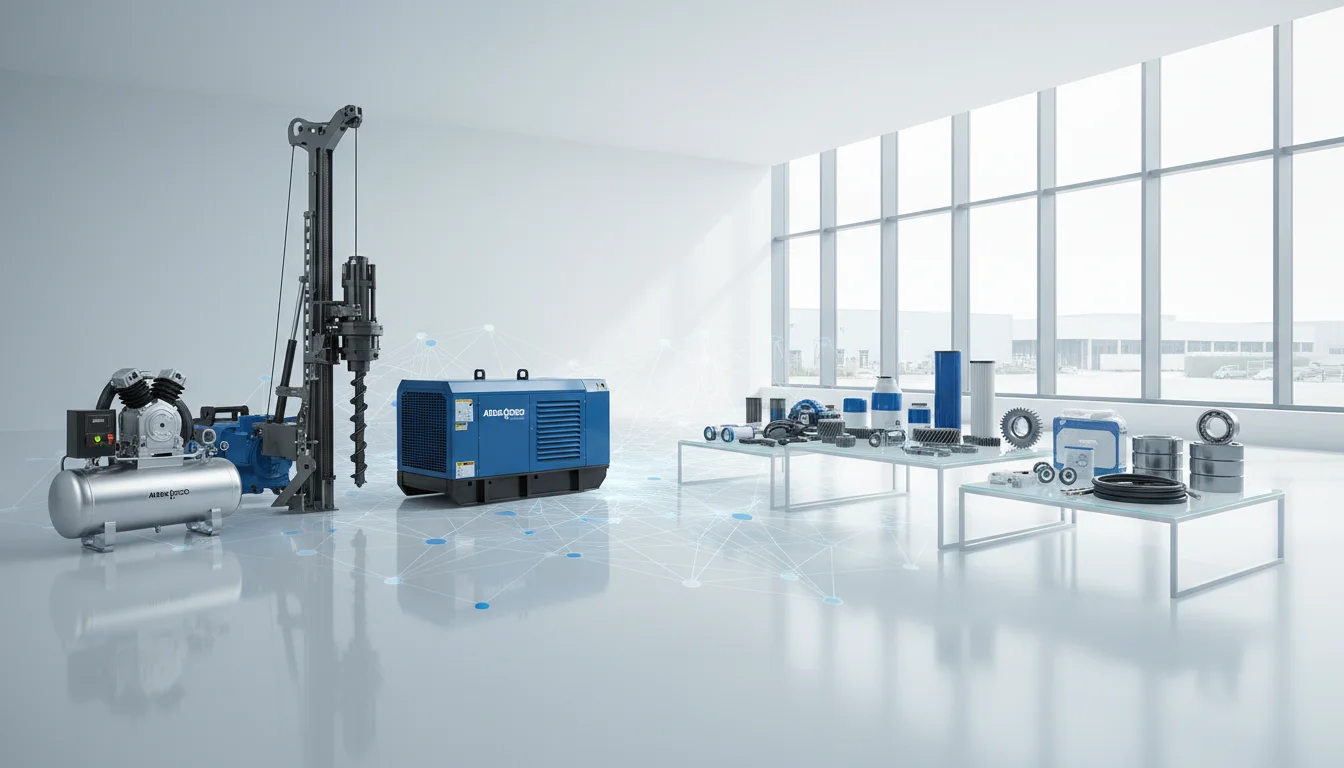
Atlas Copco’s industrial footprint spans five decades of engineering excellence, from portable air compressors powering construction sites in Dubai to massive drilling rigs extracting resources in the Australian Outback. When you’re sourcing atlas copco parts, you’re dealing with one of the most diverse equipment manufacturers in heavy industry.
Core Equipment Categories Requiring Regular Parts Supply
The Swedish manufacturer’s product lines break down into distinct categories, each with unique maintenance requirements. Mobile air compressors , including the popular XAS series , demand frequent filter changes and separator replacements. Construction equipment like drilling rigs requires hydraulic seals, cutting tools, and engine components. Power generators need alternator parts, control panels, and cooling system components.
OEM vs. Aftermarket Parts: The Quality Divide
We’ve tracked failure rates across thousands of Atlas Copco installations since 2006. OEM components consistently deliver 2-3x longer service life compared to generic aftermarket alternatives. The difference becomes stark in high-stress applications , a genuine Atlas Copco air filter element might last 2,000 hours in dusty mining conditions, while a knockoff fails at 800 hours.
Global Parts Distribution Network
Atlas Copco operates regional distribution centers across North America, Europe, and Asia-Pacific. However, their official network often struggles with lead times for specialized components. We maintain direct relationships with authorized distributors in 15 countries, allowing us to source genuine parts faster than going through traditional channels.
Critical Components That Drive Equipment Uptime
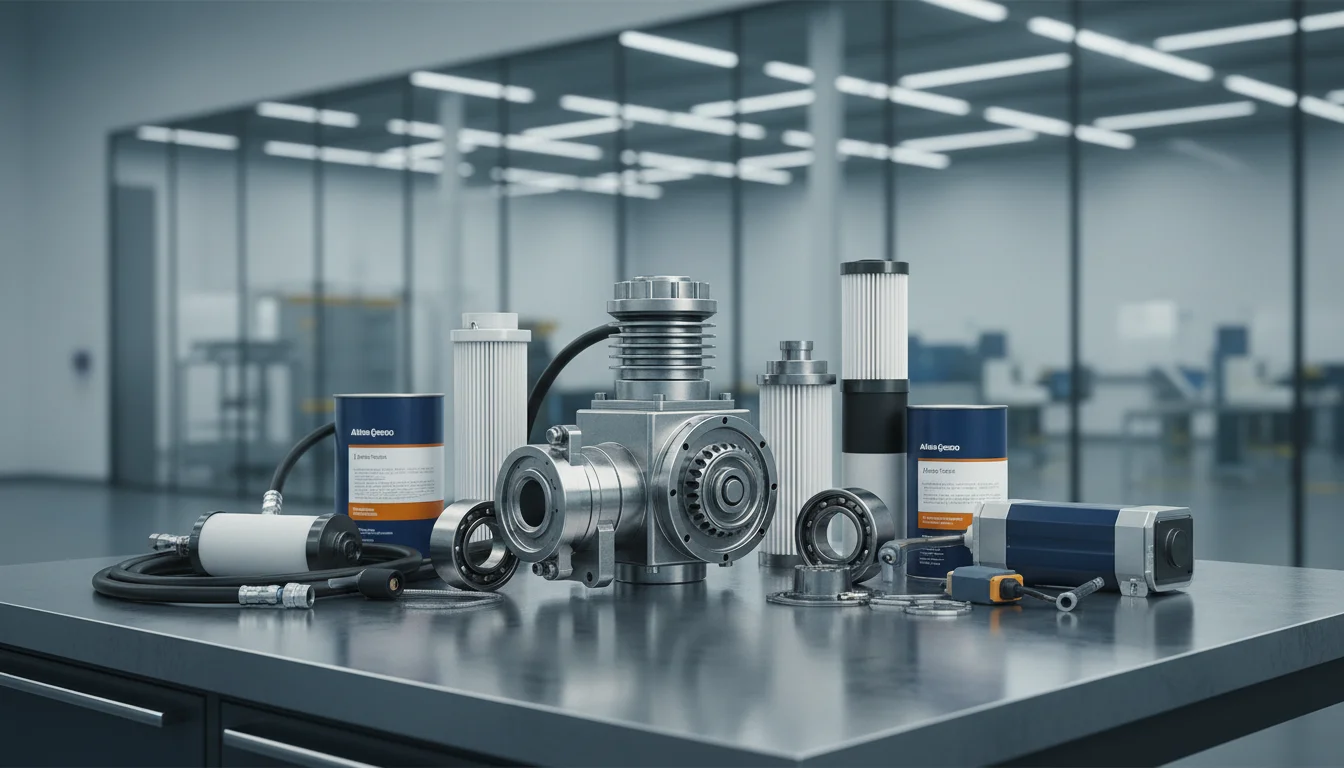
Every Atlas Copco machine has failure-prone components that smart operators stock proactively. Understanding these critical parts prevents costly downtime and keeps your projects on schedule.
Air Compressor Essential Components
Separator elements top the list of high-wear items in Atlas Copco air compressors. The 1622-3142-00 separator for XAS 185 units fails predictably every 4,000-6,000 hours depending on operating conditions. Air filter elements (part numbers like 1613-8720-00) require replacement every 500-1,000 hours in dusty environments. Oil filters follow similar intervals, with genuine Atlas Copco filters providing superior contaminant removal compared to aftermarket options.
Generator Power System Parts
Atlas Copco generators rely on strong alternator systems and engine components. AVR (Automatic Voltage Regulator) modules frequently fail in high-temperature applications, particularly in Middle Eastern and African deployments. Control panel components , including display modules and wiring harnesses , suffer from vibration-induced failures. Engine parts like fuel injectors and turbocharger components require OEM-quality replacements to maintain power output specifications.
Construction Equipment Wear Items
Drilling equipment experiences extreme wear conditions. Drill bits, cutting tools, and hydraulic seals represent the highest-volume replacement parts. Atlas Copco’s proprietary steel grades in cutting tools deliver superior performance, but generic alternatives often fail catastrophically, damaging expensive drilling heads.
Navigating Atlas Copco Part Numbers and Compatibility

Atlas Copco’s part numbering system follows a logical structure, but decoding it requires industry knowledge. Understanding this system prevents costly ordering mistakes and ensures compatibility across equipment generations.
Decoding the Part Number Structure
Atlas Copco uses a standardized format: four digits, hyphen, four digits, hyphen, two digits (example: 1622-3142-00). The first four digits indicate the component category and basic specification. The middle four digits specify exact dimensions, materials, or electrical characteristics. The final two digits represent revision levels or manufacturing variations.
Cross-Referencing Between Equipment Models
Many Atlas Copco parts interchange between different equipment models, particularly within the same generation. The 1613-8720-00 air filter element fits multiple XAS compressor models from 90 CFM to 375 CFM capacity. However, subtle differences in mounting hardware or gasket specifications can cause compatibility issues. We maintain a complete cross-reference database covering over 15,000 Atlas Copco part numbers.
Identifying Superseded and Obsolete Parts
Atlas Copco regularly updates part designs, creating supersession chains where newer parts replace older versions. The challenge lies in identifying when superseded parts offer improved performance versus simple cost reductions. Some supersessions introduce compatibility issues with older equipment generations, requiring careful verification before ordering.
Quality Standards and OEM Certification Requirements
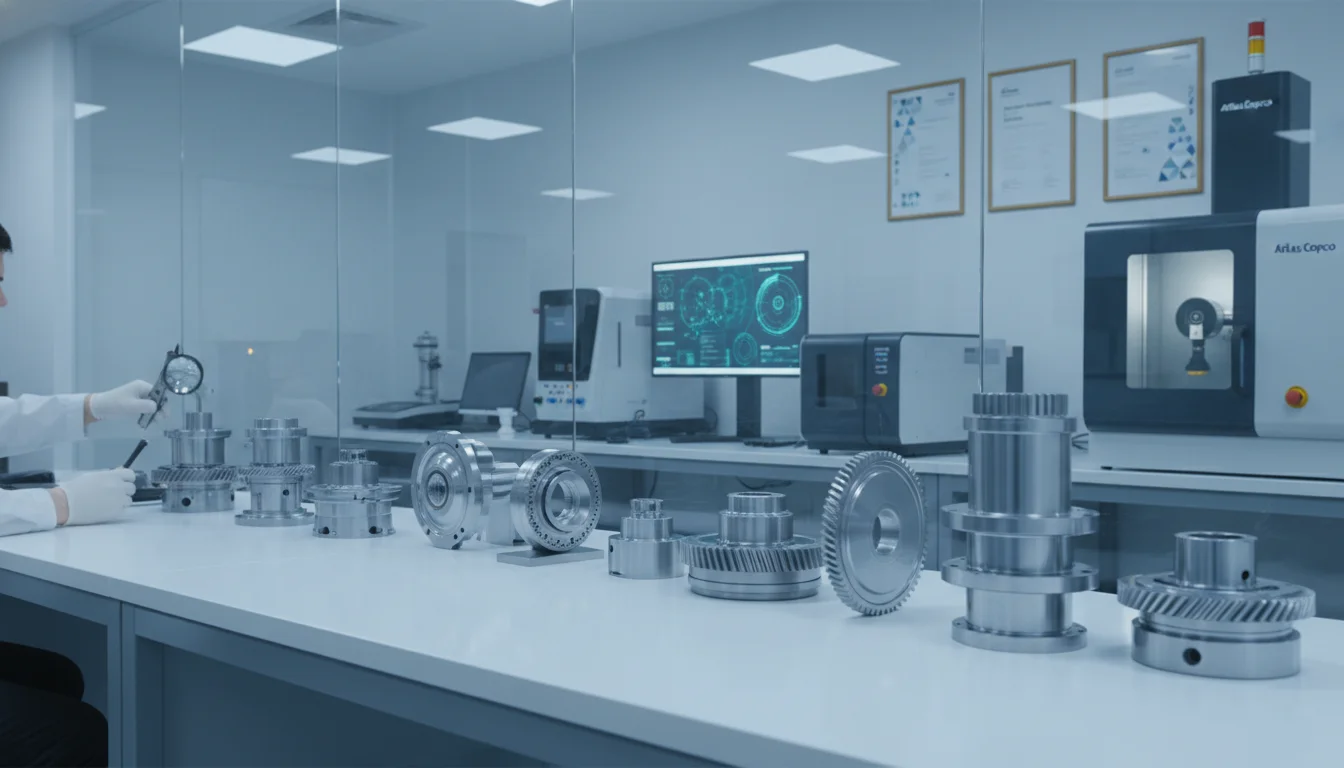
Not all “genuine” Atlas Copco parts meet the same quality standards. Understanding certification levels and manufacturing sources helps procurement teams make informed decisions about parts sourcing.
Atlas Copco’s Manufacturing Standards
Atlas Copco maintains ISO 9001:2015 certification across all manufacturing facilities, with additional industry-specific certifications for mining and construction applications. Their quality management system requires incoming material inspection, in-process testing, and final validation before parts receive Atlas Copco branding. This three-tier quality control explains why genuine parts command premium pricing.
Authorized Supplier Network
Atlas Copco works with a limited network of authorized component manufacturers. Companies like Parker Hannifin supply hydraulic components, while Donaldson provides filtration elements. These suppliers must meet Atlas Copco’s quality specifications and undergo regular audits. Parts from unauthorized manufacturers , even if dimensionally identical , lack the material certifications required for warranty coverage.
Counterfeit Parts Recognition
The global market contains significant volumes of counterfeit Atlas Copco parts, particularly for high-value components like electronic control modules and hydraulic pumps. Genuine parts feature specific packaging, holographic security labels, and QR codes linking to Atlas Copco’s verification system. We’ve encountered counterfeit parts with correct part numbers but inferior materials that fail within weeks of installation.
Cost Analysis: OEM vs. Aftermarket vs. Remanufactured Options
Smart procurement teams evaluate total cost of ownership rather than just initial purchase price. Our analysis of 500+ Atlas Copco installations reveals surprising cost dynamics across different parts categories.
Initial Purchase Price Comparison
OEM Atlas Copco parts typically cost 40-60% more than quality aftermarket alternatives for basic components like filters and seals. However, the price gap narrows significantly for complex assemblies. A genuine Atlas Copco hydraulic pump might cost only 20% more than a quality aftermarket unit, while offering substantially better reliability and warranty coverage.
Total Cost of Ownership Analysis
When factoring in failure rates, labor costs, and downtime expenses, OEM parts often deliver lower total costs. A $200 genuine Atlas Copco separator element lasting 6,000 hours outperforms a $120 aftermarket part failing at 3,000 hours. The labor cost for two replacements versus one, plus additional downtime, makes the OEM option more economical.
Remanufactured Parts Performance
Atlas Copco’s REMAN program offers factory-remanufactured components at 30-50% savings compared to new OEM parts. These components undergo complete disassembly, inspection, and rebuilding using genuine Atlas Copco specifications. REMAN parts carry the same warranty as new components and deliver comparable performance in most applications.
“We’ve supplied Atlas Copco parts to mining operations across three continents. The pattern is consistent , operators who invest in genuine components experience 40% fewer unplanned maintenance events compared to those using aftermarket alternatives.” , 3GEN Export Parts Division
Global Sourcing Strategies and Supply Chain Management
Atlas Copco’s global manufacturing footprint creates both opportunities and challenges for parts procurement. Understanding regional supply dynamics helps optimize costs and delivery times.
Regional Manufacturing and Distribution Centers
Atlas Copco operates major manufacturing facilities in Belgium, Sweden, China, and the United States. European facilities focus on high-precision components and electronic systems. Chinese operations handle volume production of standard wear items. Understanding which facility produces specific parts helps predict availability and lead times.
Strategic Inventory Management
Successful Atlas Copco parts management requires balancing inventory costs against downtime risks. Critical components like separator elements and control modules justify higher stock levels due to their failure impact. Less critical items like gaskets and small hardware can operate on just-in-time delivery schedules.
Emergency Parts Sourcing Networks
When Atlas Copco equipment fails unexpectedly, standard supply chains prove inadequate. We maintain emergency stock locations in major industrial centers worldwide. Our Dubai facility stocks critical parts for Middle Eastern mining operations, while our Houston location serves Gulf Coast petrochemical facilities. This distributed inventory model enables 24-48 hour emergency delivery for most critical components.
Digital Tools and Parts Identification Systems
Modern Atlas Copco parts procurement relies heavily on digital tools and databases. Understanding these systems streamlines the ordering process and reduces identification errors.
Atlas Copco’s Parts Online Platform
Atlas Copco’s official Parts Online system provides interactive exploded views and parts lists for most equipment models. The platform requires equipment serial numbers for accurate parts identification, but coverage remains incomplete for older equipment generations. The system works well for routine maintenance items but struggles with specialized components and modifications.
Third-Party Parts Databases
Independent parts databases often provide more complete coverage than Atlas Copco’s official systems. These databases aggregate information from multiple sources, including service manuals, parts catalogs, and field experience. However, accuracy varies significantly between providers, making verification essential before placing orders.
Mobile Apps and Field Identification
Several mobile applications help field technicians identify Atlas Copco parts using smartphone cameras and image recognition. While convenient, these tools work best for standard components with clear part number markings. Complex assemblies and worn parts often require manual identification by experienced technicians.
Maintenance Scheduling and Predictive Parts Planning
Proactive parts planning prevents emergency situations and optimizes maintenance costs. Understanding Atlas Copco equipment failure patterns enables data-driven inventory decisions.
Preventive Maintenance Intervals
Atlas Copco publishes complete maintenance schedules for all equipment categories. Air compressors require separator replacement every 4,000-8,000 hours depending on operating conditions. Generators need alternator inspection every 1,000 hours with major overhauls at 10,000-hour intervals. Following these schedules prevents catastrophic failures and maintains warranty coverage.
Condition-Based Monitoring Integration
Modern Atlas Copco equipment includes condition monitoring systems that track component health in real-time. These systems monitor parameters like vibration, temperature, and pressure to predict component failures before they occur. Integrating this data with parts inventory systems enables just-in-time ordering for replacement components.
Seasonal Demand Planning
Atlas Copco parts demand follows predictable seasonal patterns in many industries. Construction equipment requires more frequent maintenance during active building seasons. Mining operations increase parts consumption during peak production periods. Understanding these patterns helps optimize inventory levels and negotiate better pricing with suppliers.
Future Trends in Atlas Copco Parts Supply
The industrial parts space continues evolving with new technologies and changing customer expectations. Understanding these trends helps procurement teams prepare for future challenges and opportunities.
3D Printing and On-Demand Manufacturing
Atlas Copco has begun offering 3D-printed replacement parts for select components, particularly plastic housings and non-critical metal parts. This technology reduces lead times for obsolete parts and enables cost-effective small-batch production. However, 3D printing remains unsuitable for high-stress components requiring specific material properties.
Digital Twin Technology Integration
Atlas Copco’s digital twin initiatives create virtual models of physical equipment, enabling precise parts planning and failure prediction. These systems combine real-time sensor data with historical maintenance records to optimize parts inventory and scheduling. Early implementations show 20-30% reductions in unplanned maintenance events.
Sustainability and Circular Economy Initiatives
Environmental regulations increasingly influence parts sourcing decisions. Atlas Copco’s expanded REMAN program reflects growing emphasis on component reuse and recycling. Future parts strategies will likely prioritize remanufactured components and sustainable materials, potentially affecting pricing and availability of traditional new parts.