
B2B Heavy Machinery Parts Procurement: 2026 Guide
B2b heavy machinery parts procurement done right cuts downtime and costs. Explore OEM vs aftermarket strategy, supplier vetting, and sourcing hotspots for
Loading article…
Article Not Found
The article you're looking for doesn't exist or may have been removed.
Back to BlogB2b heavy machinery parts procurement is the structured process of sourcing, qualifying, and purchasing replacement components for excavators, bulldozers, loaders, and other heavy equipment. This guide covers OEM versus aftermarket decisions, supplier vetting, and digital tools that cut downtime.
Key Takeaways
- OEM parts guarantee exact fit but carry a premium, while quality aftermarket alternatives can cut costs 20-40% when sourced from tier-1 manufacturers.
- A structured 5-step procurement process, from spec development to receipt inspection, prevents costly mistakes and protects part compatibility.
- Digital procurement platforms and AI-assisted part matching are changing how B2B buyers source, compare, and order heavy machinery components globally.
- Regional supplier clusters in China, India, and Eastern Europe offer competitive pricing for commoditized parts but require rigorous vetting against ISO and ASTM standards.
- Total cost of ownership (TCO) analysis looks beyond purchase price to factor in warranty terms, failure risk, and machine downtime.
What Is B2B Heavy Machinery Parts Procurement?
parts procurement is the end-to-end process construction firms, mining operations, and industrial contractors use to acquire replacement components for heavy equipment. Unlike retail purchases, this is a complex, high-stakes activity involving bulk orders, strict technical specifications, and global supply chains. According to the Singapore Institute of Purchasing and Materials Management (SIPMM), an effective procurement cycle includes ten key stages, from requirement specification to invoice payment (SIPMM). The machinery and equipment market is projected to include over 240,000 enterprises by 2025, growing at a CAGR of 1.71% according to industry data, which signals just how large and competitive this sector has become (Specialist parts supplier).
"Procurement teams that treat spare parts sourcing as a strategic function, not an administrative task, consistently see fewer emergency breakdowns and better fleet uptime." - Industry maintenance data reviewed by the 3GEN Export Team
OEM vs Aftermarket Parts: A Strategic Comparison
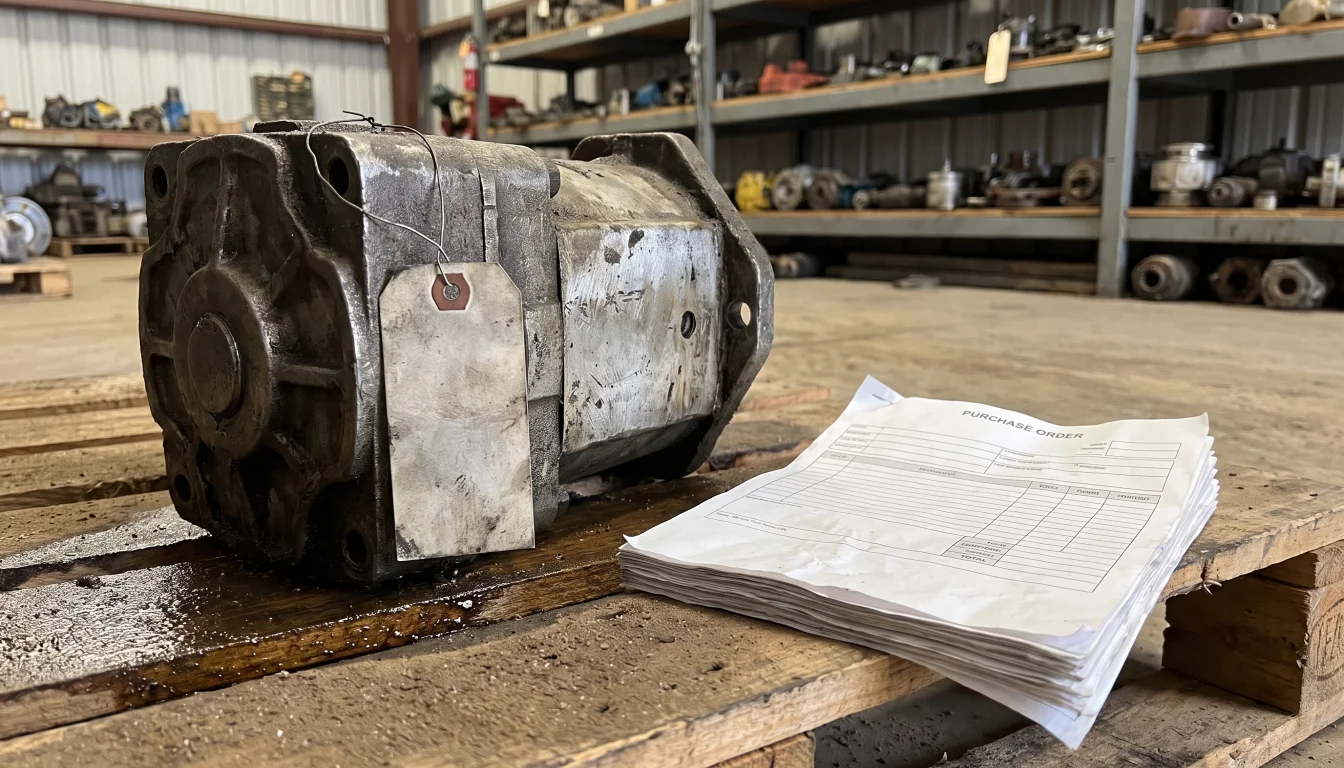
Choosing between OEM and aftermarket components is one of the most consequential decisions in this type of procurement. OEM parts are built by the brand that manufactured the machine, such as Caterpillar, Komatsu, or Sany, and are identical to the original assembly-line part. Aftermarket parts come from third-party manufacturers and vary widely in quality, ranging from premium tier-1 suppliers that meet comparable metallurgical standards to generic, off-brand replacements. As noted by Apex Machinery Parts, aftermarket options often carry a 20-40% lower upfront price, but the real measure of value comes from total cost of ownership (TCO), not sticker price alone.
When to Choose OEM
- Engine, electronics, and safety-critical systems: OEM parts guarantee sensor compatibility and avoid fault codes that trigger expensive diagnostics.
- Machines under warranty: Installing non-OEM components on critical systems can void the manufacturer's coverage.
- High-precision hydraulics: OEM pumps and valves are engineered for exact flow rates, reducing the risk of system imbalance.
When Aftermarket Parts Excel
- Undercarriage (tracks, rollers, idlers): Commoditized wear parts where high-quality aftermarket brands deliver strong cost-per-hour numbers.
- Ground engaging tools (GET): Bucket teeth, cutting edges, and adapters are consumables; aftermarket alternatives offer comparable lifespan at a fraction of the OEM price.
- General hydraulics and filtration: Reputable tier-1 manufacturers use casting foundries and metallurgy comparable to OEMs, certified to ISO 9001 and ASTM standards.
| Component Category | Recommended Source | Key Rationale |
|---|---|---|
| Engine & Electronics | OEM | High electronic complexity; sensor mismatch can trigger fault codes |
| Hydraulics (Pumps/Valves) | Tier-1 Aftermarket | Premium aftermarket pumps offer comparable flow rates at lower cost |
| Undercarriage (Tracks/Rollers) | Aftermarket | Commoditized; high-quality aftermarket wear parts provide lower cost-per-hour |
| Ground Engaging Tools | Aftermarket | High-wear parts; brand name adds little value in consumption rate |
| Transmission & Final Drives | OEM or Certified Rebuild | Tight tolerances demand exact specifications to avoid premature failure |
5-Step Procurement Process for Heavy Equipment Parts
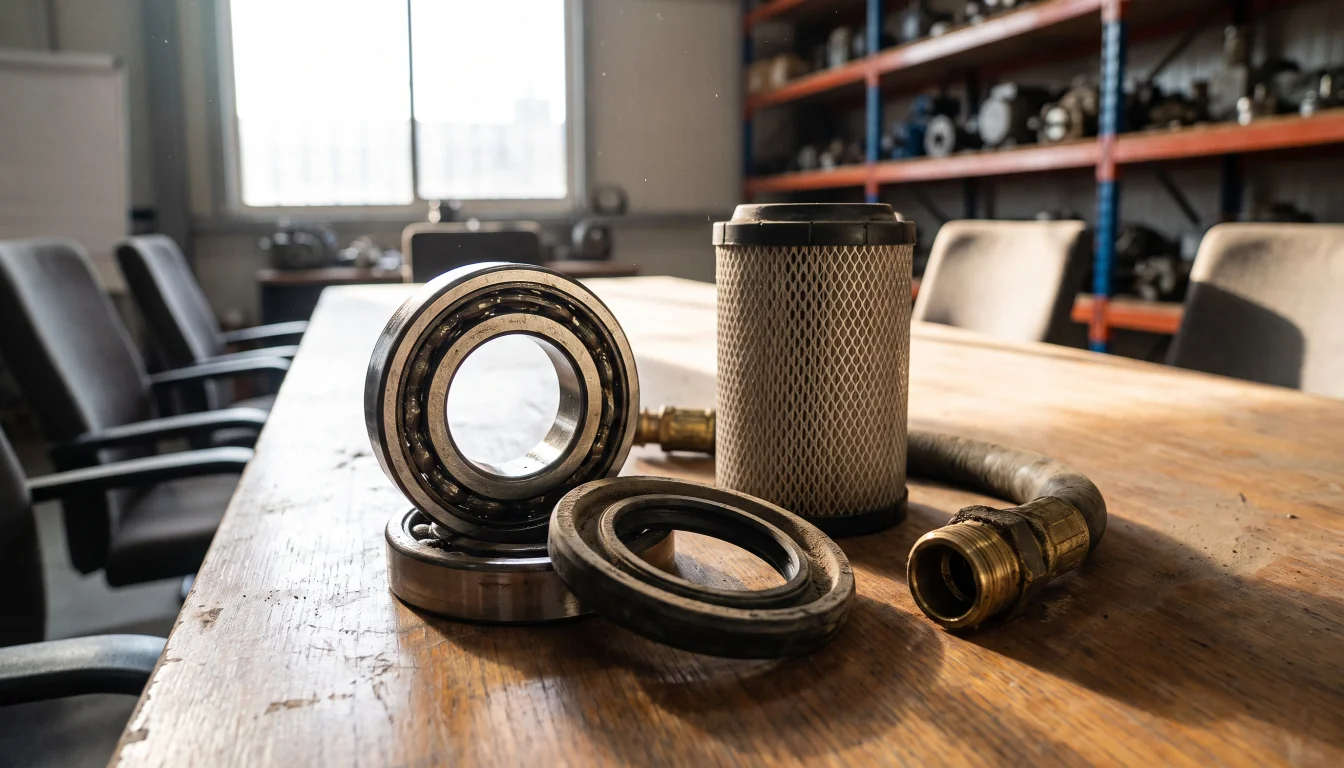
A disciplined 5-step methodology is the fastest way to streamline this kind of parts procurement while minimizing equipment downtime. Based on the SIPMM framework, here's a condensed approach built for busy fleet managers.
Step 1: Write a Precise Requirement Specification
A formal specification document should include the OEM part number, machine model and serial number, quantity needed, and any stock availability constraints. This becomes the foundation for every quote and ensures each supplier bids on exactly the same item.
Step 2: Source Suppliers Through Multiple Channels
Cast a wide net using three proven channels:
- Manufacturer portals: Official websites of Caterpillar, Komatsu, Volvo, and Sany list authorized regional distributors.
- Trade shows: Events like Bauma China and CONEXPO-CON/AGG allow in-person vetting of component quality and supplier capabilities.
- Digital marketplaces: aggregator platforms connect buyers with pre-vetted global suppliers and speed up RFQ management.
Step 3: Qualify and Shortlist Rigorously
Evaluate suppliers on more than price alone. Key criteria include ISO 9001 certification, referenceable clients in your industry, production capacity, and lead time consistency. Request material test reports and factory audit summaries for critical parts like undercarriage or hydraulic cylinders.
Step 4: Negotiate and Finalize Contracts
For high-volume orders, negotiate multi-year frame contracts with price escalation clauses tied to raw material indices, such as steel price. Clarify warranty terms up front: OEM warranties often cover secondary damage, while aftermarket warranties typically replace only the failed part. Well-drafted contracts should also address force majeure provisions and intellectual property protection for proprietary designs, particularly when working with overseas manufacturers.
Step 5: Inspect Receipt and Track Performance
Upon delivery, verify part numbers against the packing list and run a visual and dimensional check. For mission-critical components, perform a metallurgical analysis or fit-test before installation. Log failure rates and track cost-per-hour across different part categories to continuously refine your sourcing mix.
How Do You Evaluate Supplier Quality in B2B Heavy Machinery Parts Procurement?
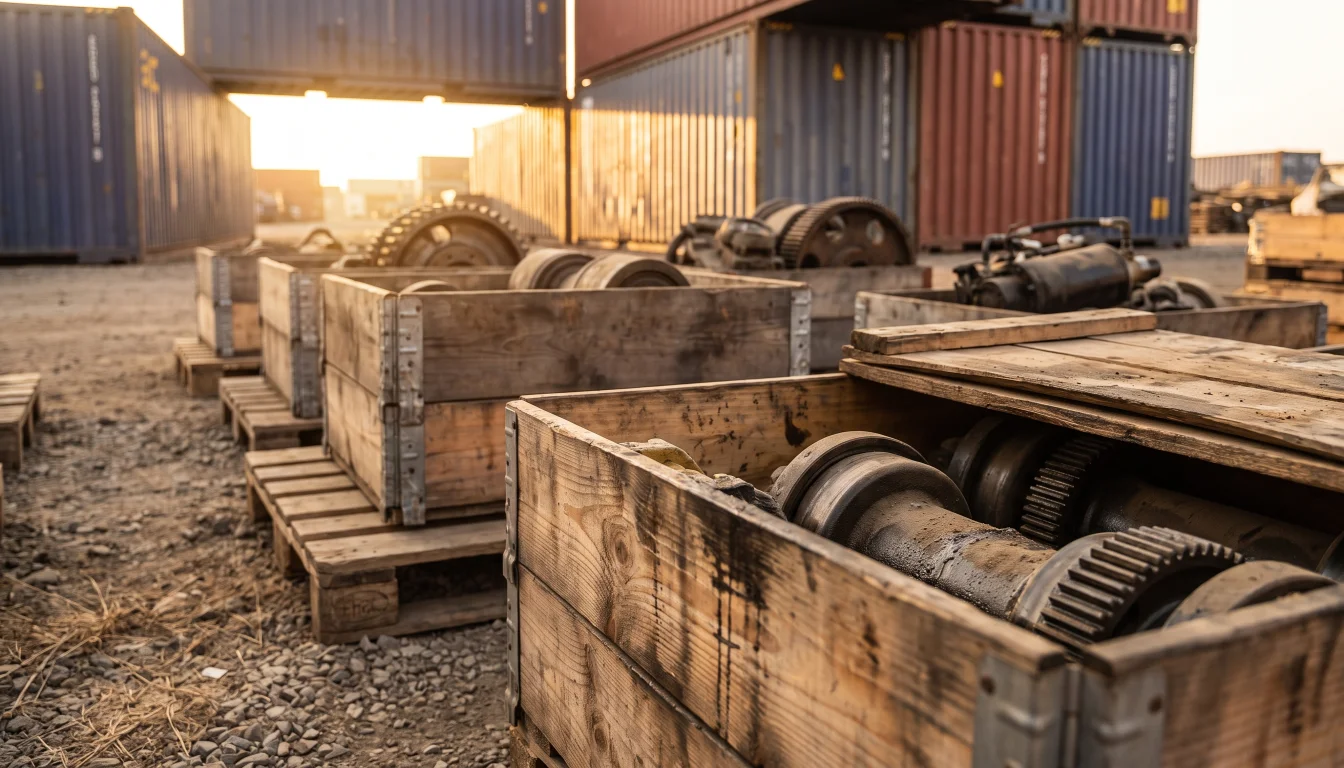
Supplier quality is evaluated through certifications, referenceable field performance, factory audits, and logistics reliability, and it can make or break your the heavy machinery parts procurement strategy. A failed undercarriage or hydraulic pump can idle a machine worth hundreds of thousands of dollars, costing thousands per day in lost productivity. Below are the non-negotiable evaluation pillars.
- Certifications: ISO 9001, ISO 14001, and ASTM compliance are baseline requirements. For hydraulic parts, look for SAE (Society of Automotive Engineers) ratings.
- Real-world references: Ask for case studies or contact details of mining or construction clients who deployed similar parts in harsh conditions, from copper mines in Chile to large infrastructure projects in Saudi Arabia.
- Production audits: For Chinese or Indian suppliers, a third-party factory audit (for example, SGS or Bureau Veritas) is essential to verify metallurgy, machining tolerances, and heat treatment processes.
- Logistics reliability: The best part is useless if it arrives late. Assess the supplier's delivery track record and whether they offer just-in-time (JIT) or vendor-managed inventory (VMI) programs. Also confirm which Incoterms (FOB, CIF, DDP) apply, since this determines who bears risk and cost during international transit.
Leveraging Digital Platforms for Smarter Procurement
Digital platforms improve procurement by replacing phone-and-email ordering with self-service portals that offer real-time inventory visibility and automated quoting. According to Corcentric, companies using integrated procurement platforms can manage over 800,000 vehicles and 2,000 customers through consolidated supplier programs (Corcentric). These systems remove manual friction through contract-based pricing and automated quote requests.
AI and Agentic Commerce
Advanced solutions now incorporate AI-assisted part matching, which can identify a compatible aftermarket replacement for an OEM out-of-stock part by cross-referencing technical specs, part numbers, and failure histories. In pilot programs, this capability has helped reduce procurement cycle time by up to 60%, according to platform data reviewed by industry analysts.
Marketplace Integration
aggregator platforms aggregate supplier catalogs and provide built-in RFQ tools, letting buyers compare offers from multiple vendors at once. Some portals also support trade financing and shipment tracking, creating a single point of contact for international procurement.
Global Sourcing Hotspots for Heavy Machinery Components
China, India, Eastern Europe, and Turkey are the leading global sourcing hotspots for heavy machinery components, each offering distinct pricing and specialization advantages. Understanding where to source specific parts can yield meaningful cost advantages within your b2b heavy strategy.
- China (Shandong, Zhejiang, Jiangsu): Home to thousands of aftermarket factories for undercarriage, hydraulic cylinders, and GET. Many OEMs, including Sany and XCMG, have major manufacturing bases here. Prices can run well below Western equivalents, but rigorous quality verification is mandatory.
- India (Maharashtra, Tamil Nadu): A growing hub for engine components, gaskets, and electrical parts. Indian suppliers often hold IP rights for legacy models of major brands.
- Eastern Europe (Poland, Czech Republic): Specializes in remanufactured components and precision machining for European brands like Liebherr and JCB. Remanufacturing programs here also support circular economy goals by extending part life cycles and reducing raw material waste.
- Turkey: A rising center for rubber tracks, seals, and hydraulic hoses, bridging European quality standards with competitive pricing.
Cost Management and Budgeting for B2B Heavy Machinery Parts Procurement
Effective cost management in parts procurement requires a disciplined budgeting approach covering both planned replacements and emergency breakdowns. The Corcentric fleet model shows that consolidating purchasing power across 165 key suppliers can unlock volume-based discounts of 8-12% (Corcentric). Here's how to structure your budget.
- Annual maintenance budget: Allocate 60-70% for scheduled part replacements based on equipment hours or mandatory OEM service intervals.
- Emergency reserve fund: Keep 20-25% for unexpected failures, especially for mobile equipment operating in remote sites where expedited shipping can add 30% to part cost.
- Innovation and testing pool: Reserve 5-10% to trial high-quality aftermarket alternatives in non-critical systems, with the goal of validating them for broader fleet rollout.
- Price tiers: For a mid-size fleet running 50-100 machines, annual parts spend typically ranges from $750,000 to $2.5 million, depending on asset age and utilization. Premium OEM-only strategies tend toward the higher end, while a balanced sourcing mix can keep costs 25-30% lower.
"The firms that treat spare parts like a supply chain asset, not an afterthought, are the ones that keep machines running through steel price shocks and shipping delays." - Procurement insight drawn from Corcentric fleet solutions data
Pros and Cons
Pros
- A structured approach to b2b heavy machinery parts procurement reduces unplanned downtime and extends machine service life.
- Diversifying between OEM and vetted tier-1 aftermarket sources can lower total parts spend by 20-40% without compromising reliability.
- Digital platforms and AI-assisted matching speed up sourcing and improve price transparency across global suppliers.
Cons
- Vetting unfamiliar overseas suppliers demands time, factory audits, and material testing, adding upfront administrative cost.
- Low-quality aftermarket parts can cause secondary damage that voids warranty coverage on connected components.
- Global sourcing introduces currency, tariff, and shipping variables that can erode projected cost savings if not managed with clear Incoterms.
Building a Resilient Procurement Strategy for 2026
As of 2026, resilient b2b heavy machinery parts procurement means diversifying supplier bases across regions while keeping a core group of certified, audited partners for critical systems. This year, more fleet operators are formalizing supplier scorecards that track on-time delivery, defect rates, and responsiveness during emergency orders. Pairing a primary OEM relationship with two or three vetted aftermarket suppliers per component category gives your team pricing leverage without sacrificing quality control.
Mastering b2b heavy machinery parts procurement is no longer a back-office function. It is a strategic lever that directly affects fleet uptime, project margins, and operational safety. By combining a clear understanding of OEM versus aftermarket trade-offs, a structured sourcing process, rigorous supplier qualification, and modern digital platforms, your organization can build a supply chain that holds up under global disruptions. As the market grows toward 240,000 enterprises, the companies that win will treat procurement as a data-driven discipline, testing and refining their part strategies continuously. For fleet managers looking to shortcut the vetting process, working with an established global supplier of OEM-standard spare parts from 40+ trusted brands can significantly cut the qualification timeline.
Frequently Asked Questions
What is the parts procurement process?
The parts procurement process is the sequence of steps a buyer follows to source, qualify, purchase, and receive replacement components, typically covering specification, sourcing, supplier vetting, negotiation, and receipt inspection. For heavy machinery, this process also includes compatibility verification against machine serial numbers and OEM specifications.
What is the most common mistake in b2b heavy machinery parts procurement?
Many buyers focus only on purchase price and overlook total cost of ownership. A cheap aftermarket part that fails prematurely can cause downtime costs far exceeding the initial savings.
How can I verify an aftermarket part is truly equivalent to OEM?
Request a material certification and heat treatment report from the supplier. For critical parts, commission a third-party metallurgical analysis and compare it against the OEM's published standards.
Is it safe to mix OEM and aftermarket parts on the same machine?
Yes, for non-integrated systems. Aftermarket undercarriage and GET on an otherwise OEM-powered excavator is common practice. Avoid mixing OEM and aftermarket components within the same hydraulic circuit to prevent compatibility issues.
How do I handle urgent breakdowns when lead times are long?
Build a relationship with a local distributor that stocks high-failure items, or join a procurement consortium offering JIT replenishment. Keeping a small buffer stock of critical filters, seals, and belts can also prevent extended downtime.
Can aftermarket parts void a machine's warranty?
In many jurisdictions, using a non-OEM part alone cannot void the entire warranty, but if the aftermarket part causes damage to a covered component, the manufacturer may deny that specific claim. Always document supplier certifications to prove equivalent quality. Ready to simplify your sourcing? Shop OEM-quality spare parts with global 5-day delivery at 3genexport.com.