
Best B2B Marketplace for Machinery Parts 2026
Find the best b2b marketplace for machinery parts. Compare top platforms, key features, and get OEM-quality parts with global 5-day delivery at 3genexport.
Loading article…
Article Not Found
The article you're looking for doesn't exist or may have been removed.
Back to BlogThe best b2b marketplace for machinery parts is a specialized digital platform that connects industrial buyers with verified suppliers of OEM and aftermarket components for construction, mining, and energy equipment. Choosing the right platform directly affects lead times, part quality, and total procurement cost.
Key Takeaways
- The machinery parts combines verified suppliers, real-time inventory, and ERP integration in one platform.
- Platforms like DirectIndustry, TradeWheel, and SyncSpider each serve different procurement needs and buyer profiles.
- According to DHL's B2B marketplace analysis, the global B2B e-commerce market was valued at US$30.42 trillion in 2024 and is projected to reach US$66.89 trillion by 2029.
- Real-time inventory visibility and order tracking are baseline requirements for serious industrial procurement.
- 3GEN Export ships OEM-quality spare parts globally with 5-day delivery, covering 40+ equipment brands including Caterpillar, Komatsu, and Volvo.
- Regional availability, ERP compatibility, and supplier verification should drive your platform selection.
"Finding the right part at the right time is mission-critical in modern manufacturing. Inefficient parts search creates cascading problems: downtime increases, inventory costs rise, and supplier relationships suffer." - Pascal van den Berk, VP Performance Marketing, Lucidworks
Understanding B2B Marketplaces for Machinery Parts
A B2B marketplace is a digital platform that connects businesses for buying and selling goods and services at scale. For heavy equipment procurement, the this type of parts goes beyond a simple product catalog: it provides verified supplier networks, compatibility data, and logistics infrastructure that general-purpose platforms simply cannot match.
Types of B2B Marketplaces
- Vertical Marketplaces: Focus on specific industries or product categories, such as construction equipment spare parts. These offer deeper catalog depth and more relevant supplier vetting.
- Horizontal Marketplaces: Offer a broad range of products across multiple industries. Useful for sourcing across categories but often lack the technical specificity industrial buyers need.
- Hybrid Marketplaces: Combine features of both vertical and horizontal platforms, providing specialized services alongside a diverse product range. SyncSpider's B2B portal is a strong example in the machinery space.
Top B2B Marketplaces for Machinery Parts
The best b2b marketplace for machinery parts depends on your fleet, geography, and procurement volume. Here is how the leading platforms compare on the criteria that matter most to industrial buyers.
| Marketplace | Product Range | Key Features | Best For |
|---|---|---|---|
| DirectIndustry | 550,000+ industrial products | Detailed product catalogs, 2.7M monthly visitors, real-time inventory | European industrial buyers, catalog sourcing |
| TradeWheel | Global suppliers across machinery categories | Large global network, user-friendly interface, diverse categories | Global sourcing, competitive pricing |
| SyncSpider B2B Portal | Custom machinery and spare parts | ERP integration, real-time order tracking, configure-to-order | OEM manufacturers, dealer networks |
| 3GEN Export | OEM-quality parts for 40+ brands | 5-day global delivery, brand compatibility data, direct B2B support | Mining, construction, energy procurement teams |
1. DirectIndustry
DirectIndustry specializes in industrial equipment and components, listing over 550,000 industrial products from verified manufacturers worldwide. According to DirectIndustry's own platform data, the site attracts 2.7 million visitors per month, making it one of the most-trafficked industrial sourcing platforms in Europe. The platform offers detailed product catalogs and real-time inventory updates, which is critical when sourcing components for active job sites.
2. TradeWheel
TradeWheel operates as a large global B2B network connecting buyers with machinery parts suppliers across dozens of product categories. The platform's strength is breadth: buyers can source across regions and compare multiple suppliers simultaneously. Its user-friendly interface reduces the friction that typically slows industrial procurement cycles.
3. SyncSpider B2B Portal
SyncSpider's B2B portal is built specifically for the complexity of industrial machinery sales. It supports configure-to-order workflows, live ERP and inventory synchronization, and multi-location dealer management. Per SyncSpider's platform documentation, the number of enterprises in the Machinery and Equipment market is projected to reach 240,000 by 2025, growing at a compound annual rate of 1.71%. For OEM manufacturers and distributors managing dealer networks, this level of integration is difficult to replicate on general-purpose platforms.
"We've finally found a solution. It aggregates data, optimizes workflows, and improves multichannel business management. We no longer need to handle API parameters for each vendor. We've saved countless hours and can focus on what we do best." - Dana D., Owner, This and That Solutions (via Capterra, on SyncSpider)
4. 3GEN Export
For procurement teams sourcing OEM-standard spare parts for Caterpillar, Komatsu, Volvo, Atlas Copco, and 40+ other brands, 3GEN Export is purpose-built for the job. We stock and ship hydraulic components, undercarriage parts, engine components, filters, and electrical parts with 5-day global delivery. Every part is sourced to OEM specifications, and our team provides direct compatibility support before you order. This is not a general marketplace: it is a focused B2B supplier for heavy equipment procurement teams who cannot afford wrong-part delays.
Pros and Cons of Using B2B Marketplaces for Machinery Parts
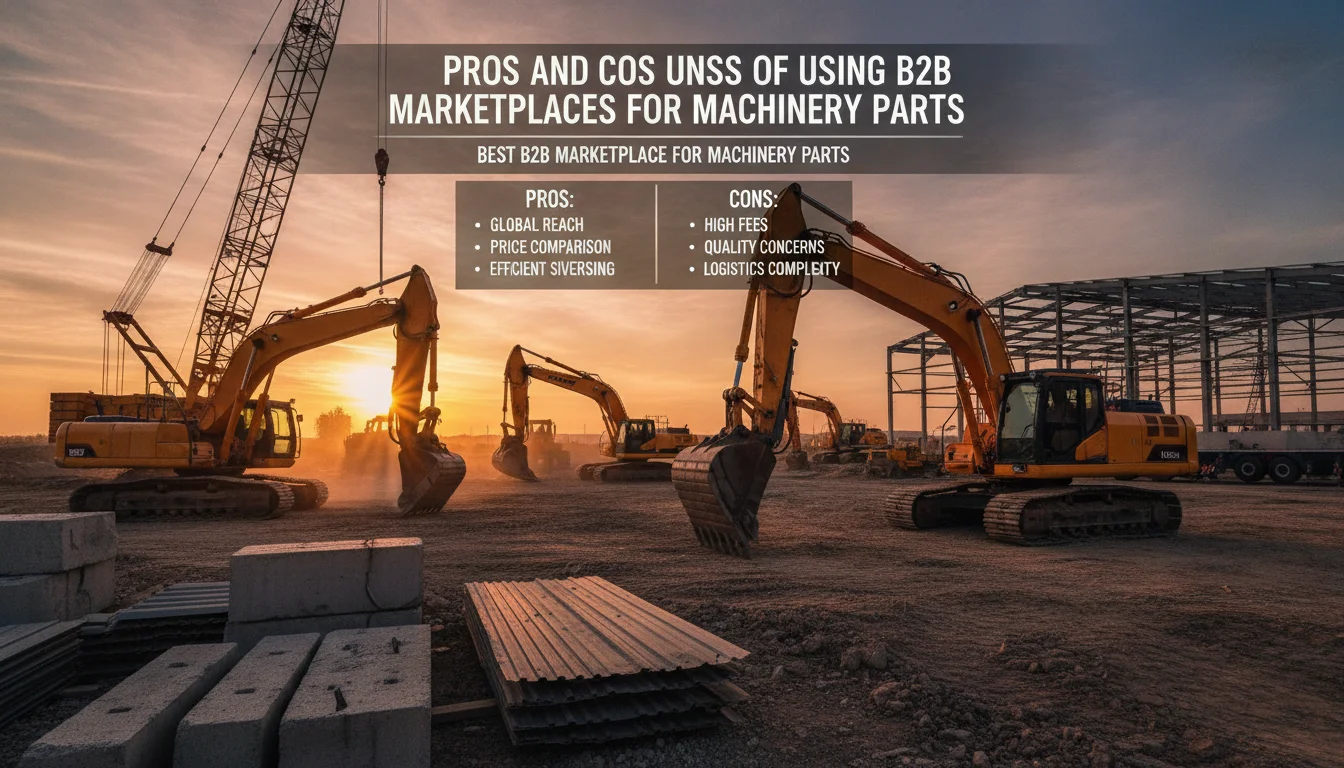
Selecting the best b2b marketplace for machinery parts requires an honest look at what these platforms deliver and where they fall short.
Pros
- Supplier breadth: Access to hundreds of verified suppliers in one place reduces sourcing time significantly.
- Price transparency: Side-by-side pricing across suppliers helps procurement teams negotiate better terms.
- Real-time inventory: According to ClickPost's 2026 B2B marketplace analysis, roughly 60% of B2B buyers now expect real-time inventory visibility as a baseline requirement.
- ERP integration: Leading platforms sync directly with procurement and warehouse management systems, cutting manual data entry.
- Global reach: Cross-border sourcing opens access to competitive pricing from manufacturers in multiple regions.
Cons
- Quality variance: General-purpose marketplaces mix OEM-grade and low-quality aftermarket parts without clear differentiation, creating compatibility risk.
- Supplier verification gaps: Not all platforms vet suppliers rigorously. Unverified listings can lead to counterfeit or non-compliant parts reaching your fleet.
- Lead time uncertainty: Marketplace listings often show optimistic ship dates that do not account for customs clearance, especially on cross-border orders.
- Limited technical support: Most horizontal marketplaces offer no part compatibility guidance. A wrong part order on a CAT 320 excavator costs more than the part itself.
- Complex returns: Industrial parts returns are rarely straightforward on multi-vendor platforms, and restocking fees can erode any pricing advantage.
What to Look For When Buying Machinery Parts Online
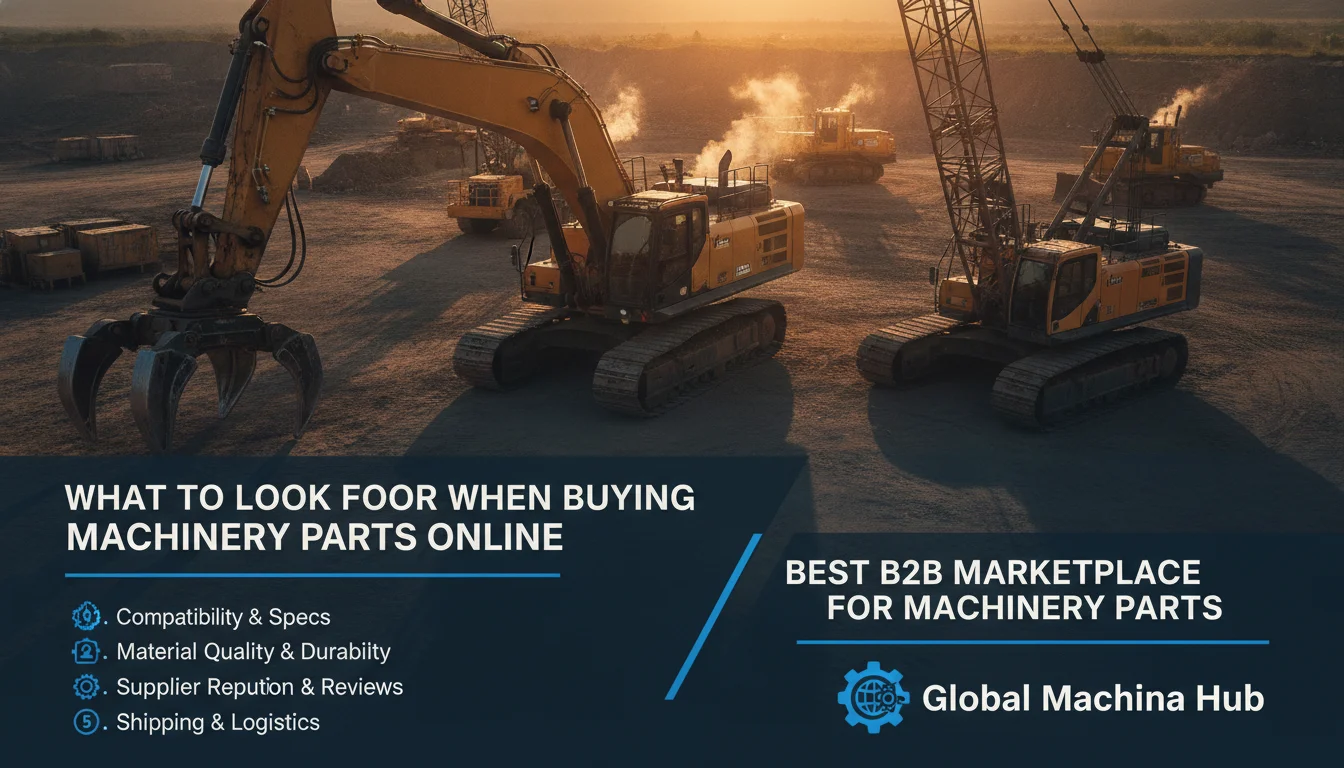
The best b2b marketplace for machinery parts earns that title by meeting specific procurement standards, not just offering the largest catalog. Here is what separates a reliable platform from a risky one.
- OEM vs. aftermarket clarity: The platform must clearly label whether parts are OEM, OEM-equivalent, or aftermarket. Mixing these without disclosure is a red flag.
- Brand compatibility data: Look for platforms that list exact model compatibility, not just brand names. A hydraulic seal kit for a Komatsu PC200 is not interchangeable with one for a PC300.
- Supplier verification: Prioritize platforms that audit supplier credentials, certifications, and quality management systems.
- Logistics transparency: Confirmed lead times, customs documentation support, and real shipment tracking are non-negotiable for international orders.
- Technical support access: Direct access to parts specialists before purchase prevents costly wrong-part orders.
- Return and warranty policy: Understand the platform's policy on defective parts before committing to a large order.
How to Structure Your Machinery Parts Procurement Process
A structured procurement process reduces errors, cuts lead times, and protects your maintenance budget. Follow these steps when sourcing through any B2B platform.
- Define your parts requirement precisely: Capture the OEM part number, equipment model, serial number, and application. Vague requests produce wrong quotes.
- Identify the right platform type: Match your need to the platform. High-volume repeat orders suit ERP-integrated portals. Urgent one-off sourcing suits specialist suppliers like 3GEN Export.
- Verify supplier credentials: Check certifications, review transaction history, and request documentation for critical components before placing an order.
- Compare total landed cost: Factor in shipping, customs duties, and lead time alongside unit price. A cheaper part that arrives three weeks late is not cheaper.
- Place the order with full documentation: Confirm part numbers, quantities, delivery address, and incoterms in writing before payment.
- Inspect on receipt and log performance: Document part condition on arrival and track performance in service. This data informs smarter sourcing decisions on the next cycle.
Regional Considerations for Global Machinery Parts Sourcing
The best b2b marketplace for machinery parts in one region may not be the right fit in another. Regional factors directly affect availability, lead times, and compliance requirements.
- North America: Buyers benefit from strong OEM distributor networks and domestic warehousing for Caterpillar and Komatsu parts. Platforms with US-based inventory reduce customs delays significantly.
- Middle East and Africa: Mining and energy sectors drive high demand for Atlas Copco, Sandvik, and Volvo components. Cross-border logistics complexity makes supplier reliability the top selection criterion.
- Southeast Asia: Construction growth is driving demand for excavator and crane components. Buyers in this region often source from multiple platforms simultaneously to manage availability risk.
- Europe: Strict CE compliance requirements mean buyers must confirm certification status before purchase. DirectIndustry's European supplier base is well-suited to this market.
3GEN Export ships to over 80 countries with full customs documentation support, making us a practical sourcing partner for procurement teams in regions where local distributor networks are thin. See our full brand coverage and parts categories for availability by equipment type.
Care and Maintenance of Machinery Parts
Proper maintenance extends part life and reduces total cost of ownership across your fleet. These practices apply regardless of which platform you source from.
- Regular inspections: Conduct scheduled checks on hydraulic seals, undercarriage components, and filters. Catching wear early prevents catastrophic failure.
- Correct lubrication: Apply manufacturer-specified lubricants to moving parts. Using the wrong viscosity or type accelerates wear and voids OEM warranties.
- Clean storage: Store unused parts in sealed, dry conditions. Hydraulic seals and electrical components degrade rapidly in humid or contaminated environments.
- Traceability records: Log part numbers, installation dates, and service intervals. This data supports warranty claims and informs future procurement timing.
Pro Tip: When replacing hydraulic cylinder seals on Caterpillar or Komatsu excavators, always replace the full seal kit rather than individual seals. Per manufacturer service bulletins, partial seal replacement on high-pressure hydraulic circuits significantly increases the probability of repeat failure within the same service interval.
Frequently Asked Questions
Which B2B marketplace is considered the best for machinery parts?
The best b2b marketplace for machinery parts depends on your specific equipment brands, order volume, and geography. DirectIndustry suits European industrial buyers with its 550,000+ product listings. For OEM-quality parts with guaranteed global delivery, specialist suppliers like 3GEN Export offer direct compatibility support that general marketplaces cannot match.
What is the best website to sell machinery and spare parts?
TradeWheel and DirectIndustry are widely used for listing machinery and parts due to their large buyer networks. For suppliers focused on construction, mining, and energy equipment, a specialist B2B platform with verified buyer access typically delivers better conversion than a general horizontal marketplace.
What is the B2B marketplace for industrial products?
The B2B marketplace for industrial products is a digital platform where manufacturers, distributors, and buyers transact on components, equipment, and services at commercial scale. DirectIndustry, with 2.7 million monthly visitors and 550,000 listed products, is one of the largest dedicated industrial B2B platforms globally.
How do I find a good B2B supplier for machinery parts?
Start by verifying the supplier's OEM certifications, reviewing their transaction history on the platform, and requesting part documentation for critical components. For heavy equipment parts, prioritize suppliers who can confirm exact model compatibility and provide customs-ready shipping documentation for international orders.
How can I ensure the quality of machinery parts purchased online?
Request OEM part numbers and cross-reference them against manufacturer specifications before ordering. Work with suppliers who provide material certifications or test reports for critical components. Inspect parts on receipt and document any discrepancies immediately to support warranty or return claims.
As of 2026, procurement teams sourcing heavy equipment spare parts have more platform options than ever. The decision comes down to one question: does the platform give you verified parts, confirmed lead times, and direct technical support? If the answer is no, the price advantage disappears the moment a wrong part arrives on site.
Shop OEM-quality spare parts for Caterpillar, Komatsu, Volvo, Atlas Copco, and 40+ brands with global 5-day delivery at 3genexport.com.