
Best Practices for Heavy Equipment Maintenance (2026)
Discover the best practices for heavy equipment maintenance in 2026: schedules, inspections, tools, and cost-saving tips from 3GEN Export's parts
Loading article…
Article Not Found
The article you're looking for doesn't exist or may have been removed.
Back to BlogKey Takeaways
- Implement a structured preventive maintenance schedule based on OEM intervals and real-world usage hours.
- Conduct daily inspections to catch issues early, before they become costly breakdowns.
- Use fleet management technology for real-time monitoring and data-driven decisions.
- Train operators thoroughly so they can spot warning signs and handle basic upkeep safely.
- Document every maintenance activity for compliance, warranty claims, and future planning.
- Source OEM-quality replacement parts quickly to avoid extended downtime when repairs are needed.
Best practices for heavy equipment maintenance are the documented, repeatable procedures that keep machinery running safely and reduce unplanned downtime. These practices combine scheduled service, daily inspections, and data tracking to extend equipment life and protect your budget.
Understanding Heavy Equipment Maintenance
Heavy equipment maintenance is the set of systematic tasks required to keep machinery in working condition, covering everything from oil changes to full component overhauls. This includes both routine maintenance and preventive maintenance, both aimed at catching problems before they turn into expensive repairs. We've supplied replacement parts to fleet operators long enough to know that the difference between a profitable fleet and a money pit almost always comes down to discipline in these two areas.
Following the equipment maintenance isn't about perfection. It's about building a system that holds up when your team is short-staffed, your budget is tight, and your project deadline isn't moving. As of 2026, more operations are combining paper checklists with connected telematics, but the fundamentals haven't changed: inspect often, service on schedule, and fix small problems before they become big ones.
Types of Maintenance
- Routine Maintenance: Regularly scheduled tasks such as oil changes, lubrication, and tire inspections.
- Preventive Maintenance: Actions taken to prevent equipment failures, including visual inspections and technical monitoring.
- Corrective Maintenance: Reactive repairs performed after equipment has already failed.
The Importance of Maintenance
Proper maintenance matters for several concrete reasons:
- It extends the lifespan of equipment, ensuring components work efficiently and undergo less wear and tear.
- It reduces overall expenses by minimizing downtime and avoiding rushed, expedited repairs.
- It enhances safety by ensuring machinery functions correctly, which lowers the risk of accidents.
- It protects resale value, since well-documented service histories matter to future buyers.
"Preventive maintenance can reduce machinery repair bills by roughly 25 percent," notes MacAllister Machinery in its Caterpillar equipment maintenance guidance, a figure that underscores why proactive scheduling beats reactive fixes almost every time.
Step-by-Step Process for Effective Maintenance
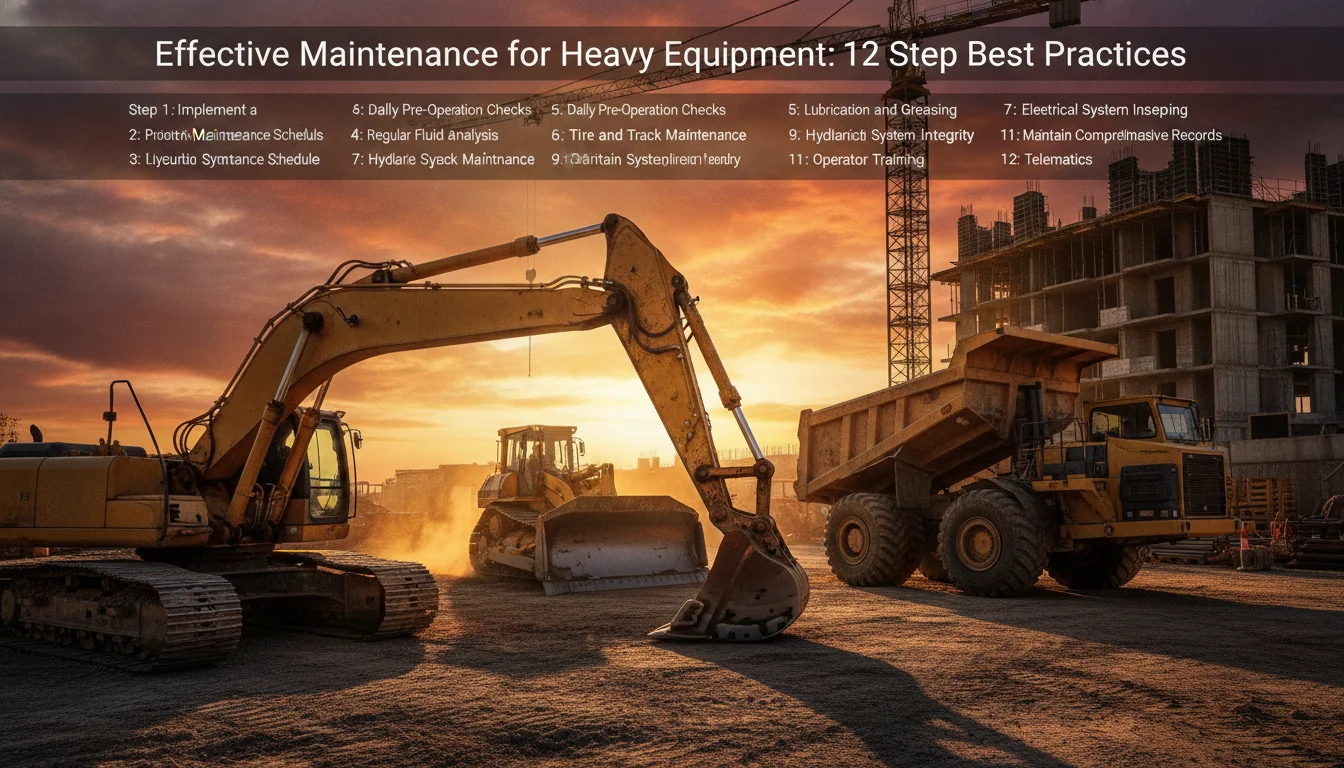
Effective heavy equipment maintenance follows five concrete steps, starting with a documented schedule and ending with thorough operator training. Skipping any one of these steps tends to create blind spots that show up later as expensive failures.
- Establish a Preventive Maintenance Schedule: Build a structured schedule based on OEM recommendations and real-world usage data, not just calendar months.
- Conduct Daily Inspections: Perform walkarounds to check fluid levels, tire and track conditions, and safety features before each shift.
- Utilize Technology: Implement fleet management software or telematics to monitor equipment health and automate maintenance scheduling.
- Document Maintenance Activities: Keep detailed records of every repair, part replacement, and inspection for compliance and future budgeting.
- Train Operators: Ensure every operator understands safe operation and can perform basic maintenance checks confidently.
Pro Tip: Tie your preventive maintenance intervals to engine hours rather than the calendar. A machine sitting idle for weeks doesn't need the same attention as one running double shifts, and hour-based scheduling keeps your team focused on the equipment that actually needs it.
Comparison of Maintenance Strategies
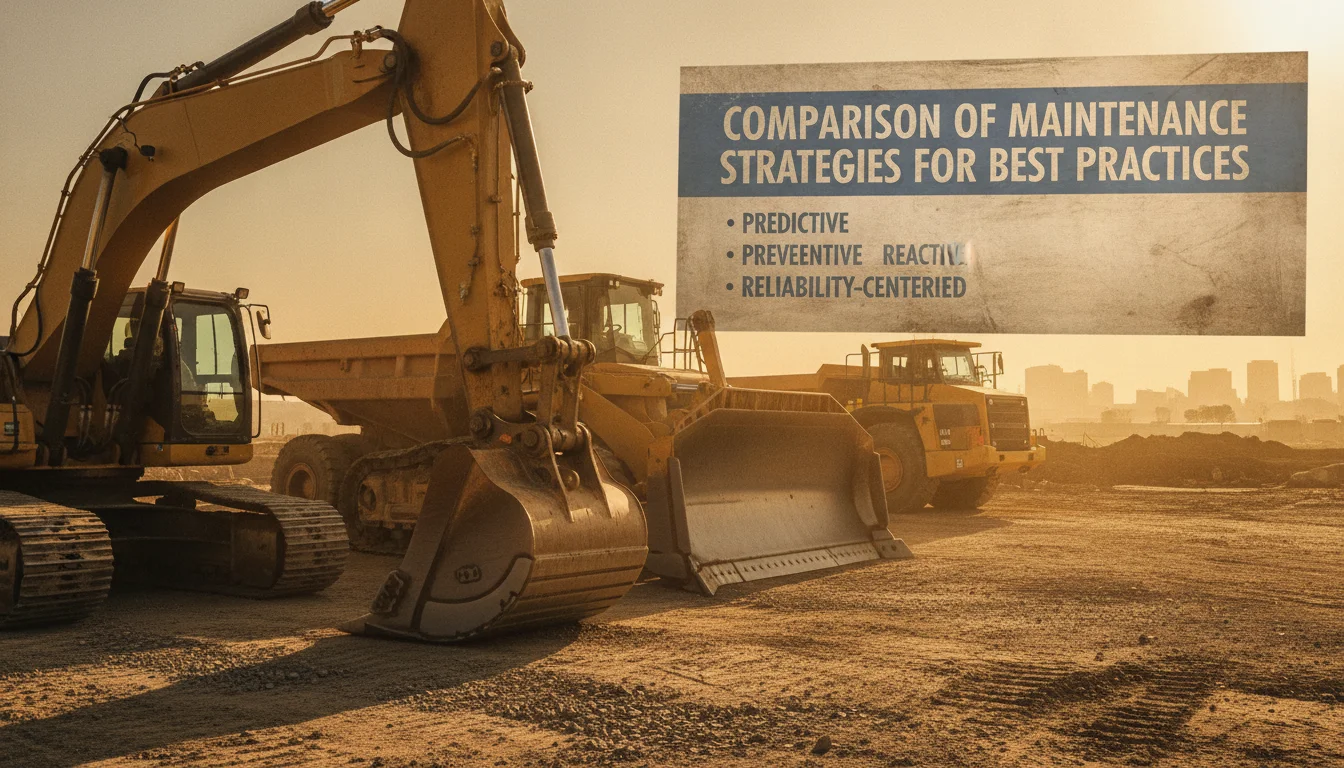
| Maintenance Type | Trigger | Purpose | Cost Impact | Risk if Ignored |
|---|---|---|---|---|
| Corrective | Equipment failure | Restore functionality | Highest, since expedited parts and overtime labor drive up cost | Downtime, safety incidents, cascading failures |
| Preventive | Scheduled intervals | Prevent failures | Moderate and predictable | Missed early warning signs if not tracked consistently |
| Predictive | Data trends | Anticipate failures | Requires upfront investment in tools and data | Low, but only if the underlying data is reliable |
What to Look For When Buying Maintenance Tools
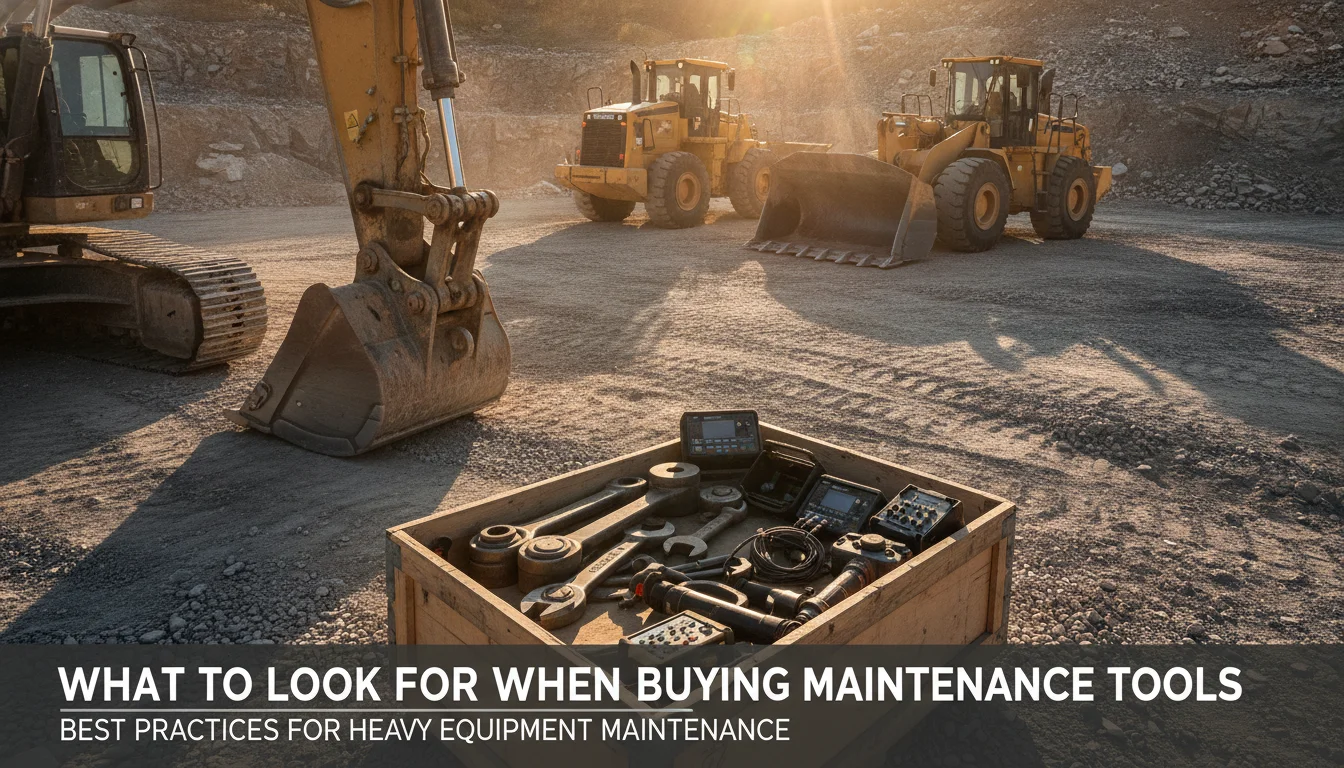
The right maintenance tools should match your existing fleet, your team's technical comfort level, and your budget tier. When selecting tools and software to support the best practices for heavy equipment maintenance, weigh these criteria:
- Compatibility: Confirm tools work with your existing equipment brands, whether that's Caterpillar, Komatsu, Volvo, or a mixed fleet.
- Ease of Use: Pick user-friendly software that simplifies tracking rather than adding another layer of paperwork.
- Cost: Assess the price range against the value delivered. Budget tools often cover basic logging, while premium platforms add predictive analytics.
- Support: Look for vendors offering solid customer support, onboarding, and operator training resources.
- Parts Access: Choose a maintenance workflow that connects directly to a reliable spare parts supplier, so flagged issues turn into fast repairs instead of extended downtime.
Price Range Guidance
| Tier | What You Get | Best For |
|---|---|---|
| Budget | Basic digital checklists, manual logging, simple reminders | Small fleets with a handful of machines |
| Mid-Range | Fleet management software with maintenance scheduling and reporting | Growing fleets managing 10-50 units |
| Premium | Telematics integration, predictive analytics, automated parts ordering | Large fleets across multiple sites or regions |
How to Style Your Maintenance Program
A strong maintenance program is built around standardized procedures, reliable data, and open communication between operators and technicians. Integrating these habits into daily operations makes the best practices for heavy equipment maintenance stick, rather than fading after the first busy month.
- Standardize Procedures: Develop clear, written protocols for inspections and repairs so results don't depend on who's on shift.
- Use Data Actively: Pull from telematics and service logs to spot trends and adjust intervals instead of guessing.
- Encourage Team Collaboration: Build regular communication between operators and maintenance teams so small issues get reported immediately, not buried.
- Match the Program to the Fleet: A five-machine site doesn't need the same complexity as a 200-unit mining operation. Scale your approach to the size and criticality of your equipment.
Care & Maintenance
Day-to-day care is what makes a maintenance program actually work between scheduled services. Regular care includes:
- Checking and changing fluids as recommended by the manufacturer, not just when they look low.
- Inspecting and replacing filters on schedule to keep contaminants out of engines and hydraulic systems.
- Cleaning equipment regularly to prevent dirt buildup that accelerates wear on seals and moving parts.
- Storing machinery properly during off-seasons, including battery maintenance and corrosion protection.
- Keeping a stock of common wear parts, such as seal kits and filters, on hand to avoid delays when something needs replacing.
According to industry maintenance data shared by heavy equipment dealers, repair costs for neglected machinery routinely run into the thousands of dollars, and severe damage can require replacing the entire unit. That's the real financial argument for sticking to a maintenance calendar instead of waiting for something to break.
Pros and Cons
Pros
- Lower long-term repair costs compared to reactive, breakdown-driven maintenance.
- Extended equipment lifespan and better resale value at trade-in or auction.
- Improved job site safety and fewer compliance issues during inspections.
- More predictable budgeting once maintenance data accumulates over time.
Cons
- Requires upfront investment in software, training, and sometimes telematics hardware.
- Demands consistent discipline from operators and technicians, which can slip during busy periods.
- Predictive maintenance tools are only as good as the data feeding them.
- Smaller operations may find dedicated maintenance software costly relative to fleet size.
What to Expect in 2026 and Beyond
This year, more fleets are blending telematics-based predictive maintenance with traditional preventive schedules rather than choosing one approach exclusively. Industry maintenance data shows that connected inspection workflows are becoming standard even among mid-sized contractors, not just large mining operations. Updated for 2026, the trend is toward centralizing inspections, work orders, and parts procurement into a single digital workflow, which cuts down on the tribal knowledge and spreadsheet chaos that has historically plagued maintenance planning.
As Fleetio's fleet maintenance research notes, mature maintenance operations don't rely on a single approach. They blend corrective, preventive, and predictive maintenance based on the asset, its criticality, and the data available.
Looking ahead, expect tighter integration between maintenance software and parts suppliers. When a system flags a worn hydraulic seal or a filter nearing its service interval, the fastest operations are the ones that can source the OEM-quality replacement part within days, not weeks. That's where global parts logistics increasingly plays a direct role in maintenance outcomes.
Frequently Asked Questions
What is the best way to maintain heavy equipment?
The best way to maintain heavy equipment is to follow the core best practices for heavy equipment maintenance: a structured preventive schedule, daily inspections, and thorough documentation of every service event. Combining these three habits catches most problems long before they cause downtime.
How often should heavy equipment be serviced?
Heavy equipment should be serviced based on manufacturer recommendations, often tied to engine hours rather than calendar time, with many OEMs specifying tiered checklists at intervals such as daily, 250-hour, and 500-hour marks. Always check your specific owner's manual since intervals vary by brand and machine class.
What are the signs that equipment needs maintenance?
Signs that equipment needs maintenance include unusual noises, decreased performance, fluid leaks, and warning lights on the dashboard. Operators who know their machinery well tend to catch these signs earlier, which is why daily walkarounds matter so much.
Can I perform maintenance myself?
Yes, operators can perform basic maintenance tasks such as checking fluid levels, cleaning filters, and inspecting tires, but more complex repairs should go to qualified technicians. Attempting major hydraulic or engine work without proper training often causes more damage than it prevents.
What is the cost of heavy equipment maintenance?
The cost of heavy equipment maintenance varies widely based on machine type and repair scope, with reported construction industry repair costs ranging from a few hundred dollars for minor fixes to tens of thousands for major component failures. Preventive maintenance consistently reduces these costs by catching problems while they're still small and affordable to fix.
How can I extend the life of my heavy equipment?
To extend the life of your heavy equipment, follow a documented maintenance schedule, train operators thoroughly, and address warning signs promptly instead of pushing through them. Sourcing quality replacement parts quickly when issues arise also prevents small problems from cascading into major failures.
Conclusion
Implementing the best practices for heavy equipment maintenance is essential for maximizing equipment performance and minimizing costs. By establishing a preventive maintenance schedule, conducting regular inspections, training operators, and utilizing technology, your organization can keep machinery running efficiently and safely well into 2026 and beyond.
When maintenance uncovers a worn part that needs replacing, waiting weeks for OEM shipping isn't a real option on an active job site. Shop OEM-quality spare parts with global 5-day delivery at 3genexport.com, and keep your fleet's maintenance schedule on track instead of stalled on backorder.