
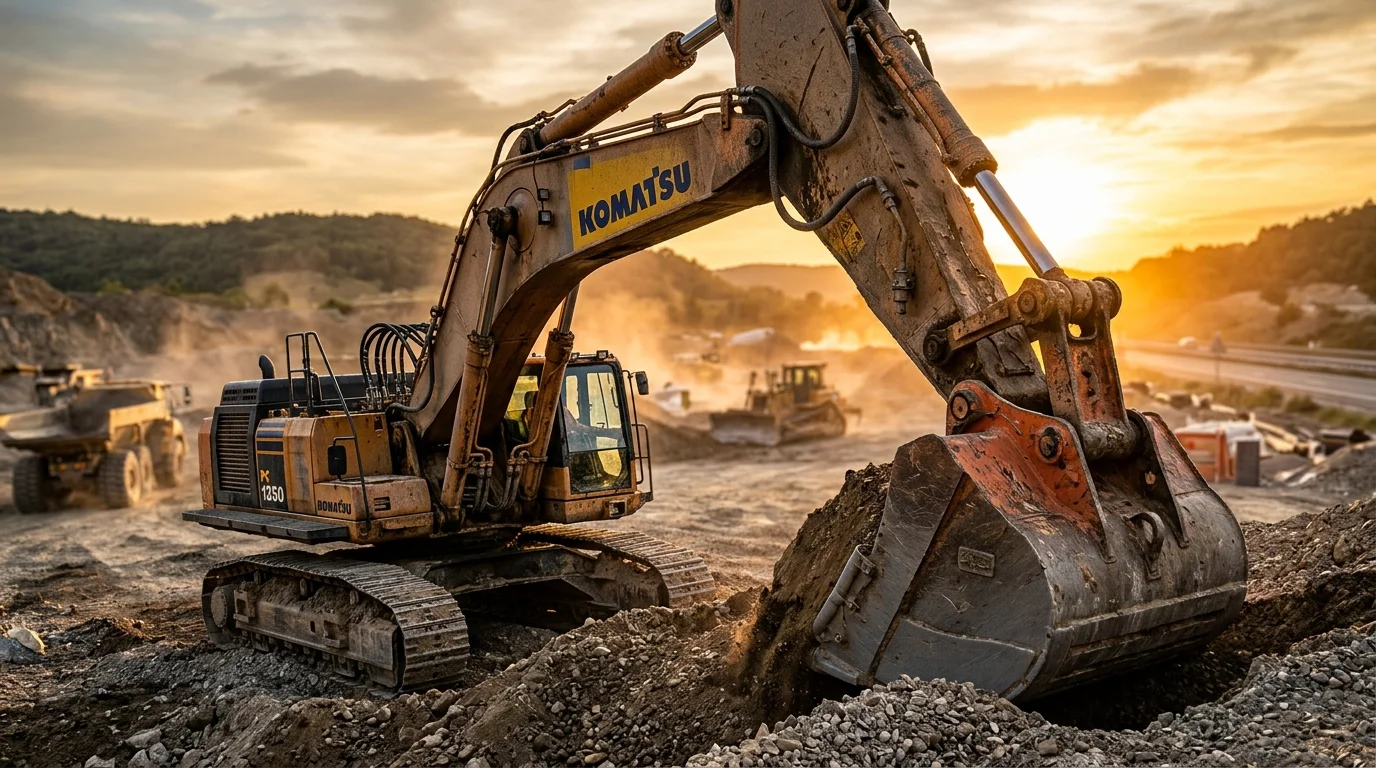
Bulk Order Heavy Machinery Parts Discount Guide
Bulk order heavy machinery parts discount strategies that cut procurement costs. OEM-quality parts for CAT, Komatsu & Volvo with 5-day global delivery.
Loading article…
Article Not Found
The article you're looking for doesn't exist or may have been removed.
Back to BlogBulk Order Heavy Machinery Parts Discount: 2026 Buying Guide
Bulk order heavy machinery parts discount is the practice of purchasing large quantities of construction, mining, or energy equipment components at a reduced per-unit cost. As of 2026, quality aftermarket suppliers price OEM-equivalent parts at 30–60% below dealer list, according to industry sourcing analysis.
Key Takeaways
- Bulk ordering reduces per-unit cost and cuts procurement frequency for fleet operators.
- Quality aftermarket parts priced 30–60% below OEM list are available for CAT, Komatsu, Volvo, and 40+ brands.
- Purchasing five or more units of the same part typically unlocks tiered discount pricing.
- Always verify OEM part numbers and machine serial numbers before placing a bulk order.
- Supplier warranties, return policies, and global shipping speed are as important as unit price.
- Regular inspections and proper lubrication extend part life and reduce total cost of ownership.
Understanding Bulk Ordering for Heavy Machinery Parts
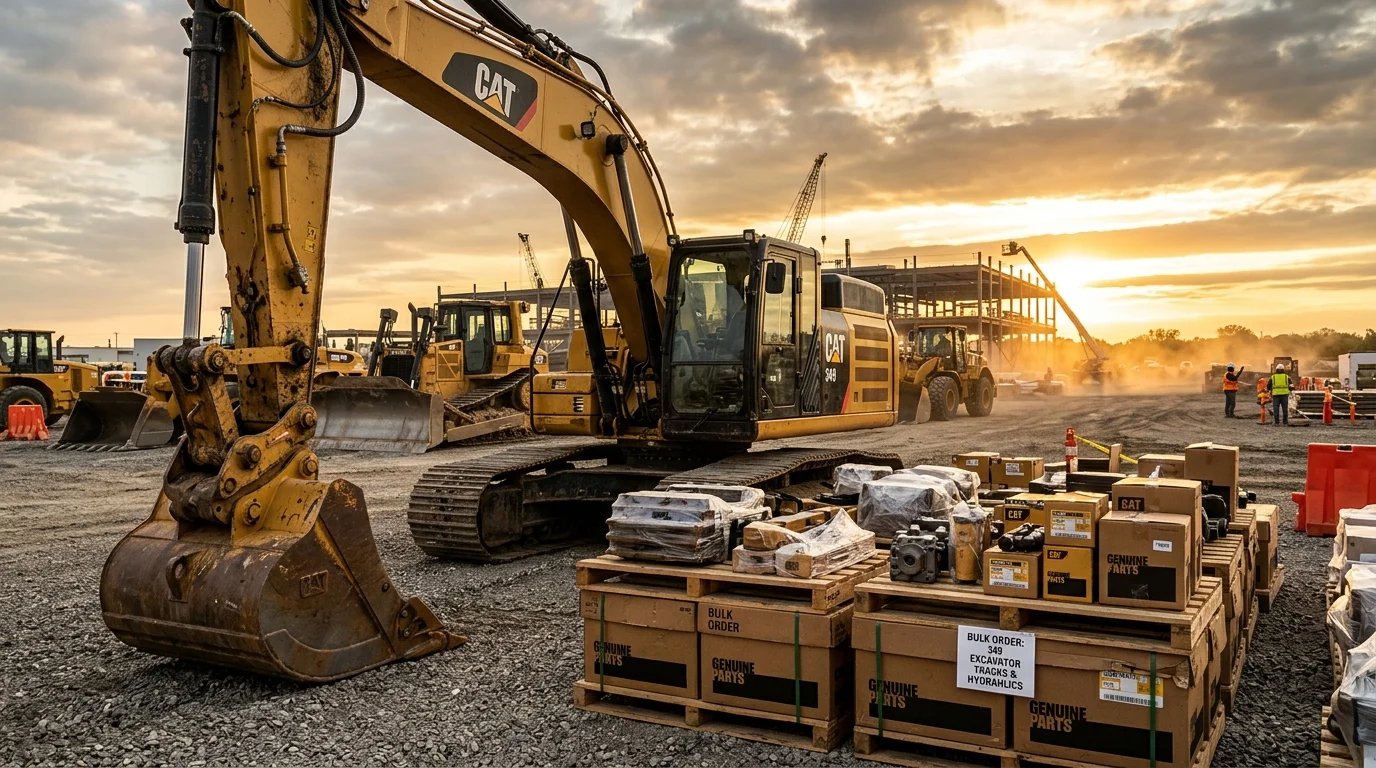
Bulk ordering means purchasing large quantities of a single part or part category in one transaction to secure a lower price per unit. For heavy equipment fleets, this approach directly reduces procurement overhead and protects against supply disruptions. Industry promotions confirm that purchasing five or more units of the same part unlocks progressively larger discounts, with list prices on premium heavy equipment parts exceeding $10,000.
Purchase 5 or more and unlock even bigger discounts. List Price: Over $10,000.
Benefits of Bulk Ordering
- Cost savings: Quality aftermarket suppliers offer 30–60% below OEM list price on verified fitment parts.
- Procurement efficiency: Fewer purchase orders, less administrative overhead, and consolidated shipping reduce total cost.
- Inventory readiness: Stocking critical wear parts eliminates emergency sourcing and cuts unplanned downtime.
Types of Parts Available for Bulk Ordering
- New OEM-equivalent parts: Manufactured to OEM specifications, cross-referenced against your machine serial number.
- Rebuilt/remanufactured parts: Restored to OEM tolerances, typically carrying a warranty comparable to new parts.
- Aftermarket parts: Non-OEM components that meet or exceed original specifications at a lower price point.
- Used parts: Pre-owned components suitable for specific salvageable applications; require thorough inspection before bulk purchase.
Pros and Cons of Bulk Ordering Heavy Machinery Parts
Pros
- Lower per-unit cost: Volume pricing from quality aftermarket exporters runs 30–60% below OEM dealer list, according to 2026 sourcing data.
- Reduced downtime risk: On-hand inventory means a failed part gets swapped the same shift, not after a two-week lead time.
- Simplified procurement: One bulk purchase replaces multiple small orders, cutting purchase-order processing time and freight costs.
- Better supplier leverage: Consistent volume orders give you negotiating power on price, lead time, and warranty terms.
- Predictable budgeting: Locking in unit prices on a bulk contract shields your maintenance budget from spot-market price swings.
Cons
- Upfront capital commitment: Large orders tie up working capital that could be deployed elsewhere in the operation.
- Obsolescence risk: If a machine is retired or upgraded, surplus parts may have no use in your fleet.
- Storage requirements: Bulk inventory needs proper shelving, climate control, and labeling to prevent damage and mix-ups.
- Compatibility errors are costly: A wrong part number ordered in bulk means a large return shipment and delayed maintenance schedules.
What to Look For When Buying Heavy Machinery Parts in Bulk
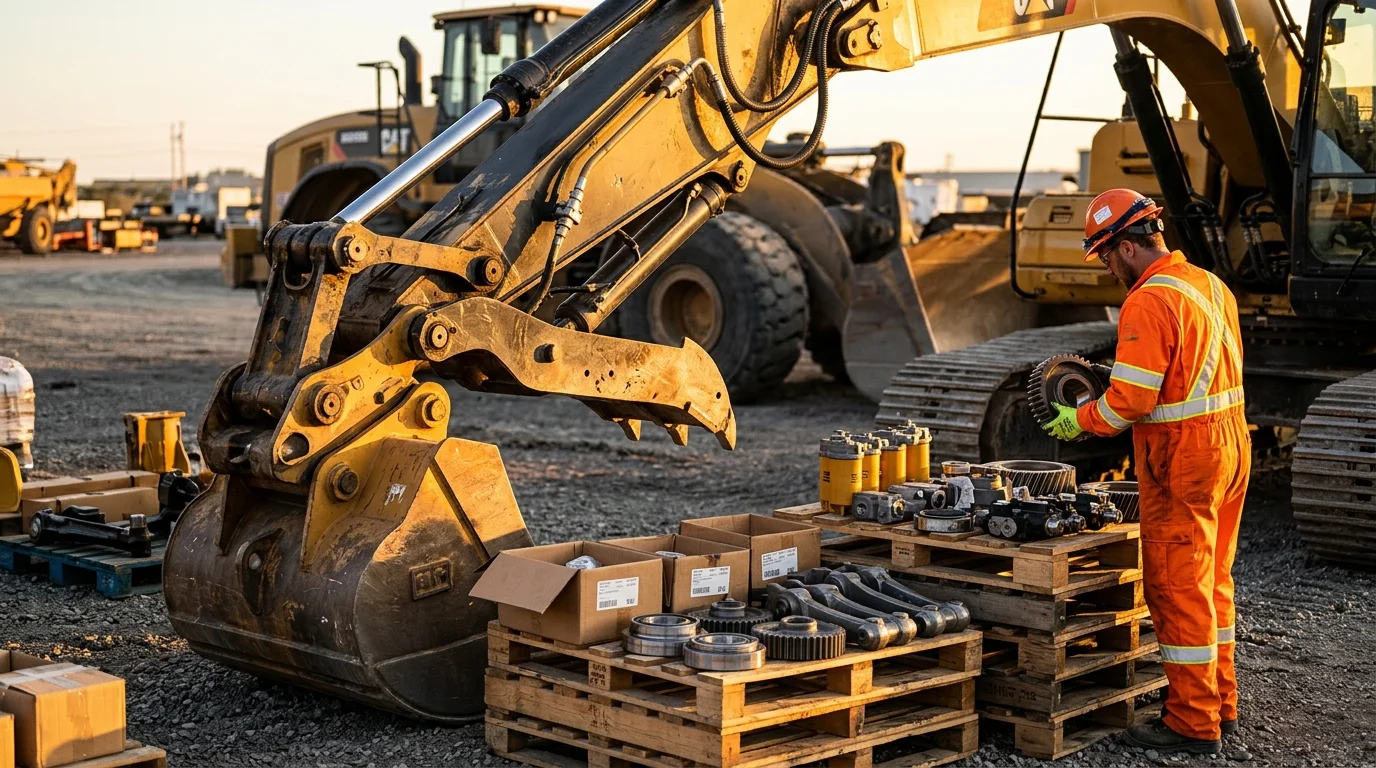
The right part at the wrong specification is still the wrong part. Before committing to a bulk order, verify three things: material grade, OEM part number match, and supplier warranty coverage.
Material Quality
Specify the material grade and heat treatment standard when requesting quotes. For undercarriage components, ground-engaging tools, and hydraulic seals, material quality directly determines service life under load. Ask suppliers for material certifications or test reports on high-wear items.
Fit and Compatibility
Cross-reference every part against the OEM part number and your machine's serial number before ordering. Most reputable exporters confirm fitment against your serial before dispatch. This step is non-negotiable on bulk orders: a compatibility error multiplied across 20 units is a significant financial and logistical problem.
Price Range Expectations
Part prices vary widely by category and brand. To give you a realistic benchmark: a Volvo A25E transmission lists at $23,760.00, a Caterpillar 315B final drive at $11,120.00, a Komatsu D65EX-16 final drive at $11,960.00, and a radiator at $1,110.00. Smaller wear items like bucket links run $265.99 and side links $349.00. These figures come from current market listings and give you a baseline for evaluating bulk quotes.
Step-by-Step Process for Placing a Bulk Order
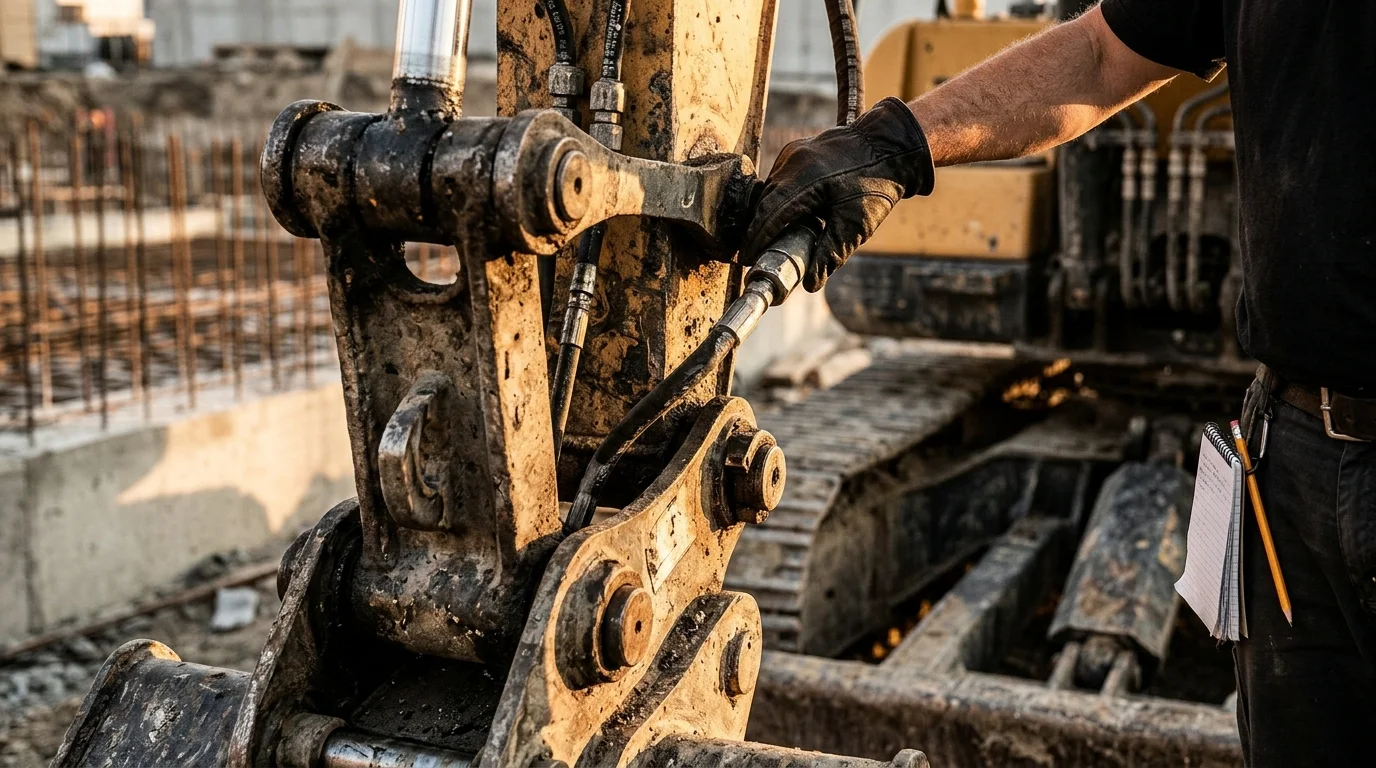
- Audit your fleet's parts consumption: Pull maintenance records for the past 12 months. Identify which parts fail most frequently and in what quantities.
- Compile OEM part numbers: Use your machine's serial number to pull the correct OEM part numbers from the manufacturer's parts catalog. Never order by description alone.
- Request itemized quotes from multiple suppliers: Provide the OEM part number, machine model, serial number, and target quantity. Ask for unit price at your volume tier.
- Compare on total landed cost: Factor in unit price, freight, customs duties, and lead time. A lower unit price with a six-week lead time may cost more than a slightly higher price with five-day delivery.
- Confirm warranty and return terms in writing: Get warranty duration, coverage scope, and the return process for incompatible parts documented before you pay.
- Place the order and track shipment: Use the supplier's tracking system and confirm expected customs clearance dates for international shipments.
- Inspect on arrival: Check part numbers, condition, and quantity against the packing list before signing off. Flag discrepancies immediately.
Choosing the Right Supplier for Bulk Orders
The supplier you choose determines not just price but delivery reliability, parts quality, and your recourse if something goes wrong. These are the criteria that matter most for B2B bulk procurement.
Reputation and Track Record
Look for suppliers with verifiable experience serving fleet operators, contractors, and dealers at scale. A supplier that handles OEM and aftermarket parts for CAT, Komatsu, Hitachi, John Deere, and Volvo across multiple equipment categories has the catalog depth to support a mixed fleet. Check whether they cross-reference parts to your machine serial before dispatch.
Warranties and Return Policies
A warranty is only as good as the supplier's willingness to honor it. Confirm the warranty duration, what it covers (defects in materials and workmanship vs. wear), and the return process for parts that don't fit. Get this in writing before placing a bulk order.
Shipping Speed and Global Reach
For international buyers, shipping lead time is a critical variable. Stock items from quality exporters typically dispatch within 3–7 days. For operations in Africa, the Middle East, or Southeast Asia, confirm whether the supplier handles customs documentation and can quote a total landed cost. A supplier with established freight partnerships will consistently outperform one that hands off logistics to a third party.
The right bulk parts supplier confirms fitment against your machine serial before dispatch, carries warranty coverage, and delivers on a timeline that keeps your fleet running.
Comparison of Part Categories and Typical Price Ranges
| Part Category | Example Application | Indicative Price (USD) | Typical Availability |
|---|---|---|---|
| Transmission (rebuilt) | Volvo A25E | $23,760.00 | New, Rebuilt |
| Final Drive (new aftermarket) | Caterpillar 315B | $11,120.00 | New Aftermarket |
| Final Drive LH (rebuilt) | Komatsu D65EX-16 | $11,960.00 | Rebuilt |
| Final Drive Assembly | Takeuchi TL140 | $5,200.00 | New Aftermarket |
| Track Spring Assembly | Volvo EC330B LC | $1,600.00 | New Aftermarket |
| Radiator | Multiple brands | $1,110.00 | New Aftermarket |
| Track Spring Assembly | Komatsu PC78MR-6 | $740.00 | New Aftermarket |
| Side Link | Caterpillar 336 | $349.00 | New Aftermarket |
| Bucket Link | Komatsu PC200-7 | $265.99 | New Aftermarket |
Care and Maintenance of Heavy Machinery Parts
Proper maintenance extends part life and protects your bulk inventory investment. These practices apply whether you're running a single excavator or a 50-machine fleet.
Regular Inspections
Schedule visual and functional inspections at manufacturer-recommended intervals. Early identification of wear on undercarriage components, seals, and filters prevents a minor issue from becoming a major failure. According to manufacturer service bulletins, catching seal degradation early on hydraulic systems can prevent secondary damage to pumps and cylinders.
Proper Lubrication
Apply lubricants at the grades and intervals specified in the OEM service manual. Using the wrong viscosity or skipping a lubrication interval accelerates wear on pins, bushings, and bearings. For high-cycle applications like excavator swing drives, lubrication intervals are shorter than many operators assume.
Timely Replacements
Replace wear parts before they reach failure, not after. Bulk ordering your most-consumed wear items, such as filters, seals, bucket teeth, and track components, means you always have the right part on the shelf when the inspection says it's time to swap.
Frequently Asked Questions
What is the minimum quantity for bulk ordering discounts on heavy machinery parts?
Most suppliers begin offering tiered pricing at five or more units of the same part. Purchasing five or more identical components in a single order is the standard threshold for unlocking volume discounts. For high-value assemblies like final drives or transmissions, even two or three units may qualify for negotiated pricing.
How much can I save with a bulk order on heavy machinery parts?
Quality aftermarket exporters price OEM-equivalent parts at 30–60% below OEM dealer list, based on 2026 market data. The exact saving depends on the part category, brand, and order volume. Filters, seals, and undercarriage components typically see the largest percentage discounts at volume.
Are aftermarket parts reliable for heavy construction and mining equipment?
Yes, when sourced from a reputable supplier that cross-references parts to OEM specifications and your machine serial number. The working standard in the industry is OEM-equivalent fitment and performance. For warranty-critical components or machines still under OEM warranty, consult the OEM dealer first.
What if bulk-ordered parts are not compatible with my machines?
A reputable supplier will confirm fitment against your machine serial number before dispatch, reducing this risk significantly. If an incompatibility does occur, your recourse depends on the supplier's return policy, which you should confirm in writing before placing the order. Always inspect parts against the packing list on arrival and flag discrepancies immediately.
How do I maintain bulk-purchased parts in storage?
Store parts in a clean, dry environment with consistent temperature. Keep components in their original packaging until installation, and label all items with the OEM part number and the machine model they fit. Hydraulic seals and rubber components are especially sensitive to UV exposure and temperature extremes.
Can I get a warranty on bulk orders of heavy machinery parts?
Most quality suppliers offer warranties on both new aftermarket and rebuilt parts, including bulk orders. Confirm the warranty duration and coverage scope before purchasing. At 3GEN Export, all OEM-quality parts ship with documented warranty coverage and a clear returns process.