Caterpillar Engine Parts Cross Reference Guide (2026)
Our caterpillar engine parts cross reference guide covers official Cat tools, aftermarket databases, and a serial-number-first workflow to avoid costly
Loading article…
Article Not Found
The article you're looking for doesn't exist or may have been removed.
Back to BlogKey Takeaways
- A caterpillar engine parts cross reference matches Cat part numbers to genuine or aftermarket alternatives.
- Official free resources include parts.cat.com and downloadable parts reference guides.
- Independent databases such as Parts Cross Reference index over 500,000 part numbers across construction, agriculture, and industrial equipment.
- Aftermarket suppliers Interstate-McBee and Maxiforce serve the Cat aftermarket segment, with Maxiforce citing savings of 30 to 40% compared to OE.
- Every cross reference match should be verified against the engine serial number or PIN before ordering.
- Treat third-party interchange data as a lead to confirm, not a final answer.
A caterpillar engine parts cross reference is a lookup process that matches an original Cat part number to equivalent genuine, OEM, or aftermarket numbers from suppliers such as Interstate-McBee and Maxiforce. It relies on official tools like parts.cat.com plus independent interchange databases.
The fastest cross reference is not the cheapest listing; it is the one tied to your machine's serial number and a documented interchange source.
We've worked with fleet managers who learned this the hard way. A part number that looks right on paper can still fail if it ignores a serial number break. That's the core discipline behind any reliable cross reference process, and it's what separates a five-minute fix from a two-week engine teardown.
What Is a Caterpillar Engine Parts Cross Reference?
Defining the Cross Reference Process
A cross reference is a matching table that connects an original equipment manufacturer part number to one or more equivalent part numbers from the same manufacturer, another OEM, or an aftermarket producer. In Caterpillar equipment service, a this type of reference answers a practical question: if the exact Cat engine part is unavailable, discontinued, or too expensive, which alternative part will perform the same function without compromising the engine?
The process typically starts with a Cat part number from an engine tag, parts book, or failed component. That number is then run through official Cat lookup tools, independent interchange databases, or aftermarket supplier catalogs. The result is a list of possible replacements that may include superseded Cat numbers, genuine upgrades, or aftermarket parts with equivalent dimensions and specifications.
Why Part Numbers Are Not Automatically Interchangeable
Caterpillar part numbers often change through supersessions, serial number breaks, and engineering revisions. A superseded part number means the old component is no longer produced, but a newer Cat part is a direct replacement. A serial number break means the same engine family may require different components before and after a specific serial number. Cross reference tools flag these distinctions, but only if the tool has current data.
This is why a cross reference is not simply a dictionary lookup. A piston for one Cat 3054 engine may not fit another 3054 variant if the serial number falls on the other side of a production break. The most reliable caterpillar engine parts cross reference workflow always includes serial number verification as a validation step, not an optional check.
The Role of Serial Numbers and PINs
According to Boyd Cat, you need your machine's serial number before searching for parts. This unique identifier is typically called a Product Identification Number, or PIN, and is located on the outer frame of the machine. Cat engines within a machine also have their own serial number, as do some larger systems.
The identification plate can wear down or sit in a hard-to-reach spot, so the owner's manual or dealer records are useful fallbacks. Boyd Cat recommends recording the serial number somewhere safe and taking a photo for your files. Building a habit of checking identification plates during routine maintenance prevents future headaches. Without an accurate serial number, even the best database can return a part that fits the general engine family but fails on a specific production run.
Why Cross-Referencing Caterpillar Engine Parts Matters
Reducing Downtime and Preventing Costly Errors
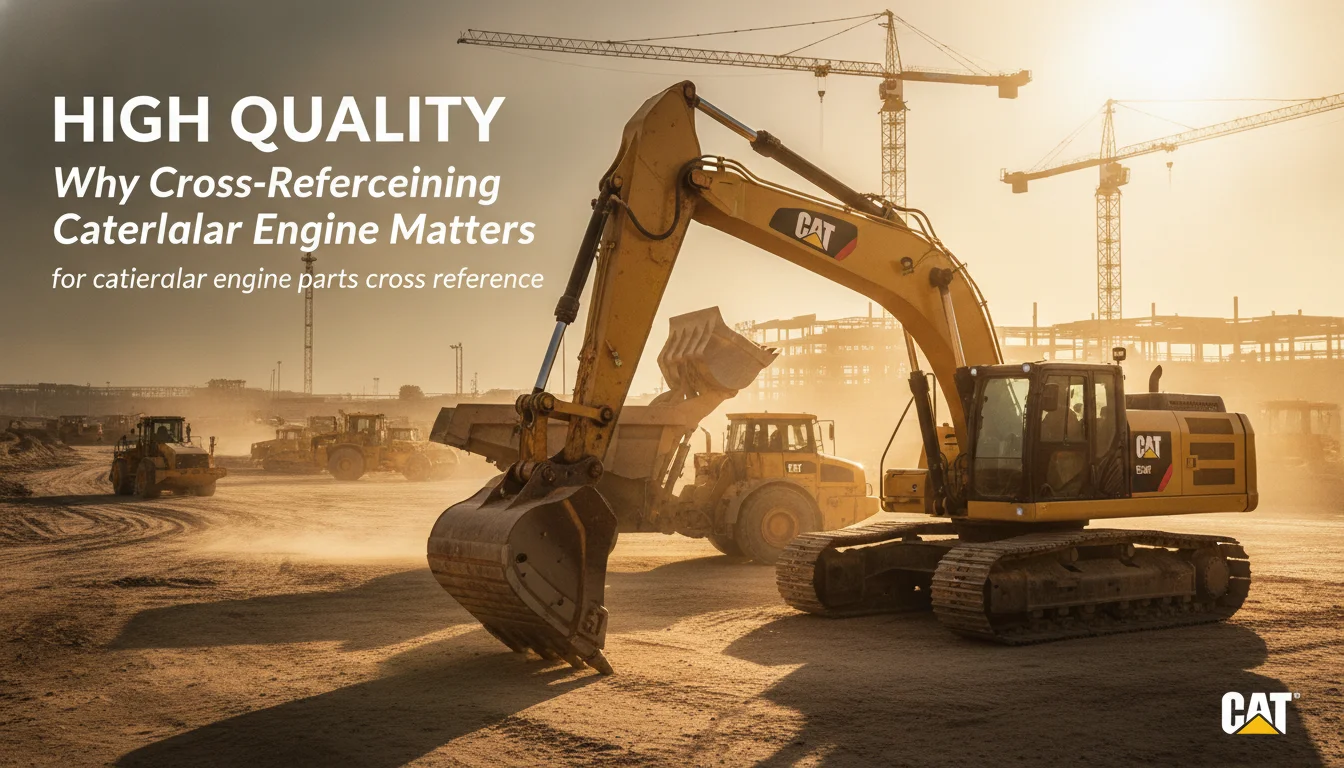
Cross-referencing Caterpillar engine parts matters because ordering the wrong component leads directly to machinery damage, extended downtime, and repeat labor costs. Boyd Cat's guide notes that using the incorrect part can lead to machinery damage, increased downtime, and additional costs. A wrong fuel injector, piston, or gasket can cause poor combustion, oil leaks, or outright engine failure.
Downtime is expensive for fleets, contractors, and owner-operators. The ability to identify a replacement part quickly, whether genuine or aftermarket, reduces the time a machine sits waiting for a backordered component. A disciplined caterpillar engine parts cross reference process is therefore an operational tool as much as a procurement one.
Extending Equipment Life with Correct Parts
Genuine Cat parts are engineered to fit and function precisely with the other components on a specific machine model. Using the correct component helps the engine maintain its designed performance, efficiency, and fuel economy. Cross referencing supports this goal because it routes the technician toward parts verified against Cat's engineering data or aftermarket testing programs.
Even when an aftermarket part is selected, a well-sourced cross reference confirms that the replacement was designed for the same application. Suppliers such as Interstate-McBee and Maxiforce publish model coverage so buyers can confirm the part is intended for their Cat engine family before ordering.
Unlocking More Sourcing Options
Cross referencing expands the supply chain. A Caterpillar dealer may have one path for a part, but an independent database may reveal an alternate Cat part number, a genuine supersession, or an aftermarket equivalent. This matters most for older Cat engines, where original part numbers may be discontinued or subject to long lead times.
Having multiple sourcing options also creates price competition. Aftermarket suppliers often position their parts as direct replacements at a lower cost. A proper cross reference lets the buyer compare cost, availability, and quality claims side by side instead of accepting the first listing they find.
Official Caterpillar Engine Parts Cross Reference Resources
Parts.Cat.Com and the Cat Parts Store
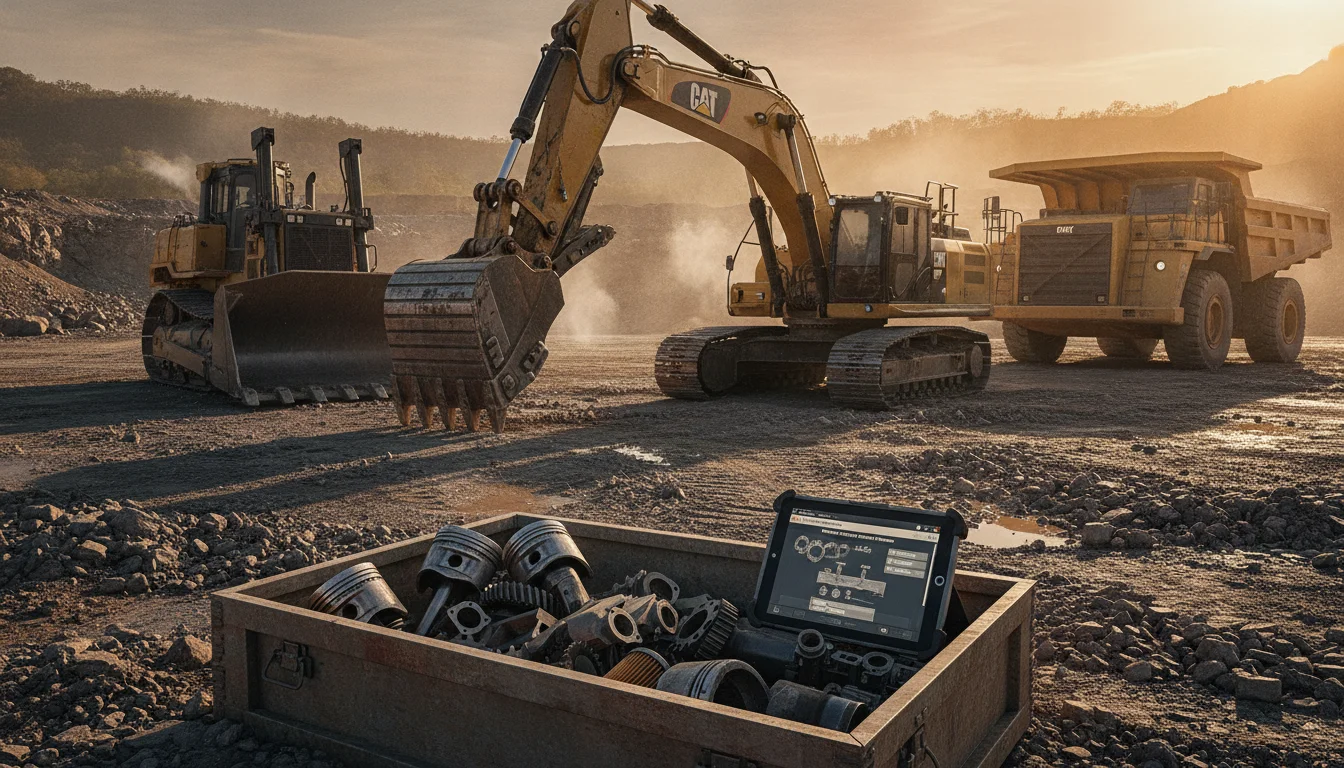
The official Caterpillar Parts Store is the starting point for genuine parts. It allows users to shop by category, part number, or serial number to find the parts needed for repair. Enter a Cat part number and the system returns the current official part number, any supersessions, and the applications where the part is used.
This resource is especially useful for confirming whether a part number is still active. If a number has been superseded, the Cat Parts Store typically shows the replacement. Using the serial number search path ties results directly to your machine, cutting the risk of ordering a part that looks right but is wrong for your specific production run.
Cat Filters Cross Reference Tool
The Cat Filters Cross Reference tool is designed specifically for filter applications. It accepts up to 50 competitor part numbers at once, making it efficient for bulk cross referencing. Users enter competitor filter numbers, see the corresponding Cat filter part number, then add parts to a shopping list and buy Cat filters directly.
This tool works well for maintenance shops servicing multiple machine brands that want to consolidate filter inventories to Cat products. The bulk paste function saves time compared to looking up one filter number at a time, which matters for shops managing dozens of SKUs across a mixed fleet.
Free Parts Reference Guides
According to Caterpillar's official parts reference guide page, users can download free Parts Reference Guides by selecting their machine type. These guides include a list of common wear and maintenance part numbers to make ordering online or in person quick and easy. Machine categories include articulated trucks, backhoe loaders, dozers, cold planers, excavators, motor graders, pavers, skid steer loaders, telehandlers, and wheel loaders.
Parts Reference Guides help a technician build a baseline list of common parts without digging through individual diagrams. Once the part numbers are known, they can be ordered 24/7 on parts.cat.com. The Cat SIS2GO app, downloadable from app stores, delivers maintenance, troubleshooting, and repair information straight from Caterpillar to a phone or tablet in the field.
How to Use a Caterpillar Engine Parts Cross Reference Step by Step
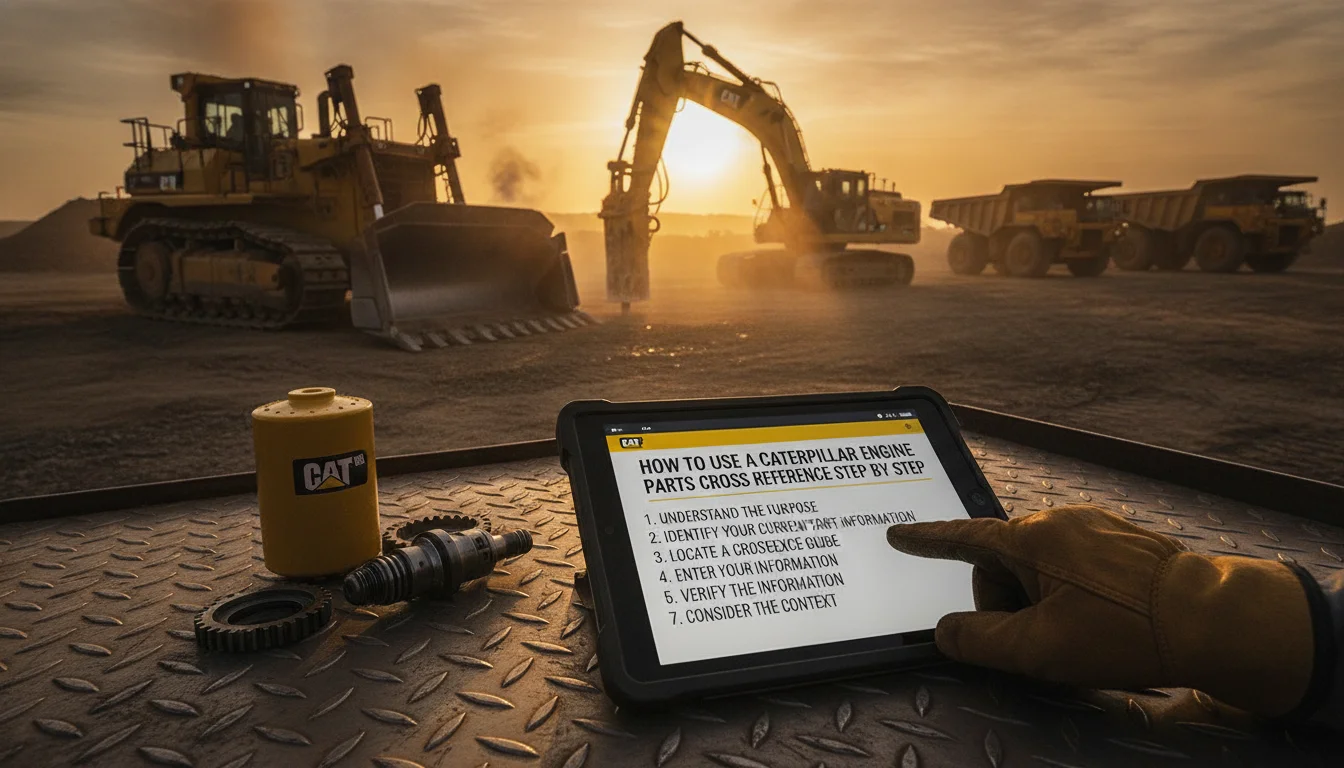
Step-by-Step Search Workflow
Using a caterpillar engine parts cross reference correctly starts with the serial number, not the part number. Follow this sequence to reduce the chance of ordering the wrong part; each step builds a checkpoint before money is spent.
- Locate the Product Identification Number (PIN) on the machine frame or the engine serial number plate.
- Record the original Caterpillar part number from the engine tag, parts manual, or the failed component itself.
- Open the official lookup at parts.cat.com and enter the part number or machine serial number.
- Review supersession and serial number break notes to see if the part number has changed.
- Run the Cat part number through an independent cross reference database such as TractorParts.com or Parts-CrossReference.com.
- Compare aftermarket equivalents from suppliers like Interstate-McBee or Maxiforce and check their published model coverage.
- Verify dimensional and application details, then order only once the supplier confirms fitment for your exact serial number.
Interpreting Cross Reference Results
A cross reference result may show a direct interchange, a supersession, or an application-specific match. A direct interchange means the part replaces the original without modification. A supersession means the original number is obsolete but the new number is the official replacement. An application-specific match means the part fits only certain serial number ranges or machine configurations.
Pay attention to the type of match returned. If a third-party database lists a part as an equivalent but doesn't specify serial number coverage, treat that match as unverified. Contact the supplier with your engine serial number to confirm before ordering.
Common Search Inputs: Part Number vs. Model vs. Serial Prefix
You can search by part number, machine model, or serial prefix depending on the tool. Part number search is the most direct route when you have a known failed part. Model search works well when building a maintenance parts list. Serial prefix search is valuable when the engine has multiple production breaks or when the part number on the component is unreadable.
The official Cat Filters Cross Reference tool uses competitor part numbers as inputs, while TractorParts.com uses Caterpillar part numbers. Knowing which input a database expects prevents failed searches and wasted time, especially when you're working against a downtime clock.
Third-Party and Aftermarket Caterpillar Engine Parts Cross Reference Databases
TractorParts.com Interchange Tables
TractorParts.com hosts a Caterpillar Part Number Search with dozens of interchange and cross reference tables. These include Cat bearing, Cat Continental, Cat Delco, Cat Master Part Number, Cat Mitsubishi, Cat Rockford Clutch, Cat Twin Disc, Cat Vickers, and many other manufacturer-specific cross references. The site describes the database as being in its test phase and asks users to send comments, corrections, and additions to [email protected].
Because the database is user-assisted and still being validated, use it as a research starting point rather than a final authority. The site itself advises care and diligence when ordering parts from anyone based on its cross reference data, a caution worth repeating to any technician relying on it as a sole source.
Parts-CrossReference.com Database
Parts Cross Reference is a multi-brand interchange platform covering agriculture, construction, industrial equipment, and forklifts. It lists more than 500,000 part numbers across a long roster of manufacturers, from AGCO and Allis Chalmers to Caterpillar, Clark, Dana, and many others. This broad scope makes it useful for shops working mixed fleets that need to cross Cat parts with other OEM or aftermarket numbering systems.
The platform includes subscription plans and login features, so not every lookup path is free. For occasional use, free search options may be limited, but the database shows how cross referencing has expanded well beyond single-brand dealer systems.
Aftermarket Supplier Catalogs: Interstate-McBee and Maxiforce
Interstate-McBee supplies aftermarket replacement parts for Caterpillar engine applications. Its product line includes engine rebuild kits, fuel injection components, gaskets, turbochargers, camshaft and valve train parts, seals, cylinder heads, crankshafts and dampers, pistons, cylinder liners, bearings and bushings, and lubrication, fuel, electrical, cooling, and intake and exhaust system components. Gaskets and gasket sets are produced at its facility in Cleveland, Ohio.
Maxiforce covers Caterpillar diesel engine parts for models including the 3013C, 3024, 3024C, 3024T, 3044, 3044C, 3044CT, 3044T, 3046, 3054, 3054B, 3054C, 3054E, 3054T, 3056, 3056E, 3056T, C1.5, C1.7, C2.2, C2.2T, C3.3, C3.3T, C3.4, C4.4T, C4.4TA, C6.6, and C7.1 tier 2 and tier 3 certified engine models. Maxiforce states these engines are found in Cat 416 and 426 backhoe models, as well as skid steers, wheel loaders, vibratory compactors, and marine and power generation applications spanning from 50KW to 300KW.
Comparing Genuine, OEM, and Aftermarket Caterpillar Engine Parts
What Each Sourcing Path Offers
Genuine Cat parts, OEM parts, and aftermarket parts each carry different tradeoffs, and a proper cross reference helps you weigh them. Genuine Cat parts are sold through Caterpillar's official parts network and engineered to the original specifications. OEM parts may be produced by the same manufacturers that supply Caterpillar but sold under a different label. Aftermarket parts are produced by third-party companies that reverse engineer or manufacture replacements to match the original fit and function.
Genuine parts carry the strongest fitment guarantee and the highest price. Aftermarket parts often offer lower cost but require more careful validation. A cross reference helps the buyer move between these paths without losing the thread of part number accuracy.
Comparison Table of Cross Reference Sources
| Source | Best For | Volume/Coverage | Key Features | Caveat |
|---|---|---|---|---|
| Cat Parts Store | Genuine Cat parts | Full Cat catalog | Search by category, part number, serial number | Requires accurate serial number |
| Cat Filters Cross Reference | Cat filters | Up to 50 competitor part numbers per search | Bulk paste, shopping list | Filter-only scope |
| TractorParts.com | Broad interchange research | Dozens of Caterpillar interchange tables | Multiple OEM and component cross refs | Test-phase database; verify before ordering |
| Parts Cross Reference | Agriculture, construction, industrial, forklift | More than 500,000 part numbers | Multi-brand search | Subscription features may require login |
| Interstate-McBee | Aftermarket engine parts | Full engine coverage guide | Gaskets, fuel injection, turbochargers | Aftermarket, not genuine Cat |
| Maxiforce | Diesel overhaul kits and components | Covers 3013C through C7.1 Cat engines | ISO 9001:2015, savings of 30-40% vs OE | Primarily smaller Cat engines used in backhoe loaders and skid steers |
Quality Standards and Certifications
Aftermarket quality claims should be checked against documented standards rather than taken at face value. Maxiforce states that its Quality Control and Product Development teams operate under ISO 9001:2015 certification, a recognized quality management system standard. The company also cites savings of 30 to 40% compared to OE parts, noting that product testing is required under its ISO certification.
Genuine parts remove most of the guesswork. Every alternative you consider after that is a tradeoff between cost, lead time, and how much validation you're willing to do yourself.
Genuine Cat parts are backed by Caterpillar's engineering and dealer network, which reduces the verification burden on the buyer. Independent cross reference databases don't manufacture parts, so their role is purely informational. The buyer still has to confirm the quality and fitment of the final part selected.
Common Challenges and How to Avoid Cross Reference Errors
Serial Number Breaks and Model Variants
One of the most common cross reference failures is ignoring serial number breaks. A part number may look interchangeable because it belongs to the same engine model, but a production break can change cylinder head, injector, or piston specifications. Always check whether the interchange note mentions a serial number range or a specific Cat SN prefix.
Cat engines within a machine may carry their own serial numbers, separate from the machine PIN. Boyd Cat warns that machines can have multiple identification plates and serial numbers. If you cross reference using only the machine PIN, you risk missing an engine-specific serial number break entirely.
Incomplete or Outdated Databases
No cross reference database is perfect, and treating any single source as gospel is a mistake. TractorParts.com openly describes its Caterpillar part number search as being in a test phase and asks users to submit corrections. That transparency is useful because it tells you not to treat every result as final.
When a database lacks a recent supersession, it may point to an obsolete part number. When it lacks a serial number break, it may suggest a part that cannot physically fit. Cross reference results from any source should be confirmed against the official Cat lookup or a dealer parts specialist before ordering.
Counterfeit and Low-Quality Parts Risks
Cross referencing opens the door to aftermarket parts, but not all aftermarket parts are equal. A low-quality piston or gasket can fail early and cause engine damage. That risk climbs when the cross reference result comes from an unverified source or a marketplace seller with no documented quality system.
To reduce risk, prefer suppliers with published catalogs, such as Interstate-McBee and Maxiforce, and check for quality system certifications. Use the cross reference to find candidate parts, but rely on supplier documentation and serial number verification to make the final call.
Pros and Cons of Using a Caterpillar Engine Parts Cross Reference
Pros
- Widens sourcing options beyond a single dealer, especially valuable for older or discontinued Cat engines.
- Creates price competition between genuine, OEM, and aftermarket suppliers.
- Reduces downtime by surfacing available alternatives faster than waiting on a backordered genuine part.
- Helps technicians catch supersessions before ordering an obsolete part number.
Cons
- Third-party databases can be incomplete, outdated, or still in test phase, as TractorParts.com itself acknowledges.
- Serial number breaks are easy to miss if you skip the verification step.
- Aftermarket quality varies by supplier, so certification and documentation still need to be checked manually.
- Some databases, like Parts-CrossReference.com, gate full functionality behind subscription plans.
Conclusion: Build a Reliable Caterpillar Engine Parts Cross Reference Workflow
A caterpillar engine parts cross reference is most effective when it combines official Cat resources, independent interchange databases, and documented aftermarket catalogs. Start with the machine or engine serial number, confirm the original part number, use the official lookup to identify supersessions, then widen the search to independent and aftermarket sources.
The goal isn't replacing genuine Cat parts with the cheapest option; it's finding the correct part quickly and confidently. As of 2026, the number of interchange databases and aftermarket catalogs available to buyers keeps growing, which makes the serial-number-first discipline more important, not less. By following that workflow and treating cross reference data as leads to verify, equipment owners and technicians can reduce downtime, avoid costly misfits, and keep Caterpillar engines running longer. For heavy equipment operators sourcing globally, working with a supplier that documents fitment and ships fast matters as much as the part number itself. Shop OEM-quality spare parts with global 5-day delivery at 3genexport.com.
Frequently Asked Questions
What are the cross references for Caterpillar parts?
Cross references are interchange records that link Caterpillar part numbers to equivalent numbers from other Cat lines or aftermarket brands. They help find a replacement when an exact Cat part is unavailable or too costly, provided the match is verified against your engine's serial number.
How can I find Caterpillar part numbers for free?
You can use parts.cat.com, free Cat parts reference guides at cat.com, and the Cat Filters Cross Reference tool at no charge. Third-party databases such as TractorParts.com also offer free lookup while their database is in test phase.
Who manufactures Caterpillar engines?
Caterpillar Inc. is the original equipment manufacturer of Cat engines, while aftermarket suppliers like Interstate-McBee and Maxiforce manufacture replacement components. Maxiforce lists coverage for engines from 3013C through C7.1 used in Cat backhoe loaders and other equipment.
Where can I buy Caterpillar parts?
Genuine parts are available through parts.cat.com and authorized Cat dealers. Aftermarket Caterpillar engine parts can be purchased from FinditParts, Interstate-McBee, Maxiforce, and global suppliers such as 3GEN Export that stock OEM-standard components for Caterpillar, Komatsu, and Volvo equipment.
Are aftermarket Caterpillar engine parts safe to use?
Quality aftermarket parts can be safe when the supplier follows documented specifications and quality systems. Maxiforce cites ISO 9001:2015 certification and claims savings of 30 to 40% compared to OE, but fitment must still be verified against your engine serial number before ordering.
What is a Cat Product Identification Number (PIN)?
A PIN is the unique serial identifier located on the machine frame or engine plate. It ensures that any caterpillar engine parts cross reference match aligns with the exact model and serial number break for your specific unit.