
Caterpillar Genuine Parts vs Aftermarket: 2026 Guide
Caterpillar genuine parts vs aftermarket compared on cost, warranty, and fitment. Get 2026 data-backed guidance before you order your next replacement
Loading article…
Article Not Found
The article you're looking for doesn't exist or may have been removed.
Back to BlogCaterpillar genuine parts vs aftermarket is a comparison between OEM-manufactured components built to Caterpillar's exact specifications and third-party replacement parts designed to fit the same equipment. Both options serve different budgets and risk tolerances.
Key Takeaways
- Caterpillar genuine parts are OEM parts made to exact specifications, ensuring compatibility and reliability.
- Aftermarket parts can offer real cost savings but vary in quality and fitment depending on the supplier.
- Choosing between vs aftermarket options depends on your budget, equipment age, and specific application.
- Warranty terms matter: check your machine's coverage before switching to a third-party supplier.
- Availability and lead time often swing the decision, especially for older or discontinued equipment.
- Tier-one aftermarket manufacturers now compete closely with OEM on fitment and warranty terms.
Overview of Caterpillar Genuine Parts
Caterpillar genuine parts are OEM components manufactured to the exact specifications of the parts originally installed in the machine. These parts are built to fit and function without modification, which is why dealers and fleet managers default to them for critical repairs.
Quality and Durability
Caterpillar genuine parts are built to meet strict performance standards, and according to manufacturer specifications, they undergo testing before release to the dealer network. This consistency reduces the odds of premature failure compared to unverified aftermarket alternatives. For fleet operators running machines around the clock, that reliability translates directly into fewer unplanned stops.
Warranty Considerations
Using Caterpillar genuine parts typically preserves your equipment's warranty coverage. Many OEM warranty terms specify that non-compliant parts used in a covered repair can affect claims tied to that repair, so operators managing new or recently purchased machines should check their warranty documentation closely. This is one of the biggest factors fleet managers weigh in the caterpillar genuine parts vs aftermarket decision.
Availability and Support
Genuine parts move through a network of authorized dealers and service centers. That distribution model means you get support from staff who know the equipment, though it can also mean longer lead times for less common models, a point raised repeatedly on operator forums like Heavy Equipment Forums.
Understanding Aftermarket Parts
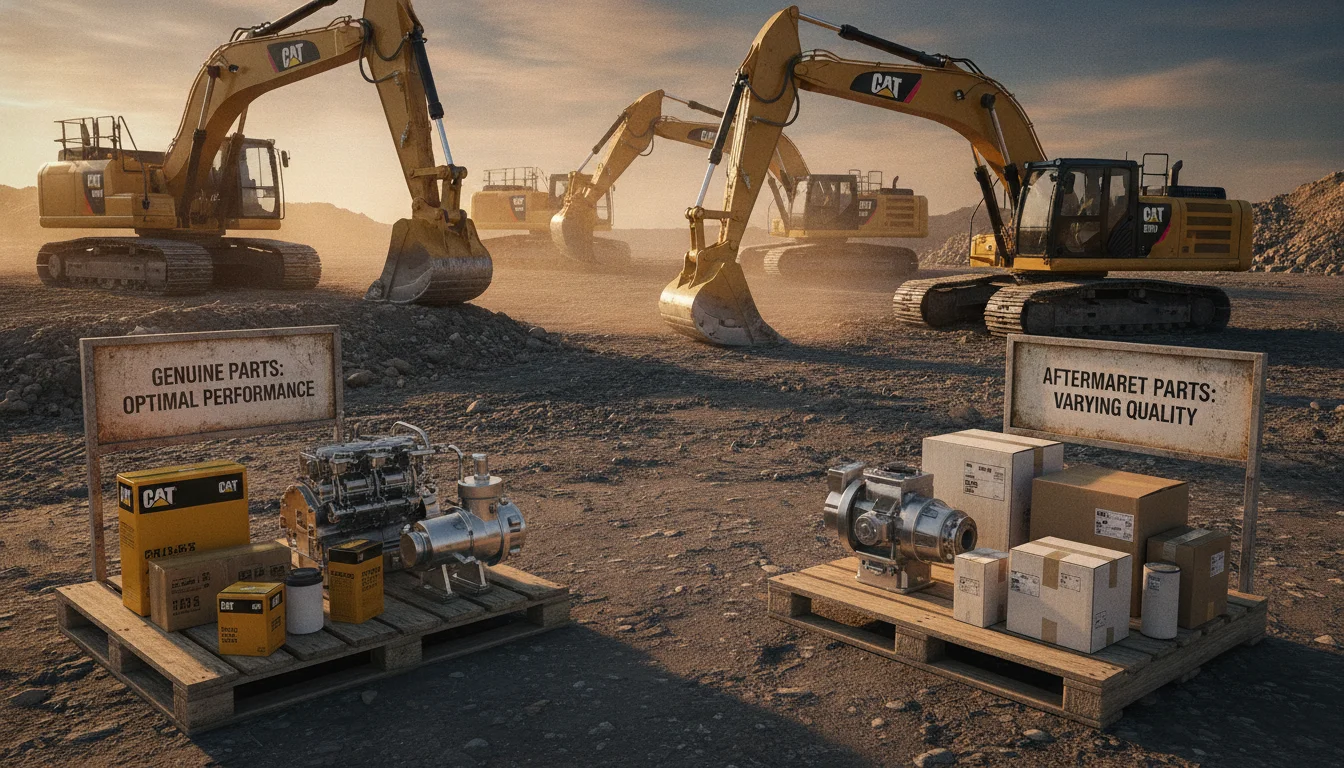
Aftermarket parts are produced by third-party manufacturers designed to fit and perform like the original component. Quality swings widely across suppliers, so due diligence matters more here than with OEM sourcing.
Cost-Effectiveness
Lower price is the main draw of aftermarket parts. Buyers on equipment forums routinely report paying a fraction of dealer pricing for comparable components, and tier-one suppliers like ITR (part of the USCO ITR Group) have publicly stated savings in the 25-40% range compared to genuine Caterpillar pricing. That said, the discount only pays off if the part holds up in the field.
Quality Variability
Not all aftermarket parts are built the same. Some manufacturers produce components that rival OEM in fitment and lifespan, while others cut corners on materials or tolerances. One veteran mechanic on Heavy Equipment Forums noted that older IPD parts used on Caterpillar 3406 engines were roughly a quarter the cost of OEM but required manual fitting adjustments around piston spray tubes, an issue he said may have improved in more recent production runs.
Availability and Sourcing
Aftermarket parts are often easier to source than genuine parts, especially for older or discontinued equipment. Multiple manufacturers competing for the same part number generally means more stock on hand and shorter shipping windows, which cuts downtime for operators who can't afford to wait on a single-source dealer.
"Cat was losing sales to the aftermarket suppliers so they started selling the aftermarket parts as 'classic' parts. Usually they charge a premium for using the Cat name on a part that comes from the same shelf as the aftermarket option." - discussion thread, ACMOC Forum
How Genuine and Aftermarket Parts Are Actually Made
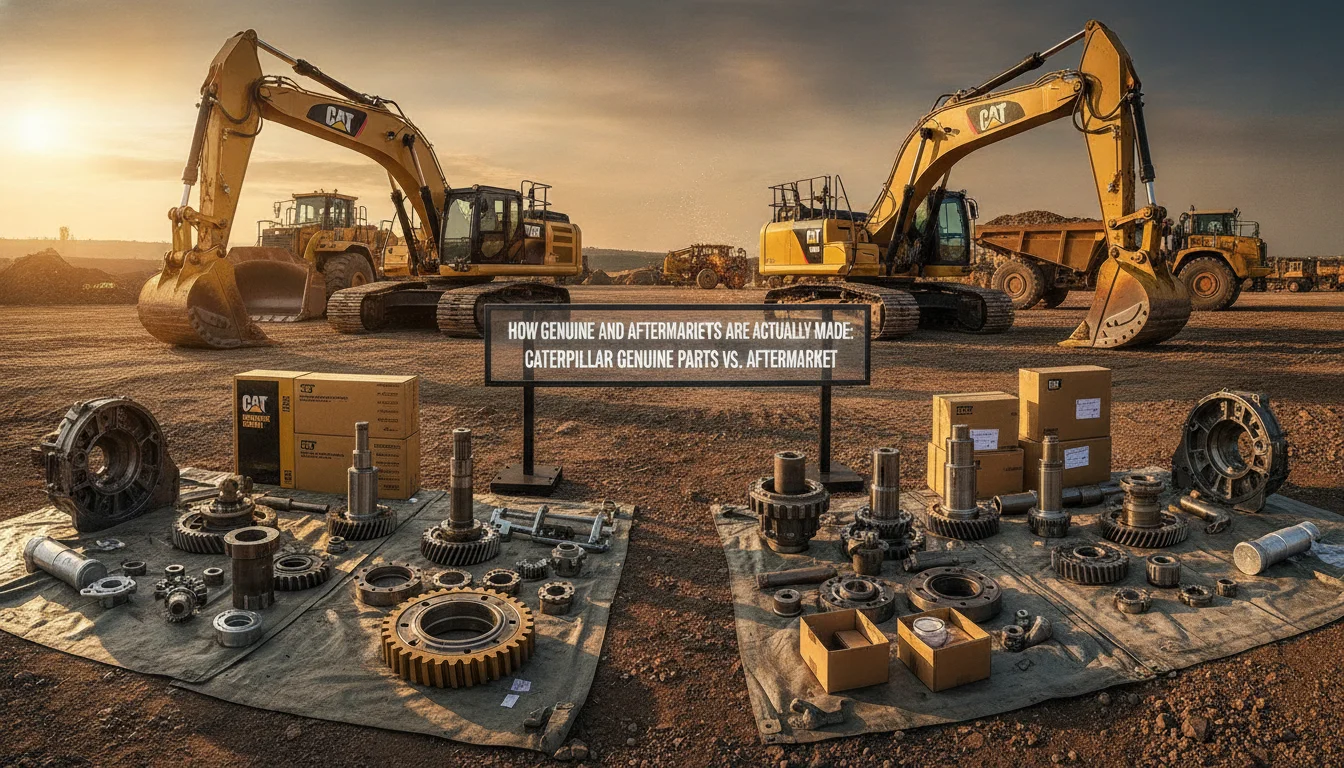
The manufacturing process explains most of the price and quality gap between these two sourcing paths. Caterpillar genuine parts are engineered in-house or by contracted manufacturers who build strictly to Caterpillar's blueprints, tolerances, and material specs, then stamp the part with Caterpillar's part number and quality sign-off.
Here's what many buyers don't realize: Caterpillar, like most global OEMs, doesn't manufacture every component in its own foundries. It relies on a network of specialized external manufacturers producing parts to Caterpillar's exact specifications. Tier-one aftermarket manufacturers, such as ITR (part of the USCO ITR Group), operate the same way, engineering ground engaging tools and undercarriage components designed as direct replacements that meet the same dimensional specs.
The difference comes down to who controls the spec sheet and who signs off on final quality. With genuine parts, Caterpillar owns that process end to end. With aftermarket parts, a third-party engineering team reverse-engineers or independently designs a component to match OEM tolerances, then backs it with their own warranty. This is why reputable aftermarket suppliers now offer ISO-certified fitment and national warranty programs that rival OEM coverage, while lower-tier suppliers skip these steps entirely to hit a lower price point.
How to Apply This: Choosing the Right Part for Your Job
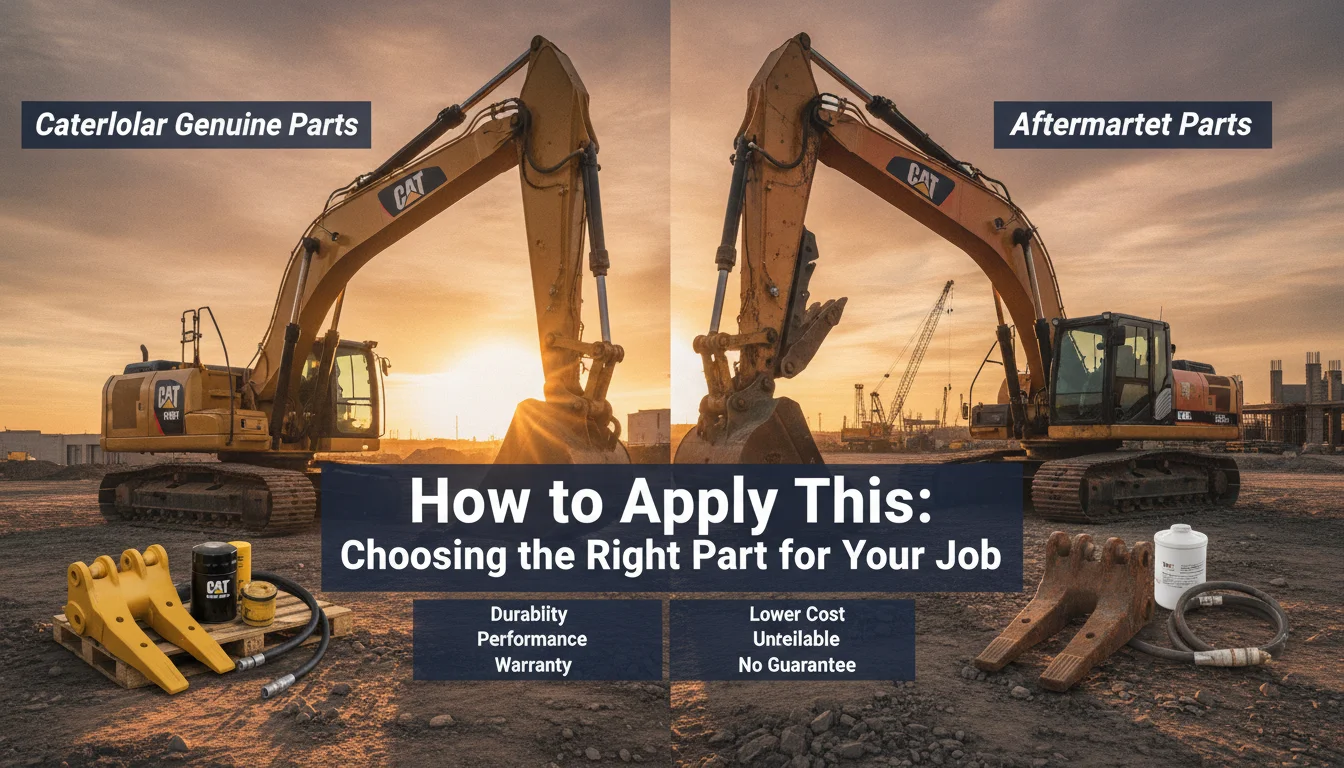
Deciding between caterpillar genuine parts vs aftermarket options gets easier when you follow a structured process instead of defaulting to habit or price alone.
- Identify the part's criticality. Engine internals, hydraulic pump components, and undercarriage parts on machines under warranty should default to genuine parts unless you've vetted a tier-one aftermarket alternative.
- Check your warranty terms. Pull your service agreement and confirm whether non-OEM parts affect coverage on the specific system you're repairing.
- Research the supplier, not just the part. Ask for ISO certification, warranty length, and whether the manufacturer publishes fitment tolerances.
- Compare total cost of ownership, not sticker price. Factor in expected lifespan, downtime risk, and shipping lead time alongside the unit price.
- Order a test batch for non-critical repairs. If you're unsure about a new aftermarket supplier, trial the part on a lower-stakes machine before committing your whole fleet.
- Document everything. Keep receipts, part numbers, and installation records in case of a future warranty dispute or performance issue.
Comparative Analysis: Caterpillar Genuine Parts vs Aftermarket
| Criteria | Caterpillar Genuine Parts | Aftermarket Parts |
|---|---|---|
| Quality | High, meets OEM specifications | Varies by manufacturer; tier-one brands can match OEM |
| Cost | Higher price point | Generally lower cost, often 25-40% less from tier-one suppliers |
| Warranty | Maintains equipment warranty | Coverage varies; reputable suppliers offer comprehensive national warranties |
| Availability | Dealer-dependent, may have longer lead times | Often more readily available, including for older equipment |
| Performance | Guaranteed compatibility and performance | Performance can match OEM with careful supplier selection |
A Realistic Scenario: Rebuilding an Older Engine
Picture a fleet manager overseeing a Caterpillar 3406 that's due for a water pump, oil cooler, and gasket replacement. The dealer quote comes in high, and the machine is old enough that some OEM parts take weeks to source. This is a common situation reported on operator forums, where owners of older 3406 and D8-series machines frequently weigh dealer pricing against aftermarket suppliers like IPD or PAI.
In this scenario, a fleet manager working through the caterpillar genuine parts vs aftermarket decision might reasonably choose OEM for the water pump housing (a precision-fit, warranty-sensitive component) while sourcing gaskets and fasteners aftermarket, where fitment tolerances are less critical and the cost difference is significant. This kind of mixed sourcing strategy, common among experienced mechanics, balances risk against budget rather than treating the decision as all-or-nothing.
When to Choose Caterpillar Genuine Parts vs Aftermarket
The right choice depends on equipment age, warranty status, application severity, and how quickly you need the part installed. Weigh these factors before ordering:
- Budget Constraints: If cost is a primary concern, aftermarket parts may be the better choice, provided you select a reputable supplier with documented quality controls.
- Equipment Age: For older machinery, aftermarket parts may be more accessible and cost-effective, especially when genuine parts are discontinued or back-ordered.
- Warranty Needs: If maintaining warranty coverage is critical, lean toward Caterpillar genuine parts to avoid disputes over claim eligibility.
- Performance Requirements: If your machinery runs in demanding conditions, genuine parts may offer the consistency needed to minimize downtime.
Pros and Cons
Pros
- Genuine parts guarantee fitment and are backed by Caterpillar's dealer support network
- Aftermarket parts from established manufacturers deliver meaningful cost savings on repair budgets
- Aftermarket sourcing often shortens lead times for older or discontinued equipment
- Tier-one aftermarket suppliers now offer warranty terms that rival OEM coverage
Cons
- Genuine parts carry a higher upfront cost and can involve longer wait times through dealer channels
- Aftermarket quality varies significantly, and low-tier suppliers can compromise fitment or lifespan
- Using non-compliant aftermarket parts can complicate warranty claims on covered systems
- Vetting a new aftermarket supplier takes time most operators don't budget for upfront
Common Mistakes to Avoid
The most common mistake buyers make is treating caterpillar genuine parts vs aftermarket as a single fleet-wide policy instead of a part-by-part decision. Here's what else to watch for:
- Skipping the warranty check. Operators install aftermarket parts on covered systems without confirming whether it affects an active claim.
- Assuming all aftermarket brands are equal. A budget knockoff and a tier-one manufacturer like IPD or ITR are not interchangeable, despite similar price positioning.
- Ignoring fitment tolerances on undercarriage and hydraulic components. As one Australian aftermarket manufacturer put it, tolerances on undercarriage parts are measured in millimeters, and a track chain slightly out of pitch accelerates wear across the whole system.
- Not documenting part sourcing. Skipping records makes it harder to resolve disputes if a part fails early.
- Chasing price alone on critical components. The cheapest option on a hydraulic pump or engine internal rarely stays cheap once downtime costs are factored in.
2026 Outlook: What's Changing in the Parts Market
As of 2026, the gap between top-tier aftermarket suppliers and Caterpillar genuine parts continues to narrow on fitment and warranty terms, even as quality still varies sharply at the budget end of the market. More aftermarket manufacturers are pursuing ISO certification and publishing fitment tolerance data to compete directly with OEM on trust, not just price. At the same time, global sourcing shifts and tariff discussions affecting parts manufactured overseas, including components made in China, are prompting some buyers to scrutinize country of origin regardless of whether the part carries a genuine or aftermarket label. For procurement teams sourcing parts globally, working with a supplier who can verify OEM-standard manufacturing and provide consistent lead times matters more than brand name alone.
Expert Insight
"While aftermarket parts can offer significant savings, it's essential to consider the long-term implications on performance and warranty. In many cases, investing in genuine parts saves money over time by reducing downtime and maintenance costs." - Industry Expert
Conclusion
In the debate of caterpillar genuine parts vs aftermarket, both options have real merits and tradeoffs. Caterpillar genuine parts provide reliability, warranty protection, and guaranteed compatibility, making them the safer default for critical applications. Aftermarket parts, particularly from established tier-one manufacturers, offer substantial cost savings and availability that appeal to budget-conscious operators managing older fleets. The right call depends on your specific equipment, warranty status, and operational risk tolerance.
Our team at 3GEN Export sources OEM-standard spare parts for Caterpillar, Komatsu, Volvo, Atlas Copco, and 40+ heavy equipment brands, backed by quality verification on every shipment. Shop OEM-quality spare parts with global 5-day delivery at 3genexport.com.
Frequently Asked Questions
Are Caterpillar genuine parts worth the extra cost?
Genuine parts are often worth the premium for warranty-sensitive repairs and critical components like engine internals or hydraulic pumps, where guaranteed compatibility reduces downtime risk. For lower-stakes parts like gaskets or fasteners, a reputable aftermarket supplier can deliver comparable value at a lower price.
Can I use aftermarket parts without voiding my warranty?
It depends on your specific warranty terms and which system you're repairing. Always check your coverage documentation before installing a non-OEM part on equipment still under warranty.
How do I choose a reputable aftermarket parts supplier?
Look for ISO certification, published fitment tolerances, transparent warranty terms, and a track record with your specific equipment brand. Checking operator forums and asking industry peers for supplier recommendations is also standard practice.
What are the risks of using aftermarket parts?
The main risks include quality variability between suppliers, potential fitment issues on precision components, and the possibility of complicating a warranty claim if the part is tied to a covered failure.
Can aftermarket parts perform as well as genuine parts?
Some aftermarket parts, particularly from tier-one manufacturers, match or come close to OEM performance and lifespan. Quality still varies significantly by manufacturer, so vetting the supplier matters as much as the part itself.
Is Caterpillar considered an OEM?
Yes, Caterpillar is the original equipment manufacturer for its machines, meaning genuine Caterpillar parts are built to the exact specifications used in the original equipment. Aftermarket suppliers produce compatible parts independently, without being the original manufacturer.
How can I find genuine Caterpillar parts?
Genuine Caterpillar parts are available through authorized dealers, certified service centers, and Caterpillar's official parts network, which ensures authenticity and traceability.