Caterpillar Technical Support Parts Guide 2026
Caterpillar technical support parts sourcing guide: OEM vs reman, ordering steps, SIS 2.0, CVAs, and global procurement tips for 2026. Read the full guide.
Loading article…
Article Not Found
The article you're looking for doesn't exist or may have been removed.
Back to BlogCaterpillar Technical Support Parts: The 2026 Procurement Guide
Caterpillar technical support parts are the OEM and remanufactured components used to maintain, repair, and overhaul Cat-branded heavy equipment across construction, mining, and energy sectors. Getting the right part, fast, is what keeps your fleet productive.
Key Takeaways
- OEM Cat parts are engineered to exact machine specifications, minimizing failure risk and protecting warranty coverage.
- Cat's online catalog at parts.cat.com lists more than 1.4 million genuine parts, searchable by part number or machine serial number.
- Warren CAT data shows 98% of orders are filled within 24 hours through the authorized dealer network.
- Cat Reman covers 8,000+ components, offering like-new performance at a lower cost than new OEM parts.
- Customer Value Agreements (CVAs) bundle parts delivery, maintenance scheduling, and technical support into a single plan.
- For global procurement outside the dealer network, suppliers like 3GEN Export offer OEM-quality parts with 5-day worldwide delivery.
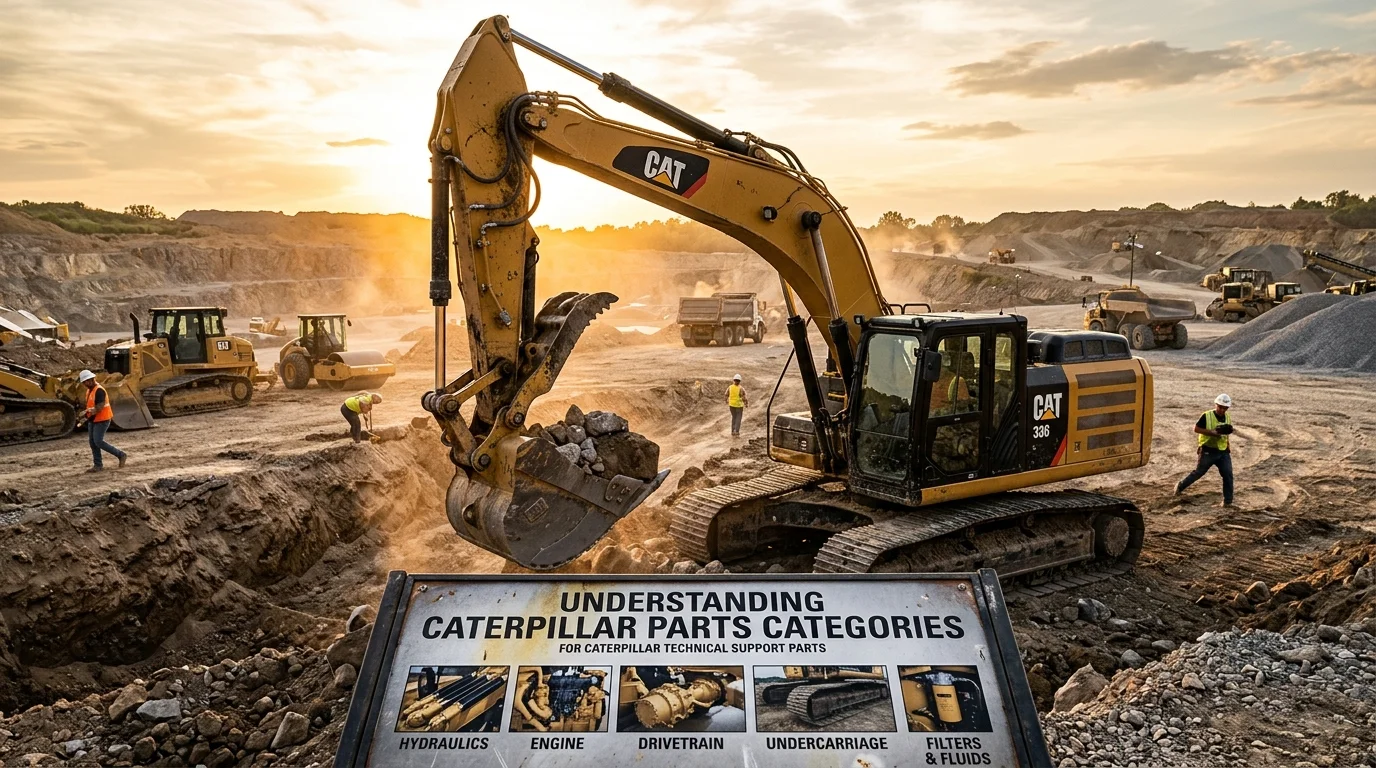
Understanding Caterpillar Parts Categories
Caterpillar parts fall into three distinct categories, each with a different cost profile, warranty structure, and use case. Knowing which category fits your situation is the first decision every procurement manager should make before placing an order.
Types of Caterpillar Parts
- OEM Parts: Manufactured by Caterpillar to exact equipment specifications. These carry a standard Cat warranty and are the benchmark for compatibility and reliability.
- Remanufactured (Reman) Parts: Used cores are disassembled, cleaned, inspected, and rebuilt to OEM tolerances. Cat Reman covers more than 8,000 components, from engines to electronics to hydraulics. Performance matches new parts at a lower price point.
- Aftermarket Parts: Produced by third-party manufacturers. Quality varies significantly by supplier. Some aftermarket suppliers, such as KMP Brand, engineer their parts to be interchangeable with OEM components without modification, but warranty terms and quality control differ from Cat-sourced parts.
Importance of Genuine Parts
Using genuine Cat parts protects your equipment investment in two concrete ways. First, OEM parts are engineered specifically for each machine model, so fit and function are guaranteed. Second, installing non-genuine parts can void your Cat warranty, leaving you exposed to full repair costs on a machine that may still be under coverage.
"Cat equipment is built to be rebuilt and run for decades. That's why we offer attachment, upgrade and rebuild options, as well as updates on functions and features." - Caterpillar Inc., cat.com Support Hub, 2026
How the Cat Parts Ecosystem Works
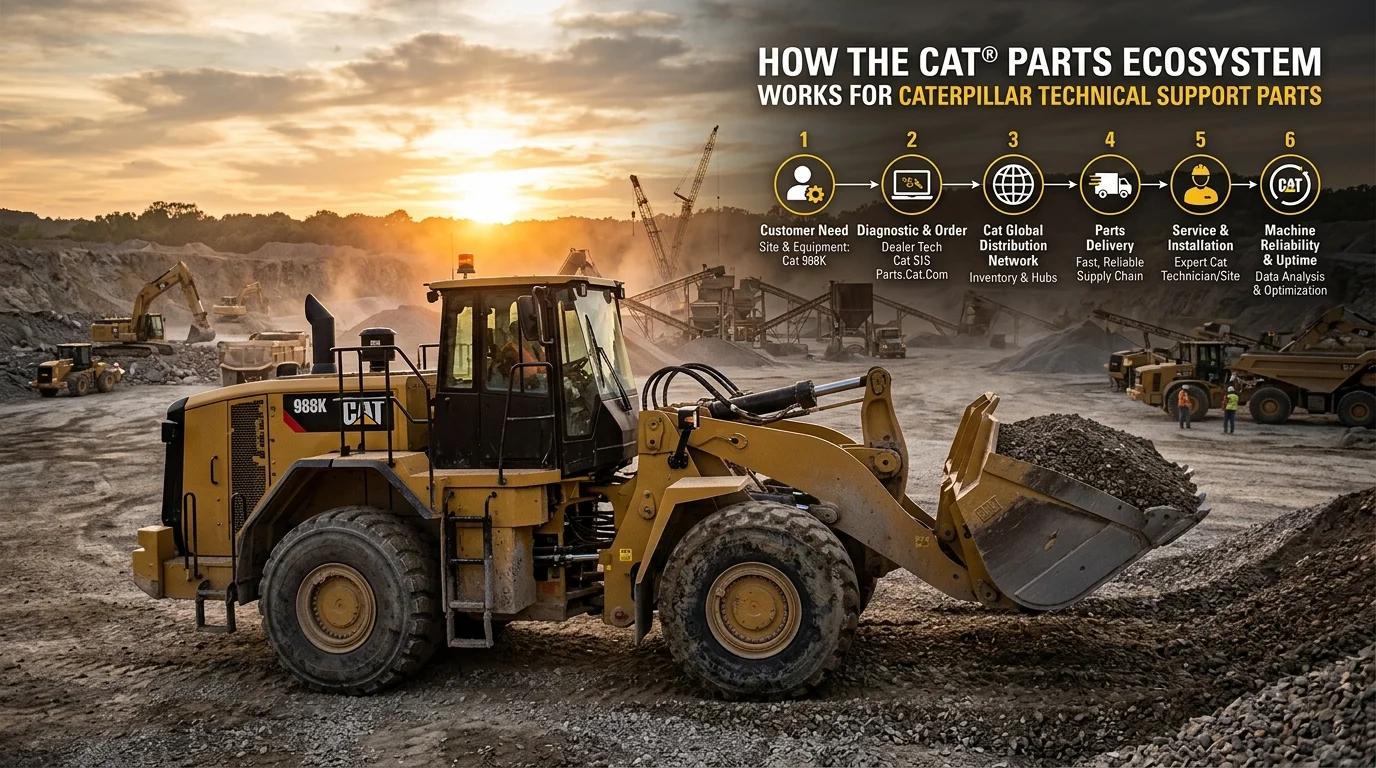
The Cat parts supply chain operates through a layered network: Caterpillar's own distribution infrastructure feeds into a global authorized dealer network, which in turn serves end customers through physical locations, online ordering, and direct delivery. Understanding this structure helps procurement teams choose the fastest and most cost-effective sourcing path.
At the center is parts.cat.com, Caterpillar's primary online parts portal. It provides real-time inventory visibility, part number lookup, and order tracking. Dealers like Warren CAT run regional distribution centers, putting on more than 7,000 miles of delivery routes each night to fulfill orders. Their network includes 175+ drop box locations for no-charge pickup, giving customers flexibility beyond standard shipping.
Parallel to the dealer network, Cat SIS 2.0 (Service Information System) serves as the technical backbone. SIS 2.0 is Caterpillar's official parts and service information platform, giving technicians access to detailed repair procedures, maintenance instructions, technical data, and parts diagrams. It's the reference system that dealers and independent shops use to confirm part numbers before ordering.
For buyers operating outside North America or in regions with limited dealer coverage, authorized global suppliers fill the gap. At 3GEN Export, we source OEM-quality parts for Caterpillar equipment and ship worldwide, typically within 5 business days. This matters on remote mining sites or international construction projects where the nearest Cat dealer is hundreds of kilometers away.
How to Order Cat Parts: Step-by-Step
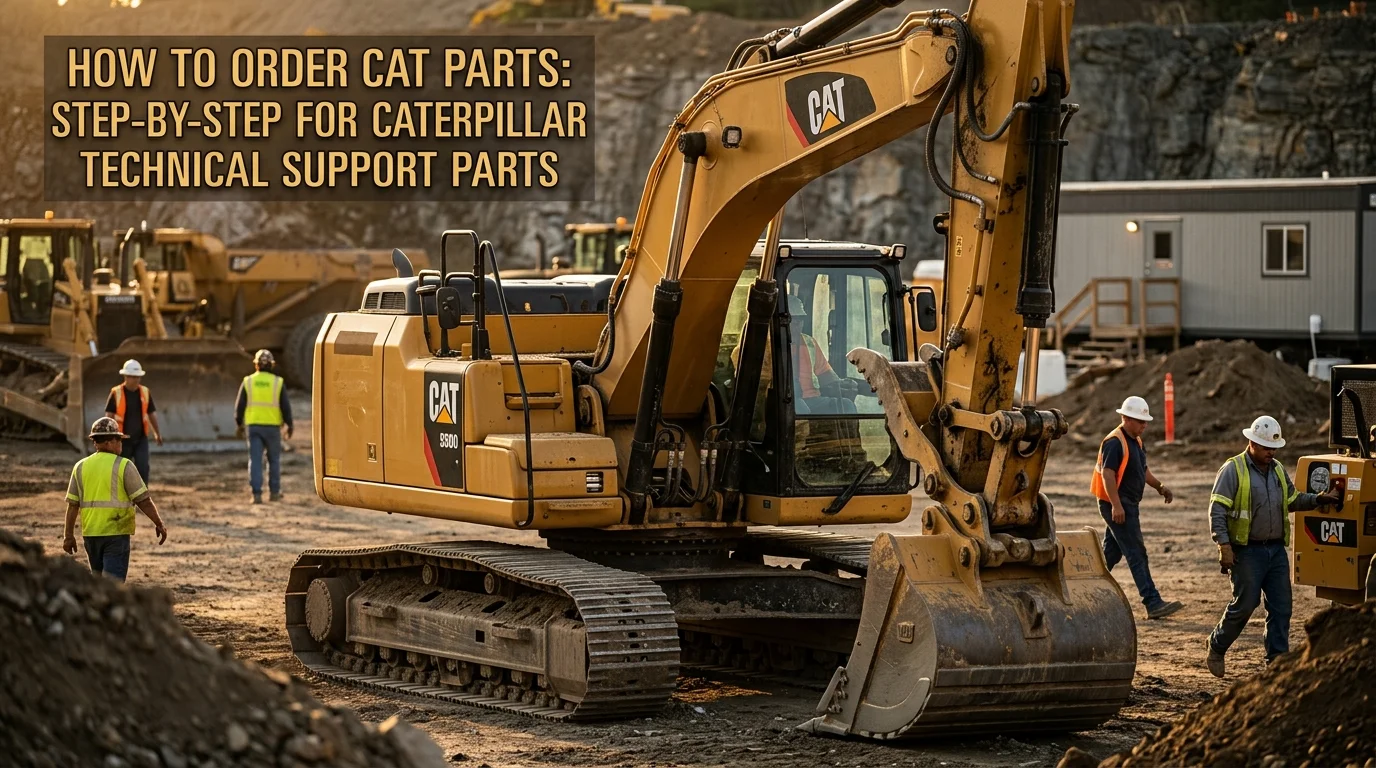
Ordering the right part starts with accurate machine identification. Skipping this step is the single most common cause of wrong-part deliveries and costly return freight.
- Locate your machine serial number (PIN). Find the serial number plate on the outer frame of your machine. Models built before 2002 use an 8-character PIN. Newer models use a 17-character PIN, where the last 8 digits are the serial number. Engine serial numbers are on a separate plate and are not the same as the machine serial number.
- Access parts.cat.com. Navigate to the portal from any device. You'll need a dealer account for full catalog access and pricing. For common maintenance and repair parts, shop.cat.com allows purchasing without a dealer account.
- Search by part number or description. If you have the part number from your service manual or Cat SIS 2.0, enter it directly. If not, search by machine model and component category.
- Verify compatibility. Confirm the part matches your machine's serial number range. The catalog flags superseded part numbers, so always check for the current replacement if your original number returns no results.
- Select your fulfillment option. Choose between dealer pickup, drop box collection, or direct delivery. Rushed shipping may incur additional fees; standard orders through the authorized network are typically filled within 24 hours.
- Track your order. parts.cat.com provides real-time order tracking. For urgent orders, contact your dealer's parts division directly to confirm dispatch status.
Ordering Through Local Dealers
For complex repairs or unfamiliar part numbers, working directly with a Cat dealer's parts team is often faster than self-service. Dealer reps can cross-reference your machine's service history, identify superseded part numbers, and flag any technical service bulletins that affect the repair. Dealers can also advise on whether a reman part is available, which can cut your parts cost significantly while maintaining OEM-level performance.
Comparison of Caterpillar Parts Options
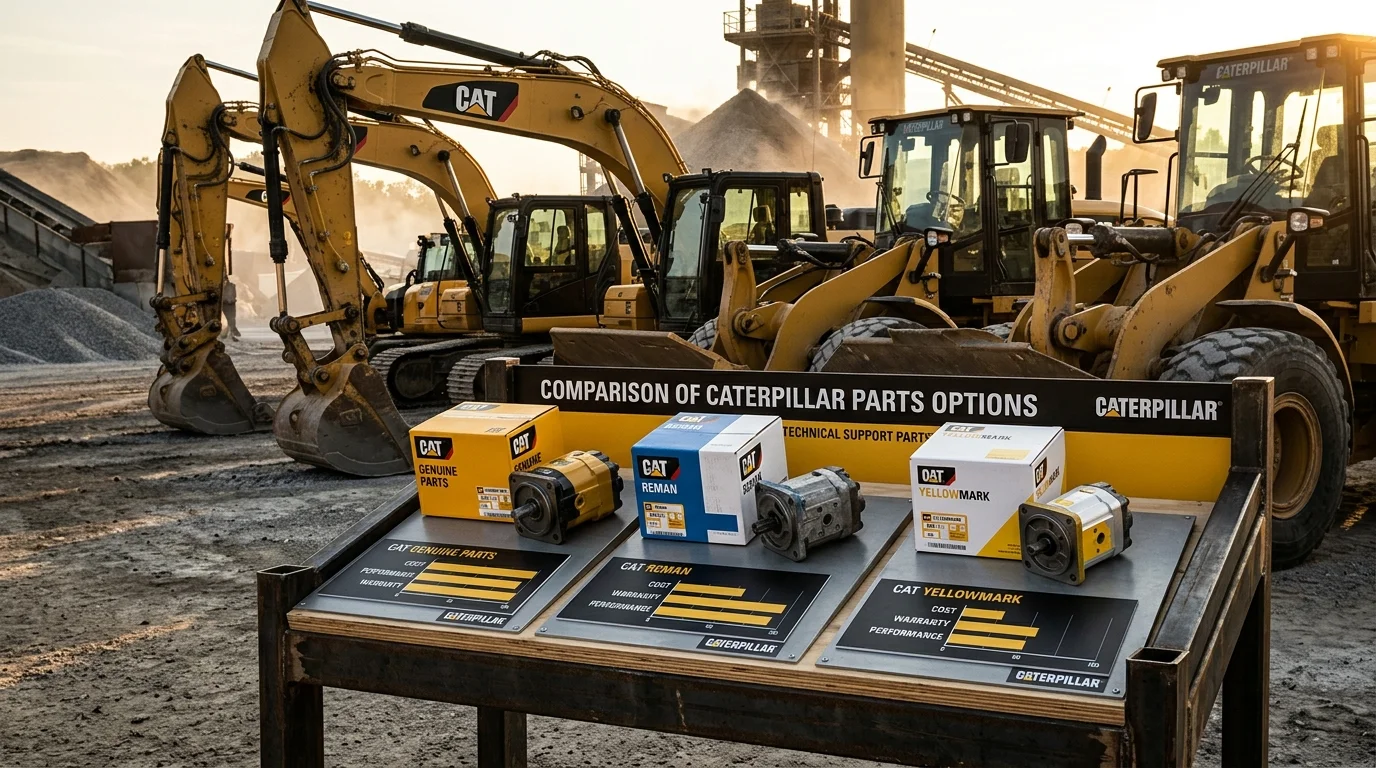
| Part Type | Cost | Warranty | Availability | Best For |
|---|---|---|---|---|
| OEM New Parts | Higher | Standard Cat Warranty | Widely available via parts.cat.com and dealers | Critical systems, warranty-active machines |
| Cat Reman Parts | Moderate | Cat Reman Warranty | 8,000+ components available | Major components: engines, hydraulics, electronics |
| Aftermarket Parts | Lower | Varies by supplier | Varies; quality suppliers offer global distribution | Non-critical wear parts, cost-sensitive fleets |
| Exchange Parts | Moderate | Supplier warranty | Ready for immediate installation | Fast turnaround when downtime cost is high |
Pros and Cons of Each Sourcing Approach
Every procurement path involves trade-offs between cost, speed, and risk. Here's how the main options compare in practice.
Pros
- OEM via Cat dealer network: Guaranteed compatibility, warranty protection, access to technical bulletins, and real-time inventory visibility through parts.cat.com.
- Cat Reman: OEM-level performance at a lower price point. Covers more than 8,000 components. Backed by a Cat warranty. Supports Caterpillar's circular economy program.
- Authorized global suppliers (e.g., 3GEN Export): Faster delivery to remote or international locations. Competitive pricing. OEM-quality assurance without requiring a dealer account.
- Cat SIS 2.0: Eliminates guesswork on part numbers and repair procedures. Reduces the risk of ordering the wrong component.
- Customer Value Agreements: Predictable maintenance costs, scheduled parts delivery, and bundled technical support in a single plan.
Cons
- OEM new parts: Highest unit cost. In regions with limited dealer coverage, lead times can extend beyond standard 24-hour fulfillment.
- Cat Reman: Not every component has a reman equivalent. Core return requirements add a logistical step to the process.
- Aftermarket parts: Quality varies significantly. Non-genuine parts can void Cat warranty coverage and may not meet OEM tolerances on critical systems.
- Online self-service: Requires accurate serial number identification upfront. Errors at this stage cause wrong-part deliveries and return freight costs.
- CVAs: Tailored plans require upfront commitment. May not suit fleets with highly variable maintenance needs or short equipment lifecycles.
Technical Support Resources
Caterpillar's technical support ecosystem extends well beyond parts ordering. The tools below are the ones procurement managers and maintenance supervisors use most frequently.
Cat SIS 2.0: Service Information System
Cat SIS 2.0 is the authoritative source for parts and service information across the Cat equipment range. It provides detailed repair procedures, maintenance schedules, technical data, and parts diagrams. Whether you're planning a scheduled overhaul or diagnosing an unplanned breakdown, SIS 2.0 gives technicians the information needed to identify the correct part and procedure before touching the machine. Access is available through authorized dealers and the Cat digital ecosystem.
Service Manuals and Parts Reference Guides
Service manuals and parts reference guides are available through the Caterpillar maintenance hub on cat.com. These documents cover maintenance procedures, torque specifications, fluid capacities, and parts identification for specific machine models. Your local Cat dealer can also provide printed copies on request.
Customer Value Agreements (CVAs)
Cat Customer Value Agreements are tailored ownership plans that bundle parts delivery, equipment maintenance scheduling, data access, and technical support into a single agreement. CVAs are structured around your specific machine models and operating conditions, so the plan reflects your actual maintenance requirements rather than a generic schedule. For fleet managers running multiple Cat machines, a CVA can simplify procurement, reduce unplanned downtime, and make maintenance costs more predictable.
Operator and Technician Training
Caterpillar offers training for equipment operators, service technicians, and fleet managers. Options include in-person courses, on-demand digital learning, and Cat simulator training. Many authorized dealers also run local training programs. Investing in technician training reduces misdiagnosis, lowers the risk of incorrect parts installation, and extends component life.
"However you choose to maintain your equipment, we've got the resources to help you do it right. From DIY maintenance and repair resources to concierge-level fleet maintenance solutions, we have options that fit every type of business." - Caterpillar Inc., cat.com Services and Support, 2026
Common Mistakes to Avoid When Sourcing Cat Parts
Procurement errors cost more than the wrong part. They cost downtime, return freight, and in some cases, warranty coverage. These are the mistakes we see most often.
- Using the engine serial number instead of the machine serial number. These are two different plates on two different locations. Ordering against the wrong number will return incompatible parts, particularly for undercarriage and structural components.
- Ignoring superseded part numbers. Cat regularly updates part numbers as components are revised. If your original number returns no results, check SIS 2.0 or ask your dealer for the current replacement number before assuming the part is discontinued.
- Choosing aftermarket parts for critical systems. On hydraulic pumps, final drives, engine components, and electronic control modules, the tolerance requirements are tight. Non-OEM parts that don't meet these tolerances can cause secondary damage that costs far more than the savings on the part itself.
- Skipping the CVA review. Many fleet managers don't realize their CVA includes parts delivery as a covered benefit. Ordering parts outside the agreement when they're already covered under it adds unnecessary cost.
- Ordering without checking real-time availability. parts.cat.com shows live inventory. Ordering a part that's not in stock at your nearest distribution center without checking alternatives can add days to your lead time. Use the portal to identify the nearest stocking location before committing to a delivery address.
- Delaying maintenance until failure. Industry maintenance data consistently shows that operating through early warning signs, whether a hydraulic leak, unusual wear on undercarriage components, or rising oil temperatures, leads to more extensive and expensive repairs. Scheduled parts replacement based on manufacturer service intervals is always cheaper than emergency breakdown repair.
Realistic Procurement Scenario: Excavator Hydraulic Pump Replacement
Here's how a typical parts procurement plays out for a fleet maintenance supervisor managing a Cat 320 excavator on a remote construction project.
The machine starts showing reduced hydraulic response and elevated cycle times. The operator reports it at end of shift. The maintenance supervisor accesses Cat SIS 2.0 to pull the diagnostic procedure for the 320's main hydraulic pump. SIS confirms the symptoms align with pump wear and provides the current OEM part number for the main pump assembly.
The supervisor logs into parts.cat.com and searches the part number. The nearest dealer distribution center shows the part in stock. Standard delivery is quoted at 24 hours to the project's regional depot. The supervisor places the order and schedules the machine for next-day maintenance, avoiding a multi-day unplanned outage.
On a similar project in a region without close dealer coverage, the same supervisor contacts 3GEN Export directly. We confirm OEM-quality availability, provide a competitive quote, and arrange air freight delivery within 5 business days to the project site. The machine is back in service before the project schedule is affected.
The key in both cases: accurate serial number identification upfront, SIS 2.0 for part number confirmation, and a clear understanding of which sourcing channel is fastest for the specific location.
Maintaining Caterpillar Equipment: Scheduled vs. Reactive
Regular maintenance is the most cost-effective way to manage a Cat fleet. The choice between scheduled and reactive maintenance has a direct impact on parts costs, machine availability, and total cost of ownership.
Scheduled Maintenance
Following Caterpillar's recommended maintenance intervals is the baseline. This covers fluid changes, filter replacements, undercarriage inspections, and wear part monitoring. Cat's maintenance schedules are published in the machine's Operation and Maintenance Manual and are also accessible through SIS 2.0. CVA holders receive automated maintenance reminders tied to their specific machines and operating hours.
Scheduled maintenance allows procurement teams to plan parts orders in advance, avoiding premium freight costs and last-minute sourcing pressure. Ordering wear parts, filters, and fluids on a planned cycle also makes it easier to negotiate volume pricing with dealers or global suppliers.
DIY Maintenance Resources
Caterpillar provides a substantial library of DIY maintenance resources through cat.com, including online tutorials and instructional videos covering common maintenance tasks. These resources are designed for operators and site technicians who handle basic maintenance in-house. For more complex repairs, Cat's dealer network and authorized service centers provide on-site support.
Financing and Pricing Considerations for Parts
Parts pricing varies by component type, machine model, and sourcing channel. OEM new parts carry the highest unit cost but include full warranty coverage. Cat Reman parts offer a lower price point for major components while maintaining OEM performance standards. Aftermarket parts from quality suppliers can reduce cost further on non-critical wear items, though warranty terms require careful review.
Cat Financial offers financing solutions for equipment acquisition, but parts procurement is typically handled through dealer credit accounts or direct payment via parts.cat.com. For large fleet operators, dealer credit terms can provide payment flexibility on high-value parts orders. CVAs can also spread parts costs across a predictable monthly or annual fee, which simplifies budgeting for maintenance-intensive fleets.
For international buyers, currency, import duties, and freight costs all factor into the total landed cost of parts. Working with a global supplier like 3GEN Export that handles export documentation and international logistics removes this complexity and provides a single, all-in price for delivered parts.
2026 Outlook: What's Changing in Cat Parts Procurement
As of 2026, the Cat parts ecosystem is evolving in two directions: deeper digital integration and broader global distribution. parts.cat.com continues to expand its real-time inventory visibility and self-service capabilities, reducing the need for phone-based dealer interaction for standard parts orders. Cat SIS 2.0 is increasingly integrated with telematics data from Cat machines, allowing predictive maintenance alerts that trigger parts orders before a failure occurs.
On the supply side, the Cat Reman program continues to grow its component coverage, with more than 8,000 parts now available. This expansion reflects both cost pressure from fleet operators and Caterpillar's commitment to circular economy principles outlined in its 2025 Sustainability Report.
For global procurement teams, the shift toward digital ordering and faster international freight options means that sourcing OEM-quality Cat parts from specialist global suppliers is increasingly practical, even for remote project sites. 3GEN Export's 5-day global delivery capability is a direct response to this demand.
Frequently Asked Questions
How can I contact Caterpillar technical support?
You can reach Caterpillar technical support through cat.com or by contacting your local authorized Cat dealer directly. Dealers provide parts advice, service scheduling, and technical guidance for their specific region. For parts ordering support, the Cat Customer Care team is also reachable through the online Help Center at parts.cat.com.
Where can I find parts for my Caterpillar excavator?
Genuine Cat parts for excavators are available through parts.cat.com, which lists more than 1.4 million components searchable by part number or machine serial number. Your local Cat dealer is also a direct source, with most orders filled within 24 hours. For international projects or regions with limited dealer coverage, authorized global suppliers like 3GEN Export provide OEM-quality parts with worldwide delivery.
What is the difference between OEM and aftermarket parts?
OEM parts are manufactured by Caterpillar to exact machine specifications and carry a standard Cat warranty. Aftermarket parts are produced by third-party manufacturers and vary in quality and warranty coverage. For critical systems such as hydraulic pumps, final drives, and engine components, OEM or Cat Reman parts are strongly recommended. Aftermarket options from quality suppliers can be appropriate for non-critical wear items where cost is the primary consideration.
Can I order Cat parts online without a dealer account?
Yes. shop.cat.com allows you to purchase common maintenance and repair parts without a dealer account. For access to the full parts catalog, including pricing and real-time availability across the complete range, a dealer account on parts.cat.com is required. Your local Cat dealer can set up an account for your business.
What are Customer Value Agreements and who should use them?
Customer Value Agreements (CVAs) are tailored ownership plans from Caterpillar that bundle parts delivery, maintenance scheduling, data access, and technical support into a single agreement. They're best suited to fleet operators running multiple Cat machines who want predictable maintenance costs and automated service reminders. CVAs are structured around your specific machines and operating conditions, so the coverage reflects your actual requirements.
How do I get access to Cat SIS 2.0 for parts and service information?
Cat SIS 2.0 is available through authorized Cat dealers and the Cat digital ecosystem. It provides detailed repair procedures, parts diagrams, maintenance schedules, and technical data for the full Cat equipment range. If you're an independent operator or global buyer without direct dealer access, your parts supplier or a Cat-authorized service center can provide SIS-verified part numbers to ensure you're ordering the correct component.
Need OEM-quality Cat parts delivered to your project site anywhere in the world? Browse our Caterpillar parts categories at 3GEN Export and get a quote with 5-day global delivery. We stock components for Cat excavators, dozers, motor graders, and more, all verified to OEM specifications. View all supported brands or contact our procurement team directly at 3genexport.com.