
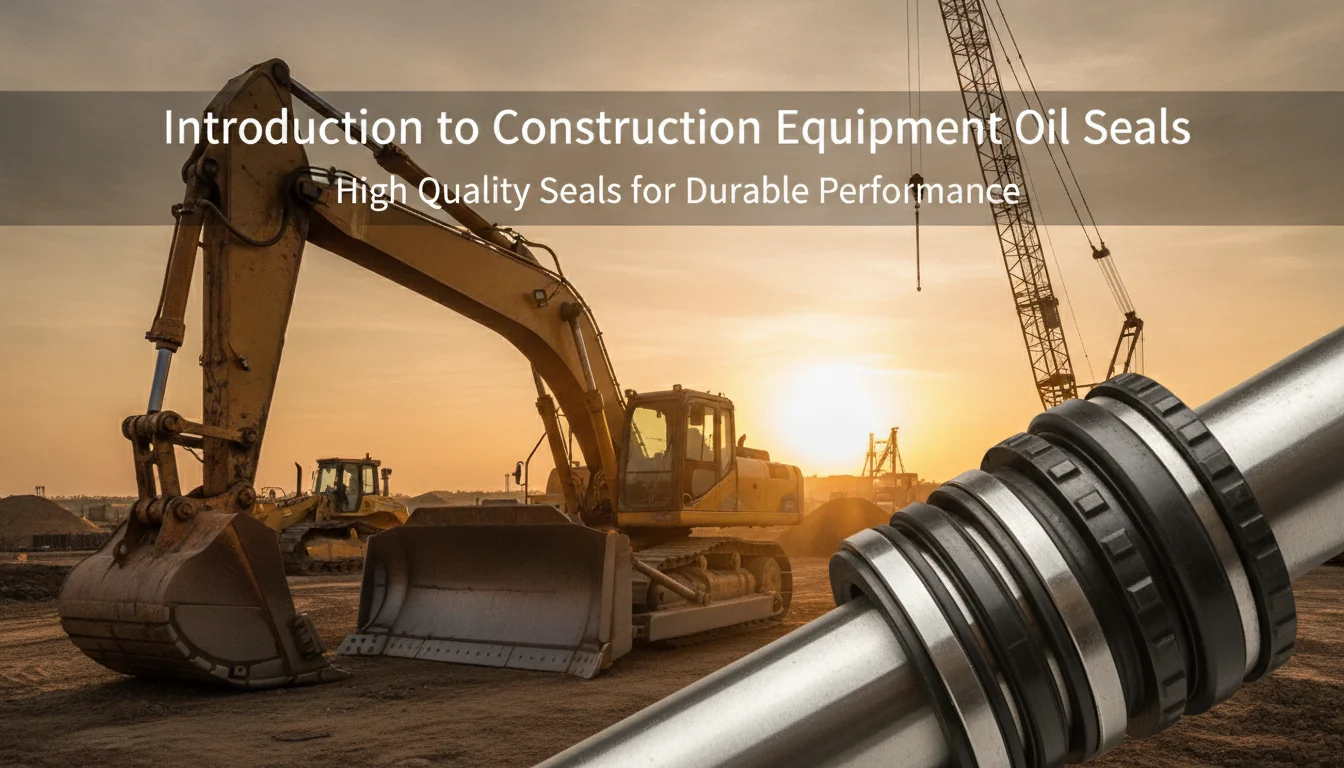
Construction Equipment Oil Seals: Buyer's Guide 2026
Construction equipment oil seals guide: types, materials, sizing, and OEM compatibility. Compare brands and get 5-day global delivery at 3GEN Export.
Loading article…
Article Not Found
The article you're looking for doesn't exist or may have been removed.
Back to BlogConstruction equipment oil seals are precision components that retain lubricant inside rotating shafts, hydraulic pumps, and gearboxes while blocking dirt, mud, and moisture from entering. They keep excavators, loaders, and bulldozers running without fluid loss or contamination damage.
Key Takeaways
- oil seals prevent leaks and keep contaminants out of hydraulic systems, engines, and drivetrains.
- Three main seal types dominate the market: rotary shaft seals, lip seals, and metal-cased seals.
- Material selection (NBR, FKM, or polyurethane) should match your fluid type and operating temperature.
- Accurate ID, OD, and width measurements are non-negotiable for proper fit.
- Poorly maintained seals drive up unplanned downtime and repair costs, according to industry reporting.
- Always cross-check OEM part numbers before ordering aftermarket replacements.
"High-quality this type of seals are essential for the longevity and efficiency of heavy machinery, reducing downtime and maintenance costs significantly." - Industry Expert
Introduction to Construction Equipment Oil Seals
this kind of oil seals protect the internal guts of your machinery from the outside world. Excavators, bulldozers, hydraulic pumps: none of it runs clean without a seal doing its quiet job at every rotating shaft. We've built this guide to walk you through the types available, the factors that actually matter when you're sourcing replacements, and how to keep them lasting as long as possible.
Construction equipment spends its life in dust, mud, sand, and vibration, often across wide temperature swings in a single shift. Oil seals in these machines have to retain lubricant while keeping abrasive particles away from shafts, bearings, pumps, gearboxes, and axles. Get the wrong seal, or let a worn one slide, and you're looking at contamination damage that costs far more than the part itself.
Types of Construction Equipment Oil Seals
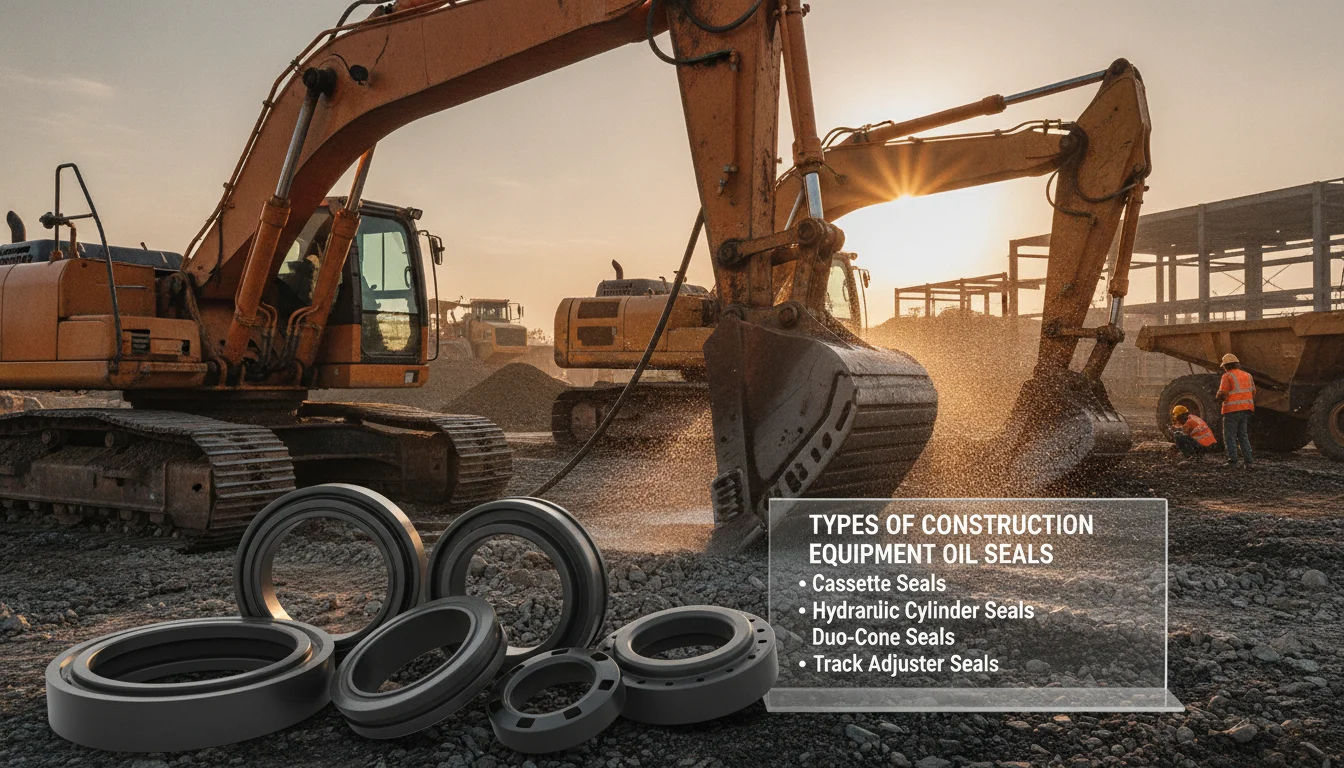
The three main types of oil seals used in construction equipment are rotary shaft seals, lip seals, and metal-cased seals, each built for a distinct combination of pressure, speed, and environment. Picking the right category is the first step before you even look at dimensions or material.
1. Rotary Shaft Seals
Rotary shaft seals wrap around a rotating shaft to hold lubricant in place while keeping contaminants out. You'll find them in hydraulic pumps and gearboxes across nearly every excavator and wheel loader brand we work with.
2. Lip Seals
Lip seals use a flexible sealing edge that rides against the shaft, handling environmental contaminants even at higher rotational speeds. They show up constantly in excavators and bulldozers, particularly at final drive and swing gear locations.
3. Metal-Cased Seals
Metal-cased seals hold their shape under high pressure and high heat where rubber-only designs would deform or fail. Heavy-duty applications like hydraulic pump housings and mining equipment gearboxes rely on this reinforced construction.
Factors to Consider When Buying Oil Seals
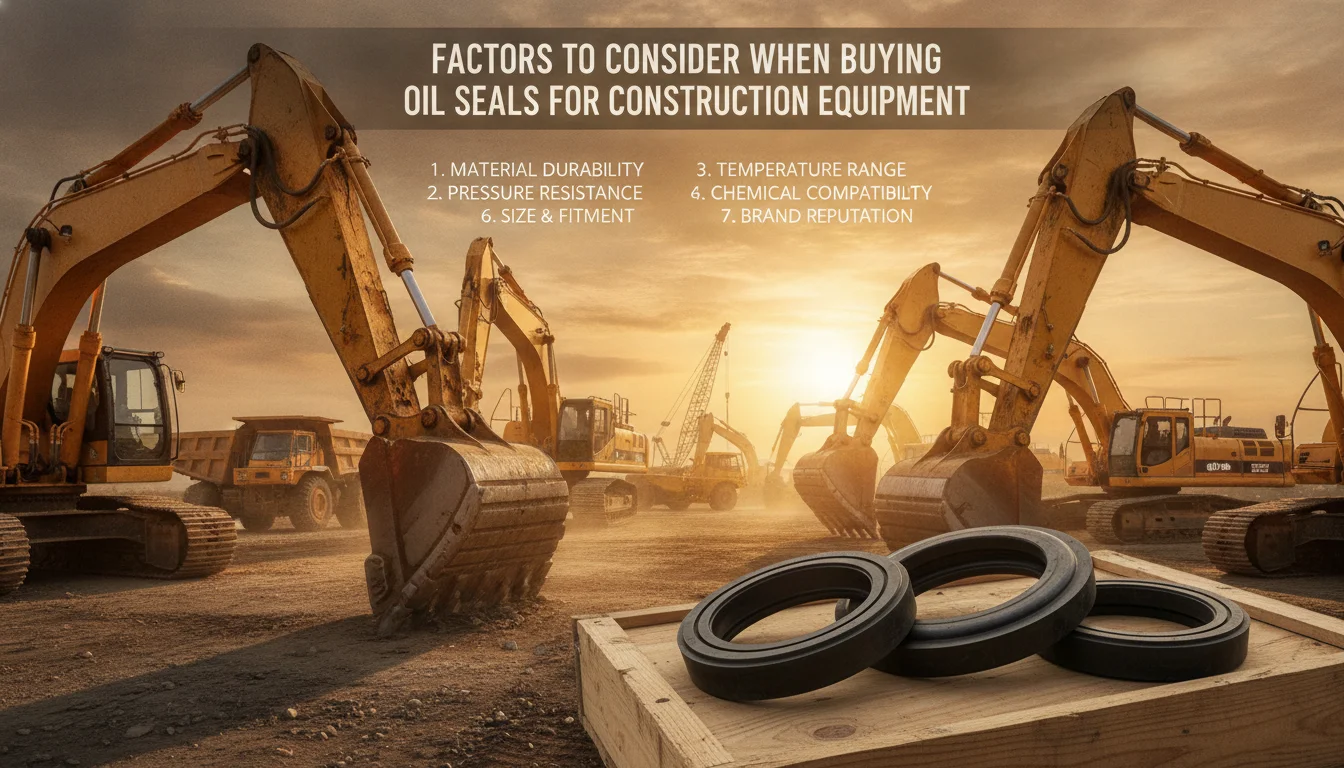
Choosing the right the equipment oil seals comes down to three variables: material, dimensions, and operating conditions. Miss any one of these and you risk a seal that fits but fails within weeks.
1. Material
The seal material determines how it holds up against heat, chemicals, and abrasion. Common options include:
- Nitrile Rubber (NBR): Suitable for general oil applications and moderate temperatures.
- Fluoroelastomer (FKM): Built for high-temperature exposure and chemical resistance.
- Polyurethane: Offers strong wear resistance and flexibility under repeated cycling.
Pro Tip: If your equipment operates in extreme heat or around aggressive hydraulic fluids, don't default to standard nitrile just because it's cheaper. The cost of a mid-project seal failure will always outweigh the few dollars saved upfront.
2. Dimensions
Getting the fit right requires knowing three measurements: inner diameter, outer diameter, and width. A seal that's off by even a fraction of a millimeter won't seat correctly, and that mismatch is one of the most common causes of early leak failure we see reported across the industry.
3. Operating Conditions
Operating conditions, meaning temperature range, pressure, shaft speed, and contaminant exposure, determine which seal type and material will actually survive in your application. A seal rated for light-duty agricultural use won't hold up on a mining excavator running continuous shifts.
How to Choose the Right Oil Seal
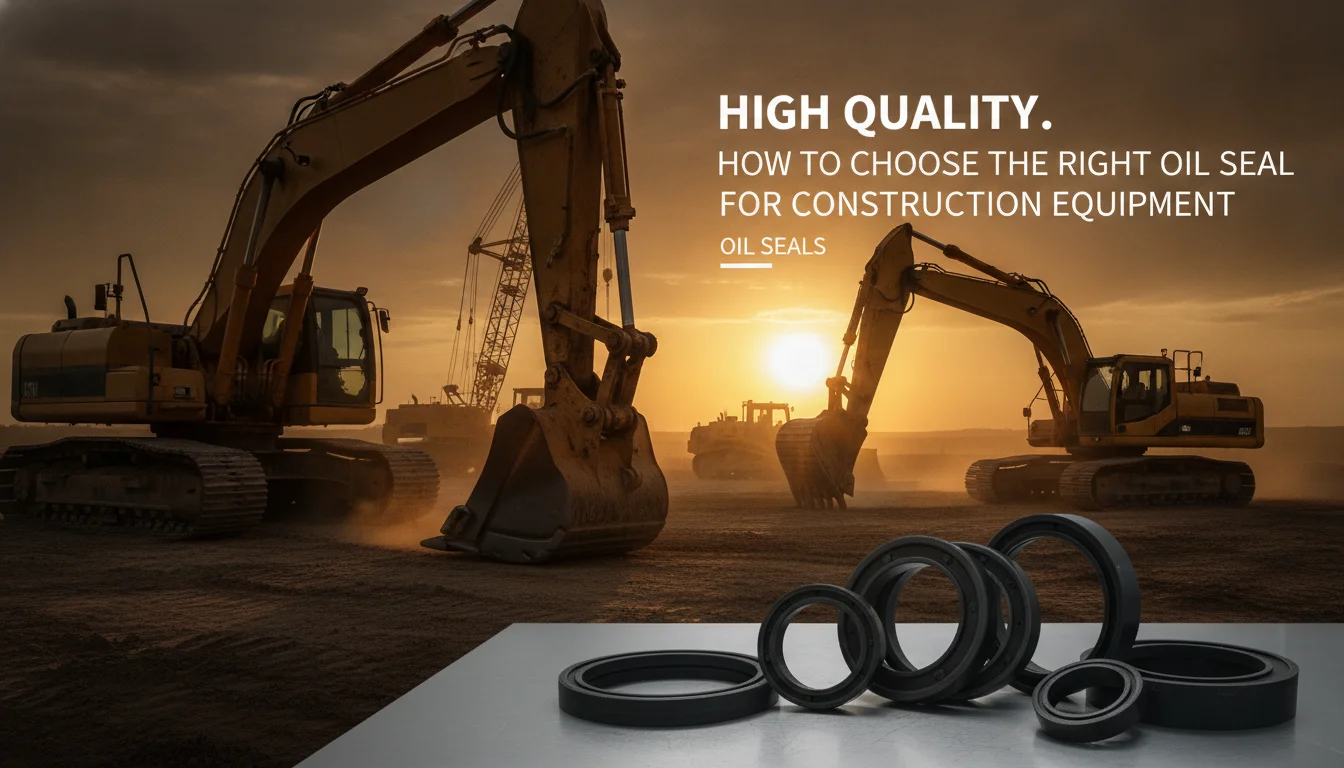
Choosing the right oil seal starts with identifying your equipment and ends with confirming fit against OEM specifications. Follow these steps in order:
- Identify the Equipment: Determine the exact make, model, and component (engine, transmission, hydraulic pump) that needs the seal.
- Check OEM Specifications: Reference the manufacturer's documentation for the recommended seal type, dimensions, and material.
- Assess Operating Conditions: Evaluate temperature, pressure, and contamination exposure to confirm the seal will hold up.
- Consult with Suppliers: Work with a supplier who can cross-reference OE numbers and confirm compatibility before you order.
As of 2026, sourcing globally has gotten faster and more reliable, but the fundamentals haven't changed: match the part number, verify the dimensions, and don't guess on material compatibility.
Maintenance and Care for Oil Seals
Proper maintenance for construction equipment oil seals means regular inspection, a clean working environment, and timely replacement before failure occurs. Skipping any of these steps shortens seal life and increases the odds of unplanned downtime.
1. Regular Inspections
Check seals regularly for cracks, hardening, or deformation. Catching wear early is far cheaper than replacing a seal after it's already let contaminants into a hydraulic pump or gearbox.
2. Clean Environment
Keep the work area and storage environment as clean as possible. Dust covers and protective wraps on stored seals go a long way toward preventing premature degradation before installation.
3. Timely Replacement
Replace seals at the intervals recommended in OEM service documentation, or immediately when you spot early warning signs. Industry maintenance data consistently shows that reactive replacement, waiting until a seal fully fails, costs more in downtime than proactive swaps ever do.
Per industry reporting on heavy equipment maintenance, poorly maintained seals are linked to higher unplanned downtime and increased operating costs across construction fleets. That reality is exactly why a seal inspection belongs in every scheduled maintenance interval, not just when something starts leaking.
Specific Brand Recommendations and Compatibility
Specific brand recommendations for construction equipment oil seals should always start with OEM cross-reference numbers rather than the brand name alone. Caterpillar, Komatsu, Volvo, and Atlas Copco all publish component specifications that aftermarket seal manufacturers match against for fit and material grade. When you're sourcing replacement seals, ask your supplier for the OE or cross-reference number, not just a generic size, since two seals with identical dimensions can use different lip designs or materials suited to different fluids.
Installation Best Practices
Proper oil seal installation starts with a clean, undamaged shaft surface and ends with correct seating depth and orientation. Rushing this step is one of the fastest ways to turn a good part into a warranty claim.
- Inspect the shaft for scoring or corrosion before installing a new seal. Even a new seal will leak against a damaged shaft surface.
- Lubricate the seal lip before installation to prevent dry-running damage during initial startup.
- Use a proper installation tool or sleeve rather than tapping the seal in directly with a hammer, which can distort the sealing lip.
- Confirm the seal is seated to the correct depth and facing the right direction, since reversed seals will fail almost immediately.
- For complex hydraulic pump or final drive assemblies, we recommend consulting a qualified technician rather than attempting a DIY install.
Comparison of Top Oil Seal Brands
| Brand | Type | Material | Applications | Price Range |
|---|---|---|---|---|
| HONGYU | Rotary Shaft Seal | Nitrile | Excavators, Loaders | $5 - $15 |
| Wyatt Seal | Lip Seal | FKM | Bulldozers, Cranes | $10 - $25 |
| NOK | Metal-Cased Seal | Polyurethane | Hydraulic Pumps | $20 - $40 |
Pros and Cons
Pros
- Prevents costly fluid leaks and contamination that can destroy internal components.
- Extends the operational lifespan of hydraulic pumps, gearboxes, and engines.
- Available in materials matched to nearly any temperature or chemical environment.
- Aftermarket options can match OEM specifications at a lower cost with faster availability.
Cons
- Incorrect sizing or material selection leads to premature failure.
- Installation errors, like a nicked shaft or reversed lip orientation, can void the benefit of even a high-quality seal.
- Sourcing exact OEM cross-references for older or less common equipment models can take extra research time.
Frequently Asked Questions
What are the three main types of oil seals?
The three main types of oil seals are rotary shaft seals, lip seals, and metal-cased seals, each designed for specific applications and conditions. Rotary shaft seals handle general rotating shaft applications, lip seals suit higher-speed environments, and metal-cased seals are built for high-pressure or high-temperature service.
What is the difference between TB and TC oil seals?
TB seals have a single sealing lip without a dust lip, while TC seals include a secondary dust lip that adds extra protection against contaminants. TC seals are generally preferred in dirty, abrasive environments like construction and mining sites where dust ingress is a constant concern.
Which company makes the best oil seals?
Several reputable manufacturers produce high-quality construction equipment oil seals, including HONGYU, Wyatt Seal, and NOK. The right choice depends on your specific equipment, operating environment, and whether you need OEM-matched specifications or a general aftermarket fit.
What is the purpose of an oil seal?
An oil seal prevents fluid leaks and blocks contaminants from entering critical machinery components, ensuring efficient and reliable operation. Without a functioning seal, lubricant loss and dirt ingress can quickly damage bearings, shafts, and pumps.
How often should oil seals be replaced?
Replacement schedules vary based on usage intensity and operating environment, but seals should be assessed during every regular maintenance interval. Manufacturer service bulletins typically specify recommended intervals based on hours of operation, and those should always take priority over a generic timeline.
Sourcing Construction Equipment Oil Seals Globally
Sourcing construction equipment oil seals globally means balancing OEM-quality assurance against lead time, since a delayed part keeps machinery idle regardless of price. We've seen fleet managers wait weeks for a single manufacturer-brand seal when a properly cross-referenced aftermarket equivalent could have shipped within days.
This is where working with an established global supplier pays off. Shop OEM-quality spare parts with global 5-day delivery at 3genexport.com, and cross-reference your existing part numbers against our catalog for Caterpillar, Komatsu, Volvo, Atlas Copco, and 40+ other brands before you commit to a purchase.