
Construction Machinery Hydraulic Hoses: Buyer's Guide
Construction machinery hydraulic hoses explained: SAE ratings, materials, pricing, and maintenance. Get OEM-quality parts with fast global delivery.
Loading article…
Article Not Found
The article you're looking for doesn't exist or may have been removed.
Back to BlogKey Takeaways
- Hydraulic hoses are the critical fluid pathways in construction equipment. Failure leads to costly downtime.
- Match SAE specifications (100R1, 100R2, 100R12, etc.) to your machine's pressure, temperature, and flexing needs.
- Inspect hoses regularly for leaks, cracks, or abrasion, and replace before catastrophic failure.
- OEM vs. aftermarket: OEM guarantees precise fit and performance; aftermarket offers savings but requires careful specification.
- Prices vary widely, from under $100 for basic hoses to $400 or more for heavy-duty or OEM assemblies.
Construction machinery hydraulic hoses are reinforced, flexible conduits that carry pressurized fluid within heavy equipment systems, powering lifting, digging, and steering functions. Choosing the right hose means matching pressure ratings, materials, and SAE standards to your machine's demands.
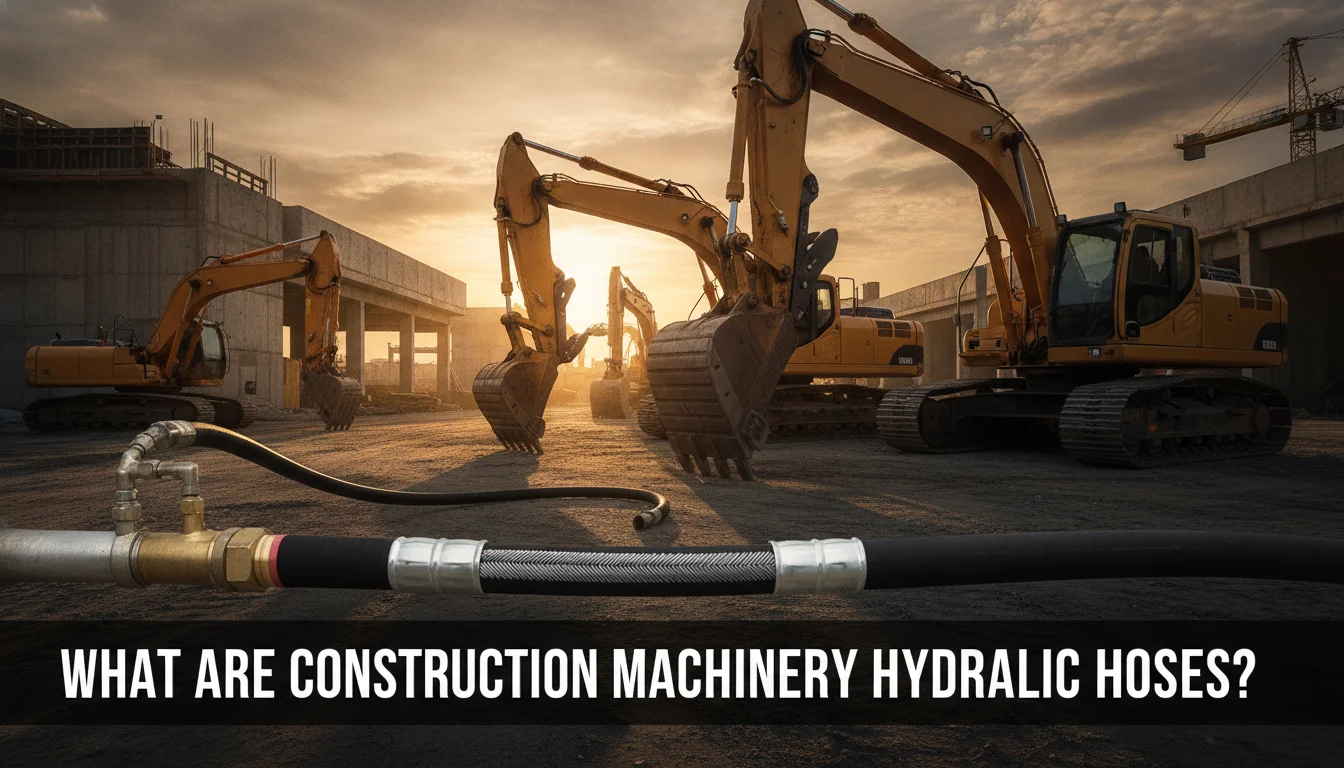
What Are Construction Machinery Hydraulic Hoses?
hydraulic hoses are engineered assemblies that carry high-pressure hydraulic fluid between pumps, valves, cylinders, and motors in excavators, loaders, bulldozers, and cranes. Unlike standard industrial hoses, they're built to withstand extreme pressures, often in the 3,000 to 6,000 psi range, along with constant vibration, wide temperature swings, and abrasive job-site conditions. We've fitted hoses on machines ranging from compact skid steers to mining-grade excavators, and the demands only get harsher as machine size increases.
Anatomy of a Hydraulic Hose
Every hydraulic hose consists of three layers:
- Inner tube: Made of synthetic rubber (nitrile, EPDM, or PTFE/Teflon) that resists the hydraulic fluid and prevents leakage.
- Reinforcement: Determines pressure capacity. Textile braid handles low pressures, single or multiple wire braids cover medium to high pressures, and spiral-wound steel wire is used for very high or extreme pressures.
- Outer cover: Protects against abrasion, weather, ozone, and oil exposure. Often synthetic rubber, polyurethane, or thermoplastic.
This layered construction is what lets this type of hoses flex repeatedly while containing fluid at pressures that can exceed 6,000 psi.
How Hydraulic Hoses Power Heavy Equipment
In a closed-loop hydraulic system, a pump pressurizes fluid, which then travels through control valves and hoses to cylinders or motors. The hoses must handle steady-state pressure plus surges and spikes that occur every time an operator engages an attachment. According to Moreland Hose, fluid power system breakdowns are behind the large majority of construction equipment failures, which underscores why properly specified this kind of hydraulic hoses matter so much to uptime.
According to Ryan O'Lone, Product Manager at PIRTEK USA, "the minimum bend radius plays a big part in the life span of a hose. If a hose is subjected to constant flexing while under pressure, then the makeup of the reinforcement... and its minimum bend radius must be considered to achieve the optimal life span" (Fluid Power Journal, May 2025).
Key Factors When Selecting Construction Machinery Hydraulic Hoses
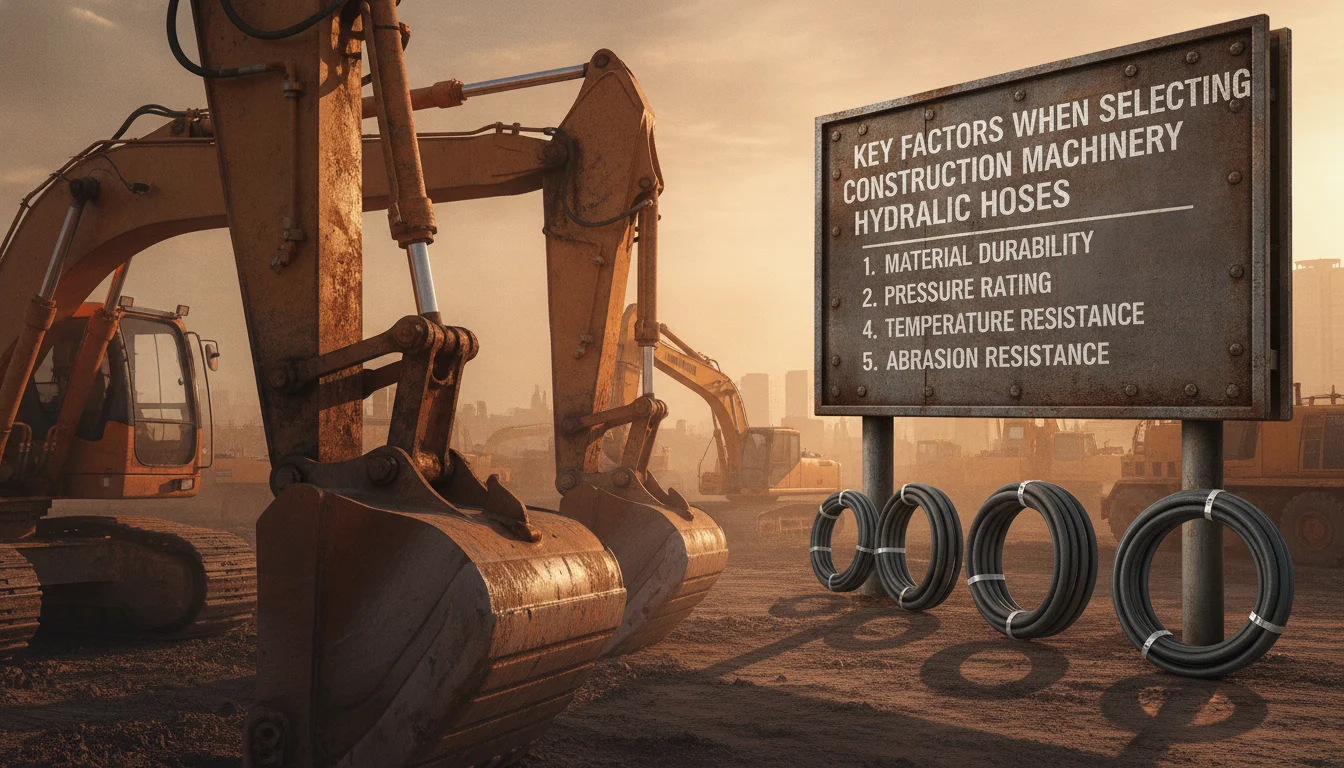
Selecting the right hose requires matching technical specifications to your equipment's operating environment. Here are the criteria we tell every procurement team to check first.
Pressure Ratings and Operating Conditions
Hydraulic hoses are categorized by working pressure (the maximum continuous pressure they withstand) and burst pressure, which is typically four times the working pressure. According to Essentra Components, pressure ranges for construction equipment generally break down as follows:
- Low pressure: up to 300 psi
- Medium pressure: 300 to 3,000 psi
- High pressure: 3,000 to 6,000 psi
- Extremely high pressure: above 6,000 psi
For most heavy construction machinery, you'll be selecting hoses in the high or extremely-high-pressure categories. Always check the equipment manufacturer's specifications. Over-rating is safer than under-rating.
Material Compatibility and Environmental Resistance
The inner tube material must be compatible with the hydraulic fluid type used, whether mineral oil, synthetic ester, or phosphate ester. Nitrile rubber is common for petroleum-based fluids, while EPDM handles phosphate esters and higher temperatures. The outer cover has to resist job-site hazards: ozone cracking, oil, chemical splash, and abrasion from rubble or metal edges. For extremely cold climates, EquipmentShare notes that thermoplastic hoses often perform better than rubber, since rubber can turn brittle in sub-zero temperatures.
Size, Bend Radius, and Fittings
Hoses are sized by inner diameter (ID) and overall length. A hose that's too narrow restricts flow and builds heat; one that's too large adds unnecessary weight and cost. Equally important is the minimum bend radius. Bending a hose tighter than its rated radius kinks the reinforcement and drastically shortens its service life. Fittings must match the hose type and size exactly. Common fittings include JIC, NPT, ORFS, and metric styles, and they need to be crimped to exact specifications. Stainless steel fittings are recommended in corrosive environments.
Because these hoses are often exposed to constant movement, routing them correctly matters just as much as the hose itself. Avoid twisting, chafing against metal edges, and hanging loops that can snag on debris.
Common Types of Construction Machinery Hydraulic Hoses
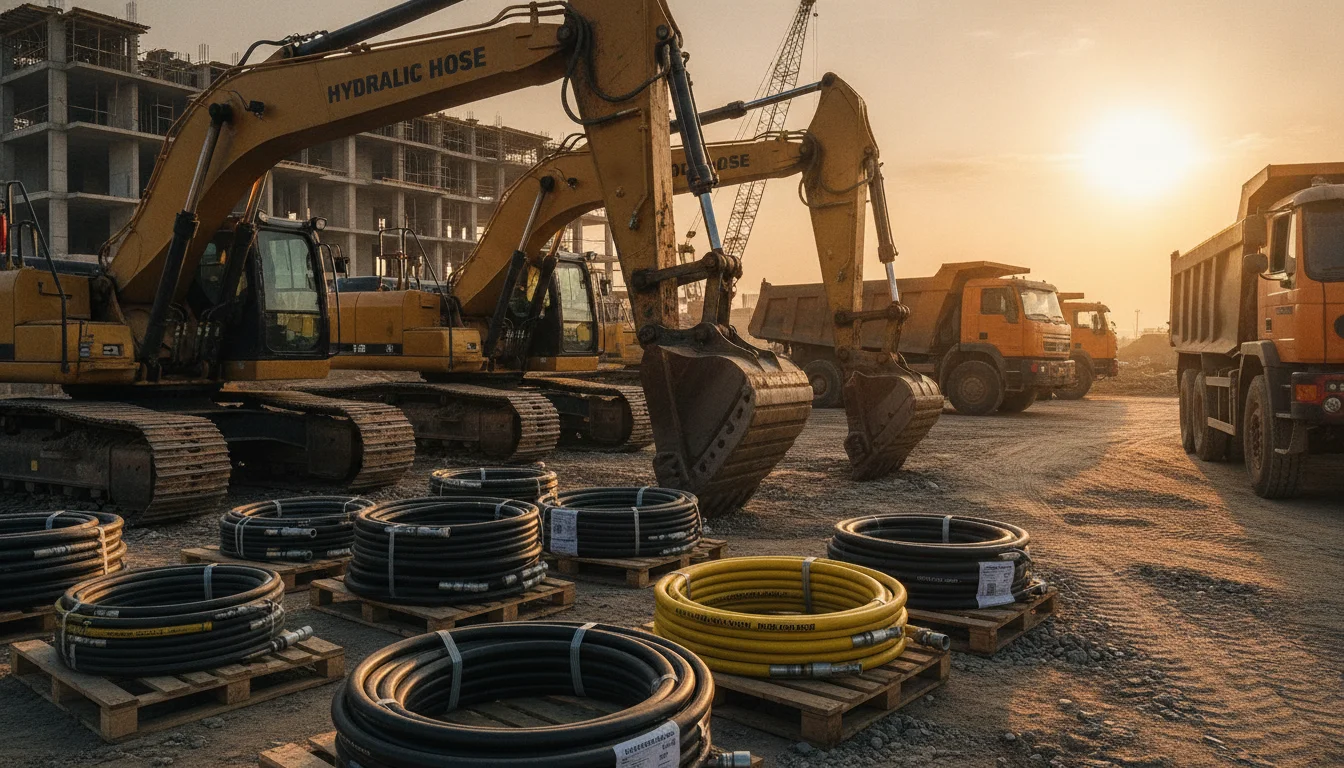
The SAE (Society of Automotive Engineers) J517 standard governs hydraulic hose construction and performance, and it's the reference point our team uses when specifying replacement parts. Below is a comparison of the most common SAE types found on construction equipment.
| SAE Type | Construction | Typical Working Pressure (psi) | Common Applications |
|---|---|---|---|
| 100R1 | Single wire braid | Up to 3,000 | Small tractors, steering, low-medium pressure circuits |
| 100R2 | Two wire braid | Up to 5,000 | Road construction equipment, backhoes, medium-pressure hydraulics |
| 100R5 | Textile braid with wire helix | Up to 3,500 | Truck air brakes, fuel lines, grease systems |
| 100R12 | Four spiral wire | Up to 6,000 | Heavy-duty excavators, loaders, high-pressure circuits |
| 100R13 | Six spiral wire | Up to 6,000 (larger IDs) | Mining equipment, large construction machines, extreme flexing |
| 100R7 | Thermoplastic (nylon tube, polyurethane cover) | Up to 3,500 | Non-conductive uses, CO₂ and nitrogen transfer, cold climates |
Wire-Braided Hoses (100R1, 100R2, 100R5)
These are among the most common hose types for medium-pressure tasks. The number of wire braid layers determines strength. Amazon Hose & Rubber stocks 100R1 and 100R2 as standard offerings for small tractors and road construction equipment.
Spiral-Wire Hoses (100R12, 100R13)
For high pressure and frequent flexing, spiral-wire hoses use multiple layers of steel wire wound in alternating directions. They handle pressure surges better than braided hoses and are standard on heavy-duty construction and mining machinery. Four-wire (100R12) construction is typical for high pressure; six-wire (100R13) handles the largest diameters and the most extreme fatigue cycles.
Thermoplastic and Specialty Hoses
Thermoplastic hydraulic hoses (100R7, 100R8) use a nylon core with a polyurethane cover. They're lighter, more flexible in cold weather, and available in non-conductive versions (often orange-colored) for use around electric shock hazards. PTFE hoses offer wide chemical compatibility and high temperature resistance, while low-pressure push-on hoses handle return lines and suction applications.
OEM vs. Aftermarket Hydraulic Hoses: Pros and Cons
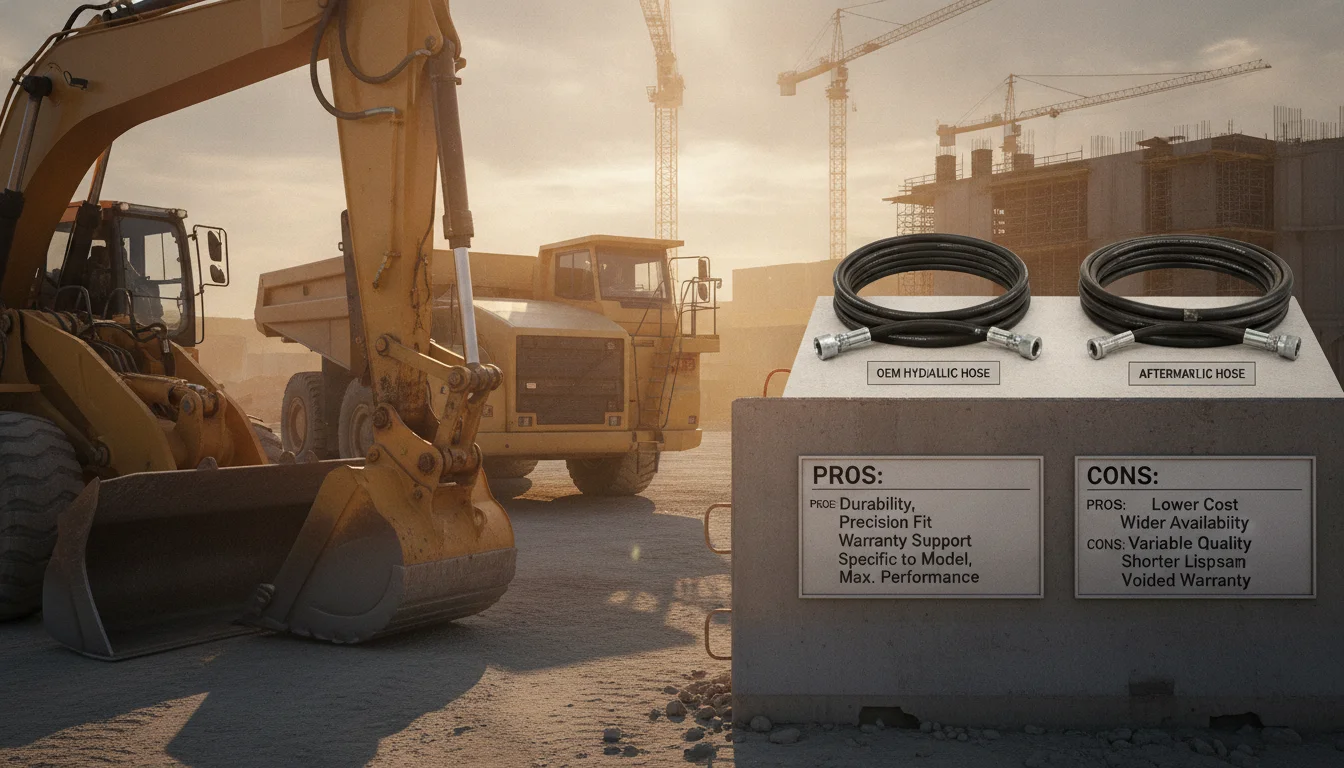
Choosing between OEM and aftermarket comes down to how critical fit precision is versus how much budget flexibility you need. When replacing hoses, you can go with original equipment manufacturer parts or aftermarket assemblies, and each approach carries real trade-offs.
| Factor | OEM Hoses | Aftermarket Hoses |
|---|---|---|
| Fit & Performance | Precisely engineered for your machine's hydraulic system; tested as a unit. | May require measurements and careful matching; risk of improper bend radius or fitting thread mismatch. |
| Availability | Dealer network; often faster turnaround with services like Volvo Hose Service. | Widely available through distributors, mobile repair services, and online retailers. |
| Cost | Typically higher, but includes warranty and engineering support. | Lower initial cost; ideal for older machines or when OEM isn't critical. |
| Quality Assurance | Factory-certified crimps, skived connections, clean-room assembly to prevent contamination. | Quality depends on supplier; look for ISO-certified shops with published crimp specs. |
Volvo CE, for example, runs a hose service where certified technicians use exact machine specifications to build hoses on-site, cutting downtime significantly. For less critical applications or tighter budgets, a qualified aftermarket supplier such as PIRTEK or a local distributor can supply reliable hoses at a lower price point. At 3GEN Export, we source both OEM and OEM-quality aftermarket parts across 40+ brands, so fleet managers get flexibility without sacrificing fit or performance.
"Every part of the hydraulic system is engineered to perform together," notes Volvo CE in its hose service documentation, pointing to bend radius, flexing capacity, working pressure peaks, vibration, and temperature as the properties calibrated into every genuine hose assembly.
Step-by-Step Inspection and Maintenance for Construction Machinery Hydraulic Hoses
Proactive inspection is the single best way to extend hose life and avoid sudden failures on the job site. Follow these steps at least every 250 operating hours or as recommended by the machine manufacturer.
Step 1: Visual Inspection for Leaks and Damage
Walk around the machine and look for wet spots, drips, or staining. Pay special attention to fittings and connection points. A small fluid leak escalates quickly: leaks reduce system pressure, attract dirt, and create slip hazards on site.
Step 2: Check for Abrasion, Cracks, and Bends
Run your hand along the hose length (with the machine off and pressure relieved) to feel for cuts, bulges, or flattened areas. Look for cracks in the cover, especially near end fittings where flexing concentrates. Any hose that's kinked, crushed, or has exposed reinforcement wire needs immediate replacement.
Step 3: Monitor Fluid Condition and Filters
Contaminated fluid speeds up wear. Check hydraulic oil level and cleanliness regularly. A clogged filter can restrict flow, causing hoses to overheat and degrade prematurely. EquipmentShare points out that reduced flow often traces back to a clogged filter, not necessarily a hose blockage, so don't jump to hose replacement without checking the filter first.
Step 4: Proper Replacement Procedure
Pro Tip: Never reuse old fittings on a new hose unless you have proper crimping equipment and manufacturer specifications on hand. When a hose fails, replace the entire assembly. Cap open ports to keep contamination out. After installation, bleed the system and check for leaks at operating pressure. Always follow the machine's service manual for torque values and routing.
Hydraulic Hose Price Ranges and Buying Options
What you pay for construction machinery hydraulic hoses depends on type, length, pressure rating, and whether you choose OEM or aftermarket. Based on pricing data from suppliers like Unique Truck Equipment, here are the typical tiers as of 2026.
Budget Tier (Below $150)
Basic low- to medium-pressure hoses, often with standard couplers, fall in this range. An 8-ft Esco hydraulic hose with couplers sells for around $94.95. These suit light-duty attachments or older compact equipment but may lack the durability needed for daily heavy use.
Mid-Range ($150 to $400)
Most aftermarket hoses land here. A 10-ft Norco high-pressure hose lists at $171.70, and 6.5-ft versions at $129.45. Custom lengths and higher-spec assemblies (100R2, 100R12) can push the price toward $300 to $400. Mobile repair services typically charge a premium for on-site fabrication.
Premium and OEM Hoses ($400+)
Genuine Volvo, Caterpillar, or Komatsu hoses, along with custom spiral-wire hoses for large excavators, often exceed $400 each once you factor in professional installation and fluid replacement. The upfront cost runs higher, but OEM hoses are engineered to match the exact pressure spikes and flex patterns of the machine, which lowers total cost of ownership over the life of the equipment.
Where to buy: OEM dealers, dedicated hydraulic shops, mobile hose service vans, and global industrial suppliers like 3GEN Export all carry construction machinery hydraulic hoses. For fleets running mixed brands, sourcing from a single global supplier that stocks parts for Caterpillar, Komatsu, Volvo, and Atlas Copco equipment simplifies procurement and cuts down on emergency downtime. Check our parts categories and brand pages for compatibility details across 40+ manufacturers.
Pros and Cons of Construction Machinery Hydraulic Hoses
Pros
- Enable precise, powerful movement in excavators, loaders, and cranes that mechanical linkages can't match.
- Available across a wide range of SAE-rated options to match nearly any pressure or flexing requirement.
- Replaceable as standalone components, so a single hose failure rarely requires replacing the whole hydraulic assembly.
- OEM and aftermarket options give buyers flexibility between guaranteed fit and cost savings.
Cons
- Subject to wear from abrasion, heat, and constant flexing, requiring regular inspection.
- Incorrect specification (wrong pressure rating, incompatible material, wrong bend radius) can cause premature failure.
- High-pressure failures pose real safety risks, including fluid injection injuries and slip hazards.
- OEM assemblies carry a higher upfront cost, which can strain budgets for older or mixed-fleet operations.
Frequently Asked Questions
What is the most common cause of hydraulic hose failure in construction?
Wear from abrasion and poor routing that leads to external damage is the leading cause, followed closely by incorrect hose selection for the pressure or temperature conditions on site. Regular inspection catches most of these issues before they cause a failure.
How often should I replace construction machinery hydraulic hoses?
There's no universal replacement interval that applies to every machine. Hoses should be replaced when they show signs of wear, cracks, or leaks, or at the manufacturer's suggested service life, which in hard daily use often falls in the 2 to 5 year range.
Can I use the same hose for different types of hydraulic oil?
Not always. The inner tube material has to be compatible with the fluid in use. Nitrile hoses work fine with petroleum oils, but phosphate ester fluids may require EPDM or PTFE construction instead. Always check the chemical compatibility chart published by the hose manufacturer before switching fluids.
What do SAE 100R1 and 100R2 mean?
They're SAE J517 standard designations: 100R1 is a single wire braid hose rated for medium pressure up to 3,000 psi, and 100R2 uses two wire braids for higher pressure up to 5,000 psi. Both are common on small to mid-size construction equipment.
Is it safe to repair a hydraulic hose with tape or a patch?
No, and this is a genuine safety hazard, not just a maintenance shortcut. Temporary fixes can't contain the thousands of psi of pressure inside the system, so the entire hose assembly needs replacement with one that meets the original specifications.
Where can I find construction machinery hydraulic hoses near me?
Most regions have local hydraulic hose distributors, equipment dealerships, or mobile repair services that stock common SAE-rated hoses. Global suppliers also ship parts for Caterpillar, Komatsu, Volvo, and dozens of other brands, often with delivery in days rather than weeks.
Sourcing construction machinery hydraulic hoses shouldn't mean choosing between quality and speed. 3GEN Export supplies OEM-quality spare parts for 40+ heavy equipment brands with global 5-day delivery, backed by procurement specialists who understand both the machinery and your project timeline. Shop OEM-quality spare parts with global 5-day delivery at 3genexport.com.