
Construction Machinery Parts Distributors: 2026 Buying Guide
Compare construction machinery parts distributors by pricing, warranty, and brand coverage. Our 2026 guide helps you source OEM-quality parts with
Loading article…
Article Not Found
The article you're looking for doesn't exist or may have been removed.
Back to BlogKey Takeaways
- Understand the importance of selecting reliable construction machinery parts distributors.
- Compare options based on parts availability, pricing, and customer service.
- Consider new, used, and rebuilt parts for cost-effectiveness.
- Check for warranty and return policies before purchasing.
- Utilize customer reviews and ratings to gauge distributor reliability.
- Factor in global shipping timelines when your fleet spans multiple regions.
Buying Guide for Construction Machinery Parts Distributors
Construction machinery parts distributors are suppliers that source, stock, and ship replacement components for excavators, loaders, dozers, and related heavy equipment. Choosing the right one affects your uptime, your budget, and your project timelines.
We've spent years watching fleet managers scramble when a final drive fails mid-project and the nearest supplier quotes a six-week lead time. That's the wrong way to find out your distributor relationship isn't working. This guide breaks down what actually separates a dependable parts source from one that leaves you stranded, and it gives you a practical framework for comparing your options before you're in a crisis.
Understanding Construction Machinery Parts Distributors
parts distributors supply components for heavy equipment used in construction, mining, and agricultural operations. They stock new, used, and rebuilt parts across multiple machinery brands, and the better ones maintain inventories deep enough to cover both routine maintenance items and emergency breakdowns.
Types of Parts Offered
- New Parts: Brand new components that meet OEM specifications.
- Used Parts: Second-hand parts that are often more affordable but may vary in condition.
- Rebuilt Parts: Refurbished components that have been restored to working condition.
- Aftermarket Parts: Non-OEM parts that can provide cost savings but may differ in quality.
Key Brands and Models
Distributors typically stock parts for major brands such as Caterpillar, Komatsu, John Deere, and Volvo. Understanding which brands your machinery belongs to will help narrow down your search. Many suppliers also carry lines for Hitachi, Bobcat, Case, Kobelco, and Takeuchi, so it's worth confirming brand coverage before you commit to a single source.
"Getting the right parts at the right time is vital to save time and money," notes TVH, a global parts supplier, in its construction equipment resources. That principle holds whether you're managing a single excavator or a multi-site fleet.
What to Look For When Buying
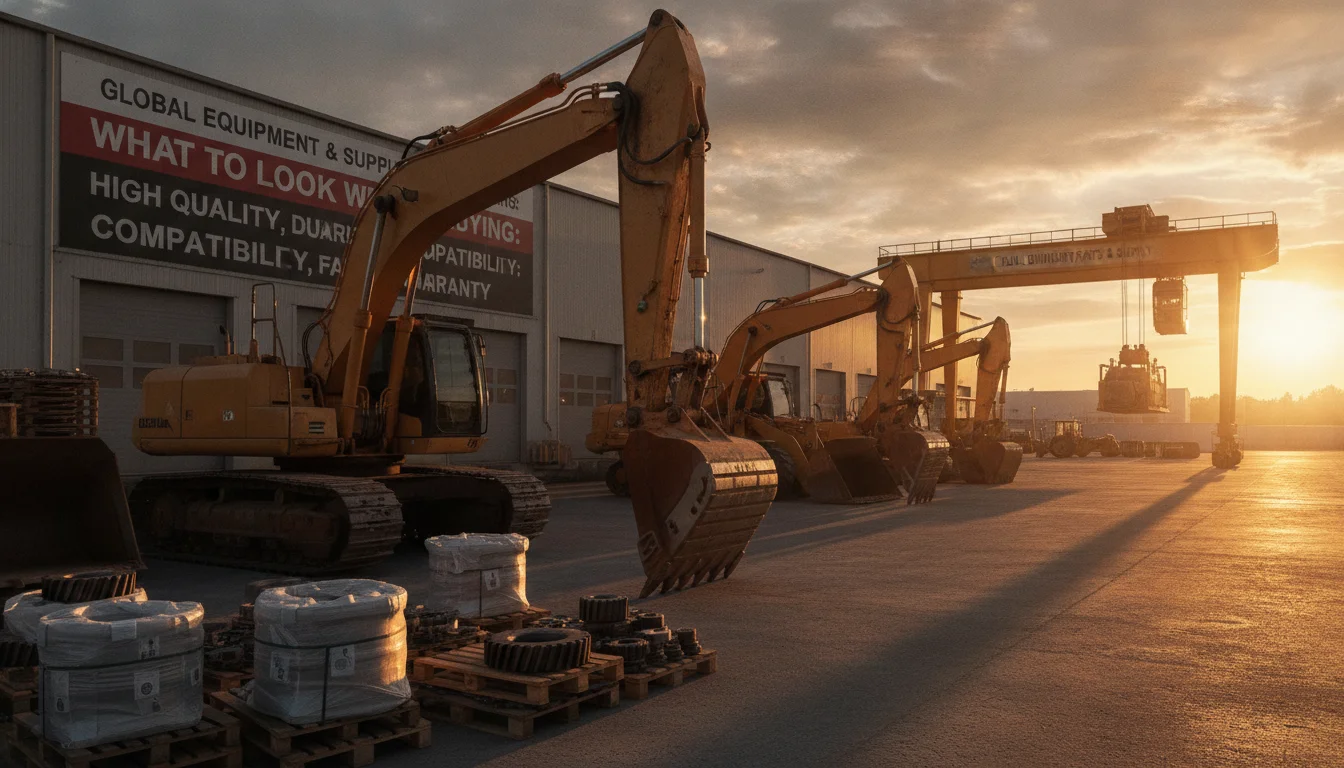
What you should look for in a distributor comes down to four core factors: parts availability, pricing transparency, customer service quality, and warranty terms. Weigh these before price alone, because the cheapest quote often carries hidden costs in downtime or returns friction.
1. Parts Availability
Ensure the distributor has a wide selection of parts for your specific machinery. A comprehensive inventory will save you time and reduce downtime for your equipment. Some suppliers maintain catalogs spanning millions of part references across dozens of brands, which matters if your fleet is mixed rather than single-brand.
2. Pricing
Compare prices across different distributors. While cheaper options may be tempting, consider the quality and warranty offered. Sometimes, investing a little more can lead to better long-term value, especially on high-failure components like final drives, hydraulic pumps, and undercarriage parts where a bargain part that fails early costs more than the savings.
3. Customer Service
Evaluate the level of customer support provided. Reliable distributors should offer knowledgeable staff who can assist with part selection and provide after-sales support. Ask whether support is available by phone, email, or live chat, and whether they have parts specialists who understand cross-brand compatibility, not just a sales team reading part numbers off a screen.
4. Warranty and Return Policy
Check the warranty terms and return policy. A good distributor will offer warranties on their parts and a straightforward return process in case of issues. Warranty length varies widely across suppliers, so get it in writing before you place a large order.
Price Tiers: Budget, Mid-Range, and Premium Parts
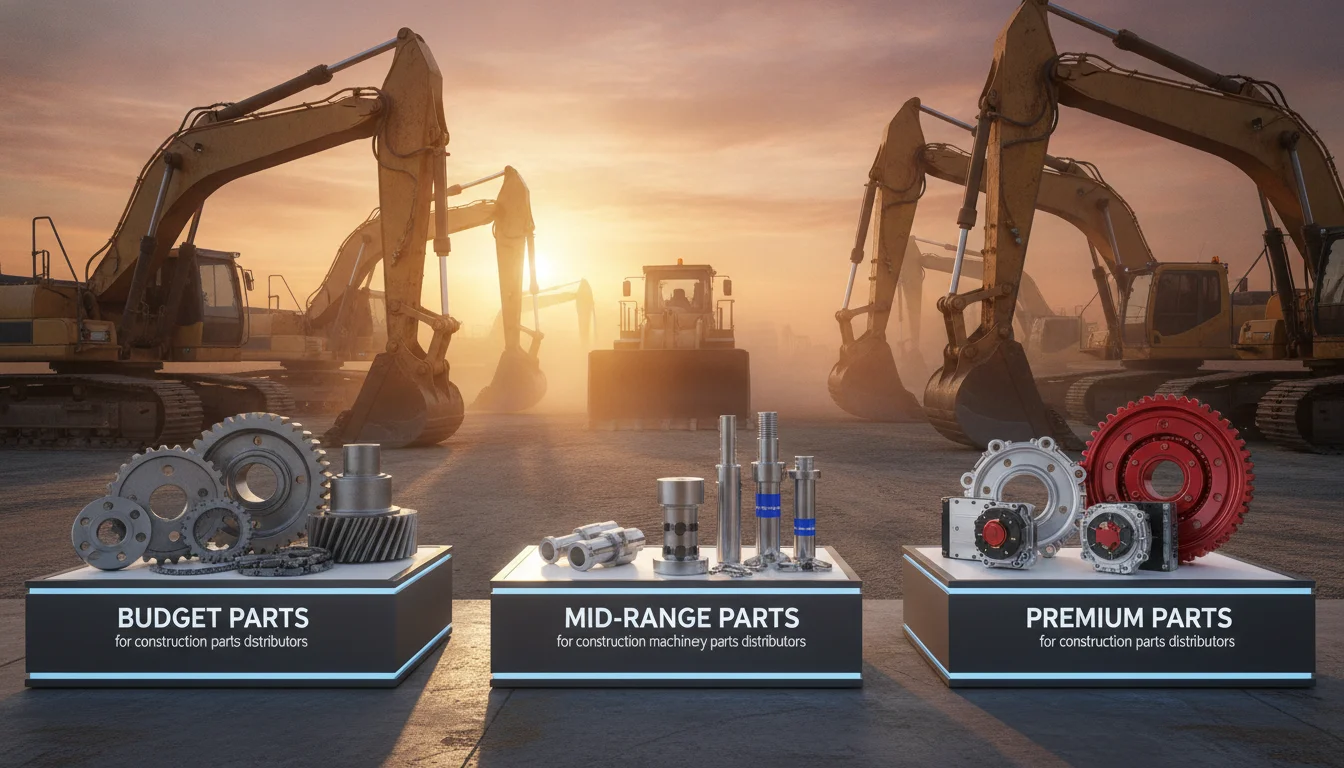
Price tiers for construction machinery parts generally break into three categories: budget aftermarket, mid-range rebuilt or remanufactured, and premium new OEM. Each tier fits a different maintenance strategy, and most fleets end up using all three depending on the component and the machine's remaining service life.
- Budget tier (aftermarket, used): Best for non-critical wear items or older machines nearing retirement, where the goal is keeping equipment running at the lowest possible cost.
- Mid-range tier (rebuilt, remanufactured): A strong middle ground for major components like transmissions and final drives. Rebuilt parts typically carry some warranty coverage while costing meaningfully less than new OEM.
- Premium tier (new OEM): Best for critical machines under heavy daily use, warranty-sensitive fleets, or components where failure risk is unacceptable, such as steering and braking systems.
Pro Tip: Match the part tier to the machine's remaining lifecycle. Investing in premium OEM components on a machine you plan to sell within a year rarely pays off. Save premium spend for equipment that's core to your operation for the long haul.
Comparison of Top Construction Machinery Parts Distributors
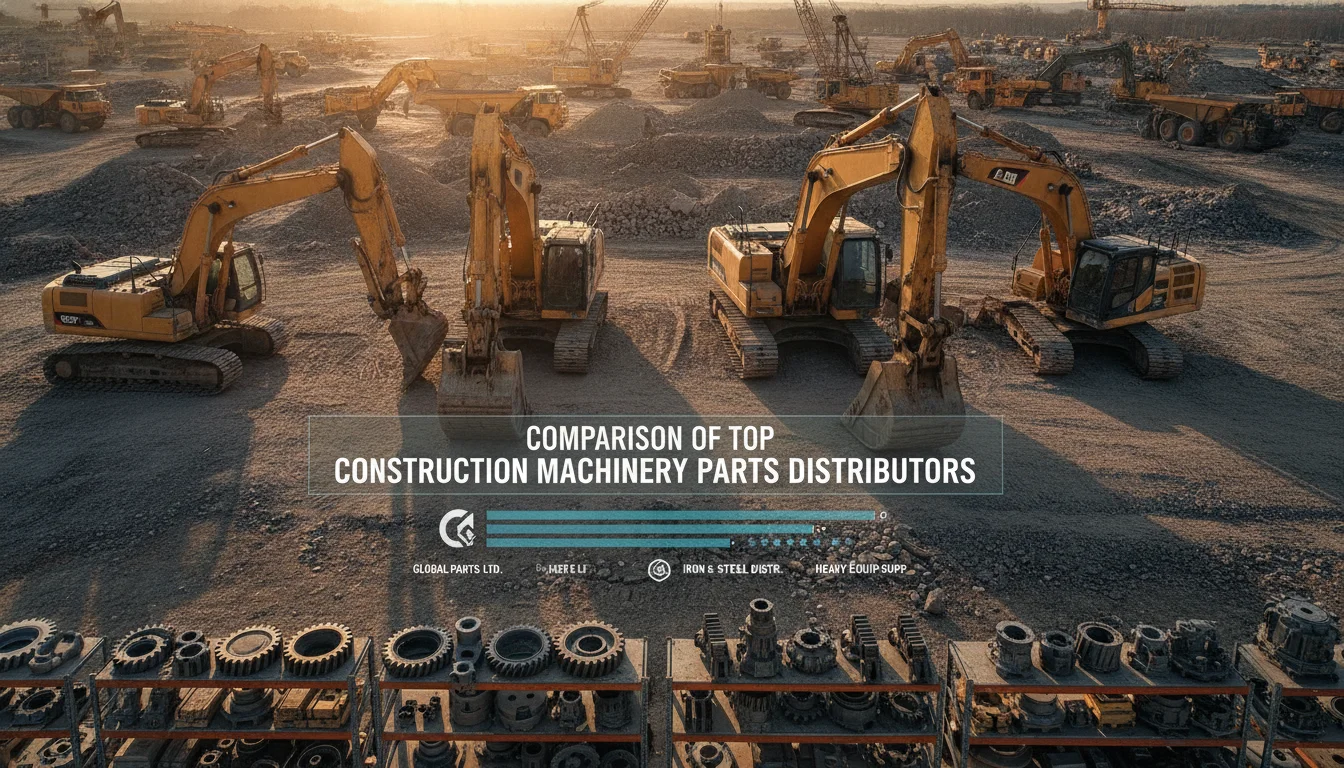
| Distributor | Parts Type | Brands Supported | Warranty | Customer Service |
|---|---|---|---|---|
| AMS Parts | New, Used, Rebuilt | Caterpillar, Komatsu, John Deere | 12 months | 24/7 support |
| H&R Parts | New, Used | Volvo, Hitachi, Bobcat | 6 months | Phone and online support |
| TVH | New, Aftermarket | All major brands | 1 year | Online chat support |
| Machinery Parts Warehouse | New, Used, Rebuilt | Komatsu, Caterpillar | 12 months | Email and phone support |
As of 2026, most established distributors in this space list Caterpillar, Komatsu, Volvo, and John Deere among their core supported brands, with several extending coverage to Hitachi, Bobcat, Case, and Kobelco. When you're comparing quotes, always confirm brand and model fitment against the actual part number, not just the machine name.
How to Choose the Right Distributor
Choosing the right distributor starts with defining exactly what part you need and matching that against suppliers who specialize in your equipment brand. Here's a step-by-step process:
- Identify Your Needs: Determine what parts you require and for which machinery.
- Research Distributors: Look for distributors that specialize in your machinery brand.
- Compare Options: Use the comparison table to evaluate different distributors.
- Contact Distributors: Reach out to inquire about parts availability and pricing.
- Make a Decision: Choose a distributor that meets your criteria and place your order.
Use-Case Example: Mixed Fleet Operations
If you're running a mixed fleet, say a Caterpillar excavator alongside a Komatsu dozer and a Volvo wheel loader, a single-brand distributor won't cut it. You'll want a supplier with genuinely broad brand coverage rather than one that treats non-primary brands as an afterthought. Ask directly how deep their inventory runs for each brand you operate, not just whether they "carry" it.
Pros and Cons
Pros
- Access to a wide range of new, used, rebuilt, and aftermarket parts across brands.
- Competitive pricing compared to buying directly through OEM dealer networks.
- Specialized parts expertise that speeds up sourcing for hard-to-find components.
- Global shipping options that reduce downtime for international fleets.
Cons
- Quality can vary significantly between used and aftermarket parts if you don't vet the supplier carefully.
- Warranty terms differ widely, and shorter warranties can leave you exposed on major components.
- Not every distributor stocks parts for every brand or older machine models, requiring extra research.
- Return policies on custom or special-order parts are often more restrictive.
Care & Maintenance of Parts
Proper care and maintenance of construction machinery parts extends their lifespan and improves performance. Following manufacturer service intervals, according to manufacturer specifications, remains the single most reliable way to avoid premature part failure. Here are practical tips:
- Regular Inspections: Check parts for wear and tear regularly, particularly seals, hoses, and undercarriage components that see constant stress.
- Proper Storage: Store parts in a clean, dry environment to prevent damage, especially hydraulic components sensitive to contamination.
- Follow Manufacturer Guidelines: Adhere to maintenance schedules and guidelines provided by the manufacturer to preserve warranty coverage and equipment reliability.
- Document Everything: Keep records of part installations and service dates. This makes warranty claims faster and helps you track which components tend to fail early on specific machines.
Industry maintenance data shows that consistent inspection schedules catch wear-related failures before they cascade into more expensive repairs, a pattern that holds true across excavators, dozers, and wheel loaders alike.
What to Expect in 2026 and Beyond
What to expect from construction machinery parts distributors in 2026 is faster digital ordering, broader global shipping networks, and continued growth in the aftermarket and remanufactured parts segment. Several major suppliers now list millions of part references online, and fleet operators are increasingly comparing quotes digitally before committing to a purchase. This year, expect more distributors to formalize fast international delivery windows as a standard offering rather than a premium add-on, since fleets operating across borders need predictable lead times to plan maintenance schedules.
Frequently Asked Questions
What are construction machinery parts distributors?
Construction machinery parts distributors are suppliers that provide parts for heavy equipment used in construction, mining, and agriculture. They typically stock new, used, rebuilt, and aftermarket components across multiple brands.
How do I find a reliable distributor?
Research online, read customer reviews, and compare options based on parts availability, pricing, and customer service. Confirm warranty terms and brand coverage directly with the supplier before placing a large order.
What types of parts can I buy?
You can purchase new, used, rebuilt, and aftermarket parts from distributors. Each tier fits a different budget and risk tolerance, so match the part type to how critical the component is to your operation.
Are aftermarket parts a good choice?
Aftermarket parts can be cost-effective, but it's essential to ensure they meet quality standards. They work well for non-critical wear items but deserve more scrutiny on major components like transmissions and hydraulic pumps.
What should I consider when comparing prices?
Look beyond the price; consider warranty, quality, and customer service when comparing options. A lower upfront cost can turn into higher total cost if the part fails early or the distributor offers no support.
Can I return parts if they don't fit?
Most distributors have a return policy, but it's crucial to check the terms before purchasing. Custom or special-order parts often carry more restrictive return conditions than standard stock items.
Ready to source parts without the guesswork? Shop OEM-quality spare parts with global 5-day delivery at 3genexport.com, and work with a team that understands both the machinery and the procurement pressure you're under.