
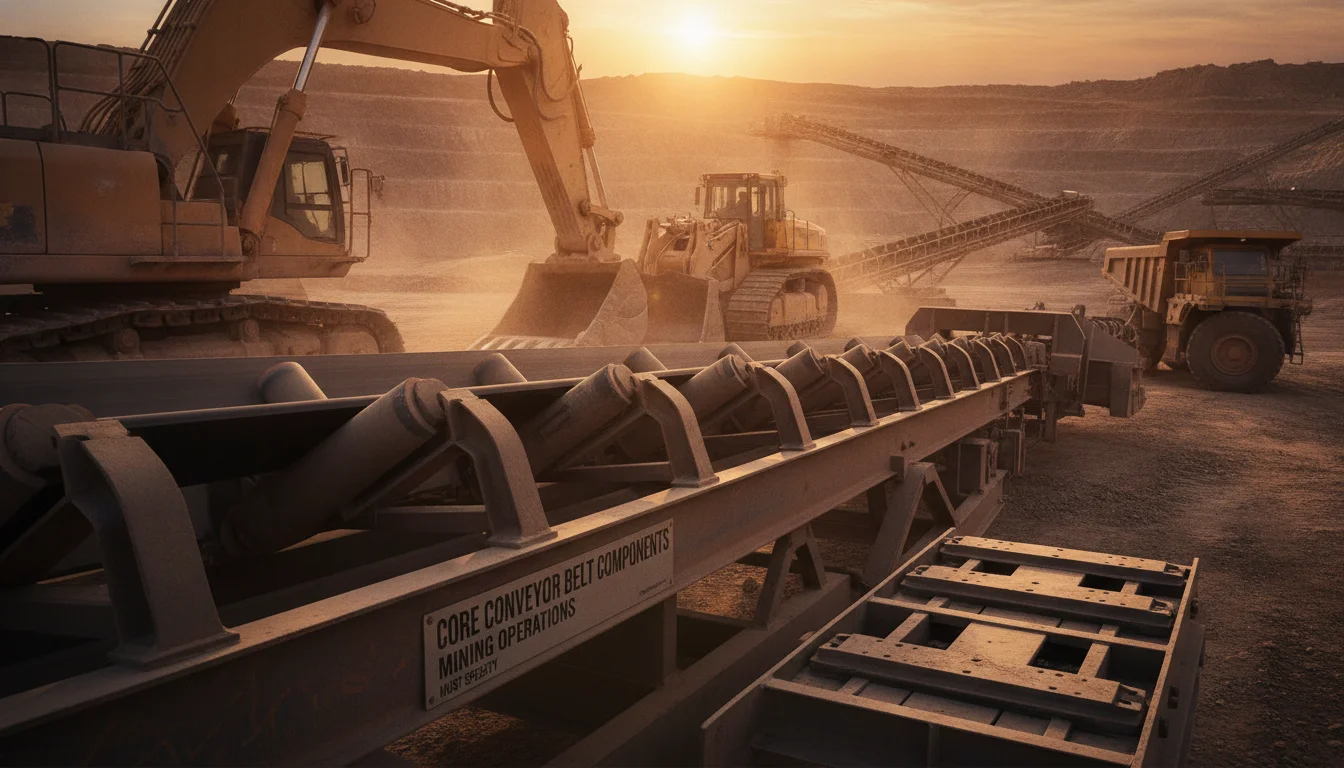
Conveyor Belt Components Mining Guide 2026
Conveyor belt components mining teams need: belts, idlers, pulleys, drives, and frames. Source OEM-quality parts with fast global delivery at 3genexport.
Loading article…
Article Not Found
The article you're looking for doesn't exist or may have been removed.
Back to BlogConveyor belt components mining operations depend on are the belt, idlers, pulleys, drive unit, take-up device, and structural frame. Selecting each conveyor belt component as part of an integrated system prevents premature wear, costly downtime, and energy waste across surface and underground operations.
Key Takeaways
- System thinking beats part picking: Specify belt, idlers, pulleys, and drive as one load path, not isolated SKUs.
- Three belt layers matter: Top cover, carcass, and bottom cover each address a different wear mechanism.
- Belt type drives total cost: Multi-ply, straight-warp, steel-cord, and solid woven belts carry different service lives and replacement costs.
- Gearless drives reduce wear parts: Eliminating the gearbox cuts main wear components and drive footprint in high-power conveyors.
- Maintenance access is a design criterion: Underground belt replacement after 10+ years must be planned before purchase, not after installation.
- Digital monitoring is now standard: Real-time KPI systems for idler temperature and belt tracking reduce unplanned stoppages on long overland runs.
Core Conveyor Belt Components Mining Operations Must Specify
The core conveyor belt components mining operations must specify are the belt, head and tail pulleys, idler rollers, drive unit, take-up device, and frame. According to IQS Directory, a belt conveyor is an efficient material handling system that uses a continuous belt supported by idler rollers and actuated by an electric motor. In mining, that definition expands to cover abrasive ores, long overland distances, steep grades, and underground accessibility constraints. A buying decision built around conveyor belt components for mining must treat each part as a single load path rather than a list of replaceable items.
The Conveyor Belt Itself: A Three-Layer Defense System
A mining conveyor belt is the continuous loop that physically transports ore from extraction to processing. Its anatomy includes three specialized layers. The top cover is the wear surface that resists abrasion and impact from ore. According to West River Conveyors, the top cover's thickness and compound must match the specific material characteristics of the ore being transported. The middle carcass is the structural backbone made from fabric reinforcement or steel cables, providing the tensile strength that prevents stretching and catastrophic failure under load. The bottom cover is the friction surface that rides over rollers and shields the carcass from operating wear. A belt that ignores any one of these layers fails early, even if the other two are over-specified.
Idlers, Pulleys, and Frame
Idler rollers are the rotating supports positioned along the belt path to prevent sagging and maintain alignment. Types include troughing idlers, impact idlers, training idlers, rubber disk idlers, and return idlers. The head pulley is the drive pulley at the discharge point, typically lagged with a rough surface layer to improve grip, reduce slip, and enhance power transmission. The tail pulley at the loading end often uses a wing design to shed material and reduce carryback, improving belt tracking and reducing buildup on the return side. The frame is the structural steel or aluminum support that holds all conveyor belt components in alignment. A weak frame accelerates idler misalignment and belt tracking failures, which cascade into edge wear and splice damage.
Drive Systems and Tensioning
The drive system provides motive power to the entire conveyor belt assembly. According to ABB, gearless conveyor drives eliminate the gearbox entirely, reducing main wear parts and instrumentation while shrinking the drive footprint. This is especially valuable underground, where space is limited and dust accelerates mechanical wear. A take-up device maintains belt tension to prevent slippage and compensate for stretch over time. Without adequate take-up travel, a new belt may run correctly for weeks and then begin slipping or mistracking as it beds in.
Belt Type Comparison: Properties, Pros, Cons, and Price Tiers
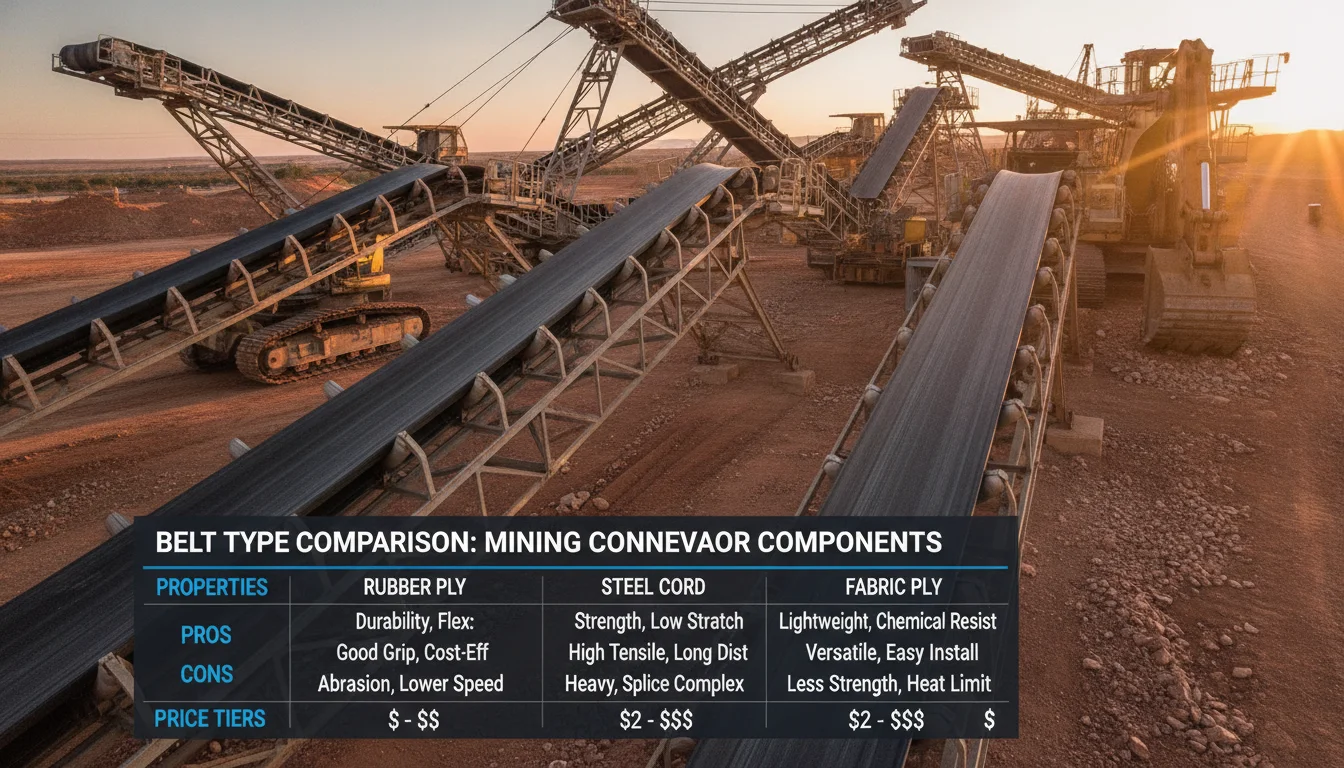
The right belt type for conveyor belt components mining procurement depends on load, impact, distance, and replacement access. The table below compares the four most common mining belt constructions.
| Belt Type | Best Suited For | Advantages | Limitations | Typical Price Tier |
|---|---|---|---|---|
| Multi-Ply | Underground mining where replacement is difficult | Shock-absorbing fabric layers, longer service life | Lower tensile rating than steel-cord | Budget to mid-range |
| Straight-Warp | Tunneling, rock quarries, crushing operations | High impact and tear resistance, higher troughability at narrower widths, higher PIW ratings | Less flexible than multi-ply in tight radius applications | Mid-range |
| Steel-Cord | High-tension, long overland, heavy-load underground | Unmatched tensile strength, longest conveyor runs | Highest initial cost, splice complexity required | Premium |
| Solid Woven | High-impact applications requiring rip and tear resistance | Single-ply woven carcass resists rip and tear | Fewer suppliers, may require special fasteners | Mid-range to premium |
According to West River Conveyors, the conveyor belt itself often receives the least attention during system design, yet it directly impacts your operation's efficiency, safety, and bottom line.
Ulf Richter, ABB's Global Product Manager for Conveyor Systems, notes that digital services for material handling performance and optimization are now available, and that continuous belt conveyors are becoming more important as ore grades decrease and mines go deeper.
Pros and Cons of Integrated Conveyor Belt Component Sourcing
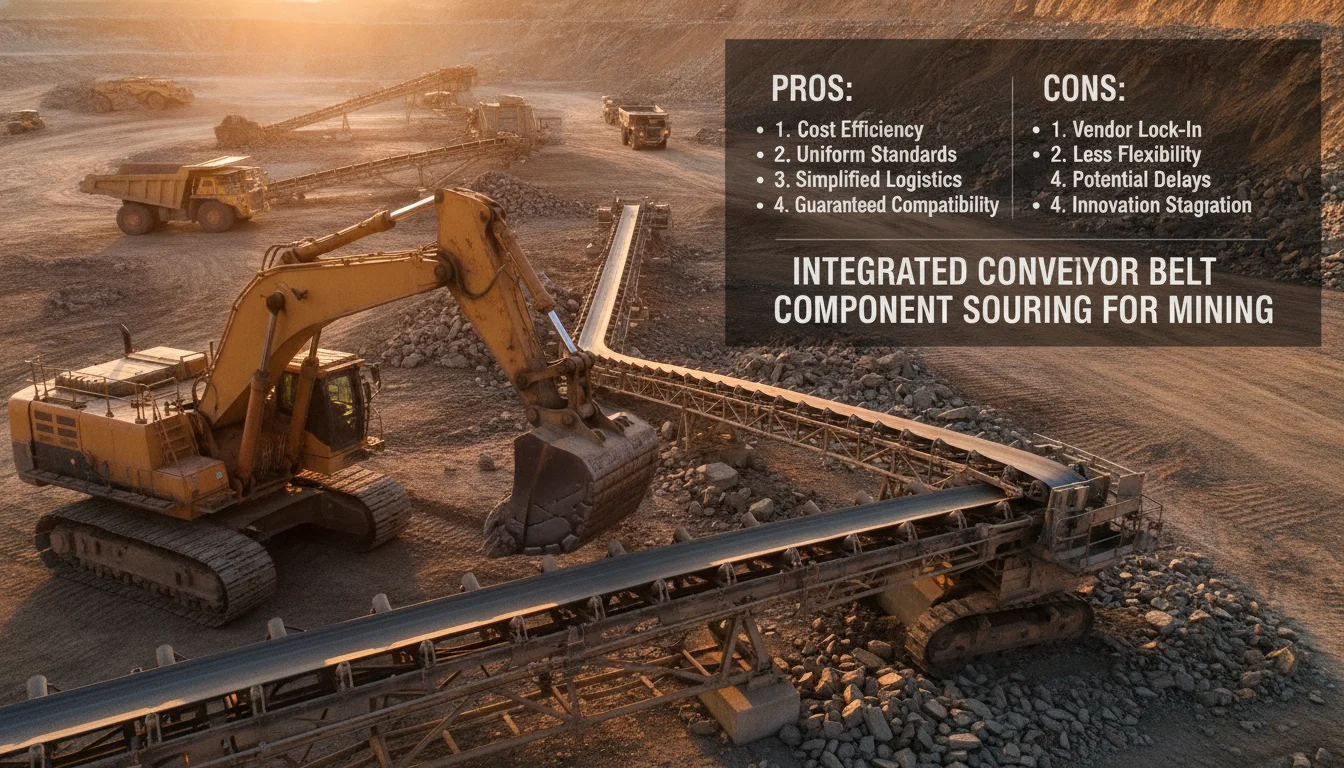
Pros
- Specifying belt, idlers, pulleys, and drive as one system eliminates compatibility gaps that cause premature wear.
- Integrated sourcing gives procurement teams a single point of accountability for technical documentation and splice procedures.
- Matching cover compound to idler surface from the start reduces chronic carryback and mistracking issues.
- System-level suppliers can provide bearing ratings, frame load calculations, and take-up travel specs together, reducing engineering time.
Cons
- Single-supplier sourcing can limit competitive pricing on individual components like standard idlers or pulleys.
- Integrated packages may include premium-tier components where budget-tier equivalents would perform adequately.
- Long lead times on one component, such as a custom steel-cord belt, can delay the entire system delivery.
What to Look For When Buying Conveyor Belt Components
Material Compatibility and Cover Compound Selection
Start with the ore. Abrasive iron ore requires a thicker top cover than soft coal. High-temperature materials need heat-resistant compounds. Wet or sticky ores pair with self-cleaning idlers like rubber disk or screw designs. If the belt cover compound and idler surface are not matched, carryback and mistracking become chronic. Ask suppliers for cut-and-gouge test samples before committing to a full roll.
Dimensional Fit and Troughability
Fit is not just length and width. Troughability determines whether the belt will form the required three-roll trough without edge lifting. Straight-warp belts offer higher troughability at narrower widths, making them suitable for space-constrained underground transfers. Check pulley diameters against belt carcass thickness. An undersized pulley bends the belt beyond its rated radius and destroys the carcass in months.
Maintenance Access and Service Life
Underground conveyors need components that can be changed out in tight spaces. As ABB notes, even a complete conveyor belt may need full replacement after 10+ years of operation. Buying a belt with a long-life carcass but no splice plan in a low-clearance drift creates future downtime that could have been designed out. Prefer idler frames with drop-in replacement and pulleys with accessible lagging.
Price Range Expectations: Budget, Mid-Range, Premium
No verifiable dollar figures appear in the reviewed supplier sources, so treat these as general procurement tiers. Budget tier covers standard rubber multi-ply belts for short surface conveyors with moderate abrasion. Mid-range includes straight-warp and solid woven belts, impact idlers, and standard drives. Premium tier covers steel-cord belts, gearless drives, and custom-engineered frames for overland or high-tension underground installations. The cheapest conveyor belt component often becomes the most expensive downtime event.
How to Configure Conveyor Belt Components Mining Applications Actually Need
High-Abrasion Iron Ore or Hard Rock
Pair a thick-top-cover steel-cord belt with troughing idlers on the carrying side and rubber disk idlers on the return side. Use a lagged head pulley and a wing tail pulley. Specify a gearless drive if the conveyor exceeds the power range where gearbox vibration becomes a maintenance issue. This combination addresses impact, abrasion, carryback, and drive reliability together as a single engineered system.
Underground Longwall or Room-and-Pillar
Choose a multi-ply or straight-warp belt for easier splicing and shock absorption. Install impact idlers at the loading zone and training idlers at regular intervals to prevent mistracking in low-clearance entries. Since replacement is difficult, prioritize belt service life and put take-up travel within reach of the drive station. A gearless drive can eliminate gearbox oil changes and reduce noise, which matters under modern EU noise regulations.
Overland Surface Conveying
Steel-cord belts with deep troughing idlers maximize capacity per meter of belt width. Use a drive system with one or more drive pulleys, depending on length and lift. Design the frame for thermal expansion if the route crosses significant temperature swings. Add real-time monitoring for idler temperature and belt tracking. An overland conveyor is hard to walk along in bad weather, so remote condition data is not optional.
Digital Monitoring and Conveyor Optimization: As of 2026
Digital services for conveyor belt components mining operations are no longer a future-state concept. According to ABB's published data, continuous belt conveyors are becoming more important as ore grades decrease and mines go deeper. ABB's ABB Ability platform collects operating data, applies machine learning methods, and delivers KPIs covering overall equipment effectiveness, energy performance, and predictive maintenance. As of 2026, only a fraction of available operating data is being used for optimization across the industry. Procurement teams that specify monitoring-ready conveyor belt components from day one, including sensor-compatible idler frames and instrumentation-ready drive packages, position their operations to close that gap without a costly retrofit.
Step-by-Step Procurement Process for Conveyor Belt Components Mining Teams Should Follow
- Characterize the material and duty cycle. Record ore density, top size, moisture, temperature, and annual tonnage. This data defines cover compound selection and idler spacing requirements.
- Select belt carcass and cover. Choose multi-ply, straight-warp, steel-cord, or solid woven based on tensile requirement, impact resistance, and splice access in the installation environment.
- Size idlers and pulleys. Match idler diameter and bearing rating to belt speed and load. Verify pulley diameter against belt carcass thickness to avoid bending the carcass beyond its rated radius.
- Choose the drive configuration. Compare geared versus gearless. Gearless drives reduce wear parts and instrumentation but may require a different motor and control package.
- Verify frame and take-up compatibility. Confirm the structural steel or aluminum frame can handle belt tension and idler load. Ensure take-up travel accommodates stretch and thermal expansion over the belt's full service life.
- Negotiate maintenance and splice support. Require supplier documentation for splice procedures, idler replacement intervals, and emergency belt repair protocols before signing any purchase order.
Frequently Asked Questions
What are the main components of a conveyor belt?
A typical belt conveyor includes the belt itself, head and tail pulleys, idler rollers, a drive unit, a take-up device, and a structural frame. Each component handles a specific load, friction, or alignment function, and all must be specified together to avoid compatibility failures.
What type of conveyor belt is used in mining?
Mining operations commonly use multi-ply, straight-warp, steel-cord, and solid woven belts. The choice depends on impact load, tensile requirement, and whether the conveyor is surface or underground, with steel-cord belts preferred for the longest and highest-tension runs.
What are the components of a belt conveyor frame?
The frame is typically steel or aluminum and includes stringers, idler support brackets, transition sections, and mounting points for pulleys and take-up. It must resist flexing under full load to prevent belt mistracking and idler misalignment.
What materials are commonly used for conveyor belts?
Conveyor belts are made from rubber, PVC, PU, polyester, or other polymer compounds, often reinforced with fabric or steel cables. The top cover compound is selected for abrasion, heat, and chemical resistance based on the specific ore or material being transported.
How do I choose the right mining conveyor belt supplier?
Ask for material test reports, splice procedures, idler bearing ratings, and on-site installation support. A supplier that cannot provide complete system technical data is unlikely to support long-term belt performance across the full service life of the installation.
What is the best value in conveyor belt components mining purchases?
Best value comes from matching belt type, idler design, and drive configuration to the specific ore and duty cycle. A mid-range straight-warp belt with proper impact idlers often outlasts a cheaper multi-ply belt in abrasive surface mine applications.
Ready to source OEM-quality conveyor belt components mining operations can rely on? Shop our full range of mining conveyor parts with global 5-day delivery at 3genexport.com.