
Diesel Engine Spare Parts for Construction Equipment Guide
Expert guide to sourcing diesel engine spare parts for construction equipment. OEM-quality components for Caterpillar, Komatsu, Cummins engines with 5-day delivery.
Loading article…
Article Not Found
The article you're looking for doesn't exist or may have been removed.
Back to BlogWhen your excavator’s Cummins QSB6.7 starts throwing black smoke at 6 AM on a Monday, you need diesel engine spare parts for construction equipment that actually work , not generic knockoffs that’ll fail in three months.
We’ve been supplying engine components for construction fleets since 2006, and the pattern never changes. Operators ignore the early warning signs , slight power loss, increased fuel consumption, occasional rough idle , until the engine protection system finally shuts everything down. By then, what could’ve been a $300 injector replacement becomes a $15,000 overhaul.
Here’s what separates reliable diesel engine spare parts from expensive paperweights, and how to source components that keep your machines earning instead of burning cash in the shop.
Critical Engine Components That Fail First in Construction Equipment
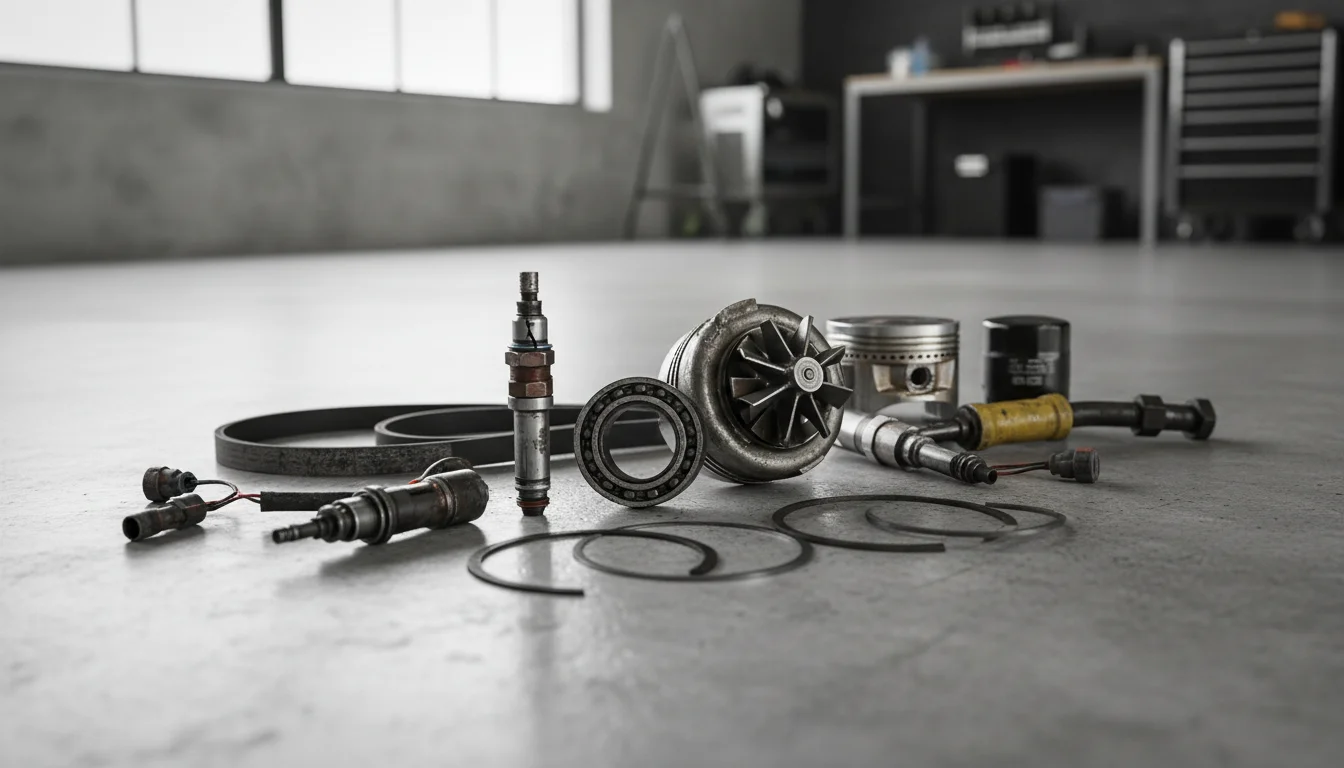
Construction environments destroy diesel engines faster than any other application. Dust infiltration, thermal cycling, and constant load variations create a perfect storm for component failure.
Fuel System Components Under Siege
Fuel injectors take the biggest beating in construction applications. We’ve replaced more Caterpillar C7 injectors than any other single component , the combination of dirty fuel and extreme operating temperatures creates carbon buildup that chokes fuel flow.
Common rail fuel pumps fail next, especially on Komatsu PC200 excavators running Cummins engines. The high-pressure system (up to 2,000 bar) can’t tolerate contaminated fuel, and most construction sites don’t maintain fuel filtration systems properly.
Fuel filters need replacement every 250 hours in dusty conditions, not the standard 500-hour interval. Skip this maintenance, and you’ll be buying new injectors within 2,000 hours instead of 8,000.
Air Intake System Vulnerabilities
Turbochargers fail catastrophically when air filtration breaks down. We’ve seen Volvo EC210 turbochargers destroyed by a single day of operation with a compromised air filter , the abrasive particles turn precision-machined components into expensive scrap metal.
Intercoolers clog with construction dust, reducing air density and forcing engines to work harder. This creates a cascade effect: higher exhaust gas temperatures stress the turbocharger, increased fuel consumption accelerates injector wear, and reduced power output tempts operators to override engine protection systems.
Cooling System Stress Points
Radiators in construction equipment face constant bombardment from debris. We stock more replacement cores for CAT 320 excavators than any other cooling component , the combination of hydraulic oil mist and airborne particles creates a concrete-like coating that standard cleaning can’t remove.
Water pumps fail when cooling systems run too hot, usually from clogged radiators or failed thermostats. The cavitation damage to impeller blades creates a domino effect that destroys the entire cooling circuit.
Sourcing Strategy: OEM vs Aftermarket Quality Standards
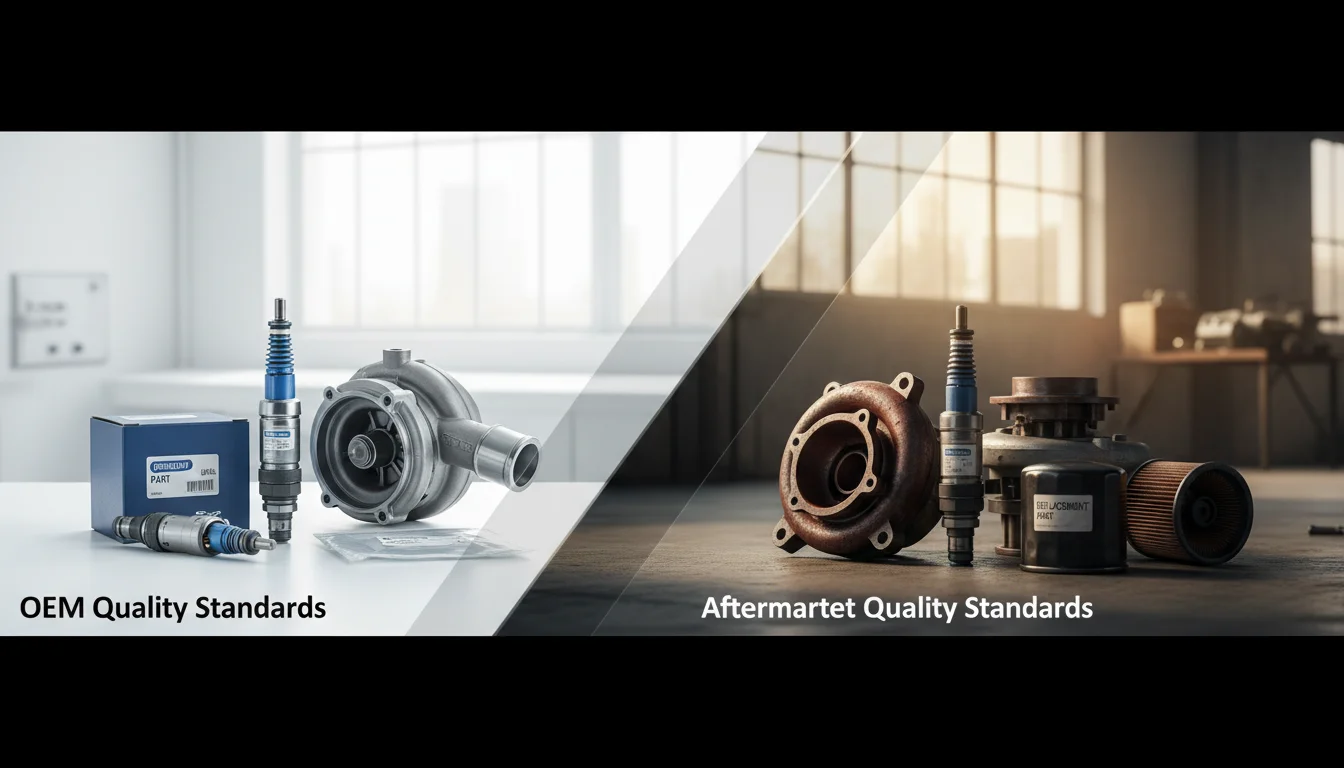
Not all diesel engine spare parts for construction equipment meet the brutal demands of job site operation. The quality gap between premium aftermarket and bargain-bin components can make or break your maintenance budget.
Understanding OEM Specifications
Original Equipment Manufacturer parts carry premium pricing for good reason , they’re engineered for specific applications with known operating parameters. When Caterpillar designs an injector for the C9 engine, they account for fuel quality variations, thermal cycling, and expected service intervals.
However, OEM doesn’t always mean optimal for your specific application. We’ve seen cases where aftermarket manufacturers improve on original designs, incorporating lessons learned from field failures. The key is finding suppliers who maintain OEM-equivalent quality standards without the brand premium.
Premium aftermarket parts often exceed OEM specifications. Companies like Bosch manufacture fuel system components for multiple OEMs, then offer the same parts under their own brand at lower prices.
Red Flags in Component Quality
Cheap diesel engine components reveal themselves quickly in construction applications. Fuel injectors with inconsistent spray patterns create uneven combustion, leading to increased emissions and reduced power output. We’ve tested injectors that varied by 15% in flow rate within the same batch , that’s enough variation to damage engines.
Turbocharger rebuilds using substandard bearings fail within 1,000 hours instead of the expected 8,000-10,000 hours. The bearing material can’t handle the thermal stress, leading to shaft play that destroys the compressor and turbine wheels.
Gasket sets made from inferior materials leak under pressure, allowing combustion gases to contaminate the cooling system or oil. We’ve seen head gasket failures that required complete engine rebuilds because operators continued running with coolant contamination.
Certification and Testing Standards
Reliable suppliers provide component certifications that verify materials and manufacturing processes. ISO 9001 certification indicates consistent quality management, while ISO/TS 16949 specifically addresses automotive and heavy equipment requirements.
Component testing data separates professional suppliers from parts brokers. Legitimate manufacturers provide flow bench results for injectors, pressure testing data for pumps, and metallurgical analysis for critical wear components.
Engine-Specific Parts Compatibility Across Major Brands
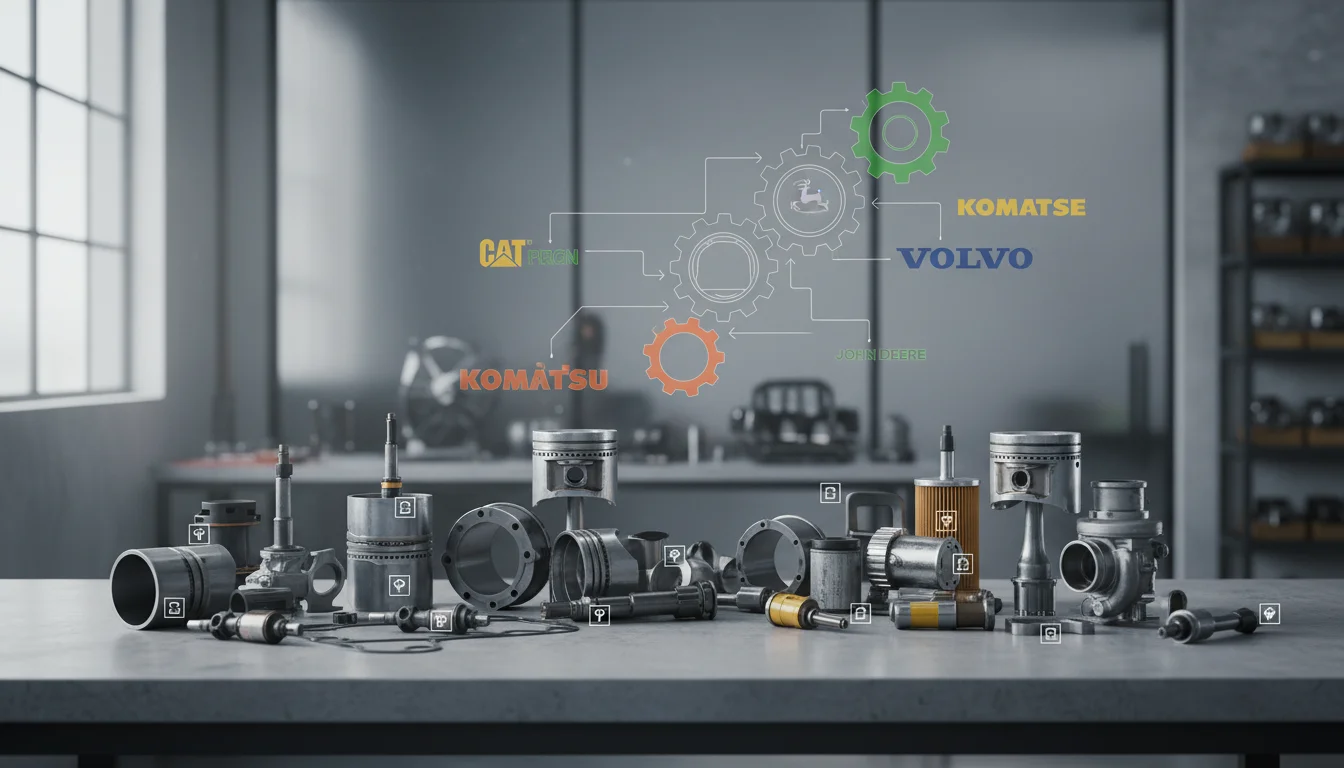
Construction equipment manufacturers often use engines from multiple suppliers, creating compatibility challenges that can strand your equipment if you order the wrong components.
Caterpillar Engine Families
CAT construction equipment uses both Caterpillar-manufactured engines and engines from other suppliers, depending on the model year and application. The popular CAT 320 excavator has used Mitsubishi, Caterpillar, and Perkins engines across different production runs.
C7 engines in CAT equipment require specific injector part numbers based on the engine serial number prefix. Using the wrong injector can cause fuel system damage that voids warranty coverage. We maintain a cross-reference database that matches equipment serial numbers to correct engine specifications.
ACERT technology in newer CAT engines requires specific fuel system components that aren’t interchangeable with older mechanical systems. The electronic controls and high-pressure fuel delivery systems demand precise component matching.
Komatsu Power Plant Variations
Komatsu equipment predominantly uses engines from Cummins, Komatsu-manufactured units, or Isuzu powerplants. The PC200-8 excavator uses a Komatsu SAA6D107E engine, while the PC210 uses a Cummins QSB6.7.
Tier 4 emissions compliance created significant changes in Komatsu engine specifications. Diesel particulate filters, selective catalytic reduction systems, and exhaust gas recirculation components are model-specific and require exact part number matching.
Hydraulic-driven cooling fans in Komatsu equipment create unique engine loading patterns that affect component wear rates. Standard replacement parts may not account for these application-specific stresses.
Volvo Construction Equipment Engines
Volvo uses primarily Volvo Penta engines in their construction equipment, with some models incorporating Deutz or Cummins powerplants. The engine identification becomes critical when sourcing diesel engine spare parts for construction equipment.
Volvo’s advanced engine management systems integrate closely with machine hydraulics, creating dependencies that affect parts selection. Fuel injection timing, turbocharger boost control, and cooling system operation are all electronically managed and require compatible replacement components.
Step-by-Step Parts Identification and Ordering Process
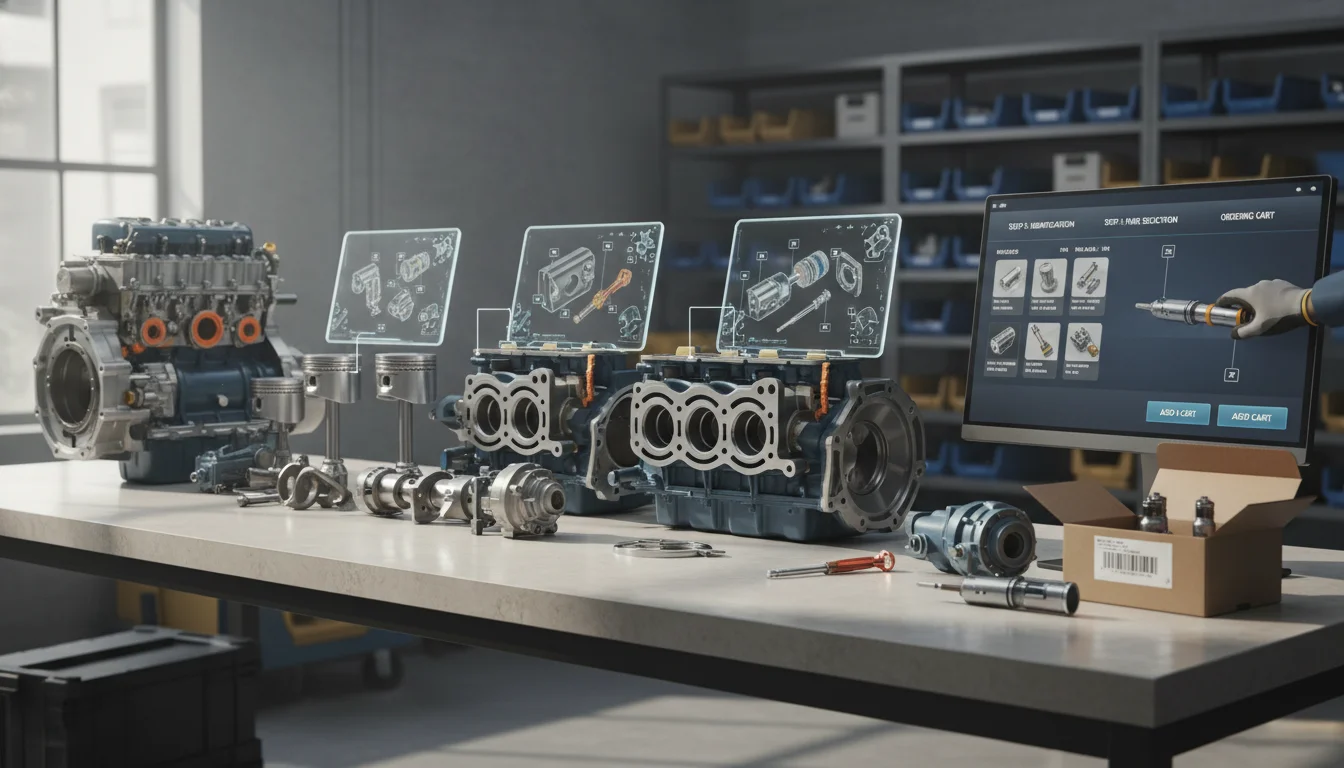
Ordering the wrong diesel engine components can cost thousands in downtime and return shipping. Here’s our proven process for getting the right parts every time.
Gathering Essential Machine Information
Start with the equipment serial number, not the engine serial number. The machine serial number provides the complete specification package, including engine model, transmission type, and hydraulic system configuration. This information determines which engine variant is installed.
Locate the engine serial number on the engine block, usually stamped on the left side near the injection pump. This number provides specific engine build information, including emission compliance level and component specifications.
Document the failure symptoms and operating conditions. A turbocharger failure caused by oil starvation requires different replacement components than one caused by foreign object damage. The failure mode affects parts selection and identifies related components that need inspection.
Cross-Referencing Part Numbers
OEM part numbers provide the starting point for component identification, but don’t limit yourself to single-source suppliers. We maintain cross-reference databases that identify equivalent parts from multiple manufacturers, often at significant cost savings.
Verify supersession information before ordering. Manufacturers frequently update part numbers to reflect design improvements or supplier changes. The original part number may no longer be available, but an updated version provides better performance and reliability.
Check for kit availability when replacing individual components. Fuel system overhaul kits often cost less than individual injectors and include related components like seals, filters, and gaskets that should be replaced during service.
Quality Verification Before Installation
Inspect components immediately upon receipt, before installation. We’ve seen cases where shipping damage wasn’t discovered until after installation, creating warranty disputes and extended downtime.
Verify part numbers match your order and equipment specifications. Component packaging should include clear identification and installation instructions. Missing or unclear documentation indicates questionable quality control.
Test critical components before installation when possible. Fuel injectors should be flow-tested, turbochargers should be inspected for shaft play, and electronic components should be bench-tested for proper operation.
Preventive Maintenance to Extend Engine Component Life
Proper maintenance extends diesel engine spare parts life by 3-4 times in construction applications. The harsh operating environment makes preventive care even more critical than in highway applications.
Fuel System Protection Strategies
Fuel quality directly impacts injector and pump life. Construction sites often have contaminated fuel supplies, with water and particulates that destroy precision components. We recommend installing secondary fuel filtration systems that exceed OEM specifications.
Fuel additives designed for construction applications help prevent injector coking and fuel system corrosion. Biocide treatments prevent microbial growth in fuel tanks, which creates acids that damage fuel system components.
Regular fuel system cleaning prevents carbon buildup that restricts fuel flow. Professional cleaning services can restore injector performance and extend component life, but the process requires specialized equipment and expertise.
Air Filtration System Optimization
Construction dust destroys engines faster than any other contaminant. Standard air filtration systems aren’t adequate for heavy dust environments , we recommend upgrading to high-capacity filter systems with pre-cleaners.
Monitor air filter restriction gauges religiously. Most operators wait until the restriction light comes on, but that’s too late in dusty conditions. Replace filters when restriction reaches 80% of maximum, not 100%.
Inspect air intake ducting for leaks that bypass filtration. A small crack in intake tubing allows unfiltered air to enter the engine, destroying turbochargers and cylinder components within hours of operation.
Cooling System Maintenance Protocols
Cooling system failures cascade through the entire engine, destroying multiple components simultaneously. Regular coolant analysis identifies problems before they cause expensive damage.
Radiator cleaning requires more than compressed air in construction applications. The combination of hydraulic oil mist and dust creates deposits that require chemical cleaning or core replacement.
Thermostat replacement should follow scheduled intervals, not failure-based maintenance. A stuck thermostat creates temperature fluctuations that stress engine components and accelerate wear rates.
Cost Analysis: Repair vs Replace Decision Framework
Knowing when to repair versus replace diesel engine components can save thousands in unnecessary expenses. The decision framework depends on component type, failure mode, and equipment utilization.
Economic Thresholds for Major Components
Turbocharger rebuilds make economic sense when the housing and wheels are undamaged. Core exchange programs reduce costs by roughly 40% compared to new units, but require careful inspection to avoid cores with hidden damage.
Fuel injection pump rebuilds become questionable when multiple internal components need replacement. The labor cost often exceeds the price difference between rebuilt and new units, especially when downtime costs are factored.
Complete engine rebuilds make sense when the block and heads are serviceable, but require careful cost analysis. We’ve seen cases where rebuild costs approached new engine prices due to unexpected internal damage discovered during disassembly.
Hidden Costs in Component Replacement
Labor costs vary significantly based on component accessibility and required supporting work. Replacing injectors in a Volvo EC210 requires removing the cab, adding 8-10 hours to the job compared to engines with top-mounted injection systems.
Supporting component replacement often doubles the parts cost. When replacing a turbocharger, best practice includes new oil lines, gaskets, and often the air filter system. Skipping these related components frequently leads to premature failure of the new turbocharger.
Downtime costs dwarf parts costs in most construction applications. A $2,000 component that takes three days to source costs $15,000 in lost productivity for a typical excavator operation. Premium pricing for immediate availability often provides better total cost of ownership.
Warranty Considerations and Risk Management
Component warranties vary significantly between suppliers and affect the total cost equation. Premium suppliers often provide 12-24 month warranties with comprehensive coverage, while discount suppliers may offer limited 90-day coverage.
Installation requirements affect warranty coverage. Many component warranties require professional installation and specific break-in procedures. DIY installations or shortcuts during commissioning can void warranty protection.
Failure analysis determines warranty coverage for related component damage. When a turbocharger fails due to oil starvation, the warranty may not cover engine damage caused by oil contamination. Understanding coverage limitations helps manage financial risk.
Global Supply Chain and Delivery Logistics
Construction projects can’t wait for standard shipping schedules. Understanding supply chain dynamics helps secure diesel engine spare parts for construction equipment when you need them most.
Regional Inventory Distribution
Major component suppliers maintain regional distribution centers to reduce delivery times, but inventory levels vary by location and season. West Coast ports handle most Asian-manufactured components, while East Coast facilities focus on European suppliers.
Seasonal demand patterns affect availability for certain components. Turbocharger demand peaks during spring construction season, often creating temporary shortages for popular models. Planning ahead for seasonal maintenance reduces supply chain risk.
Emergency inventory programs provide guaranteed availability for critical components at premium pricing. These programs make sense for high-utilization equipment where downtime costs exceed the inventory carrying costs.
International Sourcing Considerations
Component manufacturing has globalized, with quality suppliers located worldwide. However, international sourcing introduces lead time and quality control challenges that affect project schedules.
Customs and import procedures can delay critical shipments, especially for high-value components that require additional documentation. Understanding these requirements helps avoid unexpected delays during emergency repairs.
Currency fluctuations affect international component pricing, sometimes significantly. Long-term contracts with suppliers can provide price stability, but require volume commitments that may not match actual usage patterns.
Expedited Shipping and Emergency Services
Air freight costs become insignificant compared to equipment downtime in critical situations. We maintain relationships with freight forwarders who specialize in heavy equipment components and understand the urgency of construction schedules.
Same-day delivery services exist in major metropolitan areas for common components. These services cost 3-5 times standard shipping but can save thousands in downtime costs for high-value equipment.
Emergency repair services that combine parts supply with field service can minimize downtime for complex repairs. Mobile service units carry common components and can perform repairs on-site, eliminating transportation time and costs.
Quality Control and Testing Procedures
Component quality varies dramatically in the aftermarket, making quality control procedures essential for reliable operation. Professional testing separates reliable components from expensive failures.
Incoming Inspection Protocols
Visual inspection catches obvious quality issues before installation, but sophisticated components require more detailed evaluation. We maintain inspection procedures that identify substandard components before they cause equipment damage.
Dimensional verification ensures components meet specifications for critical fits and clearances. Fuel injectors with incorrect nozzle dimensions create combustion problems that damage engines, while turbocharger components with excessive clearances fail prematurely.
Material certification verifies that components use appropriate materials for the application. Substandard materials may look identical to premium components but fail under operating stress. Legitimate suppliers provide material certifications and testing data.
Performance Testing Standards
Fuel system components require flow testing to verify performance specifications. Injectors should be tested for flow rate, spray pattern, and opening pressure. Variations beyond specification limits cause combustion problems and engine damage.
Turbocharger testing includes shaft play measurement, boost pressure verification, and balance testing. Components that pass visual inspection may still have internal problems that cause premature failure under operating conditions.
Electronic component testing verifies proper operation before installation. Engine control modules, sensors, and actuators should be bench-tested to confirm functionality and avoid diagnostic confusion during installation.
Installation Verification Procedures
Proper installation procedures are critical for component reliability and warranty coverage. We provide detailed installation instructions and torque specifications for all critical components.
Break-in procedures vary by component type and affect long-term reliability. New turbochargers require specific oil change intervals and operating restrictions during the first 50 hours of operation. Skipping these procedures can cause premature failure.
Post-installation testing verifies proper operation and identifies installation problems before they cause damage. Fuel system pressure testing, cooling system pressure testing, and engine performance verification should be completed before returning equipment to service.
Ready to source reliable diesel engine spare parts for construction equipment? Shop OEM-quality spare parts with global 5-day delivery at 3genexport.com