
Dresser Construction Equipment Parts: Complete OEM Guide 2026
Find OEM-quality Dresser construction equipment parts for bulldozers, wheel loaders, and track loaders. Global shipping, competitive pricing, expert support.
Loading article…
Article Not Found
The article you're looking for doesn't exist or may have been removed.
Back to BlogWhen your Dresser TD8E bulldozer throws a hydraulic pump failure at 6 AM on a Monday, you need parts that work , not promises. We’ve been supplying dresser construction equipment parts since 2006, and the pattern never changes: operators who source quality aftermarket components keep their fleets running while others wait weeks for OEM delivery.
The Dresser brand carries serious weight in heavy construction. From the legendary TD series bulldozers to the strong 850 wheel loaders, these machines built America’s infrastructure. But here’s what most procurement managers miss: finding reliable parts for discontinued Dresser models requires knowing exactly which components interchange across the International Harvester, Case IH, and Komatsu lineage.
Understanding Dresser’s Equipment Legacy and Parts Compatibility
Dresser Industries merged with International Harvester’s construction division in 1982, creating Dresser Industries Construction Equipment Division. This merger produced some of the most durable bulldozers and loaders ever manufactured, but it also created a complex parts ecosystem that confuses buyers today.
The International Harvester Connection
Most Dresser construction equipment from the 1980s and 1990s shares significant component overlap with International Harvester agricultural tractors. The TD8E bulldozer, for example, uses the same DT466 engine block as IH’s 1086 farm tractor. This crossover means you can often source engine components, hydraulic pumps, and transmission parts from agricultural suppliers at roughly 30% less cost than construction-specific channels.
We’ve helped customers identify over 200 interchangeable part numbers between Dresser dozers and IH tractors. The key is understanding the casting numbers and specifications rather than relying solely on equipment-specific part catalogs.
Komatsu’s Acquisition Impact
When Komatsu purchased Dresser’s construction equipment division in 1988, they continued manufacturing several popular models under the Dresser name through the mid-1990s. This transition period created unique opportunities for parts sourcing, as many components received dual part numbers , both Dresser and Komatsu designations for identical pieces.
The Dresser 850 wheel loader, manufactured until 1994, shares hydraulic components with early Komatsu WA series loaders. Smart procurement teams use this overlap to access Komatsu’s more extensive parts network while maintaining OEM-quality standards.
Model-Specific Parts Availability
Not all Dresser models enjoy equal parts support. The TD12C, TD15C, and TD20E bulldozers maintain strong aftermarket availability due to their popularity in mining applications. Conversely, specialty models like the 515B and 515C wheel loaders present sourcing challenges, particularly for hydraulic components and final drives.
Track loaders in the 100 and 125 series generally offer better parts availability than their wheel-mounted counterparts, primarily because undercarriage components interchange with other tracked equipment manufacturers.
Critical Dresser Parts Categories and Sourcing Strategies
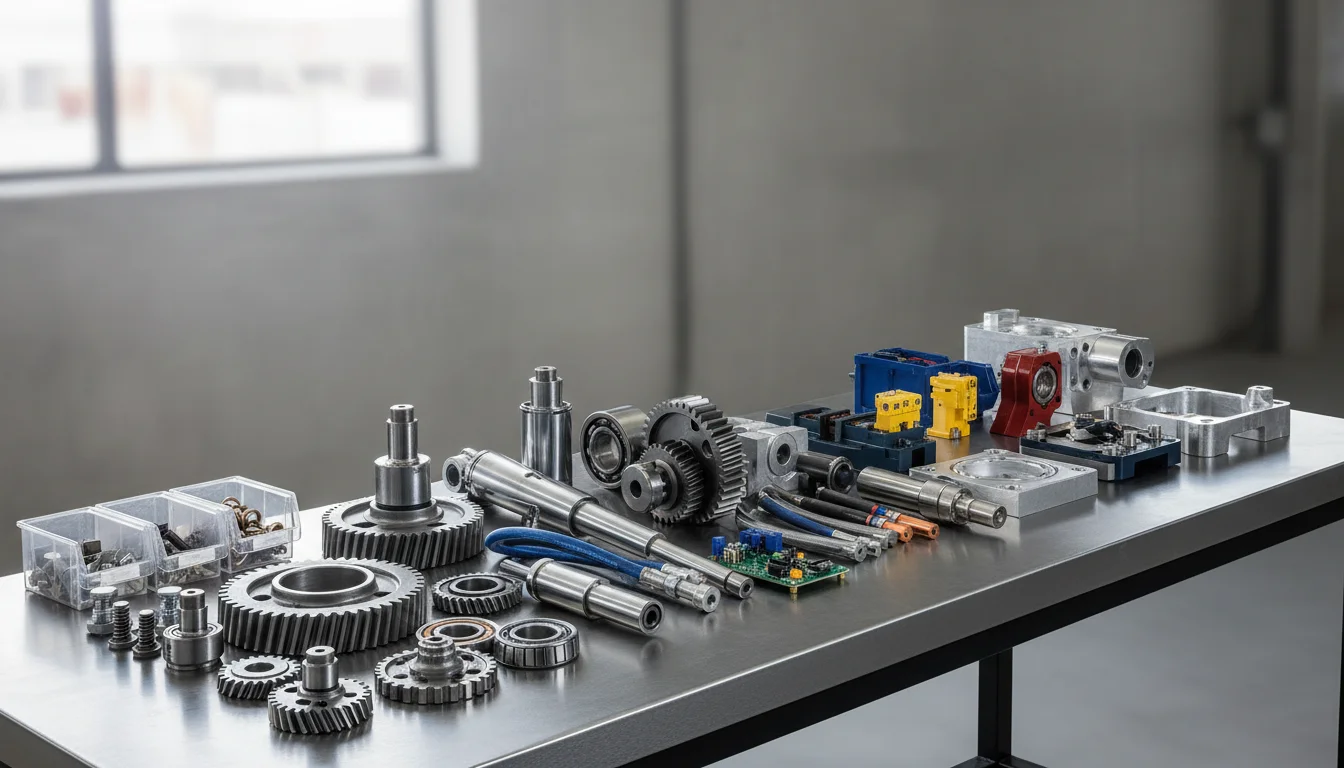
Successful Dresser fleet management requires understanding which components fail most frequently and where to source replacements efficiently. Our parts data from thousands of Dresser machines reveals clear patterns in failure rates and sourcing complexity.
Undercarriage Components: The Foundation of Reliability
Dresser bulldozers and track loaders consume undercarriage parts at predictable intervals. Track chains typically require replacement every 2,000-3,000 operating hours, while sprockets and idlers last roughly 4,000-5,000 hours under normal conditions.
The challenge with Dresser undercarriage parts lies in the variety of track configurations across models. The TD8E uses a different track pitch than the TD8G, despite sharing the same basic chassis design. We maintain detailed compatibility charts that cross-reference track specifications across all major Dresser models.
Pro tip: Many Dresser track components interchange with Caterpillar D6 and D7 series dozers from the same era. This crossover significantly expands your sourcing options and often reduces costs by 15-25%.
Hydraulic System Components
Hydraulic failures account for roughly 40% of all Dresser equipment downtime. The most common failure points include main hydraulic pumps, lift cylinders, and control valves. Dresser used primarily Vickers and Rexroth hydraulic components, which simplifies aftermarket sourcing compared to proprietary systems.
The 850 wheel loader’s hydraulic system deserves special attention. Its tandem hydraulic pumps (part numbers 705235050C and 1253107H91) are expensive to rebuild but readily available in the aftermarket. We’ve seen significant cost savings when customers purchase remanufactured units rather than attempting field repairs.
Engine and Powertrain Parts
Dresser equipment predominantly used International Harvester DT series engines and Allison transmissions. This standardization works in your favor , these powertrains appear across multiple equipment brands, creating a strong aftermarket supply chain.
Engine components like water pumps, fuel injection systems, and cooling system parts maintain excellent availability through both construction and agricultural channels. Transmission parts require more careful sourcing, as Allison model variations can be subtle but critical for proper operation.
OEM vs Aftermarket: Quality and Cost Considerations
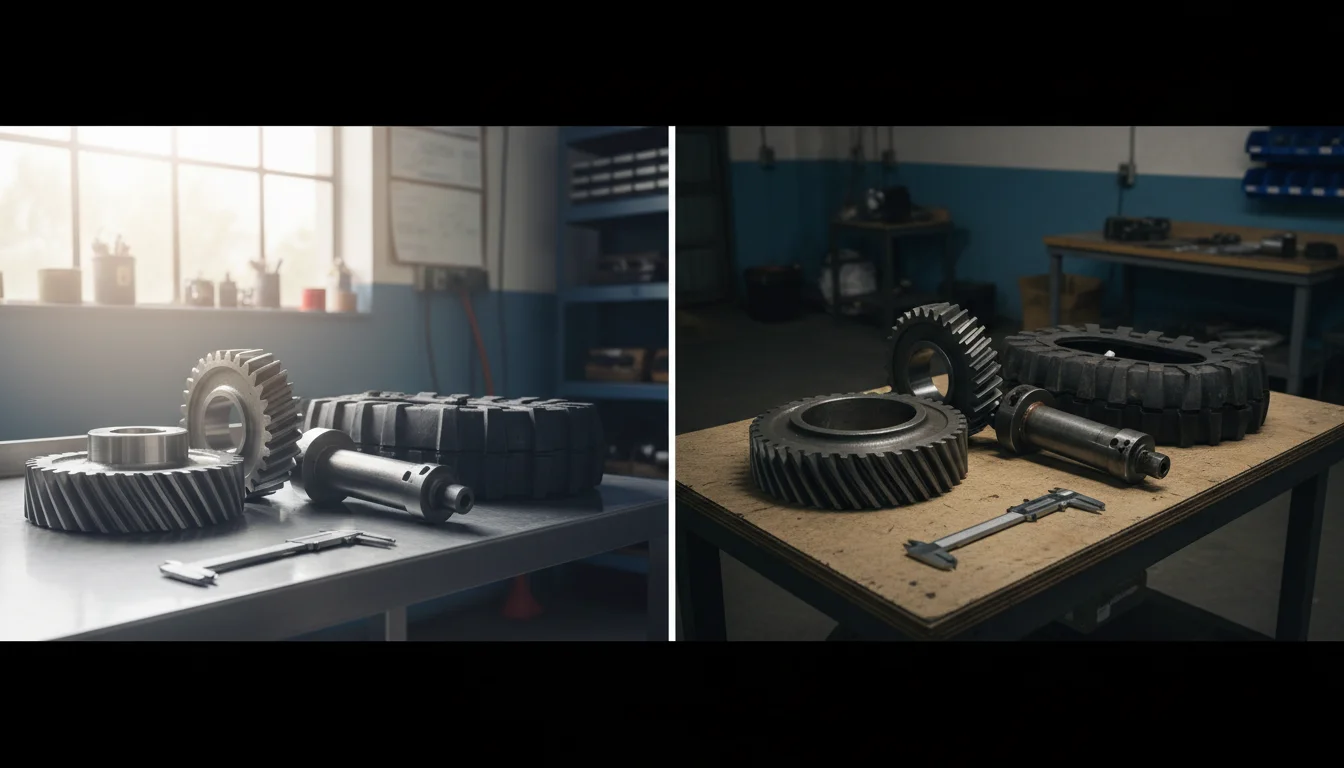
The decision between OEM and aftermarket dresser construction equipment parts isn’t always straightforward. While OEM parts guarantee perfect fit and finish, aftermarket alternatives often provide equivalent performance at significant cost savings.
When OEM Parts Make Sense
Certain components demand OEM specification regardless of cost. Final drives, transmission cases, and engine blocks represent major investments where compatibility issues can cascade into expensive secondary failures. We recommend OEM parts for any component where failure could damage surrounding systems.
Safety-critical items like brake components, steering systems, and ROPS structures should always meet or exceed OEM specifications. The liability exposure from aftermarket safety components rarely justifies the cost savings.
Aftermarket Advantages
High-wear items like filters, belts, hoses, and basic maintenance components offer excellent aftermarket alternatives. Quality aftermarket suppliers often improve upon original designs, incorporating lessons learned from field failures.
We’ve seen aftermarket hydraulic seals that outlast OEM components by 20-30% due to improved rubber compounds and manufacturing processes. Similarly, aftermarket air filters frequently offer better filtration efficiency than original specifications.
Quality Assessment Criteria
Not all aftermarket parts deserve consideration. We evaluate suppliers based on ISO certification, material specifications, and field performance data. Reputable aftermarket manufacturers provide detailed material certifications and often offer warranties that match or exceed OEM coverage.
The key is working with suppliers who understand the application requirements, not just the part dimensions. A hydraulic seal that works perfectly in a farm tractor may fail prematurely in a bulldozer’s more demanding environment.
Common Dresser Model Parts Breakdown
Each Dresser model presents unique parts challenges and opportunities. Understanding these model-specific characteristics helps optimize your parts inventory and sourcing strategy.
TD Series Bulldozers
The TD8E remains the most popular Dresser bulldozer in active service, primarily due to its strong DT466 engine and straightforward hydraulic system. Parts availability is excellent across all major categories, with particularly strong aftermarket support for undercarriage components.
TD12C and TD15C models present more complex parts scenarios. Their larger engines (DT466 and DT570 respectively) share components with over-the-road trucks, opening additional sourcing channels. However, their specialized transmissions and final drives require more careful sourcing.
The TD20E represents the pinnacle of Dresser bulldozer engineering but also the most challenging parts situation. Its Cummins NTC-400 engine provides excellent power but requires specialized knowledge for proper maintenance and parts sourcing.
Wheel Loader Models
The 850 wheel loader dominates our Dresser parts requests, accounting for roughly 60% of all wheel loader inquiries. Its Allison CLT transmission and Rexroth hydraulics create a parts ecosystem that extends well beyond construction equipment.
Smaller models like the 515B and 515C present sourcing challenges due to limited production numbers. Their Perkins engines and proprietary hydraulic systems require more specialized knowledge and often longer lead times for critical components.
Track Loader Applications
Dresser track loaders in the 100 and 125 series offer excellent parts availability due to their popularity in utility and landscaping applications. These machines share many components with contemporary Case and International Harvester equipment, expanding sourcing options significantly.
The key advantage of Dresser track loaders lies in their undercarriage design, which uses standard rubber track systems that interchange with multiple manufacturers. This standardization reduces inventory complexity and improves parts availability.
Global Supply Chain and Lead Time Management
Managing dresser construction equipment parts inventory requires understanding global supply patterns and seasonal demand fluctuations. The construction equipment aftermarket operates on different cycles than other industrial sectors.
Regional Supply Concentrations
North American Dresser parts supply concentrates heavily in the Midwest, particularly Illinois, Iowa, and Wisconsin, where many original dealers maintained extensive inventories. European suppliers focus primarily on engine and hydraulic components, while Asian manufacturers dominate the undercarriage and basic maintenance parts segments.
We maintain supplier relationships across all major regions to ensure consistent availability regardless of local supply disruptions. This geographic diversification proved critical during recent supply chain challenges, allowing us to maintain delivery schedules when single-source suppliers faced delays.
Seasonal Demand Patterns
Dresser parts demand follows predictable seasonal patterns that smart procurement managers can use. Spring construction season drives demand for undercarriage and hydraulic components, while winter months see increased engine and heating system parts requests.
Planning major overhauls during low-demand periods can reduce parts costs by 10-around one in ten and ensure better availability of critical components. We work with customers to develop seasonal procurement strategies that optimize both cost and availability.
Emergency Parts Logistics
When a critical Dresser component fails unexpectedly, standard supply chains often prove inadequate. We maintain emergency inventory relationships with suppliers worldwide, enabling same-day shipping for many critical components.
Our emergency parts network includes relationships with equipment dismantlers, remanufacturing facilities, and specialty machine shops capable of fabricating obsolete components. This multi-tier approach ensures solutions even for the most challenging parts requirements.
Maintenance Strategies to Extend Parts Life
Proper maintenance significantly extends Dresser equipment component life and reduces total parts costs. Understanding manufacturer specifications and field-proven maintenance practices can double or triple component service intervals.
Hydraulic System Maintenance
Dresser hydraulic systems respond exceptionally well to preventive maintenance. Regular fluid analysis, filter changes, and system flushing can extend hydraulic component life by 50-most. We recommend hydraulic fluid analysis every 500 operating hours for equipment in demanding applications.
Temperature management proves critical for hydraulic longevity. Installing auxiliary cooling systems or upgrading to synthetic hydraulic fluids can prevent the thermal damage that destroys seals and pumps in high-ambient-temperature applications.
Contamination control represents the single most important factor in hydraulic system longevity. Implementing proper filtration and maintaining clean work environments dramatically reduces hydraulic component failures.
Engine Maintenance Optimization
International Harvester engines in Dresser equipment respond well to extended maintenance intervals when properly managed. Quality synthetic oils and extended-life filters can safely double standard service intervals while maintaining warranty compliance.
Cooling system maintenance deserves special attention in Dresser equipment. The DT466 and DT570 engines generate significant heat, and cooling system failures can destroy engines quickly. We recommend coolant analysis every 1,000 hours and proactive replacement of thermostats, water pumps, and radiators based on analysis results rather than arbitrary time intervals.
Undercarriage Care
Proper undercarriage maintenance can extend track life by 30-roughly a third compared to reactive replacement strategies. Daily track tension checks, regular cleaning, and prompt replacement of worn components prevent accelerated wear patterns.
Track tension management proves particularly critical on Dresser bulldozers. Over-tensioned tracks accelerate sprocket wear, while under-tensioned tracks cause premature track chain failure. We provide detailed tension specifications for all major Dresser models.
Cost-Effective Parts Procurement Strategies
Successful Dresser parts procurement requires balancing immediate needs with long-term cost optimization. The most effective strategies combine strategic inventory management with flexible sourcing approaches.
Strategic Inventory Management
Maintaining optimal Dresser parts inventory requires understanding failure patterns and lead times for critical components. High-failure items like hydraulic seals, filters, and belts justify higher inventory levels, while expensive, low-failure components like transmissions and final drives should be sourced as needed.
We recommend the 80/20 approach: maintain inventory for components that represent most of your parts requests by volume, while sourcing the remaining about one in five of high-value, low-frequency items on demand. This strategy typically reduces total inventory investment by 30-roughly a third while maintaining equipment availability.
Seasonal inventory adjustments can further optimize costs. Building inventory of high-wear items before peak construction season ensures availability while taking advantage of off-season pricing.
Supplier Diversification Benefits
Relying on single suppliers for critical Dresser parts creates unnecessary risk and limits cost optimization opportunities. We maintain relationships with multiple suppliers for each major component category, enabling competitive pricing and ensuring supply continuity.
Geographic supplier diversification proves particularly valuable for international operations. Local suppliers often provide faster delivery and better pricing for routine maintenance items, while specialized suppliers handle complex remanufacturing and obsolete parts requirements.
Remanufacturing vs New Parts
Remanufactured Dresser components often provide the best value proposition for major assemblies like transmissions, final drives, and hydraulic pumps. Quality remanufacturing processes can restore components to like-new condition at 40-over half of new part costs.
The key is selecting remanufacturers who understand Dresser-specific requirements and provide appropriate warranties. We work exclusively with remanufacturers who offer warranties comparable to new parts and maintain detailed quality control documentation.
Core exchange programs further reduce remanufactured part costs while ensuring proper disposal of worn components. These programs typically reduce net costs by an additional 15-about one in five compared to outright purchases.
Future-Proofing Your Dresser Parts Strategy
As Dresser equipment ages and production numbers decline, parts availability will continue to evolve. Successful fleet managers are already adapting their strategies to ensure long-term parts support for their Dresser investments.
Obsolescence Planning
Certain Dresser models are approaching the obsolescence threshold where OEM parts support becomes unpredictable. The 515 series wheel loaders and early TD models require particular attention as their production ended over two decades ago.
We recommend identifying critical, single-source components for aging Dresser equipment and developing alternative sourcing strategies before supply disruptions occur. This might include purchasing strategic inventory, identifying remanufacturing sources, or planning equipment replacement timelines.
Documentation becomes increasingly important as equipment ages. Maintaining detailed parts histories, supplier relationships, and compatibility information ensures continuity even as personnel changes occur.
Technology Integration Opportunities
Modern diagnostic tools can significantly improve parts management for older Dresser equipment. Vibration analysis, oil analysis, and thermal imaging can predict component failures before they occur, allowing planned maintenance rather than emergency repairs.
Digital parts catalogs and inventory management systems help optimize parts availability while reducing carrying costs. These systems can track usage patterns, predict demand, and automatically reorder critical components.
Supplier Relationship Evolution
The Dresser parts supply chain continues evolving as the equipment population ages. New suppliers enter the market while others exit, creating both opportunities and challenges for procurement managers.
Building strong relationships with multiple suppliers ensures continuity and competitive pricing. We regularly evaluate new suppliers and maintain detailed performance metrics to ensure consistent service quality.
Collaborative relationships with suppliers can also drive innovation in parts availability and cost reduction. Many suppliers are willing to invest in tooling or inventory for customers who provide volume commitments and long-term partnerships.
| Component Category | Typical Lifespan (Hours) | Best Sourcing Strategy | Cost Optimization Tip |
|---|---|---|---|
| Track Chains | 2,000-3,000 | Aftermarket | Buy during off-season |
| Hydraulic Pumps | 4,000-6,000 | Remanufactured | Core exchange programs |
| Engine Components | 8,000-12,000 | OEM/Aftermarket Mix | Cross-reference with IH parts |
| Final Drives | 10,000-15,000 | OEM/Remanufactured | Preventive maintenance |
Managing a Dresser construction fleet requires understanding both the equipment’s heritage and the evolving parts space. Success comes from combining strategic inventory management, supplier diversification, and proactive maintenance planning.
The key is working with parts suppliers who understand Dresser equipment intimately and maintain the relationships necessary to source components efficiently. Whether you need a simple hydraulic seal or a complete transmission rebuild, the right supplier makes the difference between minimal downtime and extended equipment outages.
Ready to optimize your Dresser parts strategy? Shop OEM-quality spare parts with global 5-day delivery at 3genexport.com