

Energy Sector Equipment Spare Parts: 2026 Buyer Guide
Sourcing energy sector equipment spare parts in 2026? Compare OEM, refurbished, and digital inventory options to cut downtime and control costs.
Loading article…
Article Not Found
The article you're looking for doesn't exist or may have been removed.
Back to BlogEnergy sector equipment spare parts are replacement components, assemblies, and consumables used to keep turbines, boilers, inverters, and balance-of-plant systems running. This guide compares sourcing channels, quality tiers, and maintenance strategies for procurement teams.
Key Takeaways
- Rank spare parts by downtime impact first, unit cost second.
- Match sourcing channel to part type: OEM for core components, refurbished for high-cost gearboxes, digital inventory for obsolete references.
- Documentation and traceability, material certificates, drawings, production route evidence, reduce compliance and warranty risk.
- Identify single-supplier and long-lead parts before maintenance windows open, not during them.
- Total cost of ownership almost always outweighs purchase price once downtime and emergency freight enter the equation.
- Refurbishment programs can cut both cost and carbon footprint on high-value mechanical components.
"The most expensive spare part is the one you did not know you needed until the outage started. Readiness, not inventory volume, is the real metric."
This buyer's guide draws on supplier capabilities and maintenance practices across wind, solar, boiler, and turbomachinery markets, referencing publicly documented programs from leading service providers. As of 2026, procurement teams face longer asset lifecycles and tighter uptime requirements than ever, which makes a structured sourcing approach to energy sector equipment spare parts a practical necessity rather than a nice-to-have.
What Are Energy Sector Equipment Spare Parts?
Definition and Scope
Energy sector equipment spare parts are the replacement components, assemblies, and consumables used to repair or maintain power generation assets. These range from wind turbine blades and gearboxes to boiler tubes, burner parts, inverter spares, and transformer bushings. According to Austin Hardware, renewable energy installations rely on fasteners, sealants, hinges, handles, gas springs, and drawer slides to keep enclosures and machinery accessible and protected. The category spans everything from commodity hardware to highly engineered OEM parts such as steam turbine flow parts and gas turbine blades.
Types and Categories
Spare parts generally fall into four groups: mechanical, electrical, hydraulic, and consumable. Spares in Motion organizes its wind turbine catalog around these groups, including main components like gearboxes and generators, plus fasteners, blades, and cooling parts. Valmet focuses on boiler pressure parts such as membrane walls, tangent walls, superheater elements, screens, and economizers. Everllence PrimeServ covers compressors, steam turbines, and gas turbines, offering flow parts, wear-and-tear parts, maintenance kits, blades, and gearboxes.
Criticality and Operational Risk
A spare part is only as valuable as the downtime it prevents. GhostMatter frames spare parts risk in the energy sector as operational risk, especially for distributed assets, single-supplier dependencies, and planned maintenance windows. Utilities, renewables, and remote sites often operate equipment spread across regions, so a missing part at one site can delay repair crews and stretch an outage from days into weeks. Mapping each part to asset, site, and downtime impact before a shortage appears is the single highest-leverage habit a maintenance team can build.
What to Look For When Buying Energy Sector Equipment Spare Parts
Material and Coating Requirements
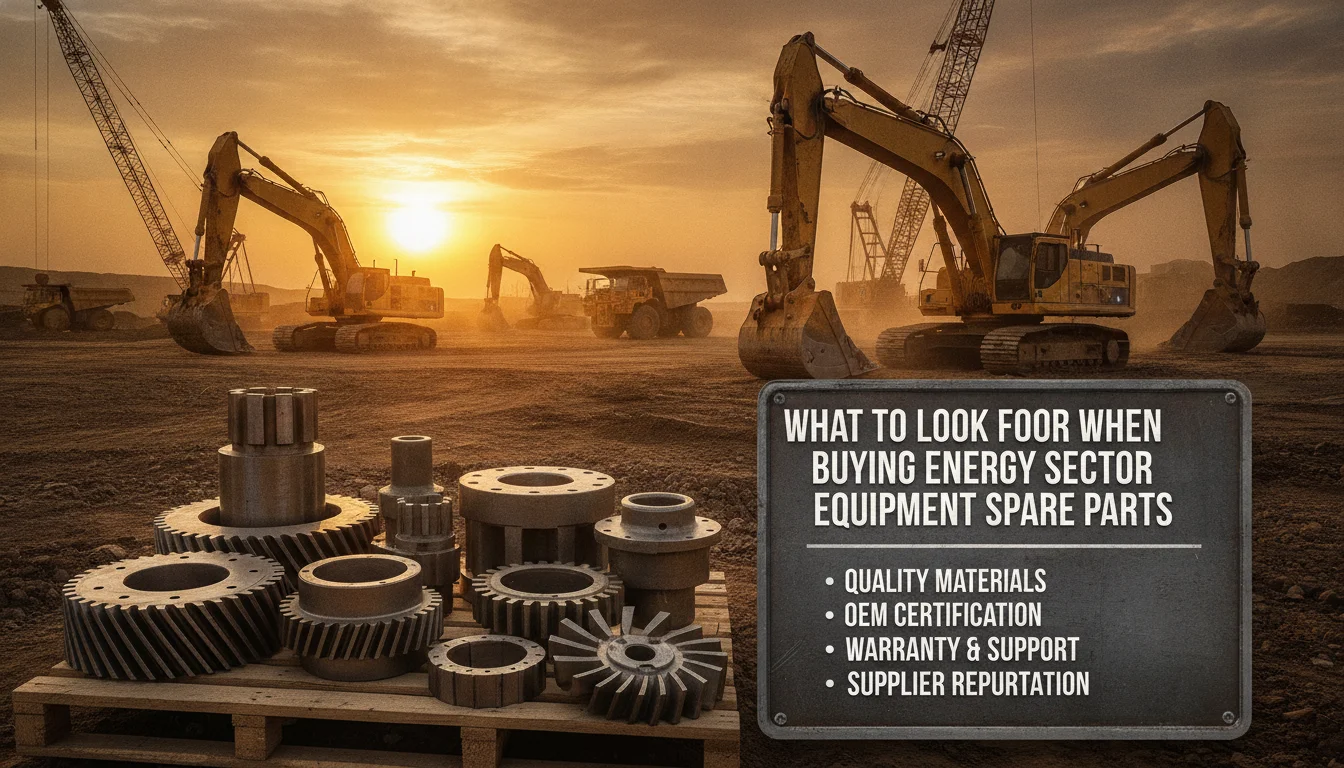
Buyers should look for materials and coatings rated for the pressures, temperature swings, and corrosive agents specific to the asset. Specialty Resources Inc. notes that energy industry parts must be built from resilient materials, finished with corrosion-resistant coatings, and tested for extreme field conditions. For offshore wind farms, Austin Hardware recommends stainless steel or coated fasteners to withstand salty, corrosive environments. Valmet supplies boiler spare parts in different steel grades, composite material, and overlay welded material to match specific boiler application requirements.
Compatibility and OEM Documentation
Compatibility means more than dimensional fit. It includes material specifications, heat treatment, and performance testing, all of which should be documented before a part ships. Everllence PrimeServ states that genuine OEM spare parts are manufactured to the same quality standards as new equipment, from flow parts to wear-and-tear parts and core components. For third-party machines, Everllence offers reverse engineering through 3D measurement to produce tailored parts. Buyers should request material certificates, dimensional drawings, and, where applicable, production process evidence for every order.
Lead Time and Supplier Reliability
Some turbomachinery support items and maintenance-critical references depend on long lead times or a single supplier, which makes early planning essential. GhostMatter advises teams to identify these parts before a shortage appears and prepare alternative production routes in advance. According to RES Group, guaranteed service-level agreements paired with an inventory of over 60,000 spare parts across 24 countries reduce turnaround times, and the company reports supplying over 500,000 items per year with more than 10,000 parts held in stock. Valmet maintains emergency stock of common boiler tubes and offers 24/7 OEM competence to support fast delivery worldwide.
Sourcing Channels and Supplier Comparison

The best sourcing channel for energy sector equipment spare parts depends on part criticality, lead time, and budget, not on a single default supplier relationship.
OEM, Aftermarket, and Refurbished Options
OEM parts offer exact fit and warranty support, usually at premium prices. Aftermarket parts can match specifications at lower cost but require careful vetting before purchase. Refurbished components, such as rebuilt gearboxes, deliver real sustainability benefits alongside cost savings. According to Spares in Motion, refurbishing a wind turbine gearbox can save 115,831 kg CO₂ compared with manufacturing a new one, a 75% reduction, and refurbishing wind turbine parts more broadly can cut up to 80% of CO₂ emissions. RES offers comprehensive repair and refurbishment across multiple brands to extend equipment life, and Spares in Motion supports customers from hubs in Rotterdam, Bilbao, Colorado, and Pune.
Digital Inventory and On-Demand Manufacturing
A digital twin is a secure virtual representation of a physical spare part, built from drawings, scans, material assumptions, supplier notes, and operating context. GhostMatter helps energy teams govern selected maintenance-critical references as digital inventory, ready for traceable on-demand production through internal capacity, qualified partners, or additive manufacturing. This approach works especially well for obsolete references, low-volume parts, and emergency sourcing when original tooling is no longer available. For teams managing global fleets, this is often the difference between a controlled repair and an improvised one.
| Supplier | Specialization | Key Advantage | Notable Metric |
|---|---|---|---|
| Spares in Motion | Wind turbine spare parts & main components | Multi-brand new, used, refurbished; global support | Refurbishing gearbox saves 115,831 kg CO₂ (75%) |
| RES Group | Renewable energy spares & repair | End-to-end spares management, warranty, logistics | Over 60,000 spare parts; 24 countries; 500,000+ items/year |
| Valmet | Boiler & energy plant spare parts | OEM pressure parts, daily spares, shutdown management | Emergency stock of common tubes; global logistics |
| Everllence PrimeServ | Compressor & turbine OEM parts | Genuine OEM quality, reverse engineering for third-party | 100+ service centers worldwide |
| GhostMatter | Digital inventory for critical spares | Secure digital twins, traceability, on-demand production | Readiness checks before quote/production |
| Specialty Resources Inc. | Custom energy industry parts | Custom engineering, corrosion-resistant coatings | Parts for transformers, solar, switchgear, oilfield |
Choosing Between Single-Source and Multi-Brand Suppliers
Single-source OEM suppliers provide deep technical support but can create dependency risk over time. Multi-brand suppliers like RES and Spares in Motion reduce that risk by offering access to many manufacturers through one relationship. RES states it maintains strong relationships with all major manufacturers and manages the entire sourcing process to help ensure genuine, high-quality parts. For remote or multi-vendor fleets, a multi-brand partner can consolidate procurement and reduce administrative burden. RES recently opened a Bellshill logistics hub in Scotland to support wind farm maintenance and component refurbishment across the UK, a sign of how regional logistics infrastructure is becoming part of the sourcing conversation.
Price Ranges and Budget Tiers
Budget, Mid-Range, and Premium Tiers
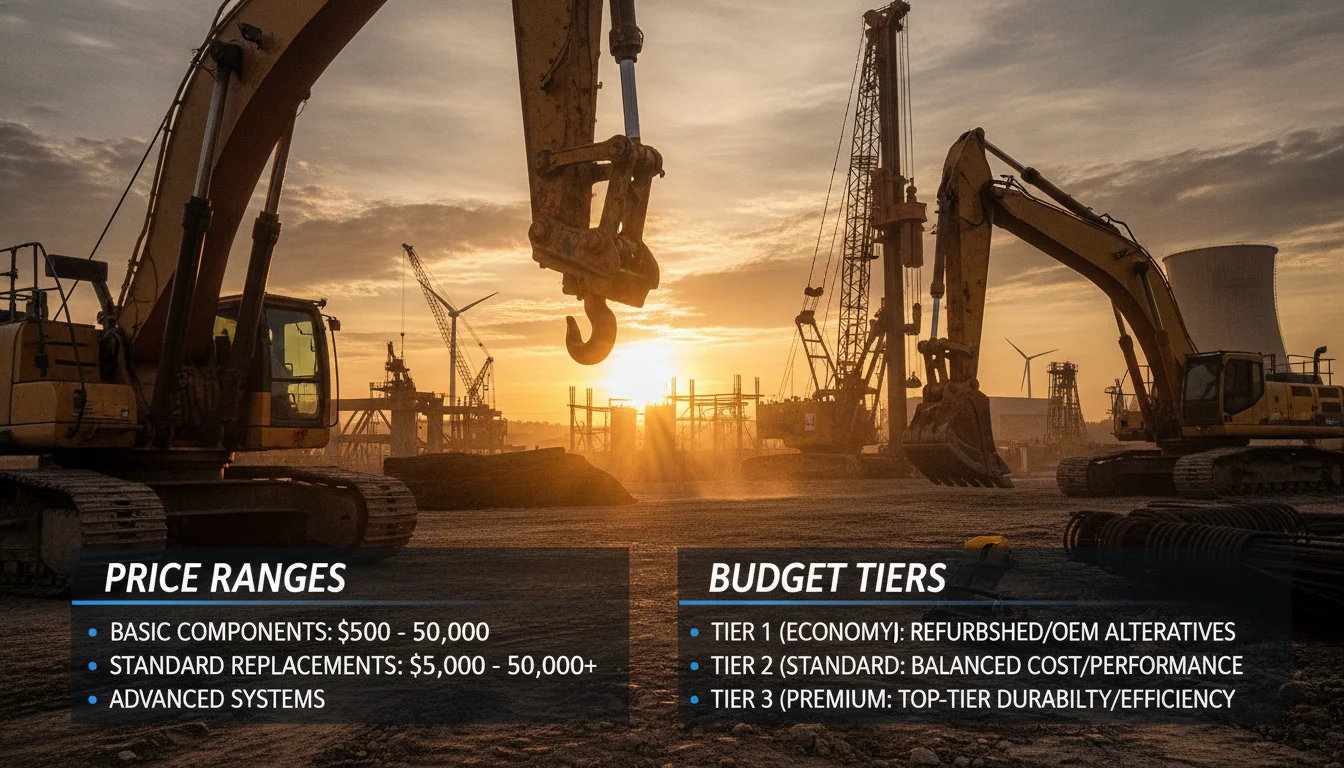
Pricing for energy sector equipment spare parts varies widely by part type and sourcing route. Budget-tier items include fasteners, seals, hinges, and drawer slides, hardware that Austin Hardware notes is used across solar, wind, and hydropower facilities. Mid-range parts include hydraulic cylinders, electrical controls, and consumable wear parts. Premium-tier components include gearboxes, blades, turbine rotors, and boiler pressure parts. While exact prices are project-specific, buyers should expect premium components to carry lead times of weeks to months and to require significant capital budget allocation.
Total Cost of Ownership
Purchase price is often a small fraction of total cost of ownership (TCO) for critical machinery. GhostMatter frames TCO as weighing stock, digital inventory, and requalification decisions against downtime risk, carrying cost, and supplier exposure. A cheap aftermarket part that fails early can cost more in labor, crane rental, and lost generation than a genuine OEM part would have cost upfront. Valmet emphasizes cost savings through optimized inventory and reduced net working capital, while RES highlights just-in-time supply to minimize downtime and maximize efficiency.
Refurbishment as a Cost-Saving Strategy
Refurbishing high-value components can lower both cost and carbon footprint at once. Spares in Motion's data shows that refurbishing a gearbox saves 115,831 kg CO₂ compared to new manufacturing, and refurbishment programs can cut CO₂ emissions by up to 80%. For wind farm operators, refurbished main components offer a lower-cost alternative to new OEM parts without sacrificing reliability, provided the work is performed by qualified specialists with proper testing protocols.
Industry maintenance data consistently shows that inventory volume alone does not guarantee readiness. What matters is whether the right part, documentation, and production route are confirmed before the outage clock starts running.
Care, Storage, and Maintenance of Spare Parts
Storage Environment and Handling
Spare parts need storage conditions that prevent corrosion, contamination, and mechanical damage before they ever reach the field. Austin Hardware recommends corrosion-resistant fasteners for outdoor exposure, and the same logic extends to stored inventory: climate-controlled warehouses, desiccant packaging, and rust-inhibiting coatings all extend shelf life. Valmet uses global logistics networks and regional inventories to keep parts close to customers, reducing transit damage risk. For hydraulic and electrical components, protection from moisture and temperature extremes is critical to avoid premature failure on installation.
Obsolescence Management
Obsolete references are common in energy equipment, where asset lifecycles often run 20 to 30 years. When supplier support, drawings, or original tooling become harder to access, teams need a plan well before the part actually fails. GhostMatter's digital inventory approach keeps legacy references actionable by creating secure digital twins and defining production readiness requirements in advance. This allows on-demand manufacturing through additive or distributed capacity when stock runs out. A proactive obsolescence review belongs in every annual maintenance plan, not just in crisis response.
Documentation and Traceability
Traceability records tied to part, site, and order history support audits, warranty claims, and future outages. Everllence PrimeServ guarantees full life cycle support with documentation for all replacement parts. GhostMatter captures production evidence and delivery history for auditability, which proves useful for TCO reviews and continuity planning. Buyers should require certificates of conformance, material test reports, and serial number tracking for every critical part in the inventory.
Step-by-Step Spare Parts Management Plan
Step 1: Identify Critical Parts by Asset and Downtime Impact
Map every major asset, turbine, boiler, inverter, transformer, and list the parts that could cause unplanned downtime if unavailable. GhostMatter advises starting with maintenance-critical spares, obsolete references, repair supports, and remote-site replacement items. Prioritize single-supplier and long-lead items first, since these carry the highest risk if a shortage appears.
Step 2: Create Digital Records and Readiness Checks
For selected references, build secure digital twins that include drawings, scans, material assumptions, supplier notes, and operating context. Define production readiness requirements and approval workflows up front. This clarifies exactly what must be checked before a part can move toward quote or production. According to GhostMatter, this approach converts a passive file archive into inventory a team can actually act on.
Step 3: Choose Sourcing Routes and Suppliers
Match each part to the sourcing channel that fits its risk profile: stock for high-turnover items, OEM for core components, refurbishment for expensive mechanical parts, and digital inventory for obsolete or low-volume parts. RES Group offers just-in-time supply and warranty management, while Valmet provides shutdown management to ensure parts are available during planned outages.
Step 4: Store, Monitor, and Reassess
Implement storage conditions appropriate to the part's material and environment. Use traceability records to monitor usage, lead times, and supplier performance over time. Reassess criticality annually or after any major failure event. This continuous improvement loop keeps the spare parts strategy aligned with asset condition and shifting market conditions.
Pros and Cons
Pros
- A structured sourcing plan for energy sector equipment spare parts reduces unplanned downtime and emergency freight spend.
- Refurbishment programs cut both procurement cost and carbon footprint on expensive mechanical components.
- Digital inventory keeps obsolete references usable long after original tooling disappears.
- Multi-brand suppliers simplify procurement for fleets running equipment from several manufacturers.
Cons
- Premium OEM components carry lead times of weeks to months, which strains reactive maintenance schedules.
- Aftermarket parts require careful vetting; a poor match can cost more in downtime than it saves upfront.
- Digital twin and readiness programs take upfront investment before returns become visible.
- Single-source OEM relationships can create dependency risk during supply disruptions.
Ultimately, sourcing energy sector equipment spare parts is a risk-management exercise, not a simple purchasing task. Whether you choose OEM parts from Everllence, multi-brand sourcing from RES, boiler spares from Valmet, or digital inventory from GhostMatter, the goal stays the same: keep power generation assets running without paying for unnecessary inventory. Applying the criteria and comparisons in this guide helps procurement teams reduce downtime, control costs, and build a resilient supply chain heading into 2026 and beyond. For buyers sourcing heavy machinery components across construction, mining, and energy fleets, 3GEN Export supplies OEM-standard spare parts for Caterpillar, Komatsu, Volvo, Atlas Copco, and 40+ brands, with global delivery built for procurement teams that cannot afford downtime. Shop OEM-quality spare parts with global 5-day delivery at 3genexport.com.
Frequently Asked Questions
What are the most important factors when buying energy sector equipment spare parts?
Focus on compatibility, material quality, lead time, and documentation. Verify that the part meets OEM specifications for the specific asset, and confirm supplier reliability through metrics like RES Group's 60,000-part inventory or Valmet's emergency stock program.
How can I verify if a spare part is genuine OEM?
Request serial number tracking, material certificates, and documentation from the original manufacturer. For turbomachinery, Everllence PrimeServ manufactures replacement parts to the same standards as new equipment and provides full life cycle support.
What is the difference between refurbished and used spare parts?
Refurbished parts are inspected, repaired, and tested to a serviceable condition by qualified specialists, often with a warranty attached. Used parts are typically sold as-is without that assurance. Refurbishing a gearbox can save 115,831 kg CO₂ versus new manufacturing, according to Spares in Motion.
How do I manage spare parts for obsolete equipment?
Use digital inventory and reverse engineering together. GhostMatter creates secure digital twins for legacy references, and Everllence offers 3D measurement and reverse engineering for third-party machines to produce tailored parts on demand.
What is a realistic lead time for critical energy spare parts?
Lead times vary widely by part type. Commodity hardware may ship in days, while premium components like boiler pressure parts or turbine blades can take weeks to months, though RES Group and Valmet mitigate this through stock programs and just-in-time logistics.
Is it better to buy from a single OEM or a multi-brand supplier?
It depends on fleet complexity. A single OEM offers deep technical support for one brand, while multi-brand suppliers like RES or Spares in Motion consolidate sourcing across technologies and reduce administrative burden, especially for multi-vendor renewable portfolios.