

Engine Oil Recommendations Heavy Machinery: 2026 Guide
Our engine oil recommendations heavy machinery guide covers viscosity, API grades, brands, and change intervals to cut downtime and repair costs in 2026.
Loading article…
Article Not Found
The article you're looking for doesn't exist or may have been removed.
Back to BlogEngine oil recommendations heavy machinery guidance is a set of viscosity, API-grade, and change-interval standards that match lubricant chemistry to diesel engine demands in construction, mining, and energy equipment.
Key Takeaways
- Choosing the right engine oil is crucial for heavy machinery performance and directly affects component life.
- Synthetic oils generally offer superior protection and longer intervals compared to mineral-based oils.
- Viscosity grade and API certification are the two most critical factors in oil selection.
- Regular oil changes, tracked against manufacturer intervals, can significantly extend the life of heavy machinery.
- Sound engine oil recommendations for heavy machinery always start with the OEM owner's manual, not the cheapest jug on the shelf.
- Cost per operating hour, not price per liter, is the number that actually matters for fleet budgets.
"Selecting the appropriate engine oil is not just about lubrication; it is a vital decision that impacts the longevity and efficiency of heavy machinery." - Industry Expert
We've spent years sourcing OEM and OEM-standard components for excavators, loaders, and drill rigs, and we still see the same mistake on job sites worldwide: operators treat engine oil as an afterthought instead of a maintenance decision with real financial consequences. A $40 jug of the wrong viscosity can cost a fleet manager thousands in premature wear. Good engine oil recommendations for heavy machinery aren't guesswork, they're built on OEM specs, operating conditions, and honest cost math.
Understanding Engine Oil for Heavy Machinery
Engine oil for heavy machinery is a formulated lubricant that reduces friction, dissipates heat, and suspends contaminants inside diesel engines used in construction, mining, and energy equipment. The right engine oil recommendations for heavy machinery ensure optimal performance and longevity of diesel engines, which power nearly every piece of equipment on a modern job site. Below, we break down the oil types, specifications, and selection criteria that matter most for fleet managers and equipment operators.
What is Heavy-Duty Engine Oil?
Heavy-duty engine oil is a specialized lubricant designed to meet the demands of high-performance diesel engines. It's formulated to withstand extreme conditions, providing protection against wear, corrosion, and deposit buildup. Heavy-duty oils fall into three main categories:
- Mineral Oil-Based Engine Oils: Derived from crude oil, these oils are the most traditional and widely used. They offer solid lubrication and hold up under high temperatures and pressures, but they tend to form sludge and deposit buildup over time, and they perform poorly in extreme weather.
- Synthetic Engine Oils: Made from synthetic base stocks with advanced additive packages, these oils provide superior performance, better fuel economy, and longer drain intervals compared to mineral oils. They resist sludge formation and hold up well in extreme temperatures, though they cost more upfront.
- Semi-Synthetic Engine Oils: A blend of mineral and synthetic base stocks, semi-synthetic oils offer improved protection over straight mineral oils while staying more affordable than full synthetics.
Why is Engine Oil Important for Heavy Machinery?
Engine oil serves five critical functions in heavy machinery, and skipping any one of them shortens engine life:
- Lubrication: Reduces friction and wear between moving parts, extending engine life.
- Cooling: Helps dissipate heat generated during engine operation, preventing overheating.
- Cleaning: Suspends dirt, soot, and combustion deposits, preventing buildup that can lead to engine damage.
- Protection: Guards against rust, corrosion, and contaminants that can harm engine components.
- Sealing: Minimizes blow-by between piston rings and cylinder walls, ensuring maximum power output.
How Engine Oil Actually Protects Your Machinery
Engine oil protects heavy machinery by forming a molecular film between moving metal surfaces, carrying heat away from combustion zones, and holding contaminants in suspension until the next service interval. Understanding the mechanics behind this helps explain why the wrong oil, even briefly, does measurable damage.
Inside a diesel engine, pistons move thousands of times per minute against cylinder walls under extreme pressure and heat. Without a stable oil film, metal-on-metal contact would destroy an engine in hours. Viscosity, the oil's resistance to flow, determines how well that film holds up under load and temperature swings. Additive packages, including detergents, dispersants, anti-wear agents, and oxidation inhibitors, do the rest of the work: detergents keep hot metal surfaces clean, dispersants keep soot particles from clumping into sludge, and anti-wear additives (commonly zinc-based compounds) coat metal surfaces to reduce friction during startup, when lubrication is thinnest.
As oil ages, heat and combustion byproducts break down these additives. That's why oil analysis programs, common in mining and large construction fleets, track total base number (TBN) depletion, soot loading, and viscosity shift to catch degradation before it causes damage. According to manufacturer specifications published by major OEMs, oil that falls outside its designed viscosity range or loses TBN reserve should be changed immediately, regardless of the calendar interval.
Choosing the Right Engine Oil

Choosing the right engine oil for heavy machinery means matching viscosity grade and API certification to your specific engine, climate, and duty cycle. Several factors must line up to get this right, and getting even one wrong undermines the rest.
Viscosity Grade
Viscosity measures an oil's resistance to flow and is one of the most important factors in oil selection. The viscosity grade affects how well the oil performs across different temperature conditions. Common viscosity grades for heavy machinery include:
- 15W-40: A popular choice for many diesel engines, this oil provides solid protection across a wide range of temperatures and remains the default recommendation across much of the industry, according to community data from equipment operator forums.
- 10W-30: Suitable for moderate climates, this oil can improve fuel efficiency and reduce emissions compared to heavier grades.
- 5W-40: Offers better cold-start performance and suits regions with extreme temperature variation.
API Certification
The American Petroleum Institute (API) sets standards for engine oils to ensure they meet specific performance criteria. Look for oils meeting these API specifications:
- API CK-4: Designed for modern diesel engines, offering enhanced protection against wear and oxidation. Industry maintenance data shows CK-4 has become the baseline recommendation for most current heavy-duty diesel platforms.
- API FA-4: Provides improved fuel economy and suits low-emission engines built to tighter tolerances.
Popular Engine Oil Brands and Products
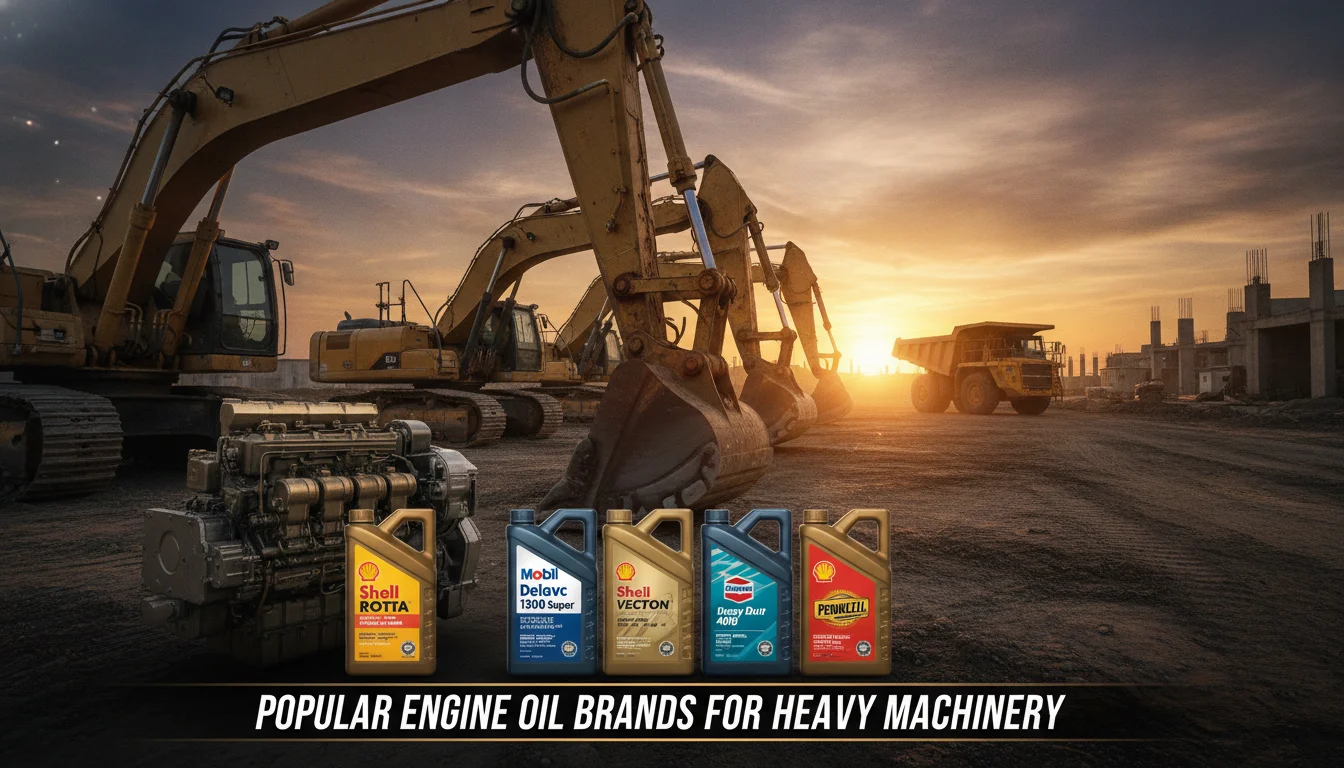
Here's a comparison of widely used heavy-duty engine oils referenced across the industry, including options frequently discussed in equipment operator communities:
| Brand | Product | Viscosity Grade | API Certification |
|---|---|---|---|
| Shell | Rotella T6 | 15W-40 | API CK-4 |
| Mobil | Delvac 1 | 5W-40 | API CK-4 |
| Boss Lubricants | Xtreme 15W40 | 15W-40 | API CK-4 |
| Valvoline | Premium Blue | 15W-40 | API CK-4 |
| Amsoil | Heavy-Duty Diesel | 10W-30 | API CK-4 |
Beyond independent brands, OEMs like Caterpillar sell their own factory-formulated lubricants tuned specifically to their engine tolerances. Genuine OEM oils are engineered and tested against the manufacturer's own equipment, which is why brand-matched fluids often outperform generic alternatives in long-term durability testing, even when the price tag is higher upfront.
"Heavy equipment oils that cost less on the front end often cost more in the long run. When you focus on total cost of ownership, choosing the right oil for your fleet is a straightforward calculation." - Fleet Maintenance Perspective, Boyd Cat
How to Apply These Engine Oil Recommendations for Heavy Machinery
Applying engine oil recommendations for heavy machinery starts with the OEM manual and moves through climate assessment, oil selection, and a documented tracking system. Follow these steps to build a maintenance program that actually protects your equipment:
- Step 1: Pull the OEM specification sheet. Every engine has a manufacturer-approved viscosity range and API/ACEA rating. Start there, not with whatever oil is cheapest at the local supplier.
- Step 2: Assess your climate and duty cycle. Machines running in sub-zero mornings need better cold-flow properties (5W-40) than machines in stable moderate climates (10W-30).
- Step 3: Choose mineral, semi-synthetic, or full synthetic based on usage intensity. High-hour equipment under continuous heavy load benefits most from synthetic oil's extended protection window.
- Step 4: Set your interval based on oil analysis, not just the calendar. Oil sampling every service interval catches problems, like coolant intrusion or excessive soot, before they become expensive.
- Step 5: Document every change with hour-meter readings. This protects your warranty claims and gives you a real maintenance history if you ever sell the machine.
- Step 6: Standardize across your fleet where possible. Fewer oil types in inventory means fewer mistakes and simpler procurement.
A Practical Scenario: Matching Oil to a Mixed Fleet
Consider a mid-sized contractor running a mixed fleet: two CAT 320 excavators working in a humid coastal climate, a Komatsu dozer on a mountain job with wide day-night temperature swings, and a Volvo wheel loader running near-continuous shifts at a quarry. Each machine faces different conditions, so a single blanket oil choice isn't going to serve the fleet well.
The excavators in the humid coastal environment are reasonable candidates for a 15W-40 API CK-4 oil, since the climate stays fairly stable and mineral or semi-synthetic formulations handle the load fine. The dozer facing wide temperature swings benefits from a 5W-40 synthetic for reliable cold starts and stable protection as temperatures climb through the day. The quarry loader, running near-continuous hours under heavy load, is the strongest case for full synthetic oil with extended drain intervals, since the fuel economy and wear protection gains offset the higher oil cost over thousands of operating hours. This is the kind of case-by-case thinking that should drive real engine oil recommendations for heavy machinery, not a one-size-fits-all default.
Comparing Oil Types Side by Side
The table below summarizes the trade-offs between the three main oil categories to help you match the right product to your operating conditions.
| Oil Type | Cost | Protection Level | Best For | Drain Interval |
|---|---|---|---|---|
| Mineral | Lowest | Basic | Older engines, mild climates, light duty | Shortest |
| Semi-Synthetic | Moderate | Improved | Mixed-duty fleets balancing cost and protection | Moderate |
| Full Synthetic | Highest | Superior | Heavy load, extreme temperatures, high-hour machines | Longest |
Impact of Oil Change Intervals
Oil change intervals directly determine how much wear protection your engine actually gets over its service life. The right frequency depends on several factors:
- Operating Conditions: Machines operating in harsh, dusty, or high-load environments may require more frequent oil changes.
- Type of Oil Used: Synthetic oils generally allow for longer intervals compared to conventional mineral oils.
- Manufacturer Recommendations: Always consult the owner's manual for specific guidelines, since intervals vary by engine family and application.
Benefits of Regular Oil Changes
Maintaining a regular oil change schedule delivers real, measurable benefits, including:
- Extended engine life by reducing wear and tear on internal components.
- Improved fuel efficiency due to better lubrication and reduced internal friction.
- Reduced risk of engine failure and the costly repairs that follow.
Signs of Oil Degradation
Operators should watch for signs that indicate oil degradation, including:
- Increased engine noise or knocking sounds.
- Oil discoloration or a burnt smell.
- Reduced engine performance or noticeable power loss.
Pro Tip: Pull an oil sample at every scheduled change and send it to a lab for analysis. Tracking wear metals, viscosity, and TBN over time tells you whether your current interval is too long, too short, or just right for your specific duty cycle.
Common Mistakes in Engine Oil Selection
The most common mistake in engine oil selection is assuming any 15W-40 or any synthetic oil will work regardless of API certification or OEM approval. Watch for these additional pitfalls:
- Ignoring API certification: An oil without the correct API CK-4 or FA-4 rating may not meet your engine's additive requirements, even if the viscosity looks right on the label.
- Mixing oil types mid-interval: Switching between conventional, semi-synthetic, and full synthetic formulations without proper analysis can dilute additive packages and reduce protection.
- Using engine oil in hydraulic systems: Engine oil and hydraulic oil are formulated differently. Never substitute one for the other.
- Chasing the lowest price per liter: Cheap oil that requires more frequent changes or causes premature wear almost always costs more per operating hour than a quality product.
- Skipping oil analysis: Fleets that rely purely on calendar-based intervals miss early warning signs that oil analysis would catch.
- Overlooking climate shifts: A viscosity grade that worked fine last season may be wrong if the machine gets relocated to a different climate zone.
Common Misconceptions About Engine Oil
Several misconceptions lead to poor oil selection and maintenance practices. Here are the two we hear most often on job sites:
Myth: All Oils Are the Same
Not all engine oils are created equal. Different formulations cater to specific engine requirements and operating conditions. Always choose oil that meets the manufacturer's specifications rather than assuming any bottle labeled "heavy-duty" will do.
Myth: Thicker Oil Is Always Better
While thicker oils can provide better film strength under extreme load, they may not flow well in colder temperatures, leading to inadequate lubrication during startup. Always select the viscosity appropriate for your actual climate, not just your heaviest load condition.
Cost Considerations for Fleet Managers
The real cost of engine oil for heavy machinery isn't the price per liter, it's the total cost of ownership over the machine's service life. Cheaper mineral oils cost less upfront but typically require more frequent changes, more labor hours, and more disposal fees over a year of operation. Synthetic oils cost more per liter but stretch drain intervals further, which can offset the higher purchase price through reduced labor and downtime.
When budgeting, factor in oil cost, filter cost, labor time, disposal fees, and the opportunity cost of downtime during service. A fleet running dozens of machines should model these numbers per machine per year rather than comparing single-purchase prices side by side. Bulk purchasing agreements with a trusted supplier can also meaningfully reduce per-unit costs across a large fleet.
Pros and Cons
Pros
- Correct engine oil recommendations for heavy machinery reduce unplanned downtime and extend component life.
- Synthetic oils cut the frequency of service intervals, lowering labor costs over time.
- Oil analysis programs catch developing engine problems before they become catastrophic failures.
- Standardizing oil types across a fleet simplifies inventory and reduces procurement errors.
Cons
- Full synthetic oils carry a higher upfront cost per liter than mineral oils.
- Tracking OEM specifications across a mixed-brand fleet takes real administrative effort.
- Oil analysis programs add a recurring cost and require lab turnaround time.
- Switching oil types mid-fleet-life can create inventory and compatibility confusion if not managed carefully.
2026 Outlook for Heavy Machinery Engine Oils
As of 2026, the shift toward low-emission diesel engines continues to push API FA-4 oils further into mainstream use, particularly for newer equipment built to tighter emissions tolerances. This year, more fleet managers are combining synthetic oil programs with routine oil analysis as a standard practice rather than an occasional check, driven largely by rising component costs and the ongoing push to extend equipment service life. Expect continued emphasis on matching viscosity and certification precisely to OEM specifications as engine tolerances get tighter across new equipment lines.
Conclusion
Choosing the right engine oil is crucial for the performance and longevity of heavy machinery. By understanding the different oil types, viscosity grades, and API certifications, operators can make informed decisions that improve equipment reliability and efficiency. Regular oil changes and adherence to manufacturer recommendations further protect engine health. For the best results, always consult the owner's manual, factor in your specific operating conditions, and treat engine oil recommendations for heavy machinery as a maintenance investment rather than a line-item expense to minimize.
Shop OEM-quality spare parts with global 5-day delivery at 3genexport.com. Our team sources genuine and OEM-standard components for Caterpillar, Komatsu, Volvo, Atlas Copco, and 40+ other brands, so your fleet stays running no matter where in the world you operate.
Frequently Asked Questions
What type of engine oil is best for heavy equipment?
The best engine oil for heavy equipment typically includes synthetic or semi-synthetic oils that meet API CK-4 specifications, such as 15W-40 or 10W-30, depending on your operating conditions. Always confirm against your OEM owner's manual before finalizing a choice.
Can you use 15W-40 engine oil for hydraulics?
No, 15W-40 engine oil is not recommended for hydraulic systems. Hydraulic systems require oils specifically formulated for that application, such as AW46 or ISO 46, which have different additive packages and viscosity behavior under pressure.
What is SAE 30 heavy-duty oil used for?
SAE 30 heavy-duty oil is commonly used in older diesel engines and some small engines. It provides adequate lubrication for these applications but generally doesn't meet the performance requirements of modern high-pressure common-rail diesel engines.
Should I use 10W-30 or 15W-40?
The choice between 10W-30 and 15W-40 depends on your operating temperature and manufacturer recommendations. 10W-30 suits moderate, stable climates, while 15W-40 handles a wider temperature range and remains the more common default across the industry.
How often should I change the engine oil in heavy machinery?
Oil change intervals vary based on operating conditions and oil type, so the manufacturer's manual is always the final word. Synthetic oils generally allow for longer intervals than conventional oils, and oil analysis can help fine-tune the schedule to your specific duty cycle.
What are the benefits of synthetic engine oil?
Synthetic engine oils offer superior wear protection, better fuel efficiency, longer drain intervals, and improved performance in extreme temperatures compared to conventional mineral oils. The higher upfront cost is often offset by reduced service frequency and labor over the equipment's life.