
Engine Piston Ring Replacement Cost: 2026 Guide
Engine piston ring replacement cost runs $1,800–$3,500. Learn what drives the price, symptoms to watch, and how to avoid costly mistakes in 2026.
Loading article…
Article Not Found
The article you're looking for doesn't exist or may have been removed.
Back to BlogKey Takeaways
- Engine piston ring replacement cost typically ranges from $1,800 to $3,500 for most passenger vehicles.
- Labor accounts for the largest share of the total bill, often requiring 10 to 15 hours of shop time.
- Vehicle type, engine size, and regional labor rates are the three biggest cost drivers.
- Symptoms like excessive oil consumption, blue exhaust smoke, and power loss signal ring failure before it becomes catastrophic.
- A compression test and leak-down test are the two most reliable diagnostic tools before committing to a repair.
- For high-mileage vehicles, compare total repair cost against a remanufactured engine or vehicle replacement value.
Engine Piston Ring Replacement Cost: Full 2026 Breakdown
Engine piston ring replacement cost is the total expense of removing worn piston rings from an internal combustion engine and installing new ones, covering both parts and labor. As of 2026, most vehicle owners pay between $1,800 and $3,500 for the complete job.
Understanding Piston Rings
What Are Piston Rings?
Piston rings are metal rings that fit into grooves on the outer edge of each piston inside your engine. They perform three critical functions that directly affect engine health and operating cost:
- Sealing the combustion chamber: Piston rings prevent combustion gases from escaping past the piston, ensuring efficient power generation on every stroke.
- Controlling oil consumption: They scrape excess oil from the cylinder walls, stopping oil from entering the combustion chamber and burning off.
- Heat dissipation: Piston rings transfer heat from the piston to the cylinder wall, keeping temperatures within safe operating limits.
Most engines use three rings per piston: a top compression ring, a second compression ring, and an oil control ring at the bottom. When one ring fails, the standard practice is to replace the full set across all pistons. Replacing a single ring on one piston while leaving worn rings on the others is a short-term workaround, not a permanent fix.
"You don't replace just one ring. The piston rings come as a complete set for each piston, and for all the pistons in that engine. When one ring breaks, you need to replace the rings on the entire engine." - Experienced automotive technician, via Quora community discussion
Why Do Piston Rings Need Replacement?
Piston rings wear out because of sustained friction, extreme heat cycles, and mechanical stress over tens of thousands of operating hours. According to manufacturer service data, worn piston rings produce a recognizable set of symptoms:
- Excessive oil consumption: The engine burns oil that bypasses the rings, raising operating costs and creating environmental concerns.
- Loss of compression: Combustion gases escape past the rings, reducing power output and fuel efficiency.
- Increased exhaust smoke: Blue-tinged smoke from the exhaust is a direct indicator that oil is burning inside the combustion chamber.
Left unaddressed, worn rings accelerate cylinder wall damage, contaminate spark plugs, and can ultimately destroy the engine block. Catching the problem early keeps replacement cost at the lower end of the range.
How Piston Rings Work: The Mechanics in Detail
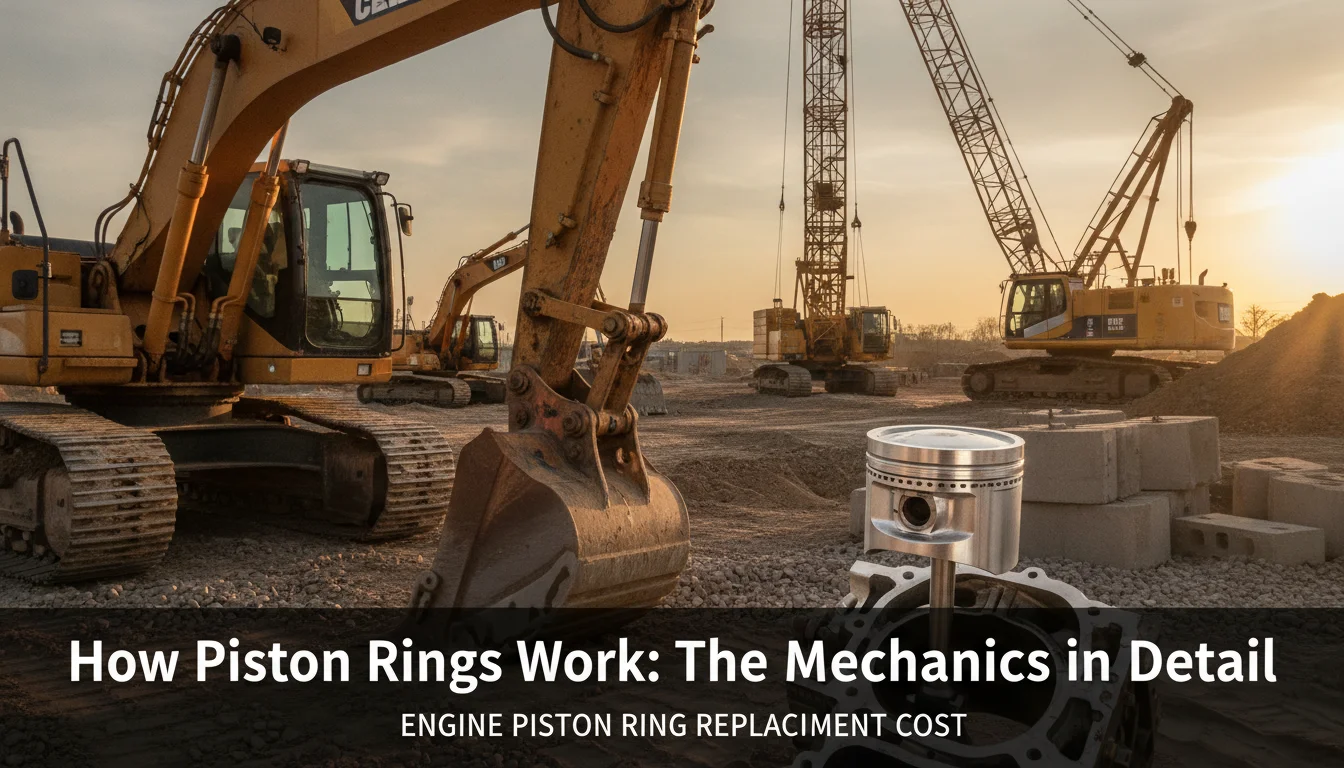
Understanding the mechanics behind piston ring function helps you recognize failure modes faster and make smarter repair decisions.
Each piston travels up and down the cylinder bore hundreds of times per minute. On the compression and power strokes, cylinder pressure can reach extremely high levels. The top compression ring is the primary seal against this pressure. It sits in a machined groove and relies on both its own spring tension and combustion pressure behind it to press outward against the cylinder wall, forming a near-perfect gas seal.
The second ring acts as a backup compression seal and also assists with oil control. The oil control ring at the bottom of the piston stack uses a multi-piece design with a spring expander to maintain consistent wall contact. It scrapes oil back down into the sump on every downstroke.
Cylinder wall finish matters as much as the rings themselves. A properly honed cylinder has a cross-hatch pattern that holds a thin film of oil for ring lubrication while still allowing the rings to seat and seal. When rings wear, they lose the spring tension needed to maintain wall contact. Combustion gases blow past the rings (called blow-by), oil migrates upward into the combustion chamber, and compression drops measurably.
This is why piston ring replacement almost always involves cylinder honing or boring. Installing new rings into a worn, glazed cylinder bore without resurfacing the walls means the rings will never seat correctly, and the repair will fail prematurely.
"A big reason engines are replaced is oil usage. GM advised against using 10-40 oil because it clogged oil control rings. The wider the viscosity range, the more additives - and those additives can stick rings." - Bruce A. Hevner, ASE Master Automotive Machinist with over 50 years of experience, via Quora
Factors Affecting Engine Piston Ring Replacement Cost
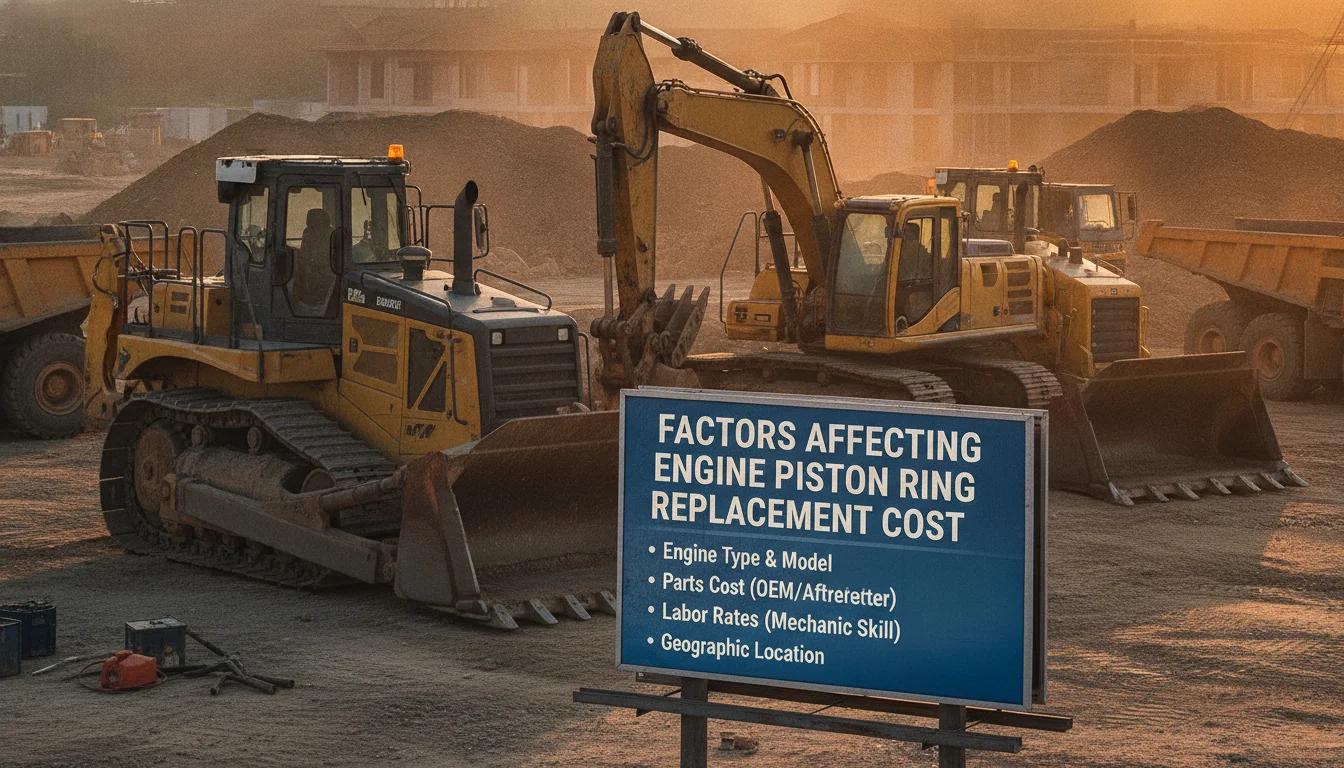
Vehicle Type and Engine Size
Vehicle type and engine configuration are the most direct variables in this type of cost. Larger engines with more cylinders require more rings, more labor hours, and often more expensive gasket sets:
- Small 4-cylinder engines: Replacement costs typically fall in the $1,800 to $2,500 range. Fewer cylinders mean less disassembly time and a smaller parts bill.
- V6 and V8 engines: Costs rise to $2,500 and above due to additional cylinders, more complex engine architecture, and higher parts volume.
- High-performance or diesel engines: Specialized rings, tighter tolerances, and longer labor times push costs to $3,000 or more. Heavy-duty diesel applications used in construction and mining equipment can exceed this range significantly.
Labor Rates
Labor is the single largest cost component in any engine piston ring replacement. Rates vary by geography and shop type:
- Independent shops: Generally charge between $75 and $100 per hour. A good independent mechanic with engine rebuild experience can be the most cost-effective option.
- Dealerships: Typically charge $100 to $150 per hour, reflecting factory training, specialized diagnostic equipment, and warranty coverage on the repair.
Additional Parts and Machine Work
The rings themselves are rarely the biggest parts expense. The surrounding components that need replacement or machining during the job add substantially to the total engine piston ring replacement cost:
- Gasket and seal sets: $100 to $400
- Cylinder honing or boring: varies by shop
- Bearings, if worn: additional parts cost
- New pistons, if the originals are damaged: significant additional expense
Typical Costs for Engine Piston Ring Replacement
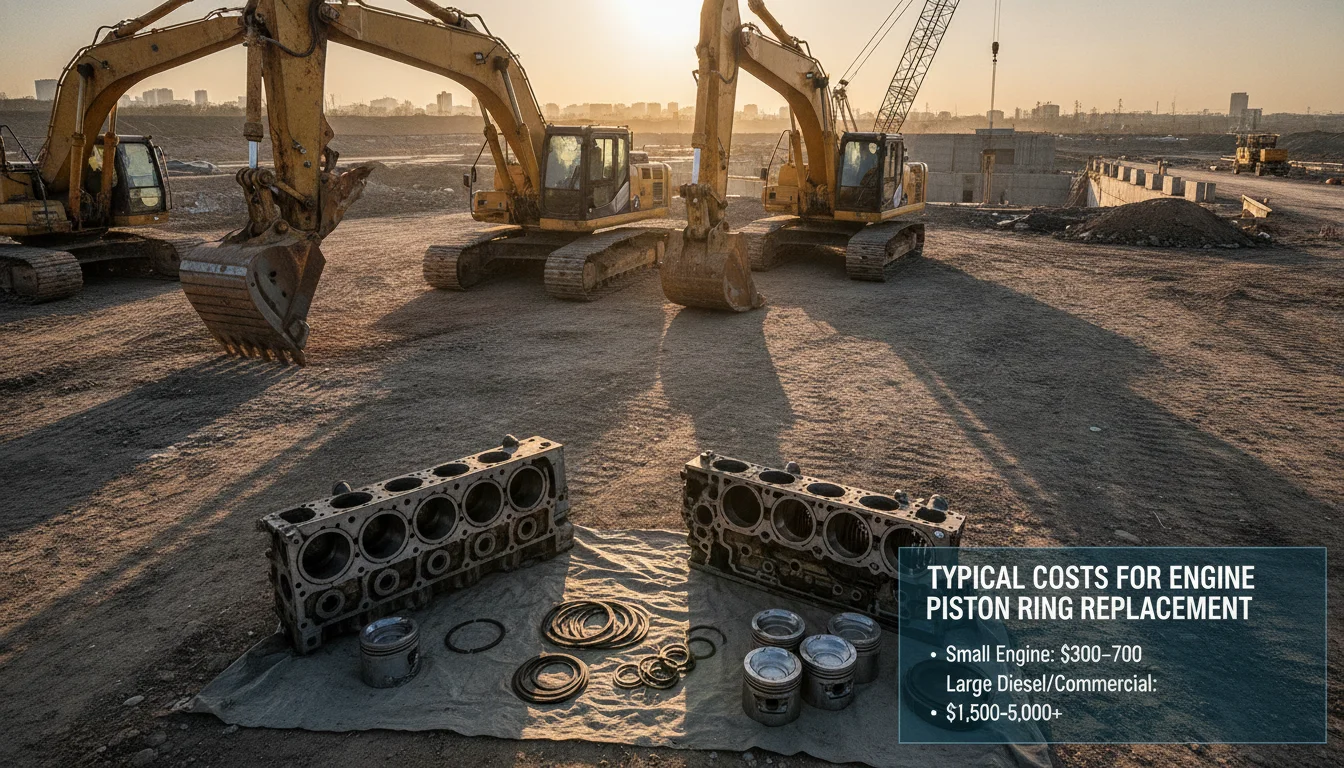
Parts Costs
The cost of piston rings themselves is a small fraction of the total job. What drives parts cost upward is everything else the mechanic needs to replace while the engine is open:
- Piston ring set: Typically $25 to $300, depending on engine type and whether you choose OEM or aftermarket rings.
- Additional parts commonly needed: Gaskets, seals, and bearings can add $100 to $800 to the total cost.
Labor Costs
Labor costs for replacing piston rings are substantial because the job requires a near-complete engine teardown:
- Typical labor time: Replacing piston rings usually requires 10 to 15 hours of labor, depending on engine accessibility and whether additional machine work is needed.
- Overall labor costs: At standard shop rates, labor alone ranges from $750 to $2,000.
Cost Comparison for Different Vehicles
| Vehicle Make/Model | Estimated Cost Range | Engine Type | Notes |
|---|---|---|---|
| Ford F-150 | $2,000 – $3,500 | V6 / V8 | V8 variants require more parts and labor time. |
| Honda Accord | $1,800 – $2,800 | 4-cylinder | 4-cylinder engines generally sit at the lower end. |
| Chevrolet Silverado | $2,500 – $4,000 | V6 / V8 | High-performance trims add parts complexity. |
| Toyota Camry | $1,800 – $3,000 | 4-cylinder / V6 | Generally reliable engines; repair is still costly. |
| Dodge Ram | $2,200 – $3,500 | V8 | V8 engines often need additional gaskets and seals. |
| GMC Terrain (2.4L) | $2,500 – $4,500 | 4-cylinder | Known oil consumption issue; some owners opt for remanufactured engine instead. |
| Honda Odyssey (3.5L) | $2,800 – $4,000 | V6 | VCM-related ring sticking is a documented issue on 2005-2010 models. |
Signs That Piston Rings Need Replacement
Common Symptoms
Recognizing the symptoms of failing piston rings early keeps engine piston ring replacement cost at the lower end of the range and prevents secondary damage to cylinder walls and bearings:
- Excessive oil consumption: If your engine is burning through oil between changes at an abnormal rate, worn rings are a primary suspect.
- Loss of power: A noticeable drop in engine performance, particularly under load, signals compression loss caused by ring wear.
- Blue smoke from the exhaust: Blue or blue-gray smoke, especially on startup or hard acceleration, confirms oil is burning in the combustion chamber.
- Oily or fouled spark plugs: Oil bypassing the rings coats the plugs, causing misfires and rough running.
- Poor fuel economy: Compression loss forces the engine to work harder, increasing fuel consumption noticeably.
Diagnostic Tests
Two tests give you the clearest picture of ring condition before committing to a repair:
- Compression test: Measures peak pressure in each cylinder. Low or uneven readings across cylinders point to ring or valve seat issues.
- Leak-down test: Pressurizes each cylinder and measures how much air escapes. Air escaping past the rings (heard at the oil filler cap or crankcase) confirms ring failure rather than valve or head gasket problems.
Run both tests before authorizing any repair. A mechanic who skips the leak-down test and jumps straight to ring replacement based on symptoms alone is guessing. Insist on documented test results.
How to Approach Engine Piston Ring Replacement: Step-by-Step
Whether you're managing this repair yourself or overseeing a shop doing the work, understanding the process helps you ask the right questions and avoid being overcharged.
- Confirm the diagnosis. Run a compression test and leak-down test on all cylinders. Document the results. Low compression combined with air escaping at the crankcase confirms ring failure.
- Assess the full scope of work. Ask the mechanic to inspect cylinder walls, pistons, bearings, and the cylinder head while the engine is open. Replacing rings in a worn bore without addressing other damage wastes money.
- Source parts before approving labor. Get the ring set part number and compare OEM versus quality aftermarket pricing. For most passenger vehicles, a quality aftermarket ring set performs comparably to OEM at a lower cost.
- Confirm cylinder honing is included. New rings require a properly honed cylinder surface to seat correctly. If the shop is not honing the cylinders, the repair will not last.
- Verify the gasket set covers everything. Head gasket, intake manifold gasket, valve cover gasket, and oil pan gasket should all be replaced while the engine is apart. Skipping any of these creates a future leak and another labor bill.
- Request a post-repair compression test. After reassembly, a compression test should show even, healthy readings across all cylinders. This is your proof the repair was done correctly.
- Follow the break-in procedure. New rings need a proper seating period. Avoid sustained high-RPM operation for the first few hundred miles. Change the oil at the interval your mechanic specifies after the repair.
DIY vs. Professional Replacement
Considerations for DIY Replacement
Some vehicle owners consider replacing piston rings themselves to avoid the labor portion of engine piston ring replacement cost. This is technically possible but demands a realistic assessment of your skills and equipment:
- Specialized tools required: Piston ring compressor, ring expander, torque wrench, cylinder hone, bore gauge, and a complete set of engine assembly tools are all necessary.
- Machine shop work: Cylinder honing typically requires a machine shop unless you own the equipment. This cost partially offsets DIY labor savings.
- Technical knowledge: Incorrect ring orientation, improper gap spacing, or wrong torque specs on fasteners can cause immediate engine failure after reassembly.
- Time investment: A first-time DIY engine rebuild on a 4-cylinder can take a full weekend or longer. A V8 is a multi-week project for most home mechanics.
Benefits of Professional Replacement
For most vehicle owners, professional replacement is the right call:
- Expertise: An experienced engine builder catches secondary damage that a visual inspection misses, preventing a repeat failure.
- Warranty: Many shops offer a parts-and-labor warranty on engine rebuilds, giving you documented protection if something goes wrong.
- Proper machine work: Professional shops have the equipment to hone, bore, and measure cylinder dimensions accurately.
Pros and Cons of Piston Ring Replacement vs. Engine Replacement
Pros
- Restores original engine performance and compression without replacing the entire powertrain.
- Generally less expensive than a full engine replacement or remanufactured engine swap on newer vehicles.
- Preserves the original engine, which may have sentimental or collector value in certain applications.
- Allows inspection and replacement of other wear components (bearings, gaskets) at the same time.
- A properly done ring job on a healthy block can extend engine life by many additional years of service.
Cons
- High labor cost relative to parts cost makes the total engine piston ring replacement cost significant even on smaller engines.
- Does not address other worn components (camshaft, crankshaft bearings, timing chain) that may fail shortly after the ring repair.
- On high-mileage vehicles, the cost may approach or exceed the vehicle's market value.
- A remanufactured engine from a reputable supplier often comes with a warranty that a ring job on an old block cannot match.
- DIY attempts without proper machine work frequently result in premature ring failure and a second, more expensive repair.
Common Mistakes to Avoid
These are the errors we see most often when vehicle owners or inexperienced shops handle piston ring repairs. Each one adds cost or causes the repair to fail early.
- Skipping the leak-down test. A compression test alone cannot tell you whether the problem is rings, valves, or a head gasket. The leak-down test pinpoints the source. Replacing rings when the real problem is a valve seat wastes thousands of dollars.
- Not honing the cylinders. Installing new rings in a glazed or worn bore means the rings will never seat properly. Oil consumption will continue, and you'll be back in the same situation within a short time.
- Reusing old gaskets. Any gasket disturbed during disassembly must be replaced. Reusing a head gasket or intake manifold gasket to save $50 in parts risks a coolant or oil leak that costs far more to fix.
- Ignoring ring gap orientation. Piston ring end gaps must be staggered at specific angles around the piston. Aligning gaps creates a direct path for combustion gases to escape, defeating the entire repair.
- Choosing the cheapest possible rings. Low-quality rings wear faster, seat poorly, and may not hold the correct tension against the cylinder wall. For a job this labor-intensive, quality rings are worth the modest price difference.
- Not addressing the root cause. If rings failed prematurely due to oil starvation, coolant contamination, or a PCV system failure, replacing the rings without fixing the underlying issue guarantees a repeat failure.
- Authorizing the repair without a written estimate. Engine work has a way of expanding in scope once the engine is open. Get a written estimate that specifies what is included and what additional work will require separate authorization.
Realistic Scenario: When Repair Makes Sense vs. When It Doesn't
Consider a 2012 GMC Terrain with the 2.4L Ecotec engine at 125,000 miles. This engine has a documented oil consumption issue that often traces back to piston ring wear. The owner faces a repair estimate in the $2,500 to $4,500 range for a ring job at an independent shop.
At the same time, a remanufactured engine from a reputable supplier with a 3-year/36,000-mile parts-and-labor warranty is available. The installed cost of the remanufactured engine may be comparable to or only modestly higher than the ring repair. The remanufactured engine also addresses the timing chain, tensioner, and other wear items that are due for attention on a high-mileage 2.4L.
In this case, the math favors the remanufactured engine if the rest of the vehicle is in good condition. The ring repair saves money upfront but leaves the owner with an aging engine that still has a worn timing chain and other deferred maintenance items.
Contrast this with a 2019 Honda Accord with 60,000 miles showing early signs of ring wear from an oil consumption issue caught at a routine service. Here, a targeted ring repair on a relatively young engine with a healthy block makes clear financial sense. The vehicle has significant remaining life, and the repair cost is well below the vehicle's market value.
The decision framework is straightforward: compare total repair cost against vehicle market value, remaining useful life, and the condition of other major components. If the repair exceeds roughly half the vehicle's current market value and the vehicle has other deferred maintenance, replacement or a remanufactured engine is usually the better investment.
Long-Term Implications of Piston Ring Replacement
A properly executed piston ring replacement does more than stop oil consumption. It restores compression to factory specification, which directly improves power output, fuel efficiency, and emissions compliance. Vehicles that have been running on worn rings often show a noticeable improvement in throttle response and overall drivability after a quality ring job.
The long-term value of the repair depends heavily on what else was done while the engine was open. A ring job that also includes new bearings, a fresh gasket set, and cylinder honing is effectively a partial engine rebuild. Done correctly, it can add years of reliable service to an otherwise sound engine.
As of 2026, supply chain conditions for aftermarket engine components have stabilized compared to the disruptions of prior years, making parts availability and pricing more predictable. OEM-specification ring sets for most common passenger vehicle engines are readily available through established parts suppliers, and lead times for specialty or diesel applications have shortened considerably.
For fleet operators and equipment managers, tracking engine piston ring replacement cost across a vehicle fleet provides useful data for lifecycle planning. Engines that require ring replacement before expected intervals often signal a systemic issue: wrong oil specification, extended drain intervals, or a PCV system that was never serviced. Addressing these root causes across the fleet prevents repeat failures and reduces total maintenance spend.
Frequently Asked Questions
Is it worth fixing piston rings?
Fixing piston rings is worth it when the vehicle is otherwise in good mechanical condition and the repair cost is well below the vehicle's current market value. A quality ring job restores compression, reduces oil consumption, and extends engine life. On high-mileage vehicles with multiple deferred maintenance items, a remanufactured engine may offer better long-term value than a ring repair alone.
Can I drive with a bad piston ring?
Driving with bad piston rings is not advisable. Worn rings allow combustion gases to contaminate the oil (blow-by), accelerate cylinder wall wear, and cause spark plug fouling. The longer you drive on failed rings, the more expensive the eventual repair becomes, as secondary damage to the cylinder bore and bearings adds to the total engine piston ring replacement cost.
How long will a car last with bad piston rings?
A vehicle with bad piston rings may continue running for several thousand miles, but performance will decline progressively and the risk of catastrophic engine failure increases with every mile. Oil consumption will worsen over time, and the engine may eventually seize or suffer irreparable damage to the cylinder walls. Early intervention keeps repair costs manageable.
Is it a big job to change piston rings?
Yes, changing piston rings is one of the more labor-intensive engine repairs a shop can perform. The job typically requires removing the cylinder head, extracting the pistons, honing the cylinder walls, and reassembling the engine with new gaskets and seals throughout. Most shops estimate 10 to 15 hours of labor, which is why labor dominates the total engine piston ring replacement cost.
What are the signs of bad piston rings?
The most reliable signs of bad piston rings are excessive oil consumption between changes, blue or blue-gray exhaust smoke (especially on startup or hard acceleration), a noticeable loss of engine power, oily or fouled spark plugs, and poor fuel economy. A compression test and leak-down test will confirm ring failure and rule out other causes like valve seat wear or a failing head gasket.
How much does engine piston ring replacement cost on a diesel or heavy-duty engine?
Engine piston ring replacement cost on diesel and heavy-duty engines is substantially higher than on standard passenger vehicle engines. Diesel rings are built to tighter tolerances, require specialized tooling, and the engines themselves are more complex to disassemble. For heavy construction or mining equipment engines, the repair scope often extends to a full overhaul, and costs vary widely based on engine displacement and parts availability. Contact a specialist supplier for accurate parts pricing before authorizing any heavy-duty engine repair.
Need OEM-quality piston rings and engine components with reliable global delivery? Shop spare parts for Caterpillar, Komatsu, Volvo, and 40+ equipment brands at 3genexport.com - with 5-day global shipping and OEM-standard quality assurance on every order.