
Excavator Hydraulic Cylinder Repair: Diagnosis to Rebuild
Excavator hydraulic cylinder repair covers diagnosis, seal replacement, and full rebuilds. Get OEM-quality parts with fast global delivery at 3genexport.
Loading article…
Article Not Found
The article you're looking for doesn't exist or may have been removed.
Back to BlogExcavator Hydraulic Cylinder Repair: Diagnosis to Rebuild
Excavator hydraulic cylinder repair is the process of diagnosing leaks, scoring, or structural damage, then resealing or rebuilding the cylinder to restore pressure and movement. Most failures respond to seal kits, but cracked barrels or broken rod eyes require welding or full replacement.
Key Takeaways
- Excavator hydraulic cylinder repair starts with structured diagnosis before any parts are ordered: leaks, rod scoring, and structural damage each demand a different fix.
- Most cylinder failures involve worn seals and O-rings, which a proper seal kit can address.
- Structural failures such as cracked barrels, broken rod eyes, or bent rods require welding, machining, or full replacement.
- DIY resealing is viable on many excavator models, but high-pressure hydraulic systems demand strict safety protocols and a clean work area.
- Professional shops use honing, polishing, and pressure testing to restore cylinders to like-new tolerance.
- Matching seal material to your hydraulic fluid type and operating temperature is critical for long service life.
Excavators rely on hydraulic cylinders for nearly every major movement: boom lift, stick extension, bucket curl, and swing. When one cylinder fails, the machine often cannot perform its core function. The repair decision is rarely as simple as ordering a seal kit. A thorough inspection separates cylinders that need a few new O-rings from those that need a machine shop, a certified welder, or a complete replacement assembly. This guide walks through the diagnosis, repair, and maintenance workflow used by field technicians and hydraulic shops worldwide.
Excavator Hydraulic Cylinder Repair Fundamentals
What Is an Excavator Hydraulic Cylinder?
An excavator hydraulic cylinder is a linear actuator that converts hydraulic fluid pressure into mechanical force. According to ConEquip's rebuild guide, hydraulic cylinders are critical components that power movements like bucket operation and arm extension. The cylinder consists of a barrel, a piston, a piston rod, end caps, and multiple sealing elements. The piston moves when hydraulic fluid pressurizes one side, pushing the rod in or out. Bore diameter, rod diameter, stroke length, and mounting configuration all vary by excavator model and function.
Boom cylinders, stick cylinders, bucket cylinders, and swing cylinders each carry different load profiles. A boom cylinder handles lifting and gravity loads; a bucket cylinder handles curling and breakout forces. These differences matter during any excavator hydraulic cylinder repair because the seal arrangement, cushioning design, and rod surface requirements are optimized for each application.
Why Cylinders Fail in the Field
Hydraulic cylinders on excavators operate in abrasive conditions. Dirt, dust, and moisture attack the rod surface every time the cylinder extends and retracts. The most common failure causes include contaminated hydraulic fluid, worn rod seals, side loading from misaligned pins, and pressure spikes from abrupt operations. As ConEquip notes, cylinders may develop leaks, lose efficiency, or experience damage over time and heavy use. A cylinder that is not repaired promptly can contaminate the entire hydraulic system, turning a simple seal replacement into an expensive pump and valve repair.
Some failures are obvious: oil dripping from the rod gland, a drifting boom, or a cylinder that stalls under load. Others are hidden: internal piston seal bypass, micro-cracks in the barrel, or a bent rod that only shows up as premature seal wear. Effective excavator hydraulic cylinder repair depends on identifying the root cause, not just replacing the failed component.
"Before beginning the rebuilding process, thorough assessment and diagnosis are crucial. Inspect the cylinder for leaks, dents, or signs of wear. Check the piston rod for bends or scoring, which can affect performance. Measure dimensions and tolerances to ensure replacements fit precisely." - ConEquip 101 Learning, June 2024
Repair vs. Replace: Decision Criteria
There is no universal rule for when to repair versus replace a cylinder. The decision depends on barrel integrity, rod straightness, seal groove condition, and parts availability. If the barrel is cracked, the rod is bent beyond straightening, or the internal surface is deeply pitted, replacement may be more cost-effective than repair. A cylinder with only worn seals and a clean, undamaged barrel is an ideal candidate for a seal-and-rebuild procedure.
A practical field approach is to evaluate three failure zones: the rod, the barrel, and the end attachments. If only one zone is damaged and the other two are serviceable, repair is usually viable. If two or more zones require major work, a replacement cylinder or remanufactured assembly often makes more sense economically.
Diagnosing Excavator Hydraulic Cylinder Problems
Visual and Operational Inspection
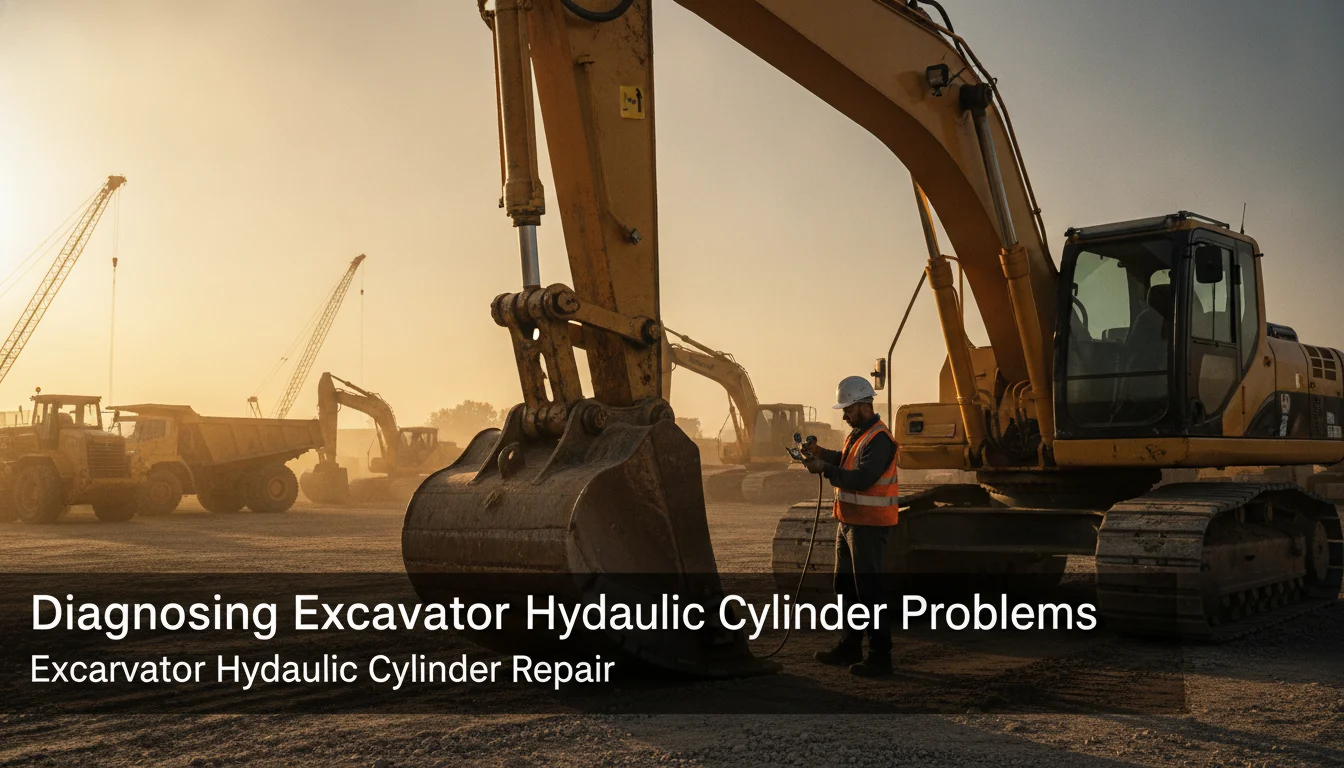
Start with the cylinder mounted on the machine. Look for oil leaks around the rod gland, wet spots on the barrel, and damaged hoses or fittings. Cycle the cylinder through its full stroke and listen for abnormal noise, jerky movement, or excessive drift. A boom or stick that drops slowly when the control valve is in neutral indicates internal piston seal leakage. External leakage around the rod is usually caused by a failed rod seal or wiper seal.
Check the rod surface for scratches, scoring, or chrome damage. Even a small nick can destroy a new seal within hours. Examine the barrel for dents, cracks, or signs of impact. Pay close attention to the rod eye and base end attachments. A stick cylinder that breaks at the rod eye, where the end has been threaded and then welded, is a structural failure that requires more than a seal kit.
Pressure Testing and Internal Leakage
Internal leakage is harder to diagnose from the outside. A hydraulic cylinder can look dry but still fail to hold pressure because the piston seals are bypassing fluid. Technicians use pressure gauges and flow meters to evaluate cylinder performance. If the cylinder fails to reach rated pressure or the rod creeps under load, internal bypass is likely. On a double-acting cylinder, bypass can also be detected by removing a hose and checking for flow from the opposite port while pressurizing the other side.
Pressure testing should always be performed with the cylinder isolated from the rest of the hydraulic system to avoid damaging pumps, valves, or other cylinders. Per the ConEquip 101 guide, thorough assessment and diagnosis are crucial before beginning any excavator hydraulic cylinder repair. Inspect for leaks, dents, and wear, then check the piston rod for bends or scoring before disassembly begins.
Documenting Cylinder Condition Before Disassembly
Before removing any part, document the cylinder orientation, hose routing, port locations, and mounting pin positions. Take photos or make written notes. Measure the cylinder length between pin centers, the rod diameter, and the bore size if possible. These measurements are essential when ordering seal kits and ensure reassembly returns to the correct sequence.
Clean the exterior of the cylinder before disassembly. Mud and debris can enter the cylinder and contaminate new seals. Use a wire brush, degreaser, and compressed air to remove built-up material around the gland nut, ports, and rod end. The cleaner the work area, the lower the risk of premature seal failure after the rebuild.
Step-by-Step Excavator Hydraulic Cylinder Repair Process
Step 1: Pre-Disassembly Preparation
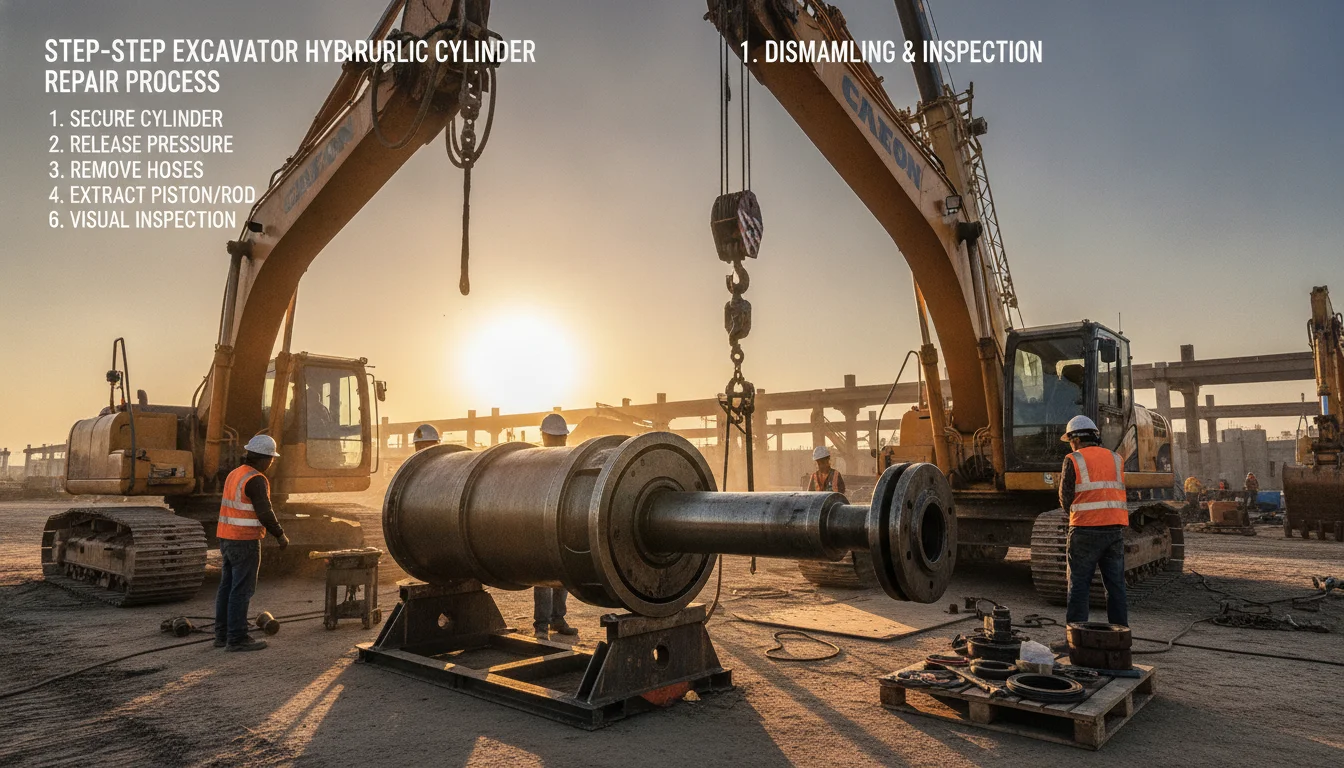
The first priority in any excavator hydraulic cylinder repair is safety. Hydraulic systems store energy even when the engine is off. Relieve all pressure from the system before loosening any fitting. Follow these steps in order:
- Secure the excavator: Park the machine on stable, level ground. Lower all attachments to the ground or support them with stands. Engage the hydraulic lockout if equipped.
- Relieve hydraulic pressure: Cycle the control levers with the engine off to release trapped pressure. Confirm zero pressure at the cylinder ports using a gauge.
- Remove the cylinder: Detach hydraulic lines, bolts, and mounting pins. Cap all open ports and hoses immediately to prevent contamination.
- Move the cylinder to a clean bench: Clean the outside again before opening. Have seal picks, soft hammers, and a torque wrench ready before you begin.
Step 2: Disassembly and Component Cleaning
Disassembly sequence varies by cylinder design. Most excavator cylinders have a threaded gland nut or a bolted end cap. Loosen the gland nut with a spanner wrench, not a pipe wrench, to avoid damaging the threads. Slide the rod assembly out of the barrel slowly, keeping it supported to prevent bending. Remove the piston retaining nut, then slide the piston and gland off the rod.
Clean every component with solvent and inspect under bright light. Document the orientation of each seal, backup ring, and wear band as it comes off. Many reseal mistakes come from installing a seal backward. Keep old seals until the new kit is verified against them. Metal particles or black sludge inside the barrel indicate excessive wear or contamination elsewhere in the hydraulic system.
Step 3: Seal Replacement and Reassembly
Replace all seals, O-rings, backup rings, wear bands, and wiper seals, even if only one looks damaged. Seal kits are matched to the cylinder bore and rod diameter. Lubricate new seals with clean hydraulic fluid or assembly grease before installation. Do not use petroleum grease that is incompatible with the hydraulic fluid. Install the rod seal carefully using a seal tool or plastic shim to avoid cutting the lip.
Reassemble the piston and rod, then slide the assembly back into the barrel. Tighten the gland nut to the manufacturer's torque specification. After reassembly, cycle the cylinder slowly on a test stand or on the machine while watching for leaks and erratic movement. Bleed air from the system by cycling the cylinder through its full stroke several times. A properly rebuilt cylinder holds position under load and shows no external leakage.
Common Failure Modes and Targeted Repair Approaches
Seal and O-Ring Failures
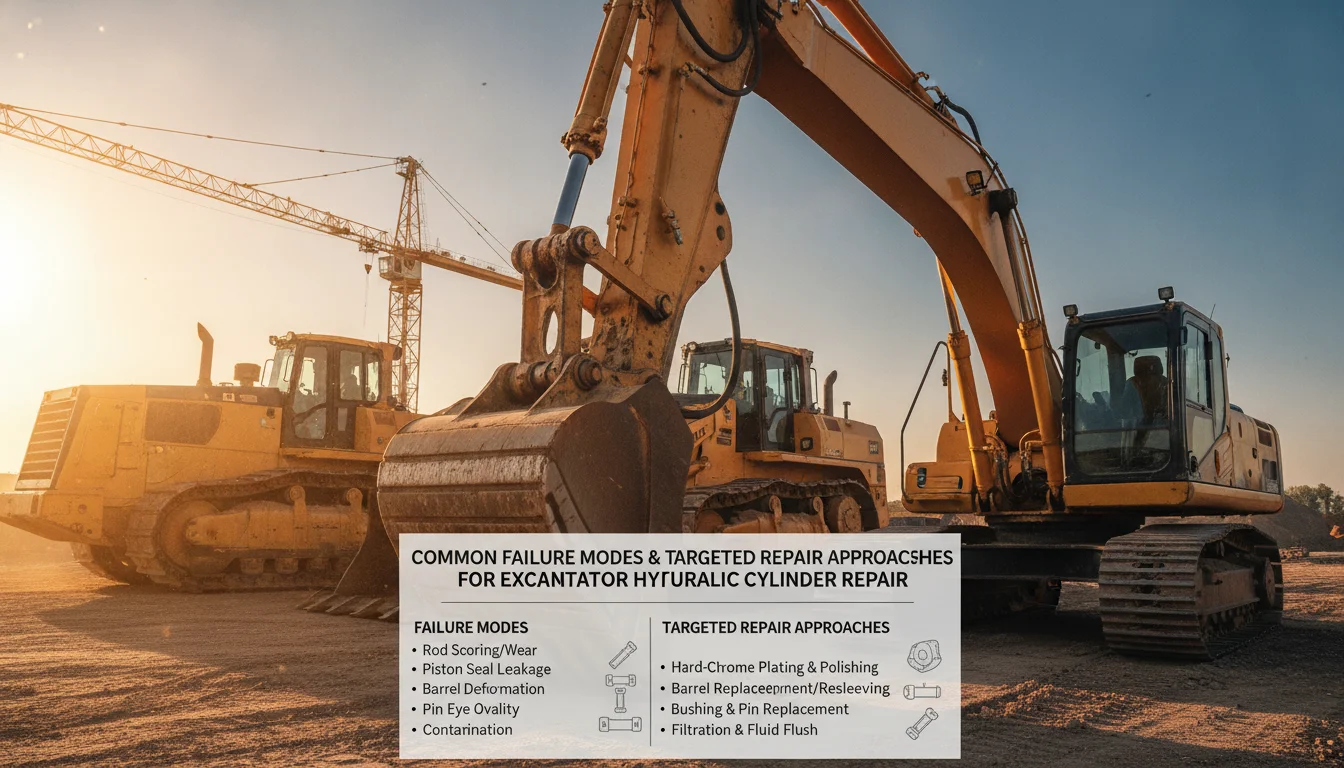
Seal failure is the most common reason for excavator hydraulic cylinder repair. Rod seals wear from normal cycling, contamination, and pressure spikes. The result is external oil leakage. Piston seals wear from internal contamination or age, causing cylinder drift and reduced breakout force. O-rings at the end caps and ports can harden, crack, or extrude under pressure. The fix is straightforward: disassemble, clean, and install a new seal kit matched to the cylinder.
Seal material matters. Nitrile, polyurethane, and fluorocarbon seals have different temperature and chemical resistance profiles. Always use seals specifically rated for the hydraulic fluid type and operating temperature of the excavator. A generic seal that is not compatible with the fluid can swell, soften, or fail prematurely, putting you right back where you started.
Rod Scoring and Pitting
The piston rod is exposed to the environment on every stroke. Scratches, nicks, and corrosion create leak paths past the rod seal. A scored rod will also destroy a new seal quickly, leading to repeated failures. Light surface damage can sometimes be polished out. Deeper scoring requires chrome plating, regrinding, or rod replacement. A bent rod must be straightened or replaced; running a bent rod creates uneven seal wear and can damage the gland bushing.
During reassembly, inspect the rod for straightness using a dial indicator or V-blocks. If runout exceeds the manufacturer's tolerance, do not reuse the rod. The cost of a new rod is often less than the cost of repeated cylinder failures caused by a rod that should have been replaced the first time.
Barrel Damage and Structural Cracks
Barrel damage is the most serious form of cylinder failure. Dents can bind the piston, while cracks can cause sudden catastrophic failure under load. Excavator boom cylinder repairs involving inspection, welding, and reinforcement of the cylinder base are well-documented in the field. Structural repairs must be performed by a qualified welder who understands hydraulic cylinder metallurgy and heat distortion control.
Cylinder barrels can also be honed to remove light pitting or scoring, restoring the internal surface finish required for seal life. If the barrel is severely pitted, a sleeve may be installed inside the original barrel. This is a specialized machining operation. A cracked barrel may be welded temporarily, but the root cause must be found. Often a cracked barrel indicates a design overload or a material defect, and replacement is the safer long-term path.
Pros and Cons of DIY Excavator Hydraulic Cylinder Repair
Pros
- Lower labor cost when the cylinder has only external seal leaks and a clean, undamaged rod.
- Faster turnaround: a field reseal can return the machine to service the same day.
- Builds in-house diagnostic capability, so your team catches problems earlier on future inspections.
- Seal kits for common excavator models (Caterpillar, Komatsu, Volvo, John Deere, Hitachi, Bobcat, Case) are widely available from OEM dealers and aftermarket suppliers.
Cons
- DIY resealing does not fix scored rods, cracked barrels, or bent rods. Attempting a rebuild without addressing underlying damage repeats the failure.
- High-pressure hydraulic systems carry serious injury risk if pressure is not fully relieved before disassembly.
- Incorrect seal orientation or incompatible seal material can cause faster failure than the original worn seal.
- Internal leakage, honing requirements, and structural cracks require shop equipment that is not practical to own in the field.
Professional Shop Repair vs. Field Rebuild
When to Choose a Hydraulic Repair Shop
A professional hydraulic shop is the right choice when the cylinder has internal damage, rod scoring, bent rods, or structural cracks. Shops have access to honing machines, chrome plating services, precision grinders, and weld positioners. They can also pressure test the rebuilt cylinder to verify it holds pressure at rated load. As shown in the Dirt Perfect video series, many professional rebuilds involve extensive disassembly and measurement before any new parts are installed.
Shops also carry or can machine hard-to-find parts. Some excavator cylinders use metric seals or proprietary gland designs not available in a generic seal kit. A shop can identify the exact seal profile and source the correct replacement. If the cylinder bore is worn oversized, a shop can hone and fit an oversized piston or sleeve to restore the original clearance.
DIY Resealing with Common Tools
Many external seal leaks can be repaired in the field with basic hand tools. A DIY excavator hydraulic cylinder repair typically requires a seal kit, spanner wrench, torque wrench, and a clean work area. The Dirt Perfect video on repairing a hydraulic cylinder on a John Deere excavator demonstrates the step-by-step process without specialized shop equipment. The key is cleanliness and patience.
DIY repairs are not appropriate for all cylinder failures. If the rod is scored, the barrel is dented, or the cylinder has internal leakage, a seal kit alone will not solve the problem. Use the diagnosis checklist above to confirm that a DIY reseal is safe and likely to succeed before you pull the cylinder off the machine.
Dealing with Stuck Cylinders
Large cylinders can be extremely difficult to disassemble without proper tooling. Field technicians sometimes use hydraulic jacks, porta-powers, and custom pullers to separate stubborn rod assemblies. The Hitachi ZX470 cylinder rebuild, documented in a widely viewed video by Cutting Edge Engineering Australia, shows how a large cylinder can resist disassembly and require purpose-built extraction tools. If a cylinder is stuck and force is applied incorrectly, the barrel or rod can be damaged further. When in doubt, bring the cylinder to a shop with the right equipment rather than forcing it in the field.
Cost Factors
Pricing for excavator hydraulic cylinder repair varies by cylinder bore size, rod diameter, stroke length, damage type, and local labor rates. Seal kits for small cylinders cost less than kits for large boom cylinders, and welding or machining adds to the total. A complete replacement cylinder is usually more expensive than a seal rebuild but may be cheaper in the long run if the old cylinder has multiple wear points.
When comparing repair options, request itemized quotes. Ask whether the quote includes honing, chrome plating, seal kit, bushings, pressure testing, and warranty. A shop that only quotes the seal kit may not be addressing the rod or barrel condition. Use the comparison table below to evaluate your options.
| Repair Approach | Best For | Typical Scope | Limitations |
|---|---|---|---|
| DIY seal replacement | External rod seal leaks, minor weeping | Remove cylinder, replace seal kit, reassemble | Does not fix scored rods, cracked barrels, or bent rods |
| Professional hydraulic shop rebuild | Internal leakage, worn piston, honing needed | Full disassembly, hone, polish, new seals, pressure testing | Higher cost, machine downtime |
| Welding and machining repair | Broken rod eye, cracked end cap, pitted barrel | Structural weld, line bore, sleeve or replacement | Requires certified welder, risk of heat distortion |
| Complete cylinder replacement | Severe barrel damage, non-repairable cracks | New or remanufactured cylinder installation | Highest parts cost, may require re-hosing |
Tools, Kits, and Parts for Excavator Hydraulic Cylinder Repair
Seal Kits and Parts Identification
A seal kit is a collection of seals, O-rings, wear bands, and wiper rings matched to a specific cylinder model or bore size. Seal kits are available from OEM dealers, hydraulic parts suppliers, and online marketplaces. The range covers everything from small bucket cylinder kits to large boom cylinder kits. When ordering a kit, always verify the cylinder bore diameter, rod diameter, and seal groove dimensions before placing the order.
Seal identification can be challenging because many seals look similar. As highlighted in the Allegheny York hydraulic seal identification video, matching seal profiles is as important as matching dimensions. A U-cup seal and a lip seal may share the same measurements but perform very differently under pressure. Compare old seals carefully against the new kit before installation. If you are unsure, bring the old seal to a hydraulic parts supplier for a direct match.
Honing, Welding, and Machining Equipment
Professional cylinder repair requires specialized equipment. A cylinder hone removes light pitting and restores the internal surface finish. A lathe or cylindrical grinder can resurface rods and cut seal grooves. Welding equipment for cylinder repair must be matched to the barrel material, which is typically high-tensile steel. Preheating and post-weld stress relief may be required to prevent cracks from forming in the heat-affected zone.
Some shops use line boring equipment to restore damaged rod eye or base end bores. Large cylinders, such as those on a Hitachi ZX470, can be difficult to disassemble without proper tooling and may require hydraulic jacks, porta-powers, and custom pullers to separate stubborn rod assemblies.
Sourcing OEM vs. Aftermarket Components
OEM parts are manufactured to the excavator manufacturer's specifications and are the safest choice for critical sealing surfaces. Aftermarket parts can cost less and are often made from equivalent materials, but quality varies significantly between suppliers. For major brands including Caterpillar, Komatsu, Volvo, John Deere, Hitachi, Bobcat, and Case, both OEM and aftermarket cylinders and seal kits are available. As of 2026, the aftermarket supply chain for these brands is mature, with many suppliers offering material certifications on request.
When sourcing aftermarket components, check the manufacturer's reputation and material certifications. A seal kit made from inferior polyurethane may fail in cold weather or under high pressure. A replacement rod with insufficient chrome thickness will wear quickly. The cost difference between OEM and aftermarket is often small compared to the cost of downtime from a failed repair.
"Inspect seals and O-rings and replace worn or damaged components with high-quality replacements suitable for hydraulic systems. Evaluate the piston and cylinder tube for pitting or damage that may require honing or replacement." - ConEquip 101 Learning, June 2024
At 3GEN Export, we supply OEM-standard seal kits and cylinder components for Caterpillar, Komatsu, Volvo, Hitachi, and 40+ other brands. Browse our hydraulic parts categories or visit our brand pages to find the exact kit for your machine.
Safety and Preventative Maintenance for Hydraulic Cylinders
Hydraulic Pressure Safety Protocols
Hydraulic fluid under pressure can penetrate skin and cause serious injury. Never use your hands to locate a hydraulic leak. Use a piece of cardboard or wood instead. Relieve all pressure before disconnecting any line or fitting. Wear safety glasses, gloves, and steel-toed boots. Support heavy cylinders with appropriate lifting equipment. A boom cylinder on a large excavator can weigh hundreds of pounds and requires mechanical support during removal.
Block the boom, stick, or bucket before removing a cylinder. If the attachment moves unexpectedly, it can crush a technician. Follow lockout/tagout procedures for the machine. Only reconnect hydraulic lines after all fittings are clean and tight, and confirm the system is pressurized correctly before returning the machine to operation.
Preventative Maintenance Intervals
Preventative maintenance is the most cost-effective way to extend the life of excavator hydraulic cylinders. Inspect the cylinders during every scheduled service. Look for early signs of leakage, rod wear, and pin bushing play. Keep the hydraulic fluid clean and change filters according to the manufacturer's schedule. Contaminated fluid is a leading cause of seal and pump failure across all major excavator brands.
Grease the cylinder pin joints regularly to prevent side loading from worn bushings. Worn pins and bushings allow the cylinder to run misaligned, which accelerates rod seal wear and can bend the rod over time. When a pin bore is elongated, repair it before rebuilding the cylinder. The base end and rod eye should be re-bushed or line bored as needed to restore correct alignment.
Warning Signs That Precede Catastrophic Failure
Some cylinder failures give early warning. A gradual increase in drift, a persistent external leak, or a slight bend in the rod are all signs that a major failure may be approaching. A rod that is losing chrome or showing rust will soon destroy the seal. A barrel that has been dented by a rock may crack under the next load spike. Any unusual noise during cylinder movement, such as knocking or grinding, should be investigated immediately.
Addressing these signs early can be the difference between a straightforward seal replacement and a full cylinder replacement. Regular visual inspections and hydraulic fluid sampling are the best early warning systems available to any maintenance team.
Frequently Asked Questions
Can a hydraulic cylinder be repaired?
Yes, most hydraulic cylinders can be repaired. Seal replacements and full rebuilds are standard procedures for cylinders with external leaks or internal bypass. Structural repairs such as welding may be needed for cracked barrels or broken rod eyes, and in severe cases, full replacement is the most practical option.
How much does it cost to repair an excavator hydraulic cylinder?
Costs vary widely by cylinder size, damage type, and local labor rates. No universal price applies across all excavator models and failure types. Request an itemized quote from a hydraulic shop that covers the seal kit, honing, rod condition, and pressure testing to get an accurate figure for your specific cylinder.
What are the most common causes of hydraulic cylinder failure?
Contaminated fluid, worn seals, side loading from misaligned pins, and pressure spikes are the most common causes. According to ConEquip's rebuild guide, cylinders may develop leaks, lose efficiency, or experience physical damage over time and heavy use. Addressing contamination at the fluid and filter level prevents many repeat failures.
How much does it cost to rebuild a hydraulic cylinder?
Rebuilding is generally less expensive than full replacement, but the exact cost depends on bore size, parts required, and shop labor. A seal-only rebuild on a small cylinder costs far less than a full hone-and-reseal on a large boom cylinder. Request itemized estimates from at least two shops before committing.
Can I rebuild an excavator hydraulic cylinder myself?
Yes, DIY resealing is possible with common tools on many excavator models when the rod and barrel are in good condition. The Dirt Perfect video series demonstrates a John Deere excavator cylinder repair without specialized shop equipment. High-pressure hydraulic systems require strict safety protocols and a clean work area; if the rod is scored or the barrel is damaged, a professional shop is the right call.
When should I replace instead of repair a hydraulic cylinder?
Replace the cylinder when the barrel is cracked beyond weldable repair, the rod is bent beyond straightening, or internal surfaces are deeply pitted. If two or more failure zones require major work simultaneously, a new or remanufactured cylinder is often more cost-effective than attempting a complex multi-point repair.
Next Steps After Diagnosis
Excavator hydraulic cylinder repair is a diagnosis-driven process. The most successful repairs begin by separating simple seal failures from structural damage. Seal failures respond well to DIY resealing when the rod and barrel are in good condition. Structural failures require welding, machining, or replacement. As ConEquip's guide states, measuring dimensions and tolerances before ordering parts ensures replacements fit precisely and prevents mismatched seal kits and misaligned components.
Once the cylinder is diagnosed, decide who will perform the repair. For seal-only leaks and minor weeping, a quality seal kit can return the machine to service quickly. For internal bypass, rod scoring, or structural cracks, contact a hydraulic repair shop with honing and welding capabilities. Always document the failure, replace all seals as a set, and pressure test the rebuilt cylinder before returning the excavator to full duty.
Shop OEM-quality spare parts with global 5-day delivery at 3genexport.com. We carry seal kits, cylinder components, and hydraulic parts for Caterpillar, Komatsu, Volvo, Hitachi, and 40+ brands, backed by OEM-standard quality assurance and direct support from our technical team.