
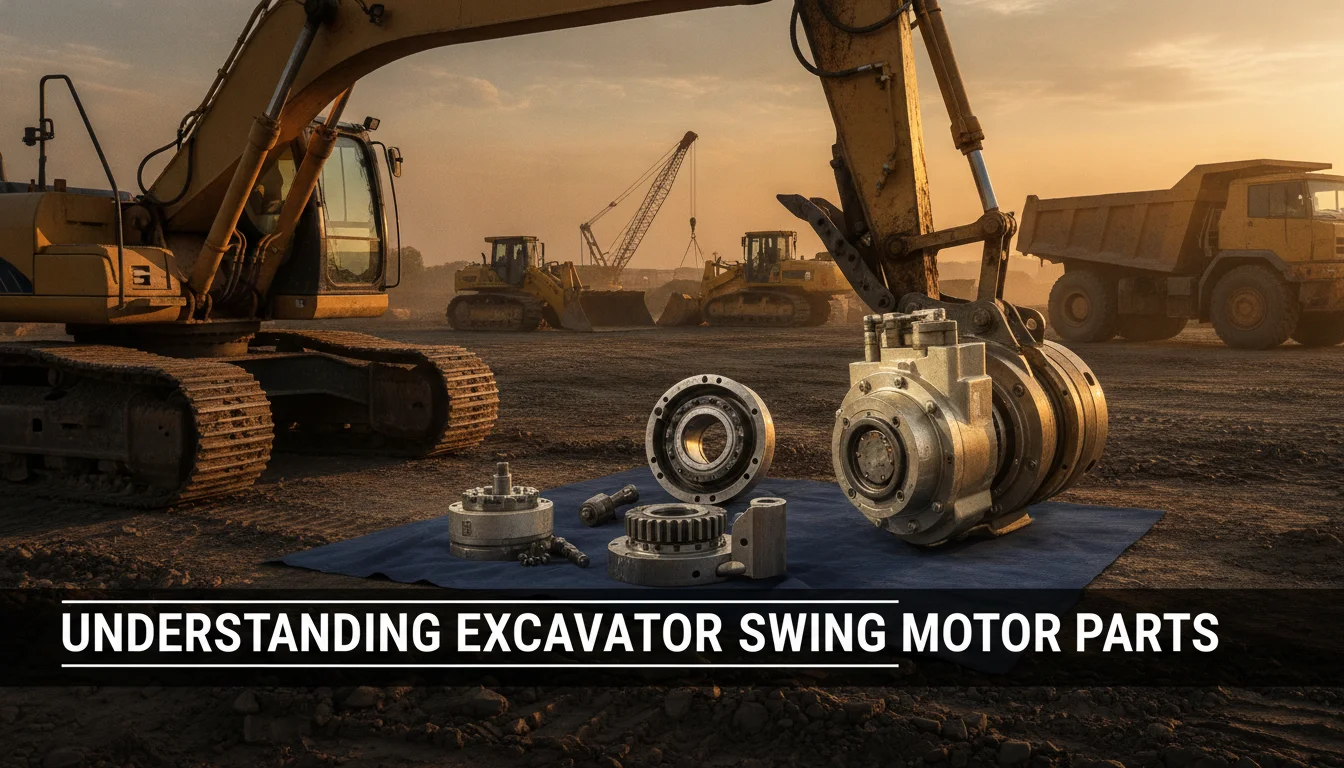
Excavator Swing Motor Parts: 2026 Buying Guide
Excavator swing motor parts explained: components, brands, pricing, and maintenance tips for CAT, Komatsu, Volvo & more.
Loading article…
Article Not Found
The article you're looking for doesn't exist or may have been removed.
Back to BlogExcavator swing motor parts are the hydraulic and mechanical components that enable an excavator's upper structure to rotate horizontally. Choosing the right replacement components keeps your machine productive and your project on schedule.
Key Takeaways
- The swing motor converts hydraulic pressure into rotational motion, driving the excavator's superstructure left and right.
- Core internal components include the cylinder block, pistons, valve plate, drive shaft, and planetary gear set.
- OEM-quality parts from brands like Caterpillar, Komatsu, Kobelco, Hitachi, and Volvo deliver the best fit and service life.
- Price ranges vary by brand and motor type: budget aftermarket units start around $500, while premium OEM assemblies reach $2,500 or more.
- Regular hydraulic fluid changes and seal inspections are the two highest-impact maintenance actions you can take.
- As of 2026, global supply chains have stabilized, making OEM-quality parts more accessible with shorter lead times than in previous years.
Understanding Excavator Swing Motor Parts
Excavator swing motor parts are integral to the hydraulic system of excavators, allowing for the rotation of the upper structure. The swing motor converts hydraulic energy into mechanical motion, enabling the excavator to pivot and perform various tasks efficiently. According to manufacturer specifications, the swing system must sustain continuous rotational loads while maintaining precise speed control - a demand that puts every internal component under constant stress.
Components of an Excavator Swing Motor
A swing motor is more than a single unit. It's an assembly of precision-machined parts, each with a specific role. Based on industry parts catalogs and OEM service documentation, the core components include:
- Cylinder Block: Houses the pistons and forms the rotating core of the motor. Wear here causes internal leakage and loss of torque.
- Valve Plate: Controls the flow of hydraulic oil into and out of the cylinder block. A scored valve plate is one of the most common causes of swing slowdown.
- Piston Assembly: Typically arranged in sets of 7 or 9, pistons convert hydraulic pressure into rotational force. Piston assemblies are available in single-ring and double-ring configurations depending on the motor series.
- Ball Guide: Available in bronze or steel, the ball guide retains the piston shoe plate and maintains alignment under load.
- Shoe Plate: Provides the sliding surface for the piston assembly. Surface finish is critical - even minor scoring accelerates wear across the entire piston set.
- Drive Shaft: Transfers rotational output from the motor to the planetary gear reduction unit. Drive shafts are model-specific; tooth count matters (e.g., 13T, 16T, 19T, 21T variants exist across the M5X130 and M5X180 series).
- Friction Plates and Separation Plates: Part of the swing brake pack. These wear items are often overlooked until the machine fails to hold position on a slope.
- Spring Set: Maintains pressure on the cylinder block and assists brake engagement. Spring fatigue leads to brake drag or brake release failure.
- Planetary Gears: Reduce motor output speed while multiplying torque, enabling smooth, controlled swing motion.
- Bearings and Seals: Reduce friction and prevent hydraulic fluid leaks. Seal kits are the most frequently ordered replacement items across all excavator brands.
- Housing: The outer shell that protects internal components from contamination and impact damage.
"The valve plate and cylinder block interface is where most swing motor failures originate. Contaminated hydraulic fluid accelerates wear at this surface faster than any other failure mode." - Based on OEM service bulletin guidance for axial piston swing motors.
Types of Swing Motors
There are several types of swing motors used in excavators, and selecting the right type for your application affects both performance and parts availability:
- Hydraulic Swing Motors: The most common type, powered by pressurized hydraulic fluid. Used across virtually all major excavator brands.
- Axial Piston Swing Motors: Pistons are arranged parallel to the motor shaft. These are highly efficient, compact, and offer precise speed control. The M2X and M5X series motors from Kawasaki are widely used in Kobelco, Hitachi, and Sumitomo excavators.
- Radial Piston Swing Motors: Pistons arranged radially along the shaft. High power density in a compact package, common in smaller excavators and material handling equipment.
- Piston Swing Motors: Known for high torque output, ideal for heavy-duty applications in the 20-tonne-and-above class.
- Geared Swing Motors: Use a gear system to convert hydraulic energy into rotational motion. Known for simple structure and high load capacity, often found in older excavator models.
- Electric Swing Motors: Used in hybrid and fully electric excavators for precise positioning control. Adoption is growing as of 2026, particularly in urban construction markets.
What to Look For When Buying Excavator Swing Motor Parts
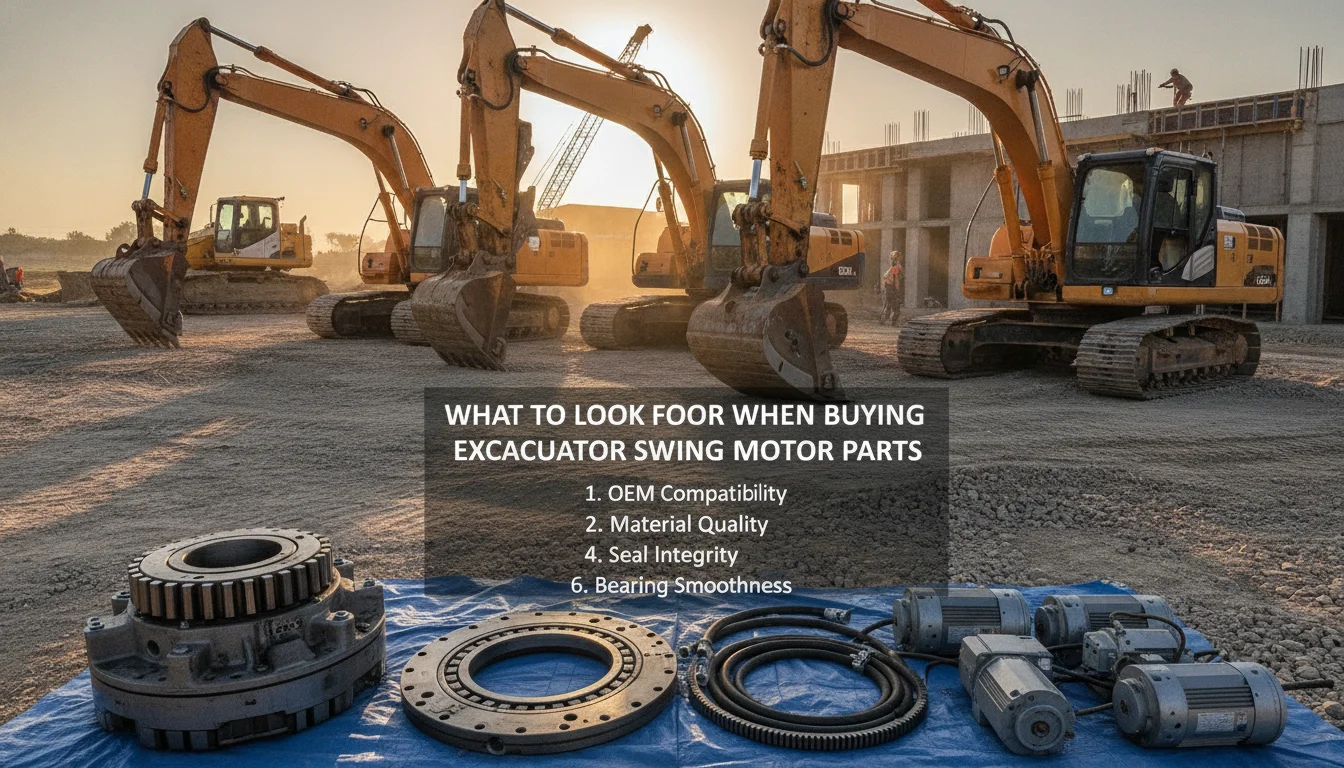
The right excavator swing motor parts for your machine depend on more than price. Here are the selection criteria that matter most in practice:
Compatibility First
Always verify the part number against your machine's serial number, not just the model name. A Komatsu PC200-8 built in different production years may use different motor variants. The Komatsu PC200-8 swing motor, for example, carries part number 706-7G-01140 - confirm this against your OEM parts book before ordering. The same applies to Kobelco SK200-8 (part number LQ15V00015F2) and Volvo EC210 (VOE14552686).
OEM vs. Aftermarket Quality
OEM parts are manufactured to the original design specifications and carry full manufacturer backing. Quality aftermarket parts, when sourced from reputable suppliers, can deliver comparable service life at a lower cost - but the key word is reputable. Low-cost imports with no traceability are a false economy. A failed swing motor on a 30-tonne excavator costs far more in downtime than the price difference between a quality part and a cheap one.
Warranty Coverage
Check warranty terms carefully. Most OEM swing motor assemblies carry a 12-month warranty. Some aftermarket suppliers offer 6-month coverage. Rebuilt units from specialist suppliers like Brikers go through test-center validation before shipping, which is a meaningful quality signal.
Supplier Lead Time
As of 2026, global parts logistics have improved significantly compared to the supply chain disruptions of recent years. That said, lead time still varies widely. A supplier with in-stock inventory and established freight partnerships can deliver globally in 5-7 business days. A supplier sourcing to order may take 3-6 weeks. For active job sites, that difference is critical.
Price Range Guidance
Swing motor pricing varies by brand, motor size, and whether you're buying a complete assembly or individual internal components:
- Budget tier (aftermarket assemblies, mini excavators): $500 to $900. Suitable for lower-utilization machines where cost control is the priority.
- Mid-range tier (quality aftermarket or rebuilt OEM, 13-25 tonne class): $900 to $1,500. Best value for most fleet operators.
- Premium tier (OEM assemblies, 25-tonne-plus machines): $1,500 to $2,500 and above. Justified for high-utilization machines where reliability directly impacts project revenue.
Individual internal components - seal kits, valve plates, piston assemblies - are significantly less expensive and are the right choice when the motor housing and shaft are still serviceable.
Comparison of Excavator Swing Motor Parts by Brand
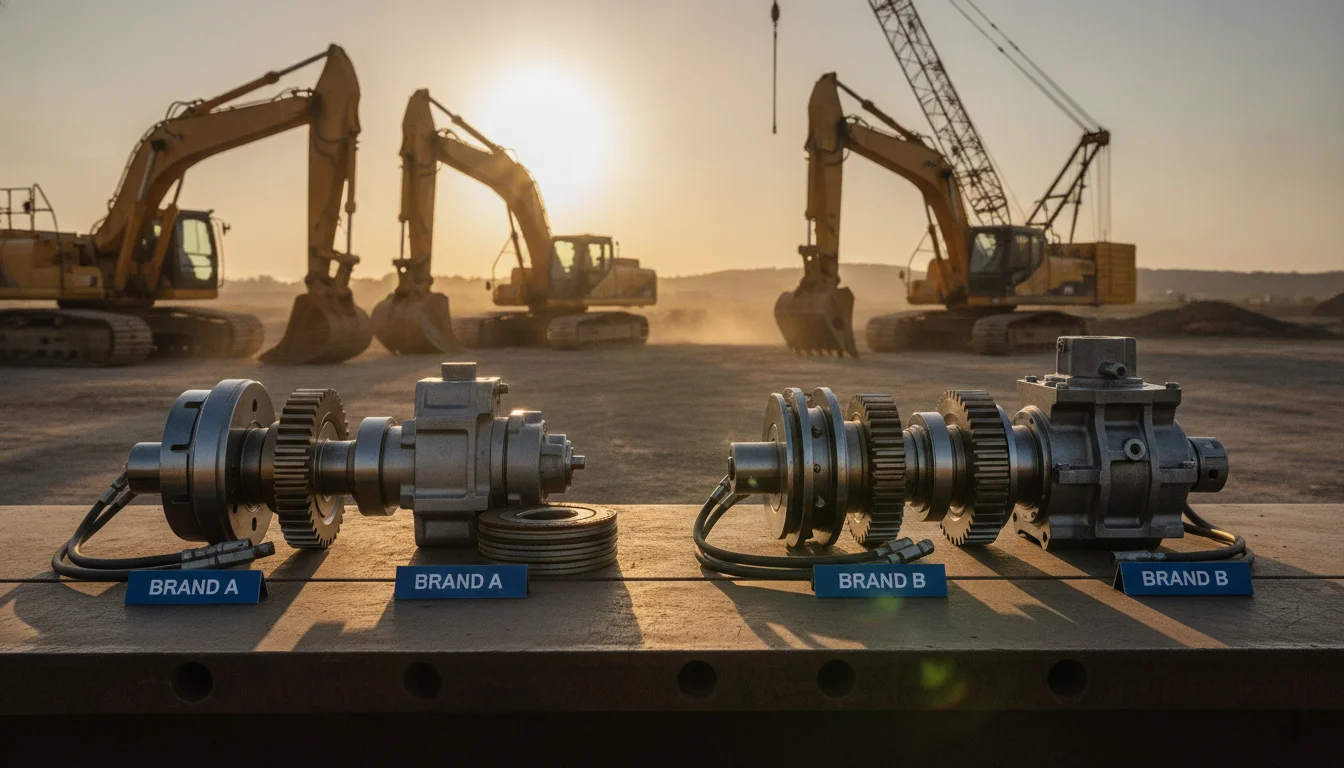
The table below compares swing motor specifications and pricing across the most commonly serviced excavator brands. Use this as a starting reference and confirm part numbers against your machine's serial number.
| Brand | Model | Motor Type | Common Part Number | Price Range (Assembly) | Typical Warranty |
|---|---|---|---|---|---|
| Caterpillar | 330CL | Hydraulic Axial Piston | Confirm via serial | $1,200 - $2,500 | 12 months |
| Kobelco | SK200-8 | Axial Piston (M5X130) | LQ15V00015F2 | $1,000 - $2,500 | 6-12 months |
| Komatsu | PC200-8 | Geared / Axial Piston | 706-7G-01140 | $900 - $1,500 | 12 months |
| Hitachi | EX120-2 | Hydraulic Axial Piston | Confirm via serial | $1,000 - $2,000 | 12 months |
| Volvo | EC210 | Hydraulic Axial Piston | VOE14552686 | $1,100 - $2,000 | 12 months |
| Hyundai | R480-9 | Hydraulic Axial Piston | 31QB-18160 | $1,200 - $2,500 | 12 months |
| Case | CX130 | Hydraulic | LNM0434 | $900 - $1,800 | 6-12 months |
Pros and Cons of OEM vs. Aftermarket Swing Motor Parts
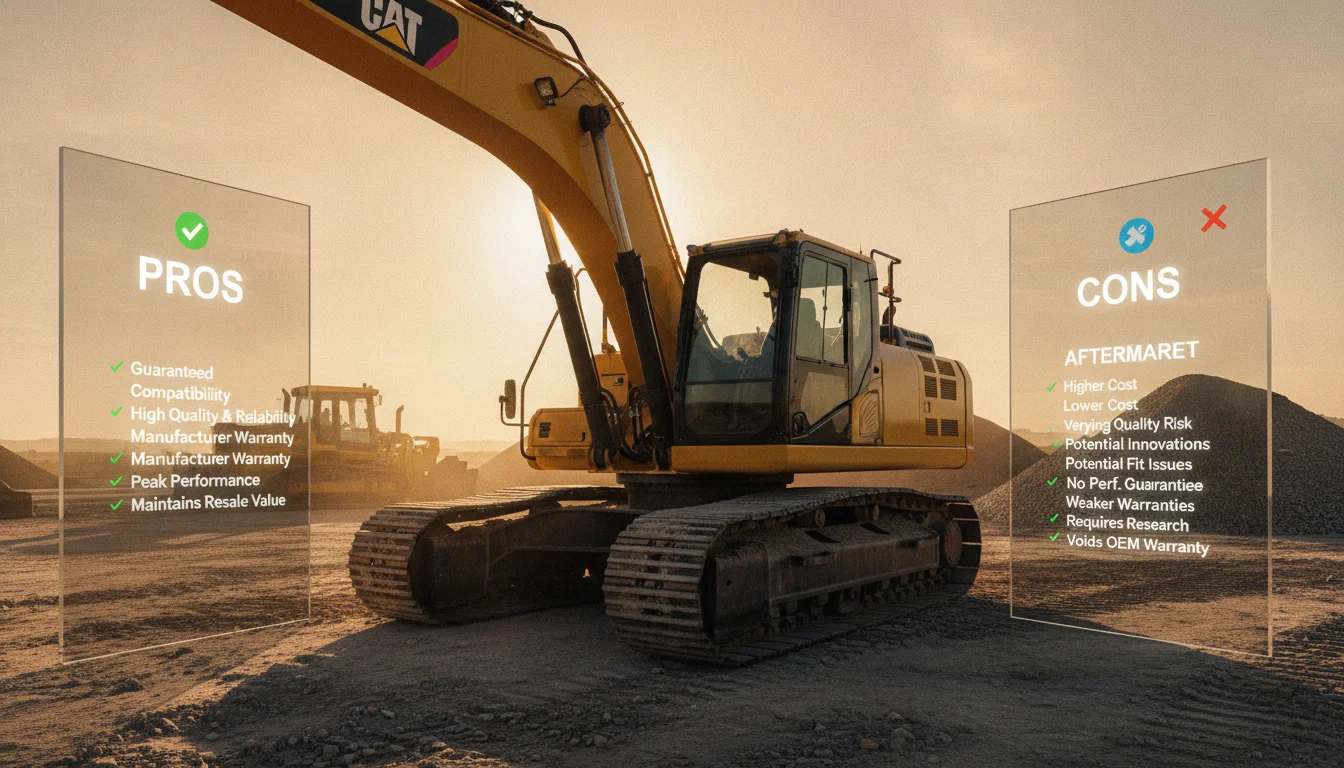
Pros
- OEM parts: Guaranteed fit, full manufacturer warranty, and consistent quality across production batches.
- Quality aftermarket parts: Lower cost than OEM, often faster availability from regional distributors, and suitable for machines outside the OEM warranty period.
- Rebuilt assemblies: Cost-effective for complete motor replacement; reputable rebuilders test units before shipping, reducing installation risk.
- Individual component sourcing: Buying seal kits, valve plates, or piston sets separately extends motor life at a fraction of full assembly cost.
Cons
- Low-cost aftermarket imports: Variable material quality, no traceability, and limited warranty support. Failure risk is higher, especially in high-cycle applications.
- OEM parts: Higher upfront cost and longer lead times if not stocked locally. Some discontinued models have limited OEM availability.
- Rebuilt assemblies: Quality depends entirely on the rebuilder's process. Without test-center validation, you're accepting unknown internal wear.
- Sourcing individual components: Requires accurate diagnosis. Replacing only the seal kit when the cylinder block is scored will result in repeat failure.
How to Choose the Right Parts for Your Application
Matching excavator swing motor parts to your specific use case prevents over-spending on premium components where they're not needed - and under-specifying where they are.
High-Utilization Mining and Quarry Applications
Machines running two or three shifts per day in abrasive environments need OEM or OEM-equivalent parts. The piston assemblies and cylinder block face accelerated wear from high cycle counts. In these applications, budget aftermarket parts rarely deliver acceptable service intervals. Specify OEM assemblies or validated rebuilds, and plan for seal kit replacement at every major service interval.
General Construction Fleets
For 13-25 tonne excavators in general earthmoving, quality aftermarket parts in the mid-range tier offer the best balance of cost and reliability. Brands like Kobelco SK200-8 and Komatsu PC200-8 have well-established aftermarket supply chains, so parts availability is rarely an issue. Focus your budget on the cylinder block, valve plate, and piston set - the components that directly determine motor efficiency.
Mini Excavators and Low-Utilization Machines
For machines under 8 tonnes or equipment used intermittently, budget-tier aftermarket assemblies are a practical choice. The M2X series motors used in many mini excavators (including Doosan DH55, DH60, R60-7, and R80-7 models) have a wide range of aftermarket suppliers. Seal kits and friction plates are the most common wear items in this class.
Older and Discontinued Models
For machines like the Hitachi EX120-2 or older Komatsu PC60-7, OEM parts may be scarce. This is where specialist aftermarket suppliers and rebuilders provide real value. Cross-referencing the motor series (e.g., M2X63, M5X130) often reveals compatible parts across multiple brands, expanding your sourcing options.
"When OEM availability runs out on older machines, the motor series number is your best sourcing tool. An M2X150 motor from a Doosan DH225 shares internal components with several other brands using the same Kawasaki motor platform." - 3GEN Export technical sourcing team, based on cross-brand compatibility analysis.
Step-by-Step Process for Replacing Excavator Swing Motor Parts
- Identify the Problem: Determine if the swing motor is malfunctioning by checking for unusual noises, hydraulic leaks, slow swing speed, or complete loss of swing function. Slow swing with normal hydraulic pressure often points to internal wear rather than a control valve issue.
- Gather Necessary Tools: Collect the correct wrenches, torque wrench, snap ring pliers, hydraulic line caps, and clean hydraulic fluid. Cleanliness is critical - contamination during reassembly is a leading cause of repeat failure.
- Relieve System Pressure: Before disconnecting any hydraulic lines, cycle the swing control with the engine off to relieve residual pressure. This step prevents injury and hydraulic fluid spills.
- Remove the Old Motor: Label and cap all hydraulic lines before disconnecting. Remove the motor mounting bolts and carefully extract the assembly. Note the orientation of all ports and fittings.
- Inspect Before Installing: Check the swing gear and pinion for wear while the motor is out. Replacing the motor without addressing gear wear will shorten the new motor's service life.
- Install New Parts: Follow the manufacturer's torque specifications for all fasteners. Apply clean hydraulic fluid to all internal components before assembly. Never use sealant on hydraulic port threads unless specifically called for in the service manual.
- Test the System: Reconnect all hydraulic lines, fill the motor case with clean hydraulic oil through the case drain port, and start the engine. Run the swing at low speed for several minutes before applying full load. Check for leaks at all connections.
Care and Maintenance of Excavator Swing Motor Parts
Regular maintenance is the most cost-effective investment you can make in swing motor longevity. Industry maintenance data shows that most swing motor failures are preventable with consistent inspection and fluid management.
Hydraulic Fluid Management
Use the hydraulic oil grade specified by the manufacturer - typically ISO VG 46 or ISO VG 68, selected based on ambient operating temperature. Change intervals vary by brand, but most OEM service manuals specify fluid analysis or replacement at regular hour intervals. Contaminated fluid is the primary driver of cylinder block and valve plate wear. If your fluid shows discoloration, metallic particles, or a milky appearance, change it immediately and investigate the source.
Seal and Bearing Inspections
Inspect the motor case drain line for signs of internal leakage. A small amount of case drain flow is normal; excessive flow indicates worn seals or internal component damage. Check shaft seals visually at each service for signs of weeping. Catching a seal failure early means a seal kit replacement rather than a full motor rebuild.
Swing Brake Maintenance
The friction plates and separation plates in the swing brake pack are wear items. If the machine fails to hold position on a grade, or if you notice the swing drifting after releasing the control, inspect the brake pack. Worn friction plates are a straightforward replacement - ignoring them leads to more expensive damage to the planetary gear set.
Contamination Prevention
Keep the area around the motor clean. Debris entering the hydraulic system through a loose cap or damaged line fitting causes rapid internal wear. Always cap hydraulic lines immediately when disconnecting them, and use clean containers for any fluid handling.
Pro Tip: When ordering a seal kit, also order a spare valve plate if your machine has high hours. The valve plate is inexpensive relative to a full motor assembly, and having one on the shelf means you can complete a full internal service in a single maintenance window rather than waiting for parts.
Swing Motor Parts in 2026: What's Changed
As of 2026, the global market for excavator swing motor parts has matured considerably. Supply chain disruptions that affected lead times in previous years have largely resolved, and OEM-quality aftermarket parts are more accessible than ever across Asia, Europe, the Middle East, and the Americas. The growth of electric and hybrid excavators is introducing electric swing motor variants to the market, but hydraulic axial piston motors remain the dominant technology for the vast majority of the global fleet. Procurement teams sourcing replacement components should prioritize suppliers with verified inventory, clear part number traceability, and established international freight capabilities.
Frequently Asked Questions
What are the common swing motor problems?
The most common issues are internal hydraulic leaks, unusual grinding or whining noises, slow or unresponsive swing function, and swing brake failure. Most originate from contaminated hydraulic fluid accelerating wear on the cylinder block and valve plate interface. Regular fluid analysis and seal inspections catch these problems before they become full motor failures.
What oil should I use in an excavator swing motor?
Use the hydraulic oil grade specified in your machine's service manual, typically ISO VG 46 or ISO VG 68 depending on operating temperature range. Always use clean, filtered fluid and follow the manufacturer's change interval recommendations. Mixing oil grades or using non-specified fluids accelerates internal wear and can void warranty coverage.
What does a swing motor do?
A swing motor enables the excavator's upper structure - including the cab, boom, and attachment - to rotate horizontally on the undercarriage. This rotation allows the operator to position the bucket precisely for digging, loading, and dumping without repositioning the entire machine. The swing motor works in conjunction with a planetary gear reduction unit to deliver controlled, high-torque rotation.
What is the motor that spins the excavator called?
It's called the swing motor, also referred to as the slew motor, swivel motor, or rotate motor depending on the brand and region. The complete assembly including the gear reduction unit is often called the swing drive or slewing drive. All terms refer to the same hydraulic system responsible for rotating the excavator's superstructure.
How do I know if I need to replace my swing motor?
Key indicators include significant hydraulic leaks from the motor case, grinding or metallic noises during swing operation, noticeably reduced swing speed at normal hydraulic pressure, and failure of the swing brake to hold position on a slope. A pressure test at the motor ports can confirm whether the issue is internal motor wear or an upstream control valve problem. If internal leakage is confirmed, replacement or rebuild is the correct course of action.
Where can I buy excavator swing motor parts?
OEM parts are available through authorized dealer networks for brands like Caterpillar, Komatsu, Volvo, Kobelco, and Hitachi. Quality aftermarket and rebuilt assemblies are available from specialist suppliers including 3GEN Export, which stocks OEM-quality swing motor parts for 40-plus brands with global delivery in approximately 5 business days. Always verify part numbers against your machine's serial number before ordering, regardless of supplier.