
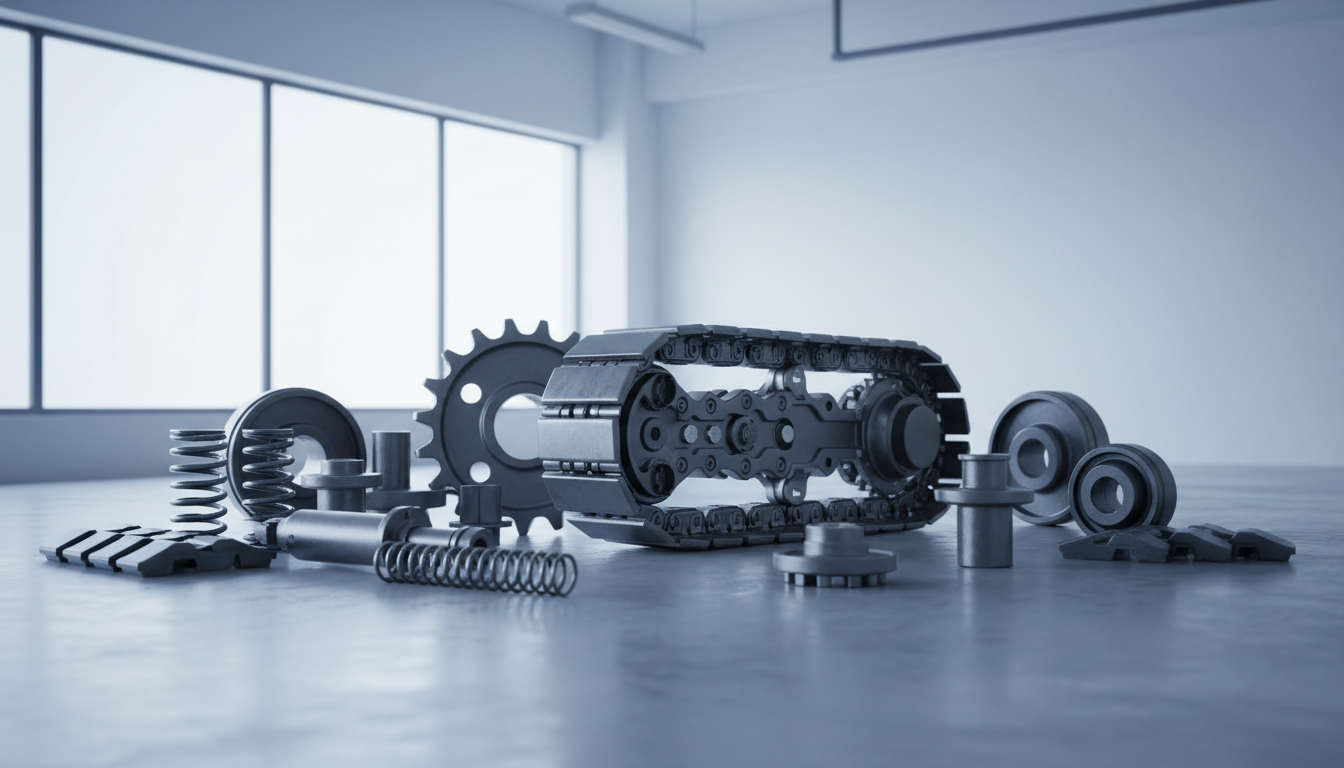
Excavator Undercarriage Parts: Complete Guide & Sourcing
Expert guide to excavator undercarriage parts. Track chains, rollers, idlers, sprockets for CAT, Komatsu, Volvo. OEM-quality with global 5-day delivery.
Loading article…
Article Not Found
The article you're looking for doesn't exist or may have been removed.
Back to BlogKey Takeaways
- Track chains represent 60-70% of total undercarriage replacement costs but last 3,000-5,000 hours with proper maintenance
- Roller and idler wear patterns indicate alignment issues that can cut track life in half if ignored
- OEM-compatible aftermarket parts offer 30-40% cost savings without sacrificing durability on most applications
- Proper tensioning extends component life by up to 25% , check weekly, adjust monthly
- Global sourcing reduces lead times from 6-8 weeks to 5-7 days for critical components
When your CAT 320’s track chain starts throwing shoes on a $2 million pipeline project, you learn fast that excavator undercarriage parts aren’t just components , they’re the foundation of your operation’s profitability.
We’ve supplied undercarriage components for mining, construction, and energy projects across six continents since 2006. The pattern is consistent: operators focus on engine hours and hydraulic maintenance while the undercarriage quietly accumulates wear. Then reality hits during a critical project phase.
The undercarriage accounts for roughly 50% of an excavator’s total maintenance costs over its lifetime. Yet most procurement teams treat these parts as commodities, focusing solely on initial price rather than total cost of ownership.
Understanding Critical Undercarriage Components
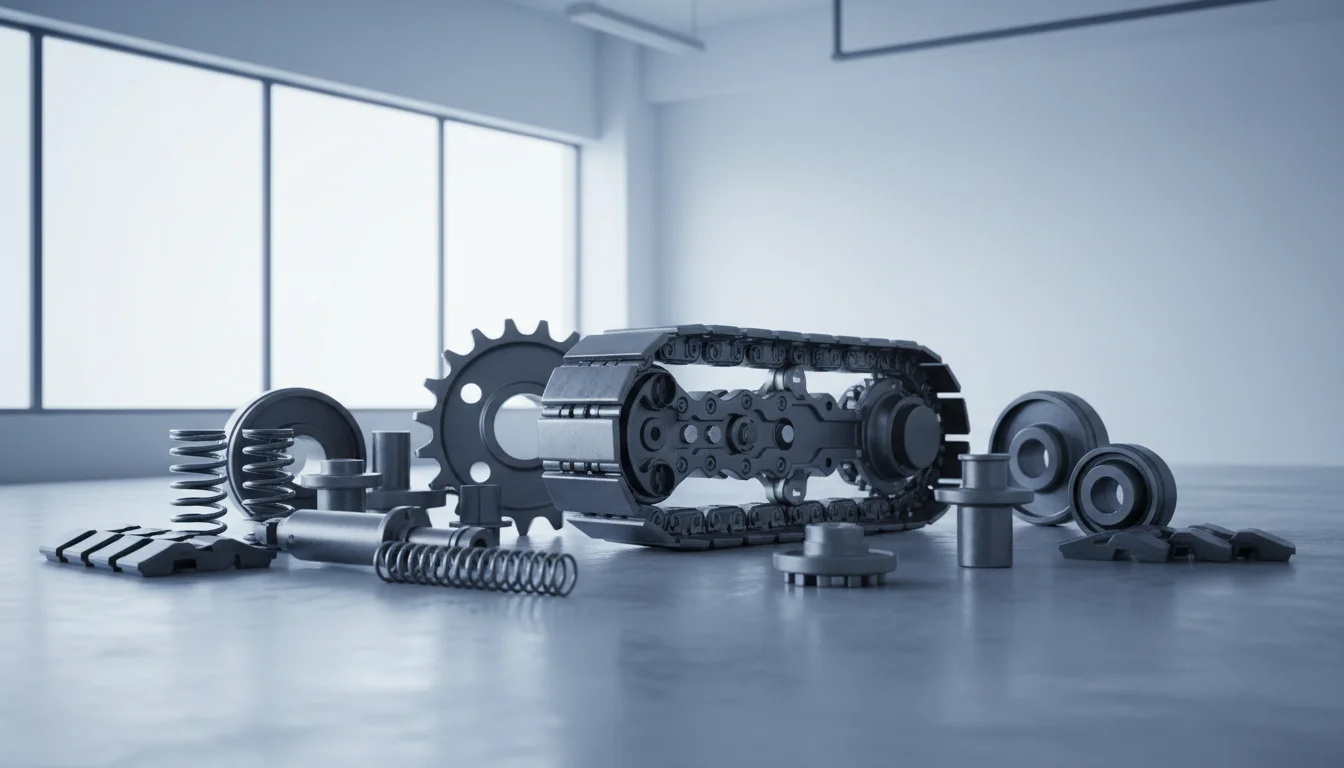
The excavator undercarriage system consists of eight primary components working in precise coordination. Each part affects the others , a worn idler creates uneven track tension, accelerating roller wear and reducing overall system life.
Track Chains and Shoes: The Foundation
Track chains carry the machine’s full operating weight while transferring power to the ground. Modern excavator track chains use sealed and lubricated pins and bushings, designed for 3,000-5,000 operating hours under normal conditions.
Track shoe selection depends on application. Standard shoes work for general construction, while grouser bars provide traction in soft conditions. Rubber pads reduce ground pressure and protect finished surfaces but wear faster on abrasive materials.
We stock track assemblies for excavators from 1.5 to 90 tons, including complete chains for CAT 300 series, Komatsu PC200-PC800 models, and Volvo EC140-EC750 machines. Chain pitch varies by manufacturer , CAT uses 216mm pitch on most mid-size excavators, while Komatsu standardizes on 190mm for comparable models.
Rollers: Managing Load Distribution
Bottom rollers support the machine’s weight and guide track movement. Carrier rollers on the top maintain proper track alignment and prevent sagging between the drive sprocket and front idler.
Roller failure typically starts with seal deterioration, allowing contamination into the bearing assembly. External wear indicators include flat spots on the roller surface and excessive lateral movement. Internal symptoms include grinding noises and increased operating temperature.
Quality aftermarket rollers use double-sealed bearings and hardened steel surfaces. We source rollers with OEM-equivalent specifications, including proper bore dimensions, mounting bolt patterns, and load ratings for specific machine models.
Idlers and Sprockets: Power Transfer Points
Front idlers maintain track tension and guide track movement around the front of the machine. Drive sprockets transfer engine power through the final drive to move the track chain.
Idler adjustment affects entire system performance. Insufficient tension causes track slippage and accelerated sprocket wear. Excessive tension increases power consumption and stresses all components. Most manufacturers specify 15-25mm deflection at the midpoint between rollers.
Sprocket wear appears as hooked or shark-fin shaped teeth. Once sprocket teeth show significant wear, replacement becomes critical , continued operation damages track pins and can cause catastrophic chain failure.
Maintenance Strategies That Extend Component Life
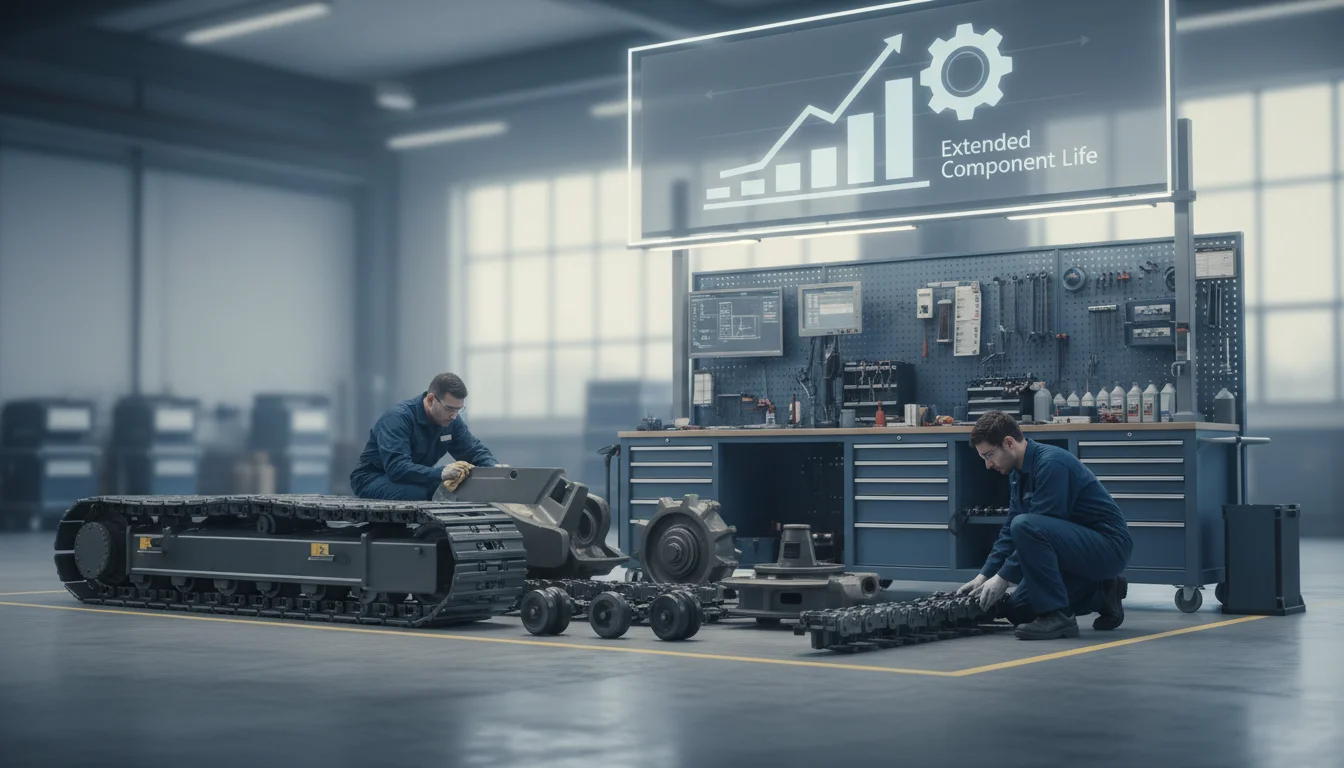
Proper maintenance can double undercarriage life while reducing unexpected failures. The key is understanding wear patterns and addressing issues before they cascade through the system.
Daily Inspection Protocols
Start each shift with a visual undercarriage inspection. Look for loose track shoes, damaged rubber pads, and debris accumulation. Check track tension by measuring sag between the bottom rollers , excessive sag indicates worn components or improper adjustment.
Remove packed material daily, especially in clay or sticky conditions. Accumulated debris increases component stress and accelerates wear. Use a pressure washer or scraper bar, but avoid high-pressure water on sealed components.
Monitor track alignment during operation. Tracks that consistently run to one side indicate worn idlers, damaged rollers, or bent track frames. Address alignment issues immediately to prevent accelerated wear on the opposite side.
Scheduled Component Replacement
Track chains typically require replacement at 3,000-5,000 hours, depending on application severity. Abrasive conditions like demolition or rock work reduce life to 2,000-3,000 hours. General earthmoving and utility work can extend chains to 4,000-6,000 hours.
Rollers and idlers usually last 1.5-2 times longer than track chains when properly maintained. However, contaminated seals can cause premature failure. Replace rollers showing seal leakage, excessive play, or surface damage immediately.
Sprockets often outlast two track chain sets with proper maintenance. Monitor tooth wear using manufacturer specifications , most recommend replacement when tooth height reduces by 10-15mm from new dimensions.
Tension Adjustment Best Practices
Check track tension weekly and adjust monthly or as conditions require. Proper tension varies by manufacturer but typically allows 15-25mm deflection when measured at the center point between bottom rollers.
Use the machine’s built-in grease fitting to adjust tension. Add grease to tighten, remove grease to loosen. Make small adjustments , over-tensioning stresses all components and increases power consumption.
Temperature affects track tension. Cold conditions tighten tracks, while heat causes expansion and loosening. Adjust for average operating conditions rather than extreme temperatures.
OEM vs Aftermarket: Making the Right Choice
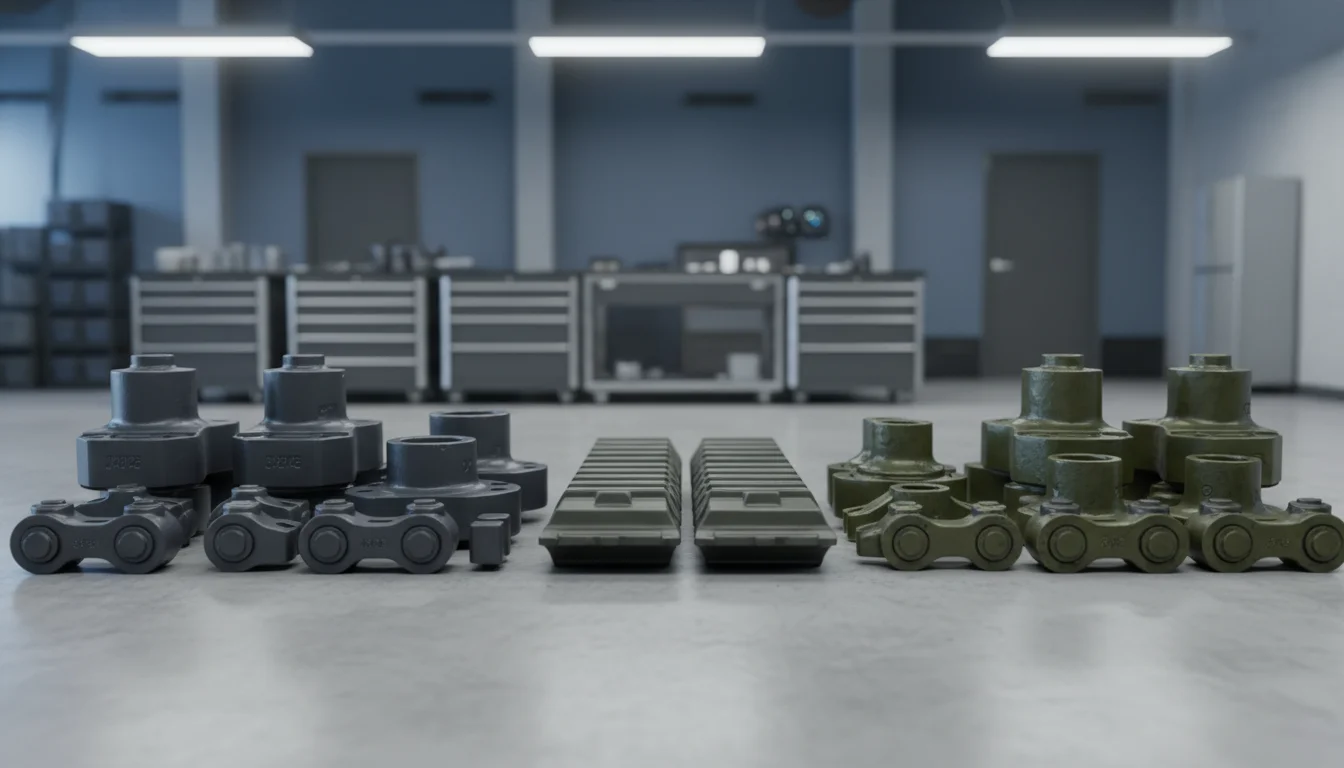
The OEM versus aftermarket decision affects both immediate costs and long-term performance. Understanding when each option makes sense protects your investment while controlling expenses.
OEM Parts: When Premium Pays
OEM parts guarantee exact fit and performance specifications. For critical applications or machines under warranty, OEM components eliminate compatibility risks and ensure manufacturer support.
Choose OEM for final drives, complex assemblies, and high-stress applications like mining or heavy demolition. The premium cost , typically 40-60% higher than quality aftermarket , provides insurance against downtime and performance issues.
OEM parts also maintain resale value. Machines with documented OEM maintenance command higher prices and sell faster than those with mixed component histories.
Quality Aftermarket: Balancing Cost and Performance
Quality aftermarket parts offer significant cost savings without sacrificing durability for most applications. We source from manufacturers who supply OEM plants, ensuring identical specifications and materials.
Aftermarket advantages include faster availability, competitive pricing, and often improved designs that address known OEM weaknesses. Many aftermarket suppliers offer warranties equal to or better than OEM coverage.
Focus on supplier reputation and manufacturing standards rather than price alone. Quality aftermarket parts should meet or exceed OEM specifications, include proper documentation, and provide technical support.
Application-Specific Considerations
Match component quality to application severity. General construction and utility work can use quality aftermarket parts throughout the undercarriage. Mining, demolition, and other severe applications may justify OEM components for critical wear points.
Consider total cost of ownership rather than initial price. A premium component that lasts about one in five longer often costs less per operating hour than a cheaper alternative requiring frequent replacement.
Mixing OEM and aftermarket components is acceptable when done strategically. Use OEM for final drives and complex assemblies, aftermarket for standard wear items like track shoes and rollers.
Global Sourcing and Supply Chain Management
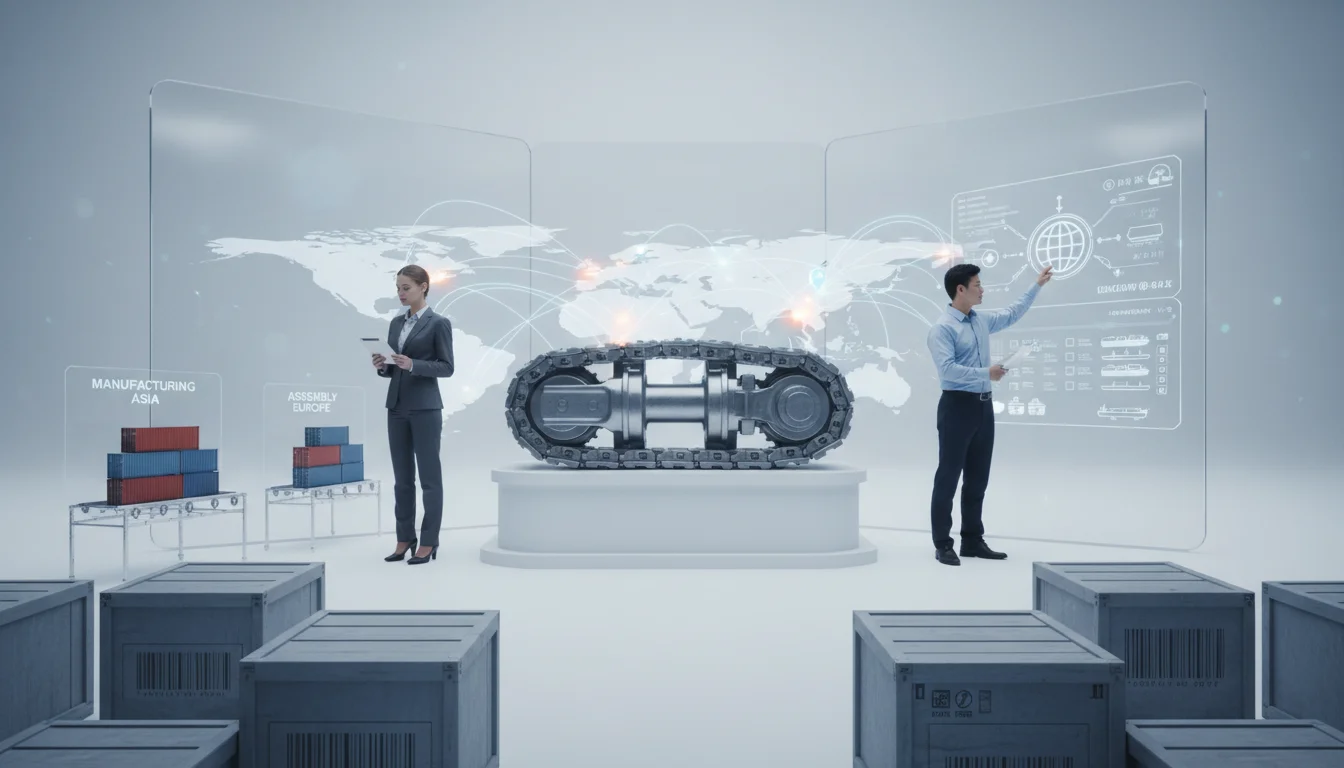
Modern excavator fleets operate globally, requiring supply chain strategies that deliver parts anywhere, anytime. Traditional regional sourcing can’t meet the speed and availability demands of today’s construction and mining operations.
Regional vs Global Procurement
Regional suppliers offer local support and faster emergency delivery but limited inventory depth. Global suppliers provide broader selection and competitive pricing but longer standard lead times.
We combine both approaches through strategic inventory positioning. Common wear items stock in regional warehouses for same-day shipping, while specialized components ship from global distribution centers within 5-7 days.
Currency fluctuations affect global sourcing costs. Lock in pricing for planned maintenance through annual agreements or bulk purchases. Emergency procurement costs 20-roughly a third more due to expedited shipping and limited supplier options.
Lead Time Management
Standard OEM lead times range from 4-12 weeks depending on component complexity and production schedules. Aftermarket suppliers typically deliver within 1-3 weeks for standard items.
Plan major undercarriage overhauls 6-8 weeks in advance to secure optimal pricing and delivery schedules. Emergency orders cost significantly more and may require accepting substitute components or extended delivery times.
Maintain strategic inventory for critical wear items. Track chains, common roller sizes, and standard track shoes should stock locally to minimize downtime during unexpected failures.
Quality Assurance in Global Supply
Global sourcing requires strong quality control processes. Verify supplier certifications, manufacturing standards, and quality management systems before establishing relationships.
Require material certifications, dimensional reports, and performance test data for critical components. Quality aftermarket suppliers provide documentation equal to OEM standards.
Implement incoming inspection procedures for high-value components. Check dimensions, surface finish, and packaging condition before installation. Document any discrepancies for supplier feedback and warranty claims.
Cost Analysis and Budget Planning
Undercarriage costs represent the largest maintenance expense category for tracked equipment. Effective budget planning requires understanding cost drivers and implementing strategies to optimize total expenditure.
Total Cost of Ownership Calculations
Calculate undercarriage costs per operating hour rather than per component. Include initial purchase price, installation labor, downtime costs, and disposal fees for complete analysis.
Track chains typically cost $15,000-$45,000 depending on machine size and application. Installation requires 8-12 hours of skilled labor plus equipment downtime. Factor these costs into replacement timing decisions.
Premature replacement wastes remaining component life. Delayed replacement risks catastrophic failure and secondary damage. Monitor wear indicators and plan replacement at 80-most of expected life to optimize costs.
Budgeting for Different Applications
Construction applications typically budget 8-around one in ten of machine value annually for undercarriage maintenance. Mining and quarry operations may require 15-about one in five due to severe operating conditions.
Seasonal operations concentrate undercarriage wear into shorter periods. Budget for accelerated replacement schedules and maintain larger parts inventories to support intensive operating periods.
Multi-machine fleets benefit from standardization. Specify common undercarriage components across similar machine sizes to reduce inventory costs and simplify procurement.
Cost Reduction Strategies
Bulk purchasing reduces component costs by 10-around one in ten while ensuring availability during peak demand periods. Coordinate purchases across multiple machines or project phases to achieve volume discounts.
Remanufactured components offer 30-over half cost savings for non-critical applications. Quality remanufacturing restores components to like-new condition with warranties comparable to new parts.
Component rebuilding extends life for expensive items like final drives and track frames. Local rebuild services cost less than replacement while maintaining OEM performance standards.
| Component | OEM Cost Range | Aftermarket Savings | Typical Life (Hours) |
|---|---|---|---|
| Track Chain Complete | $15,000-$45,000 | 30-roughly a third | 3,000-5,000 |
| Bottom Roller | $800-$2,500 | 35-roughly a third | 4,000-6,000 |
| Front Idler | $2,000-$6,000 | 25-roughly a third | 5,000-7,000 |
| Drive Sprocket | $3,000-$8,000 | 30-roughly a third | 6,000-8,000 |
Installation and Technical Considerations
Proper installation determines component performance and longevity. Technical expertise during installation prevents premature failures and ensures optimal system operation.
Professional Installation Requirements
Undercarriage installation requires specialized tools and expertise. Track chain installation needs hydraulic presses, alignment fixtures, and torque specifications for proper assembly.
Improper installation voids warranties and causes premature failure. Use certified technicians familiar with specific machine models and component requirements. Document installation procedures for warranty compliance.
Pre-installation inspection identifies related components requiring attention. Check track frame alignment, final drive condition, and mounting hardware before installing new components.
Alignment and Adjustment Procedures
Track alignment affects entire undercarriage performance. Misaligned tracks cause uneven wear, increased power consumption, and accelerated component failure.
Use laser alignment tools for precision adjustment. Manual methods work for field repairs but lack accuracy for optimal performance. Proper alignment extends component life by 15-about one in five.
Document alignment settings for future reference. Track frame damage or component wear changes alignment requirements over time.
Break-in Procedures
New undercarriage components require proper break-in procedures. Operate at reduced loads and speeds for the first 50-100 hours to allow components to seat properly.
Monitor new components closely during break-in. Check for unusual noises, excessive heat, or abnormal wear patterns. Address issues immediately to prevent long-term problems.
Adjust track tension after initial break-in period. New components settle and require retensioning to maintain proper operation.
Troubleshooting Common Undercarriage Problems
Understanding failure modes and symptoms enables proactive maintenance and prevents minor issues from becoming major repairs. Most undercarriage problems show warning signs before catastrophic failure.
Track Chain Issues and Solutions
Loose track shoes indicate worn pins, damaged bushings, or improper installation. Tighten loose shoes immediately and inspect for underlying causes. Continued operation with loose shoes damages adjacent components.
Track throwing typically results from improper tension, worn sprockets, or damaged idlers. Check tension first, then inspect drive components for wear or damage. Emergency repairs may require temporary tension adjustment to reach service facilities.
Accelerated pin wear suggests contamination, insufficient lubrication, or excessive loading. Sealed and lubricated chains resist contamination better than standard designs but cost more initially.
Roller and Idler Diagnostics
Roller noise indicates bearing wear, contamination, or insufficient lubrication. Grinding or squealing sounds require immediate attention to prevent catastrophic failure.
Excessive roller play allows track misalignment and accelerated wear. Check roller mounting and bearing condition. Replace rollers showing more than 2-3mm lateral movement.
Idler adjustment problems cause track tension issues. Seized adjustment mechanisms prevent proper tensioning and require immediate repair. Carry spare adjustment components for field repairs.
System-Wide Performance Issues
Reduced travel speed or power indicates undercarriage drag from improper tension, damaged components, or debris accumulation. Clean undercarriage thoroughly and check component condition.
Uneven machine tracking suggests alignment problems, worn components on one side, or track frame damage. Professional alignment check identifies root causes and prevents further damage.
Increased fuel consumption often relates to undercarriage drag. Properly maintained undercarriage systems improve fuel efficiency by 5-around one in ten compared to worn or maladjusted systems.
Future Trends and Technology
Undercarriage technology continues evolving to meet demands for longer life, reduced maintenance, and improved performance. Understanding emerging trends helps plan future equipment and maintenance strategies.
Advanced Materials and Coatings
Heat-treated steel components offer improved wear resistance and longer service life. Advanced metallurgy extends track chain life by 20-roughly a third in abrasive applications while maintaining compatibility with existing systems.
Ceramic coatings reduce friction and wear on high-stress components. While initially more expensive, coated components can double service life in severe applications like mining and demolition.
Composite materials show promise for specific applications. Rubber-steel composite track shoes provide excellent traction with reduced ground pressure, ideal for sensitive surface work.
Monitoring and Diagnostic Systems
Integrated sensors monitor component wear, temperature, and performance in real-time. Early warning systems alert operators to developing problems before catastrophic failure occurs.
Telematics integration provides remote monitoring capabilities for fleet managers. Track component condition, operating hours, and maintenance schedules through centralized systems.
Predictive maintenance algorithms analyze operating data to optimize replacement timing. Machine learning identifies patterns that predict component failure, enabling proactive maintenance scheduling.
Sustainability and Recycling
Component remanufacturing reduces environmental impact while providing cost-effective alternatives to new parts. Quality remanufacturing processes restore components to original specifications.
Steel recycling programs recover valuable materials from worn components. Proper disposal and recycling reduce environmental impact and may provide credit toward new component purchases.
Extended life designs focus on repairability and component upgrading rather than complete replacement. Modular designs allow selective replacement of worn elements while retaining serviceable components.
Ready to source quality excavator undercarriage parts for your fleet? Our global network delivers OEM-compatible components with 5-day shipping worldwide. From track chains to final drives, we stock the parts you need to keep your equipment moving.
Shop OEM-quality spare parts with global 5-day delivery at 3genexport.com