
Final Drive Motors for Excavators: 2026 Buying Guide
Final drive motors for excavators explained: OEM vs aftermarket, price tiers, compatibility tips, and maintenance advice for procurement teams worldwide.
Loading article…
Article Not Found
The article you're looking for doesn't exist or may have been removed.
Back to BlogKey Takeaways
- Final drive motors for excavators are the hydraulic components that power track movement - without them, the machine doesn't move.
- Always verify OEM part numbers before ordering. A mismatch costs more than the motor itself in downtime and return shipping.
- Price tiers range from roughly $1,500 for remanufactured units to over $5,000 for large-frame OEM assemblies.
- Aftermarket motors from reputable suppliers can match OEM performance when backed by a solid warranty and technician testing.
- Hydraulic fluid condition is the single biggest factor in final drive longevity. Check it at every service interval.
- As of 2026, global supply chains have stabilized, making quality aftermarket options more accessible and competitively priced than in previous years.
Final Drive Motors for Excavators: 2026 Buying Guide
Final drive motors for excavators are the hydraulic assemblies that convert engine power into track movement, giving the machine its ability to travel, position, and maneuver on site. Choosing the wrong unit - or neglecting the one you have - stops production cold.
Understanding Final Drive Motors for Excavators
What Is a Final Drive Motor?
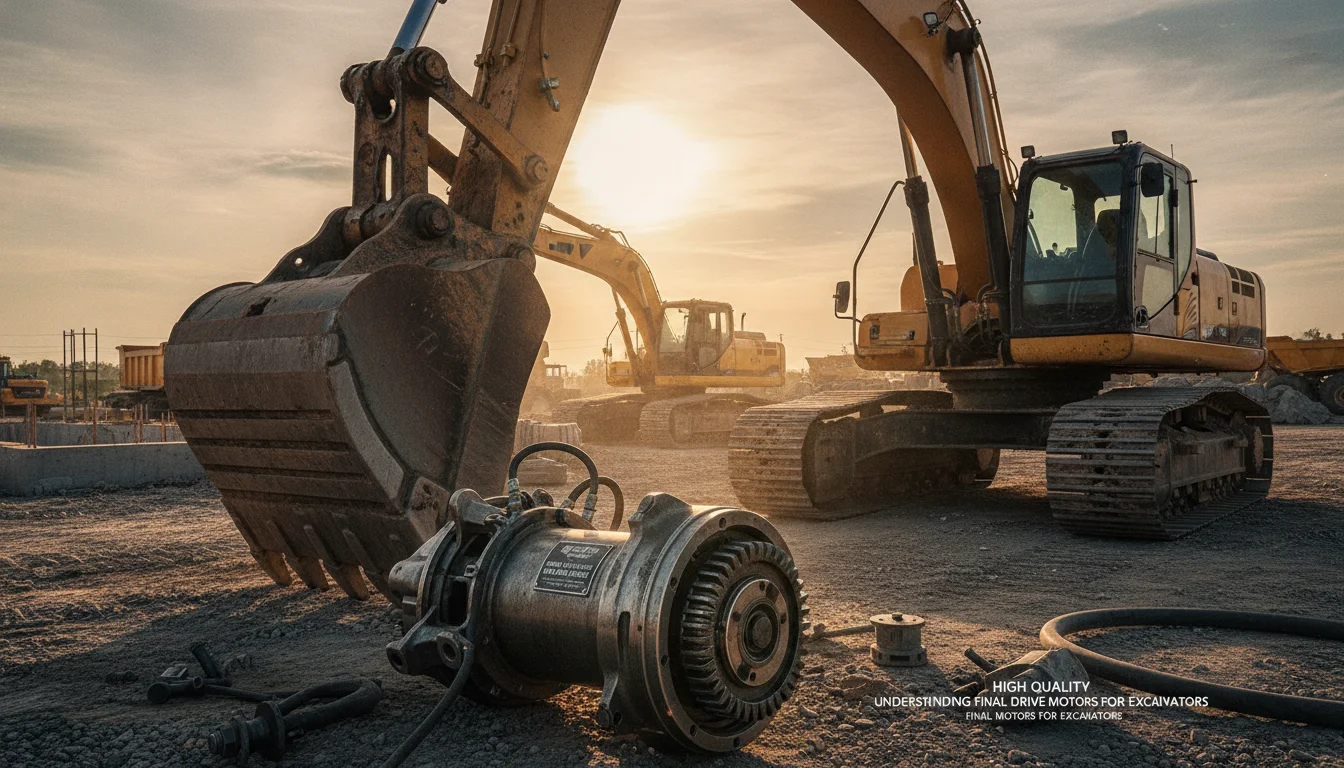
A final drive motor is a hydraulic motor combined with a planetary gearbox that transmits power from the excavator's hydraulic system directly to the tracks. It sits at the rear of each track frame and handles the full torque load required to move a machine that can weigh anywhere from a few tonnes for a mini excavator up to 80-plus tonnes for a large mining unit. Per manufacturer service documentation, the final drive is one of the highest-stress components on any tracked machine - it operates under continuous hydraulic pressure while absorbing ground-impact shock loads simultaneously.
Components of Final Drive Motors
Understanding what's inside helps you evaluate quality claims from any supplier. Every final drive motor for excavators contains the same core elements:
- Hydraulic Motor: Converts hydraulic flow and pressure into rotational force. Piston-type motors are standard on mid-to-large excavators; gear-type motors appear on some compact machines.
- Planetary Gear Set: Multiplies torque while reducing output speed to a level the track sprocket can use. The number of gear stages affects the final torque ratio.
- Hydraulic Gearbox Housing: Encloses the gear set and holds the gear oil that lubricates the planetary assembly. This is separate from the hydraulic circuit fluid.
- Output Shaft and Sprocket Drive: Connects the gearbox to the track sprocket, transferring rotational power to ground movement.
- Brake Valve and Parking Brake: Holds the machine stationary on slopes and prevents track runaway when hydraulic pressure drops.
Types of Final Drive Motors
for excavators fall into two broad supply categories, each with distinct trade-offs:
- OEM (Original Equipment Manufacturer): Produced or sourced directly by the machine manufacturer - Caterpillar, Komatsu, Volvo, Hitachi, Kobelco, and others. OEM units carry the highest confidence in fit and specification compliance, but also the highest price and, in some regions, the longest lead times.
- Aftermarket: Produced by independent manufacturers to match OEM specifications. Quality varies significantly. Reputable aftermarket suppliers physically test each unit before shipping and back their products with limited lifetime warranties. Lower-tier suppliers do not - and that difference matters enormously when a motor fails at 800 hours instead of 4,000.
"Every drive tested by real technicians. Unlike online resellers who just drop-ship parts, our team physically tests each final drive before it leaves our shop." - FinalDriveParts.com, a division of Woodland Fluid Power Inc.
What to Look For When Buying Final Drive Motors for Excavators
The right final drive motor for your excavator comes down to four non-negotiable criteria: compatibility, verified quality, warranty coverage, and supplier reliability. Skip any one of these and you're gambling with your fleet uptime.
Compatibility with Your Excavator Model
This is where most procurement errors happen. Final drive motors are not universal. A motor built for a Caterpillar 308ESR will not fit a 308ECR, even though the model numbers look nearly identical. Before placing any order, confirm:
- The exact machine model and serial number range
- The OEM part number from your service manual or the existing motor's identification plate
- The hydraulic flow and pressure specifications (displacement in cc/rev, operating pressure in bar or PSI)
- The physical mounting bolt pattern and output shaft dimensions
Reputable suppliers maintain model-specific fitment databases. If a supplier can't confirm compatibility against your serial number, that's a red flag.
Quality Indicators to Verify
Not all aftermarket this type of excavators are built to the same standard. Look for these quality signals before committing to a purchase:
- Technician testing: Was the unit pressure-tested and run before shipping? Ask for confirmation.
- Seal and bearing grade: OEM-equivalent seals resist the operating temperatures and pressures your machine generates. Cheap seals fail early.
- Housing material and finish: Cast iron housings with proper surface treatment resist corrosion in wet or muddy operating environments.
- Gear oil pre-fill: Quality suppliers ship units pre-filled with the correct gear oil. If the unit arrives dry, you're dealing with a drop-shipper, not a specialist.
Warranty Coverage
Warranty terms tell you exactly how much confidence a supplier has in their product. A 6-month warranty on a component expected to run 3,000-plus hours is not meaningful coverage. Look for a minimum of 12 months or a limited lifetime warranty from suppliers who test their own inventory. According to manufacturer specifications, OEM final drives typically carry a 12-month warranty from date of installation. Several established aftermarket specialists now match or exceed that with limited lifetime coverage.
Price Range Expectations
this kind of for excavators span a wide price range depending on machine size, supply type, and condition. Based on current market pricing verified from competitor listings as of 2026:
- Budget tier - $1,500 to $2,500: Used, remanufactured, or rebuilt units. Suitable for older machines where OEM availability is limited. Risk is higher; inspect rebuild documentation carefully.
- Mid-range - $2,500 to $4,000: New aftermarket motors from specialist suppliers. This is the most common procurement choice for fleet managers balancing cost and reliability. Caterpillar mini excavator motors (301.7CR, 308ESR range) and Bobcat units typically fall here.
- Premium - $4,000 and above: New OEM motors and large-frame aftermarket assemblies. Komatsu PC220-series final drives, Caterpillar 330D gearbox assemblies, and Kobelco SK135 complete drives sit in this tier. For high-utilization machines on critical projects, the OEM price premium is often justified by guaranteed specification compliance.
Comparison of Final Drive Motor Options by Brand and Tier
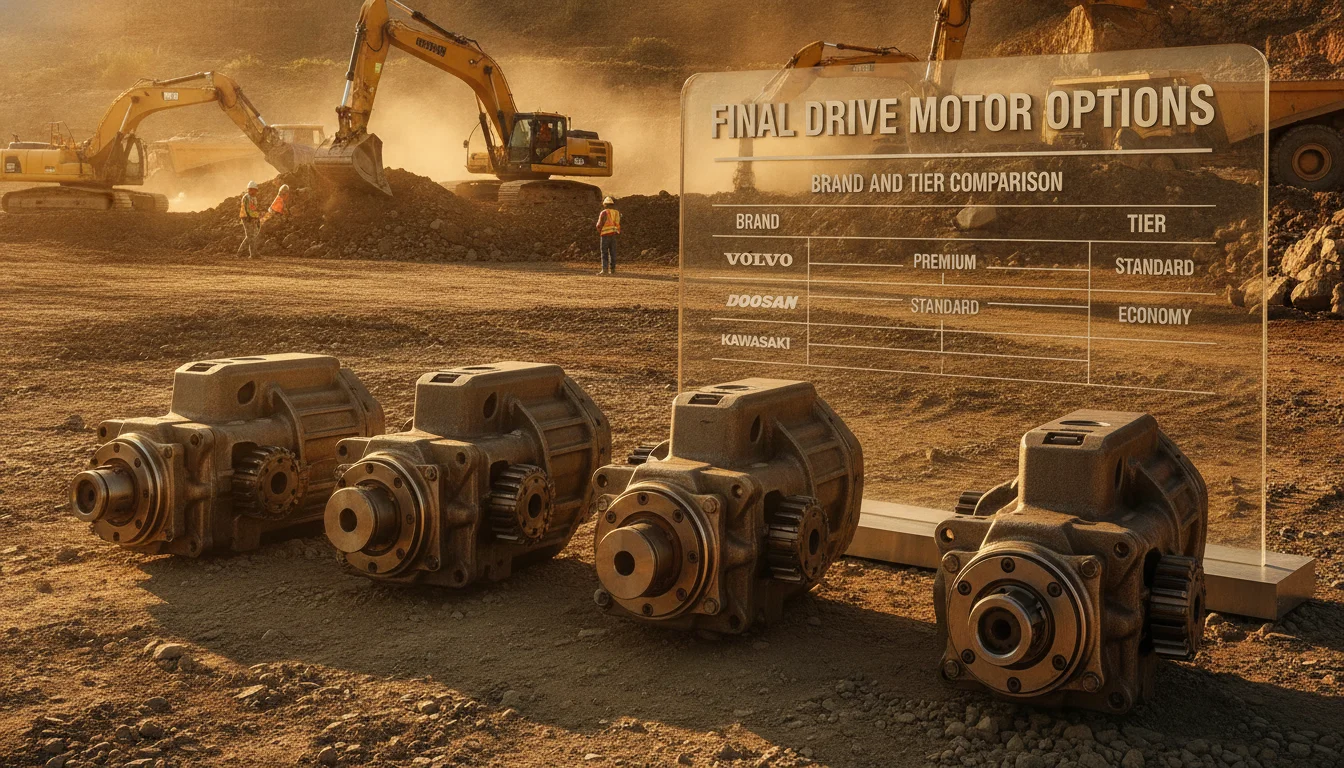
The table below summarizes verified pricing and warranty data from current market sources. Use it as a starting reference - actual pricing varies by machine model, supplier, and order volume.
| Brand / Supplier | Supply Type | Typical Warranty | Verified Price Range | Best For |
|---|---|---|---|---|
| Caterpillar (OEM) | OEM | 12 months | $2,250 – $4,500+ | High-utilization fleets, warranty-critical projects |
| Komatsu (OEM) | OEM | 12 months | $3,000 – $6,500+ | PC-series excavators, long-term reliability priority |
| Bobcat (OEM / Aftermarket) | OEM / Aftermarket | 6–12 months | $1,850 – $3,540 | Mini and compact excavators, cost-sensitive procurement |
| Aftermarket Specialist (tested) | Aftermarket | Limited lifetime | $1,899 – $3,500 | Fleet managers seeking OEM-equivalent quality at lower cost |
| Remanufactured / Rebuilt | Reman | Varies (3–12 months) | $1,500 – $2,500 | Older machines, budget-constrained operations |
| Hitachi / Kobelco (OEM) | OEM | 12 months | $4,000 – $6,580+ | Large-frame excavators, mining and infrastructure projects |
How to Choose the Right Final Drive Motor for Your Excavator
Choosing the drive motors for excavators correctly requires matching the motor to three variables: your machine's specifications, your operating environment, and your total cost of ownership target. Here's how procurement managers and fleet supervisors should approach the decision.
Step 1: Identify Your Machine's Exact Specifications
Pull the OEM service manual for your excavator model. Locate the final drive section and record the part number, hydraulic displacement (cc/rev), maximum operating pressure (bar), and output torque rating. These figures are non-negotiable. An aftermarket motor must match all of them - not just the physical bolt pattern.
Step 2: Assess Your Operating Conditions
A mini excavator working on landscaping projects has very different final drive demands than a 20-tonne machine on a quarry floor. Consider:
- Terrain: Rocky, abrasive ground accelerates seal and bearing wear. Prioritize units with reinforced seals if your site conditions are harsh.
- Utilization rate: Machines running two shifts per day need OEM or premium aftermarket units. A machine used 4-6 hours per day on light work can tolerate a quality mid-range aftermarket motor.
- Climate: Extreme cold affects hydraulic fluid viscosity and seal flexibility. Confirm the motor's operating temperature range matches your region.
Step 3: Decide Between OEM and Aftermarket
For most B2B procurement decisions, the choice comes down to this: if the machine is under manufacturer warranty or operating on a contract where downtime penalties apply, buy OEM. If the machine is out of warranty and you have a reliable aftermarket supplier who tests their inventory and backs it with a meaningful warranty, the aftermarket route delivers comparable performance at a lower acquisition cost. Industry maintenance data shows that properly tested aftermarket excavators perform comparably to OEM units when installed correctly and maintained on schedule.
Step 4: Evaluate the Supplier, Not Just the Part
The motor is only as good as the supplier's quality control. Ask these questions before ordering:
- Do they physically test each unit, or are they drop-shipping from a warehouse?
- Can they confirm fitment against your specific serial number?
- What does the warranty actually cover, and what's the claims process?
- Do they stock the unit, or is it a special order with a 4-6 week lead time?
- Do they ship internationally, and what are the freight terms?
Step 5: Factor in Total Cost of Ownership
The purchase price of a final drive motor is only part of the equation. Add installation labor (typically 2-4 hours for an experienced technician), any required hydraulic fluid flush, and the cost of downtime during the swap. A motor that costs $400 less but arrives in 3 weeks costs far more than one that ships same-day at full price. For global operations, confirm the supplier's international shipping capability and lead times before committing.
"We buy travel motors in bulk from quality suppliers and keep our overhead extremely low so we can pass on as much savings as we possibly can to you, the customer. Quality and dependability is very important to us, because we know how important it is to you too." - FinalDriveMotors.com
Pros and Cons of OEM vs. Aftermarket Final Drive Motors
Pros of OEM Final Drive Motors
- Guaranteed specification compliance with your machine's hydraulic system
- Full manufacturer warranty and documented service history compatibility
- Preferred for machines under active manufacturer warranty
- Consistent quality control across production batches
- Easier to justify in audit trails for large fleet procurement programs
Cons of OEM Final Drive Motors
- Significantly higher acquisition cost, often 2-3x the aftermarket equivalent
- Longer lead times in regions without local OEM dealer stock
- OEM availability for older or discontinued machine models can be limited or zero
- Less pricing flexibility for high-volume orders
Care and Maintenance of Final Drive Motors
Proper maintenance of final drive is the most cost-effective investment a fleet manager can make. A neglected final drive that fails at 2,000 hours costs far more to replace than one that reaches 5,000 hours through disciplined servicing.
Regular Inspections
Inspect the final drive housing, seals, and drain plug at every 250-hour service interval. Look for oil seepage around the motor shaft seal, cracks in the housing, and any signs of external impact damage. Catching a weeping seal early means a $50 seal kit repair instead of a full motor replacement. Unusual noise - grinding, whining, or knocking from the track area - is a reliable early warning sign that internal wear is progressing.
Hydraulic Fluid and Gear Oil Maintenance
There are two separate fluid systems to manage. The hydraulic circuit fluid powers the motor itself; the gear oil inside the planetary gearbox lubricates the gear set. These are not interchangeable. Contaminated or low gear oil is the leading cause of premature planetary gear failure. According to OEM service bulletins, gear oil in the final drive should be checked every 500 hours and changed at intervals specified in your machine's service manual. Always use the viscosity grade specified for your operating temperature range.
Replacement Schedule and Lifespan Expectations
With consistent maintenance, for excavators typically operate for 3,000 to 5,000 hours before requiring rebuild or replacement. Machines working in abrasive conditions - quarrying, demolition, rocky terrain - should expect the lower end of that range. Machines on softer ground with disciplined servicing can exceed it. Track the motor's hours separately from the machine's total hours if the motor has been replaced mid-life.
Pro Tip: Break-In Procedure for New Motors
When installing a new or remanufactured final drive motor, run the machine at reduced load for the first 2-4 hours of operation. Avoid full-throttle travel on hard surfaces immediately after installation. This allows seals to seat properly and gear oil to distribute through the planetary assembly. Check for leaks after the first hour of operation and again after the first full working day.
Common Failure Modes to Watch For
- Shaft seal failure: Gear oil leaks from the output shaft area. Usually caused by contaminated gear oil or impact damage to the seal lip.
- Planetary gear wear: Grinding noise under load, reduced travel speed, or the machine pulling to one side. Often caused by running low on gear oil.
- Hydraulic motor internal wear: Reduced travel power, slow response, or excessive heat in the final drive area. Typically caused by contaminated hydraulic fluid or operating beyond rated pressure.
- Brake valve failure: Machine creeps on slopes or fails to hold position. Requires immediate attention - this is a safety-critical failure mode.
2026 Market Outlook for Final Drive Motors
As of 2026, the global market for final drive motors for excavators has stabilized after several years of supply chain disruption. Aftermarket inventory levels are strong across North America, Europe, and key Asia-Pacific markets. Lead times for in-stock units from specialist suppliers have returned to the 1-5 day range for domestic shipments, with international freight to most markets running 5-14 days depending on destination and shipping method.
The trend toward telematics-integrated fleet management means procurement teams now have better data on motor hours and performance than ever before. Use that data. If your telematics system shows a final drive running hotter than baseline or consuming more hydraulic flow than normal, that's an early replacement signal - not a reason to wait until the motor fails on site.
For global operations sourcing final drive motors for excavators across multiple regions, consolidating procurement through a single supplier with verified international shipping capability reduces administrative overhead and ensures consistent quality standards across your fleet.
Frequently Asked Questions
What are final drives on an excavator?
Final drives are the hydraulic motor and planetary gearbox assemblies mounted at the rear of each track frame that provide the torque and rotational force needed to move the excavator's tracks. Each excavator has two final drives, one per track, and they operate independently to allow the machine to turn, pivot, and travel. Without functioning final drives, the machine cannot move under its own power.
What is a final drive motor?
A final drive motor is the hydraulic motor component within the final drive assembly that converts hydraulic pressure and flow from the machine's main pump into rotational mechanical force. It works in combination with the planetary gearbox to deliver the correct torque and speed to the track sprocket. The motor itself is a precision hydraulic component - typically a piston-type motor on mid-to-large excavators - that requires clean hydraulic fluid and correct operating pressure to function reliably.
How long do excavator final drives last?
With proper maintenance, final drive motors for excavators typically last between 3,000 and 5,000 operating hours. The actual lifespan depends heavily on operating conditions, gear oil change intervals, and whether the hydraulic system is kept free of contamination. Machines working in abrasive or high-impact environments will trend toward the lower end of that range, while well-maintained machines on softer terrain can exceed it.
How do you tell if a final drive is bad?
The most common signs of a failing final drive include unusual grinding or whining noise from the track area, the machine pulling to one side during travel, visible gear oil leaking from the motor housing or shaft seal, reduced travel speed or power, and excessive heat in the final drive area after normal operation. If you notice any of these symptoms, stop operating the machine under load and have a technician inspect the unit. Continuing to run a failing final drive typically converts a repairable problem into a full replacement.
What is the price range for final drive motors for excavators?
Prices for final drive motors for excavators range from approximately $1,500 for remanufactured or used units on smaller machines up to $6,500 or more for new OEM assemblies on large-frame excavators. New aftermarket motors from specialist suppliers typically fall in the $1,899 to $3,500 range and represent the best value for most fleet procurement decisions. Large complete final drive assemblies - including the gearbox and all hardware - for machines like the Caterpillar 330D or Kobelco SK135 can exceed those figures significantly.
Are aftermarket final drive motors reliable?
Aftermarket final drive motors for excavators are reliable when sourced from suppliers who physically test each unit before shipping and back their products with meaningful warranty coverage. The key differentiator is not OEM versus aftermarket - it's whether the supplier has genuine quality control processes or is simply drop-shipping untested inventory. Ask any supplier whether they test their units in-house, what their warranty covers specifically, and whether they can confirm fitment against your machine's serial number before ordering.
Conclusion
Final drive motors for excavators are high-stress, high-consequence components. Getting the selection right means verifying compatibility down to the part number, choosing a supplier with real quality control behind their product, and committing to a maintenance schedule that protects your investment. The price difference between a budget unit and a premium OEM motor is real, but so is the cost of an unplanned failure on a live project. Buy to your machine's actual demands, maintain what you install, and work with suppliers who stand behind what they sell.
At 3GEN Export, we supply OEM-quality final drive motors and spare parts for Caterpillar, Komatsu, Volvo, Hitachi, Kobelco, and 40-plus other brands, with global delivery in as few as 5 days. Browse our full parts catalog or shop by brand to find the exact motor your machine needs.