
Heavy Equipment Cooling System Components Guide
Heavy equipment cooling system components explained: radiators, water pumps, oil coolers & more. OEM-quality parts with global 5-day delivery at
Loading article…
Article Not Found
The article you're looking for doesn't exist or may have been removed.
Back to BlogHeavy equipment cooling system components are the interconnected parts that remove excess heat from engines, hydraulic systems, and turbochargers to keep machines running at peak efficiency. Radiators, water pumps, thermostats, oil coolers, and intercoolers each handle a specific thermal load in construction, mining, and energy equipment.
Key Takeaways
- The core system components are the radiator, water pump, thermostat, fan clutch, and fan shroud, working together to regulate engine temperature.
- Auxiliary coolers for hydraulic oil, transmission fluid, and compressed intake air are equally critical and frequently overlooked during maintenance.
- Hoses, serpentine belts, and overflow reservoirs are supporting components that cause immediate failure when neglected.
- Aftermarket parts from suppliers like CTP (Costex) can match OEM specifications at lower cost when sourced from reputable distributors.
- A disciplined inspection schedule catches early warning signs before they escalate into costly engine repairs or unplanned downtime.
- As of 2026, OEM-compatible replacement parts for most major brands ship globally within days, reducing fleet downtime significantly.
Core Heavy Equipment Cooling System Components
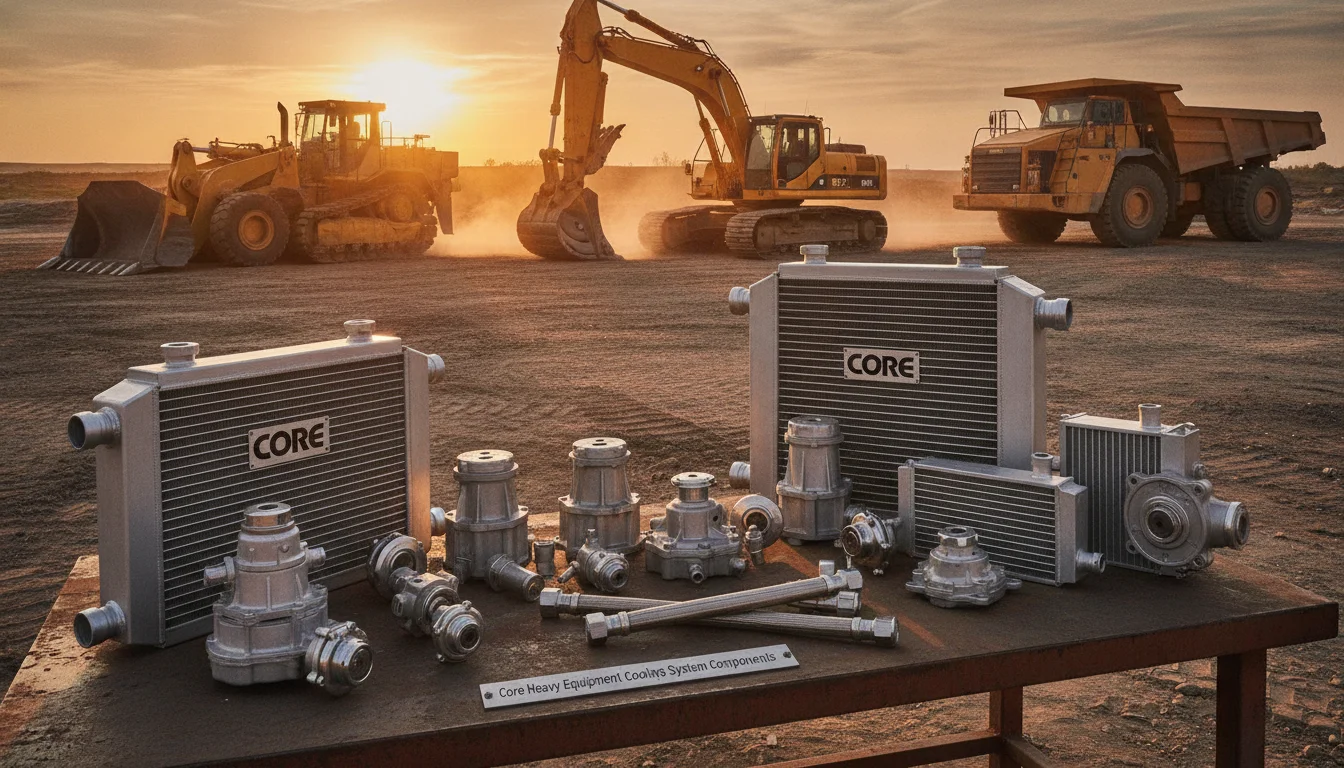
this type of components form a network designed to remove excess heat from the engine and all auxiliary systems simultaneously. The primary parts include the radiator, which dissipates heat to the atmosphere; the water pump, which circulates coolant; the thermostat, which regulates flow; and the fan clutch, which controls airflow. Supporting elements such as the fan shroud, coolant hoses, and expansion tank complete the circulation loop, while dedicated coolers for hydraulic oil, transmission fluid, and compressed intake air handle specific thermal loads. According to National Fleet Management, these components must withstand high pressures and temperatures without degrading. The system's primary goal is to maintain the engine at its optimum operating temperature to ensure efficiency and prevent catastrophic failure.
this kind of system components face extreme vibration, dust, and high ambient temperatures, especially in mining and construction applications. Design and materials matter enormously. Costex (CTP) engineers its folded core radiators to resist vibration and stress damage, using tin-coated steel wings for increased durability and brass tanks for high corrosion resistance. CTP water pumps are manufactured to meet or exceed OEM specifications, with a broad selection available for machines including Komatsu excavators (reference part WP1727760CS).
A failure in any single area, such as a stuck thermostat or a leaking hose, can quickly lead to engine overheating, reduced power, and catastrophic engine damage. Understanding each component's role is the foundation of effective fleet maintenance.
Why a Fully Functional System Matters
A fully operational set of the equipment cooling system components is vital because these machines run under continuous high loads. Unlike passenger vehicles that operate intermittently, bulldozers, excavators, and haul trucks often work 10-12 hour shifts in harsh environments. The engine generates tremendous heat during combustion, and without efficient cooling, components warp, seize, or fail.
"Regular system checks and maintenance ensure that your coolant system functions effectively, protecting your engine and keeping your fleet running smoothly under all operational conditions." - National Fleet Management, North Carolina
Beyond the engine, hydraulic systems generate significant heat through oil friction and pressure losses. Dedicated coolers for hydraulic oil, transmission fluid, and compressed intake air are therefore essential. The absence or failure of these secondary coolers leads to fluid breakdown, accelerated component wear, and reduced machine productivity.
How Liquid Cooling Works in Heavy-Duty Engines
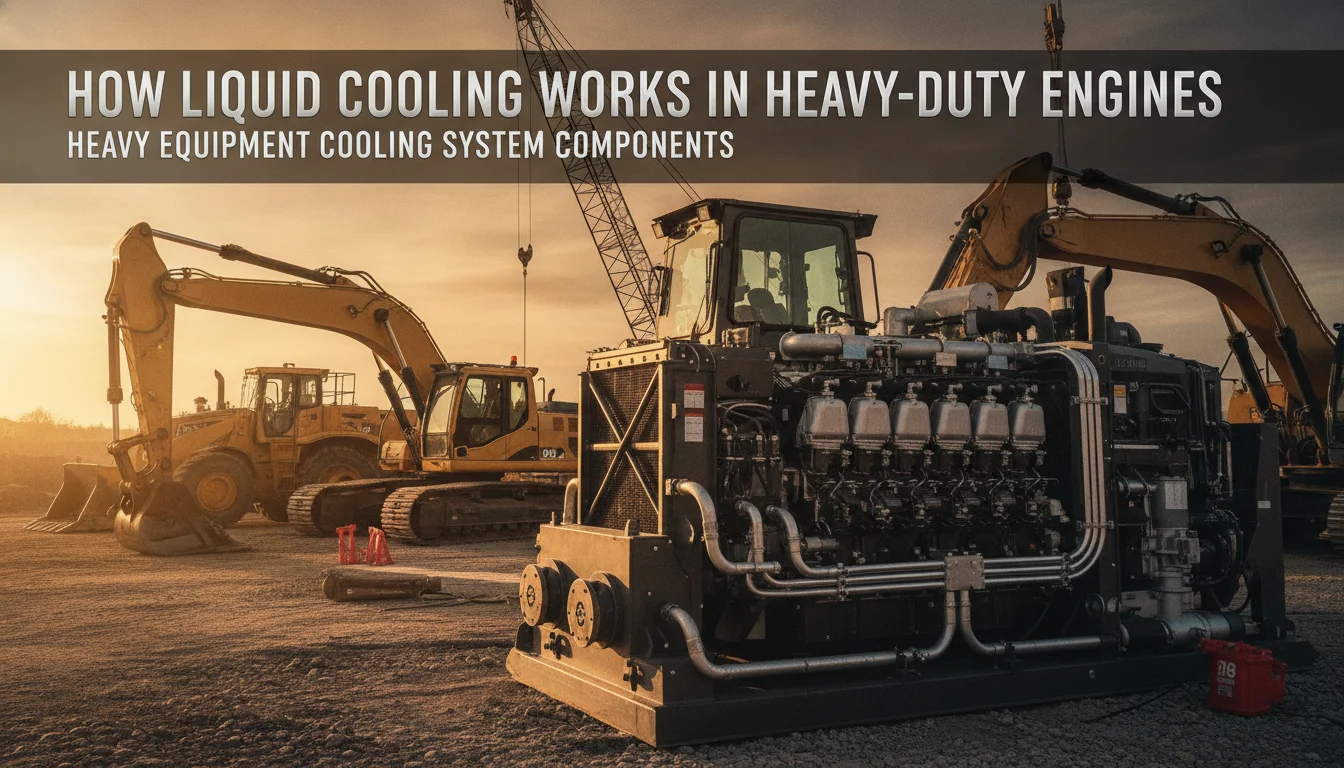
Liquid cooling is the standard approach for components because liquid transfers heat far more efficiently than air alone. The coolant, typically a mixture of water and ethylene glycol, circulates through engine passages and absorbs combustion heat. Here is a step-by-step breakdown of the cycle.
- Engine Start and Warm-Up: The thermostat remains closed, blocking coolant flow to the radiator. This allows the engine to reach its ideal operating temperature quickly, improving combustion efficiency and reducing emissions.
- Coolant Circulation Begins: The water pump, driven by the serpentine belt, pushes coolant through the engine block, cylinder heads, and heater core. The coolant absorbs heat from metal surfaces.
- Thermostat Opens: Once coolant temperature reaches the thermostat's set point, the paraffin wax inside expands and opens the valve. Hot coolant then flows to the radiator. According to IDOLZ, the thermostat contains paraffin wax that expands at a prescribed temperature, triggering the valve to open.
- Heat Dissipation in the Radiator: Hot coolant passes through narrow tubes with attached fins. Airflow from vehicle motion or the cooling fan cools the fins and tubes, transferring heat to the atmosphere.
- Fan and Shroud Assistance: When ambient temperatures rise or the machine operates under heavy load, the fan clutch engages the cooling fan to increase airflow. The fan shroud directs air precisely through the radiator core, maximizing cooling efficiency.
- Return to Engine: Cooled coolant exits the radiator and is recirculated by the water pump back into the engine. This continuous loop maintains a stable operating temperature.
Open vs. Closed Loop Systems
Heavy equipment cooling systems are typically closed-loop, incorporating an expansion tank to handle coolant volume changes. As coolant heats up, excess volume flows into the reservoir. When the system cools, vacuum draws coolant back, keeping the system full and free of air pockets. As IDOLZ notes, the radiator overflow tank is a plastic vessel installed next to the radiator, with an inlet connected to the radiator and an overflow hole. Modern systems also include surge tanks with pressure caps to maintain system pressure and raise the coolant's boiling point.
Open systems, rarely used in heavy equipment today, simply vented steam to the atmosphere and required frequent top-offs. The closed, pressurized design is far more reliable, enabling engines to run at higher temperatures without boiling over.
Radiator: The Primary Heat Exchanger
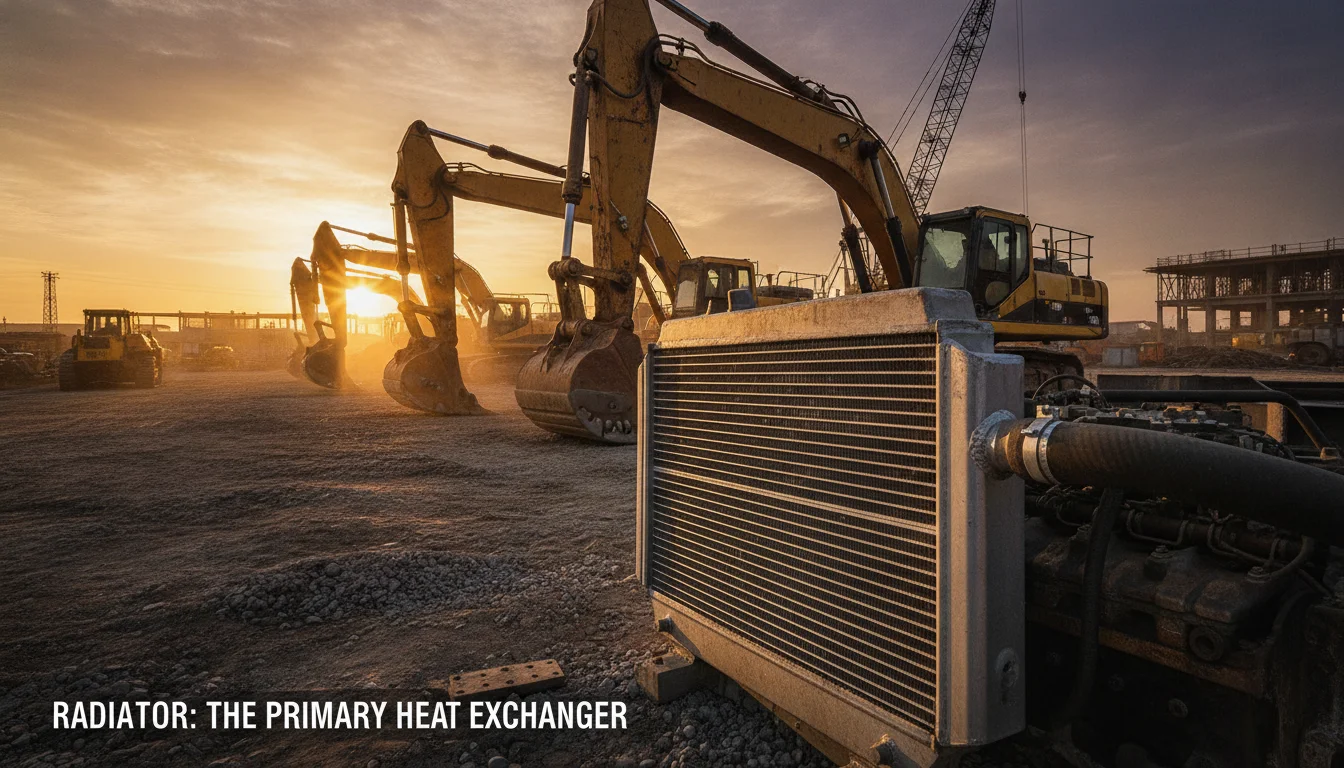
The radiator is the most recognizable of all heavy equipment, responsible for transferring heat from the coolant to the outside air. Heavy-duty radiators use high-density fin cores for maximum surface area, often made of aluminum for its excellent thermal conductivity and light weight. Some radiators use brass tanks and copper cores, which are more robust but heavier and more expensive.
CTP's folded core design incorporates tin-coated steel wings to increase durability, along with brass tanks offering high corrosion resistance. This construction is especially suited for machines exposed to corrosive environments or frequent vibration. According to aftermarket retailer Mytee Products, replacement radiators for heavy-duty trucks range from $289.99 for a Mercedes model up to $480+ for Volvo, Mack, and Peterbilt units. A Kenworth heavy-duty radiator (replacing OEM F31-60881135120) is priced around $434.99, while an aluminum radiator for a Peterbilt runs approximately $461.39.
Radiators come in crossflow or downflow layouts. Crossflow models have tanks on either side with horizontal tubes, allowing a lower hood profile common in modern trucks. Downflow radiators have tanks on top and bottom with vertical tubes, found in older equipment. The choice depends on the machine's design and available space.
Common Radiator Failures and Solutions
Radiators face constant thermal cycling and vibration, leading to predictable failure modes.
- Leaks: Cracks in the tank or seams, often caused by vibration or overpressurization. A leaking radiator quickly drops coolant levels, causing overheating.
- Clogged Tubes: Scale, debris, and corrosion block narrow passages, reducing heat transfer. This is common in machines using poor-quality coolant or tap water.
- Damaged Fins: Bent or blocked fins impede airflow, drastically reducing cooling capacity. Equipment operating in dusty environments is particularly susceptible.
Regular inspection and cleaning, combined with a quality coolant inhibitor like CTP's corrosion inhibitor product, mitigate these issues. When replacement is necessary, a radiator core with reinforced construction, such as CTP's tin-coated wing design, extends service life considerably.
Water Pump and Thermostat: Circulation and Regulation
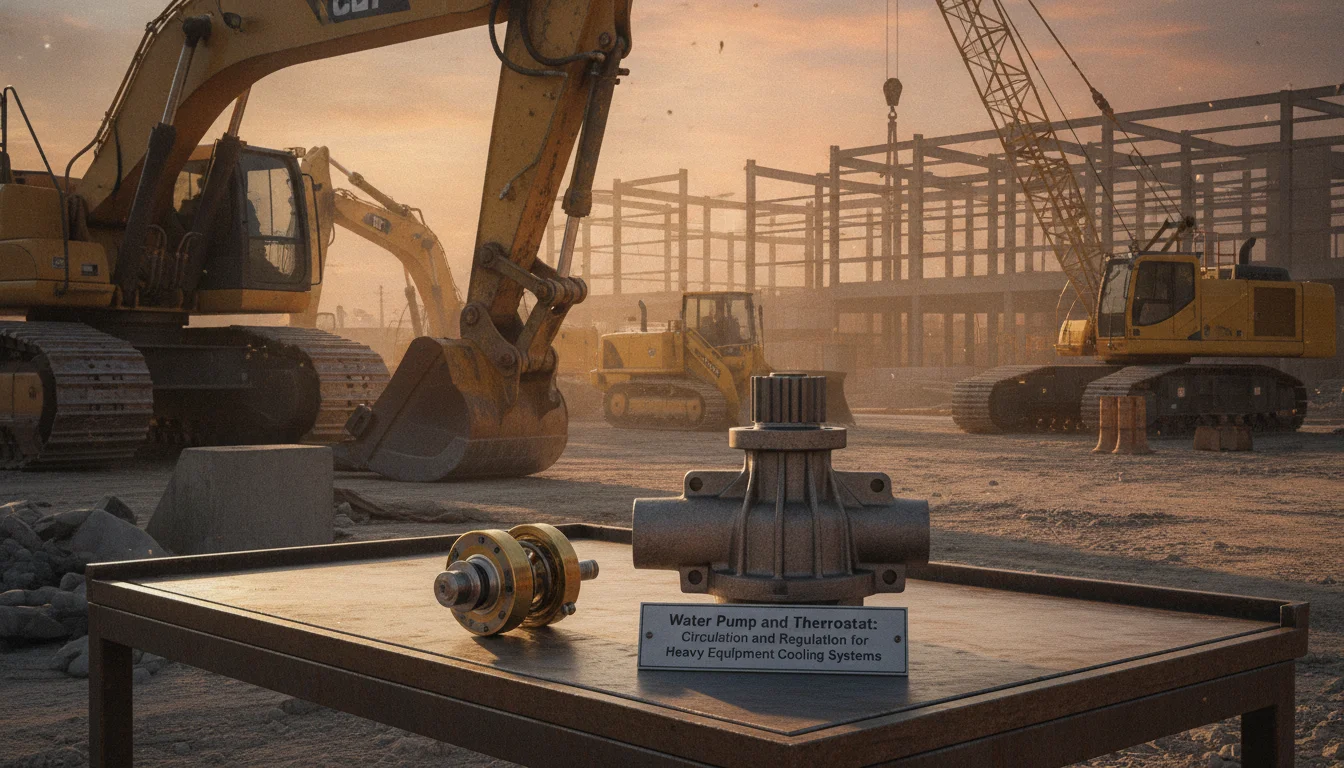
The water pump is the heart of any heavy equipment cooling system, responsible for moving coolant through the engine and radiator continuously. Driven by the serpentine belt, it uses an impeller enclosed in a housing to create centrifugal force, drawing coolant from the radiator and pushing it through the engine block. Water pumps for heavy equipment feature heavy-duty bearings and mechanical seals to withstand continuous operation.
CTP offers a broad selection of water pumps, including specific models for Komatsu equipment (part number WP1727760CS). A failed pump seal allows coolant to leak, causing loss of pressure and eventual overheating. Over time, bearing wear leads to a wobbling impeller and reduced flow. Signs of a failing water pump include a coolant leak at the front of the engine, a whining noise, or erratic temperature readings.
Thermostat Operation and Failure Modes
The thermostat acts as a valve controlling coolant flow to the radiator. It contains paraffin wax that expands when heated, pushing a piston to open the valve at a prescribed temperature. When the engine is cold, the thermostat stays closed, enabling quick warm-up. This precise regulation is essential for fuel efficiency and emissions control.
Common thermostat failures include:
- Stuck Open: The engine takes too long to warm up, leading to poor fuel economy and increased wear in cold conditions.
- Stuck Closed: Coolant cannot reach the radiator, causing rapid overheating. This is a critical failure that can warp cylinder heads and blow head gaskets.
- Intermittent Sticking: Inconsistent operation causes temperature spikes and erratic cooling behavior.
According to Mechandlink's maintenance guide, a broken thermostat is one of the top causes of overheating in heavy equipment. Replacing it is relatively inexpensive, but neglecting it can lead to thousands in engine repairs.
Airflow Management: Fans, Clutches, and Shrouds
The cooling fan, positioned behind the radiator, draws air through the core to enhance heat dissipation. In heavy equipment, the fan clutch modulates fan speed based on demand. When the engine is cool or under light load, the clutch disengages the fan, reducing parasitic drag and improving fuel economy. As engine or ambient air temperature rises, the clutch engages the fan to increase airflow. This on-demand operation saves energy and reduces noise.
CTP fans are perfectly balanced to run efficiently, and reversible blade fans are available for applications where air needs to be pushed rather than pulled. Reversible fans are useful in cleaning operations, as they blow debris out of the radiator core. The fan clutch uses a viscous fluid coupling; if the fluid degrades or leaks, the fan may not engage fully, causing overheating under load.
The Role of the Fan Shroud
The fan shroud surrounds the fan and ensures all air pulled by the fan passes through the radiator rather than around it. Without a shroud, air recirculates around the fan tips, drastically reducing cooling efficiency. In heavy equipment, shrouds are typically made of strong plastic or metal and must maintain integrity despite vibration and heat. A cracked or missing shroud can cause overheating even when the fan operates correctly. As National Fleet Management notes, "the fan shroud enhances the cooling system's effectiveness, preventing the engine from overheating, particularly during heavy loads or in high-temperature conditions."
"The fan shroud enhances the cooling system's effectiveness, preventing the engine from overheating, particularly during heavy loads or in high-temperature conditions." - National Fleet Management
Secondary Cooling: Oil Coolers, Transmission Coolers, and Intercoolers
Among all heavy equipment cooling system components, the auxiliary coolers are the least understood yet most critical for complete thermal management. The engine is not the only heat generator. Hydraulic systems, transmissions, and turbochargers all produce significant thermal energy that must be rejected to maintain performance and longevity. The table below summarizes the functions and characteristics of these secondary cooling components.
| Cooler Type | Primary Fluid | Heat Source | Typical Construction | Failure Impact |
|---|---|---|---|---|
| Oil Cooler | Engine or hydraulic oil | Friction, pump losses | Plate-fin or shell-tube | Oxidized oil, component wear |
| Transmission Cooler | Automatic transmission fluid | Torque converter, clutch packs | Fin-and-tube, often integrated with radiator | Slipping gears, fluid degradation |
| Intercooler (Charge Air Cooler) | Compressed intake air | Turbocharger compression | Aluminum bar-plate or tube-fin | Power loss, increased emissions |
Oil Cooler: Protecting Hydraulic and Lubrication Systems
Hydraulic systems in excavators, loaders, and dump trucks generate substantial heat through fluid friction and pressure drops across valves. The oil cooler ensures hydraulic oil remains within its optimal temperature range. As oil temperature rises, its viscosity decreases, reducing its ability to lubricate and transmit power. An overheated hydraulic system causes seal failures, varnish buildup, and sluggish operation. Engine oil coolers similarly maintain lubrication stability, protecting bearings and pistons from thermal breakdown. According to Chinasheng, the oil cooler is essential for maintaining stable hydraulic and lubrication system temperatures, especially during continuous operations.
Transmission Cooler: Ensuring Gearbox Longevity
Heavy-duty automatic transmissions produce heat primarily from the torque converter and clutch packs. Excessive heat accelerates fluid degradation, leading to varnish and sludge that block narrow valve body passages. A dedicated transmission cooler, often an air-to-fluid heat exchanger mounted in front of the radiator, removes this heat efficiently. Many heavy trucks and equipment combine the transmission cooler with the radiator's lower tank, but standalone coolers are common in severe-duty applications. Regular inspection for leaks and clogging is vital, as a failed integrated transmission cooler can contaminate the entire coolant system.
Intercooler (Charge Air Cooler): Boosting Engine Efficiency
Turbocharged engines compress intake air, raising its temperature significantly. Hot air is less dense and contains less oxygen, reducing combustion efficiency and increasing the risk of engine knock. An intercooler, also called a charge air cooler (CAC), cools the compressed air before it enters the intake manifold. This increases air density, allowing more oxygen into the cylinders for a more powerful and complete burn. The result is more horsepower, better fuel economy, and lower emissions. Heavy equipment intercoolers are typically air-to-air units mounted in front of the radiator, and they are susceptible to leaks and physical damage from debris. Mytee Products offers a charge air cooler kit with clamp set for semi-trucks (part CAC-KIT) for $154.99. Replacement intercoolers range from $431.99 to $679.99 depending on the OEM part number.
Supporting Heavy Equipment Cooling System Components: Hoses, Reservoirs, and Belts
While the major heat exchangers and pumps receive most of the attention, the hoses, reservoirs, and belts that connect them are equally important heavy equipment cooling system components. These parts ensure reliable coolant flow and the mechanical drive necessary for system operation. Neglecting them leads to sudden failures that cause immediate overheating.
Coolant Hoses: Withstanding Extreme Conditions
Coolant hoses carry hot coolant under pressure while resisting chemical degradation, aging, and abrasion. Radiator and heater hoses are typically made of EPDM rubber, which offers excellent heat and ozone resistance. High-performance silicone hoses, such as those sold by BHTubes in four-ply construction, withstand even higher temperatures and pressures, making them ideal for turbocharged or high-load applications. Prices for silicone coolant hoses start at $8.00 for a 2-inch diameter piece, up to $35.00 for a 4-inch diameter piece. Stainless steel constant torque clamps ($8.25) provide a reliable seal without damaging the hose. Over time, hoses become brittle, crack, or swell, leading to coolant leaks. Heavy equipment operating in extreme conditions requires more frequent inspection than standard service intervals suggest.
Overflow and Surge Tanks: Managing Coolant Expansion
Coolant expands as it heats, and an expansion or reservoir tank captures this excess volume and returns it to the system when temperatures drop. These tanks, often made of durable plastic, incorporate level sensors to warn of low coolant conditions. Mytee Products supplies a variety of coolant reservoir tanks for heavy-duty semi-trucks, with prices ranging from $48.99 to $102.19. A cracked or leaking reservoir prevents the system from maintaining proper pressure, lowering the coolant's boiling point and risking air ingestion. On many machines, the reservoir is the only visual check point for coolant level, making it a critical item in every pre-shift walkaround.
The Serpentine Belt: Driving the System
The serpentine belt wraps around pulleys to power the water pump, fan clutch, alternator, and sometimes the air conditioning compressor. Among all heavy equipment cooling system components, the belt is a critical link: if it snaps, coolant flow stops immediately. Worn or glazed belts slip, reducing pump speed and cooling performance. Unique Truck Equipment sells a specialized serpentine belt tool (Lisle) for $75.67 to assist in tensioning and replacement. Regular inspection for cracks, fraying, and proper tension is essential. Spare belts are a standard item in any heavy equipment field service kit.
Pros and Cons of Aftermarket Heavy Equipment Cooling System Components
Aftermarket heavy equipment cooling system components offer procurement teams a genuine alternative to OEM pricing. Understanding the trade-offs helps fleet managers make informed sourcing decisions.
Pros
- Lower acquisition cost: Aftermarket radiators, water pumps, and intercoolers typically cost less than direct OEM replacements, freeing budget for other maintenance priorities.
- OEM-equivalent quality from reputable suppliers: Brands like CTP (Costex) engineer their components to meet or exceed OEM specifications, including vibration-resistant folded core radiators and mechanically sealed water pumps.
- Broader availability: Aftermarket suppliers stock parts for a wider range of machine models and vintages, reducing lead times when OEM parts are backordered.
- Global shipping options: As of 2026, established aftermarket distributors ship to most markets within days, minimizing fleet downtime regardless of geography.
Cons
- Variable quality across suppliers: Not all aftermarket parts are equal. Low-cost, unverified suppliers may ship components that fail prematurely, costing more in labor and downtime than the initial savings.
- Compatibility risks: Without careful OEM part number cross-referencing, aftermarket parts can be dimensionally incorrect or rated for lower pressures than the application demands.
- Warranty implications: Using non-OEM parts on machines still under manufacturer warranty can complicate warranty claims, depending on jurisdiction and contract terms.
Preventive Maintenance and Troubleshooting
Proactive maintenance of heavy equipment cooling system components prevents downtime and extends machine life. A structured schedule is the most reliable way to stay ahead of failures.
Scheduled Maintenance Tasks
- Daily: Check coolant level in reservoir, visually inspect for leaks or damaged hoses, look for debris on radiators and coolers.
- Every 500 Hours: Pressure-test the radiator cap, inspect belt tension and condition, clean radiator fins externally.
- Annually: Test coolant freeze point and pH, analyze coolant for nitrite and sulfate levels (using CTP's inhibitor additive to correct), inspect fan clutch for oil leaks.
- Every 2-3 Years: Flush and replace coolant, replace thermostat, inspect water pump bearings.
- As Needed: Use diagnostic tools such as the MAHLE MCX-2 adapter set (priced from $42.90 to $632.50) to identify leaks, or the UVIEW Vacufill 570000X ($1,857.68) to vacuum-fill systems and eliminate air pockets.
Diagnosing Common Issues
Recognizing early signs of trouble in heavy equipment cooling system components can save thousands in engine repairs. Key symptoms include:
- Overheating with Warning Light: Often caused by low coolant, a stuck thermostat, or a failed water pump. Check for leaks, verify fan operation, and test the thermostat.
- Steam or Vapor from Engine Compartment: A pressurized leak spraying onto hot components. Shut down immediately to prevent component warpage.
- Reduced Power and Engine Derate: Modern engines reduce power to protect themselves when coolant temperature exceeds safe limits, often accompanied by diagnostic trouble codes related to coolant temperature or fan operation.
- Sweet, Syrupy Odor: A telltale sign of coolant leaking internally or externally. A pressure test locates the source.
- Visible Leaks or Puddles: Green, orange, or pink fluid under the machine. Shut down and repair before restarting.
As Mechandlink's maintenance guide notes, insufficient coolant circulation, airlocks, or a malfunctioning water pump can all manifest as reduced power, highlighting the interconnected nature of these symptoms.
When to Replace Key Components
Some components are better replaced preventively than reactively. The thermostat is cheap insurance; replacing it whenever the coolant is flushed avoids unpredictable failure. Water pumps should be replaced at the first sign of a leak or bearing noise. Hoses have a finite service life and should be swapped out before they fail. Aftermarket parts from reputable suppliers like CTP, Mytee Products, and BHTubes provide cost-effective alternatives to OEM parts, often with equivalent or better durability. Always verify compatibility using OEM part numbers and consult experienced fleet managers when in doubt.
OEM Part Number Reference: Key Heavy Equipment Cooling System Components
Cross-referencing OEM part numbers is the most reliable way to confirm aftermarket compatibility for heavy equipment cooling system components. The table below lists verified part numbers and pricing from competitor evidence for common replacement parts.
| Component | Brand / Application | OEM Part Number(s) | Aftermarket Price (USD) |
|---|---|---|---|
| Radiator | Kenworth | F31-60881135120, HK179001, N3800001 | From $434.99 |
| Radiator | Peterbilt | A05-25423-001, N4028001, N9414001 | From $461.39 |
| Radiator | Mercedes-Benz | A9405001803, A9425003503 | From $289.99 |
| Radiator | Mack / Volvo | 20516412, 20984815, 21593038 | From $480.69 |
| Water Pump | Komatsu (CTP) | WP1727760CS | Contact supplier |
| Charge Air Cooler | Semi-truck (various) | 01-24224-002, 2508-455-C | From $431.99 |
| Charge Air Cooler Kit | Semi-truck (universal) | CAC-KIT | $154.99 |
| Coolant Reservoir Tank | Kenworth / Peterbilt | DR104004, 3815537, CP23700 | From $48.99 |
| Silicone Coolant Hose (4-ply) | Universal (BHTubes) | 001-H005 (4-inch ID) | From $35.00 |
| Radiator Cap | Semi-truck (various) | 05-17223-003, RC0060, RC1040 | From $2.79 |
For Caterpillar, Volvo CE, Atlas Copco, and other brands in our catalog, contact the 3GEN Export team directly for part number cross-referencing and availability checks.
Frequently Asked Questions
What are the 10 components of a heavy equipment cooling system?
A typical heavy equipment cooling system includes: 1) radiator, 2) water pump, 3) thermostat, 4) cooling fan, 5) fan clutch, 6) fan shroud, 7) coolant hoses, 8) coolant, 9) overflow reservoir, and 10) serpentine belt. Many machines also feature oil coolers, transmission coolers, and intercoolers as part of the broader thermal management system.
What are the components of a tractor cooling system?
Tractor cooling systems share the same core heavy equipment cooling system components as construction and mining machines: radiator, water pump, thermostat, cooling fan, fan shroud, coolant hoses, and expansion tank. Agricultural tractors with turbocharged engines also incorporate an intercooler, and those with hydraulic implements use a dedicated oil cooler to manage hydraulic fluid temperature.
How often should heavy equipment coolant be replaced?
Most manufacturers recommend flushing and replacing coolant every 2 to 3 years or 2,000 to 3,000 hours of operation. Coolant degrades over time, losing its corrosion-inhibiting properties, which leads to scale buildup and internal corrosion that damages heavy equipment cooling system components.
What causes a heavy-duty engine to overheat even when the radiator is full?
Overheating with a full radiator typically points to a stuck thermostat, failing water pump, clogged radiator cores, collapsed hoses, or a faulty fan clutch. Air pockets in the system or a malfunctioning head gasket can also cause abnormal temperatures even when coolant levels appear normal.
Are aftermarket heavy equipment cooling parts as good as OEM?
Many aftermarket brands, including CTP (Costex), engineer their heavy equipment cooling system components to meet or exceed OEM specifications. CTP specifically designs its radiators for vibration resistance and its water pumps with mechanical seals rated for heavy-duty cycles. The key is purchasing from reputable suppliers and verifying compatibility using OEM part numbers before ordering.
How can I diagnose a bad fan clutch on my excavator?
A failing fan clutch often produces excessive noise such as roaring or grinding, shows external oil leaks, or fails to engage properly under load. You can check for wobble when the engine is off, or observe fan speed as the engine warms up. A temperature gun can confirm whether the radiator inlet is hot while the clutch remains disengaged, pointing directly to clutch failure.
Shop OEM-quality spare parts with global 5-day delivery at 3genexport.com. Our team stocks radiators, water pumps, thermostats, oil coolers, intercoolers, hoses, and belts for Caterpillar, Komatsu, Volvo, Atlas Copco, and 40+ brands, ready to ship to your jobsite worldwide.